Image: Tapio Haaja/Unsplash.com
Recognising psychological resilience
Definition of the term
What is psychological resilience? The Finnish security strategy defines psychological resilience as “the ability of individuals, communities, and society to withstand the stress caused by crisis situations and to recover from their impacts” (Finnish Government, 2025, p. 22). Uniquely used in the Finnish context, Finland’s security strategy views psychological resilience as one component of a comprehensive security model where different dimensions of society work towards bolstering the overall security of a country. Importantly, the security strategy considers both basic (“peace-time”) and acute (“crisis-time”) resilience, thus including various dimensions that are indirectly linked to traditional security networks (Mäenpää et al., 2025).
As a relatively broad concept, the Finnish strategic understanding of psychological resilience bears a significant family resemblance to other discussions across the Nordic Region, such as those related to societal resilience (e.g., samhällets motståndskraft,sivil motstandskraft, áfallaþol samfélaga), civil preparedness (e.g., varautuminen, civil beredskap, totalberedskap, viðbúnaður), total security (e.g., kokonaisturvallisuus, national sikkerhed), and crisis management (kriisinhallinta, krishantering, sivil krisehåndtering). Based on a policy and literature review and analysis, Figure 1 offers a way to describe where psychological resilience is situated as a policy term within current security thinking throughout the Nordic countries (Rohrer et al., 2026).
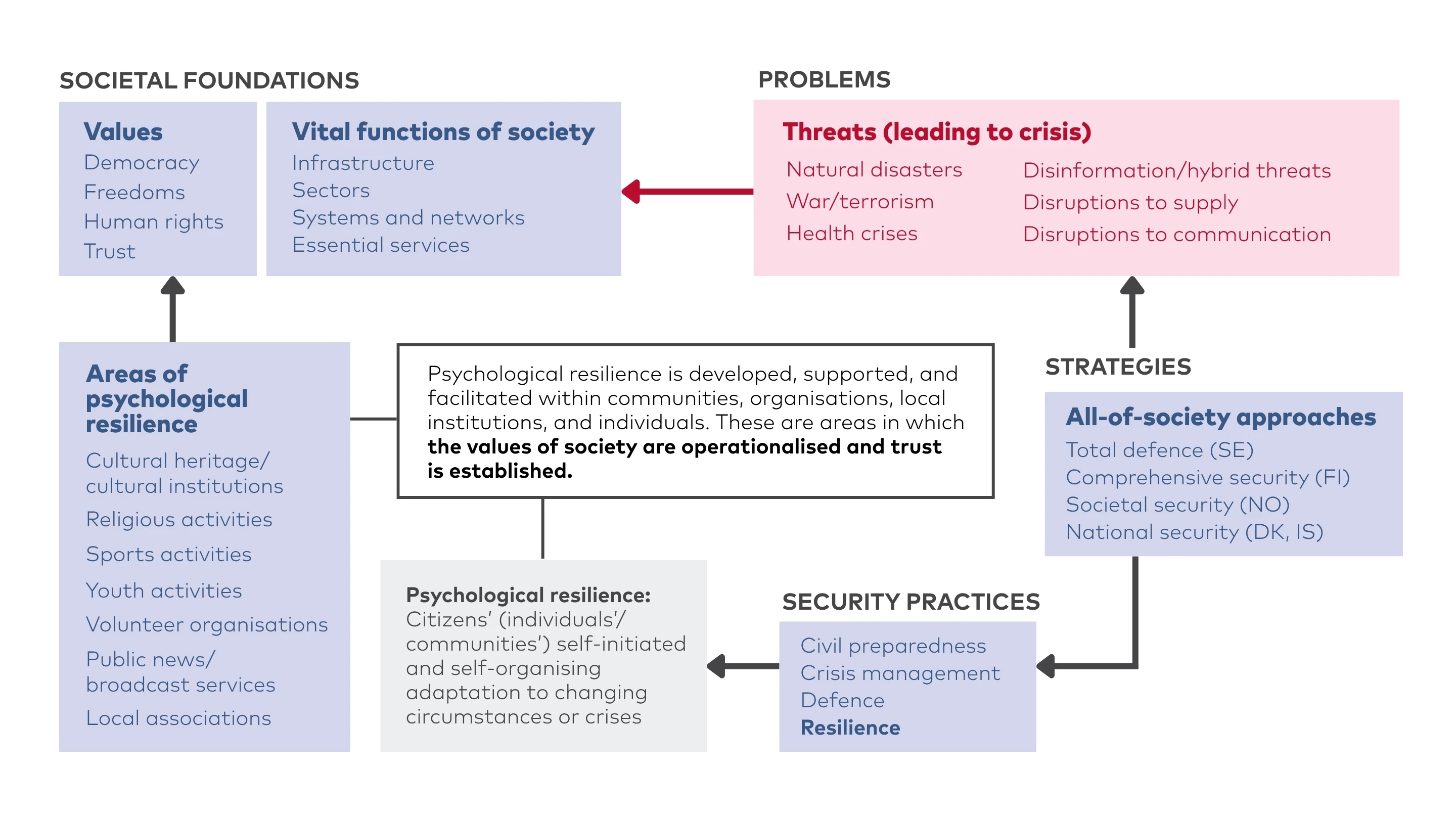
Figure 1. A descriptive framework for Nordic resilience. (Source: Rohrer et al., 2026)
The figure showcases the chain from vital functions and the values upholding them to the threats endangering both. As a descriptive framework, it outlines how Nordic security policies currently present resilience work: with strategies and practices drawn up to manage threats. Here, psychological resilience is one kind of resilience practice, defined only in the Finnish strategy but indirectly present in other Nordic strategies. Finally, the different dimensions of psychological resilience (as articulated by the Finnish strategy) close the loop by describing sites, activities, and communities in which societal values are developed and cultivated.
Following the elaborate descriptions in the 2025 Finnish security strategy, the research project set the following working definition for psychological resilience: Psychological resilience is citizens’ (individuals’ or communities’) self-initiated and self-organising adaptation to changing circumstances or crises through values-based activities.
Based on this definition, the different dimensions of psychological resilience can be observed and discussed. While psychological resilience may take many forms within different contexts (as exemplified by the range of related Nordic terms), it is important to make some distinctions of its core features to recognise and better support it. In the following paragraphs, we deconstruct the definition above to discuss its core features.
Psychological
While the word “psychological” implies a link to mental health, the Nordic translations of the term depict a broader understanding. The Finnish term henkinen kriisinkestävyys refers more to mental or even spiritual resilience, as opposed to physical resilience, and the terminology used in other Nordic countries also points more to social, civil, and community resilience than to psychological wellbeing. Mental wellbeing should therefore be considered as one factor affecting an individual’s capabilities to build and maintain his/her resilience than as the end goal of these activities. Distinct from mental wellbeing, psychological resilience attempts to describe a more profound connection to societal values and a willingness to act (i.e., to prepare for, respond to, and recover from crisis).
Resilience
While resilience entails “bouncing back” from crisis, there is a risk that the concept is interpreted rigidly as a return to the status quo, achieved by following a set of pre-ordained measures. Instead, resilience can take more nuanced and adaptive forms through measures that enable communities to recover from crises in transformative ways, rather than merely managing single events in order to return to business as usual. This difference is essential and distinguishes a resilient society from one that is overly resistant or overly impressionable to change. Previous research (Bourbeau, 2013; Hyvönen & Juntunen, 2021) has indicated that a society that views resilience mainly as a tool for maintaining its existing order may be less capable of handling negative consequences of different shocks. Such societies may emphasise external threats with rigid actions of resistance, at the expense of addressing their own internal needs for reform. On the other hand, societies that invite crises to reshape them entirely may lose their core values and vital infrastructure altogether. In short, a resilient society must balance its firm grip on fundamental values and vital functions while also being able and willing to transform how, for example, such functions are provided or maintained.
Citizens (individuals or communities)
The increasing emphasis on self-preparedness practices where individuals rely less on authorities may lead one to question whether psychological resilience is, first and foremost, an individualistic notion. Is psychological resilience about stocking individual preparedness-packs and emergency supplies? While such activities are part of the conversation, it is important to remember that preparing for specific crisis events only covers a small portion of the long-term thinking that encompasses preparation, response, and recovery stages.
In other words, psychological resilience is a systemic approach instead of a one-time exercise. It describes an individual’s or a community’s trust and willingness to prepare and to act rather than merely the preparatory activities in themselves. The impact of one person or household is always limited; therefore, individual resilience activities should mainly be considered insofar as they link with those of others. As the resilience of a community is linked to how its shared values are reflected in its everyday functions, these values and the critical functions supporting them are ordered and upheld by communities as a whole while also benefitting individuals. As one resilience actor in Gotland explained during the project webinar: “Resilience is infrastructure—it’s something that is being built in the relationships between people”(Nordregio videos, 2026).
Self-initiated and self-organised
If communities remain only at the receiving end of security-related expectations and responsibilities, their adaptive capacities may be at risk (Hyvönen & Juntunen, 2021). Resilience efforts should instead build upon existing networks, relationships, and social trust so that they may bolster overall crisis response and recovery. What, then, is the role of government authorities in enabling self-initiated and self-organised psychological resilience?
In self-initiated and self-organised resilience work, a valuable input from the national authorities lies in developing clear guidelines and holding the overall picture for security, ensuring that all relevant sectors are aware of the work of others. National-level actors may also use their authority to share the mandate of resilience work with a wider network of actors—for example, communities, NGOs, and associations, as well as local/regional public institutions. They can also hold open dialogues among various actors and across sectors to understand how they play a part in shaping resilience (both through physical and social infrastructure) and in ways previously unmandated or unforeseen by national authorities. Complementing this, regional and municipal-level authorities usually have a better picture of the distinct activities and needs of their region or municipality. They play a key role in developing trust with and engaging local actors, thereby supporting and coordinating response and recovery activities in practice.
Finally, it is important to note that national, regional, and local-level authorities are also individuals and community members themselves. Beyond their professional roles as civil servants or policymakers, such individuals have a role to play in the resilience of their own local communities. Resilience is under constant evolution and negotiation through relationships built on shared values and trust. For this reason, it can only be maintained as a self-initiated and self-organised force.
Adaptation to changing circumstances or crises
As mentioned above, the all-encompassing security approach emphasises long-term thinking that goes beyond immediate crises. A well-prepared community (e.g., in terms of food supplies) is not the same as a resilient one, as this type of preparation work can only relate to weathering a certain kind of crisis, without questioning its origins or spillover effects. In addition, one should note that any kind of change can cause pressure on a community, including traditionally positively perceived ones such as an influx of skilled workers and investments (Giacometti & Teräs, 2019). Trust, sense of belonging, and social inclusion are essential during all socioeconomic transitions, and while such elements can grow during transitions themselves, their foundations are laid already in everyday circumstances, before crises arise.
Through values-based activities
According to research by Selle and Wollebæk (2015), the existence of associations and hobby groups may make even people who are not active members in any group feel safer and more trusting in their surrounding community. Psychological resilience largely relies on the extent to which people share an understanding of threats and values in need of preservation. Communities with high levels of trust and strong sense of shared concerns may hold some of the critical foundations of resilience.
However, not all forms of psychological resilience are desirable, particularly when they are misaligned or actively conflict with national goals towards democracy and inclusion. For example, anti-immigrant neighbourhood watch groups may contain, among themselves, high degrees of psychological resilience as communities with shared values, trust, and adaptive capacities, yet they lead to exclusion and decrease of trust in their immediate surroundings. In other words, regular activities that make a group of people feel more united and capable but have an exclusionary purpose may erode the psychological resilience of another group. Therefore, it is important for authorities to facilitate resilience activities that align with core democratic values and support the development of trust across all areas of society.