Photo: Lepei Visual
3. Nordic case studies
3.1. Case study design
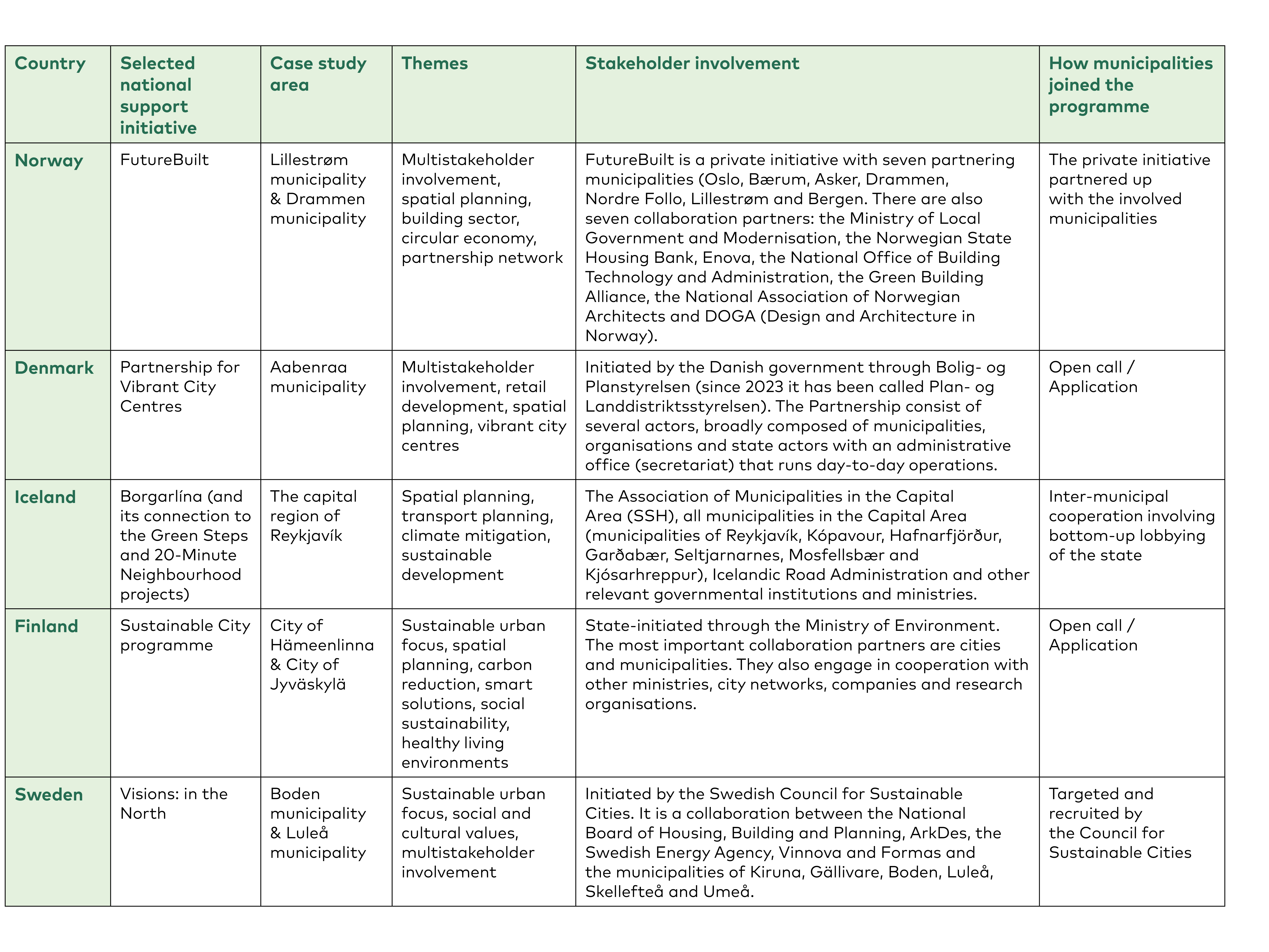
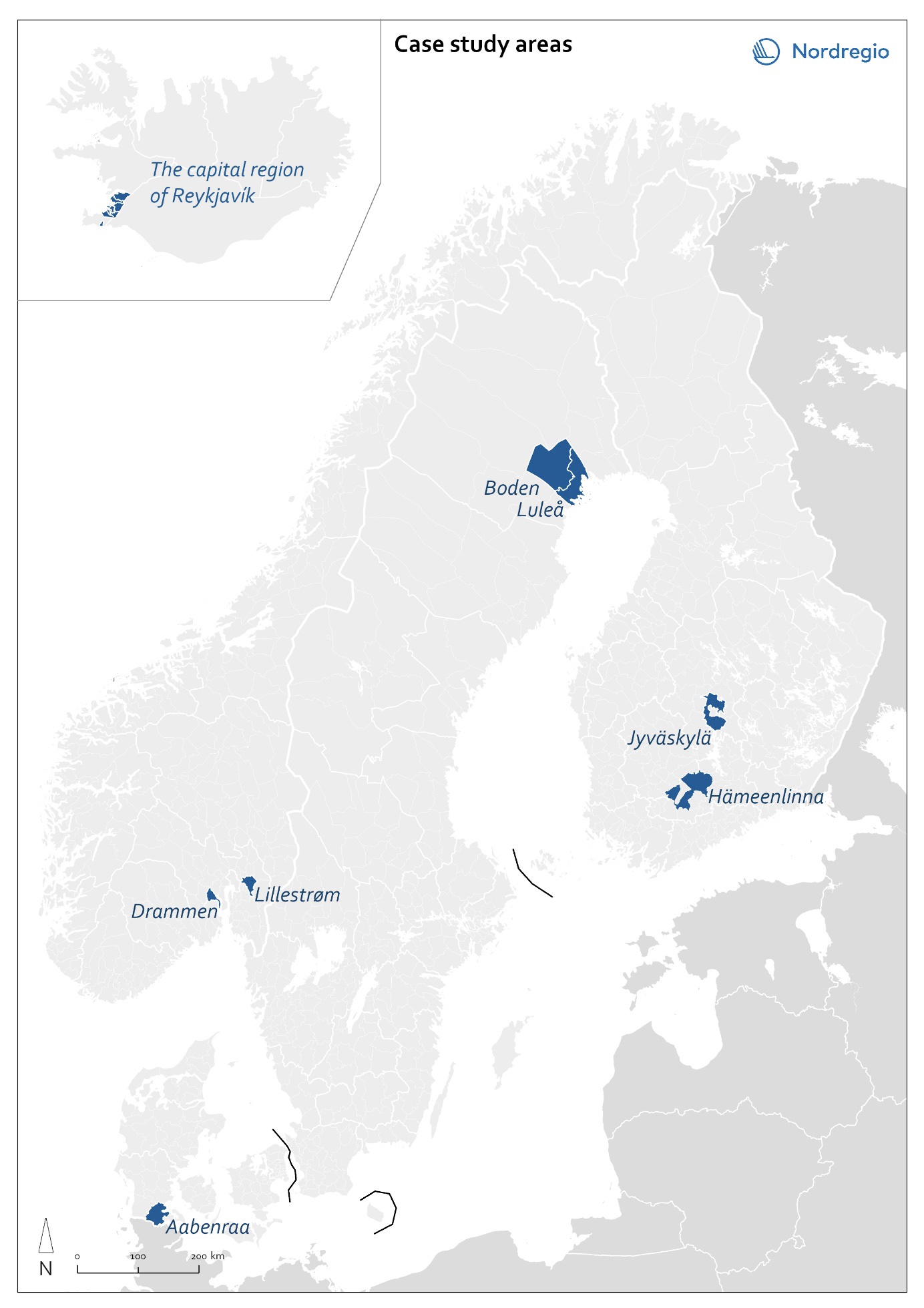
The comparative research design that informs our study aims to shed light on the variety of national support initiatives in the Nordic countries. We strive for Nordic added value by drawing lessons from a wide range of approaches. That is important as these may serve as inspiration or be adopted at either the national or local level. To that end, we have selected a variety of different types of national support initiatives, focusing on one main example from each country (see Table 2). Map 1 shows where each where each case study area is located in the Nordic Region.
Table 2. Selection of case studies
Map 1. Geographical location of our case study areas. Cartographer: Maria Bobrinskaya.
3.1.1. Research methods
Each of the examined national support initiatives was studied through desk research of relevant web-based sources for each initiative, as well as through relevant policy and document analysis. We also conducted semi-structured interviews (Dalen 2008) with representatives from each of the initiatives, as well as with planners and civil servants from the case study areas. In all cases those consist of municipalities, except for in Iceland, where the Association of Municipalities in the Capital Area (responsible for the regional plan) was examined. As a result, we conducted 2-5 interviews per case study and a total of 17 interviews. All interviews used the same interview guide (see appendix), enabling the researchers to ask specific and follow-up questions relevant to each case.
3.1.2. Research process and related considerations
The project was launched in 2021, when the mapping phase took place. The results of the mapping exercise were published in a discussion paper (see Huynh et al. 2022). The main empirical material informing this report was gathered in spring and summer 2023, but the Icelandic interviews were conducted in September and October 2022. During the research process, support mechanisms have changed slightly and national priorities in the Nordic countries may have shifted. Against that backdrop, we have aimed to learn from the implementation of a number of national support initiatives, regardless of the future direction those initiatives may take. The purpose of that is to gain more knowledge about the roles of various national support initiatives in facilitating the implementation of sustainability goals at the local level in projects related to urban development. It also helps us to better understand national support initiatives as complementary and supportive tools used by the central state (or nationwide stakeholders) to influence local sustainable solutions in the field of urban development.
Due to the limited time and scope of the research, we were only able to examine one national support initiative per Nordic country, illustrated by 1-2 municipalities as case studies. Accordingly, those cases should not be understood as in-depth analyses of each national support initiative, but rather as examples of different types of national support initiatives in each country that may serve as inspiration to other Nordic countries. Given that the initiatives differ in both scope and design, the aim is not to map the similarities and differences. Instead, we have sought to understand better how the support mechanisms in question are being used as complementary tools to govern and implement solutions for sustainable urban development locally and how they are directly or indirectly linked to spatial planning and planning systems.
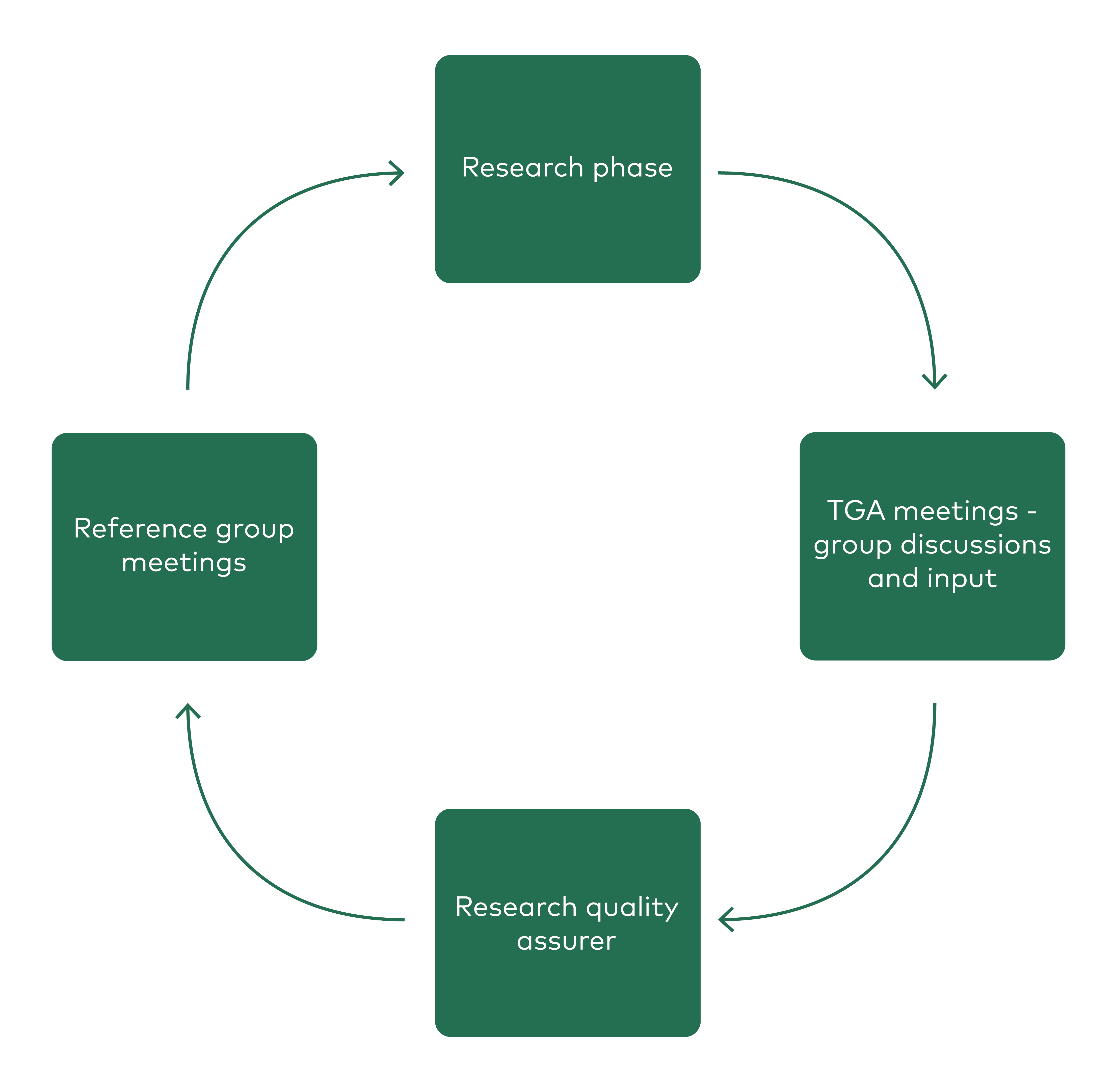
In order to ensure quality and relevance and to identify potential policy recommendations, the research was designed as an iterative process (see Figure 3). That means that the project team discussed preliminary findings with the members of the Nordic Thematic Group for Green and Inclusive Urban Development (TGA), the reference persons and a research quality assurer throughout the project. Those discussions led to valuable input, not only in terms of how to design the research, but also, and more importantly, in terms of better understanding the findings and aiding us in our comparative analysis. Through that comparative and iterative research design process, we aimed to understand better the roles of different national support initiatives in facilitating the implementation of sustainability goals locally in projects related to urban development. We also sought to better understand national support initiatives as complementary and supportive tools used by the central state (or nationwide stakeholders) to influence local sustainable solutions for urban development.
Figure 3. The research process follows an iterative approach, based on which the findings were discussed with representatives from the Nordic Thematic Group for Green and Inclusive Urban Development (TGA), a research quality assurer and reference persons throughout the process. That provided valuable input.