Foto: iStock
Introduction
This guide provides an overview of the basic prerequisites for successful locally owned energy projects. The sections include:
- Inspiration from successful projects: Examples and stories from others who have succeeded with locally owned renewable energy.
- A three-step process model: A practical guide to starting and running local energy projects.
- Tips on relevant documents, sources, and stakeholders: Get help and support from experts and organisations in Sweden.
- Recommendations for politicians and administrations: Suggestions on how to support local energy initiatives in your role.
What is locally owned energy?
Locally owned energy projects are a growing force in the energy sector, with local communities taking control of their own energy production. These projects involve residents, businesses, and organisations in a specific geographical area jointly owning and managing energy sources and jointly deciding on and controlling energy supply and use.
By owning the energy themselves, participants not only benefit financially but also have more influence over how the energy is produced and used. This creates opportunities for sustainable development, empowers local autonomy, and promotes social cohesion.
Locally owned energy projects are seen as key to meeting climate challenges while reducing dependence on external stakeholders and creating a more robust and resilient energy supply. At a time when shifting to sustainable energy is vital, these projects provide a tangible opportunity for communities to steer and shape their own energy future.
This project has developed the following definition of local ownership of energy:
An energy project or process where the project/process, influence over decisions, and ownership have a clear connection to a specific geographical area. The owners themselves experience both positive and negative impacts as a result of the project and have the opportunity to control these impacts by way of their ownership.
An energy project or process where the project/process, influence over decisions, and ownership have a clear connection to a specific geographical area. The owners themselves experience both positive and negative impacts as a result of the project and have the opportunity to control these impacts by way of their ownership.
Locally owned energy – one of the solutions
Climate change requires a transition to sustainable energy supply. Meanwhile, digitalisation and the “smart transition” are increasing our demand for energy. The Intergovernmental Panel on Climate Change (IPCC) is advocating a shift in the way society is organised and has identified the energy sector as a key element in this. Research points to the need to reduce energy consumption and to innovate in terms of both the type of energy used and how it is produced, owned, shared, and distributed. Through locally owned energy projects, we can facilitate a transition to a sustainable society, reduce distribution costs for energy production, increase energy self-sufficiency, and promote collaboration for civil preparedness in the local community.
Current situation: Ambiguities around local ownership of energy
EU countries are committed to achieving climate neutrality by 2050. 75 % of EU emissions currently stem from energy use and production. Phasing out fossil fuels in the energy sector is a crucial step towards achieving a climate-neutral EU.
To achieve climate neutrality and help deliver on the Green Deal, two types of energy communities have been introduced at the EU level by way of two EU directives: Citizen Energy Communities and Renewable Energy Communities.
At the regional and local levels in Sweden, there are strategic vision documents and plans to refer to in the establishment of locally owned energy.
Although the framework is in place, it’s not always clear how locally owned energy projects should be dealt with in legislation and planning. Both at the EU level and in Sweden, legislation emphasises that the transition of the energy sector needs to incorporate aspects of equitability, and that there can be advantages to more small-scale, locally produced energy. At the same time, international research shows the positive effects of joint energy ownership and production.
This guide has been developed by a group of Swedish researchers as part of a project funded by the Swedish Energy Agency. It is based on scientific studies, interviews with people involved in five different local energy projects, three workshops with these people, and several meetings with a reference group consisting of researchers, public stakeholders, and civil society organisations. The objective of the guide is to promote local ownership of energy for a sustainable energy future.

Inspiration: Locally owned energy projects
If you’re interested in establishing a locally owned energy project, you’re not alone – there are plenty of examples of successful locally owned energy projects in Sweden and Denmark. You can learn more about how others have done it below:
- On the Danish island of Bornholm, a group of local residents has initiated a large-scale wind power co-ownership project.
READ MORE - An economic association and energy community in a village on the Swedish island of Gotland demonstrates how joint forces can ensure locally anchored development.
READ MORE - An individually and co-operatively owned small-scale hydropower facility on a farm in Värmland, Sweden.
READ MORE - A limited liability company with circular and local roots in Gotland, Sweden, has succeeded in making biogas from agricultural waste.
READ MORE - A housing association on the outskirts of Stockholm, Sweden, wanted to reduce energy consumption and put solar panels on the roof, among several other measures.
READ MORE
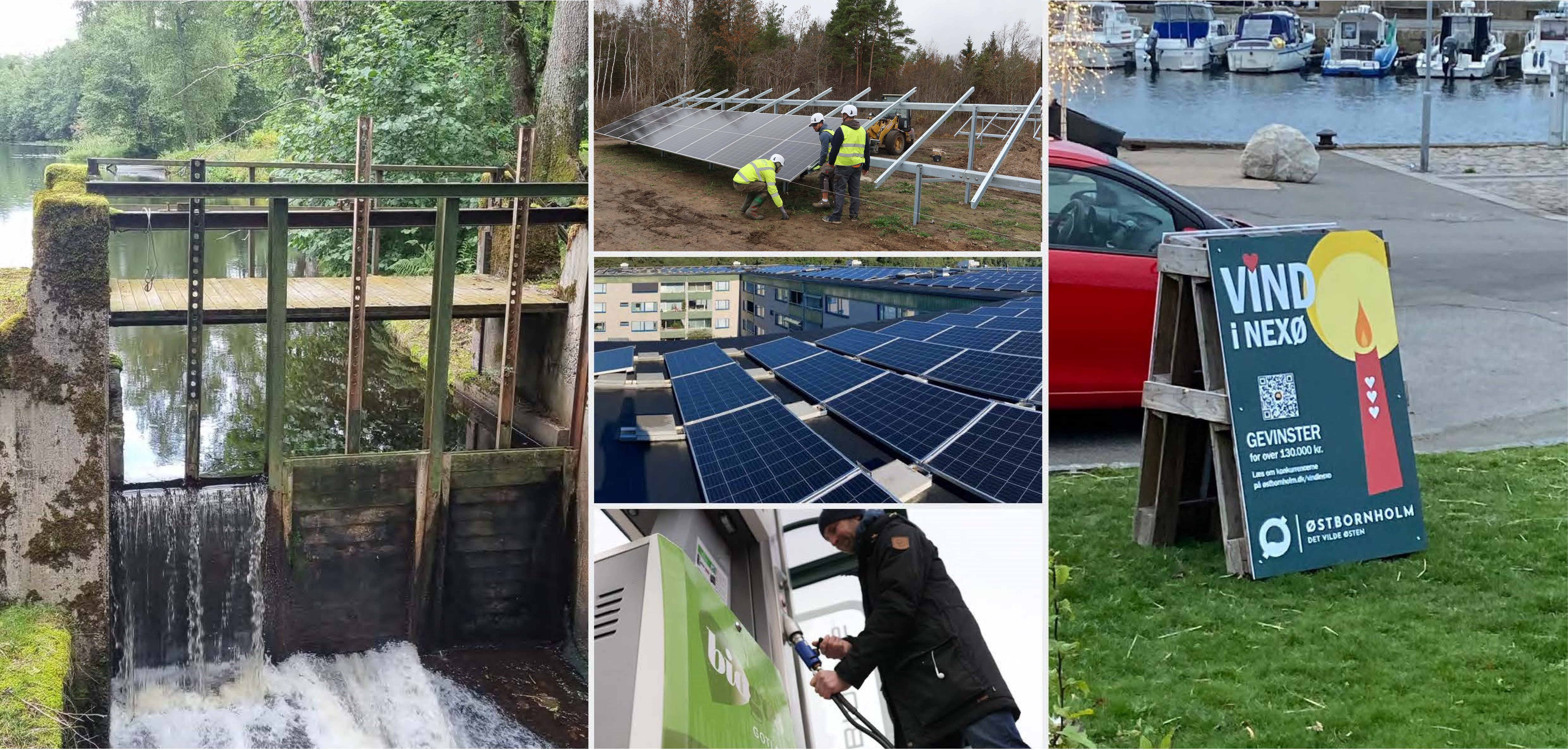
Hydropower in Värmland. Photo: Anders Björbole / Solar cells in Östergarnslandet. Photo: Austerland Energi / Solar cells on a condominium. Photo: Mathias Ridal / Biogas Gotland. Photo: Daniel Olsson / Wind in Nexø. Photo: Johannes Lidmo