Remote work, distansarbete, hjemmearbejde, etätyö, fjarvinna – no matter what you call it, it is difficult to ignore the significance of this topic in discussions about the future of work since the onset of the COVID-19 pandemic. Evidence suggests that increased levels of remote work are here to stay, at least in some form or another, however the long-term implications of this for Nordic municipalities and regions are far from clear. This policy brief summarises the first outcomes of the project ‘Remote work: Effects on Nordic people, places and planning 2021-2024’ and delivers recommendations designed to strengthen cross-Nordic learning and cooperation on this issue.
What is remote work and why is it relevant to Nordic people, places and planning?
Approximately 9.5 million Nordic workers are employed in professions where remote work is (theoretically) possible – that is, their work does not necessarily need to take place in a fixed location. A growing trend towards remote work was evident in the Nordic countries prior to the COVID-19 pandemic but has accelerated dramatically since. This project is based on the assumption that remote work will continue at higher levels post pandemic, with effects on the daily life of Nordic people, implications for different places, and complex opportunities and challenges for planning.
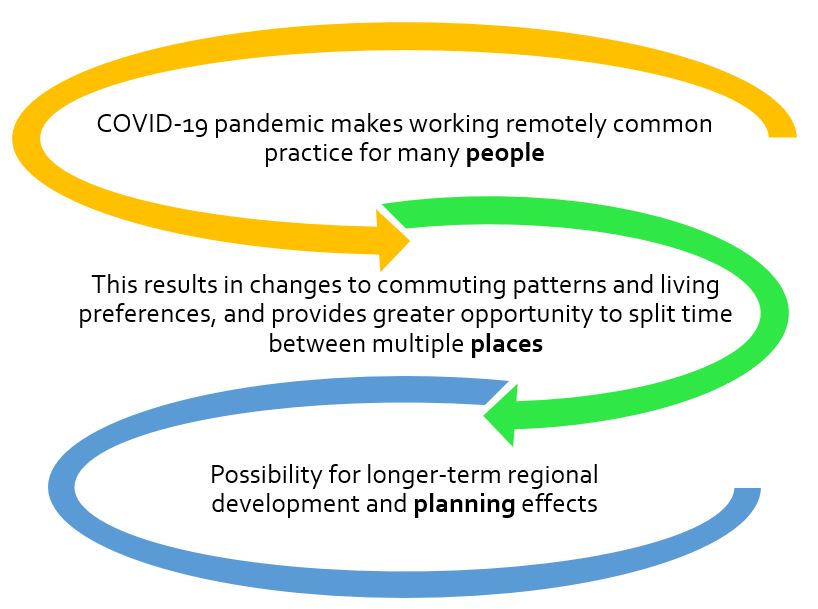
Project hypothesis
What did we do?
- Reviewed the Nordic and international literature on the topic that has emerged since the outbreak of the pandemic, including surveys about the preferences and intentions of Nordic workers and companies going forward.
- Interviewed national policy makers, business associations, and trade union representatives in each country.
- Surveyed regional and municipal planners and policy makers across the Nordic Region about their experiences of changes in the permanent and temporary population during the pandemic, with a focus on the role of increased remote work in these changes.
- Analysed the relevant statistics related to migration, mobility and multilocality at a range of geographic scales (e.g., national, regional, municipal).