What did we find?
Which services are essential in rural areas?
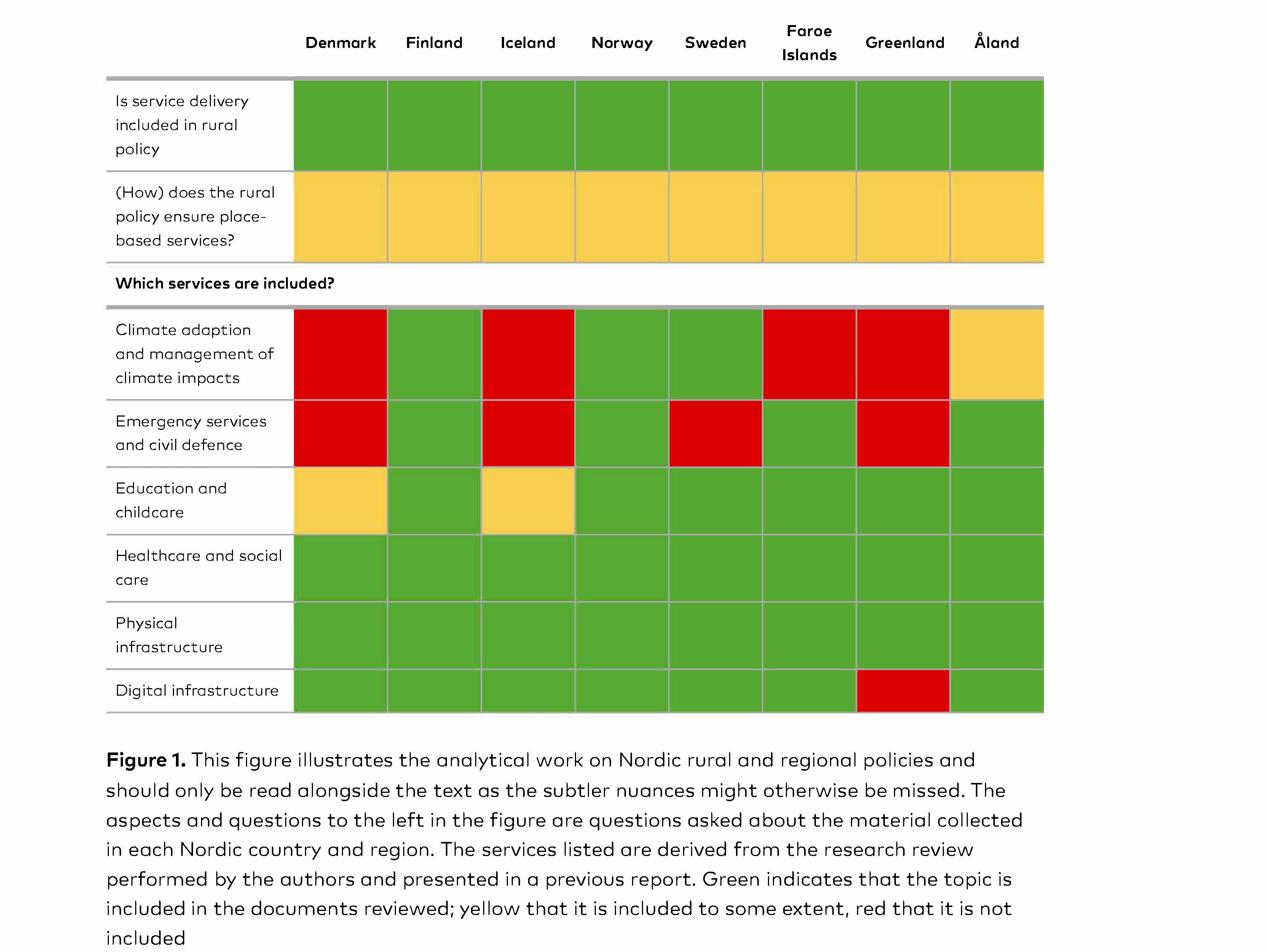
Based on the journal articles reviewed for this study and input from individuals working in Nordic public authorities at national, regional, local and cross-border institutional levels, it appears that the essential service needs for rural areas now (and in the future), are healthcare and social care; education and childcare; physical infrastructure; climate adaptation and management of climate impacts; digital infrastructure; and emergency services and civil defense. The combined research and policy review shows that most of these essential services are covered by the Nordic rural policies. The 56 interviews in eight Nordic case study areas have also, in general, confirmed the essential rural services classification. However, the fieldwork also identifies nuances and variations in each of these categories. As such, the study confirms the importance of adapting services to places, so that the inhabitants of Nordic rural areas can thrive and feel safe and secure. The fieldwork also identified additional services as essential, e.g. commercial services such as local shops and fuel delivery, payment services but also cultural and sports activities, can be viewed as essential services for everyday rural lives in the Nordics.
How are essential services provided in rural areas?
Public, private and civil society actors are responsible for ensuring rural services. There are also various collaborations and agreements between these actors that enable service provisions. Although the actors interviewed emphasised the importance of the independence of the municipalities and regions for maintaining public services, there is also cooperation with other public actors, and with private and civil-society actors, both formal and informal. It can be noted that while collaborative service provision is considered a good idea for resource efficiency, and as an alternative to merging municipalities, there are also risks involved, as it becomes more difficult to directly assign political responsibility for specific actions.
What are the main challenges for the provision of essential services in rural areas and what are there solutions?
Comparing the case study results of challenges in rural service provisions, it becomes evident that there are commonalities across the Nordics. The most important are labour shortages and attracting the right competencies to provide the rural services; mobilising financial resources to cover the service needs; and physical and geographical characteristics, such as climate and long distances, which affect service provisions. Lack of housing, bureaucracy and administration, digitalisation and tourism pressure during peak season are also perceived as challenges in some regions.
Furthermore, the results show that opportunities and strategies for rural service provisions are shared across the Nordics. The most important are digitalisation of services, increased cooperation between neighbouring municipalities and settlements as an alternative to mergers of public authorities and increased cooperation between public, private and civil society actors.

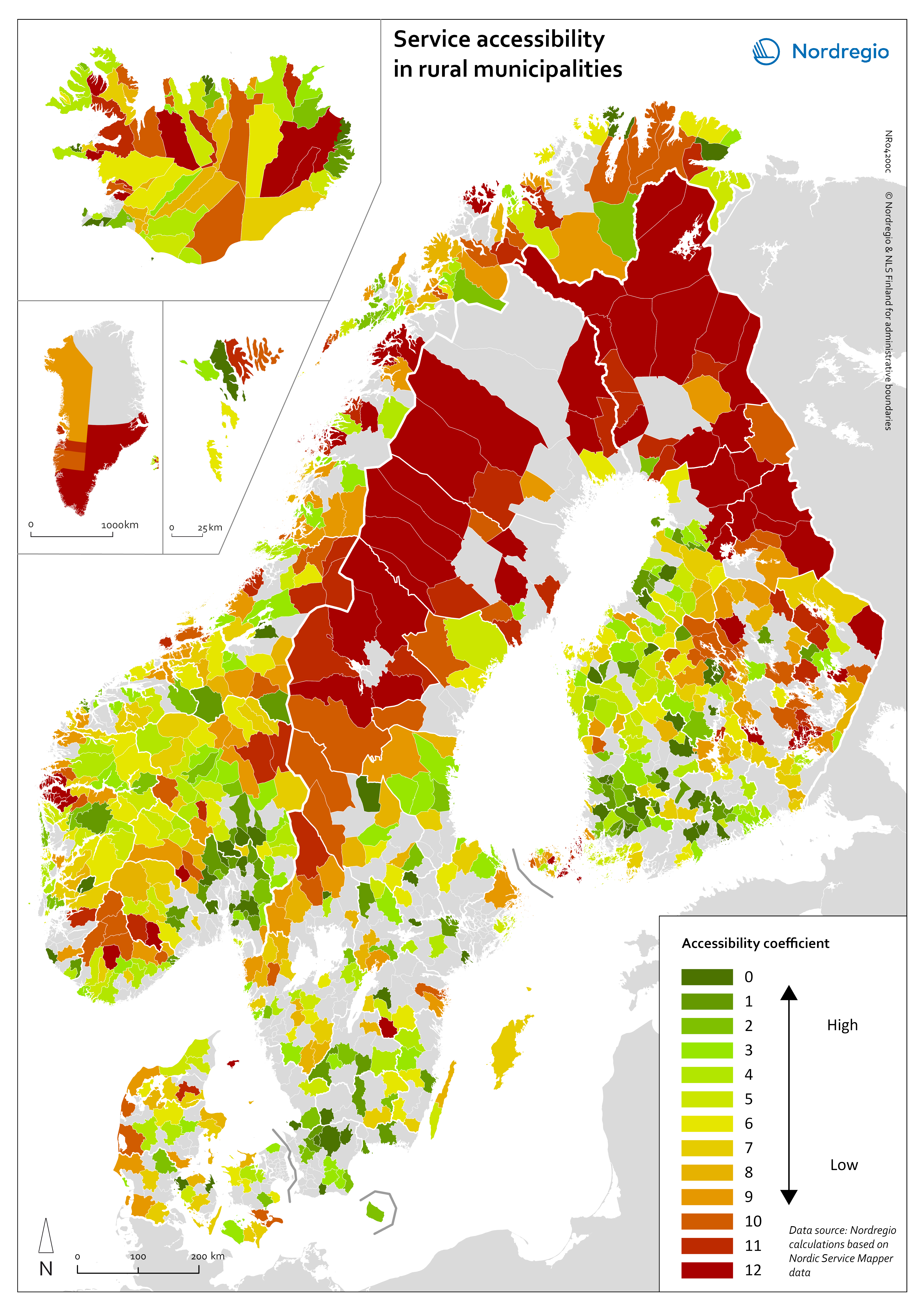
Map 1: Service accessibility by municipality in the Nordic Region. The services categories included in the analysis are grocery stores, pharmacies, libraries and educational facilities. The data reflects the situation in December 2019. The calculations of an ‘accessibility coefficient’ have been carried out separately for the four service types and with regard to the region type and the country. This means that the accessibility reflects the situation within the respective country and region but can still be compared with the situation across the whole Nordic Region.
.
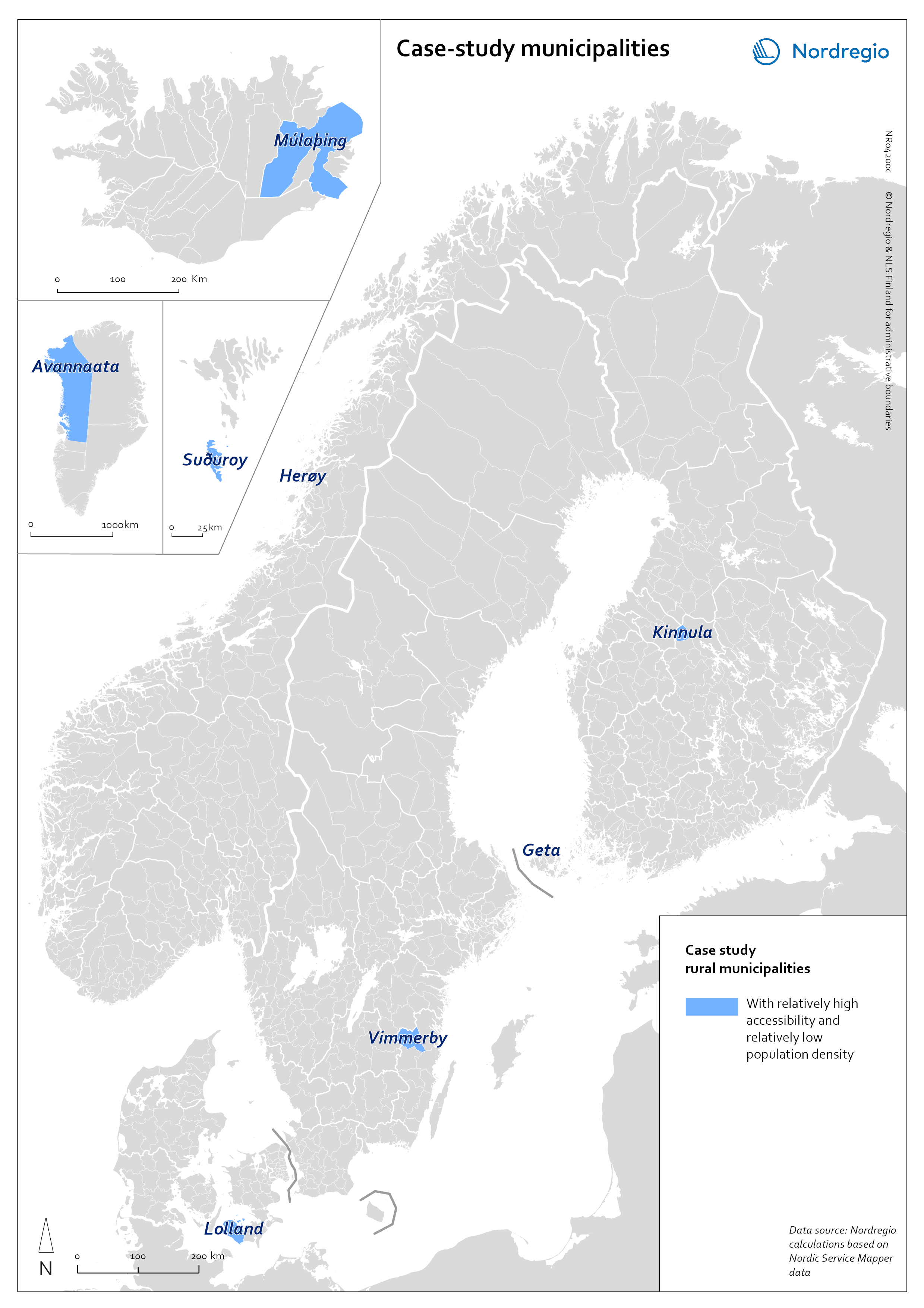
Map 2: Location of the municipalities chosen as case studies. The choice was made from a list of rural municipalities within each country that had the highest level of access to four services (libraries, pharmacies, local shops and education). The exceptions are the cases in Norway and the Faroe Islands.