Oceanview towards Helsingør in Denmark from the aft of a boat.
Photo: iStock
Photo: iStock
3. RESULTS
3.1. Findings of Interviews from the Nordic Region
The interviews we conducted enabled us to identify several challenges in terms of urban integration in cross-border regions.
It was observed by several interviewees that the state level needs to better understand the specific needs of cross-border regions. Some interviewees mentioned that a lack of such understanding was shown when the border was closed during the Covid pandemic (Wøien Meijer and Giacometti, 2021). It was noted that administrative procedures and taxation for cross-border workers could be improved. Issues tend to be addressed at the municipal level, with support from regions but without a formal common masterplan. Some challenges are also discussed within larger cooperation networks such as the String megaregion, which brings together regions and large cities from Oslo to Hamburg through Gothenburg, Helsingborg, Malmö and Copenhagen (String, 2024). Two of the cases selected for this study are in the String megaregion, namely Strömstad, Dals-Ed and Halden and Helsingborg and Helsingør.
3.1.1. Haparanda–Tornio
These two cities have many years’ experiences of cross-border cooperation, starting in the 1960s with the sharing of Haparanda’s swimming baths when Tornio lacked such facilities. Since 1987, the two municipalities have employed a common coordinator dedicated to cross-border issues and have established several agreements in areas such as education and infrastructure (Ainonen 2023). Over the years of collaboration, the cities have solved many problems related to the border and achieved a high level of integration.
In 1995, the EU membership of Sweden and Finland opened up the possibility of EU funding for Tornio and Haparanda to further develop their collaboration. The two cities are a strategic logistics hub as they constitute the main land link between Finland and Sweden, serving as a key lorry and rail connection to Europe (Ainonen 2023). Obstacles to financing the development and maintenance of road and rail connections are being overcome, prompted by the NATO membership of both Finland and Sweden and increased attention to national security concerns in the wake of the Russian invasion of Ukraine (Mikkola 2024; Sjaunja 2023).
The high integration of Haparanda and Tornio entails regular exchanges between the municipalities’ officials and staff. The cross-border coordinator shares an office with the municipalities’ leaders and meets weekly with them. A technical group composed of the municipalities’ mayors, the development director of Tornio, the chair of Tornio city boards and the cross-border coordinator meet monthly. A larger group consisting of five members from both municipalities, plus the cross-border coordinator and development director meet bimonthly. This is the case study with the most frequent meetings between representatives of the municipalities.
In addition, the city boards meet a couple of times a year and the city councils meet once a year during workshops where they discuss issues that can be later raised at their respective assemblies. The cross-border coordinator liaises between both municipal councils and municipal boards, with formal discussion of adoption of measures during the workshops. The cross-border coordinator also brings together workers from both municipalities and promptly arranges meetings for new municipal employees with their counterparts in the other municipality (Ainonen 2023).
The difference in the countries’ time zones and timing of their elections pose challenges to day-to-day work. Election of the municipal boards and councils in Finland and in Sweden are two years apart. This means that the timeframe for cross-border issues is two years with short gaps every two years at election time (Ainonen 2023).
Many problems related to shared infrastructure have been solved over the years (e.g. shared public schools, a bus terminal, swimming pool, tourism info centre). Closure of the border during the Covid pandemic highlighted the high degree of integration of the two cities. The functioning of the Swedish healthcare system in Haparanda relies on Finnish residents who cross the border to work. Closure of the border highlighted that dependence and posed many challenges in terms of ensuring that the system continued to function (Sjaunja 2023). Another issue involved buses in Finland, which could not access the common bus terminal used by the buses of the two cities located in Sweden just a hundred meters from the Finnish border (Ainonen 2023).
There are legal and economic challenges to joining up services across the border. For example, the difference in ownership and management systems between Finland and Sweden makes it harder to operate trains across the border. In Finland, the rail network is owned and managed by the state while private operators handle rail traffic in Sweden. However, the railways crossing the border are currently being electrified and will return to operation in 2025 with strengthened interest in and funding for such infrastructure in view of logistics and security. Legal challenges also arise for buses and taxis, which cannot fully operate across the border. While the municipalities would benefit from cross-border public transport by bus, their buses can travel to Finland from Haparanda but cannot pick up passengers on their return (Ainonen 2023).
There are also issues concerning operation of ambulances across the border. Currently, ambulances from the other country do provide their services across the border, but without a clear legal basis for doing so. There are legal uncertainties as to what would happen in the event of an accident or other issue involving the ambulance (Sjaunja 2023).
Many inhabitants of Haparanda can speak some Finnish and it is common for them to use the hospital in Kemi, Finland, which is about 25 kilometres away (Ainonen 2023). There are few dentists in Norrbotten and residents can benefit from the higher capacity in Finland (Sjaunja 2023). That may, however, be administratively challenging. Some issues are addressed through healthcare and welfare cooperation between the regional health authorities in the North Calotte regions. However, those need to be revised when reforms occur at the national level such as reform of the healthcare and social care systems in Finland in 2023 (Mikkola 2024).
3.1.2. Strömstad–Dals-Ed–Halden
Cross-border cooperation between Strömstad, Dals-Ed and Halden is supported by the Svinesund cross-border committee which brings together Norwegian and Swedish municipalities. Both the Region Västra Götaland and the region of Viken have seats on the committee’s board (Laupsa 2023). The committee acts as the primary link for cross-border issues for the region of Västra Götaland. The Swedish region grants financial support to the committee through an “operating grant” to fulfil the role of cross-border connections at the political level (Catoni 2023). The Svinesund committee is not legally regulated either in Norway or in Sweden but arose on a voluntarily basis to resolve cross-border issues (Widen 2023).
The committee facilitates development of opportunities across the border, but the municipalities also discuss issues on a one-to-one basis. For example, Halden and Strömstad are working together to develop businesses and workplaces and to attract new businesses and workplaces to the region (Laupsa 2023). The committee meets once a month and is an important platform for politicians and municipal authorities to liaise across the border (Laupsa 2023).
There are no fixed forums for cooperation at the municipal level between Halden and Strömstad, but the two municipalities have good lines of communication and work to maintain the cross-border infrastructure and the highway and bus route that connects both cities (Widen 2023). The municipalities meet several times per year to discuss strategic cross-border issues (Hansson 2023). There is currently no set political cooperation in place between Halden and Dals-Ed. However, the municipalities are endeavouring to strengthen their cooperation and members of the administration on both sides have been in close contact (Laupsa 2023).
The economy is inter-dependent across the border, with Halden benefiting from labour from Strömstad, Dals-Ed and the area towards Gothenburg (Laupsa 2023). Conversely the Swedish municipalities benefit from tourism and workplaces in Halden and further afield in Sarpsborg and the greater Oslo region (Widen 2023; Hansson 2023). Despite that strong degree of interconnectedness, there are obstacles that limit individuals and small businesses when it comes to working across the border.
An issue that was raised in several interviews with municipalities is the lack of statistics regarding cross-border exchanges, in particular the number of commuters between each country. Such data would allow for better understanding of the needs of commuters and businesses on both sides of the border. Nevertheless, it may be stated that a fair proportion of the population in Dals-Ed and in Strömstad, commute to Norway to work and many companies operate on both sides of the border. However, taxation and administrative difficulties, such as obtaining a D-number –a unique identification number that is often relevant for those with a temporary connection to Norway–, and other issues put individuals off working across the border. For businesses, the transport of goods across the border may be onerous due to customs, such as when goods are held for a lengthy period on the other side of the border (Hansson 2023). There are also issues with handling lorry traffic transporting goods inside or outside the EU (Laupsa 2023). It is difficult to ensure smooth entry for transport from a non-EU country such as Norway due to customs. Accordingly, there is need for support at the national and Nordic levels to facilitate the integration of cross-border regions (Catoni 2023).
The Covid-19 pandemic highlighted the asymmetric nature of trade between the Swedish and Norwegian sides. Strömstad’s economy was shown to be strongly dependent on cross-border shopping from Norway. When Norway closed its border with Sweden, Strömstad’s economy was hit very hard (Hansson 2023). That large impact can be seen in the unemployment rate in Strömstad, which rose from 4.5% in March 2020 to over 9% a year on (SCB 2024c).
To remedy that imbalance, Region Västra Götaland, together with the Swedish Agency for Economic and Regional Growth, launched a project to diversify the labour market and increase the level of education in the area (Catoni 2023). From Strömstad, higher education in Norway is within commuting distance while the connection to higher education in Sweden is slightly worse, with the journey taking over an hour and a half (Hansson 2023). There are administrative hindrances to studying across the border that are being addressed to ensure that Norwegian students can take courses in Sweden and vice versa (Nilsson 2023).
Municipalities also cooperate across the border on tourism. Halden and Strömstad are discussing the development of the border crossing via the Old Svinesund Bridge as a tourist attraction. The bridge offers beautiful scenery of the strait and of the new bridge. However, the area surrounding the bridge has fallen into disrepair since the new bridge was built because commerce in the area depended on the flow of traffic. Both sides of the border want to improve the area and discussions involving the Svinesund committee are underway on its development (Hansson 2023).
The municipalities do not co-create common development strategies or get heavily involved in each other’s master plan but maintain good lines of communication on cross-border issues. Since the municipalities are separated from each other by the Svinesund Strait or by a longer distance, they do not cooperate on their development strategies on a continuous basis. However, they do treat their counterpart as a consultative body on relevant issues and can comment on their neighbour’s development plans (Widen 2023; Nilsson 2023)
The Swedish and Norwegian border near Strömstad follows the course of the Iddefjord with the Svinesund at its mouth. The fjord and the two bridges crossing the Svinesund attract tourists. On the Swedish side, the strait forms part of a Natura-2000 area with strict environmental protection rules. The Svinesund is shallower than the rest of the fjord and hosts a variety of marine species of molluscs, anemones, crustaceans and sponges (Hedström, 2021). However, the sediments in the fjord are heavily polluted due to the past activities of the paper industry on the Norwegian side of the fjord (Hedström, 2021).
Environmental concerns and the protection status of the area on the Swedish side are in opposition to development strategies on the Norwegian side to deepen the strait and increase the connection capacity of the fjord for industries located in Halden (Hansson, 2021; Hansson 2023). There are also concerns that the pollutants lying at the bottom of the fjord could enter the coastal area, including near Strömstad, or the sea if development work, such as deepening the strait, is carried out in the fjord (Hansson 2023). Swedish authorities as well as environmental non-governmental organisations in Sweden and Norway, appealed against the plans to develop the strait in 2021 (Hedström, 2021). Swedish authorities are engaged in ongoing discussions with the county administrative board on the Norwegian side to move forward on the issue, with the elaboration of an environmental impact assessment at the centre of the discussion (Hansson 2023).
3.1.3. Helsingborg–Helsingør
Cooperation between Helsingborg and Helsingør takes place through the steering group made up of politicians called HH-cooperation, as well as a smaller steering group composed of the heads of the municipalities and a secretariat dedicated to cooperation. The HH-cooperation steering group is composed of the chairperson and vice-chairperson of the municipal council in Helsingborg, the mayor of Helsingør, the state directors of the two cities as well as Helsingør politicians from the opposition parties (Kipowski 2023). In addition, there is further collaboration between municipal employees on specific activities such as culture and tourism (Kipowski 2023).
Challenges related to the cross-border job market are addressed in the Greater Copenhagen Network or String (Kipowski 2023). The former is a cooperation initiative between eastern Denmark and southern Sweden including Region Skåne, Region Halland, the region of Hovedstaden, the region of Sjælland and 85 municipalities (Greater Copenhagen, 2024). At the municipal level, urban investments are financed by the municipality that initiated the development, but the operating costs of projects on which municipalities collaborate are shared. Helsingborg is larger than Helsingør and has a larger budget to contribute to co-financing (Kipowski 2023).
Cooperation in recent years between Helsingborg and Helsingør has focused on infrastructure development, tourism, the labour market, culture and education as well as government cooperation (Kipowski 2023). Recent projects include the organisation of job fairs and tourism development. The latter includes marketing campaigns, press trips, bike tours and events under the concept of two countries–one destination (Kipowski 2023). The two cities have also collaborated on the elaboration of attractive playgrounds, learning from each other to create a joint planning strategy in 2014 (Kipowski 2014).
Representatives from Helsingborg and Helsingør, namely politicians and officials from both cities, co-created a planning strategy during workshops in 2013 and 2014. That strategy highlighted elements of attractiveness such as the fast link between the cities that connects to coastal promenades on both sides of the strait, to natural areas and to key cultural points of interest (HH-samarbete, 2014). The planning strategy stresses key aspects that enhance the living environment of both cities: historical urban architecture; the rich marine environment on the seabed; the strong economy in the fields of crafts, production, trade, tourism and logistics; educational facilities including Campus Helsingborg and many vocational schools; and complementarity between the cities with regard to cultural activities, events and tourism (HH-samarbete, 2014).
Another important aspect of the cooperation is the lobbying of national authorities to build a second road and rail connection between Denmark and Sweden at Helsingborg and Helsingør. The cities adopted a strategy to support such infrastructure in 2017 (Kipowski 2023), but the idea was already formulated back in 1866 (Trafikverket, Vejdirektoratet, and Transport-, bygge- og boligstyrelsen, 2021). Region Skåne is also contributing to supporting such infrastructure, which it hopes will simplify the lives of cross-border workers, provide more opportunities to access the job markets on both sides and integrate Helsingborg even better into the Greater Copenhagen Region (Malm 2023). It is expected to create greater redundancy in the event of problems with the Öresund Bridge between Malmö and Copenhagen and to strengthen the connection between the Helsingborg and Helsingør job markets (Lundgren, Löfving and Westin, 2023; Kipowski 2023).
The level of unemployment in Sweden is high, especially in the Skåne region. In Denmark, the national unemployment rate ranged between 2.6% and 3.2% between January 2023 and January 2024 and between 2.8% and 3.1% for the Hovedstaden region (DST 2024c, DST 2024c). During the same period, the national unemployment rate in Sweden remained above 4.6%, with the figure being 6.4% in the Skåne region and 7.7% in Helsingborg (SCB 2024c). Accordingly, there are opportunities to work in Denmark but not all Swedish residents can benefit from the Danish job market since it depends on their immigration status. There are also limitations due to tax barriers and variations in exchange rates between the Swedish krona and the Danish krona (Kipowski 2023).
To facilitate labour market integration between Denmark and Sweden, the Nordic Council of Ministers finances collaboration between authorities from both countries called Öresunddirekt. The organisation has offices in Malmö and gathers expert knowledge from the Swedish Public Employment Service, the Swedish Tax Agency, the Swedish Social Security Agency and the County Administrative Board of Skåne (Malm 2023). The organisation operates mostly in southern Skåne and Copenhagen, but it is also engaged in activities in Helsingborg aimed at the integration of Helsingborg and Helsingør (Malm 2023). It provides help and assistance to both individuals and employers in relation to working on the other side of the strait and moving there (Malm 2023).
3.2. Sharing-Potential Along Four Research Axes
To improve urban-urban integration, we identified four main axes:
- sharing of capacity,
- sharing of specialisations,
- sharing of services,
- cross-border joint-services.
Sharing of capacity means that both municipalities provide the given service, but one can benefit from the surplus of the other if necessary. An integrated healthcare system such as in Tornedalen –where Kemi Hospital can treat patients from Sweden– is an example of that.
Sharing of specialisations means that both municipalities have the same general service, but only one has a specialised form of the service. An example is the case of vocational and higher education in Helsingborg and Helsingør or higher vocational education in Svinesund, allowing students to select a broader range of programmes and specialisations.
Sharing of services refers to services that are provided in only one of the municipalities but that can be accessed from both. The bus terminal in Haparanda, which is used by buses from both Tornio and Haparanda, is an example of a shared service, as were the swimming baths at the inception of the strong cooperation in the twin city.
Cross-border joint-services are services operating across national borders. Examples of cross-border joint-services are the bus service or the ambulances in Haparanda and Tornio. Another example is that of the common police patrols between Norway-Sweden initiated in recent years.
The maps in figures 13, 14 and 15 show the identified sharing-potential along the four axes just described above for each of the Nordic cases.
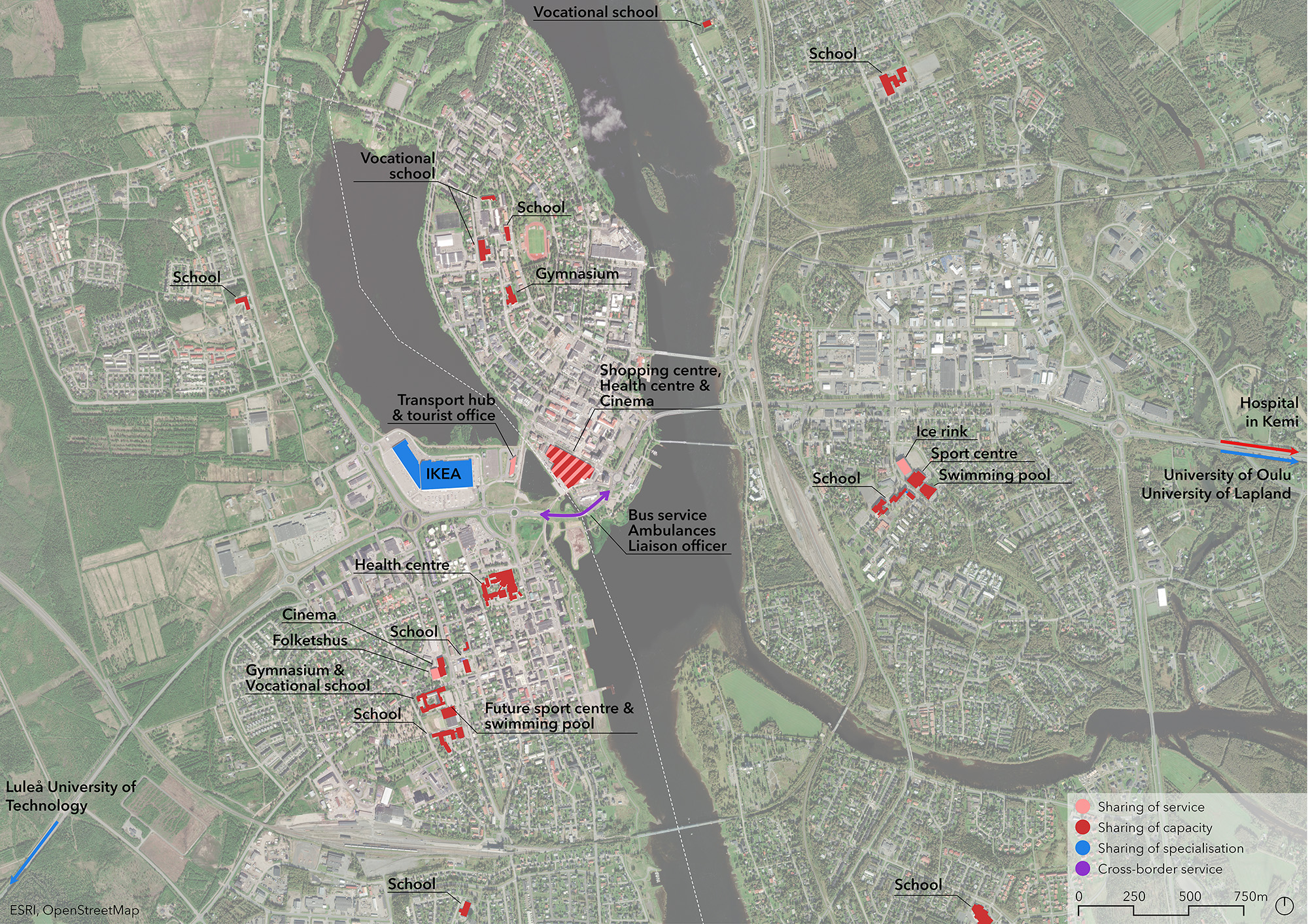
Figure 13. Map of the sharing-potential in Haparanda and Tornio.
Base map: ESRI.
Base map: ESRI.
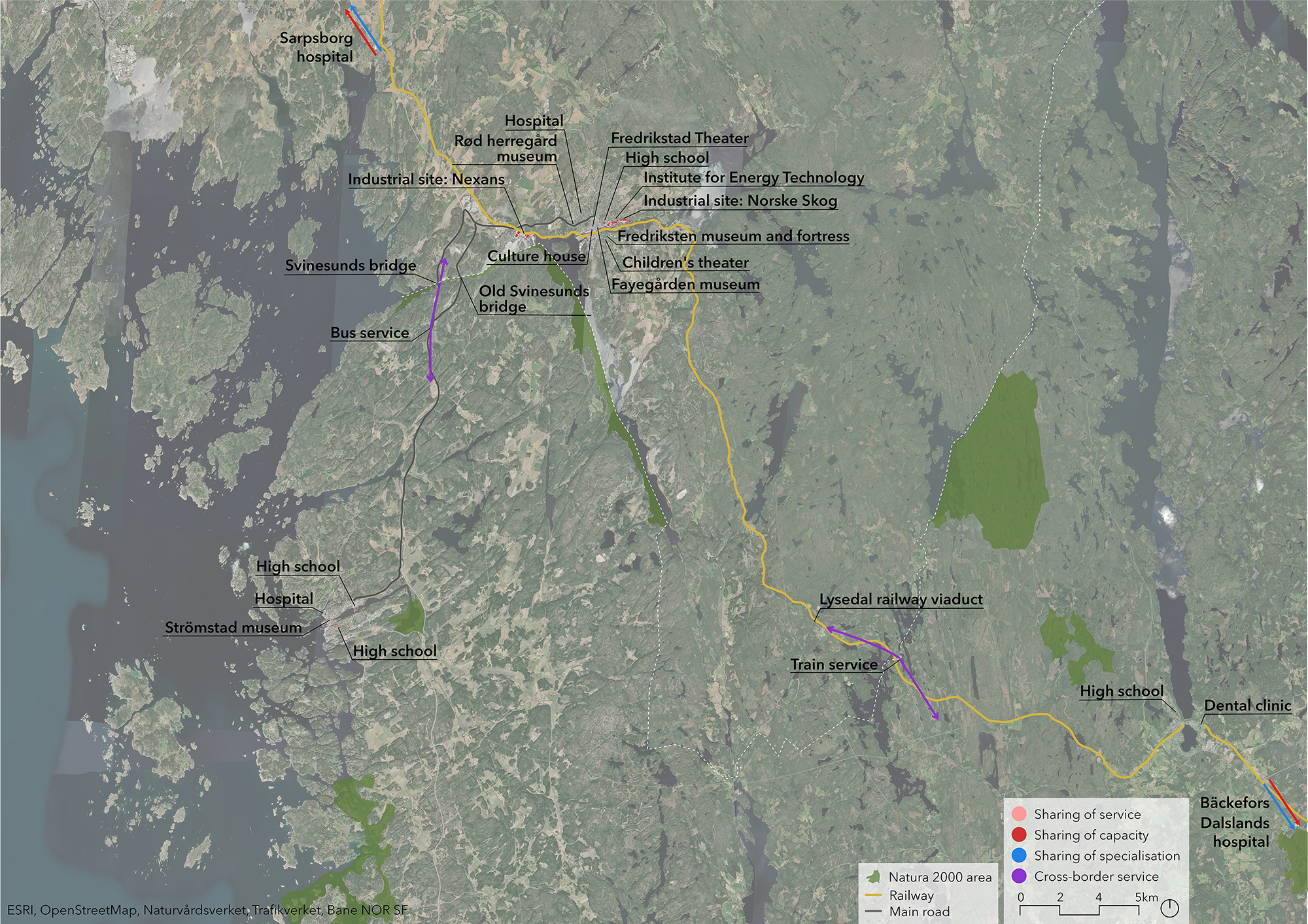
Figure 14: Map of the sharing-potential for the Svinesund region.
Base map: ESRI.
Base map: ESRI.
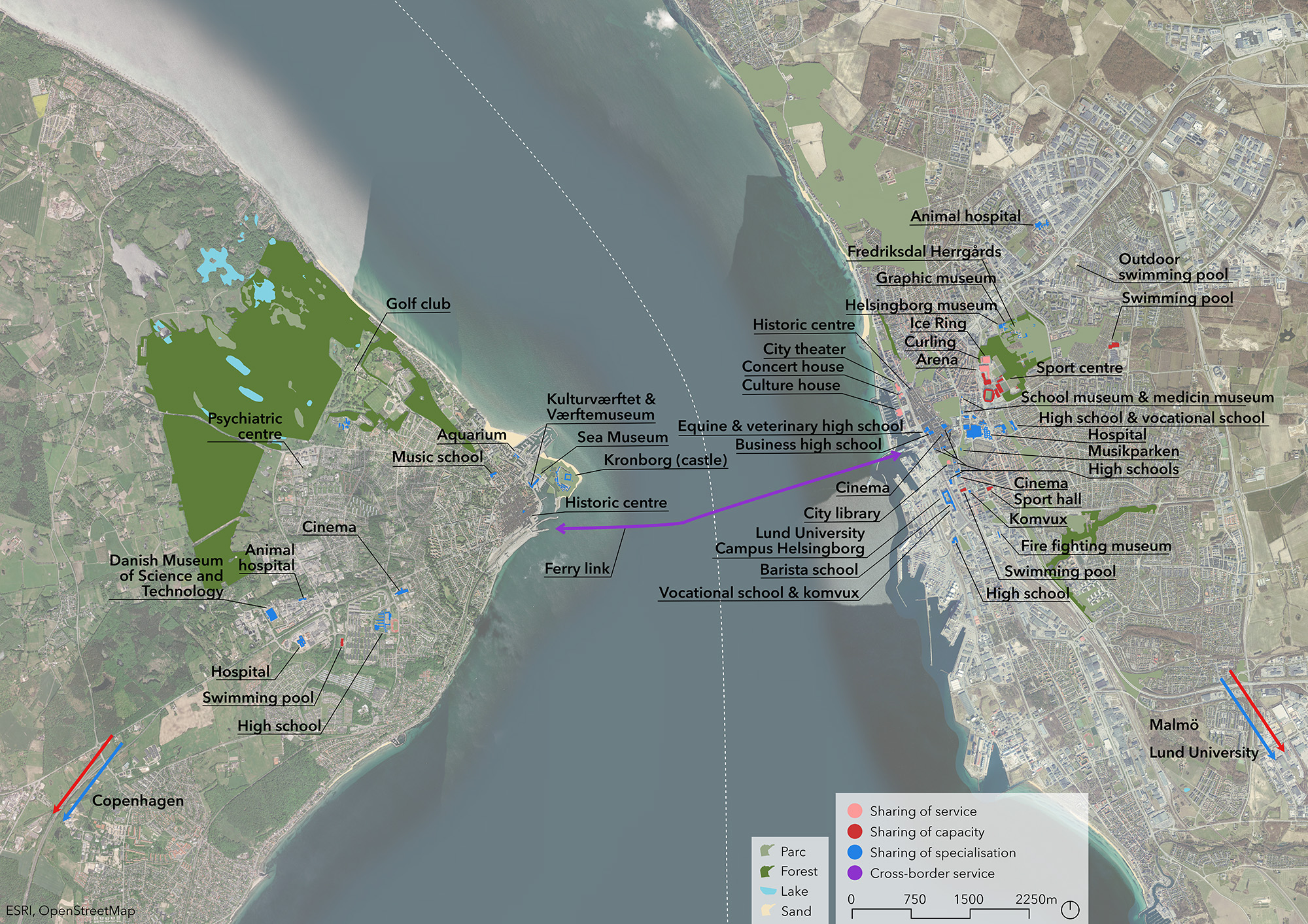
Figure 15: Map of the sharing-potential in Helsingborg and Helsingør.
Base map: ESRI.
Base map: ESRI.
3.3. Workshop: Group Discussions on Nordic Cases
During the workshop discussion, several key challenges were identified by the participants. The participants stressed the already high level of integration in these cross-border regions, to the point that they almost know no borders. Hence, these regions are already well integrated in the minds of the people living there, but harmonisation of legal and administrative challenges is necessary to facilitate daily life in the cross-border regions and to achieve the goal of the Nordic Region being the most integrated region in the world. Otherwise, those barriers will remain a major hinderance to integration.
There was consensus amongst the participants that to achieve more integrated regions, harmonisation is required and that support from higher-level authorities is necessary, either at the national or international level (NCM, Interreg, EU). In that context, they stressed the need for cross-border agreements regarding taxation and the need for common payment schemes between countries, including mobile payment systems.
The participants highlighted the importance of seeing the border more as an opportunity than a barrier and to think in terms of the Nordic level in order to address the remaining challenges.
They identified a need for statistics and background facts on cross-border realities to show the challenges and benefits of cross-border integration in order to draw the attention of national authorities to the importance of cross-border challenges. To that end, national statistics agencies need to increase their cooperation too.
Infrastructure and public services are fundamental when it comes to facilitating cross-border integration. In particular, participants raised the issues of continuity in public transport across the border and of maintaining local stops in smaller localities. Such issues are rendered even more complex due to the different systems for national transport planning. That is a challenge for cross-border integration.
Coordination and harmonisation between national, regional and local authorities were discussed by some participants. They noted the need for increased harmonisation between planning authorities that work on different levels across the border in Norway (county level) and Sweden (municipal level). Similar difficulties also arise in the healthcare system between Finland and Sweden; patients using healthcare services in the other country need to complete a lot of paperwork to have money refunded from Kela (FI) or Forsäkringskassan (SE), the national social security agencies in their respective countries.
The participants highlighted the need to include more officials from municipalities in work on cross-border challenges and to increase financial support for cross-border initiatives. Organising more meeting platforms for civil servants was suggested as a way of promoting cross-border integration. Increasing cooperation and communication with governments and decision makers was also highlighted as a key element for improving the efficiency and appropriateness of decisions.