Policy recommendations by problem
1. Planning process
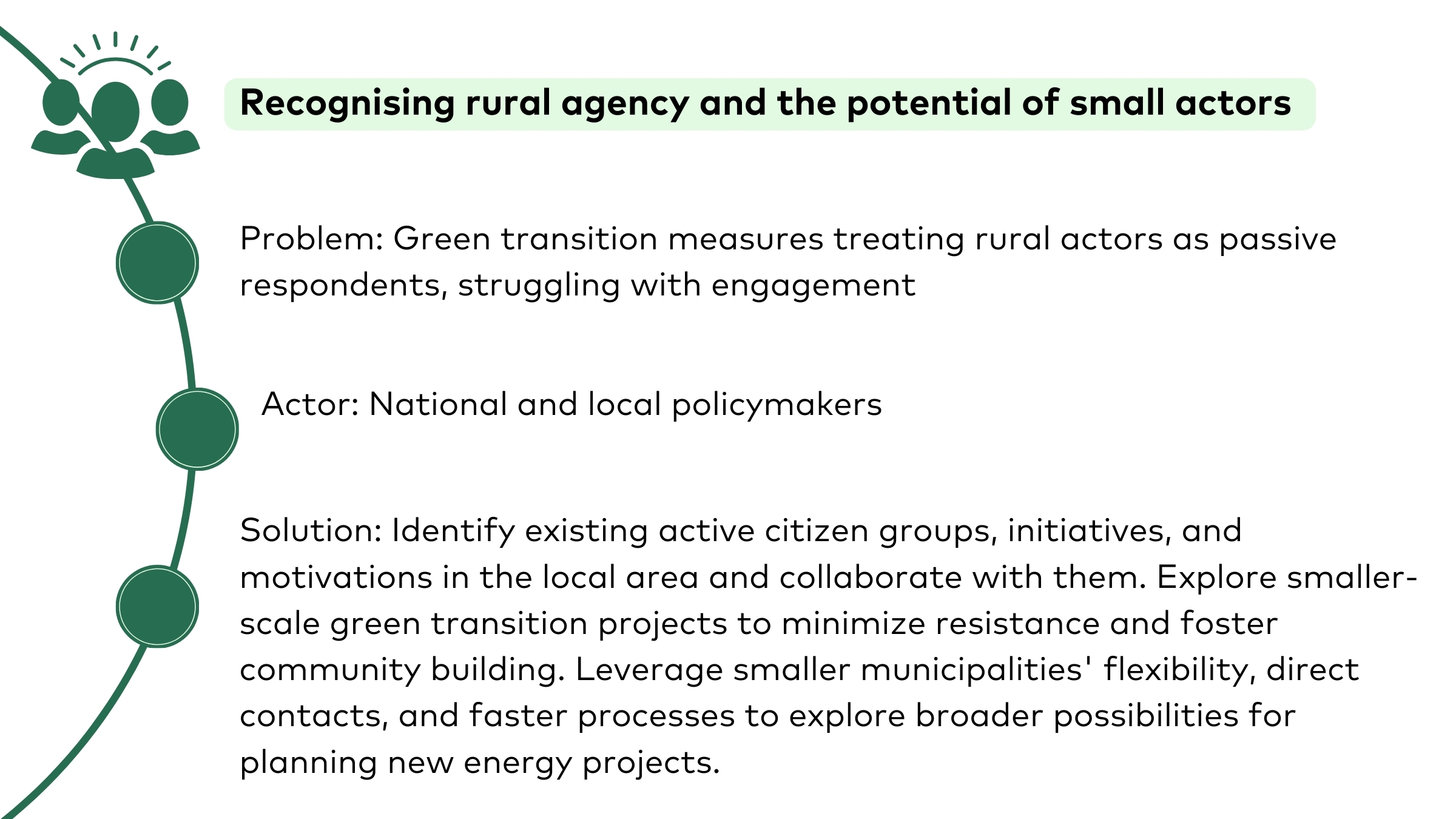
At the initial planning stage, municipal leaders and possible commercial actors interested in the region may begin the engagement and communication process before any agreements have been made. This action engages local communities, landowners and recreational groups but can also reach out to a broader range of active citizens and researchers via online platforms.
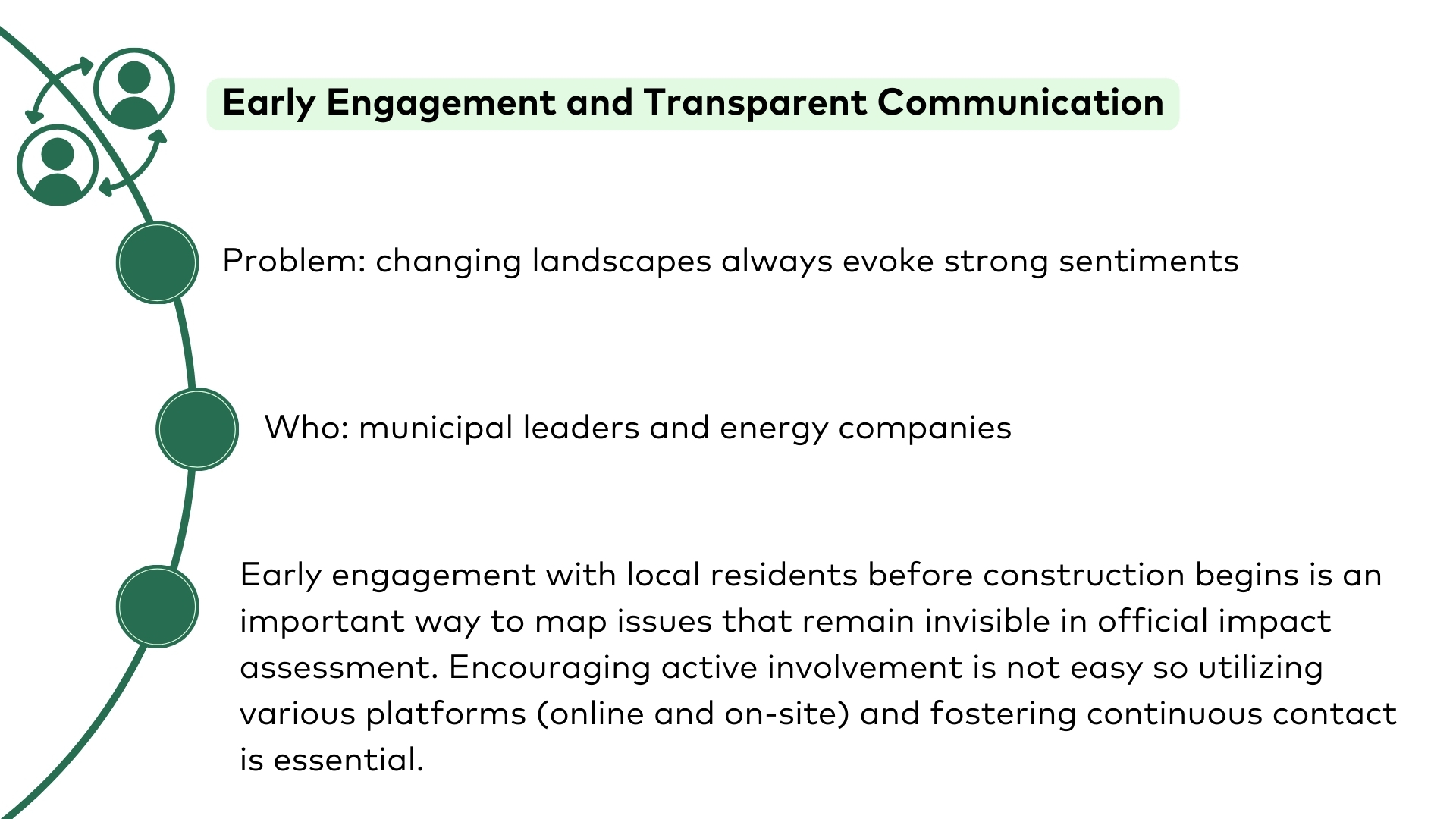
2. Communication process
Once a plan and impact assessments are completed, it is important to communicate it with as realistic visions as possible – both in terms of positive and negative impacts. This action should engage both people living and moving in the broad impact zone of the new project, as well as local businesses.
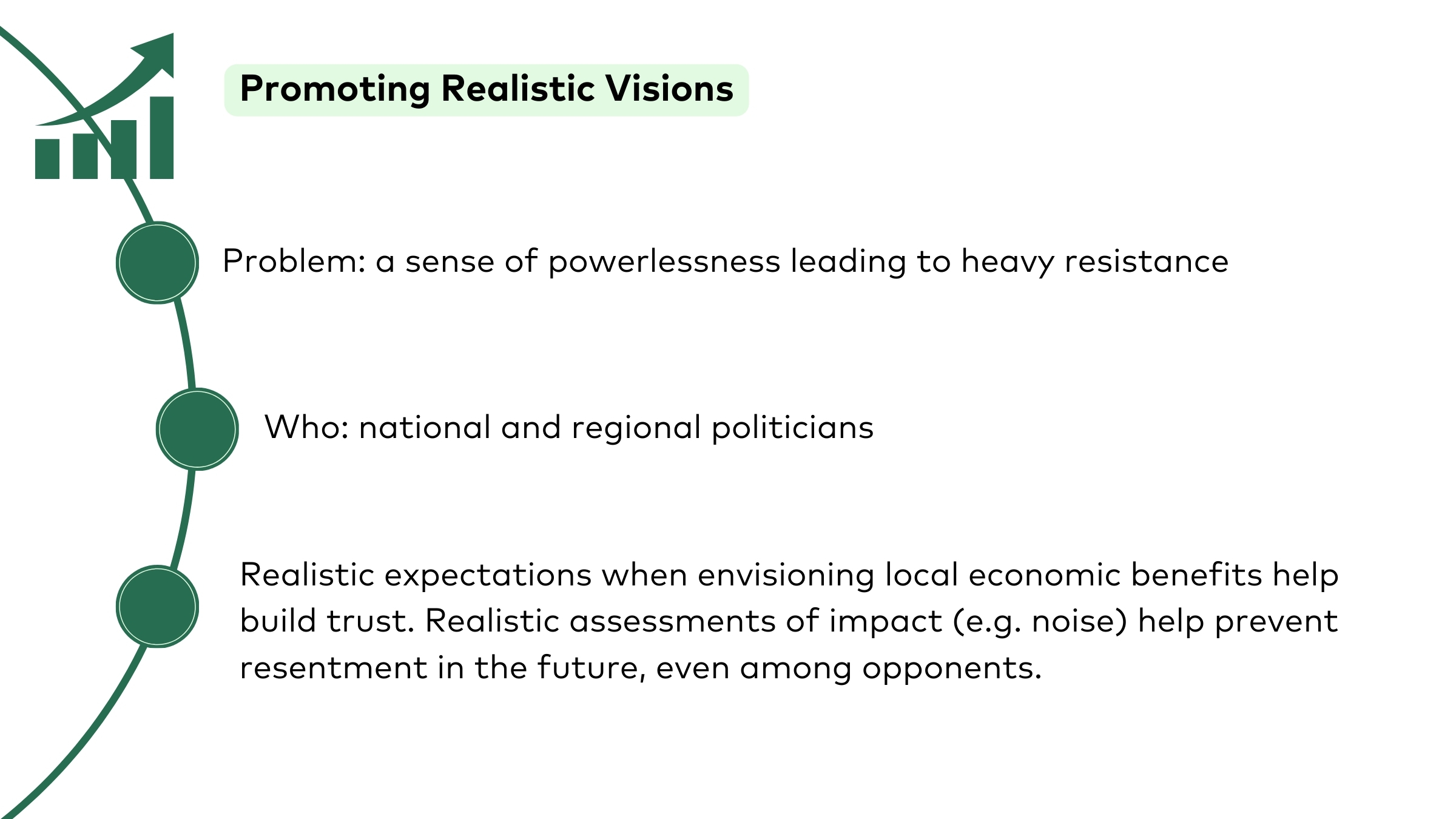
3. Agreement process
Before agreements are drafted between the municipality, landowners and energy companies, municipalities can act as bridge builders between landowners or other municipalities to review agreements and discuss how to consider better the total impact that new energy projects will have on the local community. This action engages especially municipal servants and landowners.
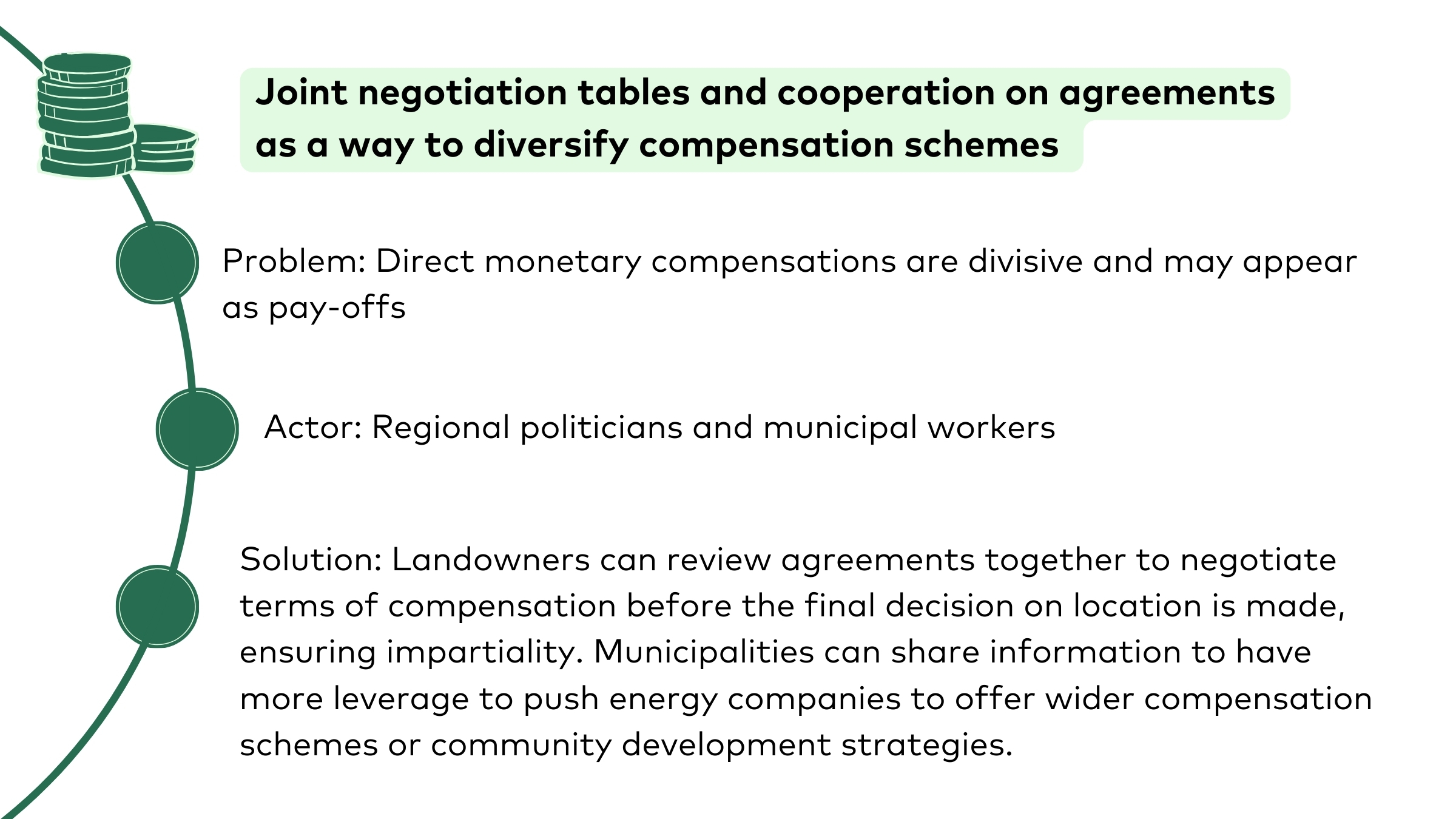
4. Review process after construction
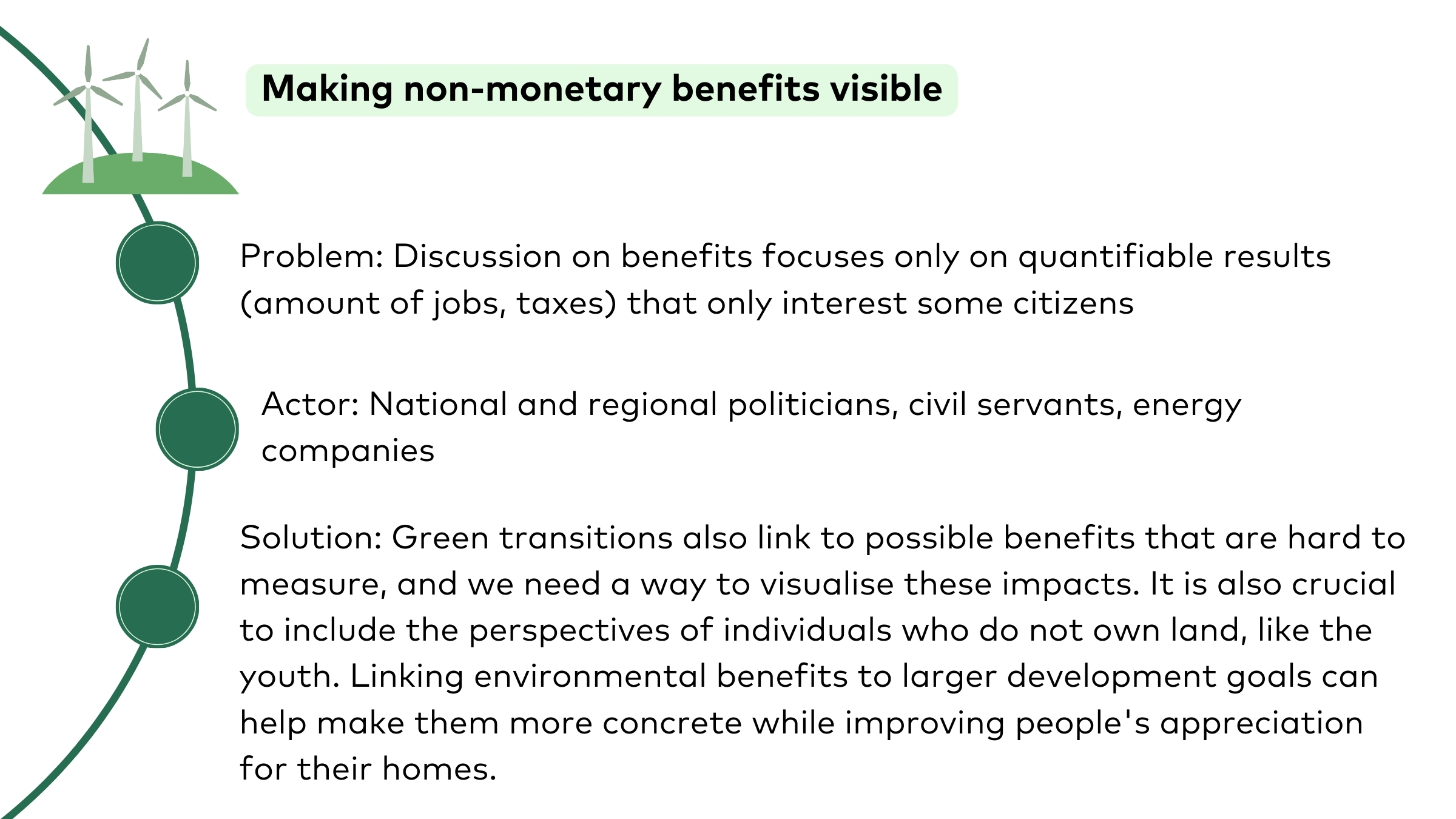
When some time has passed, and it is possible to review how the expected local benefits of the new energy project materialised, researchers and municipal leaders active in this process can think more creatively and inclusively to identify and visualise the range of possible benefits that green transitions may bring to the local community. Aiming for also these benefits may then be better included in the planning processes of the next energy projects. This action engages the whole community living in the region.
5. The whole green transition process
As the Nordic nations aim to discover new ways to accelerate the green transition to meet their climate goals and also support rural development with increasingly place-based approaches, it is essential that national-level politicians stop considering the agency and actions already existing in these regions and not overlook it based on a smaller scale. This action engages all Nordic citizens.