Photos: Louise Ögland/Nordregio, Darya Tryfanava/unsplash.com
4. Findings
The following sections will discuss the eID landscape in the Faroe Islands, Greenland and Åland, including the barriers and solutions for ensuring an inclusive rollout of eID.
4.1 The Faroe Islands
4.1.1 Landscape: Digital strategies and the Faroese eID “Samleikin”
For several years, the Faroe Islands have experienced a digital transformation of society, encompassing both public services and the use of private digital services, such as social media and the digitalisation of businesses. The Faroese digitalisation trajectory has been influenced by several factors: (1) high educational attainment, (2) high trust in the public sector (E-Riigi Akadeemia, 2023), (3) its dispersed island geography, resulting in longer travel times,(4) the peripheral location of the Faroe Islands and (5) its relationship with Denmark, including an increased push towards independence (McBride, 2019). The Faroe Islands have invested in IT and digital infrastructure for decades. Despite having only three underwater cables connecting the Faroe Islands to the rest of the world, most homes have broadband, 4G access and/or 5G access. As a result of this prioritisation of digitalisation, the Faroe Islands are today a highly digitalised society with a digitally mature population (E-Riigi Akadeemia, 2023).
As part of their digital strategy, the Faroe Islands have developed their own state-owned eID and decided against adopting MitID, the current Danish eID. Samleikin (Faroese for “Identity”) is the current national eID of the Faroe Islands, consisting of a Digital Identity and Signature.
In the context of eID, a digital identity is an online version of an individual’s personal information, and a digital signature is an electronic way to sign documents securely.
Samleikin has the assurance level substantial, which is the intermediate level of assurance under eIDAS, allowing for a balance between user convenience and security (Signicat, n.d.-b). Samleikin needs to be renewed every second year, meaning that users must update or revalidate their digital identity credentials (Samleikin, n.d.-b). Samleikin provides access to, among other things, Vangin, a digital self-service portal for citizens to access public services online (as well as Mínboks, a personal digital mailbox, which forms part of Vangin) and to banking services (Vangin, n.d.). Samleikin can be issued to individuals aged 13 and over who are listed in the Faroese population register and have a Faroese registration number, called P-tal. Samleikin can be obtained in the app or at physical help desks in Tórshavn. The documentation required for registration includes personal identification, such as a passport or driver's licence. If an individual does not have a Faroese or Danish ID, their identity must be confirmed by a witness and a meeting with the registration staff is required. The meeting can take place online (Nordic Cooperation, n.d.-a).
Unlike the Danish state-owned eID option, MitID, and its associated digital mailbox service, the Mínboks and Vangin services – and therefore also Samleikin – are not mandatory by law but rather opt-in solutions for citizens. According to interviewees, this was a deliberate decision to ensure that Samleikin would be as inclusive as possible:
Since our task was not only for the public sector, but rather digital infrastructure that needed to be used broadly in society, we realised very early on that we needed to think broadly of all the user groups we would come into contact with. Therefore, from the beginning, we have tried more or less constantly to think of all our user groups, and that’s where the focus on inclusion comes in.
- Interviewee FI01
As a result, Samleikin is available, for example, as an app for smartphones and tablets or as a USB stick for computers. In late 2023, around 44,700 individuals had access to Samleikin out of the approximately 54,500 inhabitants of the Faroe Islands. In terms of the geographical distribution of Samleikin users, the majority are located in the capital region of Tórshavn, with lower user densities in the less densely populated areas. However, the differences are small (Interviewee FI01).
4.1.2 Challenges: Immigration trends, Faroese family structures and geography
This section discusses the specific Faroese features that have posed challenges to the inclusive eID rollout in the Faroe Islands. At the time of conducting the fieldwork for this report, the rollout process of Samleikin was already well advanced. This means that several of the hurdles relevant to an inclusive eID rollout in the Faroe Islands had been addressed prior to our fieldwork. These initiatives will be discussed in greater detail in Section 4.1.3, with a focus on the solutions. The interviewees generally appreciated the efforts made by Talgildu Føroyar to achieve an inclusive rollout of Samleikin. However, some challenges still persisted in ensuring all Faroese residents can access and use Samleikin. During the analysis for this report, it became apparent that the challenges highlighted in the interviews largely related to four main themes: (1) changes in the population due to increased immigration, (2) social control and family structure, (3) socially vulnerable people and (4) people with disabilities.
The Faroe Islands have historically had a predominantly ethnically homogeneous population. However, with expansions in the construction and fishing industries, as well as increases in tourism, immigration has grown, with more than 80 nationalities living in the Faroe Islands today (see e.g. Faingold, 2023). In the period between 2010 and 2023, the proportion of non‐Nordic residents increased from 1.5% to 5.5% (Hayfield, 2024). The top three non-Nordic nationalities are the Philippines, Poland and Thailand (Faroe Islands.fo, 2023). In addition, around 200 Ukrainians refugees have arrived in the Faroe Islands since the beginning of the Russian invasion of Ukraine in February 2022 (Statista, 2025).
Several interviewees identified these groups, particularly those who are not fluent speakers of Faroese, Danish or English, as well as those without a strong social network in the Faroe Islands, as the groups experiencing challenges accessing Samleikin. It was noted by banks that this group was among those seeking help the most (Interviewee FI06) and a representative from Talgildu Føroyar identified this group as one which it would like to support more in the future (Interviewee FI01). Representatives from the Immigration Office in Tórshavn further specified some of the challenges facing immigrants in the Faroe Islands, often related to integration and onboarding to Samleikin. The first challenge identified concerns the structure of the immigration system in the Faroe Islands in relation to Denmark.
Faroese immigration still falls under Danish jurisdiction (The Government of the Faroe Islands, n.d.). The Immigration Office representatives described how this structure could create a sense of being restricted in terms of the initiatives they could undertake (Interviewee FI14). Together with the public perception that immigration to the Faroe Islands is temporary in nature, this hinders the willingness to push for changes for this group:
Sometimes I think that the Faroese people think that this (ed. increased immigration) is only a temporary situation. Our economy has been quite volatile at times and our immigration is connected to unemployment figures. If the unemployment figures go above a certain point (ed. 3.5%), then we must stop foreign workers from coming to the Faroe Islands. We've always had this belief that worse economic times may come and then things will change. But we've had a good economic time for a long period and it really has an impact on society now. I have this feeling that people think that we don't need to make all these efforts because the people will leave again at some point, as it's only a temporary situation. But it turns out it’s not.
- Interviewee FI13
According to the respondents, specific traits of Faroese society challenge integration and hinder the onboarding of immigrants to Samleikin. The first relates to the language skills required in everyday life in the Faroe Islands. As one respondent explained, it is necessary to speak Faroese, Danish and English fluently to be able to study “because Faroese is the language that we communicate in, but our school system is very much geared towards the Danish system and is originally a Danish system, so a lot of our material is in Danish. As you progress to higher education, it’s also in English.” This means that “(…) if they (ed. immigrants) come and do not speak any of the languages that we have here, it’s a really steep learning curve for them to adjust to that” (Interviewee FI13).
Another issue relates to Faroese family structures, which are described as very “tight-knit” (Interviewee FI16) and “Mediterranean/Italian” in nature (Interviewee FI07, FI14). On the one hand, this is described as a benefit, because it means that if a family member struggles with digital issues, family members will come together to offer help. On the other hand, it is noted that immigrants might not have access to the same support networks. In addition, the tight-knit society can also make it difficult to voice complaints and share opinions: “We have very tight-knit family networks and large families. If you're a third cousin, you're still family. But it's a small society and a lot of people know each other and there's a type of social control or a tall poppy syndrome (“Janteloven”)” (Interviewee FI13).
The question of Faroese family structures is also relevant to groups beyond Faroese immigrants. Faroese family structures were a recurring theme in the interviews, with both positive and negative features described in relation to an inclusive Samleikin rollout, especially among socially vulnerable individuals. One interviewee noted, “Those who have problems with digital inclusion may often face other challenges, such as controlling partners or issues of illiteracy or multiple disabilities, meaning that they are already more vulnerable. The digital aspect can increase the control over them. It may not be widespread here, but it’s certainly a danger. Digital exclusion affects those who are already more vulnerable” (Interviewee FI16).
Participants emphasised that people with cognitive and physical disabilities may face challenges with Samleikin and overall digital inclusion. Individuals with visual impairments, dyslexia or low literacy rates have difficulties with reading, creating a need for tools like screen readers. Interviewees also noted that some individuals in the Faroe Islands have multiple disabilities, further emphasising the need for digital aids and inclusive technologies (Interviewee FI16).
The disability sector in the Faroe Islands is considered relatively young, having previously been under Danish administration. It has been established in the Faroe Islands for approximately 50 years (Interviewee FI08; (MEGD, n.d.). However, significant progress has been made in a short time, according to several interviewees, even though there are some aspects left to work on, such as a long-term plan for inclusion of people with disabilities in society. One participant noted, “If you don't have anyone near you who needs support to be digitally included, it's hard for them to understand why it's important” (Interviewee FI16). Interviewees reported that Talgildu Føroyar had actively reached out to disability organisations, asking about the challenges they were facing and showing an interest in solving the problems. Nonetheless, it was noted that some groups of people with disabilities, such as visually impaired people, are able to get through the “first door” by logging into Samleikin. However, when they try navigating it and proceeding further – for example, to read documents – they encounter obstacles and cannot continue (Interviewee FI07).
4.1.3 Solutions: Digital inclusion as a starting point
Digitalisation has been a priority in the Faroe Islands for some time, with increased independence in the digitalisation field perceived as a way of gaining independence in general. Interviewees noted that digitalisation, especially eID, is considered critical infrastructure and is therefore something the Faroese want to be in control of themselves (Interviewee FI04). There has been political support for the creation of a Faroese digitalisation system, which was seen as key to developing it (Interviewee FI11).
Representatives from Talgildu Føroyar explain that one of the successful strategies for a small economy such as the Faroe Islands, when designing their own eID, was to draw inspiration from abroad:
We don’t want to be first movers. We have to see what others have done and try to learn and copy the others as much as possible. We started our strategy by looking at the countries that have done well like Estonia. We closely cooperated with them, adopting their X-road data exchange platform. Estonia has been a great inspiration both in terms of particular solutions but also in terms of digitalisation and decentralisation. Denmark has also been a great inspiration. We constantly look at what others are doing and try to stay updated.
- Interviewee FI03
Accordingly, the Faroese approach was described as learning from others and tailoring the solutions to fit the Faroese context.
As previously mentioned, Talgildu Føroyar states that digital inclusion has been a core feature of digitalisation efforts in the Faroe Islands from the outset. Several approaches have been implemented to achieve this, including allowing online registration even if an individual does not have a Faroese or Danish passport (Nordic Cooperation, n.d.-a), having a physical helpdesk in Tórshavn, providing phone support, holding information evenings for various citizen groups in the Faroe Islands and, in general, continuously striving to improve the usability of Samleikin and make it more inclusive.
Through Samleikin, it has become possible to reach a target group that previously had experienced difficulties with eID, namely sailors. The Faroe Islands is a nation of sailors, with many hundreds of individuals sailing around the world. They can now access Samleikin from anywhere globally, as only an internet connection is required. Previously, under the old eID scheme, they needed a phone connection, which is not always available, especially out at sea (Interviewee FI01).
During the rollout and implementation of Samleikin, significant efforts were made to foster strong cooperation with various actors who could assist user groups in overcoming the challenges they faced. Throughout the implementation of Samleikin, numerous events were organised with civil society organisations, including informative sessions to ensure that they were well-equipped to support their communities. It was noted that Talgildu Føroyar has worked to involve user groups and listen to their feedback. One interviewee remarked: “(Ed. named representative from Talgildu Føroyar) has been like a locomotive! We’ve had many meetings with her!” (Interviewee FI10). Additionally, cooperation with banks proved beneficial, given the substantial impact that financial and banking issues have on people’s daily lives. This collaboration helped streamline the adoption of Samleikin among the general population (Interviewee FI03, FI06).
Several channels provide support with Samleikin, including video calls, phone calls and in-person assistance at the physical service desk located in Tórshavn. Significant effort has been invested in the service desk to ensure that not all guidance is digital. This approach has received positive feedback, as it allows users to receive assistance not only through digital means but also from a person they can reach out to and discuss their concerns with (Interviewee FI05).
Representatives from Talgildu Føroyar recognised that not all people will be able to or want to use Samleikin and that people who are in the digital gap need different solutions. As noted above, use of Samleikin is not mandatory. In 2015, when developing the new digitalisation agenda for the Faroe Islands, the goal was set to include everyone who wanted to be part of the digitalisation process, with participation being voluntary (Interviewee FI02, FI03, FI04). The aim is to make the digital solutions, including Samleikin, as effective and user-friendly as possible so that people will voluntarily join. However, it is recognised that some groups lack strong digitalisation skills or do not want to engage with it and therefore need other solutions or analogue services. For this reason, the old solutions have been maintained (Interviewee FI01).
In the Faroe Islands, Power of Attorney (POA)
Power Of Attorney is a legal document that grants one person the authority to act on behalf of another person in legal or financial matters.
Efforts to ensure that everyone who wants access to Samleikin can obtain it are ongoing. One strategy involves exploring how municipalities can play a more significant role in the implementation of Samleikin. The plan is to use Denmark's citizen service centre (Borgerservice), where citizens can receive assistance with eID issues, as a model. Work is underway to determine how a similar approach could be adopted in the Faroe Islands, potentially giving municipalities a greater role in providing support and assistance to those who are unfamiliar with accessing or using Samleikin (Interviewee FI05). With regard to the digitalisation process, interviewees highlighted the need for a continued focus on web accessibility, especially for online public services.
4.2 Greenland
4.2.1 Landscape: Relationship with Denmark and adoption of MitID
Greenland adopted the Danish eID solution, MitID, in 2021, when it was announced that the previous eID in Denmark, NemID, would be replaced with MitID.
MitID was introduced as a more secure eID solution. MitID is owned by a partnership between the Danish state and the banks.
The Danish Agency for Digital Government is responsible for implementing MitID in Greenland
The Greenlandic Agency for Digitisation is not responsible for and cannot issue MitID. It only plays an intermediary role and provides information about the requirements.
To specify, the Greenlandic municipalities are responsible for issuing and maintaining MitID in Greenland according to the ”Lov om MitID og NemLog-in” (§5 & stk. 2)
The responsibility is 100% Denmark's. We’ve spent resources on this project, but it’s entirely Denmark's responsibility to ensure its implementation in Greenland. However, we were interested in implementing MitID in Greenland because the key to all our public services, NemID, was shutting down. But strictly speaking, we don't have responsibility.
- Interviewee G19
The banks in Greenland have also played a significant role in the implementation of MitID, with Grønlandsbanken assuming substantial responsibility. At the beginning of the MitID rollout process in Greenland, Grønlandsbanken was one of the first and, for a while, the only institution where MitID could be issued. Still, to this day, citizens can visit their bank to obtain information regarding MitID and refer to citizen services and the municipality for further guidance (Interviewee G03, G15).
Since the migration to MitID started in 2021, it has been possible to use the old eID (NemID) for some services. However, sullissivik.gl discontinued this option on 31 January 2023, with only digital solutions using MitID available on the site since then. NemID was fully removed from use on 31 October 2023 (Sullissivik, n.d.).
The proportion of MitID users today is relatively high, as per January 2025, 87.4% (in total 39,551 people) of the Greenlandic population over the age of 15 had an active MitID, and approximately 84.89% (in total 39,600 people) over the age of 13 residing in Greenland had a MitID.
While MitID is not mandatory in Greenland or Denmark, Public Digital Mail (Offentlig Digital Post) is. Public Digital Mail can be read through e-Boks, a digital letter box to which communications from the public sector are delivered. MitID is needed to access e-Boks. However, individuals can be exempted from use of e-Boks if they provide a valid reason (Interviewee G01, Digitaliseringsstyrelsen, n.d.). MitID is also the key for all digital services provided by the public administration through sullissivik.gl. Greenlanders who cannot or do not want to use the eID solution can access the respective services in person at their banks or the municipality. The age limit to obtain MitID is 13 years. It is possible to acquire MitID via the MitID app if the individual has a passport and a smartphone. If the individual does not have a passport (from e.g. Greenland, Denmark or the Faroe Islands with a CPR number, the Danish civil registration number), they can obtain MitID at a citizen service centre or village office. In this case, they will need to provide other valid identification, meaning either a photo ID or two forms of identification without a photo (Skattestyrelsen, n.d.).
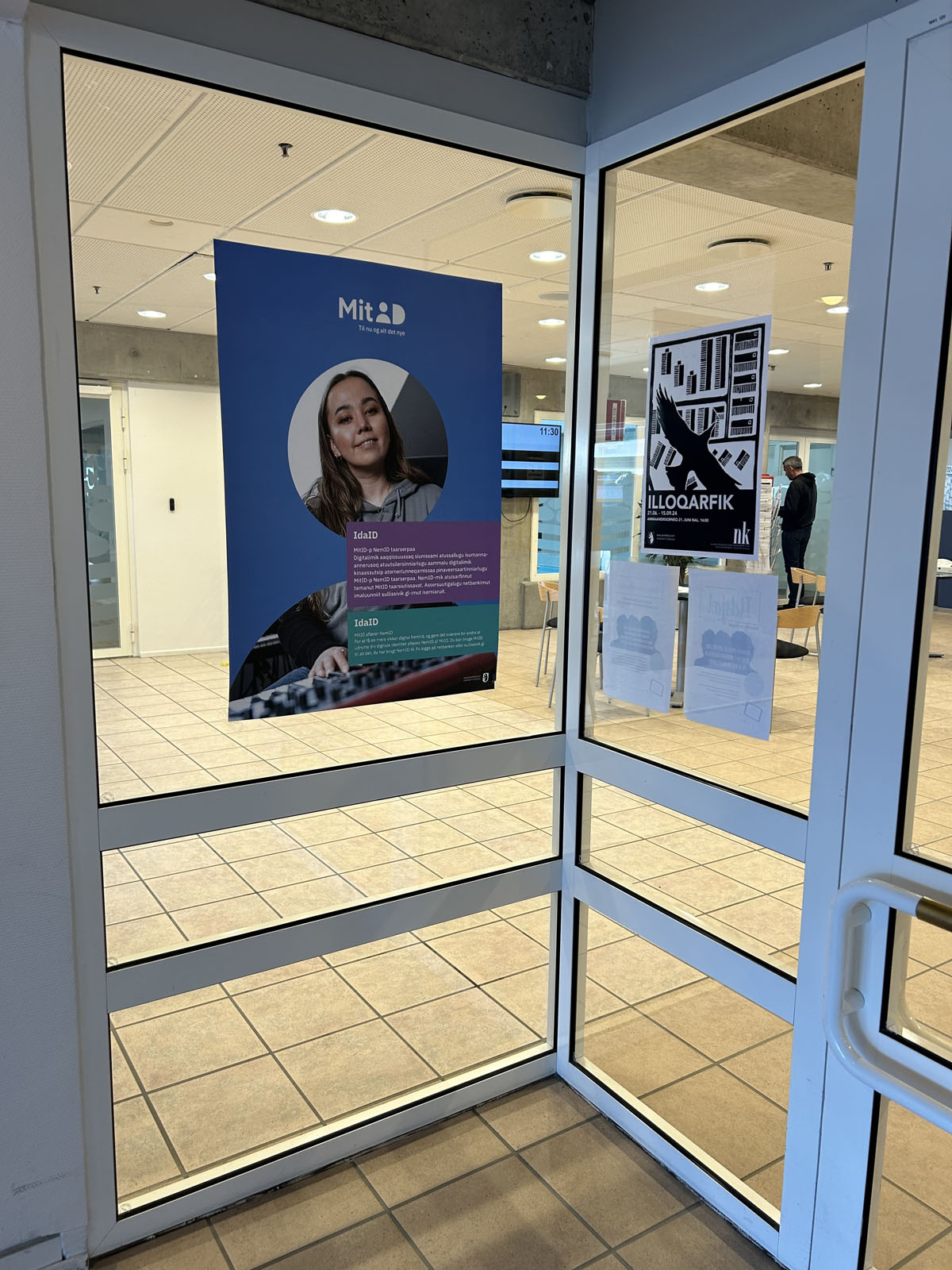
Photo: Sigrid Jessen
4.2.2 Challenges: Copy-pasting of Danish solutions into a Greenlandic context
This section discusses the challenges of an inclusive eID rollout in Greenland. At the time of conducting the fieldwork for this report, the rollout process for MitID was still ongoing. As a result, some of the obstacles had been recognised but not yet addressed by the time of our fieldwork.
While the majority of the eligible Greenlandic population today is using MitID, the implementation process has not been without challenges, especially for socioeconomically disadvantaged groups and those with limited digital capabilities. A recurring theme in the interviews was the perception that MitID, as a Danish solution, was being copy-pasted into a Greenlandic context without adjustments (Interviewee G02, G04, G19). Some of the main features of Greenlandic society causing issues with respect to the implementation of the Danish MitID concerned connectivity and digital capabilities, languages, access to physical help and a lack of coordination between Greenland and Denmark, as well as internally in Greenland between key actors.
One key challenge hindering eID implementation and usage in Greenland relates to connectivity issues. Especially in northern Greenland and eastern Greenland, digital connectivity tends to be unstable and unreliable, while high costs impact the entire society. The sea cable “Greenland Connect”(Tusass, n.d.) provides most of the west coast with reliable digital connectivity, but other areas still rely on satellite services (G06) (Tusass, 2024).
Please see the Tusass annual report from 2023 for more information about connectivity in Greenland.
The fieldwork showed that the expensive internet and bad coverage impact everyone. However, homeless individuals, older adults, people with disabilities and residents of areas outside of Nuuk might encounter additional challenges due to factors including a lack of funds, technologies and skills or greater reliance on digital services (G07, G05, G11). Interviewees described people standing outside the library in Nuuk in the evenings, on days when it is closed and even in snowstorms, since the library is one of the few places in Nuuk where the internet can be accessed free of charge (G03, G08, G16). This was further illustrated by the description of a man in a wheelchair sitting in snow drifts outside of the library’s opening hours to access Wi-Fi (Interviewee G08), underlining the scarcity of the resource “accessible internet” in Greenland.
The lack of reliable and affordable internet connectivity can be seen as a central factor in a downward spiral of digital exclusion, with limited access also making it more difficult to acquire digital skills and literacy (“digital dannelse”). This affects the ability of some population groups to use eID and associated services meaningfully to exercise their citizen rights. One participant stressed that the connectivity issue also impacts municipalities’ ability to issue MitID (Interviewee G04).
Another challenge relates to the lack of availability of MitID in Greenlandic. Greenland's Self-Government Act and the Greenlandic Language Act stipulate that Greenlandic is the official language of Greenland. As a result, the Danish authorities must ensure that they exercise their authority in Greenland in the official language. However, for a long period, MitID was only available in Danish and English. Interviewees stated that the translation of the login site began in early 2024, with the translation process continuing (Interviewee G01, G04 & G19). About half of the Greenlandic population neither speaks nor writes Danish.
Note that these numbers are estimates and there are uncertainties associated with the exact numbers.
As noted above, respondents stated that MitID had not been tailored to the Greenlandic context. To acquire MitID, valid identification documents are needed, such as a passport, ID card or a combination of identification documents. Interviewees noted that not all people in Greenland have valid identification documents, as they are either perceived as unnecessary or too expensive to acquire. It was also noted that there was a lack of understanding among some residents regarding what an eID is and why it is needed. At the time of implementing MitID, the question “why do you need an eID in a society where everybody knows everybody”? arose many times. One interviewee recounted their experience of receiving the comment: “You’re my former pupil and the lifelong friend of my daughter, you know me. Why do you need my documents to approve my identity?” (Interviewee G04).
Greenland is divided into five municipalities. A large proportion of the population resides in the municipality Sermersooq, which includes the capital, Nuuk. In Greenland, municipalities can issue MitID. To do so and to assist citizens with MitID, municipalities must first become a Registration Authority (RA). This process requires municipalities to submit an audit statement for approval by the MitID supplier. Every entity authorised as an RA to issue MitID (including both municipalities and banks) must also submit a MitID declaration for auditor approval every year – a process that is considered relatively extensive. In mid-2022, the first municipality was approved to issue MitID, followed by others.
Timeline when the municipalities could begin issuing MitID:
Sermersooq Municipality: summer of 2022
Qeqqata Municipality: January 2023
Avannaata Municipality: March 2023
Kujalleq Municipality: April 2023
Qeqertalik Municipality: April 2025
Sermersooq Municipality: summer of 2022
Qeqqata Municipality: January 2023
Avannaata Municipality: March 2023
Kujalleq Municipality: April 2023
Qeqertalik Municipality: April 2025
Several factors contributed to this delay and ongoing challenges in obtaining RA approval, including an incomplete legal framework, as certain sections had not been enacted, a lack of skills and capacity across municipalities and a high turnover rate of employees. Additionally, connectivity issues impeded the ability to follow courses required for the approval process, as videos often had to be restarted or lagged, resulting in them being marked as incomplete. In 2022, some of the training materials were translated to Greenlandic, and the rest of the training material has been translated to Greenlandic since August 2024.
In addition, an interpreter has been used during seminars since December 2023 and for trainings since 2024.
Distances are vast in Greenland, meaning that individuals who need assistance with acquiring or using eID may have to travel long distances to reach their nearest municipality citizen service office (Borgerservice). In section 4.2.3, a solution to overcome this challenge is discussed. One participant shared stories of individuals sailing in dinghies along the western coast for several hours to receive help from a citizen service allowed to issue MitID or travelling as far as 400 km to obtain help (Interviewee G04; (Berthelsen, 2022). Although a help phone line is available, it is located in Denmark and operates with a three-to-four-hour time difference.
The usual time difference between Nuuk and Copenhagen is three hours. However, differences in the timing of the Daylight Saving Time transitions can extend this to four hours.
Greenland faces socioeconomic challenges, including increasing homelessness and adverse circumstances for people with disabilities and older adults. It is estimated that approximately 1% of the Greenlandic population is homeless (Interviewee G07, (Christensen et al., 2024). A previous report reveals that some individuals with disabilities are placed in residential facilities or institutions, sometimes far from their home region. This is partly due to a lack of highly specialised services and difficulties in obtaining adequate support, especially in smaller towns and settlements (Gaardsted Frandsen et al., 2019).Participants noted that, unless purchased separately, there is no internet access in disability institutions and elderly homes and there is only limited free internet in shelters. The high cost of the internet, limited access to devices and the need for a computer to access all information, such as debt details, exacerbate these issues (Interviewee G07, G09, G11).
One critical problem is not just the number of MitID users but also the extent to which it is used. There have been instances of people being evicted from their homes because they missed important information in their digital post due to a lack of internet access. The one place in Nuuk that always offers free Wi-Fi is the public library. Respondents noted that citizens seeking help are often sent from one place to another – such as the bank, citizen service or library – without clear guidance on where to obtain assistance (G11. G18). This causes deep frustration, especially in cases where the library is not permitted to help due to privacy concerns (the library is not always able to help users as they cannot handle sensitive personal information). It was reported that, in some cases, librarians wear alarms on their bodies and alarms are installed under tables, with security personnel conducting hourly patrols to ensure safety (Interviewee G08).
One concern involves the ability to identify misinformation and scams, particularly on social media platforms like Facebook. Facebook serves as a primary information source for many individuals and is frequently used by public authorities to disseminate information to the public (Interviewee G16). However, it is also a channel through which rumours, community news and disinformation etc. can be spread. Interviewees note that fake news and conspiracy theories are increasing in Greenland and scams are becoming more widespread. Additionally, there is a pervasive feeling of insecurity regarding state ownership of personal data, with many people subscribing to related conspiracies. One participant noted, “It’s more than you would assume – I was surprised by just how many felt this way” (Interviewee G04). Despite these challenges, few courses are being held to improve digital skills and knowledge or to provide information about MitID.
The legal implementation of MitID falls under Danish jurisdiction by virtue of a “royal decree” (Digitaliseringsstyrelsen, 2021; Naalakkersuisut, 2021, 2022). There is a prevailing sense of frustration among Greenlandic agencies towards the Danish Agency for Digital Government regarding the MitID efforts in Greenland, with interviewees expressing feelings of neglect and a lack of understanding of the Greenlandic context and warnings about foreseeable issues (Interviewee G19). The Danish Agency for Digital Government made its first visit to Greenland in September 2024 (the implications of the in-person visits are further discussed in Section 4.2.3 below). On the other hand, Danish agencies also expressed their concerns about the lack of communication with stakeholders in Greenland, citing issues such as contact persons changing without notification and lengthy processes. This lack of clarity regarding responsibility and ownership of MitID issues has had tangible impacts, with reports of the bank Grønlandsbanken experiencing employee burnout and the citizen service office in Nuuk losing several employees during the migration from NemID to MitID due to the intense workload and limited assistance (Interviewee G04, G15).
One respondent shared their experiences: “Overall, I think communication has been really difficult. We all spoke Danish, but it felt like we were speaking different languages. Despite various attempts and different people trying to explain to the Danish Agency for Digital Government their responsibility, it remained a challenge. We involved our legal expert and the chief legal officer to explain the connection between the Self-Government Act and the royal decree on MitID, which finally created understanding at the Danish Agency for Digital Government of their responsibility in relation to MitID. Once this understanding was in place, the conversation and the process changed completely and I wish it had happened sooner for a smoother process” (Interviewee G19).
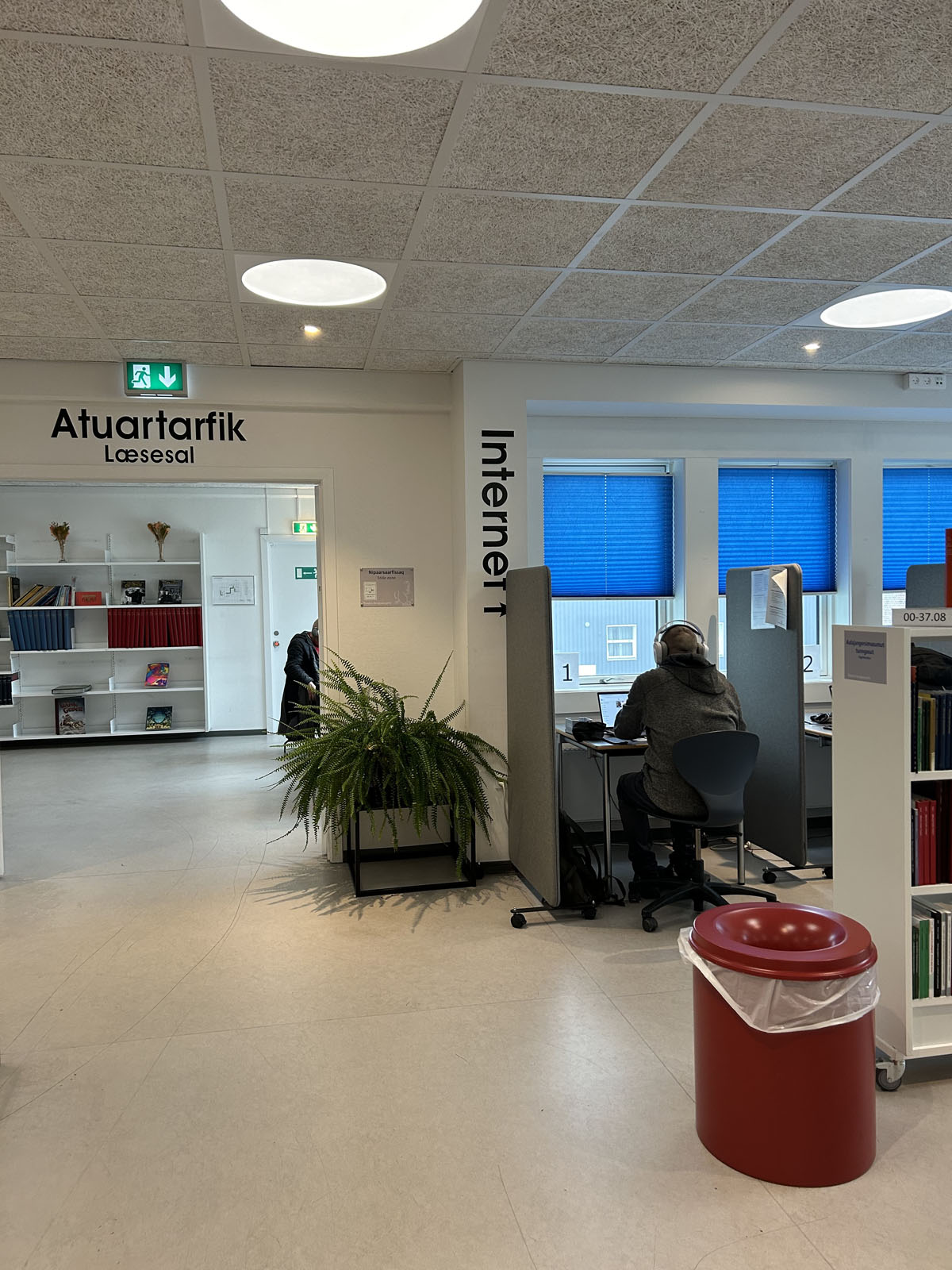
Photo: Sigrid Jessen
4.2.3 Solutions: Collaboration in Greenland and between Denmark and Greenland
Challenges to the widespread implementation and usage of MitID persist, yet efforts to overcome them exists. As noted above, the login process for MitID is now available in the Greenlandic language and work is underway to translate the entire eID and the related website and app. One measure taken to address the immediate language challenges, to ensure that all residents understand MitID, was the creation of a picture guide. The guide explains what MitID is, how to use it and where and how to obtain it (Interviewee G19). In the discussion on future solutions, translation work emerges as a recurring theme. Efforts to translate the MitID website, including the guidance materials, are currently underway.
As of April 2025, parts of the website MitID.dk where guidance on MitID can be found are translated.
In the initial phase of implementing MitID in Greenland, raising awareness of the migration from NemID to MitID was a priority. Making citizens aware about MitID in Greenland has been a multifaceted effort, with several campaigns launched by the Greenlandic Agency for Digitisation. These campaigns have been disseminated through various channels, including television, radio, social media, pamphlets and posters sent to all municipalities. Radio and television were seen as particularly effective, as these media channels remain very popular in Greenland. Social media has also been used, especially in larger settlements, while television and radio are more effective in smaller and rural settlements. This diverse approach has proven beneficial as the migration to MitID continues. Most of the campaign materials are available in both Greenlandic and Danish. The audio content is always in Greenlandic, with campaign films featuring Danish subtitles. Posters are bilingual and pamphlets are in Greenlandic. All campaign materials direct citizens to the citizen portal, sullissivik.gl, where more information is available about MitID (Interviewee G19).
Accessing reliable internet at a reasonable price remains a challenge in the rural and remote areas of Greenland, which currently rely primarily on satellite services (Interviewee G06). Respondents noted that some, but not all libraries across Greenland offer free Wi-Fi. The library in Nuuk offers free internet to all visitors, available around the clock, every day of the week. One respondent stressed that the cornerstone of libraries is their openness to all, commenting: “All library services should be free for everyone, that’s why our internet is free as well” (Interviewee G08). Librarians can also support visitors by means of “self-help”, teaching and guiding them on how to handle digital issues themselves. However, participants emphasised the need for IT courses and support sessions. These sessions could cover navigating the internet, source criticism and using MitID and other e-services. For example, the possibility for support sessions held by the national library in Nuuk in collaboration with the municipality is being explored, aimed at assisting less digitally proficient residents. One such initiative could be MitID evenings, which individuals could attend to ask questions and receive more information about MitID and related services (Interviewee G04).
Starting in September 2024, more regular visits from Denmark to Greenland are planned. As one representative noted, “It has become clear in the current budget (finansloven) that there will be a fixed allocation for employees from our agency to visit and assist the Greenlandic authorities managing the solution. So far, visits have been at the management level, but it looks like they will also occur at the employee level” (Interviewee G01). These visits are described as crucial in order to fully understand the Greenlandic context, experience the connectivity issues firsthand, grasp the vast distances and hear the insights of the people involved in implementing MitID on the ground (Interviewee G01, G19).
In the Greenlandic context, the ability to physically visit a citizen service office is considered crucial, as it enables individuals to receive assistance from staff authorised to issue MitID and provide guidance on its use. Participants emphasised that Greenland's vast territory often means that long journeys are necessary to access help. To address this challenge, village workers (bygdemedarbejdere) now provide local support.
The so-called “Lokal medarbejderløsning” has been developed specifically for Greenland. Through this solution, a local employee employed at the municipality can help issuing and maintaining MitID. The employee helps verify the individual’s identity by contacting the local citizen service centre, where a Resource Authority (RA) staff member completes the process. This approach is made possible by the small society and close-knit nature of Greenlandic communities, where it can reasonably be assumed that the local employee knows the citizen personally.
Today, it’s possible for a village worker to issue MitID to a resident in a remote village. That’s quite significant because there isn’t always internet access and the nearest municipal citizen service can be very far away. It’s been very challenging to implement, but we’ve managed to get it up and running in compliance with our legislation. The question remains whether it meets EU standards.
- Interviewee G01
The banks’ involvement in the implementation phase of MitID was deemed essential, as they may have branches in towns that are otherwise far from a citizen service office (Interviewee G03). "When people come into the bank because of encountering a challenge with MitID, we can help them. Those who are authorised to issue MitID use their training to do so. Then, we go through the process together with the customer, ensuring they understand how to use it," explained one interviewee (Interviewee G15). Now that more citizen centres are able to issue MitID and the village worker solution is in place, more places to access physical help are available. However, more locations and support are still needed (G04, G15). Additionally, maintaining analogue services is considered important for individuals who face challenges with digital connectivity, lack digital literacy or simply prefer not to engage with digital solutions.
4.3 Åland
4.3.1 Landscape: Navigating digital identity and private eID solutions in Åland
Åland, an autonomous Swedish-speaking region of Finland, currently does not have a state-owned eID scheme. Finland is engaged in discussions on the development of an eIDAS-approved eID scheme and an eID law, but, to the best of the authors’ knowledge, it is not yet in place.
Note that the eID landscape in Finland currently also consists of a variety of actors issuing eID. In Finland, electronic identification methods include the state-issued FINEID card, BankID, operated by financial associations, and MobileID, endorsed by telecom operators. A 2020 survey by the Ministry of Finance found that 90% of respondents used BankID, 8% used MobileID and fewer than 2% used FINEID, with BankID's popularity attributed to its ease of use on both smartphones and computers without the need for a separate card reader (Kemppainen et al., 2023).
The Ålandic Government and the Digitalisation Unit are observing Finland’s progress and approach to developing its state eID and the eID law. It is important to note that legislative authority in relation to electronic identity lies with Finland (Lagen om stark autentisering och betrodda elektroniska tjänster (617/2009)) (Finlex, 2009). Therefore, it is not possible for Åland to enact its own legislation in this area. Instead, the role of the Ålandic Government and the Digitalisation Unit is to monitor developments and assess how Finland's solution can be implemented within the framework of Åland's autonomy (Interviewee Å02 & Å03).
The eID landscape in Åland primarily consists of private eID vendors, with banks issuing eID apps
For example, banks such as Nordea, Danske Bank, Ålandsbanken, S-Banken, Andelsbanken, Sparbanken, POP Banken, Aktia and Oma Säästöpankki Oyj.
Alongside the banks, other important actors and stakeholders in the eID landscape include the Ålandic Government and the Digitalisation Unit. These entities are responsible for setting the digital agenda for Åland and liaising with Finland and the counterpart of the Digitalisation Unit, the Finnish Digital and Population Data Services Agency. They engage in discussions about the potential state eID and the digital systems implemented in both mainland Finland and Åland.
To the best of the authors' knowledge, no official statistics exist on the number or percentage of people who have access to and use eIDs. While banks should have data on the number of customers with their eID apps, there are no official user statistics. For public services, there should be data on the number of people using eIDs to access various services, but it is unclear if these data exist specifically for Åland or only for Finland as a whole (Interviewees Å02 & Å04). Interviewees indicated that it is likely that many Ålanders have eIDs, but do not use them frequently (Interviewees Å01).
Access to fast and reliable internet is a prerequisite for using any eID solution. The infrastructural conditions in Åland are very good, with a high level of coverage for fast fixed broadband and mobile networks. A variety of providers distribute different types of ICT services and connectivity to the public, businesses and the public sector (Bärkraft, 2018). In Åland, 96% of households have access to fixed broadband coverage with speeds of at least 100 Mbit/s, while 76% of households have access to mobile network coverage for 4G at 100 Mbit/s and 52% to 5G coverage at the same speed (data from December 2021 and 2024 for 5G, the latter provided by Traficom) (Laurell, 2022).
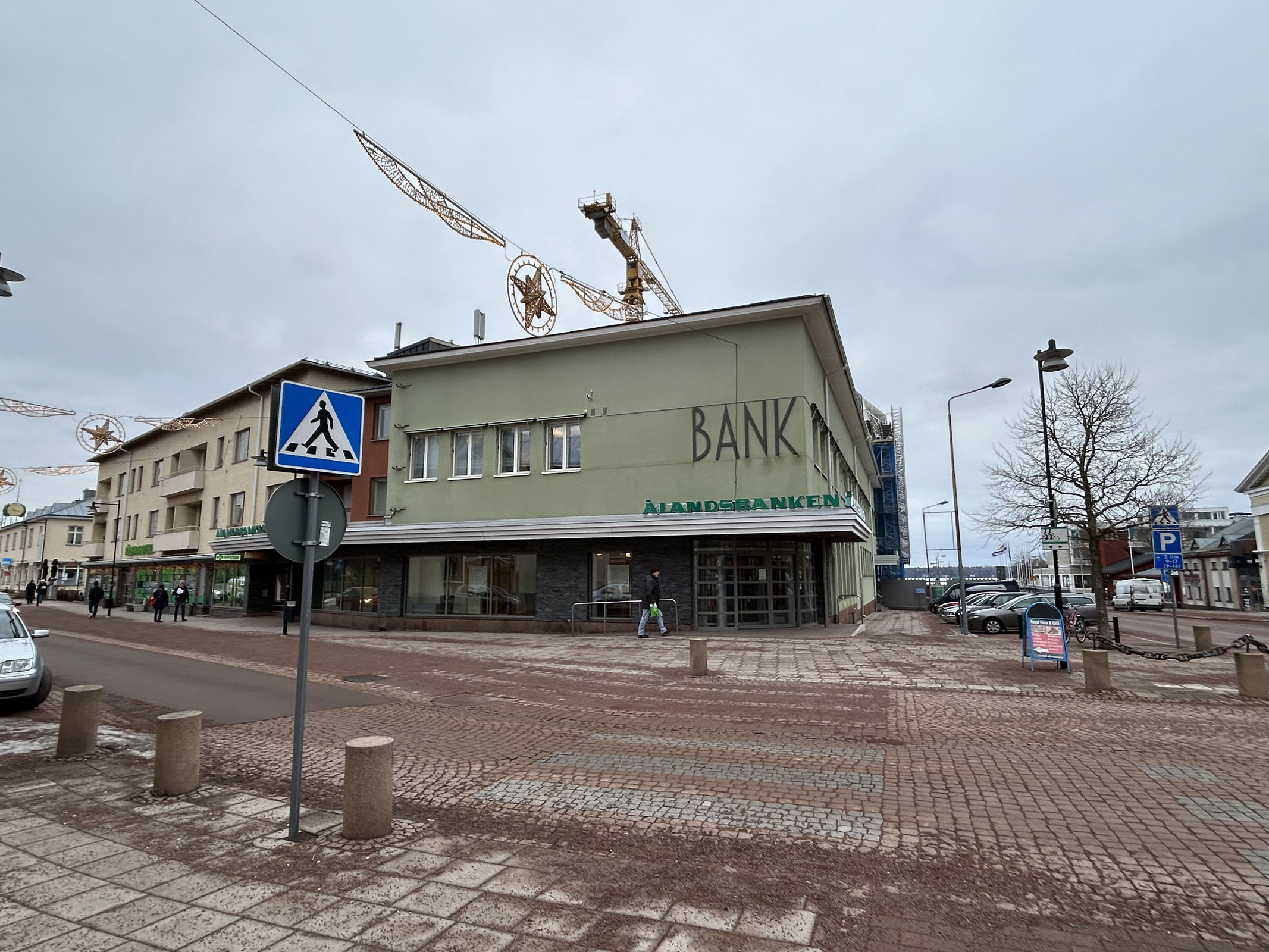
Photo: Sigrid Jessen
4.3.2 Challenges: “Digital debt” and pros and cons of a small community
During the fieldwork in Åland, several challenges were identified, including structural issues and specific groups facing difficulties with eID and overall digital exclusion.
It is important to note that not everyone within these groups faces challenges. However, these groups were highlighted as being more likely to experience difficulties. Additionally, these groups are not homogenous and may have diverse experiences and needs.
To obtain this “personbeteckning”, the individual must be registered in Finland's Population Information System, which can occur at birth, upon receiving a residence permit or by registering as a foreign citizen moving to Finland.
For older individuals, common challenges include a lack of necessary devices, such as more recent smartphone models, which are required to access and use eID. The need for newer, expensive smartphone models goes against the habit of using older devices handed down by children, as described by several interviewees. Additionally, participants reported that some older adults are uninterested in adopting digital solutions like eID due to habit and a reluctance to change. In the literature, this attitude has been connected to mistrust and a fear of scams in the digital sphere (see e.g. (Ezeudoka & Fan, 2024). One interviewee explained: “Feeling that you have control over the login process is important. With eID, I don’t feel like I have that control” (Interviewee Å01). Furthermore, elderly people may lack digital skills, as highlighted in a 2020 survey on internet use among Ålanders. The survey shows a generational divide and a risk of digital exclusion, with internet access and usage being significantly lower among those aged 75 and over than in the overall population (Viktorsson, 2020).
Young people also face challenges related to eID and may be at risk of digital exclusion, despite growing up with a range of digital tools. Different banks impose varying age restrictions for opening a bank account with a connected eID. Additionally, some young people may lack bureaucratic knowledge and understanding of public systems, making it difficult to navigate the digital public sector or understand the language used (Interviewee Å01 & Å05).
Socially vulnerable people may not have access to eID due to certain conditions and requirements. These challenges are connected to a lack of economic resources, such as the cost of being an active banking customer, obtaining a passport or maintaining a broadband network and digital devices at home. Additionally, a lack of digital skills and fear of using digital solutions can prevent these individuals from obtaining or using eID (Interviewee Å06 & Å07).
Similarly, people with disabilities may experience difficulties in both accessing and using eID solutions. eID systems often require physical actions, such as typing or swiping, which can be challenging for individuals with motor impairments. Visual or auditory disabilities can limit the ability to navigate digital interfaces or understand prompts and instructions. Accessibility features are not always adequately integrated into eID platforms, making it difficult for people with disabilities to use these systems independently and effectively (Interviewee Å10). Foreigners face additional challenges connected to eID, particularly those who do not have an Ålandic or Finnish passport or identity number, which are required for eID registration with the bank. Moreover, foreigners with limited English skills may struggle with the eID process (Interviewee Å02, Å03, Å11).
The consequences of digital exclusion in the Ålandic context include missing out on important information, being excluded from certain services provided by authorities, not receiving updates in health and financial matters and the risk of further social exclusion (Interviewees Å04, Å06, Å07, Å10). One interviewee noted, “There will always be a group of people who are not digitalised. This is due to various reasons. Inevitably, there will be a category of people who are left out. So, societal planning must also take into account that not everyone will be able to participate in the digital world” (Interviewee Å01).
Libraries in Åland play an important role in improving digital literacy and skills among the population (discussed in more detail under Section 4.3.3). However, a challenge arises: sensitive matters such as banking-related questions and eID logins cannot be handled by library staff due to policies and regulations. One interviewee expressed this concern, noting,
If we go back maybe two or three years, we had a lot of people coming here to do their banking and asking for help with logins, eID and such. We can't help with that because these are sensitive matters. We have a policy on handling digital matters, which means the person must do it themselves while we stand behind and instruct. The staff feels quite uncomfortable when it involves money or handling social benefits or applying for residence permits, because these are sensitive questions
- Interviewee Å11
The fieldwork revealed a number of common challenges connected to eID rollout and usage among the population. However, larger societal challenges were also noted. The notion of “digital debt” was raised in several interviews, described as Åland lagging behind in digitalisation and needing to catch up regarding technological advancements, digital systems and digital literacy among the population (Interviewees Å01, Å03, Å06 & Å11). One interviewee explained, “I have a perception that we have a digital debt in Åland that needs to be paid off. We are behind other regions when it comes to digitalisation. That includes not only having the infrastructure in place, but also digital processes and digital behaviour. I perceive that digital maturity is low here” (Interviewee Å08).
Digital maturity
In this context, digital maturity refers to the extent to which individuals and institutions effectively use digital technologies and tools to enhance their daily activities, services and overall quality of life. It encompasses factors such as digital literacy, access to technology and the integration of digital solutions in various sectors like education, healthcare and governance.
The pros and cons of being a small community are evident in Åland. While the close-knit nature of the community can facilitate communication and support, it also means that resources and expertise are limited. In such a small society, people tend to know each other well, which fosters a sense of familiarity and trust. The small society means that communication channels to stakeholders or decision makers are short, making it possible to gather almost all the important stakeholders for a given topic in the same room (Interviewee Å02 & Å09). According to one participant, Åland's small size is advantageous, making it an ideal test bed for new initiatives due to its manageable size and quick communication channels. This flexibility and agility facilitate the implementation of new systems, digital solutions or policies (Interviewee Å04). However, in small communities like Åland, social control and a lack of anonymity can also hinder people from voicing their complaints in fear of stigmatisation. This leads to a form of social self-censorship, with potentially controversial topics not being discussed beyond familiar circles of trusted individuals. Despite the accessibility of local policymakers, there is a siloed atmosphere, where group-specific challenges are not brought constructively into the public discourse (Interviewee Å10).
Åland faces unique challenges and opportunities compared to mainland Finland with respect to digitalisation. One significant difference lies in the digitalisation efforts and the adoption of eID. While Finland has made considerable progress in the field of digitalisation, Åland has struggled to keep pace. This disparity is partly due to Åland's smaller size and limited resources, which make it challenging to develop and implement large-scale digital systems independently. This is compounded by Åland's digitalisation efforts being relatively new and a lack of dedicated staff to drive these initiatives forward until quite recently (Interviewee Å02 & Å03). Additionally, Åland's autonomy and the use of Swedish as its official language have sometimes led to challenges in directly adopting Finnish systems. Respondents note that Åland has faced challenges in integrating fully with these systems due to its legal, linguistic and administrative status (Interviewee Å02, Å03, Å05).
4.3.3 Solutions: Future-proofing eID access in a changing landscape
To address the challenges of eID and digital inclusion, several solutions have been implemented or proposed. Banks, as issuers of eIDs, provide digital support services. These services are available when opening a bank account or when registering for the bank’s eID solution, providing assistance with any questions related to eID (Interviewee Å02).
Various identification methods and analogue services are still offered to ensure that those who cannot access digital services and solutions are not left behind. Many services requiring eID can still be accessed using analogue methods or other types of e-authentication. These include code charts with a code calculator (kodtabell), mobile certificates (electronic identifiers in a mobile phone's SIM card obtained from the mobile operator) and certificate cards (identity cards containing a citizen certificate or organisation cards containing an organisation certificate) used with a card reader and card reader program. These solutions and other types of e-identification options can be used for various purposes, such as accessing banks, online banking, tax services, insurance and handling public e-services like Suomi.fi (Interviewee Å02). Additionally, tasks such as banking can be done in person, although this depends on factors such as the availability of staff, opening hours and geographical locations.
Many interviewees emphasised the importance of maintaining alternative identification and login solutions, as well as analogue services, to ensure that everyone can access essential services, including those who cannot or do not want to use digital solutions (Interviewee Å02, Å06, Å07 & Å10). One interviewee noted, “We are undeniably moving towards an increasingly digital world. However, it’s clear that not everyone is keeping up with this development. Alternative or complementary options must still be offered to cover different needs” (Interviewee Å10). While Åland may adopt a “digital first” approach in the future, with digital solutions being the default, there remains the option to opt out of and use analogue methods (Interviewee Å03 & Å04).
ICT courses are provided to improve digital literacy and skills among the population. These courses are essential for increasing digital skills and are aimed at including all user groups in digital society, emphasising the importance of digital inclusion. For example, pensioner associations and other organisations provide training on using smartphones, tablets and computers, focusing on daily needs rather than advanced software (Interviewee Å03, Å09, Å12). However, interviewees noted the continuous need for ICT courses (Interviewee Å01). One initiative highlighted as beneficial was the effort to increase online safety and security. For example, banks or the police held information sessions on how to manage online banking and shop safely online (Interviewee Å01).
One future vision Åland is exploring is a single login portal for all public services in Åland, i.e. an Ålandic citizen portal, allowing users to submit applications and sign documents with their eID. This system is intended to be connected to Finnish services like Suomi.fi. According to the vision, digital services would become more accessible and efficient, reducing the need for physical visits and paperwork and creating a seamless digital experience for all residents, including those in remote areas (Interviewee Å03). The aim is for everyone to be comfortable using digital services, making Åland a mature digital society (Interviewee Å02). However, for this to occur, interviewees argue that more resources and initiatives are needed to help users understand and use eID and to increase digital competences overall (Interviewee Å01, Å06, Å10).
Libraries also play an important role in this regard, serving as low-threshold service points and meeting places in Åland, open to all members of society. Libraries play a crucial role in digital inclusion by providing access to the internet, digital devices, media and information courses and providing basic assistance with digital issues, helping users navigate the digital landscape and avoid the spread of false information. This support is vital for those who are not yet comfortable with digital technology (Interviewee Å09 & Å11). Interviewees argued that third sector organisations, libraries and community centres should receive funding for IT education, as this issue affects both older and younger populations. They emphasised the importance of creating more accessible places where users can receive assistance with digital services and receive training in digital skills (Interviewee Å01).
Involving user groups in the early stages of policy implementation or product development can prevent exclusion and ensure that services meet their needs. A dual focus on developing secure services and educating users to identify risks was seen as crucial (Interviewee Å04). As one interviewee underlined, “It’s essential to ensure that everyone has the skills and knowledge needed to participate in this digital society; we need to promote both education and awareness” (Interviewee Å08). User-friendly design is crucial to making digital services more accessible and easier to use and is therefore essential for digital inclusion. Projects must take account of accessibility for all user groups, including those with disabilities. This involves ensuring that digital interfaces are easy to read and navigate, with options to enlarge text and simplify complex forms. Banks and other service providers must comply with accessibility directives to avoid excluding users (Interviewee Å02 & Å04).
Future visions and plans include finding a secure digital mobile solution that is compliant and easy to use, as code tables will not be sufficiently secure (Interviewee Å04). As noted above, Finland is exploring plans for developing a state-issued eID. Åland is awaiting that decision and will see how it will fit into the Ålandic context (Interviewee Å02 & Å03). The pros and cons of a state-issued eID are being debated. A state-issued eID could provide a more standardised and secure identification method, reducing reliance on banks and ensuring broader access to digital services (Interviewee Å02 & Å04). It would allow for the development of government services without relying on banks, making it easier for users to access services. While some may prefer to use their bank for this purpose, a state-issued eID could simplify the process and reduce the number of steps required to obtain an eID. However, interviewees speculated that Ålanders would still prefer to have the option for a private bank-issued eID (Interviewee Å07).
Developing and maintaining a state-issued eID system could be costly and complex, especially for a small community like Åland. The majority of interviewees argued against Åland developing its own eID system, favouring the adaptation of a potential Finnish solution. There has been limited dialogue between Åland and Finland on developing a unified eID system, although recent legislative efforts in Finland may pave the way for better cooperation in the future. Adopting a Finnish eID solution and tailoring it to fit the Ålandic context was seen as beneficial and cost-efficient (Interviewees Å02, Å03, Å05, Å12).