7. Concluding remarks
Image: Yaid Levy / norden.org
Overall, the Nordic labour markets continue to perform strongly, but the analysis also points to considerable structural change. Productivity and employment are developing differently across sectors, the composition of employment is shifting, and high-skilled occupations are becoming more prominent. However, the general trend towards occupational upgrading is not necessarily accompanied by a corresponding boost in productivity in those regions or sectors. These findings highlight that competitiveness is shaped not only by productivity but also by how effectively labour markets adapt to structural change and make use of available labour and skills.
The changes also have a clear gender dimension, with women and men remaining unevenly distributed across sectors and occupations. The occupational analysis showed that changes in the skills composition of employment vary considerably across the Nordic Region and between women and men. Map 5 brings these perspectives together in a single spatial overview, highlighting how gender and occupational skill structures intersect across regional labour markets. The metropolitan areas of Copenhagen and Stockholm appear predominantly dark green on the map, indicating a concentration of men in high-skilled occupations, while the Oslo area is predominantly dark blue, illustrating differences in the gender composition of high-skilled employment across the Nordic capital regions. A notable pattern is the prevalence of light purple areas, indicating a medium-skilled-dominated economy, with women more concentrated in high-skilled jobs, while the corresponding light cream colour is nearly absent from the map. This also highlights the difference in industry structures between municipalities and regions.
The uneven distribution of men and women across sectors and occupations can shape how effectively Nordic labour markets respond to changing skills needs. As demographic change and the economic, green and digital transitions reshape demand, sustainable competitiveness will depend on greater mobility between sectors and occupations, as well as on local capacity to match changing demand with the available workforce. Ensuring that emerging employment opportunities are accessible to both women and men can therefore strengthen both labour market dynamics and sustainable competitiveness by improving the capacity of regional economies to respond effectively to evolving skills needs.
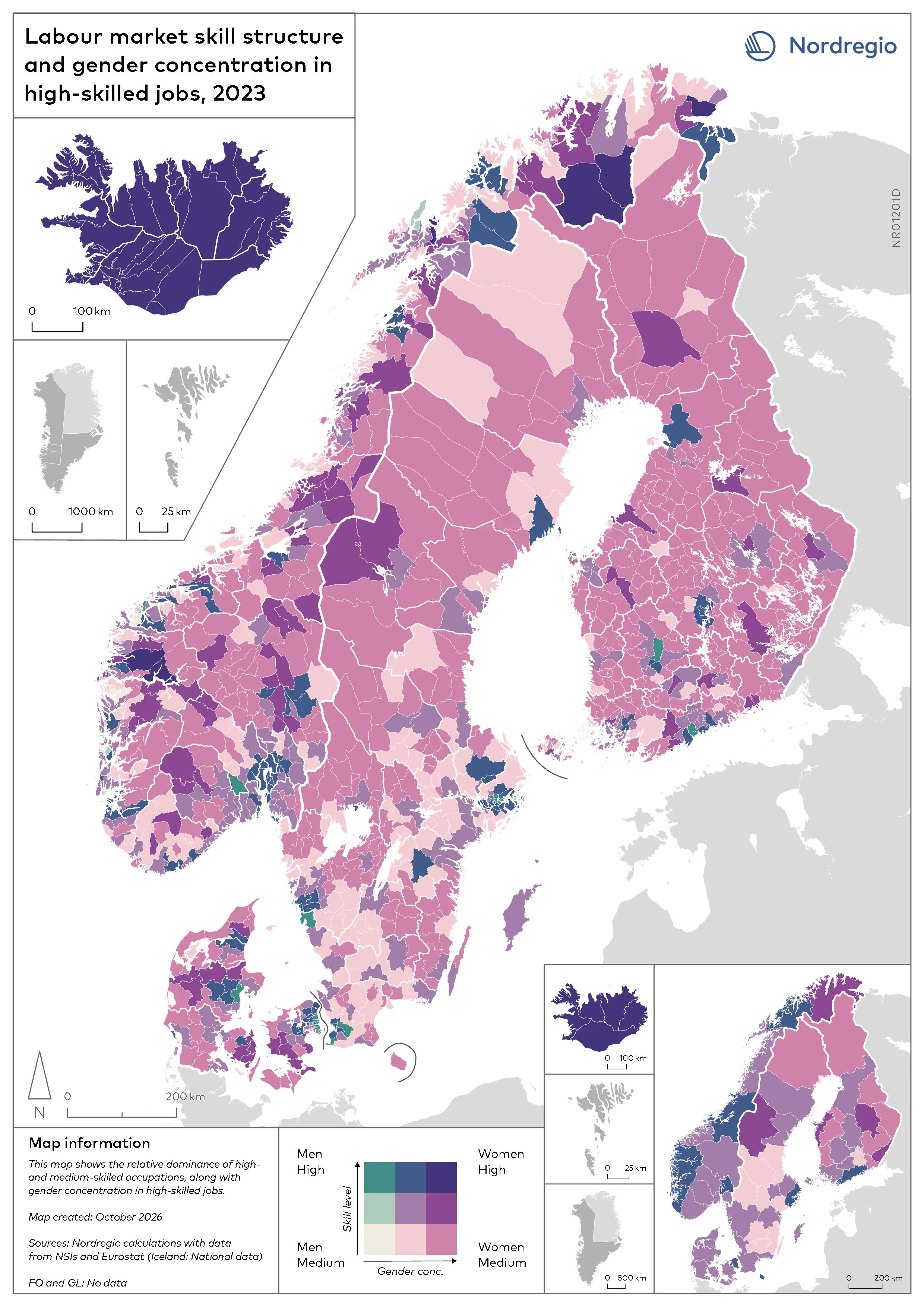
Map 5. Labour market skill structure and gender concentration in high-skilled jobs, 2023.
Note: Each class represents a combination of labour market structure (relative dominance of high-skilled versus medium-skilled occupations) and the extent to which women or men are more concentrated in high-skilled occupations.
Source: Nordregio calculations based on data from national statistical institutes and Eurostat. Data for Iceland are at the national level. No data are available for the Faroe Islands and Greenland.