Rural village:
Water contamination
Items already in place: Church, bus station
Possible items to add: School, daycare, sports field, minimarket, gas station, church, library, café, community hall, clinic
Crisis: Water contamination of unknown reason
Step 1 - Start
Facilitator instructs: Choose 3 items (group decision) to create your ideal resilient rural community (list the items above for inspiration).
(Time: 5 min.)
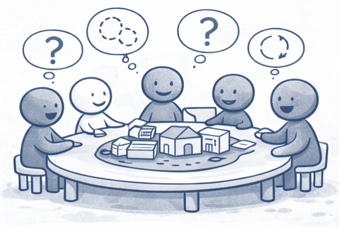
Step 2 - Crisis
Facilitator reads: The village’s freshwater system shows signs of contamination. You try to google the issue and call some numbers, but all essential call lines have crashed under hundreds of calls, social media is filled with rumours and even company chatbots are of zero help. You decide to go out to talk with your neighbours (other group members) and find out what is going on.
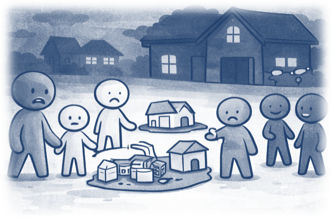
First task
Facilitator reads: Where do you go to look for reliable local information about the reason and extent of contamination and plans to repair it? Who do you want to talk with? You can only choose from the buildings already placed on the ground. Discuss as a group but possible to make individual decisions. Move your characters to this location.
(Time: 10 min.)
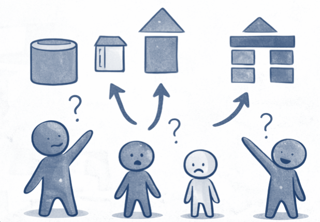
Second task
Facilitator reads: After wandering for a while, you find out that some squirrels had gotten into the main water tower and died there, contaminating the drinking water for a long while to come. You hear from a reliable source that the regional centre is planning to deliver some safe drinking water to the village, but no one knows where and all phone lines are still down. Discuss: Where do you go to check first for possible water distribution? If it’s not there yet, who do you wish to talk with? Where do you feel safe waiting for an undetermined time? Discuss as a group but it is possible to make individual decisions). Move your character to this location.
(Time: 5 min.)
Third task (optional)
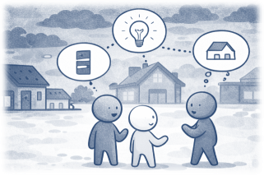
Facilitator reads: You find some water for yourself, but during your rounds, you have heard that several elderly people are unable to get the water delivered to them. You want to help but cannot do it by yourself—you need help organising people to do this task. Who do you want to talk to and where do you go?
(Time: 5 min.)
Step 3 - Rebuilding stage
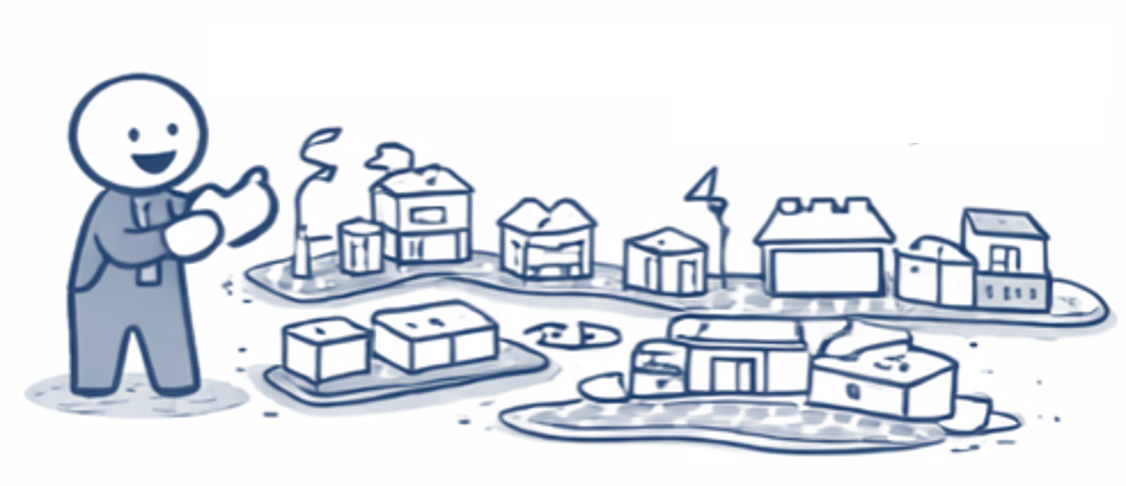
Facilitator reads: The water tower has finally been sanitised after several harrowing weeks of chlorine-smelling water! Better still, your village has been granted some money from the regional attractiveness fund to invest in something to build a stronger community in the future to help battle the derogatory “dead squirrel smell” jokes going around. This allows you to invest in one more infrastructure item. Looking back at your experiences during the contaminated water struggle, what should you add to the village?
(Time: 5 min.)
Step 4 - Final thoughts
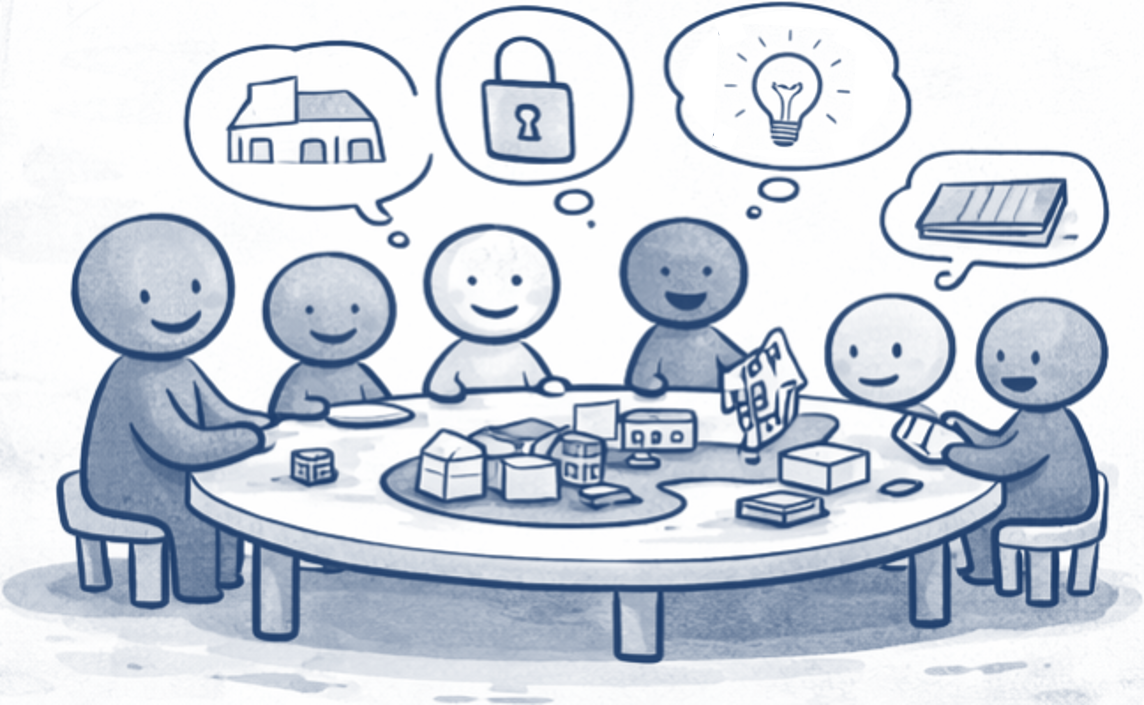
Facilitator reads: Prepare to tell the learnings from your community to the moderator (one group member represents the group). Think about the following questions as a group: Why did you chose the locations that you did? Was it easy or difficult to make the choices? Who seemed like someone you can trust in the situation you were in? Did you feel like it would be possible to find them? Think about your real-life community: do you think you would make similar choices in the same situation there?
(Time: 10 min.)
Step 5 - Discussion round
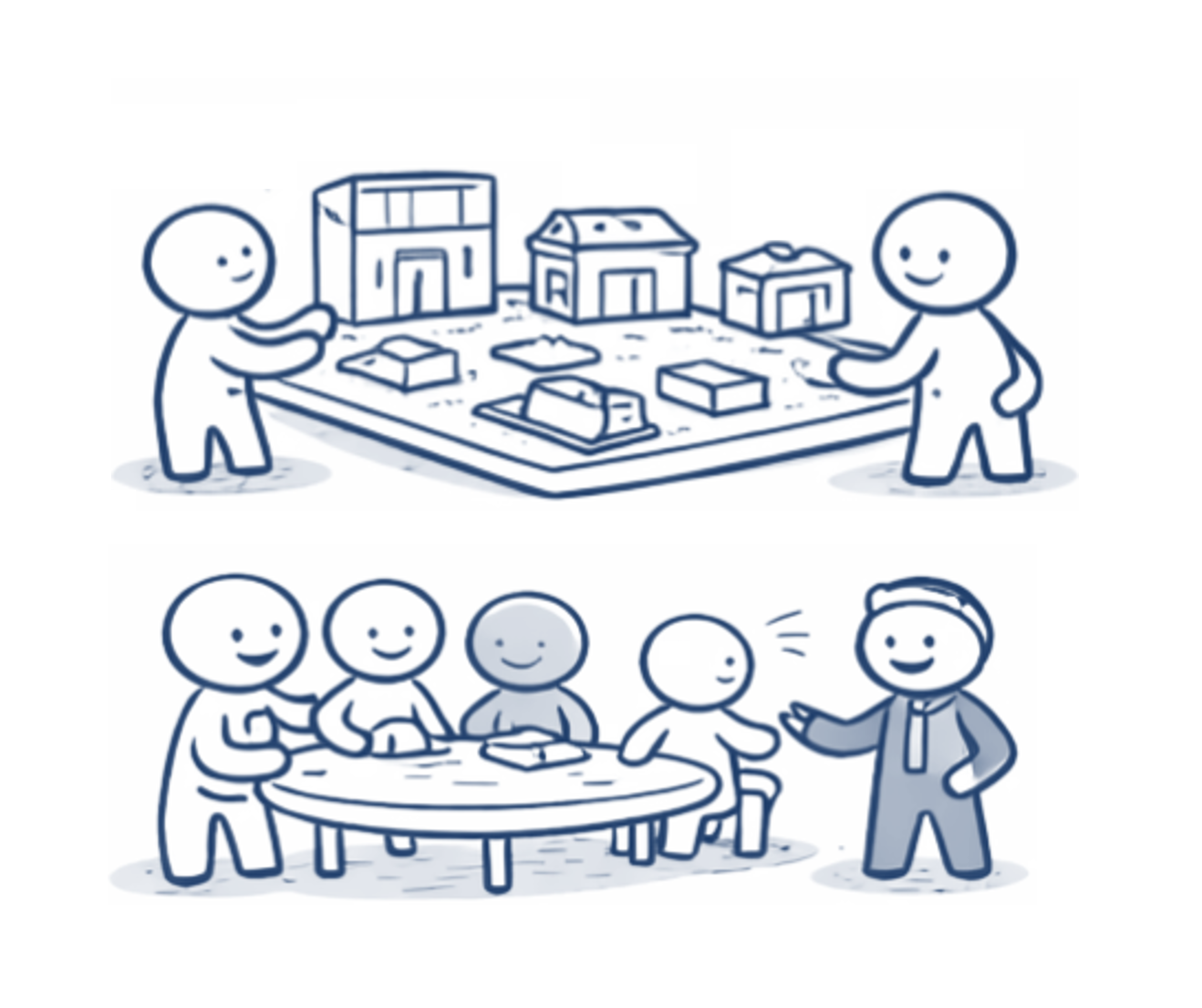
The table attends final discussion round with other tables to compare processes. This step can also be done with a moderator.