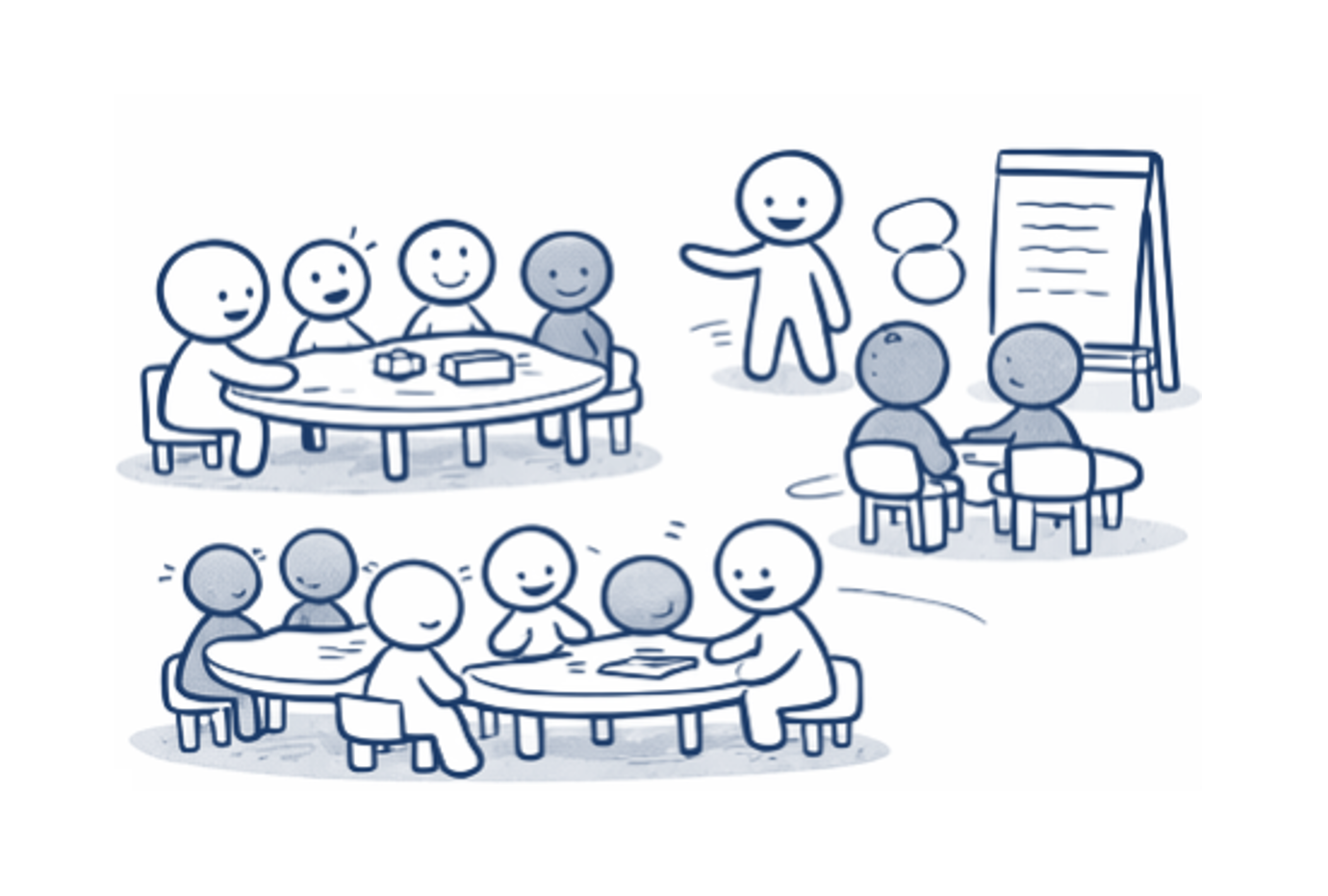
Suburb:
Large-scale power cut
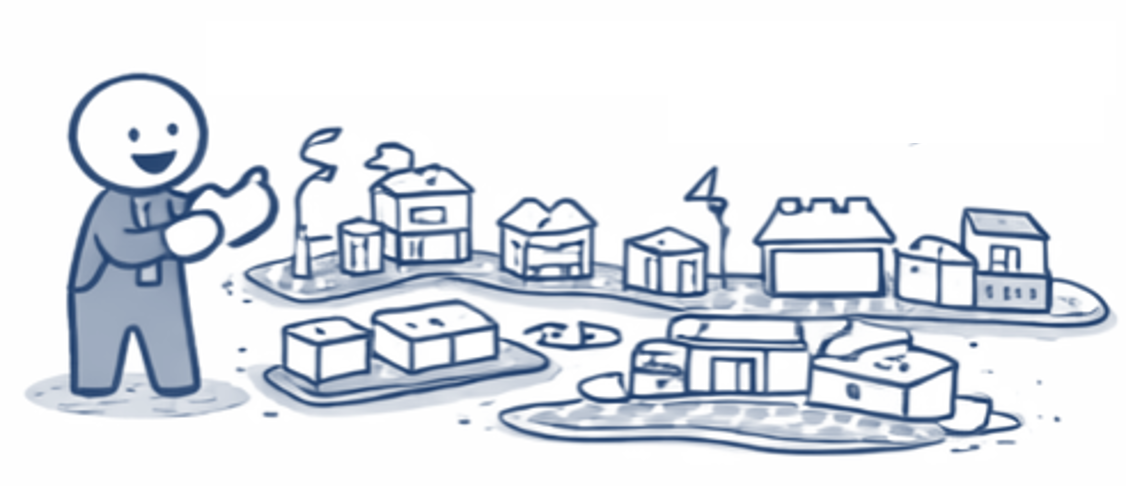
Items already in place: Metro station, central square with café, spiritual centre
Possible items to add: School, daycare, ice rink, library, cultural and event venue, bar, gas station, shopping centre, emergency room, police station
Crisis: Large-scale urban power cut that lasts 72+ hours
Step 1 - Start
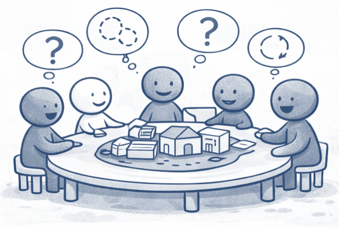
Facilitator instructs: Choose 5 items (group decision) to create your ideal resilient small town community (list items above for inspiration).
(Time: 5 min)
Step 2 - Crisis
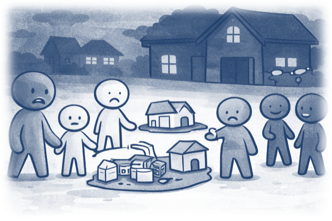
Facilitator reads: A large-scale power outage hits the suburb and nearby city districts in November. There’s no electricity, heating, mobile signal, or internet. Public transport halts, payment systems fail, and you cannot ChatGPT answers to your questions. You take your flashlight and walk out to talk with your neighbours (other group members) to find out what is going on.
First task
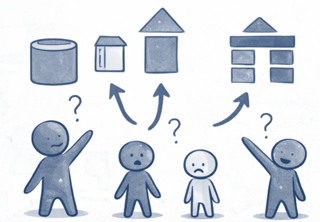
Facilitator reads: Discuss: Where do you go to look for reliable local information about the cause of out power outage and repair plans. Who do you want to talk with? You can only choose the buildings already placed on the ground. (Discuss as a group but possible to make individual decisions). Move your characters to this location.
(Time: 10 min.)
Second task
Facilitator reads: You find out that the situation will last at least 24 hours longer, and your home is getting very cold without heating. You decide to find someplace warm to huddle in for the night with hopes of finding also food supplies. Discuss: Where do you go to seek for warmth and possible supply deliveries? Where do you feel safe waiting for some hours? Who do you wish to talk with? (Discuss as a group but possible to make individual decisions). Move your character to this location.
(Time: 5 min.)
Third task (optional)
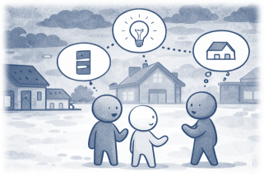
Facilitator reads: You find a place to shelter for yourself, but during your rounds, you have heard that several elderly people are unable to move to shelters by themselves. You want to help but cannot do it by yourself—you need help organising people to do this task. Who do you want to talk to and where do you go?
(Time: 5 min.)
Step 3 - Rebuilding stage
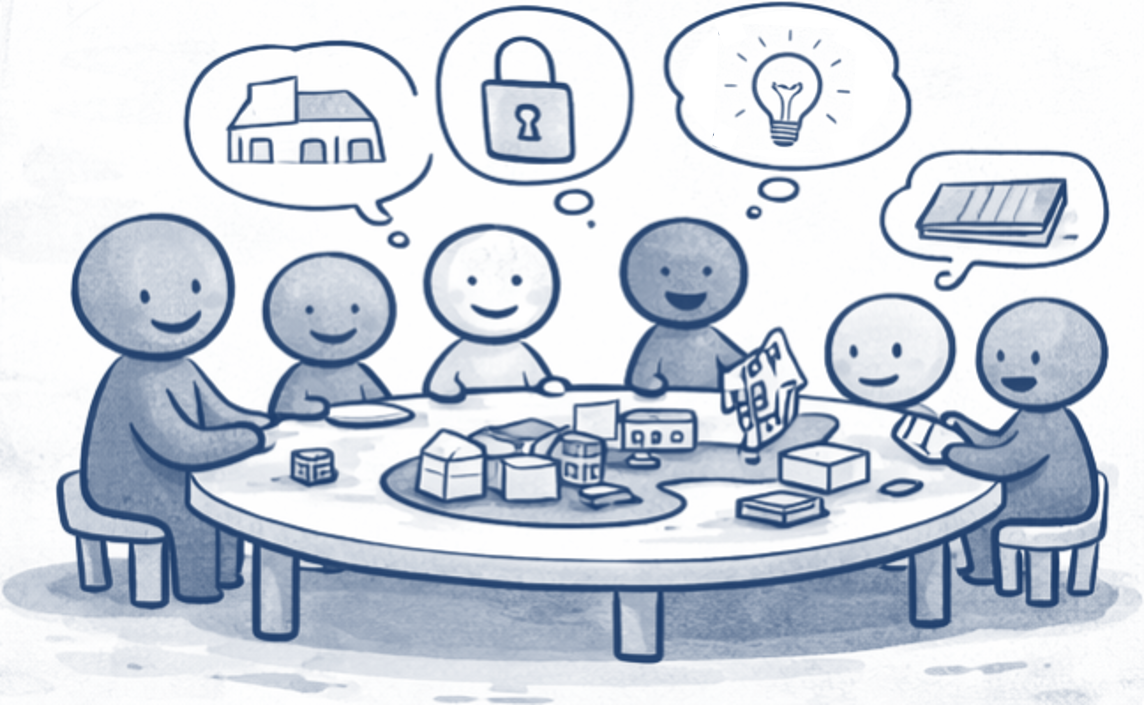
Facilitator reads: The power is back on! The city was moved by the community spirit your suburb demonstrated during the crisis and wishes to support it by funding you a new infrastructure project for some commonly agreed good. This allows you to invest in one more infrastructure item. Looking back at your experiences during the power cut crisis, what should you add to the suburb?
(Time: 5 min.)
Step 4 - Final thoughts
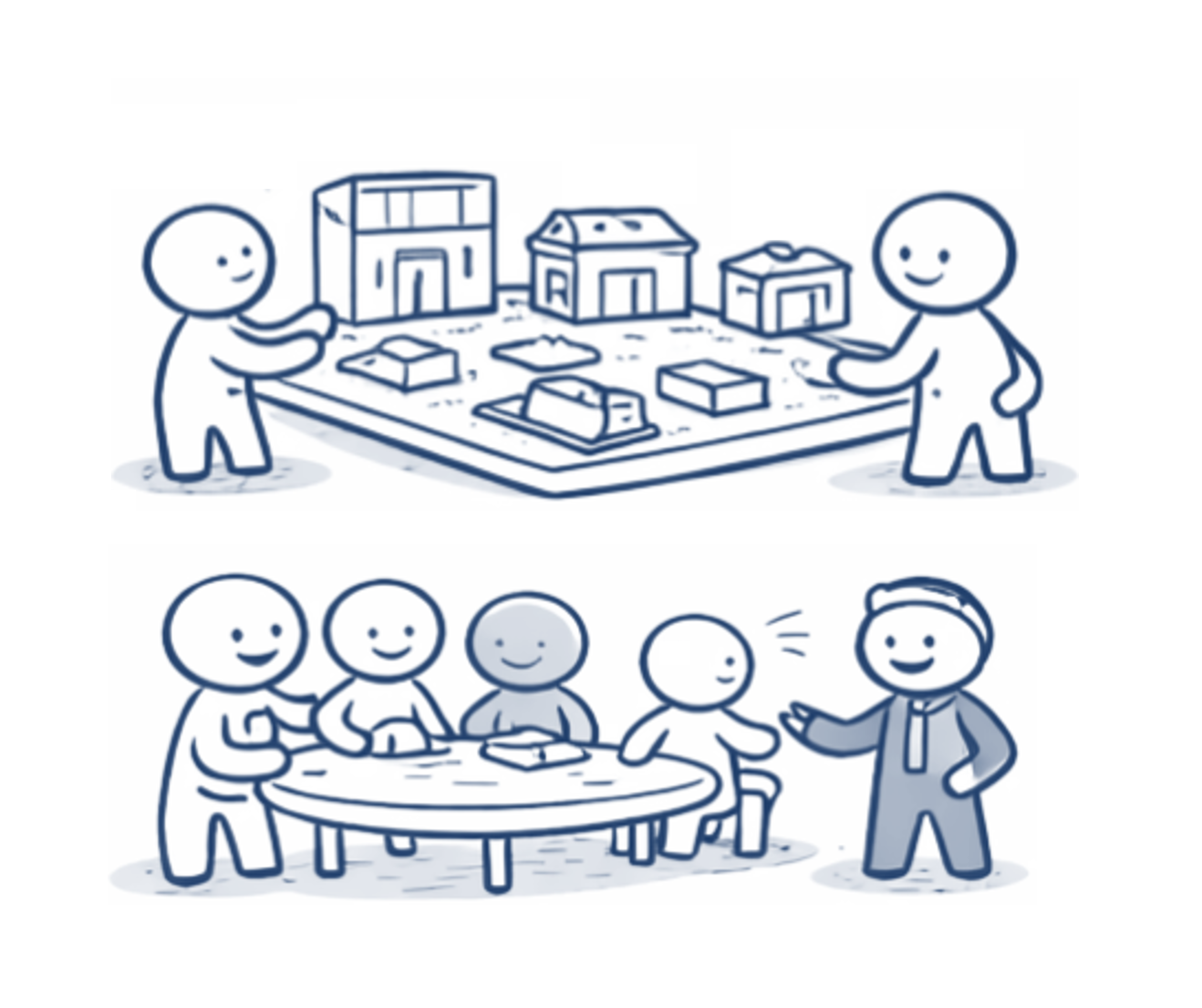
Facilitator reads: Prepare to tell the learnings from your community to the moderator (one group member represents the group). Think about the following questions as a group: Why did you chose the locations that you did? Was it easy or difficult to make the choices? Who seemed like someone you can trust in the situation you were in? Did you feel like it would be possible to find them? Think about your real-life community: do you think you would make similar choices in the same situation there?
(Time: 10 min.)
Step 5 - Discussion round
The table attends final discussion round with other tables to compare processes. This step can also be done with a moderator.