Image: Robert Noreiko / Unsplash.com
Key Concepts
Youth
For the purpose of this paper, it is important to clarify what is meant by “youth”. While there is no universal definition of this term, it is broadly understood as the transitional period between childhood and adulthood – a phase of life marked by increasing independence, self-sufficiency and gradual entry into adult roles and responsibilities (European Commission: Eurostat, 2009; Perovic, 2016).
Age is the most common way to define this period. The United Nations typically defines youth as those aged 15–24, though some frameworks extend this to 35 (Perovic, 2016; United Nations, n.d.). In a Nordic context, age categories largely follow these international standards, yet youth-policy frameworks sometime extend into the late twenties or early thirties. This reflects a broader trend across Western societies, whereby the transition to adulthood in terms of stable employment, housing and financial independence has become more gradual over time (European Commission, n.d.; Skirbekk et al., 2025).
However, age alone provides only a partial understanding of what it is to be young. Young people also share a common structural position, navigating the same age-based rules around voting, work, education and public service and as a result face similar opportunities and barriers (Swedish National Board for Youth Affairs, 2010).
For the purpose of this paper, youth is defined as individuals aged 15–29, in line with the European Commission’s usage (European Commission, n.d.). While this age range is used as a practical boundary, this paper also recognises that what young people have in common is not only their age, but a common position within institutions, policies and society.

Image: Mette Mjöberg Tegnander / norden.org
Participatory democracy
The Nordic Rural Youth Panel highlighted that young people seek meaningful involvement in policymaking (Wøien Meijer et al., 2023). This reflects a desire for engagement that goes beyond voting or indirect representation and falls within the scope of participatory democracy.
Participatory democracy refers to democratic arrangements that allow citizens to engage actively and continuously in public decision-making beyond periodic elections. Rather than limiting participation to selecting representatives, participatory approaches create opportunities for dialogue, deliberation, consultation and co-decision-making in policy processes, acting as a bridge between institutions and the public (Palumbo, 2017). This includes mechanisms through which citizens influence the direction of public policies, either directly, by interacting with policymakers to co-create policies; or indirectly, by making informed choices in direct democracy processes.
Participatory democracy does not replace representative democracy but operates alongside it, addressing one of its limitations. Namely, that periodic elections alone are insufficient to capture the full range of citizen perspectives, particularly groups who are less likely to be heard through formal political channels (Baillie, 2025). A number of scholars have documented this limitation, and describe political participation as inherently unequal, leaving some groups more politically influential than others (Dalton, 2017; Lijphart, 1997). This limitation has sparked a growing interest in participatory governance as a way of “opening the door” to decision-making for the broader public (Baillie, 2025), resulting in what is often referred to as a global deliberative wave (OECD, 2020). Accordingly, governments across varying political contexts are trying out “new or alternative ways” to engage citizens in political decision-making, including citizen assemblies and juries, participatory budgeting, and other “democratic innovations” aimed at broadening participation (Elstub & Escobar, 2019; Smith, 2009).
Some scholars also highlight the benefits of regularly employing participatory democratic approaches. For example, participatory processes can improve the reflexivity and efficiency of decision-making by pooling diverse perspectives and expertise. They can increase the responsiveness and legitimacy of institutions, grounded in the belief that citizens have a fundamental right to be involved in decisions that shape their lives. Scholars have also argued that social justice is advanced and more equitable outcomes are achieved when all those affected by a policy are involved in its design (Baillie, 2025). Finally, participatory democratic approaches have been used since the 1990s as a way to reverse trends towards declining voter turnout (Edwards, 2012).
The Nordic countries provide a particularly rich context for examining participatory democracy. Based on its strong democratic traditions and robust civil society networks, the Nordic Region has developed extensive frameworks for involving citizens in public decision-making (Haveri, 2015). A defining feature of Nordic governance is decentralisation, whereby significant decision-making authority rests with municipalities and regions, rather than central governments. This means that participatory democracy often unfolds at a sub-national level. Local and regional governments have wide-ranging responsibilities in terms of their citizens’ welfare and operate under extensive regulatory frameworks that both enable and constrain opportunities for citizen involvement. This results in a system in which participation can take diverse forms, shaped by high levels of institutional trust, a consensual approach to policymaking, and the specific capacities and practices of municipal or regional authorities, all of which result in considerable variation in how participation manifests in practice (Sinervo et al., 2025).
Varieties of participation and impact
To understand the diversity of opportunities for participation available to youth, this report draws on Archon Fung’s framework, the Democracy Cube (Fung, 2006). This framework sits within a broader scholarly debate on what participation means and what it aims to achieve, which has been ongoing for decades (Abas et al., 2023; Cornwall, 2008). One of the most influential contributions to this debate is Sherry Arnstein’s “Ladder of citizen participation” (Arnstein, 1969), which organises participation into eight levels, with non-participation at the bottom and full citizen control at the top. While the framework has been broadly adapted elsewhere, its specific typology is less suitable for this paper’s purposes. For instance, by focusing on power redistribution, the ladder treats participation as a form of advocacy, which limits its usefulness in contexts where engagement serves a broader range of purposes (Collins & Ison, 2009). It also does not fully account for the question of whose interests are served by participation, which cannot be determined by the form of engagement alone (White, 1996). More broadly, scholarship has questioned whether any single scale can capture the variety of conditions under which different modes of engagement occur (Cornwall, 2008). One concern is that hierarchical models insinuate that public empowerment and full citizen control are seen as the most desirable outcomes, which does not account for the fact that different contexts call for different modes of engagement. Participation, as we see it, is therefore not a question of how to engage everyone all the time, but rather about choosing the most appropriate mode in a given context. By mapping the diverse forms of participation without ranking them, Fung’s Democracy Cube offers a more nuanced framework for choosing between them. As such, it is well-suited for capturing the ways in which young people can impact decision-making.
Who participates?
The Democracy Cube typically categorises citizen engagement along three dimensions. The first asks who participates. At the most open end, processes are accessible to anyone who wishes to engage through self-selection, such as public hearings or protests. From here, the mechanisms become more structured in terms of how participants are recruited, whether through targeted outreach, random selection or the involvement of lay stakeholders with a particular interest in the issue at hand. At the most closed end are professional stakeholders, expert administrators and elected representatives who participate within the bounds of their formal role or expertise (Fung, 2006). Yet across all these categories, it should be kept in mind that citizens, including young people, often “wear multiple hats”. In other words, they bring a diverse range of identities, values, lived experiences and cultural backgrounds to participatory processes. It is therefore important to note that “people” and “youth” are not homogenous groups, and that individuals may play different roles depending on the context in which they are asked to participate (Hofer & Kaufmann, 2022).
How do they participate?
The second dimension of the Democracy Cube asks how participants engage. The least intensive mode involves simply listening and receiving information, with little expectation of contributing. From there, participants may express their preferences, develop and transform their views through deliberation and exchange with others, or engage in bargaining and negotiation to reach collective decisions. At the most intensive end, participation involves deploying technical expertise to make binding decisions (Fung, 2006). These modes connect to a broader deliberative democracy literature that has long examined how different forms of exchange between citizens and institutions can produce more impactful outcomes (Bächtiger et al., 2018; Mansbridge et al., 2012).
In addition, across these different modes, considerable attention has been paid to the design and selection of tools and methods to structure participation. This entails, for example, local governments and research projects experimenting with formats ranging from citizen assemblies and participatory mapping to online consultations and collaborative workshops (Schafer, 2019). However, this focus on procedure has been critiqued for diverting attention away from outcomes and what participation actually produces (Ramos et al., 2026). This is particularly relevant in practice, where municipalities and regions often face constraints in terms of time, skills and resources. As such, questions about participation’s influence and impact are at least as important as how it is designed (Irvin & Stansbury, 2004).
What influence do they have?
The third dimension of the Democracy Cube asks what difference participation makes, sometimes referred to as impact. At one end, participants may personally benefit from their involvement, without influencing outcomes. Moving along this dimension, participation can exert communicative influence by shaping public opinion or signalling to decision-makers; it can provide advice and consultation; or take the form of co-governance, where citizens and decision-makers make joint decisions. At the furthest end, participants have direct authority over decisions and resources (Fung, 2006).
While the Democracy Cube presents three equally important dimensions, in practice the question of impact often assumes particular significance. Participation is frequently evaluated not only in terms of who engages and how, but also in terms of the difference their involvement makes. This shifts attention from participation as a procedural exercise to understanding what it accomplishes. This is particularly relevant for youth participation, where tokenism has been widely recognised as a recurring pitfall, as young people are frequently consulted without regard to the quality or consequences of their involvement (Ramos et al., 2026). Furthermore, participation is rarely considered impactful unless it exerts influence beyond the process itself. However, direct and linear effects on policy are often difficult to achieve and hard to prove. The impacts are widely understood as multidimensional, occurring across multiple areas, such as policymaking, political debate and civil society (Baillie, 2025; Goodin & Dryzek, 2006; Russell, 2017). Specifically, participation can shape agenda setting, policy formulation, implementation and organisational learning; influence media coverage, public debate and stakeholder positions; contribute to theory, research and practice; and affect the participants themselves, by fostering shifts in perspective, deliberative capacity and political engagement (Russell, 2017).
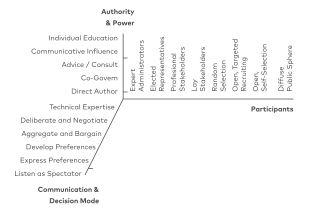
Figure 1. The democracy cube (Fung, 2006).