1. Introduction and background
1.1. Aim and scope
Nordic societies have been actively shaping their digital landscapes for the past 50 years, with a strong focus on innovation and technological advancement. Since the 1970s, organizations such as Nordic Innovation (under the Nordic Council of Ministers, NCM) have supported thousands of technological innovation projects by promoting systematic networking and collaboration across the Nordic countries. This has contributed to a number of important milestones, including establishing the Nordic region as a competitive supplier of satellite components in the 1980s, and pioneering the use of artificial intelligence (AI) in cancer treatment as early as 1985 (Nordic Innovation, 2024).
The NCM’s Vision 2030 underlines this ongoing determination to make the Nordic region one of the word’s most sustainable and globally integrated regions by 2030 (Nordic Co-operation, 2019). Digital technologies, in particular 5G, have been identified as central to this envisaged progress, with implications for various sectors, from healthcare and manufacturing to the development of smart cities and regions (Nordic Co-operation, 2019). Reliable and secure connectivity is seen as imperative when it comes to creating a society where every business and citizen can actively participate without hindrances (Koenig and Veidt, 2023). Unequal access to 5G, particularly in rural areas, can exacerbate the digital divide, limiting opportunities for education, economic advancement and inclusion while delaying overall digital development (Noll et al., 2018). Similarly, the challenges faced by businesses in innovating under the 5G framework can lead to missed opportunities for businesses and public services, hindering job creation and economic growth, and impeding broader implications of 5G for society (Blind and Niebel, 2022; Parcu et al., 2023).
One of the NCM-funded projects aimed at achieving the Vision 2030 goals was the Nordic-Baltic 5G Monitoring Tool (5G N-B MT), which focused on monitoring the 5G roll-out across the Nordic-Baltic region. The emphasis on Nordic-Baltic cooperation was driven by a conviction that strategic collaboration at the Nordic level – including the Baltic Sea region – will benefit all the countries involved beyond what might be expected from individual national initiatives (Liimatainen, 2023).This collaborative approach is particularly important in the area of 5G and connectivity, where one of the region’s key strengths lies in its strong collective history concerning technology and research. Through pooling expertise and resources, the region can achieve economies of scale and effectively address common cross-border challenges and societal issues. These concerted efforts, particularly around improving connectivity, promise to deliver not only business benefits, but societal value.
The 5G N-B MT project’s main objectives therefore not only involved mapping the 5G activity landscape, but advancing discussions on 5G technology deployment, fostering collaboration, and addressing key challenges in 5G deployment and applications. In particular, the project aimed to develop an evidence-based analytical tool/dashboard that could provide empirically based insights into the Nordic-Baltic countries’ 5G ecosystem, thereby supporting ongoing developments in the field.
A first report was launched in the summer of 2023 based on the various activities and data-collection tasks of the 5G N-B MT project. This provided an update on the status of 5G roll-out and detailed the progress made by each country within the Nordic-Baltic region (Wendt-Lucas and de Jesus, 2023). The present report represents a logical extension of that initial report, with a more targeted analysis of previously identified sectors and a focus on the challenges and bottlenecks facing 5G adoption and innovation. In terms of its scope, the report is grounded in the 5G N-B MT project events held throughout 2023, which sought to disseminate inspirational stories and learnings, while serving as a dialogue platform and networking opportunity. With this in mind, the following sections seek to summarize and extract valuable insights from the various discussions on challenges to 5G development within identified sectors/verticals.
Box 1: The 5B Nordic-Baltic Monitoring Tool project and the launch of the 5G Data Hub
The 5G Nordic-Baltic Monitoring Tool (5G N-B MT) project aimed to contribute to a more integrated, connected and inclusive Nordic region by creating and maintaining an evidence-based analytical tool to monitoring 5G in the Nordic-Baltic countries. The project’s main objectives were to:
- support discussion concerning 5G data-collection strategies in Nordic and Baltic countries;
- provide a common basis for, and contribute to, joint macro-regional discussions around 5G deployment by gathering data on coverage, as well as the challenges, opportunities, bottlenecks and enablers arising at various geographical scales;
- drive innovation by showcasing concrete examples of 5G technology application within different verticals;
- contribute to comparison between geographical areas; and
- strengthen collaborative relationships within the 5G ecosystem.
The project, running from 2021 to 2024, was funded by the Nordic Council of Ministers and implemented by Nordregio under the guidance of the 5G Expert Group and the Ministerial Council for Digitalisation within the Nordic Council of Ministers. The 5G Expert Group – consisting of national experts in the field of 5G selected from the various Nordic and Baltic countries, as well as the autonomous regions – acted as the project’s reference group. The composition of the 5G Expert Group, which changed over the course of the 5G N-B MT project, was made available on the Nordic-Baltic Digihub, a digital innovation website that facilitates knowledge-sharing, tool dissemination, research and exchange among digitalization stakeholders.
The project produced several reports
→ 5G for healthcare in the Nordic region
→ 5G and the Drone Ecosystem
→ The Role of 5G in the Transition to a Digital and Green Economy in the Nordic and Baltic Countries: Analytic Report
and organized multiple events (5G N-B MT events), all aimed at showcasing 5G applications and facilitating connections between stakeholders. Nonetheless, the main deliverable of the project has been the 5G Nordic-Baltic Monitoring Tool, known as the 5G Data Hub, launched in October 2023 and hosted on the Digihub website. The Data Hub acts as a dynamic 5G data dashboard, with filtering options that allow customization of the displayed data and metrics. This adaptability ensures the tool can meet the needs and priorities of diverse stakeholders, including industry, and both local and national policymakers and regulators.
For more comprehensive project details, the 5G Expert Group member list and information on 5G N-B MT project events, please visit the Nordic-Baltic Digihub website.
1.2. Structure of the report
The following sub-section (1.3) sets out the context of the report by providing an overview of the digital innovation landscape in the Nordic-Baltic countries. The remainder of the report then unfolds as follows. Section 2 elaborates on the methodological framework used, including the choices made concerning data sources and the importance of the 5G N-B MT project events in shaping the report’s contents. In doing so, the section provides insights into the design, co-creation process and implementation of these events.
Section 3 provides the main body of the report and is divided into five sub-sections. The first four of these focus on specific sectors/verticals
In this report, the terms ‘vertical’ and ‘sector’ are used interchangeably (see Glossary).
Section 4 concludes the report by summarizing the key challenges for each sector and highlighting important cross-cutting messages concerning the future trajectory of digital innovation and connectivity in the Nordic-Baltic region.
1.3. Conceptual background: Overview of the Nordic-Baltic digital economy and society
Looking at the European context, it can be seen that the Nordic countries have made significant research and development (R&D) investments (Figure 1), providing valuable insights into their innovation priorities. Across the Nordic region, robust education systems have consistently produced highly skilled workforces. Moreover, early investments in the information and communications technology (ICT) sector have positioned the region as a frontrunner in technological innovation and competitiveness on a global scale. This success is further underscored by a dynamic innovation ecosystem, with industry giants like Nokia and Ericsson leading 5G patenting efforts across Europe, alongside smaller, but dynamic and innovative, enterprises and start-ups that display strong digital intensity (Buggenhagen and Blind, 2022).
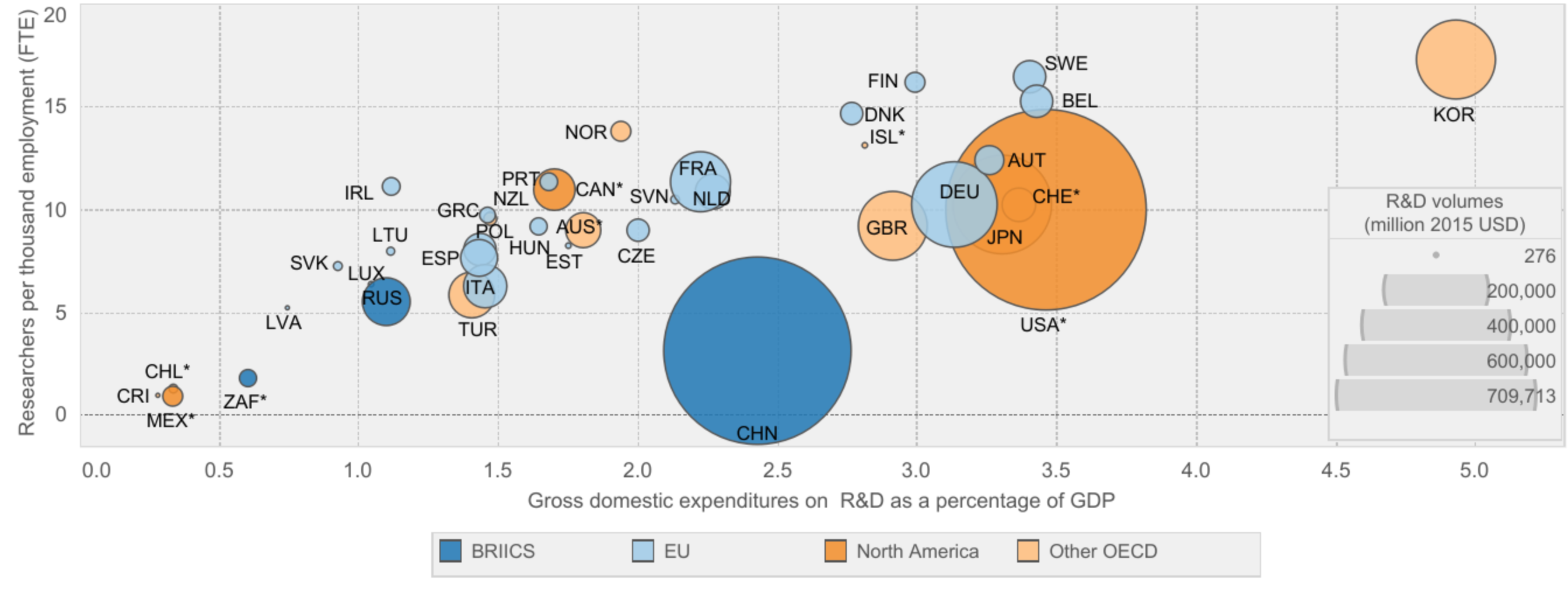
Figure 1. Human and financial resources devoted to R&D, 2021
Source: Organisation for Economic Co-operation and Development (OECD), Research and Development Statistics (RDS) – OECD
Source: Organisation for Economic Co-operation and Development (OECD), Research and Development Statistics (RDS) – OECD
To some extent, this context explains the region’s success across various digital indicators, such as individuals’ proficiency in digital skills, including information and data literacy, communication and collaboration, problem-solving, digital content creation, and safety (Figure 2). Furthermore, the notable prevalence of companies displaying substantial levels of digital intensity, as illustrated in Figure 3, sheds light on the digital maturity and competitive positioning seen in these countries.
Figure 2. % of individuals with at least basic digital skills, aged 16-74
Individuals with ‘basic’ or ‘above basic’ digital skills in each of the following five dimensions: 1) information and data literacy; 2) communication and collaboration; 3) problem solving; 4) digital content creation; and 5) safety.
Source: Digital Economy and Society Index (DESI), period: 2023 (data from 2021)
Figure 3. % of SMEs with at least a basic level of digital intensity (10–249 persons employed, excluding the financial sector)
Source: Digital Economy and Society Index (DESI), period: 2023 (data from 2022)
By prioritizing innovation, the Nordic countries have been able to develop and commercialize breakthrough technologies, create new markets, and enhance their global competitiveness across various industries. This is also reflected in the fact that the Nordic countries typically occupy the top positions in the annual Digital Economy and Society Index (DESI), a composite index that collects, summarizes and tracks progress on the digital performance of EU member states (Figure 4).
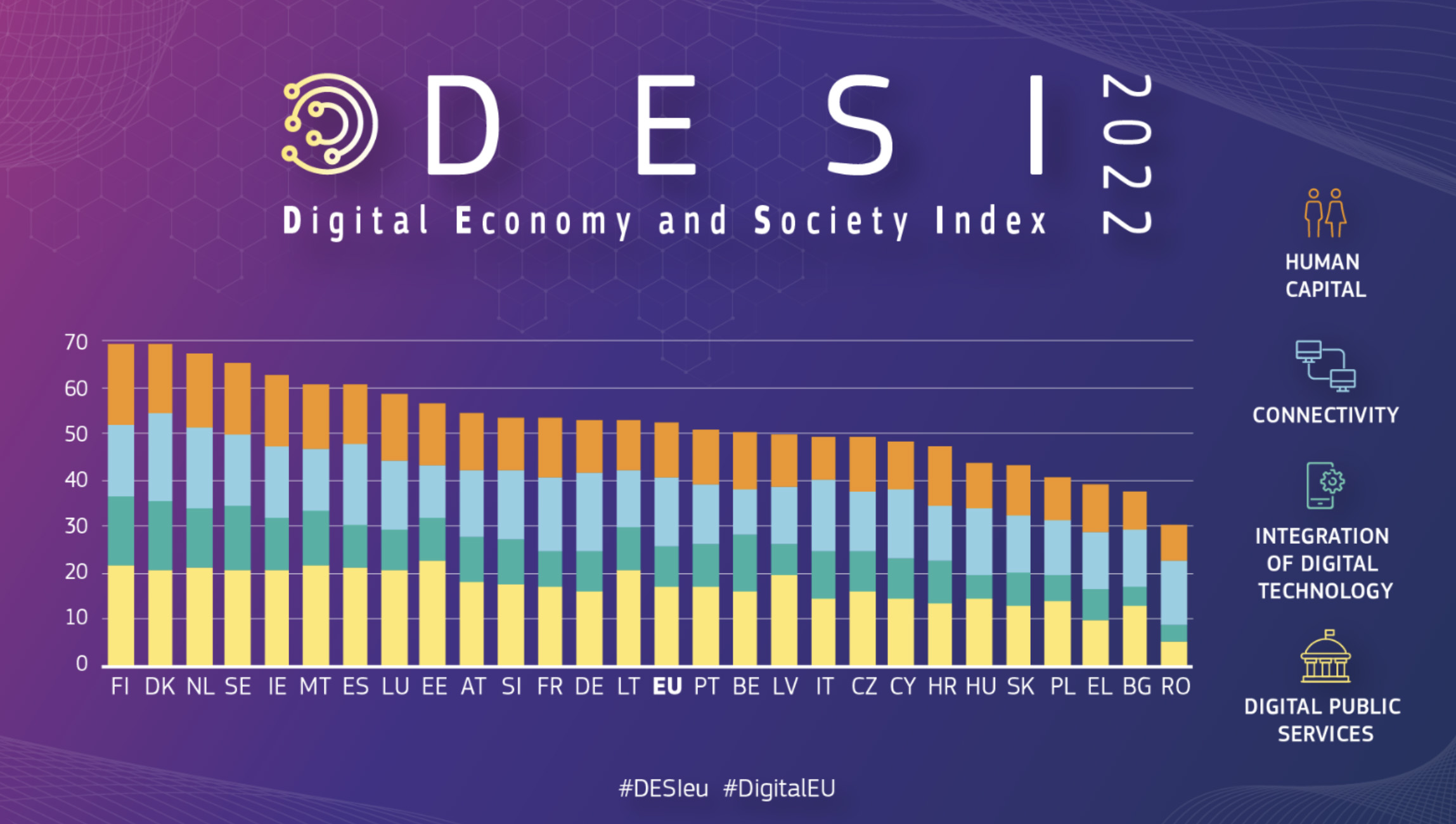
Figure 4. Digital Economy and Society Index (DESI) report 2022
Source: The Digital Economy and Society Index (DESI)
Source: The Digital Economy and Society Index (DESI)
Meanwhile, the Baltic region’s pathway towards digital innovation and 5G deployment has been shaped by historical, geopolitical and economic factors, in particular its strategic position at the intersection of East and West. The region’s trajectory includes more modest investments in R&D resources and funding, as well as more limited results in digital literacy and skills, potentially hindering the effective use of advanced technologies (Figures 1 and 2) and affecting industrial incentives to invest in digital innovation (Figure 3). In some instances, regulatory and cybersecurity discussions have played a significant role, leading to delays in 5G auctions and the overall roll-out process (Wendt-Lucas and de Jesus, 2023).
For more on the diverse dynamics of 5G roll-out in the Nordic and Baltic regions, see Wendt-Lucas and de Jesus, 2023.
Nevertheless, it is important to recognize that, according to the DESI, some Baltic countries are already ahead of the EU average in terms of digitalization. Estonia and Lithuania are notable examples, while Latvia moved up from 19th to 18th place in the 2022 index (Figure 4). Moreover, there are already signs of digital maturity in the region when it comes to increasing acknowledgement of, and adaptation to, digitalization trends (Eremina et al., 2019). Currently, digitalization is being actively promoted as a potential avenue for economic diversification, as well as a mechanism for promoting regional integration and competitiveness (Jevgenija, 2019). All this indicates the need for a deeper exploration into the adaptive strategies and, perhaps, innovative solutions achieved in the region over recent years.
Overall, the Nordic-Baltic area is driven by ambitious national policy goals concerning digital strategies and 5G roadmaps/action plans, underlining the commitment of the region’s countries to be at the forefront of technological progress both in Europe and across the global landscape (Wendt-Lucas and de Jesus, 2023). Given the multifaceted role played by 5G in today’s economy, however – both as a service itself and an enabler for delivery of other services – there remain several knowledge gaps related to the transformational value of 5G and its potential for economic growth, job creation and impact across multiple sectors (Whalley and Curwen, 2023). Despite the previous report highlighting the notable number of 5G activities taking place in areas such as ‘mobility and transport’, ‘smart cities’ and ‘education, health and welfare’ (see Figure 5 and Wendt-Lucas and de Jesus, 2023), many (most) 5G applications and ongoing projects in the Nordic-Baltic region are still in the testing/prototype phase, and the business case for 5G remains limited in all countries (Wendt-Lucas and de Jesus, 2023).
Figure 5. % of 5G activities mapped per vertical across the Nordic-Baltic region
Source: Wendt-Lucas and de Jesus, 2023
All this suggests that while progress is being made in the region on 5G deployment and applications, arguments concerning its disruptive potential and economic value require further clarification (Whalley and Curwen, 2023). Discussion is also needed on how to address the bottlenecks impeding progress and slowing the pace of change. This in turn raises questions about the effectiveness of existing strategies and policies in fostering an enabling environment. In exploring these issues, the report focuses on the following key question: How are the different sectors/verticals in the Nordic-Baltic countries tackling the challenges facing the deployment and development of 5G-enabled applications, and what lessons can be learnt from these experiences?