3. Policies and enabling environment for localising the SDGs
This chapter provides an overview of the context and institutional framework supporting local-level implementation of the 2030 Agenda in the Nordic countries. While recognising the significant role played by regions in some Nordic countries, this chapter focuses primarily on the local (municipal) level.
The chapter begins by exploring the Nordic model of self-governance, along with other key features, offering insights into the operational environments within the five countries. It then describes national support for implementation and localisation of the SDGs, before going on to examine the role of LRGAs. It concludes by analysing the governance-related success factors and challenges encountered in localisation of the SDGs. The insights in this chapter are primarily drawn from interviews with and written contributions from the Nordic LRGAs.
For more detailed information on data sources and methodological considerations, please refer to the Methodology section.
3.1. Enabling insitutional environments for local and regional governments
The Nordic countries – Iceland excepted – operate under a three-tier governance system, with the size of their respective municipalities and regions varying significantly in terms of both area and population (see Figure 6). Figure 6 illustrates the classification of Nordic urban and rural areas based on population density, proximity measures and land cover parameters. Apart for Denmark, the Nordic countries are for the most part sparsely populated, especially in the northern regions (shown in green). Iceland has a particularly sparse population, with only 11 out of 64 municipalities having more than 5,000 inhabitants (Government of Iceland, 2023).
3.1.1. The Nordic model: Welfare state with broad decentralised responsibilities
The Nordic model, which emerged in the 1970s and defines key features of the region’s social and economic frameworks, distinguishes the Nordic countries in the global context. More recently, the model has played a pivotal role in laying the groundwork for advancing the SDGs (Nordicsinfo, 2019a).
Central to the Nordic model is a robust welfare state supported by a comprehensive, decentralised public sector funded through taxation. This sector provides a wide range of welfare services, as well as a social safety net for citizens. The universal support offered to those who are sick, unemployed or elderly closely aligns with the SDGs aimed at poverty reduction, leaving no one behind, health, and well-being. Other key features of the model are high levels of income and gender equality, strong labour unions, widespread democratic engagement and extensive public participation (Nordicsinfo, 2019b), all rooted in a tradition of popular movements such as labour movements, temperance movement and free churches. The model also emphasises strong municipal and regional self-governance. Consequently, the foundational principles of the Nordic model resonate strongly with SDG objectives. Despite facing significant challenges in recent years, notably due to an ageing population impacting financial stability (Nordicsinfo, 2019b), the Nordic model continues to be an important facilitator in local-level implementation of the 2030 Agenda.
3.1.2. Strong local and regional governments form the cornerstones for SDG localisation
Strong local self-governance in the Nordic countries – including municipal autonomy and broad service delivery – provides an effective basis for supporting local-level implementation of the 2030 Agenda. Municipal autonomy encompasses the authority to impose taxes on residents and formulate local policies across various sectors. Municipalities can therefore tailor their services to the needs and priorities of their communities, providing a higher degree of accountability in service provision than would be possible under a more centralised system (Eckerberg & Dahlgren, 2007). The role played by regions within the Nordic countries varies significantly, reflecting different administrative structures, historical contexts and policy priorities (Figure 5).
In terms of financing, Nordic municipalities and regions have various sources of revenue, including taxes, user fees for specific public services, and government grants. Income tax is the main source of tax revenue, constituting on average 24.9% of residents’ taxable income. The Nordic states implement a financial ‘equalisation system’ to address disparities between local authorities concerning tax revenues and costs associated with providing services. This system aims to ensure a more balanced distribution of resources across different regions and municipalities (ORF, 2021).
Regional and local authorities play a crucial role in advancing sustainable development. This role is explicitly mentioned in the legislative texts of several Nordic countries. In Finland, the first article in the 1995 Municipal Act delegates responsibility for sustainable development to municipalities (Ministry of Finance, Finland, 1995). Similarly, in Sweden, Article 2 of the Instrument of Government mandates that all public institutions at a national, regional and local level promote sustainable development (Riksdagen, 1974). In Norway, one of the aims of the Local Government Act (2018) is to help regional and local authorities become efficient, confidence-inspiring and sustainable (Ministry of Local Government and Regional Development, 2021). The Building and Planning Act also aims at promoting sustainable development in the best interests of individuals, society and future generations (Ministry of the Environment, Norway, 2008).
One of the main benefits of working with SDGs is having a shared language across sectors. Even when the municipality’s attention may vary, the business sector and civil society keep the SDGs high on their agenda, putting pressure on us. This can be helpful in times of political shifts.
– Kristiansand Municipality, Norway
Box 1: Associations of Local Authorities and Regions (LRGAs)
KL in Denmark, AFLRA in Finland, Samband in Iceland, KS in Norway, SALAR in Sweden and the Association of Municipalities of Åland function as member and employer organisations for their respective municipalities and, in some cases, regions. These organisations support local and regional authorities by providing knowledge, expertise, advice and peer learning, thus strengthening their ability to develop welfare services for citizens and implement the 2030 Agenda. The LRGAs act as a cooperation partner vis-à-vis the state on behalf of their members, using various platforms to advocate for local interests at the national level.
Figure 5: Key features of local and regional governance frameworks in the Nordic countries
Denmark | Finland | Iceland | Norway | Sweden | |
Area (km2) | 42,924 | 303,892 | 103,000 | 304,226 | 407,340 |
Population density (people per km2) Globally, the average population density was 61 people per km² in 2022 (UN DESA, 2023). | 137.05 | 18 | 3.66 | 15 | 26 |
Average territory size of municipalities (km2) | 433 | 983 | 1419 | 854 | 1404 |
Levels of government | central (national) government, regional governments (regions) and local governments (municipalities) | central (national) government, regional governments (regions) and local governments (municipalities) | central (national) government and local governments (municipalities) | central (national) government, regional governments (regions) and local governments (municipalities) | central (national) government, regional governments (regions) and local governments (municipalities) |
Number of municipalities and regions (2024) | 98 municipalities, 5 regions | 309 municipalities, 19 regions | 64 municipalities | 357 municipalities, 15 regions | 290 municipalities, 21 regions |
Municipality responsibilities | Commonalities across the Nordic countries: primary and lower-secondary education, kindergartens, care for the elderly and disabled, social services, public housing, management of local roads, planning authority, water supply, sanitation and sewage, local economic development, and cultural affairs. The extent and nature of these services can vary across the Nordic countries. Differences across the Nordic countries: provision of upper-secondary education, rescue services and public transportation. | ||||
Regional government responsibilities | Commonalities across the Nordic countries: Regional development. Differences across the Nordic countries: Responsibility for healthcare is divided between regions and municipalities in Denmark, Norway and Sweden with some degree of variation in the content and responsibilities (NHWStat, 2024). In Finland, healthcare, social welfare and rescue services are managed by well-being services counties since 2023 (Ministry of Social Affairs and Health, Finland, 2023). In Iceland, healthcare is primarily a state responsibility. Regions in Sweden have the authority to levy taxes, which is not the case in Denmark, Finland and Norway. | ||||
Local government expenditure as percent of GDP (2022) | 30 In Denmark, the local government expenditure is the highest in the EU | 22.1 | 14.1 | 20.4 | 23.4 |
Local Autonomy Index (2015-2020) Self-rule index for local authorities in the EU, Council of Europe, and OECD countries. The values are aggregate indicators on a scale of 0–100. The higher the value, the greater the autonomy of the municipalities. Average for 57 countries is 57,16 (Sandberg, 2023). | 75,59 | 85,73 | 76,21 | 69,18 | 76,19 |
Source: Eurostat, 2022; ORF, 2021; Sandberg, 2023; and input provided by LRGAs | |||||
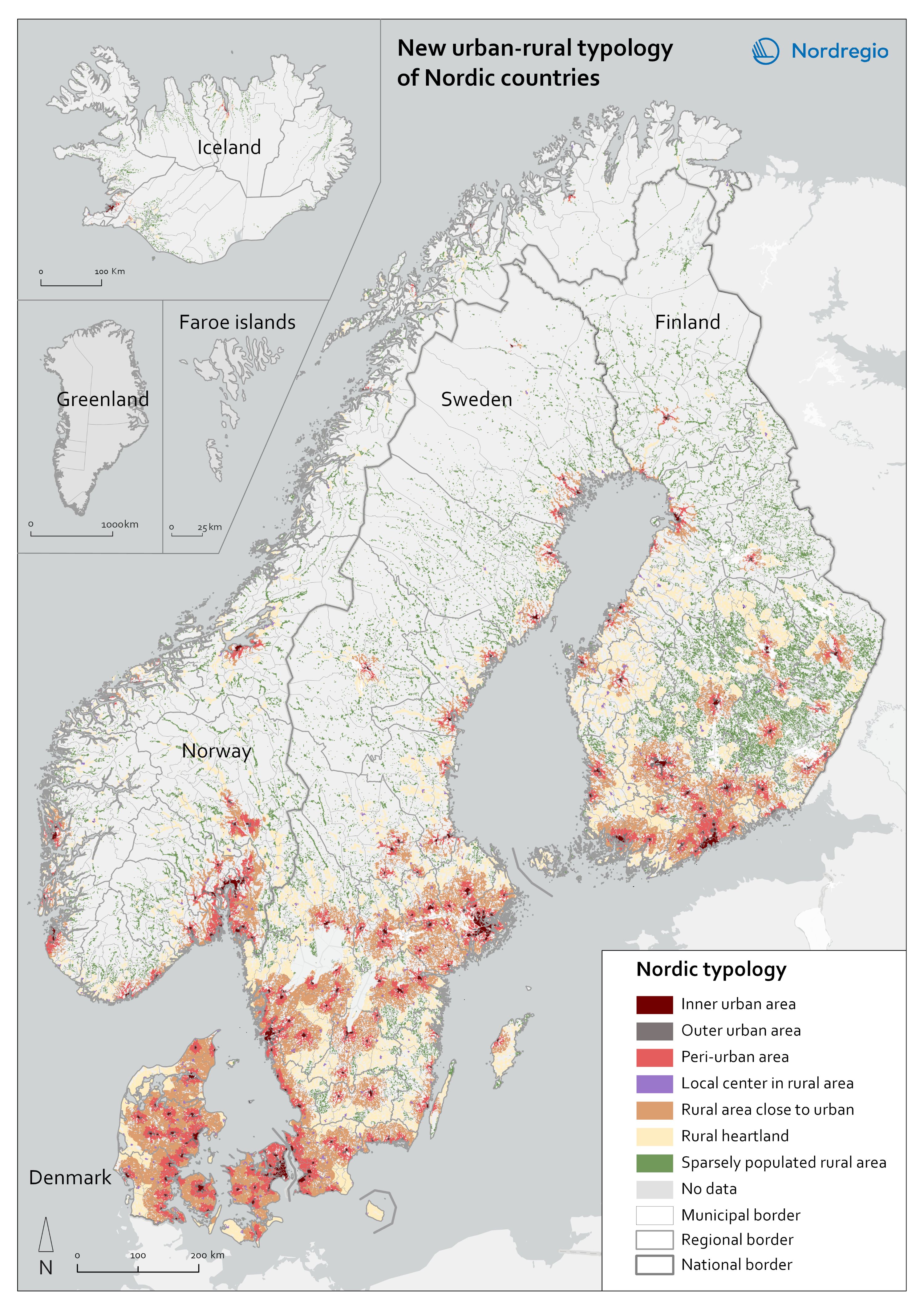
Figure 6: Nordic urban-rural typology based on the grid-level data
Source: Nordregio, 2023. Read more about Nordic urban-rural typology here.
3.2. National strategies for implementation and localisation of the SDGs
The Nordic countries have maintained an active involvement in sustainability, human rights and environmental issues for several decades. The explicit commitment to local action dates back to 1992 and the adoption of Local Agenda 21 at the United Nations Conference on Environment and Development (UNCED) in Rio de Janeiro, Brazil (Eckerberg & Dahlgren, 2007). This adoption represented a milestone, setting the stage for sustainable development initiatives at the local level.
Finland, Denmark, Norway and Sweden have all either formulated or previously developed specific national action plans outlining concrete actions for achieving the global goals set out in the 2030 Agenda
The 2030 Agenda Roadmap in Finland (2022); National Action Plan for Agenda 2030 in Denmark (2021); ‘Mål med mening’ (‘Goals with Meaning’) – an action plan to achieve SDGs in Norway (2021); Action Plan for Agenda 2030 for 2018–2020 in Sweden.
When it comes to localising the SDGs, Norway’s 2021 Action Plan for the 2030 Agenda (Meld. St. 40 (2020–2021) emphasises the central role of regional and local authorities in implementing the global goals. Similarly, the Swedish government’s proposition to parliament regarding implementation of 2030 Agenda (prop. 2019/20:188) underscores that nearly all the SDGs in the 2030 Agenda are linked to local and regional actions. Moreover, it emphasises that direct citizen engagement at these levels is the most effective way of achieving these goals. Accordingly, municipalities and regions are acknowledged as key to implementing the 2030 Agenda, bearing significant responsibility for executing sustainability initiatives(Agenda2030 samordnaren, n.d.). In Finland, the 2030 Agenda Roadmap (2022) places strong emphasis on the critical role of municipalities in contributing to biodiversity and carbon neutrality (Prime Minister’s Office, Finland, 2022), while Denmark’s National Action Plan for the 2030 Agenda (2021) underscores a strong commitment to broad engagement, including efforts at the local level (Regeringen, Denmark, 2021).
Box 2: The ‘flourishing people’ vision in the Åland islands – pursued through the Bärkraft network
The Åland Islands exemplify the localisation of the SDGs through their tailored ‘flourishing people’ vision and Seven Strategic Development Goals for 2030, customised to their unique needs and context. These goals encompass well-being, trust and participation, water quality, biodiversity, attractiveness, reduced climate impact, and responsible consumption and production.
Åland’s 16 municipalities are actively integrating the vision and goals. This integration is facilitated by the strong connection between municipalities and citizens and achieved through democratic representation and comprehensive municipal services. Municipal autonomy allows municipalities to tailor activities to local conditions: for instance, the city of Mariehamn has aligned its ‘Vision 2040’ with these goals. The goals are incorporated into municipalities’ daily operations, enhancing residents’ quality of life through education, social care and community involvement in decision-making, culture, sports and associations. This involvement builds trust and fosters participation. Environmental goals concerning water quality, biodiversity and sustainable practices are integrated into municipal planning, investments in infrastructure, and procurement processes.
The strategic development goals are pursued through the multi-stakeholder bärkraft.ax network, using specific mechanisms known as roadmaps. The bärkraft (sustainability) network coordinates sustainability efforts across Åland promoting a community-oriented approach to sustainable development through involving stakeholders from various sectors. The roadmaps serve as detailed guides outlining each goal’s necessary steps, sub-targets, priority measures, timelines and strategies.
Åland has published a status report on sustainable development every year since 2016, with the roadmap targets regularly measured to track progress. The bärkraft.ax network has also recently carried out an awareness and attitude survey linked to the sustainability agenda and the ‘flourishing people’ vision.
Åland’s statistics bureau, ÅSUB, is currently collecting data about the ‘flourishing people’ vision based on a quantification method devised at Harvard University. This method encompasses six areas used to measure an individual’s opportunities and the resources they need to flourish: 1) satisfaction with life; 2) mental and physical health; 3) meaningfulness; 4) character traits; 5) social relations; and 6) financial security.
Development and sustainability agenda for Åland
The Seven Strategic Development Goals
Åland’s ‘Everyone Can Flourish’ vision is available as an audio version on the bärkraft.ax website
3.2.1. National-level support to municipalities and LRGAs
Although there are obvious overlaps between the funding of the welfare system and the SDGs’ implementation, none of the Nordic countries has specific state funding allocated to municipalities and LRGAs for implementing the 2030 Agenda. National support generally involves including LRGAs and municipalities in various national forums, along with coordination and consultation processes. These efforts are aimed at integrating local and regional perspectives, thereby aligning local and regional initiatives with national SDG efforts.
Through these various initiatives, the Nordic governments utilise a multi-level governance approach to fosters interaction among diverse stakeholders across different levels of governance. Its overarching aim is to enhance knowledge sharing, facilitate shared decision-making and facilitate more effective implementation of the 2030 Agenda.
Other state-supported initiatives that facilitate SDG localisation include developing indicators to measure progress (see Chapter 6), establishing platforms for dialogue and best practice exchange, and enhancing knowledge through educational activities such as the development of learning materials (read more in Box 3).
Nordic LRGAs also receive state-level support for their international collaborations, particularly when it comes to facilitating their participation in the UN HLPF on Sustainable Development, highlighting the role played by global dialogue and exchange in achieving the SDGs.
Box 3: Examples of state-supported initiatives to localise the SDGs in the Nordic countries
In Denmark, the government has launched a dedicated section on emu.dk, the country’s educational portal, offering resources and inspiration for schools and educational institutions to integrate the SDGs into their curricula. This site offers a comprehensive introduction to the SDGs, addressing a variety of topics
In Iceland, the national government facilitated development of a toolbox for municipalities designed to assist peer learning among local authorities regarding implementation of the 2030 Agenda. The 2021 initiative was conducted as a collaborative effort involving Samband, Statistics Iceland and municipality representatives.
In Sweden, the ‘Glocal Sweden’ initiative was instrumental in engaging some 200 municipalities and all the country’s regions in networking and mutual learning, enhancing their understanding of the 2030 Agenda. The initiative, operational from 2018 to 2023, was implemented in collaboration with SALAR and the Swedish United Nations Association. The Swedish International Development Cooperation Agency (Sida) provided financial support, until a government decision to change the scope of Sida’s funding led to a dismantling of Glocal Sweden. The state still has a supporting role in SDG localisation through the county boards, which have been tasked with supporting local action and collaboration on the 2030 Agenda, as well as reporting to the national government on local and regional progress. The impact of this support is not yet clear.
In Finland, ILMAVA – a tailored, partly state-funded training programme conducted in 2021 – targeted the top leadership of municipalities. The initiative was designed to play a supportive role in achieving municipal climate goals, with pilot training encompassed orientation sessions, municipality-specific work, peer-learning opportunities and expert mentoring.
In Sweden, three government agencies (Vinnova, the Swedish Energy Agency and Formas) are jointly funding Viable Cities, a national innovation programme that brings together approximately 140 member organisations from businesses, academia and research institutes, public sector and civil society. The initiative, which began in 2017 and is scheduled to continue until 2030, has a mission-based approach aiming to achieve ‘climate neutral cities with a good life for all within planetary boundaries’. A key activity in Viable Cities is the Climate Neutral Cities 2030 initiative where 23 Swedish cities and their partners are spearheading efforts to become climate neutral by 2030 together with six government agencies. Governance innovation is at the core of the of Viable Cities approach, and the programme has co-created a so-called Climate City Contract as a tool to accelerate the climate transition. In addition, Viable Cities is working closely with the EU Cities Mission and the implementation platform NetZeroCities, supporting the acceleration of climate transition in 112 cities across Europe, among which seven are Swedish.
In Finland, the Ministry of the Environment-coordinated Sustainable City Programme (2019–2023) which accelerated sustainable urban development by fostering collaboration among ministries, municipalities and stakeholders. Roughly 80 municipalities and 50 organisations participated in tackling common urban sustainability challenges; fostering new solutions through pilots and projects; sustainable budgeting; replicating best practices; and sharing insights globally. Several initiatives, including the KEKANUA municipal indicator development, will continue to receive support from the Ministry of the Environment, in collaboration with research institutes.
The Hinku network in Finland, established in 2008, unites nearly 100 municipalities that have committed to an 80% reduction in greenhouse gas emissions by 2030. Coordinated by the state-owned Finnish Environment Institute (SYKE), the network promotes peer learning and provides a range of services, including emission calculation support.
While there is no direct funding specifically allocated for local-level implementation of the 2030 Agenda, national governments do provide grants or financial incentives for sustainability-related initiatives in areas such as gender equality, energy, district heating and climate change. Municipalities in Åland, for instance, can apply for funding from the provincial government for activities aimed at promoting collaboration among municipalities and boosting sustainability efforts. Additionally, the government has appointed ‘Bärkraftlotsar’, or sustainability pilots, who offer guidance to a wide range of local actors, including businesses and municipal bodies.
3.2.2. National coordination mechanisms
According to a self-assessment by the Nordic LRGAs in April 2024, the extent of national–subnational dialogue about implementation and monitoring of the 2030 Agenda varies widely across the region. This assessment is reflective of the current situation and acknowledges that conditions are subject to change. In Sweden, dialogue tends to occur through ad hoc consultation, indicating a more sporadic and less structured approach focused on some but not all the SDGs at any given time. Finland and Norway have adopted systematic consultation, demonstrating a more consistent, formalised process whereby LRGAs are present in national bodies for SDG monitoring. Iceland, meanwhile, has adopted a co-production approach, which entails the continuous, fluid and permanent inclusion of the subnational level in strategic and sectoral policies, as well as in Voluntary National Reviews (VNRs). Placing Denmark in the ranking shown in Figure 7 poses a challenge due to the country's specific context. Municipalities have largely taken ownership of the SDGs, acting as key implementers, particularly in areas like climate action plans. However, the dialogue between national and sub-national levels is less structured, with no established coordination mechanism. Despite this, the government emphasises co-creation and inclusion, for instance, by involving municipalities in the VNR and providing them with funding for educational initiatives related to the 2030 Agenda. While the overall assessment is broadly positive, the variations between countries indicate opportunities for peer learning to enhance dialogue processes (see Figure 7).
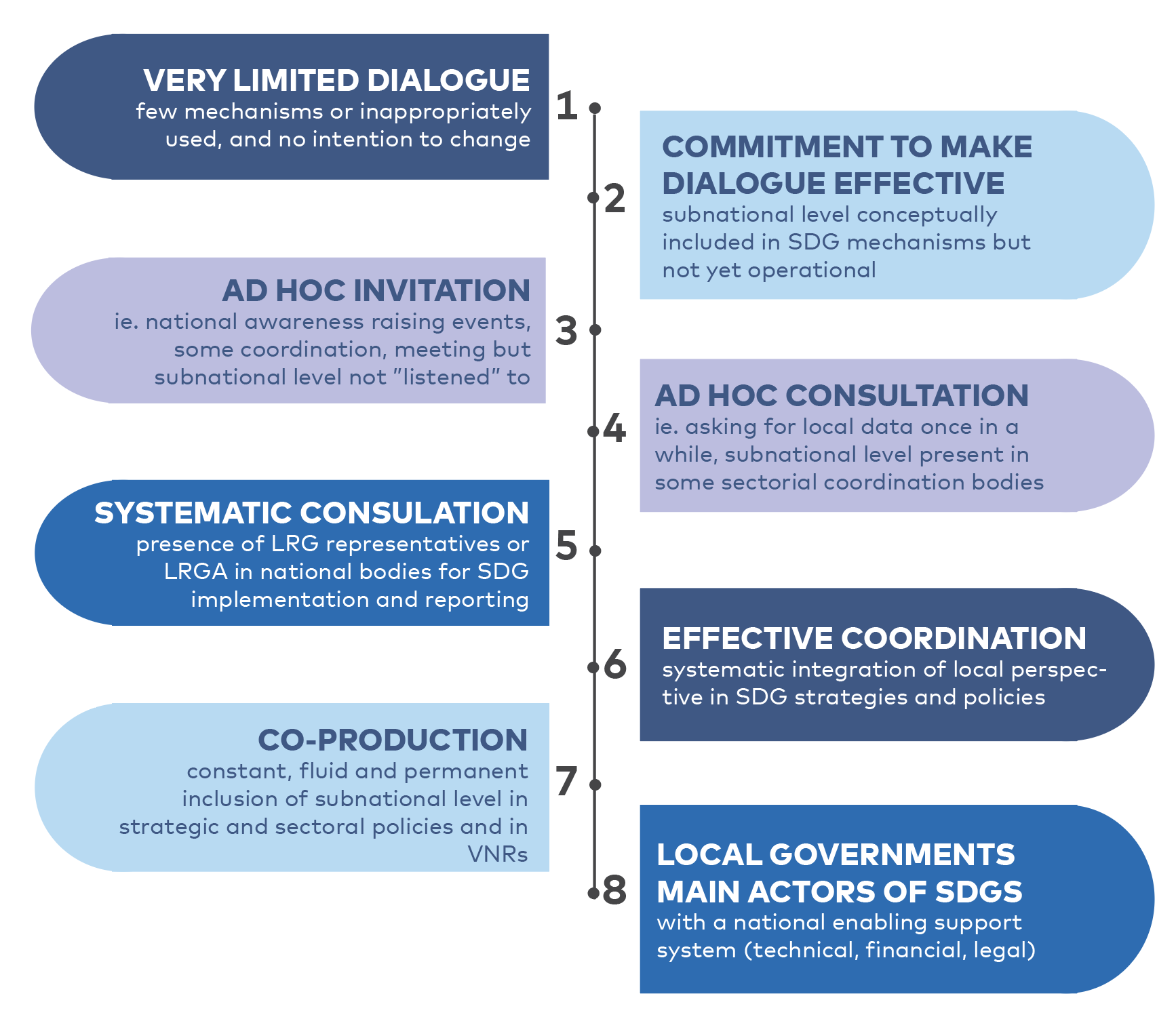
Figure 7: Schematic representation of the depth of national-sub-national dialogue for SDG implementation and monitoring.
Source: GTF, UCLG and UN-Habitat (2018).
Regardless of the differences outlined, all the Nordic countries’ coordination mechanisms aim to enhance collaboration and ensure efforts to achieve the SDGs are harmonised and inclusive. This ‘whole-of-society’ approach seeks to bring together stakeholders who can then work towards common sustainability objectives.
Finland and Iceland have established national platforms for coordinating the SDGs and sustainability efforts. These serve as central frameworks for aligning actions across various government levels – AFLRA and Samband are represented, along with the municipalities.
In Finland, the Finnish National Commission on Sustainable Development, chaired by the prime minister, has been active since 1993. It has evolved to integrate the SDGs into its ongoing efforts, with a primary focus on enhancing policy coherence and embedding sustainable development throughout the state administration. AFLRA holds a permanent seat on the commission, while municipalities are allocated one seat per term. Most recently, the cities of Turku and Espoo have represented this municipal seat.
In Iceland, the government initially set up a National SDG Steering Group, which included a special state–municipal cooperation platform. From 2022, this evolved into the National Steering Group of Sustainable Iceland and the Sustainable Iceland Cooperation Platform. These initiatives aim to enhance public sector coordination using the SDGs as a foundational framework for developing the country’s sustainable development strategy. Notable achievements include a toolbox for municipalities and the development of common municipal SDG indicators through the state–municipal cooperation platform. There was, however, a notable decline in the effectiveness of SDG support and coordination measures in 2023 when the cooperation platform was discontinued and resources redirected towards preparation of the new national sustainable development strategy.
The other Nordic countries have adopted different approaches to SDG coordination. From February 2020 until March 2024, Sweden had a national coordinator tasked with enhancing cross-sectoral collaborations and initiating efforts aimed at fulfilling the 2030 Agenda’s objectives. This role focused on five priority areas: 1) leadership for social transformation; 2) sustainable economic development; 3) transformation at local and regional levels’ 4) data for sustainable development; and 5) sustainable consumption and production. Sweden also appointed SDG coordinators within various ministries to ensure a holistic approach and foster inter-ministerial synergies, although these roles were dissolved in 2023–2024 due to a shift in government priorities. Meanwhile, regional state county boards continue to play a role in supporting SDG localisation.
Since 2001, Norway has implemented a consultation mechanism involving formalised meetings between KS and various government departments. The mechanism promotes political collaboration on various issues and aims to ensure that local and regional voices are integrated into national policymaking. This dynamic cooperation is evident in the VNR 2021, for which KS was specifically invited to prepare a subnational review. This collaboration also led to a political agreement between KS and the government focused on SDG-related actions and innovations. In Iceland, a similar process unfolded, with Samband contributing a chapter to the country’s VNR 2023. LRGAs in both countries have stressed the importance of VSRs in facilitating sustained dialogue with the state.
Another coordination mechanism used in Norway is Regjeringens Topplederforum for SDGs (the National Government’s Executive Leadership Forum for the SDGs), which acts as a platform for advancing the SDGs through creating a shared knowledge base around sustainability challenges and solutions. The forum serves as a critical bridge between different stakeholders – including government ministries, KS, business leaders, labour unions and civil society representatives – to enhance mutual understanding and coordinated action towards the SDGs.
In Denmark, the government-established ‘2030 Panel’ acts as an advisory body for integration of the SDGs on a political level. Established in 2017, it is composed of 20 diverse members representing key changemakers in Danish society. KL was represented on this panel until 2022.
3.3. LRGAs role and support to municipalities in localising the SDGs
Local-level implementation of the 2030 Agenda in the Nordic countries is predominantly driven by a bottom-up approach, with active engagement from municipalities and support from LRGAs. Collaboration between Nordic LRGAs and municipalities encompasses a range of activities, from educational initiatives, networking and peer learning to developing practical tools and resources (e.g. studies, surveys, reports) and executing specific projects that directly contribute to SDG implementation at the local level.
The specific focus of LRGA support activities varies across countries. Finland’s AFLRA focuses on assisting municipalities in developing leadership skills and integrating sustainability into strategic planning. Denmark’s KL concentrates on supporting municipalities with their climate action plans, while Iceland’s Samband promotes peer learning. In Sweden and Norway, SALAR and KS adopt a broader approach, managing several thematic networks that address various sustainability issues, in addition to their involvement in awareness-raising and educational activities. Below are some examples of LRGA activities that support SDG localisation, grouped according to four categories: 1) networks for municipalities and regions; 2) education and awareness-raising measures; 3) climate action plans; and 4) innovative procurement for sustainability.
3.3.1. Networks for municipalities and regions
Among AFLRA’s flagship initiatives in Finland is the Six Cities Network (SDG46), established in 2021 for Finland’s six largest cities: Helsinki, Espoo, Tampere, Vantaa, Oulu and Turku. Initially funded by the Ministry of Economic Affairs and Employment, and later supported internally by AFLRA and the participating cities, it serves as a prominent local-level initiative. The network aims to promote the six cities as sustainability frontrunners in the strategic steering of the SDGs, providing inspiration for other cities both nationally and globally. Peer learning through co-creation is a key concept utilised by the network.
AFLRA also runs a network called Climate Municipalities, which supports municipality climate initiatives by facilitating communication and interaction between projects and networks. Additionally, AFLRA conducts surveys on municipal climate efforts.
In Norway, the KS-supported National Sustainability Network, which includes 25 frontrunner municipalities and regional governments, aims to enhance the competencies and capabilities necessary for SDG achievement. Its activities involve actively developing methods to analyse and evaluate local and regional SDG efforts; enhancing local SDG data utilisation in governance mechanisms; bolstering citizen involvement and mobilisation; and promoting sustainable public procurement practices.
SALAR in Sweden manages numerous sustainability-related networks for municipalities and regions. These networks focus on a broad range of issues, such as SDG governance and steering; integrating gender equality and human rights; facilitating citizen dialogue; sustainability reporting within municipal companies; and climate and environmental issues. The SDGs are also seen as a helpful tool in the ongoing industrial green transition that many municipalities, mainly in the north, are experiencing.
3.3.2. Education and awareness-raising measures
In Finland, SDG46 has co-created SDG analysis tools, which are freely available on AFLRA’s website in Finnish, Swedish and English. These tools are specifically designed to facilitate integration of the SDGs into municipal strategic governance. As such, they are crucial for helping local governments effectively integrate sustainable practices into their operations and planning.
Similarly, in Sweden, SALAR has developed online training and research reports focused on governing with the 2030 Agenda. The material is designed to provide local leaders and government officials with the knowledge and tools to implement the SDGs within their respective governance frameworks. One notable peer-learning network with a 2030 Agenda focus was Glocal Sweden, (2018–2023) – established by SALAR and the UN Association of Sweden with national funding, the network included about two-thirds of the country’s municipalities and all 21 regions.
An important KS initiative in Norway is the monthly webinar series called Sustainability Fridays. Since 2020, these webinars have covered a broad range of sustainability topics, attracting a diverse audience from government, municipalities, academia and other sectors. As a result, they have become a popular platform for peer learning, sharing news and discussing sustainability issues. Additionally, KS has developed e-learning courses on the SDGs addressing both basic knowledge and more advanced topics, such as SDG conflicts and synergies. These resources aim to integrate the SDGs into various facets of municipal and regional governance and planning.
In 2021, Samband launched a six-month SDG support programme for Iceland’s municipalities with the objective of enhancing strategic SDG implementation and facilitating knowledge sharing/peer learning. Participating municipalities were divided into 10 SDG localisation frontrunners and 18 beginners. Frontrunners shared insights with each other and acted as mentors to the beginners, who in turn received tailored support from external experts. Furthermore, Samband offers short educational courses on localising the SDGs through its digital school for municipal leaders.
3.3.3. Climate action plans
KL in Denmark offers targeted support to municipalities developing and implementing climate action plans. These plans encompass a broad spectrum of municipal operations, including energy, infrastructure, social activities and children’s services. Developed through a facilitated peer-learning process, the plans comply with the international C40 Climate Action Planning Framework, which has been customised for the Danish context. The framework prioritises equity and equality, ensuring SDG alignment while focusing on achieving climate neutrality and adaptation. The work arising from the approach – which has been adopted by all 98 Danish municipalities – is conducted in partnership with the country’s five regions, Realdania and the Danish green think tank CONCITO, while certification of the municipal climate action plans is managed by the C40 Cities network.
KL has also established a special committee for climate action planning, which includes mayors and local politicians. The committee plays an important role supporting municipalities in the financing and implementation of their climate action plans. Additionally, the committee actively explores partnerships with data providers, industry and others, which can provide valuable resources and expertise when it comes to executing the climate strategies and plans.
3.3.4. Innovative procurement for sustainability
Swedish, Norwegian and Finnish LRGAs have sought to advance sustainability in innovative procurement processes within local governments and regions. These initiatives highlight the impacts that sustainable procurement can have at a local, national and international level.
In Sweden, SALAR and The Regional Office for Sustainable Procurement collaborate through the Sustainable Public Procurement initiative. A key aspect of this initiative is the promotion of circular procurement, including online training for stakeholders and assisting regions and municipalities to sign framework agreements for furniture upcycling and related services.
In Norway, KS has been instrumental in helping municipalities and regions adopt innovative and sustainable procurement solutions. In partnership with the Confederation of Norwegian Industries, KS established the National Programme for Supplier Development in 2010. This programme represents a unique collaboration between the public and private sectors, providing advice, information and expertise to Norwegian public entities regarding smarter, more sustainable and efficient procurement strategies. Additionally, the programme helps coordinate various joint procurement initiatives, particularly in the fields of health, digitalisation and climate change.
3.4. Key enablers and challenges
This section provides an overview of the success factors identified for localising the SDGs, along with insights into the key challenges facing this process. The information is drawn primarily from interviews conducted with the Nordic LRGAs.
3.4.1. Governance-related enablers
Internationally, the Nordic countries are renowned for their substantial achievements in implementing the 2030 Agenda. This success can partly be attributed to the decentralised Nordic governance model, which gives municipalities and regions substantial authority and responsibilities. Additionally, high levels of institutional and social capital at the local level, coupled with local government autonomy and decision-making capabilities, enable municipalities to engage effectively and strategically with sustainability issues. It is important to recognise, however, that the situation may be very different for small rural municipalities that lack institutional and social capital.
Governance in the Nordic countries is strengthened by a high degree of trust and open dialogue between local and national authorities, facilitated by various established platforms. This cooperative dynamic is reinforced by a collaborative culture, characterised by the informality and less hierarchical organisational structures typical of Nordic societies. The active involvement of diverse stakeholders, including civil society organisations, youth representatives and the business sector, further enriches this governance model.
3.4.2. Governance-related challenges
3.5. Key messages
- The Nordic countries’ decentralised governance model effectively supports SDG localisation, empowering municipalities to actively engage in sustainability and demonstrate strong local leadership. Given that municipal tasks and responsibilities align closely with the SDGs, the 2030 Agenda has become an effective tool for enhancing communities’ quality of life by improving the services provided to citizens.
- Localisation of the SDGs has been supported by a multi-level governance approach and political leadership across the national, regional and municipal level, integrating both bottom-up and top-down sustainability incentives. National-level shifts in policy focus have encouraged regional and local actors in some countries to adopt more proactive roles when it comes to pursuing the SDGs. Additionally, the ongoing national–local dialogue through designated SDG collaboration platforms remains valuable.
- Effectively achieving the 2030 Agenda and advancing sustainability requires a long-term approach, which can be hindered by recurring political shifts. To mitigate these challenges, the 2030 Agenda should be viewed less as a political agenda and more as a beneficial tool for the local development of both citizens and the environment. From this perspective, the political leadership’s main responsibility is to allocate resources effectively and choose which sustainability goals and measures to prioritise.
- LRGAs play an important role in promoting long-term local engagement with the 2030 Agenda in the Nordic countries, especially in times of limited state support. They do so through various recurring activities, such as facilitating peer learning; fostering networking; providing courses for local politicians and administrators; implementing awareness-raising activities; and, in several cases, producing VSRs. Moreover, they advocate for local-level needs and views at a national level.
- Although municipalities in Nordic countries have generally embraced a broader SDG agenda, there has been a shift in Denmark and Finland, where local governments are now increasingly focused on specific sustainability initiatives, particularly around climate-related efforts and plans to reach climate neutrality.