Photo: Thimas Drouault/ Unsplash.com
III. FINLAND: MISSION-ORIENTED INNOVATION POLICY?
Markku Sotarauta, Tampere University
1. Introduction
Finland is one of the first countries in the world to have embraced the idea of using a national innovation system to structure its science and technology policies (Lundvall, 2011). In doing so, it added an explicit innovation dimension to its policy mix. The drive to expand and institutionalise innovation policy instruments began in the mid-1990s, but slowed down following the financial crisis of 2008–2009 and the demise of Nokia’s mobile phone business, triggering an era of confusion in innovation policy (Laasonen et al., 2022). Despite all this, according to various indicators, Finland still ranks among the world’s top innovation economies (Dutta et al., 2022).
This century, Finnish innovation policy has broadened and deepened. It is now undergoing a process of self-reflection and searching for new initiatives and practices (Laasonen et al., 2022). The policy landscape has been in flux, and therefore this chapter is to some extent based on subjective judgements about the emerging forms of innovation policy. The main aim is to highlight the most relevant conceptual shifts and how they have been translated into practice, from the perspective of mission-driven innovation policy. Overall, Finnish innovation policy has followed the trajectory outlined by Schot and Steinmueller (2018), from technological push to emphasising the innovation system, to adding mission-oriented or transformative innovation policy to the repertoire (Sotarauta et al., 2023).
Finland has not pursued a distinctive and well-structured mission-oriented innovation policy. Rather than forming a distinct policy entity, the ‘missions’ are embedded in the main policy programmes. This chapter does not assess the potential impact or functionality of the selected strategy, but presents an overview of Finnish innovation policy and the role of mission orientation.
2. Innovation policy landscape in Finland
2.1 Overview of Finnish innovation policy
As described by Laasonen et al. (2022), Finnish innovation policy has deepened and broadened over time. Innovation Policy 1.0 was characterised by a technology-driven approach, while Innovation Policy 2.0 emphasises enhancing innovation systems. More recently, the emerging ambition to catalyse transformative changes, constitutes a new era: Innovation Policy 3.0 (see Sotarauta et al. 2023).
Finland’s science- and technology-based innovation (STI) policies have had a long history, dating back to World War II. From that time until the 1970s, when the foundations of the current framework were established, Finland – in a step-by-step manner, and not without difficulties – adopted a policy aimed at enhancing the technological capabilities of domestic industries, thereby reducing reliance on material-based production and exports (Alaja & Sorsa, 2021). The main objective was to build institutional capacity for science, technology and innovation. During this period, the foundational elements of what would later be termed an innovation system were established, including the National Technology Agency (Tekes) in 1983, the Science Council in 1963 (renamed the Science and Technology Policy Council in 1987 and the Research and Innovation Council in 2009), and the Academy of Finland in 1948 (modernised in 1969 and renamed the Research Council of Finland in 2023). Since the 1980s, city councils have established local technology-transfer mechanisms aimed at commercialising science and boosting collaboration between universities and companies (Häyrinen-Alestalo et al., 2006; Kostiainen & Sotarauta, 2003). The first local technology centre was established in Oulu in 1982 (Männistö, 2002), after which the initiative spread to many other cities around the country.
The recession of the early 1990s marked a pivotal moment for Finland. It wreaked economic havoc and signalled a shift from a linear science and technology policy to an innovation-driven approach, which necessitated a broader a systemic approach to boosting innovation. Throughout the 1990s, Finland incorporated into its policy framework concepts such as the innovation system and clusters, thereby emphasising indirect methods over direct intervention in product markets (Hernesniemi et al., 1996; Lemola, 2020; Schienstock & Hämäläinen, 2001). Over nearly three decades, National Innovation Systems (NIS)-oriented Innovation Policy 2.0 remained central to Finland’s strategy, as highlighted by initiatives such as the Strategic Centres for Science, Technology and Innovation (SHOK, 2007–2016) and the Centres of Excellence (CoE, 1994–2013), which promote collaboration at the national and regional levels to enhance specialisation. The NIS concept was also utilised rhetorically, to foster national agreement and consensus on the importance of knowledge and expertise (Miettinen, 2002) and the need to revitalise Finnish industrial policy (Ylä-Anttila & Palmberg, 2007). The mid-1990s onwards also witnessed the rapid growth of the Nokia-led ICT cluster, which increased confidence in the selected high-road strategy and added resources to the system.
The heightened focus on innovation policy and R&D efforts in the private sector led to a significant increase in Finnish R&D spending. Given that Finland’s R&D expenditure had been among the lowest among OECD countries during the 1970s (Alaja & Sorsa, 2021), this surge marked a notable shift. By 2010, Finnish R&D expenditure had risen to be among the highest globally, but then experienced a steep decline. Indeed, Finland’s innovation policy arrived at two critical junctures – one in the early 1990s, and the other around 2008–2010. The latter coincided with both the global financial crisis, which impacted economies worldwide, and Nokia facing fierce competition in the mobile phone market.
The many challenges resulted in a prolonged period of sluggish economic growth, spanning more than a decade (2010 onwards). This led to industrial restructuring, slow export growth, reduced industrial investment, declining employment levels, and decreased investment in research, development and innovation (RDI). This has been described as Finland’s ‘lost decade’ (OECD, 2017). In real terms, the Finnish GDP fell to the 2008 level in 2017 (Deschryvere et al., 2021). The various actions taken during the last decade paint a general picture of ‘innovation policy confusion’. An increasingly complex economic and political landscape led to hurried attempts to spur economic development, which revealed confusion and misunderstandings about the purpose of innovation policy and its expected outcomes (Laasonen et al., 2022). Moreover, in the 2010s, Finnish policy discourse around economic competitiveness began to emphasise fiscal sustainability and relative labour costs rather than innovation (Kaitila, 2019). Consequently, former flagship programmes were closed, and the once-successful innovation policy trajectory, which had attracted significant international attention, gradually faded away. The idea of national innovation systems, which had permeated Finnish innovation policy programmes from the 1990s to the 2000s, lost its programmatic status. Confusion reigned as to the purpose and instruments of innovation policy (Alaja & Sorsa, 2020).
The 2020s have seen the beginnings of Innovation Policy 3.0, which draws on the internationally recognised need to tackle grand challenges, based on emerging ideas around mission- or challenge-driven or transformative innovation policy. The need to transition from an institutional innovation system to a more entrepreneurially driven one is a common theme in innovation policy discourse (see Section 3).
2.2. The main innovation policy actors
The main innovation policy actors are categorised into four tiers (see Figure 6). The first-tier actors direct innovation policies at the highest national level, while the second-tier actors represent the ministries responsible for innovation policy within their mandate. For their part, the third-tier actors include agencies that specify policies and make funding decisions, while the fourth-tier actors represent the core of innovation, research, development and business-related organisations and groups.
Historically, the Research Innovation Council (RIC) and its predecessors have been regarded as a crucial, high-level coordinating mechanism within the national innovation system (Pelkonen, 2006; OECD, 2017). The Prime Minister chairs the RIC, and key ministers participate (five in 2024). In addition to the ministers, the RIC consists of seven members selected for their ability to comprehensively represent the research and innovation system. The attendees also include government-appointed permanent experts (six), including the leaders of central agencies, e.g. Business Finland and the Research Council of Finland, and three permanent secretaries from ministries, who serve as resident experts (Research and Innovation Council, 2024). RIC’s efficacy is not solely reliant on its structural elements, but also on significant cultural aspects in modern Finland. One such aspect is the consensus-seeking corporatist tradition, in which representative councils such as the RIC are regarded as customary channels for influencing policy decisions (OECD, 2017). Moreover, the Council functions within a primarily centralised administrative environment characterised by extensive networking among its members, which promotes a degree of coordination that frequently extends beyond formal protocols (Arnold & Boekholt, 2003; Pelkonen, 2006). Notably, the experience of collectively navigating the crisis of the early 1990s seems to have facilitated the Council’s transition from acting as a mediator to assuming a strategic leadership role (Pelkonen et al., 2008).
Given the emphasis on the relative importance of labour costs over innovation, the Prime Minister’s Office (PMO) has taken on a more active role in coordinating economic policies. This includes limited funding for commissioning targeted studies. The PMO has earmarked approx. €8 million specifically to support short-term applied research that is aligned with the government’s policy priorities. The rationale behind the PMO using research funds is that it helps to ensure that government-funded research addresses societal needs, rather than solely reflecting the objectives of individual ministries, and in doing so contributes to a unified research agenda. For example, the PMO has commissioned studies on mission-oriented innovation policy (Gronchi, et al. 2023). However, in 2023, Petteri Orpo’s government opted to terminate the PMO’s research funding (Valtioneuvoston…, 2023).
Finland’s second tier is described as a ‘two-pillar’ system, in that both the Ministry of Education and Culture and the Ministry of Economic Affairs and Employment (MEAE) take the lead in shaping public research and innovation policies and overseeing key research and funding agencies (OECD, 2017). The Ministry of Education and Culture is responsible for developing education, science, culture, sport and youth policies, as well as international cooperation in these fields (Ministry of Education and Culture, 2024). The MEAE is tasked with overseeing the regulation of the labour, goods and services markets, and supervising industry, energy, employment policy and regional development. It formulates policies across various areas, including industry, energy and climate, innovation and technology, internationalisation, health and safety at work, employment practices, regional development, competition, consumer policy and the integration of migrants. This wide-ranging mandate consolidates research areas that are often handled by separate ministries.
The third tier includes the various funding agencies that operate under the jurisdiction of their respective ministries. Notable among these are Business Finland (a merger between Tekes and Finpro in 2018), which is affiliated with the MEAE; and the Research Council of Finland, which operates under the Ministry of Education and Culture. For its part, Finnish Industry Investment, Ltd (FII) is ‘a state-owned, market-driven investment company that invests in venture capital and private equity funds and directly in Finnish start-ups and growth companies’. ‘FII has an industry-focused mission to promote economic growth, innovation and investments’ (Finnish Industry Investment Ltd, 2024).
In the Finnish system, as in Sweden, the agencies operate with significant autonomy from their parent ministries. Funding and other resources are typically managed at the agency level. According to the OECD (2017), this setup offers a notable advantage compared to more centralised ministry–agency relationships, as it anticipates future needs for decentralised, system-changing policies. The involvement of other ministries is increasingly crucial, mainly due to the emergence of cross-ministry strategies in fields such as the bioeconomy and healthcare. This trend is expected to continue as the societal challenges addressed by research and innovation agendas evolve, thereby necessitating greater involvement from a broader range of ministries.
The fourth tier comprises universities, state research institutes and university hospitals involved in R&D activities. While higher education institutions function independently, they are primarily overseen by the administrative arm of the Ministry of Education and Culture, which directs their activities and distributes government funding. Furthermore, other ministries provide funding for research and innovation endeavours, with some ministries directing affiliated sectoral research centres (e.g. the Finnish Institute for Health and Welfare and the Finnish Environment Institute). In addition, the Finnish Innovation Fund (Sitra) functions as an independent think-tank and funding body, focusing on future-oriented activities in the Finnish innovation system. It facilitates experimentation and acts as a catalyst for collaboration. Sitra is responsible to the Parliament of Finland. It is funded via investments stemming from endowment capital (approx. €950 million) initially granted by Parliament, with an annual operational budget of €30 million (Finnish Innovation Fund, 2022).
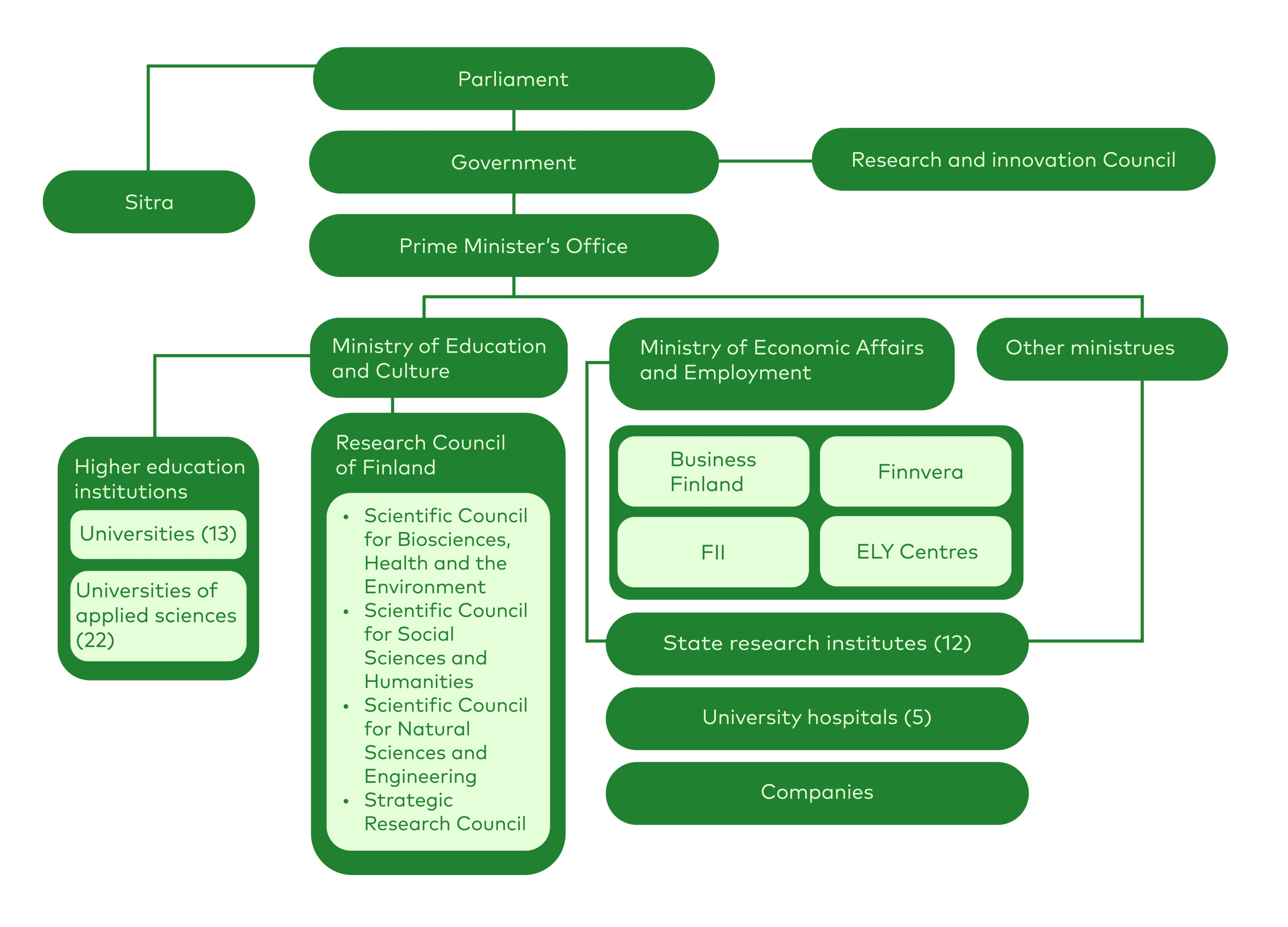
Figure 6. A simplified illustration of the main public innovation policy set-up in Finland (note that the figure is structural and does not inform funding streams). Source: Author’s own, based on OECD, 2017.
According to Statistics Finland, R&D expenditure in 2022 totalled €7.9 billion, of which the private sector’s share was 68.0%, the HEI sector 24% and the public sector 8%. In Finland’s 2024 state budget, the total allocation for R&D activities amounts to €2,511.3 million. The share of state research funding as a percentage of GDP is estimated at approximately 0.87% (Statistics Finland, 2024). The budgeted funding for R&D at universities amounts to €799.4 million (excluding external funding and basic funding of €1.9 billion, which is competitively allocated on computational criteria). For universities of applied sciences, this is €117.9 million (excluding basic and external funding). Moreover, the research appropriations of the Research Council of Finland amount to €553.5 million, of which the share for strategic research is €57.3 million. R&D funding for university hospitals is €29 million. The R&D funding for state research institutes totals €232.4 million, of which the biggest share (€96.6 million) is allocated to the Technical Research Centre (VTT). The funding for VTT’s R&D was increased by appropriations for a quantum computer and a pilot environment for microelectronics and quantum technology (Statistics Finland, 2024; Valtion talousarvioesitys, 2024).
3. Overview of the main funding instruments related to mission orientation or transformative innovation policy in Finland
3.1. Emerging mission-oriented innovation policy
The evolution of innovation policy has created a more intricate landscape for implementation, in which additional policy objectives and instruments are introduced alongside existing ones, rather than forming a distinct policy mix with clearly defined responsibilities. New goals and terminology replace old ones, without a clear understanding of how the new approach should impact specific measures.
The MOIP’s emphasis on strategic orientation, policy coordination, systemic approaches and collaborative policy formulation or implementation has been an elemental part of Finnish innovation policy since the 1990s, if not longer (see Schwaag Serger & Palmberg, 2022; Lemola, 2020). For example, the former regional CoE and the SHOK programmes were based on the principle that there needed to be clear objectives, broad coordination of policy actors across administrative boundaries, better integration of different policy instruments and broad consultation in the formulation and implementation of policies across different stages of the innovation chain and different types of instruments (Halme et al., 2023). These guiding principles were followed and implemented with varying degrees of success.
In a way, directionality has long been part of innovation policies, but the directions are being reoriented. For a prolonged period, Finland’s science, technology, and innovation (STI) policy directed resources predominantly towards sectors or clusters that were considered vital for the Finnish economy, including the forestry, metal and machinery, ICT and shipbuilding industries. RDI programmes were used to customise innovation policy for specific clusters. In recent years, however, the focus on individual industries and technologies has lessened, in favour of making room for broader economic sectors and megatrends (Laasonen et al., 2022). This emphasis on ecological and societal issues is new development in Finnish innovation policy, inspired by international policy formulations and debates. Health and well-being, the bioeconomy (including the circular economy) and digitalisation, as well as associated enabling technologies, are now spearheading the expanded scope of innovation policy. Recent discussions on innovation policy have portrayed missions as a way of addressing many pressing societal issues. What is particularly noteworthy in the present conversation is that the potential missions are believed to help mobilise various stakeholders towards a shared objective (Gronchi, et al. 2023).
Although Finland does not have an explicit MOIP, Finnish policy and academic communities are discussing and seeking ways to better integrate new ideas into the innovation policy mix. Indeed, various policy documents have included the concepts of transformative, challenge-based or mission-oriented approaches. In addition, several commissioned studies have clarified the concepts and introduced international experiences (Halme & Niinikoski, 2019; Gronchi et al. 2023; Halme et al., 2023). As such, they have sought ways to adopt a more mission-oriented or transformative approach to innovation policy. Consequently, missions may not serve as a starting point for innovation policy, but Finnish innovation policies are increasingly acknowledging, in both their goals and content, the importance of addressing complex societal problems. Missions are therefore increasingly embedded in existing or new programmes.
Interestingly, the core concepts are used in overlapping and somewhat circular ways. For example, MEAE’s report on innovation policy aimed at reforming the economy and society maintains that transformative innovation policy can be viewed as mission-oriented policy, in the sense that it focuses on addressing problem-, issue- or phenomenon-specific societal challenges, rather than supporting economic growth or renewal (Halme & Niinikoski, 2019). Similarly, it has been argued that innovation policy approaches focusing on systemic changes include both renewability (transformation) and mission-driven approaches (Halme et al., 2023). According to these reports, societal challenges constitute a new, broader, sustainable and longer-term goal. As such, they represent a clear transition from technology-centric approaches to systemic-level changes at the societal and behavioural levels. At the same time, however, the reports argue that while mission-driven approaches address societal problems through innovation, transformative innovation policy focuses on instigating significant socio-technical changes. They acknowledge that renewability and the mission-driven orientation often intersect, e.g. in societal missions (Halme et al., 2023). The reports therefore use the core concepts in a circular and overlapping manner. They conflate, on the one hand, the change-related concepts of ‘renewability’, ‘transformation’ and ‘transition’; and on the other hand, the innovation policy-related concepts of ‘mission’, ‘transformative’ and ‘challenge’. In doing so, these terms lose their distinctive meanings.
The core policy concepts, and the instruments based on them, form an embryonic ‘policy cloud’ that encompasses an explicit desire to move from pure economic growth and technology orientation to addressing grand challenges, without losing sight of the importance of economic issues.
3.2. Overall policy strategies of the 2020s
As outlined in the previous government’s sustainability roadmap (Hallituksen kestävyystiekartta, 2021), Finland is striving to attain carbon neutrality by 2035, halt biodiversity decline, advance the bioeconomy and circular economy, promote sustainable food systems, and enhance animal welfare. There is also a focus on using fewer non-renewable natural resources and transitioning to a sustainable utilisation of renewable ones. Further, efforts are being directed towards reducing reliance on fossil fuels, promoting renewable energy sources, and facilitating sustainable industrial renewal. In addition, the government aims to achieve ecological sustainability, both domestically and globally (Hallituksen kestävyystiekartta, 2021).
The sustainability roadmap envisions Finland maintaining its position as one of the most innovative nations in the world by the 2030s, with sustainable economic growth grounded in the prudent utilisation of natural resources and intangible value creation. Moreover, Finland aims to develop sustainable export solutions, including clean energy, low-carbon technologies, renewable materials, circular economy practices, clean food production, enhancements in quality of life and well-being, and associated technologies. Finland seeks to become a global leader in the circular economy, high-value bio-based products, low-emission energy systems, and climate and environmental solutions (Hallituksen kestävyystiekartta, 2021).
These high-level ambitions are translated into upper-level strategies and roadmaps for providing innovation-policy actors with a shared direction and common guidelines, including:
A roadmap for implementing Agenda 2030 (Valtioneuvosto 2022)
- In 2021, the Finnish National Commission on Sustainable Development formulated a national roadmap for the 2030 agenda. This medium-term plan outlines the necessary steps Finland must take to attain the objectives outlined in the global 2030 Agenda for Sustainable Development, as endorsed by the UN in 2015.
- The roadmap strives to advance the fulfilment of the Sustainable Development Goals through six systemic packages or areas of change. Each area of change within the roadmap encompasses a vision for 2030, a series of objectives aimed at translating these visions into tangible outcomes, and a depiction of key measures relevant to various sectors of society that are pivotal for effecting change. Alongside the six areas of change, the roadmap also delves into Finland’s efforts to aid in the execution of the 2030 agenda at the global level.
- The roadmap also includes five overarching principles that are of paramount importance in its implementation. These principles include ensuring fairness, equity and gender equality, promoting inclusion and engagement in all areas of society, prioritising the needs of the most vulnerable to ensure that no one is left behind, committing to long-term sustainability and policy coherence, and shouldering global responsibility.
National Roadmap for Research, Development and Innovation (Valtioneuvosto, 2020; Kansallinen tutkimuksen…, 2021)
- The Roadmap for RDI (2020) encompasses a series of strategies aimed at enhancing RDI. It offers directives for fostering sustainable growth and well-being, and for elevating the scale and aspirations of R&D endeavours. The aim is to increase R&D spending to 4% of GDP by 2030 (Parliamentary Working Group).
- The strategic development targets include improved competencies, a new partnership model and a more innovative public sector.
- The updated National Roadmap for RDI (2021) encompasses 36 initiatives, one of which acknowledges the significance of missions. As per the roadmap, the ministries will develop a novel challenge- and mission-oriented strategy for executing and financing research and innovation endeavours. The objective of these missions is to tackle significant global challenges and transitions that necessitate comprehensive solutions, by incorporating multiple policy measures (e.g. research, development and innovation, regulation, procurement, and information management) and fostering cross-sectoral collaboration. The planning process will leverage insights and assessments from current policies and funding mechanisms.
R&D funding law 2023 and the multi-annual plan for funding (Valtioneuvosto, 2023)
- The Parliamentary Working Group on Research, Development and Innovation outlined key areas for advancing the Finnish RDI system, and evaluated the status and allocation focus of R&D funding.
- The 2023 law on R&D funding establishes the yearly allocation of central government funds for R&D, and aims to increase public-sector R&D expenditure to 1.33% of GDP by 2030. The goal is to increase public and private investment to 4% of GDP by the end of the 2020s.
- The group underscored the significance of enhancing top-level leadership and coordination in research and innovation policy in Finland, to facilitate the holistic advancement of the RDI system.
- The working group was tasked with drafting an eight-year plan in accordance with the state law regarding R&D funding and other aspects related to R&D policy.
Circular economy programme (Ministry of Employment and the Economy, 2021)
- The programme advances the circular economy by outlining goals for the utilisation of natural resources. It sets targets and metrics, outlines the necessary actions to be implemented, and allocates resources aimed at fostering the circular economy and facilitating fundamental systemic change.
In their own ways, the RDI policies highlight the need to tackle societal and environmental issues alongside economic growth. Finland has subscribed to the ‘green growth’ concept (OECD, 2009), which highlights the importance of transitioning to more sustainable economic development models, through systemic economic change, as well as novel production methods and consumption patterns.
3.3. Research Council of Finland funding
In addition to emphasising research excellence, the Research Council of Finland addresses the interaction between research and societal actors, thereby stressing the importance of potential societal impact as a criterion in funding decisions (Arnold et al., 2022).
In 2024, the Research Council of Finland’s funding mandate is €553.5 million (Statistics Finland, 2024). It primarily functions through three scientific councils, encompassing biosciences, health and the environment; social sciences and the humanities; and natural sciences and engineering. It also includes several subcommittees, which make decisions regarding calls that cut across several scientific councils and the Finnish Research Infrastructure Committee. Notably, from the perspective of this report, the Research Council of Finland also hosts the Strategic Research Council (SRC). It was established in 2015 to ‘fund high-quality research with great societal relevance and impact. SRC-funded research seeks concrete solutions to grand challenges that require multidisciplinary approaches’ (Strategic Research Council, 2024). In addition to SRC funding, the Flagship Programme of the Research Council of Finland is another of the most relevant directed funding schemes with regard to both mission-oriented and transformative perspectives (Gronchi et al., 2023).
3.3.1. Strategic Research Council funding
The SRC’s programmes aim to support strategic, problem-focused research that supports the identification of solutions to societal issues, with a specific emphasis on policy-making. In addition, the SRC supports the revitalisation and competitiveness of businesses and industries, fosters advancements in working environments and the Finnish public sector, and can also substantiate policy-making processes and distribute research findings. The SRC allocates funding amounting to approximately €57.3 million annually. Both universities and public/private research institutes are eligible for this funding. The projects’ beneficiaries may include any relevant stakeholders.
The point of departure for SRC funding is to identify themes that represent crucial challenges for Finland’s future, which are sufficiently horizontal, broad and diverse, and which require a multidisciplinary approach. Every year, the SRC, following a consultation process, develops recommendations regarding strategic research themes. The themes of its projects are prepared in an interactive process including open online surveys, thematic workshops and open hearings for the scientific community and research users. At the end of this process, the SRC submits to the government a proposal for thematic areas and priorities for the following year (see Figure 7).
The SRC’s procedure combines top-down directionality with bottom-up proposal ideation and implementation. Ultimately, the government decides the themes upon which the SRC formulates research programmes and releases funding solicitations. Although these themes are directional, they are sufficiently broad in terms of implementation, and ensure both the autonomy of scientific and scholarly enquiry, and the collaboration between knowledge-producers and -users.
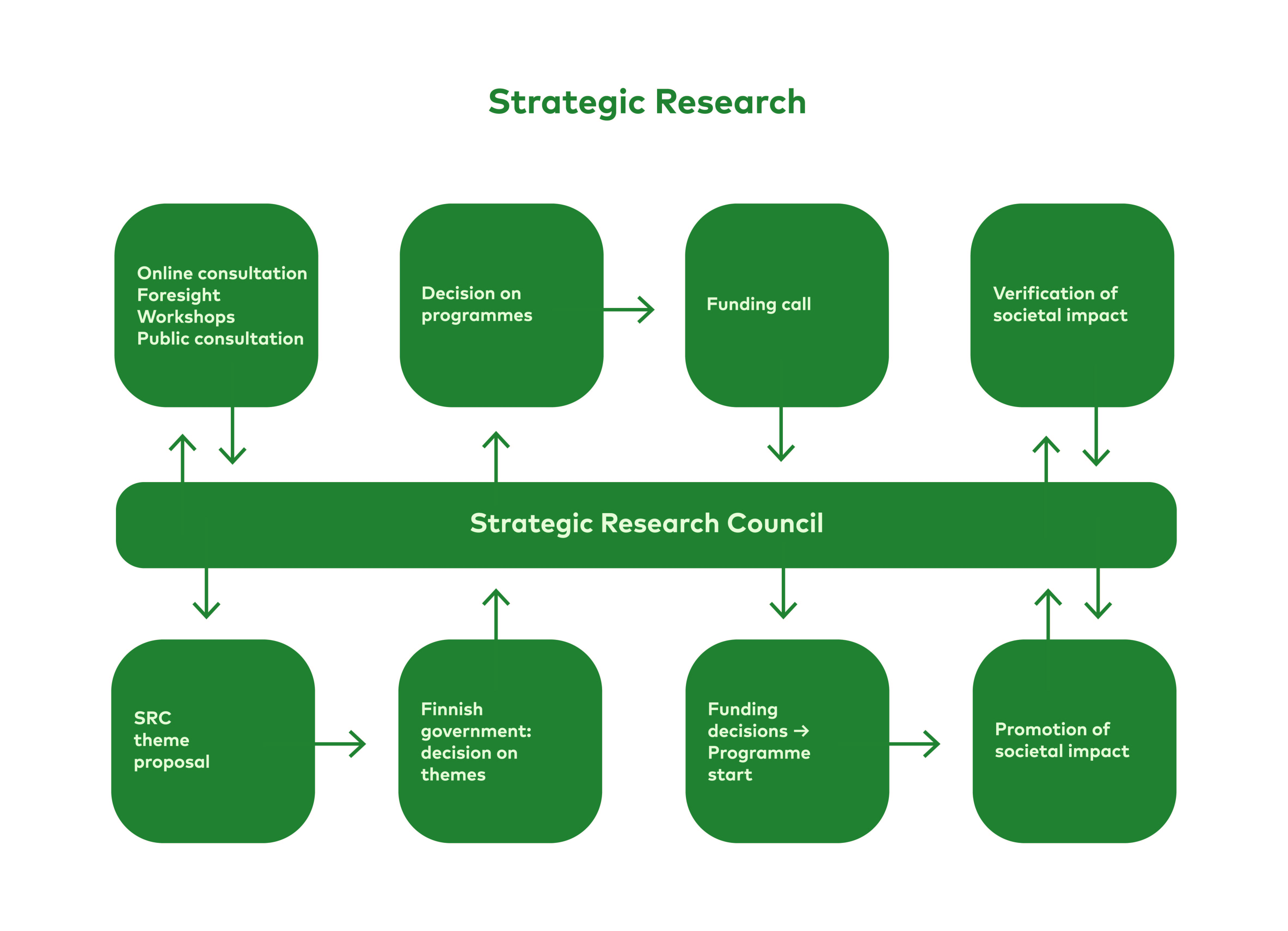
Figure 7. The Strategic Research Council’s process. Source: Adapted from the Research Council of Finland’s website: aka.fi
In 2024, there are 15 ongoing programmes, comprising 64 projects (see Strategic Research Council, 2024). Concluded projects include the following, which exemplify Finnish thinking on green growth.
Keys to Sustainable Growth (2018–2023)
- The programme’s objective was to generate strategies for how society, communities and individuals can employ innovative and sustainable methods to effectively utilise, cultivate and consolidate their resources and assets.
- It included six projects, all with extra-academic beneficiaries:
- Educational Transformations for Facilitating Sustainable Personal, Social and Institutional Renewal in the Digital Age (Growing Mind) (the University of Helsinki and the University of Turku)
- All Youth Want to Rule their World (ALL-YOUTH) (Tampere University, the University of Helsinki and the University of Eastern Finland)
- Sustainable Drug Discovery and Development with End-of-Life Yield (SUDDEN) (the University of Helsinki, the Finnish Environment Institute, the Demos Research Institute Oy, Aalto University, the University of Eastern Finland and LUT University)
- Circular Economy Catalysts: From Innovation to Business Ecosystems (CICAT2025) (Tampere University, Turku University of Applied Sciences, the University of Eastern Finland, the University of Jyväskylä, Tampere University of Applied Sciences and the University of Turku)
- New Packaging Solutions for People, Planet and Business (Package-Heroes) (VTT Technical Research Centre of Finland, Ltd; the Finnish Environment Institute; LUT University; the Natural Resources Institute Finland; and the Åbo Akademi University)
- Healthy Lifestyles to Boost Sustainable Growth (STYLE) (the University of Jyväskylä; the Finnish Environment Institute; the University of Turku; the VTT Technical Research Centre of Finland, Ltd; and the UKK Institute)
3.3.2. The Flagship Programme
The Research Council of Finland’s Flagship Programme is ‘an instrument that supports high-quality research and increases the economic and societal impact emerging from the research’ (Finnish Flagship Programme, 2024). Crucially, besides contributing to finding sustainable solutions to societal challenges, the flagships are expected to promote economic growth by developing new business opportunities. The programme emphasises intensive collaboration between knowledge producers, industry and other societal actors, and also considers the demand for international collaboration. Funding directed towards these programmes is both comprehensive and long-term. In 2024, the Finnish Flagship Programme encompasses 14 flagships. The host organisations include nine universities, six research institutes, Helsinki University Hospital, the Finnish Red Cross Blood Service and CSC - IT Center for Science, Ltd.
Of the 14 flagships, the following four, selected in the fourth call, exemplify the nature of the programmes:
Digital Waters Flagship (DWA)
- The project aims to facilitate a transition to the digital representation of real-world water systems (digital twins), to reproduce hydrological storage systems and their usage, with novel options for improved scenario analysis, planning and governance.
- It is directed by the University Oulu and partnered by the Finnish Geospatial Research Institute, the Finnish Meteorological Institute, Aalto University, the Finnish Environment Institute and the University of Turku.
- The project aims to generate new knowledge and understanding about declining learning achievement, increasing dropout rates, and the use of digital technology in education.
- It also aims to create a unique data infrastructure that integrates existing data from educational science, psychology, learning analytics, sociology and economics. The data infrastructure will serve as a platform for the utilisation of large longitudinal and register data.
- It is directed by the University of Jyväskylä and partnered by the University of Helsinki, Aalto University and the University of Turku.
Flagship of Advanced Mathematics for Sensing, Imaging and Modelling (FAME)
- This project aims to develop applied mathematics and physics methods to meet societal needs, such as medical imaging, industrial process monitoring, interpreting satellite data and testing structures for defects without breaking them.
- It is directed by the University of Eastern Finland and partnered by the University of Helsinki, LUT University, the University of Jyväskylä, Aalto University, the University of Oulu, Tampere University and the Finnish Meteorological Institute.
Finnish Quantum Flagship
- This project aims to bring together leading quantum experts in physics, computational science, mathematics, nanoscience and nanotechnology, as well as economics, to consolidate and expand Finland’s national ecosystem for quantum technology.
- It also aims to boost the emergence of new businesses and secure Finland’s position as a leading quantum-enabled society.
- It is directed by Aalto University and partnered by the University of Helsinki, CSC, the University of Jyväskylä, Tampere University, the University of Oulu and the VTT Technical Research Centre of Finland, Ltd.
3.4. Business Finland funding
Sustainable development, especially in support of climate and environmental goals, has long been a key priority for Business Finland and its predecessors’ (i.e. Tekes and Finpro) programmes. However, a significant change occurred in 2020, when Business Finland updated its strategy and selected sustainable development as one of its three main strategic objectives. Business Finland plays a central role in the Finnish innovation system. Its versatile funding repertoire covers almost all of the main innovation-related initiatives, from the commercialisation of science to boosting innovation and business ecosystems at national level. Two flagship programmes worth mentioning in the context of mission orientation are Business Finland’s missions and Growth Engines.
3.4.1. Business Finland’s missions
In early 2022, Business Finland initiated a new mission-oriented approach, and both of its first two missions were related to advancing the green transition. According to Business Finland, the green transition and, more broadly, sustainable development not only have significant business potential, but also offer promising opportunities to renew the Finnish economy. Business Finland’s missions represent its new approach to enhancing direct innovation funding aimed at addressing major global challenges and generating broad societal value. Each mission consists of a variety of programmes and campaigns that promote the missions’ objectives. In 2024, BF’s missions and their objectives are as follows:
- Diginative Finland (2023): Accelerating digital transformation and creating a global competitive advantage for Finnish companies.
- Carbon-Neutral Future (2023): Significantly increasing Finland’s global carbon handprint.
- Circular Transition for Zero Waste (2023): Supporting Finnish companies in their transition to the circular economy and zero waste, in a way that increases competitiveness and sustainable growth.
- Healthcare Reimagined 2035 (2023): Addressing global health challenges.
- Immersive Digital Life (2023): Enabling people and businesses to better collaborate, communicate and solve problems in open virtual environments.
3.4.2. The Growth Engine programme
The National RDI Roadmap (2020, 2021) outlines the necessity of consolidating business and research networks into larger ecosystems that can enhance the strength, breadth and impact of innovation policy. Autio and Thomas, for their part, laid the foundation for innovation policy by defining a platform as a ‘network of interconnected organisations, connected to a focal firm or a platform, that incorporates both production and use-side participants and creates as appropriate new value through innovation’ (Autio & Thomas, 2014). Based on this perspective, innovation ecosystems are therefore constructed on platforms. The platform strategy revolves around bringing together various interconnected actors and their expertise (Asheim et al., 2011), thereby creating and amplifying novel network effects. Indeed, in the 2020s, Finnish innovation policy explicitly prioritises building and orchestrating ecosystems that transcend spatial and industrial boundaries. The most prominent initiative in this context is the Growth Engine, which operates on a platform/ecosystem model. Instead of bolstering specific clusters, Growth Engines aim to cultivate ecosystems.
The Growth Engine programme offers financial support to platform companies rather than clusters (as was the case with the SHOK programme), with a view to achieving predetermined business objectives. The main objective is to generate billion-euro export businesses in Finland by launching new operators (known as platform companies) that will assume leadership roles in ecosystem-building. This not only enables companies to achieve their own business goals, but also generates broader effects across the ecosystem. The assumption is that boosting a platform company’s business can generate extensive networking effects and benefits for ecosystem members. Grant-winning platform companies are expected to build robust global ecosystems around them by mobilising a diverse network of companies of varying sizes, including research organisations and public actors, who can work together to achieve shared concrete business objectives.
Business Finland classifies potential platform companies into two categories: leading and challenger. Leading platform companies, known in Finnish as ‘veturi’ (locomotives), are well-established global entities with the capacity and willingness to significantly boost their R&D investments in Finland and take on leadership roles within relevant ecosystems. Business Finland provides funding of up to €20 million for a platform company, and €50 million for ecosystem partners. Challenger companies are those aiming to expand into global markets, address minor or more specific challenges, or develop entirely new business operations. Alternatively, they may be multinational corporations strengthening their global presence in Finland. While challenger companies also commit to new RDI investments, their commitments are smaller than those of leading companies. Funding for challenger companies is capped at €10 million, while ecosystem partners can receive up to €20 million (Business Finland, 2023).
From 2020 to 2023, Business Finland provided capital loans or grants (orchestration funding) to the following ecosystems, each of which is connected to green transition or digitalisation. The planned increase in cumulative RDI commitments amounts to €1,486 million (Business Finland, 2023).
Leading companies
- NESTE: Sustainable and globally scalable solutions for the R&D of raw materials that reduce the use of crude oil.
- ABB: Platforms for the optimal generation and consumption of electricity in a carbon-neutral society.
- FORTUM & METSÄ GROUP: New fibre-based products for consumer markets to reduce the carbon footprint.
- KONE: Mobility solutions for urban environments, in line with sustainable development principles.
- NOKIA 5G: Making Finland a pioneer in 5G networks and industrial 5G (ended).
- SANDVIK: Globally competitive electric and digital solutions for heavy machinery.
- TIETOEVRY: Trust-based digital services.
- KONECRANES: Zero4 material flow.
- WÄRTSILÄ: WISE – Wide & Intelligent Sustainable Energy.
- PATRIA: eALLANCE programme
Challenger companies
- BITTIUM: Seamless and secure connectivity.
- PONSSE & EPEC: Unlocking sustainability in off-road and commercial vehicles.
- DANFOSS: Fossil-free future.
- MIRKA: Shaping the green transition.
- KEMPOWER: Heavy electric traffic ecosystem.
- VALIO: Food 2.0
Connected to EU RRF
- BOREALIS POLYMERS: Sustainable plastic industry.
- MEYER TURKU: Climate-neutral cruise ship and shipyard.
- VALMET: Circular economy technology.
- NOKIA EDGE: Energy-efficient edge-computing.
- WÄRTSILÄ: Zero-emission marine.
3.5. Place-based efforts
The overall innovation policy approach in Finland is top-down, with agencies playing a central role in the implementation and framing of the actual contents. According to Schwaag Serger and Palmberg (2022), this has led to a focused implementation of generic ambitions, as formulated in various upper-level documents. In addition, the OECD (2017) found Finland to be comparatively centralised, with regions not having an established role in the formulation and execution of innovation policies. Indeed, as Suorsa (2007) observed, despite the acknowledged importance of cities and regions in innovation activities, Finnish national innovation policies did not consider the regional perspective in the 1990s or early 2000s. However, Jauhiainen and Suorsa (2008) note that the interconnection between innovation and regional development has since been formally recognised, and there have been efforts to integrate regionality into nationally designed innovation and regional policies – the CoEs (1994–2013) being the prime example (Häyrinen-Alestalo et al., 2006). However, the CoE programme and other efforts to localise innovation were more about integrating regional policy into innovation policies, rather than localising or regionalising top-down innovation policies.
The national innovation policies and innovation-oriented local/regional development strategies have served the primary cities well, as their development capacity allows them to integrate cities (as local clusters) into the national innovation framework. This not only fosters collaboration on innovation activities within local communities, but also facilitates participation in global markets (Jauhiainen & Suorsa, 2008). It should be noted that the active influence of actors in the main university cities has also allowed national policies to be formulated in a co-evolutionary process between various stakeholders at national and regional/local levels (Sotarauta & Kautonen, 2007). Overall, since the 1990s, innovation policy has, both directly and indirectly, pushed cities, regions and higher education institutions to specialise and strengthen their profiling areas.
Indeed, even though Finland appears to have a centralised and top-down innovation policy, its municipalities – most notably, the major cities – have since the 1980s and 1990s invested time and money in locally derived efforts (e.g. Männistö, 2002; Tervo, 2002; Kostiainen & Sotarauta, 2003). In addition, some explicit national policy programmes have attempted to implement integrative bottom-up and top-down programmes (e.g. Innovative Cities), with an emphasis on a customised approach that supports networking across scale and place. These policy initiatives have incentivised cities and regions to explore, identify their strengths, cultivate their distinctive knowledge bases and improve capacities through collaboration between public-sector entities, higher education institutions and industries.
The transition to ecosystem-oriented principles advocates locally and regionally rooted but globally interconnected and dynamic ecosystems. The aim of the ecosystem concept is to reduce the excessive emphasis on sectoral dimensions, without losing business and local/regional specificities. The newly adopted ecosystem approach prioritises facilitative policy interventions, such as adopting co-creation models to orchestrate engagement among diverse stakeholders, nurturing public-private partnerships and steering collaborative strategic initiatives (including foresight, visioning, cumulative knowledge generation and analysis, sense-making and collective learning). In addition, the ecosystem approach entails utilising public procurement to drive innovation and initiating a range of experimentation and innovation challenges (see Laasonen et al., 2022). The different approaches to local-level ecosystems strive to generate innovation platforms for experimentation (Anttiroiko, 2016; Sotarauta & Suvinen, 2019). Examples of ecosystem-oriented and facilitative approaches include ecosystem agreements and the Six City Strategy (2014–2022) –the six cities being Helsinki, Espoo, Tampere, Vantaa, Oulu and Turku. The Six City Strategy is mentioned here as a case that highlights the innovation-related activities of individual city councils and their joint efforts. The main goal was to build collaboration between cities, inhabitants and various partners on key themes relevant to cities. These included, among others, climate change, the circular economy, mobility, well-being, education and employment. The collaboration also enabled cities to experiment in areas such as smart mobility and cleantech. As a result, cities are generally highlighted as actors and testing grounds for innovation, as well as open platforms and physical spaces for evolving and growing ecosystems.
Another significant shift in locally oriented innovation policies is the transition from programme-based operations to a contractual model. The ‘ecosystem agreement procedure’, as facilitated by the MEAE in collaboration with city councils, exemplifies the operationalisation of the ecosystem approach. Ecosystem agreements aim to enhance cities’ innovation activities and foster collaboration relevant to particular urban areas. The ecosystem agreements are tailored to local requirements, and it is assumed that they can be effectively implemented at the local level. Agreements are formulated with cities to strategically allocate public and private research, development and innovation funding, with a view to enhancing (potentially) globally competitive ecosystems. The main aim of the agreements is to foster innovation ecosystems, essentially enhancing collaboration within networks, reinforcing key competencies, and boosting effectiveness. It is expected that these agreements will amalgamate research projects and networks into larger ecosystems, and as such support the attainment of objectives delineated in other national initiatives, such as the National Roadmap for Research and Innovation and the Export and International Growth Programme.
The implementation of the agreements aligns with the allocation of resources for sustainable urban development during the EU programming period 2021–2027. In 2021, the government earmarked €5 million for urban areas to initiate ecosystem agreements. Subsequently, following the initial phase, the agreements will be financed through EU funding designated for sustainable urban development. The participating cities and their respective thematic areas are as follows:
- Lappeenranta, including Imatra: Green electrification.
- Kuopio: Health and well-being technology and water expertise.
- Turku: Renewing industry and life sciences.
- Helsinki, Espoo and Vantaa: Smart and sustainable urban solutions; well-being and health technology; new learning environments and digital solutions for skills development.
- Oulu: Digitalisation in the changing urban environment; OuluHealth – digital well-being and health solutions; and sustainable circular economy and clean solutions.
- Joensuu: New business in the bioeconomy, circular economy and photonics.
- Lahti: Carbon-neutral circular economy and sports business.
- Jyväskylä: Physical activity, health promotion and well-being and industry renewal.
- Vaasa: Smart, sustainable energy systems.
- Tampere: Sustainable Industry X (SIX), buildings, energy and infrastructure, as well as digital health solutions.
- Seinäjoki: Sustainable regeneration of the food ecosystem and intelligent regeneration of industry.
- Mikkeli: The circular economy of the municipal water system.
- Pori: Technology metals and circular economy, as well as automation and robotics.
- Kokkola: Battery chemistry, circular economy and intelligent solutions that support industry.
- Kajaani, including Sotkamo: Measurement technology, high-performance computing, artificial intelligence and data centres.
- Rovaniemi: Arctic tourism, future well-being services and management of distances.
- (Agreements between the state and cities to speed up innovations in carbon reduction, digitalisation and well-being https://tem.fi/en/-/agreements-between-state-and-cities-to-speed-up-innovations-in-carbon-reduction-digitalisation-and-wellbeing)
4. Conclusion
The mission-driven approach to innovation has been welcomed in Finland as necessary, but thus far only small steps have been taken. Still, the clear consensus among ministries, agencies and the scholarly community is that innovation policy must address the grand challenges (Gronchi et al., 2023; Hämäläinen, 2022). Naturally, numerous challenges arise in terms of adoption and implementation, including the need to learn new capabilities and overcome the impact of short-term funding and coordination across sectors and organisations. In addition, siloed approaches and the lack of a long-term perspective have been seen as factors that impede transformative innovation policy. It has also been argued that Finland’s innovation policy lacks a shared vision, which, combined with siloing, hinders transformation (Gronchi et al., 2023; Hämäläinen, 2022).
The facilitative ecosystem approach aligns with policy discourse, and emphasises business ecosystems and the need to respect their dynamic, market-driven nature (Rinkinen, 2016). Indeed, the latest trends in Finnish innovation policy are based on the conviction that the country must move from institutional to entrepreneurial innovation systems (see for iRIS and ERIS, Ylinenpää, 2009). All of this implies that the public sector remains in the background, instigating various developmental processes and providing ecosystems with resources. It remains to be seen to what extent the need to increase the public sector’s role in directing mission-oriented efforts will be aligned with dynamic bottom-up ecosystems.
Interestingly, the mission-oriented or transformative innovation policy calls for the state to adopt a more strategic role, while the ecosystem approach advocates a more organic, self-organising approach. However, the somewhat contradictory nature of these two key trends does not appear to be fully recognised or discussed. This may be because the Finnish approach is pragmatic, and focuses on embedding sustainability-related missions and issues into innovation policy programmes and instruments, rather than launching separate mission-oriented or transformative innovation policies. In addition, virtually all policy programmes stress that solving grand societal and ecological challenges also creates business opportunities and offers ways to renew the Finnish economy.
Finland is not shy about directing innovation policies. Since the 1980s, it has had a relatively straightforward thematic and challenge-driven orientation, as well as a long tradition of formulating policies in broad consultation with a range of stakeholders and companies. Overall, demand was previously most visibly articulated in relation to business needs and technology orientations. However, in the 2020s, societal and ecological issues have become pervasive in all innovation policy-related documents, alongside business needs and technology development. Nevertheless, as Laasonen et al. (2022) observe, numerous approaches and ideas are still evolving, and have yet to form a coherent set of policy rationales, operational practices and instruments. The Finnish innovation policy of the 2020s is characterised by policy exploration and experimentation, but an integrated policy strategy has not been implemented in practice.
Similarly, while Finland is active in governance innovation (Kuivalainen et al., 2022), its adoption of the mission-oriented approach has been piecemeal, with some elements being incorporated into various projects, programmes and national funding mechanisms. The many transformative ambitions are not always clear, as the ecosystem approach necessitates letting concrete forms emerge from the bottom up, enabled by public actors and public funding, but also orchestrated by companies or universities. It remains to be seen whether the implicit world-saving ambitions will gradually become more explicit as the actors in orchestrated ecosystems adopt new operational forms and content, thereby embedding new ambitions in these ecosystems. Alternatively, the ecosystems will dissipate and turn into piecemeal activities.
In sum, Finland follows an overarching and embedded mission-oriented strategic framework consisting of multiple missions or mission areas across many programmes. Crucially, the ecosystem approach implicitly questions the long-standing appreciation of the importance of a grand shared vision, and instead (implicitly) emphasises the usefulness of relatively fuzzy but visionary concepts. As a consequence, actors are forced to reconsider their visions, their positions in the ecosystems, and their ways of acting. The emergent nature of ecosystems allows a variety of actors to collectively search for direction. A well-run ecosystem approach, with its loose conceptual tools, may empower multi-faceted and boundary-spanning endeavours that have the potential to orchestrate ecosystems.
5. References
Alaja, A., & Sorsa, V.-P. (2021). The evolution of the national innovation system as programmatic policy idea in Finland. Science and Public Policy, 47(6), 834–843.
Ali-Yrkkö, J., & Hermans, R. (2002). Nokia in the Finnish Innovation System. Discussion Paper 811. The Research Institute of the Finnish Economy. Helsinki.
Anttiroiko, A-V. (2016) City-as-a-platform: The rise of participatory innovation platforms in Finnish cities. Sustainability, 8(9)
Arnold, E. & Boekholt, P. (2003) Research and Innovation Governance in Eight Countries A Meta-Analysis of Work Funded by EZ (Netherlands) and RCN (Norway). Technopolis https://www.researchgate.net/profile/Erik-Arnold/publication/309617082_Research_and_Innovation_Governance_in_Eight_Countries_A_Meta-Analysis_of_Work_Funded_by_EZ_Netherlands_and_RCN_Norway/links/5819fe0a08ae3c82664c0fc6/Research-and-Innovation-Governance-in-Eight-Countries-A-Meta-Analysis-of-Work-Funded-by-EZ-Netherlands-and-RCN-Norway.pdf Accessed, February 13, 2024.
Arnold, E., Warta, K., Halme, K., Evers, G., van der Graaf, A., Haila, K., Järvelin, A.-M., Kettinen, J., Kolarz, P., Krismer, R., Piirainen, K. & Sutinen, L. (2022) Evaluation of the Academy of Finland. Publications of the Ministry of Education and Culture, Finland 2022:7; Helsinki.
Asheim, B. T., Boschma, R., & Cooke, P. (2011). Constructing regional advantage: Platform policies based on related variety and differentiated knowledge bases. Regional Studies, 45(7), 893–904.
Autio, E., & Thomas, L. (2014). Innovation ecosystems: Implications for innovation management. In M. Dodgson, N. Phillips, & D. M. Gann (Eds.), The Oxford handbook of innovation management, 204–228. Oxford University Press.
Business Finland. (2023). Challenge competition 2023 for leading companies & challengers [Webinar]. https://www.businessfinland.fi/48f080/globalassets/finnish-customers/01-funding/06-ecosystems/webinar-29.5.23-veturiyritysinfo-challenge-competition-for-leading-companies-2023.pdf Accessed March 29, 2024
Deschryvere, M., Husso, K., Suominen, A. (2021) Targeting R&D intensity in Finnish innovation policy. OECD Science, Technology and Industry Working Papers 2021/08. OECD; Paris.
Dutta, S., Lanvin, B., Wunsch-Vincent, S., Rivera León, L., & Wuncsh-Vinsent, S. (2022). Global innovation index 2022: What is the future of innovation-driven growth? World Intellectual Property Organization. https://doi.org/10.34667/TIND.46596 Accessed, March 15, 2024
Finnish Flagship Programme. (2024). Research Councilf of Finland. https://www.aka.fi/en/research-funding/programmes-and-other-funding-schemes/flagship-programme/ Accessed, March 15, 2024
Finnish Industry Investment Ltd. (2024). Creating new, global Finnish success stories – Market change we are striving for. https://tesi.fi/en/about-tesi/ Accessed, March 15, 2024
Gronchi, I., Leppänen, J., Sarkia, K., Ahokas, J., Järvensivu, P., Salminen, V. & Uitto, H. (2023) Missiovetoisuus uudistavan tutkimus- ja innovaatiopolitiikan aikakaudella: Strategisen toimeenpanon malli. Valtioneuvoston selvitys- ja tutkimustoiminnan julkaisusarha 2023:33. Helsinki.
Hallituksen kestävyystiekartta (2021) Valtioneuvoston julkaisuja 2021:43. Helsinki.
Halme, K., Järvelin, A.-M., Haila, K., Reid, A. & Barberis, M. (2023) Vihreää siirtymää tukeva innovaatiopolitiikka: Toimintamallit ja käytännöt. Työ- ja elinkeinoministeriön julkaisuja 2023:20. Helsinki.
Halme, K. & Niinikoski, M.-L. (2019) Taloutta ja yhteiskuntaa uudistava innovaatiopolitiikka. TEM-raportteja 2019:7. Helsinki.
Hämäläinen, H. (2022) Yhteiskunnalliset ongelmat osana Suomen innovaatiopolitiikkaa : uuden sukupolven missiolähtöisyys tiedontuotannon regiimin neuvottelussa. Master’s Thesis. University of Helsinki. https://helda.helsinki.fi/server/api/core/bitstreams/965d0e09-d62a-4550-8a39-25c01df57873/content Accessed February 12, 2024
Häyrinen-Alestalo, M., Pelkonen, A., Teräväinen, T., & Waltari, S.-T. (2006). Integrating regional policy with technology policy – The experience of Finland. Fennia – International Journal of Geography, 184(1), 3-17.
Jauhiainen, J. S., & Suorsa, K. (2008). Triple helix in the periphery: The case of Multipolis in Northern Finland. Cambridge Journal of Regions, Economy and Society, 1(2), 285–301.
Kaitila, J. (2019). From innovation to labour costs: Change of emphasis in Finnish competitiveness policy ideas after the Eurocrisis. Competition and Change, 23(1), 47–70.
Kansallinen tutkimuksen, kehittämisen ja innovaatioiden päivitetty tiekartta (2021) https://okm.fi/documents/1410845/22508665/Kansallinen+tutkimuksen,+kehittämisen+ja+innovaatioiden+päivitetty+tiekartta.pdf/b47931b4-3490-01a4-b2e2-83193329c5ef/Kansallinen+tutkimuksen,+kehittämisen+ja+innovaatioiden+päivitetty+tiekartta.pdf?t=1639483581267 Accessed February 12, 2024
Kostiainen, J., & Sotarauta, M. (2003). Great leap or long march to knowledge economy: Institutions, actors and resources in the development of Tampere, Finland. European Planning Studies, 11(4), 415–438.
Kuivalainen, M., Hauhtonen, R., Alanko, I., Sanz, A. & Pussinen, P. (2022). Public sector innovation barometer: Central government results. Publications of the Ministry of Finance 2022:78. Helsinki.
Laasonen, V., Kolehmainen, J., & Sotarauta, M. (2022). The complexity of contemporary innovation policy and its governance in Finland. Innovation: The European Journal of Social Science Research, 547-568.
Larrue, P. (2021). The design and implementation of mission-oriented innovation policies: A new systemic policy approach to address societal challenges. In OECD Science, Technology and Industry Policy Papers (No. 100). OECD Publishing. https://doi.org/10.1787/3f6c76a4-en Accessed March 15, 2024
Lundvall, B.-Å. (2011). Notes on innovation systems and economic development. Innovation and Development, 1(1), 25–38.
Miettinen, R. (2002) National innovation system: scientific concept or political rhetoric. Edita; Helsinki.
Ministry of Education and Culture (2023) Duties and objectives of the Ministry of Education and Culture (2024) https://okm.fi/en/duties-and-objectives Accessed March 15, 2024
Ministry of Employment and the Economy (2021) Government resolution on the strategic programme for circular economy. 8 April 2021. https://ym.fi/documents/1410903/42733297/Government+resolution+on+the+Strategic+Programme+for+Circular+Economy+8.4.2021.pdf/309aa929-a36f-d565-99f8-fa565050e22e/Government+resolution+on+the+Strategic+Programme+for+Circular+Economy+8.4.2021.pdf?t=1619432219261 Accessed February 12, 2024
Männistö J. (2002). Voluntaristinen alueellinen innovaatiojärjestelmä: Tapaustutkimus Oulun alueen ICT-klusterista. Rovaniemi, Acta Universitatis Lapponiensis. Rovaniem.
OECD. (2017). OECD reviews of innovation policy: Finland 2017. https://doi.org/10.1787/9789264276369-en Accessed February 1s, 2024
Pelkonen, A. (2006). The problem of integrated innovation policy: Analyzing the governing role of the Science and Technology Policy Council of Finland. Science & Public Policy, 33, 659–680.
Pelkonen, A., Teräväinen, T. & Waltari, S-T. (2008) Assessing policy coordination capacity: higher education, science, and technology policies in Finland. Science and Public Policy, 35(4), 242-252.
Research Council of Finland. (2024). What we are. https://www.aka.fi/en/about-us/what-we-do/what-we-are/
Research and Innovation Council (2024) https://valtioneuvosto.fi/en/research-and-innovation-council Accessed March 28, 2024
Rinkinen, S. (2016) Clusters, innovation systems and ecosystems. Studies on innovation policy’s concept evolution and approaches for regional renewal. Acta Universitatis Lappeenrantaensis 728. Lappenranta.
Schienstock, G., & Hämäläinen, T. (2001). Transformation of the Finnish innovation system. Sitra Report Series 7. Helsinki; Hakapaino Oy.
Schot, J., & Steinmueller, W. E. (2018). Three frames for innovation policy: R&D, systems of innovation and transformative change. Research Policy, 47(9), 1554–1567.
Sitra’s Strategy 2022. (2022) Finnish Innovation Fund. https://media.sitra.fi/app/uploads/2021/06/sitra_strategy_2022.pdf Accessed, February 12, 2024
Sotarauta, M., & Kautonen, M. (2007). Co-evolution of the Finnish national and local innovation and science arena: Towards a dynamic understanding of multi-level governance. Regional Studies, 41(8), 1085–1098.
Sotarauta, M., & Suvinen, N. (2019). Place leadership and the challenge of transformation: Policy platforms and innovation ecosystems in promotion of green growth. European Planning Studies, 27(9), 1748–1767.
Sotarauta, M., Kolehmainen, J., & Laasonen, V. (2023). Evolving innovation policy rationales in Finland. In E. Pekkola, J.-E. Johanson, & M. Mykkänen (Eds.), Finnish public administration, 197–214. Springer International Publishing.
Statistics Finland. (2024). Valtion tutkimus- ja kehittämisrahoitus kasvaa 6,6 % vuoden 2024 talousarviossa. https://www.stat.fi/julkaisu/cln1d0y49udv80cut3f6uw2af# Accessed March 15, 2024
Strategic Research Council. (2024). Programmes and projects. https://www.aka.fi/en/strategic-research/strategic-research/strategic-research-in-a-nutshell/programmes-and-projects/ Accessed March 15, 2024
Suorsa, K. (2009). Innovation systems and innovation policy in a periphery: The case of northern Finland. 183. Nordia Geographical Publications 38:4. Oulu.
Tervo, H. (2004). Rakkaudesta teknologiaan: Toimijaverkostonäkökulma Oulun IT-keskittymän rakentumiseen ja toimintaan.Acta Universitatis Lapponiensis. Rovaniemi.
Valtioneuvosto (2020) Kestävän ja kehittyvän yhteiskunnan ratkaisuja tuottava Suomi. https://okm.fi/documents/1410845/4449678/Tutkimus-,+kehittämis-+ja+innovaatiotoiminnan+tiekartta/259864dc-a31c-cbcf-30ad-e2222724ccfa/Tutkimus-,+kehittämis-+ja+innovaatiotoiminnan+tiekartta.pdf?t=1590137297000 Accessed February 12, 2024
Valtioneuvosto (2022) The 2030 Agenda Roadmap of the Finnish National Commission on Sustainable Development Finnish National Commission on Sustainable Development. Publications of the Prime Minister’s office 2022:17. Helsinki. https://julkaisut.valtioneuvosto.fi/bitstream/handle/10024/164200/VNK_2022_17.pdf?sequence=4&isAllowed=y Accessed March 15, 2024
Valtioneuvosto (2023). Multi-annual plan for the use of research and development funding. Final report of the Parliamentary RDI Working Group 2022. Publications of the Finnish Government 2023:56. https://julkaisut.valtioneuvosto.fi/bitstream/handle/10024/165008/VN_2023_56.pdf?sequence=4&isAllowed=y Accessed February 12, 2024
Valtioneuvoston selvitys- ja tutkimustoiminta lakkautetaan (2023) https://vnk.fi/-/valtioneuvoston-selvitys-ja-tutkimustoiminta-lakkautetaan Accessed March 15, 2024
Valtion talousarvioesitys. (2024). https://budjetti.vm.fi/indox/sisalto.jsp?year=2024&lang=fi&maindoc=/2024/tae/valtiovarainministerionKanta/valtiovarainministerionKanta.xml&opennode=0:1:251:697:767 Accessed March 15, 2024
Veugelers, R., Aiginger, K., Edquist, C., Breznitz, D., Murray, G., Ottaviano, G., Hyytinen, A., Kangasharju, A., Ketokivi, M., Luukkonen, T., Maliranta, M., Maula, M., Okko, P., Rouvinen, P., Sotarauta, M., Tanayama, T., Toivanen, O. & Ylä-Anttila, P. (2009). Evaluation of the Finnish National Innovation System – Full Report. Taloustieto Oy. Helsinki University Print; Helsinki.
Ylä-Anttila, P., & Palmberg, C. (2007). Economic and industrial policy transformations in Finland. Journal of Industry, Competition and Trade, 7(3–4), 169–187.
Ylinenpää, H. (2009). Entrepreneurship and innovation systems: Towards a development of the ERIS/IRIS Concept. European Planning Studies, 17(8), 1153–1170.