22. Socially inclusive and climate neutral cities
Planning for socially mixed and inclusive neighbourhoods
Nordic cities have witnessed a general trend over recent decades towards increased urban segregation, prompting a wide range of policy and planning responses among the region’s countries. Amid this context, the Planning for Socially Mixed and Inclusive Neighbourhoods project examined how Nordic governments and cities can address urban segregation challenges through policies, strategies and plans that foster greater social inclusion.
The project approached the issue from a variety of perspectives, investigating national policies in relevant fields (e.g. housing, education, employment, social policy, integration, urban planning) in all five Nordic countries. Alongside this, it studied the use of indicators in supporting policy interventions, participatory planning approaches and urban planning/design measures aimed at improving physical and social living environments in 13 Nordic cities.
The study concluded that counteracting segregation and creating more socially inclusive cities is a complex, challenging task. In particular, close collaboration between actors at various levels of policy and planning, as well as citizen/stakeholder engagement throughout planning and development processes, are key preconditions for inclusive, effective implementation.
The case studies highlight that no universal blueprint for creating more inclusive cities and neighbourhoods exists, and that each approach has its advantages and limitations. For example, interventions in the physical living environment can improve local living conditions and neighbourhood vitality, particularly if residents and the actors involved engage in meaningful co-planning. However, when it comes to addressing the broader structural causes of urban segregation – such as social inequalities – the effects of physical interventions appear somewhat limited, requiring accompanying interventions in other policy fields.
Overall, a holistic, multi-sectoral approach is essential for effectively tackling urban segregation. This in turn requires long-term planning and ongoing efforts that extend beyond the limited time frame of individual projects.
Nordic climate neutral cities
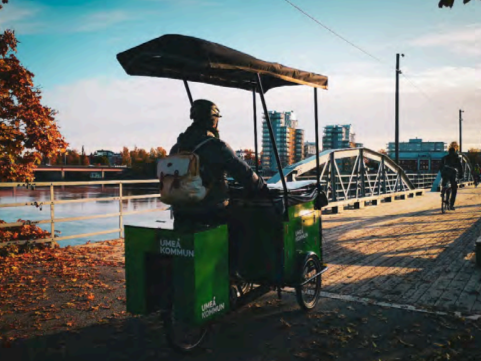
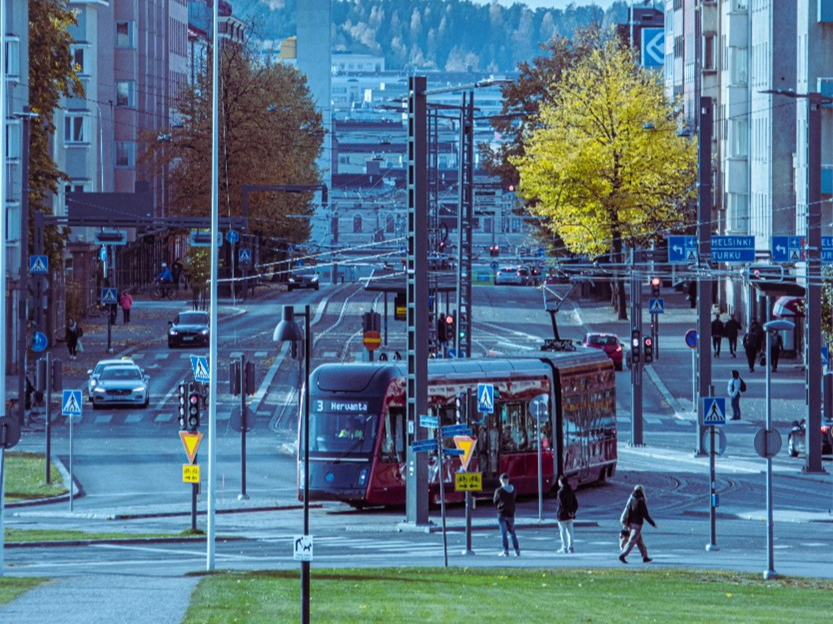
The Nordic Climate Neutral Cities project (2023-2025) investigated how Nordic municipalities are working across various sectors (e.g. land use; buildings and construction; transport and mobility) to achieve climate neutrality, including through spatial planning. The study utilised a multi-level governance perspective in order to better understand the challenges and opportunities presented by these efforts.
Through nine case studies across the Nordic countries, researchers examined how the policy capacity – encompassing regulatory autonomy and financial in/dependence – and institutional capacity of local governments play a crucial role in their climate work. As a result, a number of key strengths and weaknesses were identified among Nordic cities pursuing climate neutrality.
More specifically, the study demonstrated that despite the remarkable progress made by Nordic municipalities in this regard, regulatory complexities, siloed approaches and a reliance on national funding can present obstacles to local-level climate initiatives. At the same time, Nordic cities can benefit from stronger institutional capacity (including knowledge resources and active participation in climate networks), political commitment and autonomy in spatial planning.
Nevertheless, the proven ability of many Nordic cities to innovate, engage communities and take a holistic approach to sustainability offers a solid foundation for future progress. As the study makes clear, strengthening governance alignment, improving funding mechanisms and enhancing collaboration between municipalities, national governments and climate networks can help dismantle barriers and accelerate climate action.
Cross-cutting learnings and policy uptake
Nordic cities are characterised by diverse urban realities and challenges. In order to fully grasp this diversity, researchers in the aforementioned projects conducted case studies in cities of varying sizes. The aim of this was not only to collect best practices, but fully scrutinise a broad range of policy and planning approaches designed to create more socially inclusive and environmentally friendly cities and neighbourhoods.
Through identifying successful practices and lessons learned, these case studies offer inspiration and guidance to a multitude of actors involved in urban planning and development (see box below).
Planning for socially mixed and inclusive neighbourhoods and Nordic climate neutral cities: A sampling of key messages
- Indicators are crucial for monitoring segregation and guiding policy interventions, but must be used carefully in order to avoid stigmatising disadvantaged areas. While indicators provide valuable insights, there is a risk of misinterpretation and oversimplification. As such, it is essential to complement quantitative data with qualitative insights.Stjernberg, M., Cavicchia, R., Bogason, A. & Vuithier, A., ‘Beyond Segregation: Nordic Approaches to Socially Inclusive Cities’, Nordregio Report 2025:7, 2025, https://pub.nordregio.org/r-2025-7-beyond-segregation-nordic-approaches-to-socially-inclusive-cities/.
- Although urban design and the physical environment play a crucial role in fostering social inclusion, their impact on addressing deeper socioeconomic inequalities is limited. Well-planned public spaces, diverse housing options and accessible living environments can enhance community cohesion, but must be addressed in parallel with broader structural issues, such as employment, education and economic inequality.Ibid.
- Public engagement should be a focal point for future efforts at achieving climate neutrality. Targeted communication campaigns can raise awareness and inspire behavioural change, helping citizens understand the long-term benefits of sustainable choices and bold policies. Additionally, they can be used to disseminate information about available incentives, ensuring the target audience is well informed. Such campaigns also act as a bridge between policy and public action, ensuring collective commitment to climate goals.Aguiar Borges, L., Cavicchia, R., Tomren, L., Bogason, Á., & Kačkus Tybjerg, J. ‘Nordic Cities: Pathways Towards Climate Neutrality’, Nordregio Report 2025:8, 2025, http://doi.org/10.6027/R2025:8.1403-2503.
- Expanding the taxation and regulatory frameworks as a means of holding polluters accountable can accelerate progress towards climate neutrality. By implementing fees and tools reflective of the true environmental costs of emissions, Nordic cities can both generate revenue to fund sustainable projects and incentivise greener practices across sectors.Ibid.
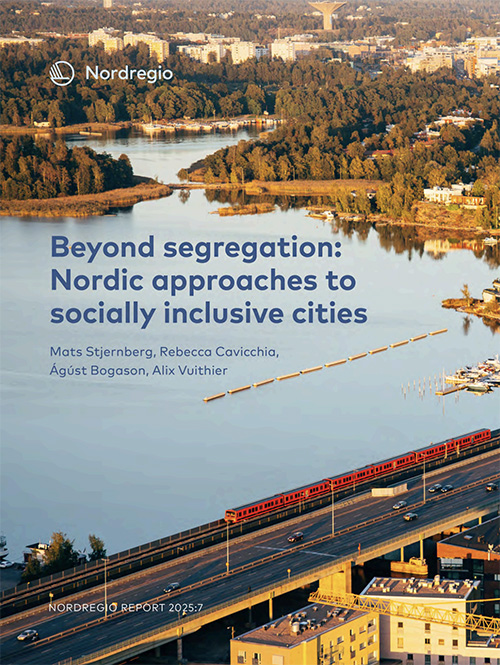
Beyond Segregation: Nordic approaches to socially inclusive cities
Nordregio Report 2025:7
The two projects have been presented at various webinars, seminars, conferences and other events targeted at those working on Nordic urban planning and development issues at the national, regional and local levels. For instance, researchers presented findings from Planning for Socially Mixed and Inclusive Neighbourhoods at Nordregio Forum 2022 in Hamar; during seminars and webinars arranged by UN-Habitat and the Nordic City Network; and for the City of Vejle urban planning department. The project has also been presented to the Finnish Segregaatiolinkki network – a state–city expert group composed of national- and local-level practitioners/planners working to counteract segregation in Finland.
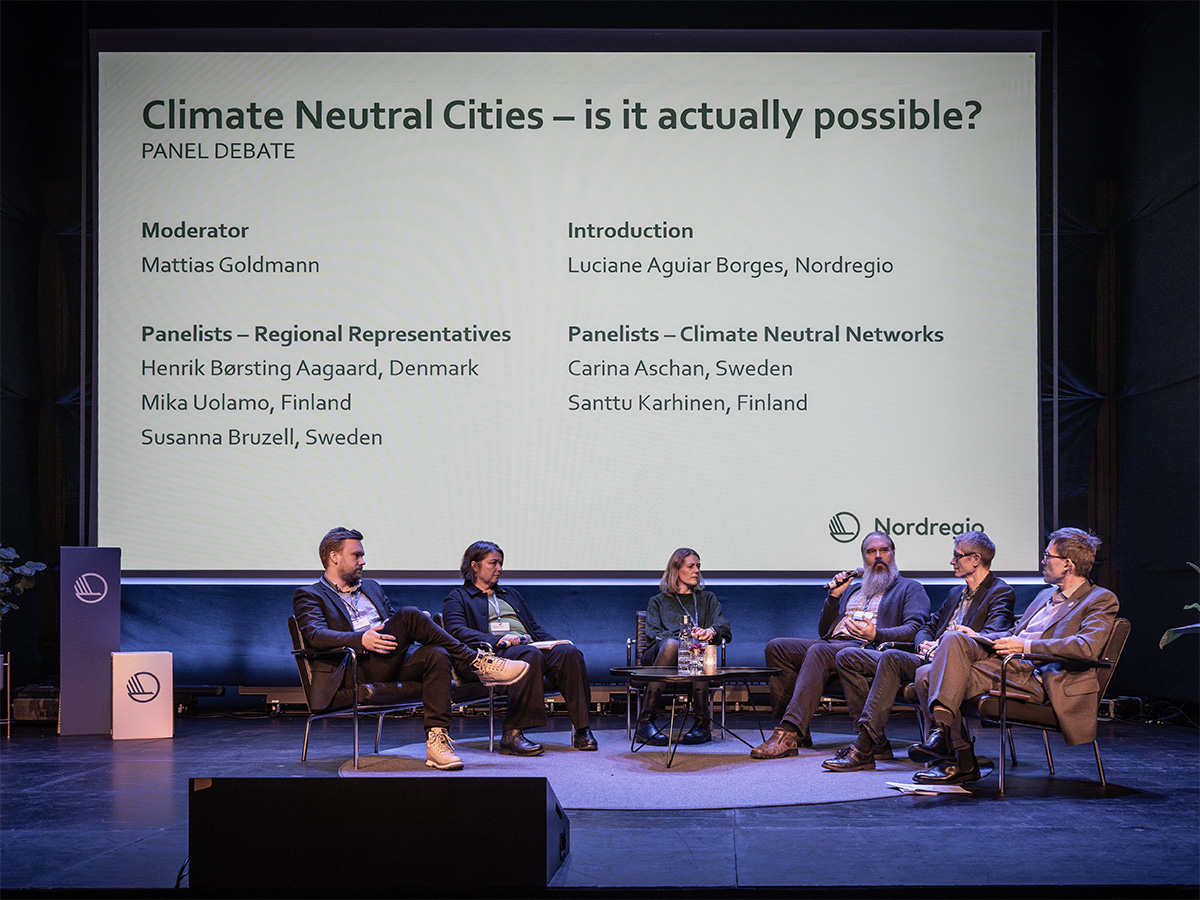
Meanwhile, dissemination activities for the Nordic Climate Neutral Cities project include presentations at the PLANNORD conference in Reykjavík and the Norwegian University of Life Sciences, as well as a workshop and panel discussion targeting planners/practitioners at Nordregio Forum 2024 in Luleå. An additional webinar to accompany the launch of the final Planning for Socially Mixed and Inclusive Neighbourhoods report in April 2025 was also held, attracting a wide audience from across the Nordic countries and elsewhere in Europe. The running theme throughout these activities has been the sharing of experiences, know-how and learnings concerning planning for socially inclusive cities and climate neutrality.