Nordregio
17. Terra Nordica: The Nordic land-negotiation game
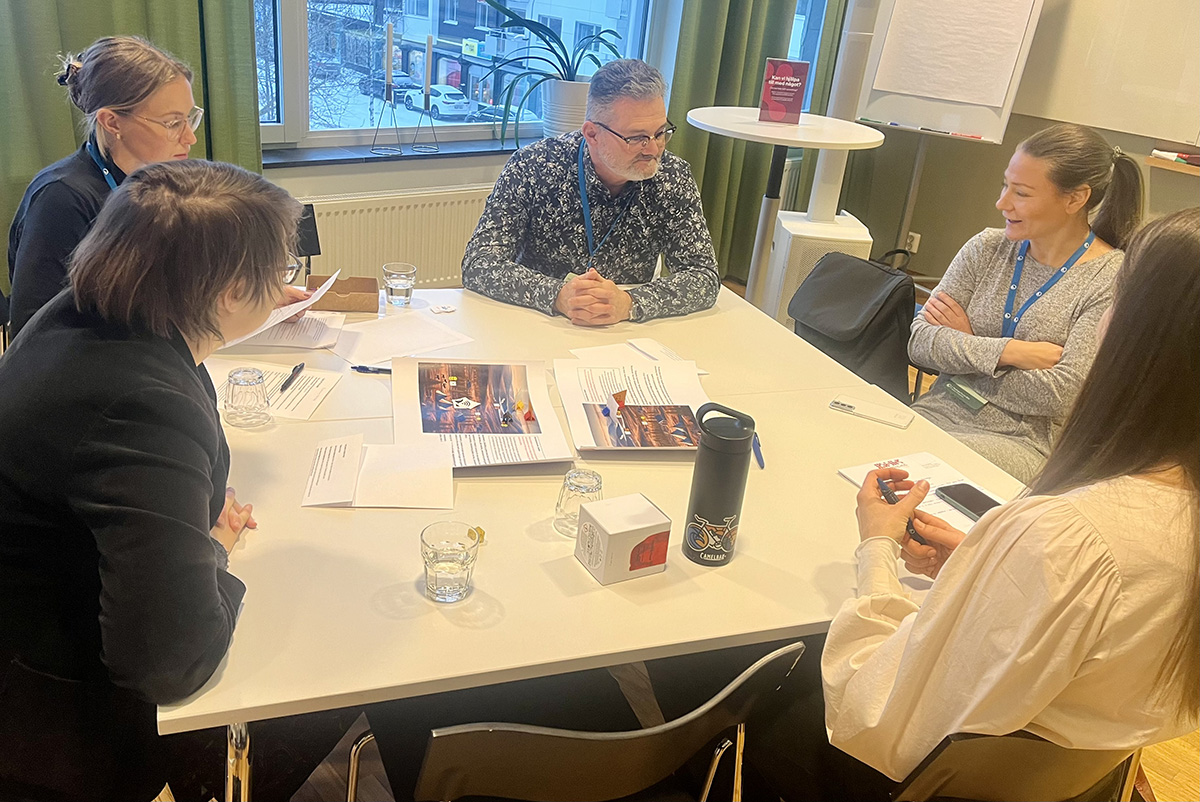
During the Nordregio Forum 2024 (an annual conference organised by Nordregio bringing together decision makers, industry leaders and regional researchers), a game simulation was organised to showcase the land-use decisions and priority-setting involved during green transitions in Nordic rural areas.
Hilma Salonen developed the game with Elin Slätmo, Miia Itänen, and Anne Katrine Ebbesen’s help. Lisa Pelling from Arena Idé moderated the actual game exercise.
Description of the game
Green business is everybody’s business – or is it? You can probably think of several examples of conflicts when a region has to balance green energy proposals with community needs. In this workshop, you will roleplay the solution process. Using Norrbotten lessons as inspiration, we jump into a simulation game, comparing different pathways to local ownership on the way.
Green business is everybody’s business – or is it? You can probably think of several examples of conflicts when a region has to balance green energy proposals with community needs. In this workshop, you will roleplay the solution process. Using Norrbotten lessons as inspiration, we jump into a simulation game, comparing different pathways to local ownership on the way.
Goal
Sharing knowledge on how to create local ownership of green energy projects. Learn and discuss how to balance local priorities and energy investments, while doing an exercise on group negotiations over green transition issues.
Sharing knowledge on how to create local ownership of green energy projects. Learn and discuss how to balance local priorities and energy investments, while doing an exercise on group negotiations over green transition issues.
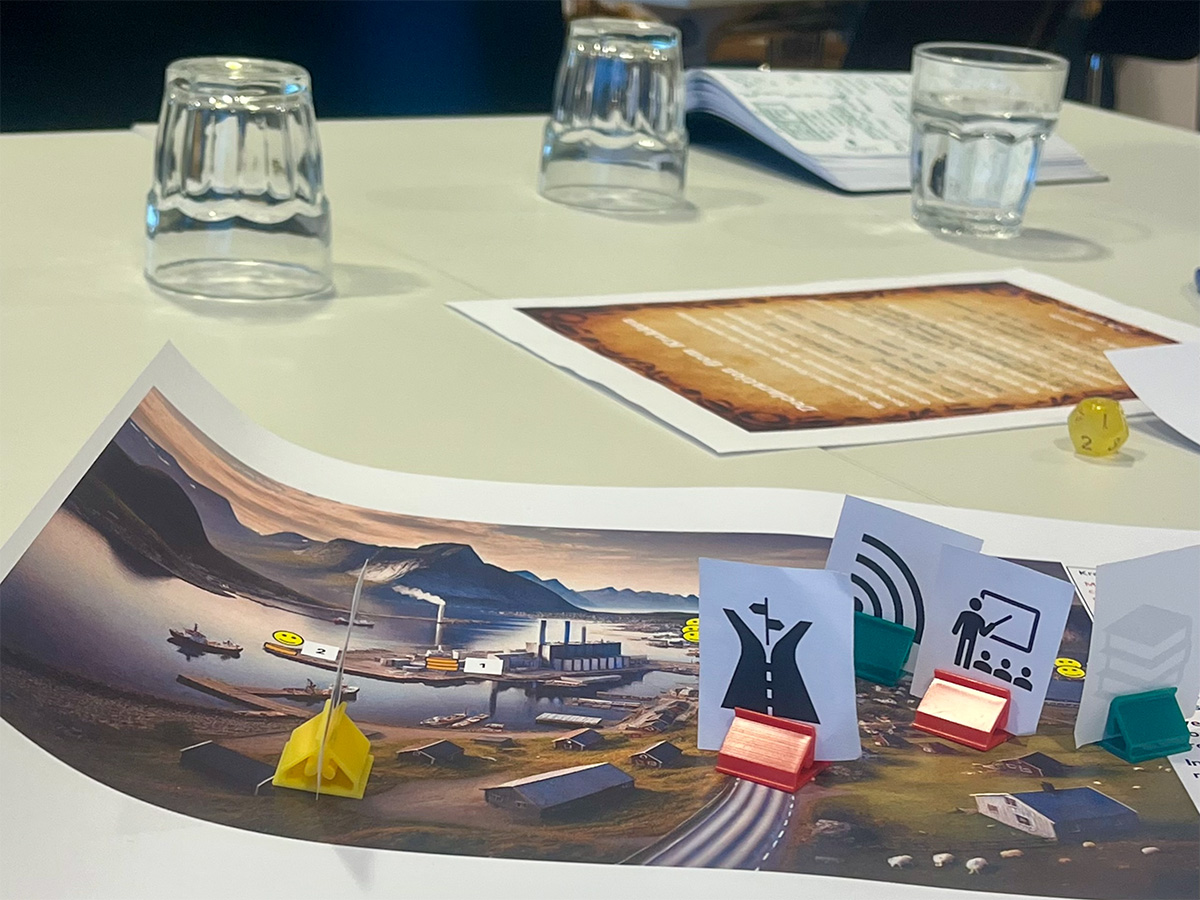
The game featured four tables, each representing an imaginary Nordic community dealing with a green transition process. The four scenarios presented involved the opening of a mine (Sweden); wind power and land use (Finland and Denmark); and the local effects of a hydrogen plant (Norway).
In each case, the groups were given two rounds to make unanimous decisions on the placement of energy infrastructure or the initial round of investments from large industrial activities. Having done so, they had to decide how best to answer related social and environmental questions, as well as invest revenues in ways beneficial to the community’s future.
The simulation concluded with a risk realisation round in which each group compiled a statement for the moderator detailing the rationale underlying their choices. This was followed by a group discussion on the different paths local value creation can take during green transitions.
Presenting and discussing research results in a form of a game allowed us to both explore them in a more concrete way and deepen our understanding of their significance. As the group discussions eventually discovered questions that were not part of the original research that had inspired the game, they give us directions for new interpretations or research questions for the future.