Nordic cycling strategies
Merihaansilta in Helsinki is a bridge designed for trams, pedestrians, and cyclists. It separates cycling infrastructure from pedestrian paths to minimise potential conflicts, as shown in the photo. Source: Marek Lumi/Unsplash.com
Nordic municipalities and regions participating in the Nordic Cycle Network frequently discuss designing safe multi-use infrastructure in their cycling and mobility strategies. Key recurring topics include shared and separated cycling spaces with motorised vehicles, pedestrians, and cyclists on different kinds of bicycles. Some cycling strategies (e.g., from the City of Stockholm) explore solutions to the challenges that emerge from sharing cycling infrastructure with other types of micromobility, such as e-bikes, e-scooters, and hoverboards.
Nordic cities generally prioritize creating fully separated spaces for cyclists, cars, and pedestrians whenever possible, while also exploring solutions for existing shared sections of the cycling network. Physical separation is preferred, as lanes marked only by white lines are suitable purely for low traffic volumes. The most critical conflicts between cars and bicycles typically occur at intersections, where the paths of different vehicles intersect, demanding the most attention in the analysed cycling strategies. While accommodating emerging mobility needs, certain core principles remain unchanged, such as providing sufficient lane width to enable safe overtaking. However, other factors, including variations in speed and physical characteristics of mobility infrastructure, require more systematic integration within planning and design processes.
Shared and separated spaces with motorised vehicles
Nordic countries aim to ensure that cyclists are separated from cars and larger motorised vehicles in most stretches of the cycling network by designing physically separated cycling infrastructure. In addition, intersections are generally identified as the most critical locations for addressing potential dual-use conflicts. Finally, some Nordic cities present solutions, such as interchangeable lanes or bicycle boxes, to ensure that safe sharing of infrastructure would not undermine smooth traffic flow.
In Copenhagen, the cycling infrastructure is generally separated from cars to ensure the continual flow of both cyclists and motorists. The most common way to achieve this is by structurally separating unidirectional cycling lanes from car lanes and pedestrian sidewalks with kerbstones (City of Copenhagen, 2011). Many other Nordic cities follow the same safety principles. However, whether cycling lanes are separated from motorised vehicles usually depends on the volume of traffic. For instance, according to cycling strategies in Oslo and Bergen, the need for lane separation is determined by the speed limit for cars (Bergen kommune, 2020; Oslo kommune, 2015). Only when speeds are reduced below 30 km/h or, in individual cases, 50 km/h, can paint marks alone be used to separate the cycling lane from the road. (Such lanes in Norwegian are called sykkelfelt). But even in these lower-speed areas, such configuration is not preferable. Overall, Oslo seeks to limit car speeds to 30 km/h in areas where cyclists are more present to limit the chance for accidents and fatal collisions.
To create a more efficient share of traffic infrastructure, Roskilde proposed to apply the “2 minus 1 street” (2 minus 1 vej) concept in suburban areas, where two-way traffic is infrequent (Roskilde kommune, 2017). On such streets, motorists drive in the middle of the road and allow cyclists to ride in their own lane, indicated with a dotted line. The cars should only cross the dotted line when there is oncoming traffic, such as another car. Such sharing of the road between cyclists and motorists in low-cycling traffic areas ensures that the road is used efficiently. On the other hand, allowing cars to cross into cycling lanes may increase cyclists’ anxiety and create hazardous situations in which vehicles unexpectedly share the same space.
There are several areas in Oslo where cycling is allowed in the oncoming traffic of motorised vehicles on one-way streets. This configuration, known as contraflow, is based on good practice from several Norwegian cities as well as international practices. While in some areas around Oslo, this is not permitted, the cycling strategy indicates plans to investigate possibilities to expand such type of cycling developments (Oslo kommune, 2015). While cycling against traffic may pose safety risks if the space between vehicles and cyclists is insufficient, it can increase cyclists’ mobility in dense urban environments.
According to their existing cycling strategies, Aarhus, Roskilde, Reykjavik, Gothenburg, and other Nordic municipalities aim to provide more attention to busy intersections and roundabouts by making them feel safer for cyclists. The Aarhus cycling strategy notes that intersections and lanes through tunnels and bridges, especially in less urbanised areas where car speeds are higher, require separated crossings and, potentially, variations in pavement level. At the same time, the city aims to reduce car speeds around intersections where different modes of transport interact the most to prevent accidents (Aarhus kommune, 2017).
Part of allowing cyclists safe passage is by clarifying when and where they have priority. According to their cycling strategy, Aarhus plans to install more detection poles that would allow cyclists to proceed quickly over the crossings. In Oslo, the strategy notes that, while communicating cyclists’ right-of-way is important to remedy potential conflicts, the current situation is frequently confusing for both motorists and cyclists alike (Oslo kommune, 2015).
To avoid collisions at intersections, cycling paths in Gothenburg are oftentimes narrowed down before an intersection to indicate that cyclists should reduce their speed (Gothenburg Traffic Office, 2015). However, additional solutions are needed to more clearly indicate that cyclists have priority when crossing unregulated intersections. For intersections with traffic lights, the city uses cycling boxes that are placed in front of the waiting cars at the intersection, giving cyclists a headstart to reach travelling speeds. Similar solutions are present in other Nordic cities and named in cycling strategies, including Helsingborg (City Planning Helsingborg Committee, 2017). Cycling boxes also mitigate conflicts arising from right-turning vehicles at intersections, as leaving cyclists in their own lane often relegates them to motorists’ blind spots. However, these measures presuppose one-way cycling lanes and do not accommodate bidirectional cycling traffic on the same side of the roadway.
The City of Roskilde has several initiatives to address potential conflicts at intersections. For instance, their strategy aims to ensure that turning trucks would have a red light at an intersection when cyclists have a green traffic light to avoid accidents (Roskilde kommune, 2017). Sections where bidirectional cycle paths intersect with roads are also planned to be converted into one-way lanes to reduce the risk of collisions caused by left-turning drivers who may not expect cyclists coming from both directions. To further address safety issues with right-turning cars, Gothenburg uses an electronic sign on some streets which lights up to alert motorists that cyclists have a green light (Gothenburg Traffic Office, 2015).
Shared and separated spaces with other cyclists and pedestrians
Shared spaces with other cyclists and pedestrians are just as important to consider in cycling plans as shared infrastructure with motorised vehicles. In fact, since many Nordic cities have already implemented separated cycling lanes from roads where high volumes of cyclists pass by, more recent discussions now focus on the conflicts which arise from multi-use cycling infrastructure between other cyclists and pedestrians.
In Copenhagen, the PLUSnet system, covering key cycling corridors and nodes including the Cycle Superhighways and the most heavily trafficked routes, prioritizes spatial quality, intersection design, and maintenance standards, while ensuring that cyclists of varying speeds and skill levels can travel at their own pace safely (City of Copenhagen, 2011). The PLUSnet system seeks to allow for a calmer way of travelling called conversation cycling. In such instances, cyclists can ride side by side without impeding following traffic, particularly faster-travelling riders, due to the bidirectional tracks (providing the space of two lanes in both directions along major routes).
Although the Nordic countries feature both shared and separated paths for cyclists and pedestrians, the main goal is to prioritize the development of more segregated infrastructure to minimize potential conflicts. For instance, Helsinki has a broad network of shared cycling and pedestrian routes. However, new cycling infrastructure is planned to be physically separated from pedestrian paths. Several sections of the old infrastructure have also been separated. The City aims to continuously work with separating cyclists and pedestrians to ensure safety and efficient cycling (City of Helsinki Urban Environment, 2020).
Similarly, the cycling strategy in Gothenburg notes that cyclists and pedestrians continue to share pathways along certain sections of the network. It emphasizes the need for clearer physical separation, as shared infrastructure can generate safety risks and user conflicts. While in some contexts, particularly in suburban areas with very low pedestrian volumes, a shared pedestrian and cycling path may be sufficient, the strategy determines that separation of infrastructure could improve safety, accessibility, and mobility flow (Gothenburg Traffic Office, 2015).
Gothenburg’s strategy mentions that, in sections where the cycling lane is separated from the pedestrian path, it is often only done so with a painted line. In some cases, such division is considered insufficient, particularly when pedestrian paths are poorly maintained, have lower design standards, or contain uneven surfaces, leading pedestrians to walk along the cycling paths (Gothenburg Traffic Office, 2015). The municipality created a classification system that indicates how lane separation could be planned based on the level of street use (see Table 1). Based on this approach, clearer differentiation is warranted in locations with higher foot traffic, either through distinct surface materials for cycling lanes or through barriers or kerbs which physically separate the two user groups.
Table 1. Separation principles between cyclists and pedestrians at different pedestrian traffic volumes in Gothenburg. (Source: Gothenburg Traffic Office, 2015)
Pedestrians per hour | ||||
Network classification | Less than 10 | 10-99 | 100-499 | More than 500 |
Commuter cycling network | Combined pedestrian and cycling lanes | Differing material | Physical separation or differing material | Physical separation |
General cycling network | Combined pedestrian and cycling lanes | Painted line or differing material | Physical separation or differing material | Physical separation or differing material |
Table 1. Separation principles between cyclists and pedestrians at different pedestrian traffic volumes in Gothenburg. (Source: Gothenburg Traffic Office, 2015)
To optimize infrastructure space along shared sections of Copenhagen’s network, the City aimed to transform its busiest streets and make them more dynamic by implementing an Intelligent Traffic System (ITS) and LED lights embedded in the asphalt, as shown in Figure 1 (City of Copenhagen, 2011). When the strategy was published, the ideas was for the lights to illuminate the streets with indicatory signs to highlight which mode of transport had priority at that time. As an example, cycle pathways could have been widened during some hours of the day, such as rush hour, by taking over additional space from the sidewalk, when there were less pedestrians and more cyclists on the streets. While such plans were highlighted in the strategy, no operational stretches of the network currently use this solution. Similarly, to alleviate some of the morning rush hour traffic in Aarhus’ busiest areas, some selected pedestrian streets are opened for cyclists between 21:00 and 9:00, when less pedestrians are using the sidewalk (Aarhus kommune, 2017).
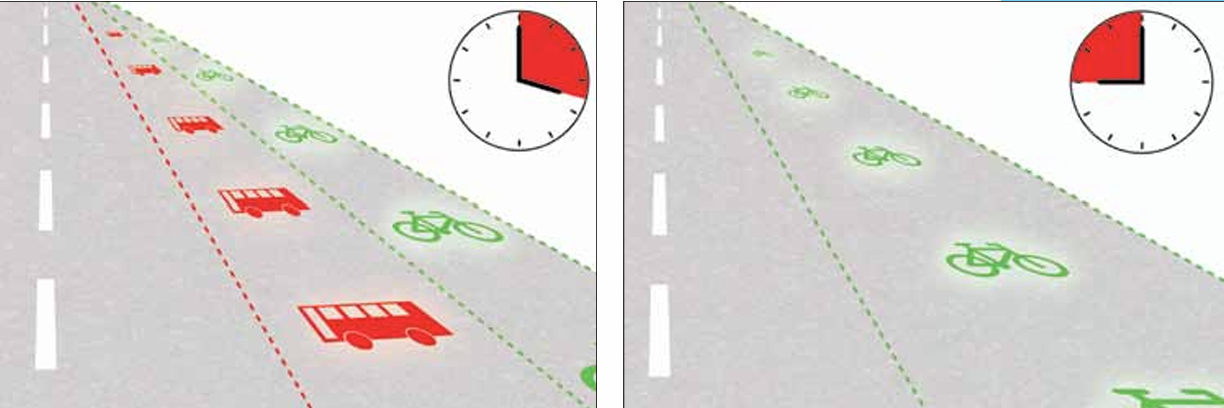
Figure 1. Illustration of the Intelligent Traffic System and LED lighting. (Source: City of Copenhagen, 2011)
In terms of the overall planning and design of cycling infrastructure, the strategies also address the differences between bidirectional and unidirectional lanes. While bidirectional cycling lanes can be useful in longer stretches of uninterrupted cycling paths, some cycling strategies suggest that this traffic organisation poses more points of conflict compared to unidrectional cycling paths on each side of the road. For instance, a four-way intersection with two-way cycle lanes have four times as many points of conflict between cyclists and pedestrians compared to single-direction cycling lanes.
Finally, bicycle parking can pose challenges for pedestrian accessibility, especially if cyclists park their bikes along the facades of buildings. For example, Aarhus aims to build more bicycle parking facilities around block developments to allow for more seamless parking while allowing pedestrians to move more freely (Aarhus kommune, 2017).
Nordic municipalities aim to create more separated cycling and pedestrian paths to prevent conflicts. At the same time, they have implemented measures to reduce conflicts in shared areas, such as adjusting lane widths and permitting cyclists to use pedestrian paths during traffic-intensive hours of the day. However, the implementation and enforcement of such initiatives have not necessarily followed as the strategies intended, nor are the solutions possible in all kinds of shared traffic environments. Additionally, more research may be needed to evaluate the success of such measures and to learn how to adjust them in light of newer forms of urban mobility.
Shared spaces with other types of micromobility
More recent Nordic cycling strategies extend beyond traditional discussions of shared, multi-use infrastructure between cyclists, pedestrians, and motor vehicles. The rapid growth of micromobility has introduced a wider range of users into the transport system. These include muscle-powered devices, such as skateboards and regular scooters, as well as electrically assisted modes like e-bikes, hoverboards, and e-scooters, which can accelerate more quickly and reach higher speeds. Differences in their characteristics can create additional conflicts when sharing cycling infrastructure.
In their cycling strategies, Stockholm, Helsingborg, and Reykjavik acknowledge that there is an increase in diverse forms of micromobility, such as e-bikes, hoverboards, skateboards, and scooters, that use the same cycling infrastructure as cyclists using standard bikes. The proliferation of alternative mobility devices requires planners to consider the relationships between these modes of transport and how they interact in and intersect with motorised traffic (City Planning Helsingborg Committee, 2017; Stockholms stad, 2022). While the Reykjavik cycling strategy does not explicitly address potential conflicts arising from shared infrastructure use, it presents a rationale for expanding cycling infrastructure in response to increased use of various forms of micromobility (City of Reykjavik, 2022). Additionally, the strategy aims to place greater emphasis on the interaction of cycling paths in connection to different types of micromobility.
As in many other countries, e-scooters in Sweden have, since 2021, been prohibited from riding on sidewalks, and users are required to comply with the same traffic regulations that apply to cyclists. The most important aspects for future planning of such transport modes are their different characteristics, such as size, travel speed, and weight (Stockholms stad, 2022). However, due to rapid developments in micromobility trends, it is difficult to plan strategically. Cycling infrastructure therefore needs to be flexible and accommodate safety of users of various modes of transport. For instance, due to an increased difference in speeds, it should be easy and safe to overtake other travellers on cycling lanes or to ride side by side. Wider paths are also required to allow larger bicycles, such as cargo bikes, to pass efficiently (Stockholms stad, 2022). Luckily, many of these requirements are not unique to emerging micromobility modes. They have already been addressed within cycling infrastructure planning prior to the recent surge in popularity of new micromobility forms. For instance, the Stockholm cycling strategy describes its recommended width of cycling lanes to allow safe overtaking based on infrastructure type (see Table 2).
Table 2. Recommended width of cycling lanes. (Source: Stockholms stad, 2022)
One-way cycling lane | One-way cycling lane (higher flow) | Two-way cycling lane | Two-way cycling lane (higher flow) | Cycling lane (on street) | |
Primary Routes (primära stråk) | 2,25 m | 3,25 m | 3,25 m | 4,5 m | - |
Main Network (huvudnät) | 1,8 m | 1,8 m | 2,5 m | 3,25 m | 1,5 m |
One-way cycling lane | One-way cycling lane (higher flow) | Two-way cycling lane | Two-way cycling lane (higher flow) | Cycling lane (on street) | |
Primary Routes (primära stråk) | 2,25 m | 3,25 m | 3,25 m | 4,5 m | - |
Main Network (huvudnät) | 1,8 m | 1,8 m | 2,5 m | 3,25 m | 1,5 m |
Table 2. Recommended width of cycling lanes. (Source: Stockholms stad, 2022)
What is new, however, is the need to place greater emphasis on designing shared spaces and cycling lanes that accommodate a broader range of mobility modes (and thus a range of behaviours and design needs), rather than focusing primarily on conventional bicycles. For instance, obstacles on cycling paths are a significant nuisance for e- scooters and cargo bikes, especially since their weight is generally higher than that of a regular bicycle. Kerbs and uneven surfaces along or parallel to cycling lanes are another challenge that requires attention (Stockholms stad, 2022). To highlight the different requirements of e-bikes, cargo bikes, and e-scooters when planning, the Stockholm cycling strategy developed an indicatory table (Table 3).
Table 3. Requirements and needs for various types of micromobility. (Source: Stockholms stad, 2022)
Electric bicycles | Cargo bikes | Electric scooters |
Requirements:
| Requirements:
| Requirements:
|
Needs:
| Needs:
| Needs:
|
Electric bicycles | Cargo bikes | Electric scooters |
Requirements:
| Requirements:
| Requirements:
|
Needs:
| Needs:
| Needs:
|
Table 3. Requirements and needs for various types of micromobility. (Source: Stockholms stad, 2022)
The Stockholm cycling strategy notes that, although speeds vary across different modes of mobility, e-bikes and e-scooters are not currently travelling at speeds significantly higher than those of faster cyclists. That said, as more people begin using electrically assisted devices, the average speeds on cycling lanes will increase, which can disadvantage or ostracize remaining slower cyclists. An important detail is the visual and practical design of the cycling infrastructure as well as willingness of micromobility users to take care of each other (Stockholms stad, 2022).
Despite acknowledging speed differences, the strategies do not address behavioural and sociocultural differences between conventional bicycle riders and other cyclist and micromobility users. Due to the differing ways of operating the transport modes, inherent behavioural differences emerge. For instance, as highly manoeuvrable e-scooters have become easily accessible in cities, inexperienced or infrequent users may not be familiar with the cycling infrastructure. Riders of devices without their own established paths may be more inclined to move in and out of the infrastructure that suits them best at any given time, “borrowing” pedestrian paths, cycling paths, or roads for motorists at various points during their trip. These behaviours may be more difficult for other road users to anticipate, creating potential confusion and conflict. Shared rental systems for e-scooters and e-bikes offer an attractive way for both residents and tourists to move through cities, but their speeds and users’ unfamiliarity with the area may also lead to increased conflicts. Such tensions, however, are merely speculative and require further research that tests actual behaviours to learn how different users manoeuvre safely among or contrary to conventional cyclists.
The City of Stockholm highlights that it is crucial to clarify how emerging micromobility solutions fit into the wider transport system of the city. These discussions could be held through a dialogue with private mobility providers (e.g., e-scooter sharing companies) and by developing educational campaigns for users, as discussed in Planning Memo 2 (Rohrer & Kačkus Tybjerg, 2026-a). The need to consider cycling and other forms of micromobility within the wider transport system is also why cities such as Copenhagen and Oslo have chosen not to develop new cycling strategies. Instead, they plan to integrate them into broader traffic or mobility strategies, as these modes of transport should be planned together rather than in silos.