Photo: Erik Kuhlefelt / Visit Åland
Chapter 5. Collaborative Regional Leadership, Case Study: Grit:lab, Åland
The Grit:lab initiative is a two-year coding programme launched in 2022 for individuals aged 18+ seeking new skills and career opportunities in tech and development. The main objective of the programme and collaboration is to benefit Åland by attracting new talent and growing the region’s tech and startup scene (Grit:lab, 2024). To succeed, close collaboration was required among key actors including the tech and gaming company Paf, Åland’s Yrkesgymnasium and the Åland government. This case study is based on five semi-structured interviews with involved parties between May and August 2024 and anonymised as Interviewees 1-5.
Overview of key regional characteristics
Åland is a self-governing and monolingual Swedish-speaking province of Finland in the Baltic Sea region. The province includes 6,757 islands larger than 0.25 hectares of which 60 are inhabited and home to a population of approximately 30,000, primarily on the main island and capital of Mariehamn. Mariehamn is considered the only town and has a population of roughly 11,700. Åland also has fifteen rural and archipelago municipalities and 20,000 more islands of less than 0.25 hectares (ÅSUB, Facts about Åland; Visit Åland, Åland in a brief, 2024).
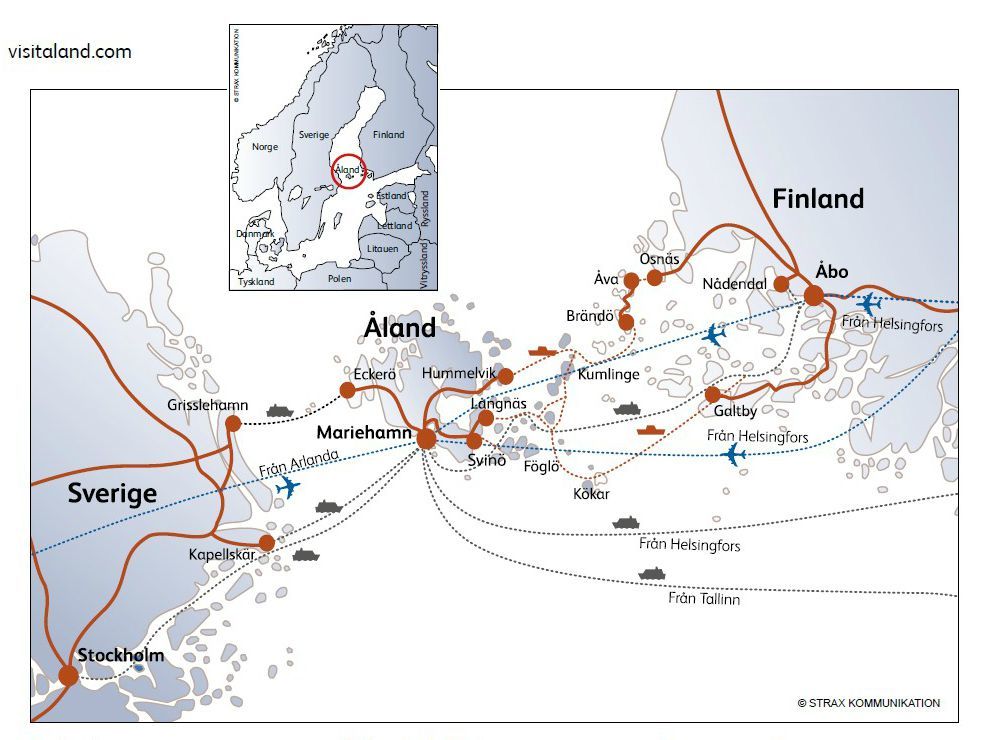
Figure 1. Map of Åland, Visit Åland. (https://visitaland.wntr.io/uploads/2022/04/kommunikationskarta.jpg)

The Åland Islands became self-governing in 1921, allowing the islanders to legislate, decide on internal affairs and control their own budget. Anybody born in Åland or who has lived there for five years without interruption is entitled to the right to domicile, a precondition to own land, conduct business, vote and stand for election to the Åland parliament. General elections to the parliament are held every four years and the parliament then appoints a candidate tasked with forming a provincial government. It governs by proposing amendments or new legislation and implementing the decisions of parliament. To assist in its work, it has various departments that are part of the general administration and several other authorities with responsibilities within the province's areas of competence (Info Norden, 2024a; Regeringen, 2024a).
Labour market and economy
The population of Åland has grown steadily over the last decade, increasing 7.6% in the period 2010–2020. The employment rate has grown slightly faster than the population. Since the fertility rate in Åland is only 1.6, the population increase can be attributed to migration. The majority of the people who moved to Åland during the same time period were born outside of Finland, and most of them are aged 20–39. This has led to Åland having a younger population, and the labour force has grown (ÅSUB, Education and Labour Market 2035).
The labour market on Åland is relatively segregated, with women dominating the healthcare, social care and education sectors, and men dominating the construction and water, electricity and waste management sectors. The service sector plays a crucial role in the Ålandic economy, and a big part of the private sector on the island is dependent on tourism, which led to Åland suffering more severe consequences than the rest of Finland during the COVID-19 pandemic. Since the economy is sensitive to shocks to the service sector, there is a need for diversification (ÅSUB, Education and Labour Market 2035).
The Åland government has drawn up three potential scenarios for the economy and demography. They highlight globalisation and digitalisation as megatrends to which the local economy will have to adapt if it is to face future challenges. In the most optimistic scenario, a successful digital transition by companies and Åland as a whole and attracting skilled workers from abroad are regarded as key prerequisites for a swift recovery from the pandemic and a rise in productivity (ÅSUB, Education and Labour Market 2035).
Education system
The education system on Åland consists of three main levels: primary, secondary and higher, with primary and lower secondary school compulsory. After completing the third year of lower secondary education, students can continue to upper secondary at Ålands Gymnasium. Upper secondary education is divided into pre-vocational and university preparatory studies. The option available for higher education is the Åland University of Applied Sciences, and many choose to move to the Finnish or Swedish mainland to continue their studies after secondary school. Swedish is the language of instruction at all schools and levels (Info Norden, 2024b; Regeringen, 2024b).
The Ålandic education system has a special focus on lifelong learning, which means learning at all ages and for both professional and personal reasons. A high-functioning system for lifelong learning means the labour market can respond more rapidly to changes in the demand for competences. The Åland government’s educational policy programme for the period 2015–2025 (Utbildningspolitiskt program för landskapet Åland Kompetens 2025) emphasises the importance of a flexible system that responds and adapts quickly to the rapid pace of change in modern society. Digitalisation is seen as the single factor with the greatest impact on change and the government policy aims to help the education system keep up with digitalisation in the rest of society. Another goal is to give Ålandic education a more international profile and keep up with the accelerating pace of globalisation (Utbildningspolitiskt program för landskapet Åland Kompetens 2025, ÅSUB, Education and Labour Market 2035).
Introduction to Grit:lab
Grit:lab is a collaboration that aims to attract people to move to Åland, develop skills that match industry needs and contribute to the digitalisation and transformation of the islands. The goal is to boost Åland’s position as a ‘tech hub’ and increase growth at the local level by attracting new competences (Interviewee 1; Interviewee 2; Interviewee 3; Interviewee 4; Interviewee 5, 2024). The programme stands out from traditional adult education in Åland. It is completely project-based, based on peer-to-peer learning without teachers, in English and provided by a “gamified” digital learning platform (Figure 3) (Interviewee 1, 2024).
Grit:lab requires no prior education or experience; instead, applicants do cognitive tests in an online gaming environment designed to test their independent problem-solving skills, creativity and logical thinking. The 150 highest-scoring applicants from the online tests are invited to Åland for the second phase of takeouts and a four-week introduction to coding and training, via for example, “raids”, “quests”, and “hackathons”. During this stage, a total of 70 participants are selected to start the programme in Mariehamn (Interviewee 1, 2024).
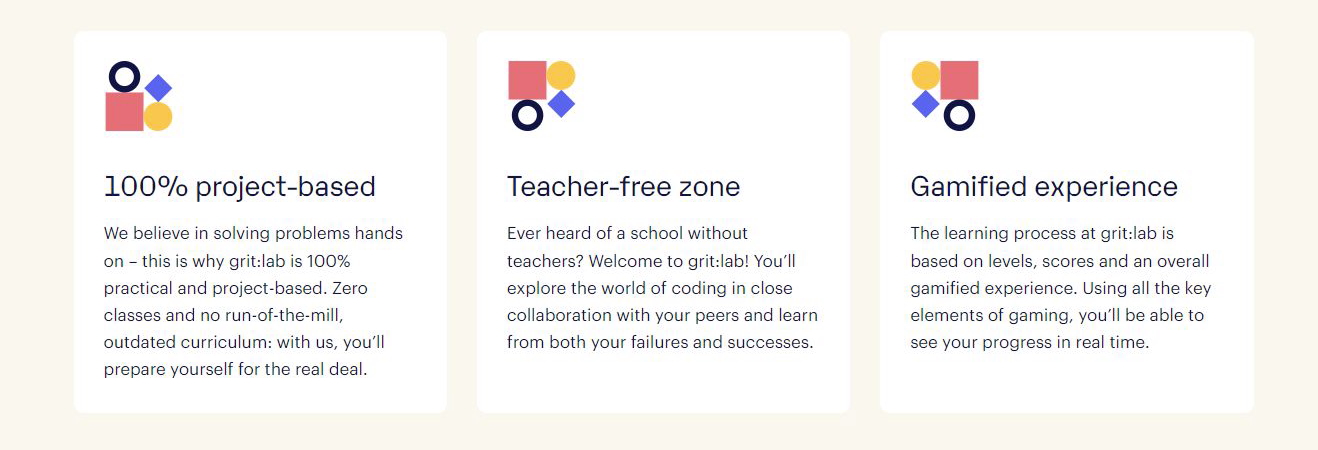
Figure 2. The three pillars of the Grit:lab concept, shared presentation slide, 2024.
The programme is run by the company Paf and Åland's Yrkesgymnasium. The latter offers vocational training in around ten different fields as well as adult education (Ålands Gymnasium, 2024). Paf is a government-owned gaming company set up in 1966 by founding parties including Folkhälsan, Rädda Barnen Åland, and Röda Korset Åland. Its mission is to generate and allocate gaming funds to socially beneficial projects and organisations (Paf, 2024).
Grit:lab officially started in 2022, a year after the concept was devised and the collaboration commenced. Roughly 2,300 individuals from 80 countries applied for its second round, in the admission period between December 2023 and January 2024, of whom 30% were women and the median age was 33 (Interviewee 1, 2024).
Drivers
The collaboration behind the Grit:lab case study resulted from a combination of driving forces, including shared challenges due to skills shortages in the tech industry and the desire to make Åland more attractive. The interviews describe the lack of creative developers, especially in systems development, as an important driver (Interviewee 1; Interviewee 3; Interviewee 4, 2024). Many larger IT companies established offices outside of Åland due to this shortage. According to the interviewees, traditional education is not perceived as keeping pace with the rapid pace of development in the sector, hence the need for new competence-supply solutions.
Against this backdrop, political support proved a critical catalyst for Grit:lab, offering links between business and education, e.g. by facilitating the dialogue that drove the involvement of Ålands Yrkesgymnasium (Interviewee 3; Interviewee 1, 2024). Another key driver mentioned in the interviews was the COVID-19 pandemic, which was an exogenous shock to Åland. The pandemic’s effects on working life, with the rapid adaptation to new work-life norms of remote and hybrid work, demonstrated the investment value in tech and its creative and adaptive workforce. The pandemic’s effects also had direct business implications, e.g. creating vacant premises at Paf’s headquarters in Mariehamn and driving the ideation process for alternative uses of the empty space – ultimately transforming it into a campus for Grit:lab students (Interviewee 1; Interviewee 2, 2024).
This also points to a third driving factor highlighted in the interviews: Paf’s entrepreneurial spirit and industry knowledge. An entrepreneurial spirit is evident in both the public and private stakeholders, but with its industry knowledge, position and particular mission for the region, the gaming company played a key role as driver and catalyst (Interviewee 1; Interviewee 2; Interviewee 3, 2024). For example, the interviews highlight that Paf found inspiration for Grit:lab in educational models developed in other countries (Interviewee 1; Interviewee 2, 2024). In pitching the concept and activating stakeholders, Paf’s management was also able to make a compelling case to its board that secured funding to initiate the programme (Interviewee 3, 2024).
How it all works
The Åland government formally commissioned Paf and Ålands Yrkesgymnasium to run Grit:lab, along with a steering group meeting twice yearly (Interviewee 2, 2024). Paf manages the programme, coordinates its partners, and ensures funds and resources such as the campus premises (Interviewee 1; Interviewee 2, 2024). Ålands Yrkesgymnasium functions as the official educational provider and administrative body, which enables students who complete Grit:lab to receive a formal degree from Åland (Interviewee 1, 2024). The Åland government and the ministries for education and economic affairs support the collaboration with funding, advocacy, policy and administrative assistance so that Grit:lab fits into the regional regulatory frameworks (Interviewee 3, 2024).
Beyond formal assignments, much of the communication and coordination takes place through informal contacts and networks. Additional stakeholders are called “Grit:lab supporters” (Figure 3). They do not have formal commitments but support Grit:lab due to a shared vision for the region (Interviewee 1; Interviewee 4, 2024). They include Ålands Näringsliv which represents roughly 500 businesses and maintains close contact with both the ministry for economic affairs and with Paf on the committee for IT matters, “IKT-utskottet” (Ålands Näringsliv, 2024). In the initiation phase, the committee was approached to assess the need for and interest in Grit:lab: “Although the idea did not originate from the business sector, it gained traction and led to further discussions with committee representatives” (Interviewee 4, 2024).
Figure 3. The Grit:lab supporters, About Grit:lab, 2024 https://gritlab.ax/about.
The programme also invited Åland tech companies to collaborate as “Grit:lab partners” (Figure 4), to enable a match-making process for students and future employers by offering internships, networking, visits and career fairs during the programme period (Interviewee 1, 2024). The cooperation with partner companies is described as flexible in the sense that the companies contribute based on resources and interest: “Those who are involved pay with commitment, and the more they are involved and visible, the more they get back in employer branding" (Interviewee 1, 2024). Thus, the level of commitment is up to the individual company, while Grit:lab serves as a facilitating forum for potential employers to meet and match with students and potential employees.
Figure 4. The Grit:lab partners, shared presentation slide, 2024.
Challenges
Challenges, however big or small, are part of any collaborative process. In this case, the capacities and resources of stakeholders to participate sometimes proved challenging. For example, one company that was initially very enthusiastic about the project had to scale back its operations and was no longer able to contribute as much (Interviewee 4, 2024). One interview also noted that there were initial challenges in getting certain stakeholders on board, e.g. Åland University in the early stages (Interviewee 3, 2024). Åland’s Yrkesgymnasium would be the educational provider instead, offering the openness and willingness needed to administrate an unconventional educational format. In addition, the educational policy frameworks posed a hindrance to implementation, requiring policy adjustments from the government during the start-up phase (Interviewee 3, 2024).
Another challenge was supporting the integration of Grit:lab students into the Åland community. Åland’s small size and the influx of students from diverse cultures created a need for greater integration efforts, which includes addressing issues such as housing, language support, and access to information about life on Åland (Interviewee 5; Interviewee 3; 2024)
Sustainability and longevity of the collaboration were also identified as challenging aspects. Interviewees noted that it can be difficult to keep motivation up over time, anchor decisions internally and at the highest level, as well as anticipate the level of engagement in a new collaborative context (Interviewee 3; Interviewee 4, 2024). They also emphasised the need for long-term work, close coordination and activation (Interviewee 1; Interviewee 2; Interviewee 4, 2024). As described by one of the interviewees, it can be difficult to collaborate when everyone is busy with their normal business (Interviewee 1, 2024). After finishing only one programme period, they highlighted that it is still a learning process for all parties involved. While it can be hard to maintain active engagement over time, flexible and voluntary partnership structures have been necessary for the process to align with a collaboration culture based on trust and mutual understanding (Interviewee 4; Interviewee 2, 2024)
Enablers
While “drivers” refer to factors that act as catalysts or initiators of collaborations, "enablers” points to the elements that contribute to their ability to function effectively. The small community with close contacts and short decision-making paths is described as having had significant advantages in this regard (Interviewee 3; Interviewee 1, Interviewee 4, 2024). A culture of collaboration and existing networks are identified as enabling factors to Grit:lab, e.g. close relationships between the Åland government, Paf and Åland’s Näringsliv representing businesses on the islands (Interviewee 4, 2024). One interviewee also stated that throughout the process of Grit:lab, it has been easy to bring together relevant stakeholders, discuss and receive information because “everyone is just a phone call away” (Interviewee 1, 2024).
The political level also played a central role in getting things in place both quickly and smoothly, from funding to administration. The interviews highlight the active support and ambassadorship of political representatives as enablers, actively engaging stakeholders and the public for Grit:lab’s cause (Interviewee 2; Interviewee 3; Interviewee 4, 2024). Political will and support from the Åland government made it possible to adapt the programme and/or policy and regulatory frameworks. For example, the political level enabled the programme to be offered in English, making changes to the Swedish requirement for education on Åland, which was critical for Grit:lab’s ability to accept international applicants (Interviewee 3, 2024).
A number of formal and informal place leaders from both Paf and the government were also crucial to realising Grit:lab. The interviewees emphasise the key role of specific individuals in facilitating collaboration with government officials and civil society actors to accommodate not just the Grit:lab applicants but their families with housing, work opportunities, language courses and other arenas for integration into Åland society (Interviewee 2; Interviewee 3; Interviewee 4, 2025). For example, arranging a tailored-made Swedish language class to be taught at the Grit:lab campus, and mobilising Åland citizens and civil society to help accommodate the international students (Interviewee 3, 2024).
One of Grit:lab’s biggest responsibilities was the integration of incoming students. However, they were also aided by a huge collaborative effort by everyone from government to individual citizens due to the common vision and strong commitment to the Grit:lab cause. As highlighted by one interviewee: “You need to work together to involve the whole of society and create the conditions for the integration of new students. It's a lot about finding the people who believe in the idea, say let’s do it and help solve problems little by little when they arise” (Interviewee 3, 2024).
Achievements
As the programme has only just finalised its first programme cycle in 2024, the collaboration achievements are rather short-term so far. Nonetheless, the collaboration behind Grit:lab has helped increase the pool of skilled IT developers and provide local companies with access to talent that was previously unavailable. In this regard, Grit:lab has succeeded in building a new talent pool in Åland (Interviewee 3, 2024). Several students from the first class to graduate were taken on by Paf and other tech companies before finishing their final semester, 18 of 20 by Åland-based companies (Interviewee 1; Interviewee 2, 2024).
Since the start of Grit:lab, Åland's Näringsliv and IKT-utskottet also applied for EU funding for projects in order to further develop Åland as an IT cluster. As emphasised in the interviews: “Grit:lab became a starting point to understand that together we can do more.” (Interviewee 4, 2024). Internationally and at the Nordic ministerial level, government representatives and Grit:lab stakeholders have also conveyed the concept behind the programme to the Nordic education ministers (Interviewee 3, 2024).
Benefits
The Grit:lab collaboration and initiative has strengthened connections between various stakeholders, from IT companies to education providers and government departments. As highlighted in the case interviews, before Grit:lab, Åland tech companies lacked a natural forum for cooperation on the common challenges they faced in attracting skilled and creative developers (Interviewee 4; Interviewee 2; Interviewee 1, 2024). The collaboration provided a platform for this and created a vibrant environment at Paf’s headquarters where this shared space enabled a natural exchange between students, Paf staff and partner companies (Interviewee 2, 2024). In addition, the efforts to integrate Grit:lab students into the Åland community also led to closer collaborations between public, private, and civil society actors (Interviewee 5, 2024).
The collaboration has also demonstrated the potential for innovative education models tailored to the needs of the local economy (Interviewee 4, 2024). It has inspired creativity and practical elements in Åland schools and particularly in adult education where, for example, teaching and learning can benefit from hosting students outside traditional school premises, according to one interview (Interviewee 3, 2024).
In addition, the initiative has enhanced the visibility of Åland as a tech hub. Grit:lab has garnered significant attention from local to international media and stakeholders, promoting Åland as a place for innovative tech education and employment (Interviewee 2, 2024). The campus at Paf’s headquarters has hosted many visits during Grit:lab’s first programme period 2022–2024 and the interest has had positive branding effects – for Grit:lab, Åland and in the long run for the associated companies in helping raise the profile of the Åland tech sector (Interviewee 1; Interviewee 2, 2024).
On top of all that, the programme provides graduates with the skills and connections necessary to pursue entrepreneurial endeavours, contributing to the development of a vibrant tech ecosystem on Åland (Interviewee 4; Interviewee 5, 2024).
Improvements
While Grit:lab has been successful in attracting students to Åland, interviews highlight the need for more strategic recruitment planning by companies who often have short-term recruitment needs. The informal nature of the local job market and lack of clear recruitment channels risk creating barriers for international students in finding employment on the islands, as highlighted by one interviewee: “Not all companies are listed on those big search engines, and if you’re new to Åland you wouldn’t know exactly which ones operate here or where to look. Then you might think there are no jobs, but it’s easy for someone from here to say: 'But there's this company, that company, and the other one.’” (Interviewee 4, 2024).
The collaboration has also led to a recognition that more can be done overall to support the integration of Grit:lab students and their families into the Åland community and make it easier for them to stay and contribute (Interviewee 4; Interviewee 5, 2024).
Future direction and recommendations
Looking to the future, one of the shared goals and long-term aspirations behind the Grit:lab initiative is for international graduates to stay, work, integrate and contribute to the business and tech ecosystem in Åland (Interviewee 1; Interviewee 3; Interviewee 5, 2024). Grit:lab fosters an environment that encourages graduates to not only seek employment but also consider starting their own businesses (Interviewee 4; Interviewee 5, 2024). Based on the interviews, here are some suggestions for future directions and recommendations:
- Utilise university innovation hubs: This opportunity would be available to Grit:lab students who wish to continue studying and develop their skills on Åland (Interviewee 1, 2024). Among the future visions for collaboration, utilising innovation hubs could offer one way to support graduates and harness the creative potential of Grit:lab students.
- Establish a business incubator: One of the government’s goals and long-term visions is to support graduates who wish to start their own companies. One future direction could be establishing a business incubator on Åland to provide resources and mentorship for graduates who aspire to launch their own tech startups (Interviewee 5, 2024).
- Enhance support for students and families: Providing further assistance to students’ families to find their feet in Åland is key for both attracting and retaining graduates on the islands (Interviewee 3, Interviewee 5), e.g. expanding language training and supporting networking opportunities.
- Strengthen existing channels: Another suggestion for the future is to leverage stakeholder networks and communication platforms to further enhance coordination and resource sharing, e.g. a shared platform for creative knowledge sharing, joint marketing efforts, and showcasing job opportunities within tech in Åland (Interviewee 4, 2024).
- Improve recruitment pathways and address market fluctuations: Collaboration would benefit from support for recruitment planning and proactive stakeholder engagement, particularly in times of economic instability (Interviewee 4, 2024).
- Develop a formal IT cluster project: Grit:lab has inspired future collaborative efforts, such as the pursuit of EU-funded projects to establish an IT cluster on the islands (Interviewee 4, 2024). This might entail a level of formalisation to describe the initiatives and define responsibilities.
- Strike a balance between formality and flexibility: It is also important to maintain the collaborative spirit and responsiveness to evolving needs (Interviewee 1, 2024). Due to the informal collaboration culture on Åland, acknowledging local needs and ensuring a place-based approach are recommended if more formalised structures were to become relevant for addressing challenges.
- Promote Åland as a destination for remote working: Addressing challenges related to cross-border work and attracting remote workers could be a potential route for Åland tech (Interviewee 5, 2024). This would call for collaborative government efforts to remove barriers to working from other countries or regions.
- Build a model for future educational initiatives: Grit:lab’s multi-stakeholder structure enables a holistic approach to problem solving, drawing upon diverse perspectives and expertise (Interviewee 1; Interviewee 2, 2024). This collaborative approach and focus on practical skills could benefit other education initiatives on the islands and beyond (Interviewee 3; Interviewee 4, 2024).
References
Interviewee 1, industry representative, 2024
Interviewee 2, industry representative, 2024
Interviewee 3, government representative, 2024
Interviewee 4, industry representative, 2024
Interviewee 5, government representative, 2024
Grit:lab (2024), https://gritlab.ax/ (Accessed: 25 November 2024).
Grit:lab (2024) About, https://gritlab.ax/about (Accessed: 25 November 2024).
Info Norden (2024a) Housing in Åland, https://www.norden.org/en/info-norden/housing-aland (Accessed: 11 December 2024)
Info Norden (2024b) Studying in Åland, https://www.norden.org/en/info-norden/education-system-aland (Accessed: 11 December 2024)
Paf (2024) About, https://aboutpaf.com/about (Accessed: 25 November 2024).
Regeringen (2024a) Om landskapsregeringen, https://www.regeringen.ax/om-landskapsregeringen-0 (Accessed: 25 November 2024).
Regeringen (2024b) Utbildning och lärande, https://www.regeringen.ax/utbildning-larande (Accessed 11 December 2024)
Regeringen (2015) Utbildningspolitiskt program för landskapet Åland Kompetens 2025. https://www.regeringen.ax/sites/default/files/attachments/page/0070-250615-bilaga-utbildningspolitiskt-program.pdf (Accessed: 25 November 2024).
Visit Åland (2024) Åland in a brief, https://visitaland.com/en/practical-info/aland-in-brief/ (Accessed: 25 November 2024).
Ålands Gymnasium (2024) Ålands Yrkesgymnasium, https://www.gymnasium.ax/alands-yrkesgymnasium (Accessed: 25 November 2024).
Ålands Näringsliv (2024) IKT-utskottet, https://www.naringsliv.ax/om-oss/utskott/ikt-utskottet (Accessed: 11 December, 2024)
ÅSUB Ålands statistik och utredningsbyrå (2024) Vanliga frågor om Åland. https://www.asub.ax/sv/vanliga-fragor-om-aland (Accessed: 25 November 2024).
ÅSUB Ålands statistik och utredningsbyrå (2021) Utbildning och arbetsmarknad 2035: Vägarna till välstånd efter pandemin. https://www.asub.ax/sites/default/files/reports/utbildning_o_arbetsmarknad_2035.pdf (Accessed: 25 November 2024).