Photo: Elvis Liang / Unsplash.com
Chapter 6. Collaborative Regional Leadership – Icelandic Case Study – Development of Telemedicine in Rural Regions
The Icelandic case study looks at how a single healthcare employee in a small and rural municipality started a local initiative to develop and invest in telemedicine equipment to improve access to specialised care and how that initiative has since developed into national policy. The collaboration involved local healthcare professionals, private companies, and non-profit organisations, while municipal and national authorities gave the collaboration their blessing and joined at later stages. The use of digital solutions in the form of telemedicine equipment quickly proved to have positive effects. Since the initial introduction of telemedicine equipment in the town of Kirkjubæjarklaustur, the long-distance healthcare solution has found its way into national health policy and will form an important feature of the future development of the health service in the more rural parts of Iceland (Heilbrigðisráðuneytið, 2019). National health policy now prioritises the use of distance care in order to ensure, among other things, equitable access to health services for all, particularly people in sparsely populated areas. The health policy recognises the importance of leveraging technology and organised transport solutions to bridge geographical barriers and improve the quality and safety of healthcare services across the entire country, drawing inspiration from successful implementation in other Nordic nations (Heilbrigðisráðuneytið, 2019; 2021). The case study is based on qualitative interviews and document analyses. The interviewees were key stakeholders at national, regional and local level, while the documents analysed included policy documents, reports, and public evaluations.
Overview of key regional characteristics
The population of Skaftárhreppur is only 620 (Samband, 2024), but it is one of biggest municipalities in Iceland, spanning almost 7.000 km2 (Skaftárhreppur, 2024). The municipality and surrounding regions are characterised by diverse landscape. Tourism, agriculture, and public services form the economic backbone of the region. A portion of the municipality lies within the western boundary of Vatnajökull National Park, home to renowned geological features like Lakagígar, Eldgjá, and Langisjór. Kirkjubæjarklaustur is the only urban settlement in Skaftárhreppur.
Recognising the challenges faced by rural communities, Skaftárhreppur actively participated in the Brotthættar byggðir (e. fragile communities) project from 2015 to 2017, an initiative spearheaded by the Icelandic Rural Development Agency. This programme targeted areas facing vulnerabilities in terms of population and regional development (Samband, 2024). As a result of this participation, some positive transformation has taken place in Skaftárhreppur, including the expansion of fibre optic networks and job creation, which has led to mild population growth. The enhanced transportation infrastructure, along with the availability of three-phase electricity in most towns, has also enhanced regional competitiveness (interviews; Skaftárhreppur, 2024). These advancements have contributed to a somewhat revitalised Skaftárhreppur, fostering growth, prosperity and optimism in the community.
This case study concentrates on local collaborative initiatives in healthcare. Iceland’s healthcare is planned and organised at the state level, and the country is divided into seven different health regions (Heilbrigðisráðuneyti, 2020; Lög um heilbrigðisþjónustu, 2007). The national health service is universal, mainly state-funded, but has a partially integrated purchaser-provider relationship. Health insurance is funded by the annual national budget. The governance structure of Iceland, combined with its small population of just over 400,000 dispersed across a vast area exceeding 100,000 km² and the considerable distances between major settlements, contribute to a rather centralised healthcare system. Iceland has only two levels of governance: the national government and the municipal authorities. Although there are no administrative regions, as mentioned earlier, the country is divided into seven distinct health regions. The government, specifically the Ministry of Health, is responsible for providing both specialised and primary health services in these regions. Specialised healthcare is primarily delivered at the major hospitals located in Reykjavík and Akureyri. Additionally, the Ministry of Social Affairs and the Ministry of Transport and Local Government are tasked with overseeing home care and social support in the health regions. The organisation and budgets for the health service are set nationally, but the management of primary care centres has been decentralised to the regional level. For example, regions are now encouraged to support the development of health centre networks in rural and isolated communities to improve after-hours services (Lundgren, et al. 2020).
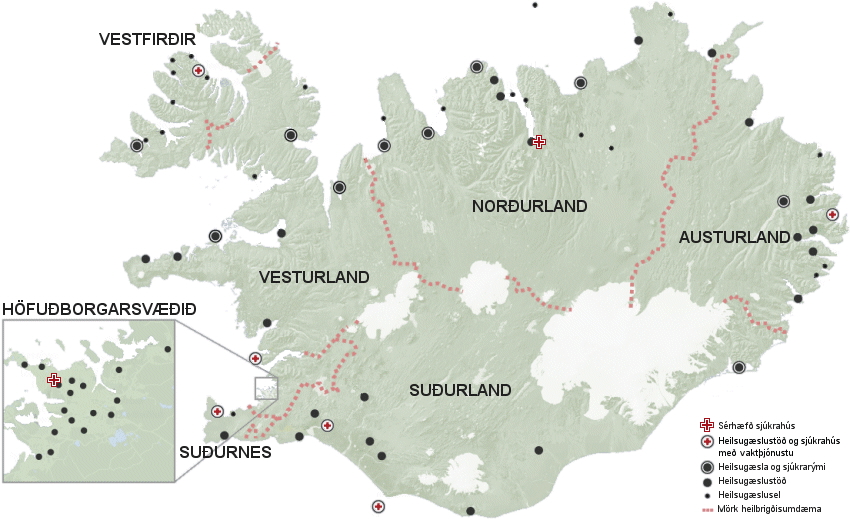
Figure 1. Geographical health regions in Iceland. Skaftárhreppur is part of the Suðurland-health region, the southernmost part of Iceland. The region is vast, large parts consist of highlands and glaciers. The south region has many second homes and is the largest tourism region outside the capital.
Introduction to the collaboration case study
The collaboration in Skaftárhreppur, Iceland, represents a case of regional collaborative innovation aimed at enhancing healthcare services by introducing telemedicine. The primary objective was to invest in telemedicine equipment to facilitate remote medical examinations, thereby improving healthcare accessibility and quality. The collaboration was developed in response to the common challenge of providing adequate healthcare in a vast and sparsely populated area and involved local healthcare professionals, municipal authorities, private companies, and non-profit organisations.
Skaftárhreppur is part of the south health region, which spans a large area, with long distances between healthcare centres and hospitals (Heilbrigðisstofnun Suðurlands, 2024). For example, from Skaftárhreppur it is around a 2½-hour drive to the nearest emergency hospital located in Selfoss and around 3½ hours to the national hospital in Reykjavík. In the sparsely populated areas of Iceland, basic healthcare is often the only available form of health provision in a relatively close proximity. This limited access is largely determined by the difficulty of attracting qualified staff to rural areas.
When the local initiative to invest in telecommunication healthcare emerged, the town of Skaftárhreppur only had a part-time doctor working in the region and a nurse. Due to the long distances, on-call personnel could take up to an hour to arrive at the scene of emergencies. Personnel conducting checkups also had a limited scope to make decisions on whether a patient needed to be sent to a hospital for further treatment. Limited access to healthcare before the telemedicine concept was introduced was summed up by one interviewee: “It was, and still is, very difficult to fill a medical position in many rural municipalities in Iceland, and short-term measures proved to be very expensive for us. The arrangement before we introduced telemedicine equipment was that a nurse worked full-time during the day while a doctor was on call throughout the year, but when he was on leave, there was no on-site emergency facility no emergency room on site. If there were accidents or emergencies after four o'clock, you had to wait for help from the nearest region, which is 70–130 kilometres away, depending on location.” (Interview 2024) The local nursing management was pivotal in introducing distance healthcare solutions in Iceland and noted that this situation was not sustainable and required a solution to deliver better healthcare provision: “In the beginning, something needed to be done to make progress. There was a doctor working part-time in the region, but that was unstable and unsustainable because the area covered was vast and very isolated. We needed better solutions to provide better healthcare in the region and municipality. Information about digital medicine solutions in Greenland had come to my attention.” (Interview 2024)
After looking more closely into that and conducting further investigations, the local nurse and a doctor working in the region pitched the idea to relevant authorities. Their goal was to conduct trials with telemedicine equipment in the health region, especially in Skaftárhreppur. “That way, we would be able to take certain measurements, do tests in the field and get a professional readout of the data from a qualified person who could be located elsewhere. This would provide more accurate decisions and shorten waiting and response times,” the nurse added (Interview 2024). At the time, in 2010, Iceland had no experience, laws or regulations concerning telemedicine. The government is responsible for the national health service in Iceland and funding was not available so shortly after the 2008/09 financial crisis, which hit Iceland particularly hard.
Despite the difficult legal and financial context, there was political support for the idea. As one interviewee noted: “But the ministry was positive, supported the idea and allowed us to experiment with telemedicine equipment as long as we provided the gadgets.” (Interview 2024) At this point, the people of Skaftárhreppur started working together to fund the purchase of the first telemedicine equipment used in Iceland. The collaboration brought together key regional stakeholders, including local healthcare professionals, municipal authorities, private companies, and non-profit organisations. Local healthcare professionals, such as the nurse and doctor who initiated the project, played a crucial role in identifying the need for telemedicine and advocating for its implementation. Municipal authorities facilitated discussions and coordinated efforts, ensuring the project was aligned with regional development goals. Private companies contributed financial support and technological expertise, which were essential for the acquisition and installation of the equipment. Non-profit organisations and community groups were instrumental in fundraising and building community support, fostering a sense of ownership and collective responsibility among local people. This multi-stakeholder collaboration was pivotal in addressing the healthcare challenges faced by the region and ensuring the successful introduction of telemedicine services.
Drivers
The initial driver behind the collaboration was a local midwife’s entrepreneurial idea. Recognising the pressing need for improved healthcare services in the rural and isolated region of Skaftárhreppur, a midwife took the initiative to explore innovative solutions. She was inspired by digital healthcare solutions in Greenland and saw the potential for telemedicine in her community. Her determination and leadership were pivotal in mobilising local support and advocating for the introduction of telemedicine equipment. “To our surprise, the ideas were met with positivity. After we introduced them and explained what it would entail, that it would not become a substitute for traditional healthcare but rather an added service, people were highly supportive,” adds the nursing manager who initially introduced the idea (Interview 2024). This entrepreneurial spirit served as the foundation for the collaborative efforts that followed.
The second driver was the regional challenge of overcoming long distances to access healthcare and the collective will to address that issue. Skaftárhreppur, part of the south health region, faced significant geographical barriers, with long distances between healthcare centres and hospitals. The local healthcare system was under strain, with limited resources and personnel, making it difficult to provide timely and effective care. Soon, the idea of local fundraising emerged. Non-profit organisations in the area picked up the ball from there, with individuals and companies alike also contributing. The shared vision and collective will of the various local stakeholders were pivotal in addressing the healthcare crisis and improving service delivery, according to an elected official in Skaftárhreppur reminiscing on how the collaboration to fund the telemedicine equipment started: “The people of the region often had to travel long distances to access specialised medical services, which was not only time-consuming but also posed risks during emergencies. This situation underscored the urgent need for a solution that could bridge the gap between patients and healthcare providers.” (Interview 2024) The community, including local authorities, private companies and ordinary people, all recognised the severity of the healthcare situation and came together with a shared vision to leverage technology to improve healthcare accessibility and quality. This collective effort was crucial in addressing the challenge at hand.
The third driver was the national support for the idea, despite the lack of initial funding. The Ministry of Health and other relevant authorities were supportive of the telemedicine initiative and provided the necessary approvals and goodwill to proceed with the project. Although government funding was not available at the time due to the financial crisis of 2008/09, the positive reception from the national authorities was instrumental in legitimising the project and encouraging local stakeholders to pursue alternative funding sources. This support highlighted the importance of telemedicine in national health policy and underscored the potential for innovative solutions to enhance healthcare services in rural areas.
How it all worked
The way the collaboration worked can be understood through the intricate interplay of various stakeholders and resources. The nurse’s initial leadership was pivotal in mobilising local support and the local healthcare workers’ advocacy was instrumental in persuading the Ministry of Health and the National Hospital to support the initiative. The collaboration established an ad-hoc operational framework in which healthcare professionals oversaw the professional part and led the process in the initial stages. They also oversaw communication with the relevant authorities and investigated technical medical aspects. Their leadership was crucial in navigating the early stages of the project and securing the necessary approvals and support from relevant authorities.
The collaboration was characterised by active and continuous interaction between all of the stakeholders. Informal meetings and conversations to discuss progress, address challenges and share knowledge complemented regular meetings that facilitated open communication and ensured everybody knew the project goals. The ad hoc nature of the collaboration meant that tasks were addressed as they arose, requiring flexibility and adaptability from all involved. Effective communication was essential in coordinating efforts and maintaining momentum throughout the project.
The success of the collaboration relied heavily on the diverse expertise of the stakeholders. Healthcare professionals provided the medical knowledge and identified the specific needs and potential benefits of telemedicine. The collaboration also benefited from the goodwill of the American company that produced and sold the equipment. The company not only provided it at a favourable price but sent a team to Iceland to set it up and train the local healthcare staff. This hands-on support was crucial in ensuring that the telemedicine services were effectively implemented and that the local healthcare staff were proficient in using the new technology. The company’s involvement demonstrated the importance of public-private partnerships in driving healthcare innovation and improving healthcare accessibility. The National Hospital in Reykjavík, one of the partners in the collaboration, also provided medical expertise and conducted some of the remote consultations. Specialists from the National Hospital were able to examine patients in Skaftárhreppur and other remote areas, ensuring they received better specialised medical care from a distance. It is also worth mentioning that the involvement of local NGOs and community groups brought in additional expertise in fundraising and community engagement. This was vital for building support and resources for the initiative, while ongoing communication by local healthcare workers after the initial installation of the equipment ensured policy support from the Ministry of Health, which was crucial for the sustainability of the initiative.
Financing the initiative was a significant challenge, given the lack of formal state funding. The collaboration relied on a community-driven approach to raise the necessary funds. Local NGOs and community groups played a pivotal role in organising fundraising efforts, which included contributions from individuals, private companies, and non-profit organisations. Over a period of 16 months, more than ISK 13 million was collected, demonstrating the strength of the community support. This financial backing was crucial for purchasing the telemedicine equipment and ensuring the project’s sustainability. In other words, civil engagement was a cornerstone of the collaboration, and this community-driven effort not only provided the necessary funds but also fostered a sense of ownership and collective responsibility among the local population.
Challenges
Despite the success of the telemedicine initiative, several challenges were encountered both within the collaboration and from external factors, including:
Interaction between the collaboration partners: Internally, the interaction between partners sometimes encountered difficulties. The ad hoc nature of the collaboration meant that roles and responsibilities were not always clearly defined, leading to occasional misunderstandings and delays. Coordination among the various stakeholders, including healthcare professionals, technical experts and community groups, required continuous effort to ensure alignment and effective communication.
Existing health legislation and regulations: Externally, the collaboration faced significant obstacles related to laws, regulations, and billing procedures. When the initiative started, Iceland had no laws and regulations governing the use of telemedicine equipment, which led to uncertainties regarding the legal and ethical aspects of remote medical consultations. Privacy concerns were paramount, even though this was before the introduction of the General Data Protection Regulation (GDPR) in the European Union. Ensuring the security and confidentiality of patient data during telemedicine consultations became a critical issue. The collaboration had to navigate these privacy concerns without clear legal guidelines, which added complexity to the implementation process.
The lack of established billing procedures for telemedicine consultations also posed a challenge. Existing healthcare billing systems were designed for in-person consultations, and there were no provisions for charging for telemedicine services. This situation created difficulties in determining how to secure correct payments from the state to the health centre for the remote consultations it conducted. In many cases, it was impossible to charge for a “doctor’s visit” unless the doctor was physically present, which undermined the financial sustainability of the telemedicine services. The collaboration had to advocate for changes in healthcare billing regulations to accommodate telemedicine services. This problem has still not been fully resolved.
Resistance to change was another challenge faced by the collaboration. Some healthcare professionals and patients were initially sceptical about the effectiveness of telemedicine. More conservative healthcare workers were particularly hesitant to adopt new technologies, preferring traditional face-to-face consultations. This scepticism was compounded by the lack of formal training and the additional workload associated with learning to use the new equipment. Patients, too, had reservations about the quality of care they would receive through telemedicine, fearing that remote consultations might not be as thorough as in-person visits.
Existing healthcare structures: The collaboration also faced challenges related to the integration of telemedicine services into the existing healthcare system. Ensuring the interoperability of telemedicine equipment with other medical devices and systems was crucial for the seamless delivery of healthcare services. There were concerns about the compatibility of telemedicine equipment with the existing IT infrastructure, which required continuous monitoring and technical support. Establishing clear protocols and guidelines for telemedicine consultations, including procedures for handling emergencies and ensuring the continuity of care, was essential but challenging without established regulatory frameworks.
Funding: The lack of state funding also meant that the collaboration had to rely heavily on community support and private donations. While this demonstrated strong community engagement, it also led to financial uncertainty. During the early years of its use, the collaboration had to seek funding to maintain and upgrade the equipment, which was a time-consuming process with no guarantee of success. The reliance on community donations also meant that the financial sustainability of the initiative was vulnerable to changes in the level of community support and economic conditions.
Healthcare training: The lack of state funding also meant no dedicated resources were allocated to training healthcare professionals to use the equipment. They had to train during already busy working days or in their free time, a situation that placed additional strain on their already heavy workloads. The lack of formal training after the initial introduction by the manufacturer of the equipment also meant the learning process was less structured and more reliant on the individual efforts of healthcare staff.
Enablers
The success of the telemedicine initiative in Skaftárhreppur can be attributed to several key enablers, primarily the dedication and vision of local healthcare professionals, the high level of social trust within the community, and the collaborative spirit of the various stakeholders.
Visionary Leadership and Expertise: The initiative was spearheaded by a place leader in the form of a visionary nurse along with a local doctor who recognised the pressing need for improved healthcare services in their rural community. Their determination and leadership were instrumental in mobilising support and resources. The nurse’s ability to engage with local people, who then engaged local companies, public actors, and individuals to secure funding for the telemedicine equipment was a testament to her commitment to enhancing healthcare accessibility. The local doctor’s support and collaboration were also crucial, as they provided medical expertise and credibility to the advocacy for the initiative.
Social Trust and Community Engagement: Trust was a key enabler in the success of the telemedicine initiative. In Iceland, the small population and close-knit communities foster a strong sense of trust among local people and between the public and institutions. This trust was evident in the willingness of local people and businesses to contribute funds and support the initiative. The community’s collective effort in raising the necessary funds demonstrated their commitment to improving healthcare services for everyone. This social trust extended to the healthcare professionals, who were trusted by the community to deliver high-quality care through the new telemedicine services. Local NGOs and community groups played a vital role in supporting the initiative. The charity founded to service the initiative was instrumental in raising funds and building community support. These organisations facilitated community engagement and fostered a sense of ownership and collective responsibility among the local population. The involvement of local NGOs also helped bridge the gap between the community and the healthcare professionals, ensuring that the initiative was responsive to community needs and priorities.
Collaboration and Partnerships: The collaboration also benefited from trust and cooperation among healthcare professionals at various levels, which epitomised the stakeholders’ collaborative spirit. Despite the lack of legislation and regulations governing telemedicine at the time, healthcare professionals in Skaftárhreppur, the regional health authorities, and the Ministry of Health worked together to ensure the initiative’s success. The small size of the population in Iceland and the close connections between healthcare professionals facilitated open communication and collaboration. This environment of trust and cooperation was crucial in overcoming the initial challenges and uncertainties associated with implementing telemedicine services. The involvement of the American company that produced and sold the equipment was another critical enabler. This public-private partnership was also an enabler of expertise and knowledge, as the company’s willingness to contribute to the initiative and ensure its success was evident in their decision to provide the equipment at a favourable price and send a team to Iceland to set it up and train the local healthcare staff. This hands-on support was invaluable in ensuring that the telemedicine services were effectively implemented and that local staff were proficient in the use of the new technology. The company’s commitment to the initiative demonstrated the importance of public-private partnerships in driving healthcare innovation.
Determination and Collective Effort: Determined individuals, a resourceful and trusting population, and the collaborative efforts of the private and public sectors were key enablers of the telemedicine initiative. The rural will and regional determination of the people in Skaftárhreppur to improve their community’s healthcare services were evident in their collective efforts and unwavering support for the initiative. This combination of factors created a conducive environment for the successful implementation and sustainability of the services, ultimately enhancing the accessibility and quality of healthcare in the region.
Achievements
The telemedicine initiative in Skaftárhreppur achieved several significant outcomes that extended beyond the initial aim of improving access to local healthcare.
Enhanced Decision-Making Processes: One of the most notable achievements of the collaboration was the enhancement of decision-making processes for healthcare professionals. The telemedicine equipment made faster and more accurate diagnoses possible, allowing healthcare providers to make informed decisions rapidly. This capability was particularly crucial in emergencies, when the ability to quickly determine the severity of a patient’s condition can make the difference between life and death, e.g. deciding on the spot whether to send a patient to a hospital via ambulance or call for a helicopter, thereby ensuring timely and appropriate medical intervention.
Improved Communication Pathways: The telemedicine services also significantly shortened communication pathways between local healthcare providers and specialists in Reykjavík and Akureyri. This improvement in communication facilitated better coordination and collaboration, leading to more efficient and effective patient care. In some cases, the enhanced diagnostic capabilities provided by the telemedicine equipment meant patients did not need to be sent to hospital. For example, a patient presenting with chest pain could be accurately diagnosed as having routine chest pain rather than a heart attack, thereby avoiding unnecessary hospital visits. This not only saved time and resources but also reduced stress and inconvenience for patients.
Financial Savings: The financial benefits of the telemedicine initiative were substantial. By reducing the number of unnecessary hospital visits and optimising the use of medical resources, the initiative resulted in cost savings for the healthcare system. These savings benefited taxpayers, as the reduced demand for emergency services and hospital admissions lowered overall healthcare costs. Healthcare professionals also benefited from this increased efficiency, as they could allocate their time and resources more effectively. Patients, too, experienced financial savings by avoiding unnecessary travel and time in hospital, which also contributed to their overall well-being.
Community Engagement and Empowerment: The initiative also had a profound impact on community engagement and empowerment. The involvement of local people and businesses in the telemedicine initiative fostered a sense of ownership and collective responsibility. The community’s active participation in fundraising and supporting the initiative demonstrated their commitment to improving healthcare services for all. This sense of ownership was further reinforced by the positive outcomes of the services, which validated the community’s efforts and investment.
Model for Other Regions: The success of the telemedicine initiative in Skaftárhreppur served as a model for other regions in Iceland. The pilot project’s achievements prompted the government to take action, drawing up the requisite legislation and policies to support telemedicine. The state recognised the potential of telemedicine to enhance the accessibility and quality of healthcare, particularly in rural areas and began to fund similar initiatives in other regions. This policy shift marked a significant step towards achieving healthcare equality and ensuring that residents in rural areas had access to the same quality of care as those in urban centres (Lög um heilbrigðisþjónustu nr. 40/2007; Alþingi, 2024).
Benefits
The telemedicine initiative in Skaftárhreppur brought many benefits that extended well beyond the immediate improvements in healthcare accessibility, including:
Strengthened Community Ties: One of the most profound benefits was the strengthened sense of community and collective effort. The involvement of local people and businesses in the initiative fostered a deep sense of ownership and collective responsibility. This collective effort not only facilitated the successful implementation of the telemedicine services but also strengthened social ties within the community. The collective goal of improving healthcare services brought people together, enhancing community cohesion and solidarity.
Policy Changes and Broader Implementation: The initiative also served as a model for healthcare provision, demonstrating the potential of telemedicine to address healthcare challenges in rural areas. The success of the pilot project in Skaftárhreppur prompted the government to update legislation and policies to support the broader introduction of telemedicine services. This policy shift marked a significant step towards achieving healthcare equality, ensuring that current policy stipulates that people in rural areas will have access to better care through distance solutions. The updated policies and legislation provided a framework for the expansion of telemedicine services into other regions, further improving access to healthcare throughout the country (Lög um heilbrigðisþjónustu nr. 40/2007; Alþingi, 2024; Stjórnarráð, 2024).
Increased Safety and Efficiency: The telemedicine initiative enhanced safety as improved diagnostic tools allowed for accurate and quick decision-making, which is crucial in emergencies, thereby improving patient outcomes and safety. By improving resource allocation, healthcare professionals also increased the overall efficiency of the health system.
Recruitment and Retention of Healthcare Staff: The initiative also had a positive impact on the recruitment and retention of skilled healthcare staff in the area. Rural areas often face challenges in attracting and retaining healthcare professionals due to the perceived isolation and lack of resources. The introduction of advanced telemedicine services made Skaftárhreppur a more attractive place for healthcare professionals to work. The opportunity to work with cutting-edge technology and be part of an innovative healthcare initiative appealed to some healthcare professionals, which helped to address the staffing challenges in the region.
Environmental Benefits: The environmental benefits of the telemedicine initiative were also noteworthy. By reducing the need for patients to travel long distances, the initiative helped cut carbon emissions, which is also in line with broader sustainability goals. The initiative demonstrated that innovative healthcare solutions can contribute to environmental sustainability while improving the accessibility and quality of healthcare.
Catalyst for Policy Changes: The success of the telemedicine initiative in Skaftárhreppur had effects that extended far beyond the region. The initiative served as a catalyst for changes at national level, leading to new policies and legislation that supported the wider implementation of telemedicine services. By improving healthcare services in rural areas, the initiative contributed to the overall well-being and quality of life of the rural population. This improvement in healthcare accessibility made rural areas more attractive places to live, potentially reversing depopulation trends. Telemedicine is now also a substantial part of Iceland’s rural development plan (Alþingi, 2024). The initiative demonstrated that innovative solutions can address the unique challenges faced by rural communities, thereby promoting sustainable rural development. The initiative inspired the government to adopt similar approaches for the rural regions in general, contributing to a more equitable healthcare system across the country. The positive outcomes of the initiative highlighted the importance of community involvement, innovative solutions, and collaborative efforts in addressing healthcare challenges and improving the quality of life for people in rural areas. As stated in the new telemedicine legislation, these services enhance resource utilisation, institutional cooperation and efficiency, make specialised healthcare more accessible regardless of location and foster innovation. The legislation also states that successful implementation provides undeniable benefits for patients, healthcare providers, institutions, and society by providing greater and equal access to health services (Stjórnarráð, 2024).
Improvements
While the telemedicine initiative in Skaftárhreppur was a local success, there are several areas where improvements could be made to ensure its long-term sustainability and effectiveness.
Sustainable Funding Models: The reliance on community donations and private contributions led to financial uncertainty. The initial implementation of the telemedicine services was largely driven by community donations and private contributions. However, for the initiative to remain viable, there needs to be a consistent and reliable source of funding. Developing sustainable funding models, such as securing government grants, public-private partnerships, or long-term funding commitments from stakeholders, would ensure financial stability.
Clearer Structure and Defined Roles: One of the main challenges faced by the collaboration was the ad hoc nature of its structure. On one hand, the flexibility and adaptability of the stakeholders allowed them to overcome numerous challenges and achieve their goals. On the other hand, the lack of a formal structure or management framework meant that many aspects of the initiative were handled on a day-to-day basis without a clear long-term strategy. Future initiatives would benefit from a more formalised structure with clearly defined roles and responsibilities for all stakeholders. Establishing a steering committee or a project management team could coordinate efforts more effectively and ensure all tasks are addressed in a timely manner. This formal structure would also facilitate greater accountability and transparency throughout projects.
Training and Capacity Building: Another area for improvement is addressing the perceived conservatism within the healthcare industry. Many healthcare professionals had doubts about the effectiveness of telemedicine and were hesitant to adopt the new technology. The initial scepticism from some professionals and patients highlighted the need for comprehensive training and capacity building. Future initiatives should include formal training programmes for healthcare professionals to ensure they are comfortable and proficient with the new technology. Emphasising that telemedicine is not intended to replace traditional healthcare services but to complement them by improving precision, decision-making and safety would also help alleviate concerns. Public awareness campaigns would be one way of educating patients about the benefits of telemedicine and addressing any concerns they may have. Providing ongoing support and resources for both healthcare professionals and patients would facilitate smoother adoption and integration of telemedicine services.
Enhanced Communication and Coordination: The collaboration aspect of the initiative was one of its greatest strengths, but there is room for improvement in forging stronger links between local and national institutions. While the collaboration benefited from active stakeholder interaction, misunderstandings and delays cropped up occasionally due to the lack of formal communication channels. Regular, structured communication channels would improve coordination and ensure that all stakeholders are kept informed of developments. The coordination and communication between different authorities and institutions would have been beneficial. Establishing formal partnerships between local healthcare providers, regional health authorities, and state institutions would create a more cohesive and supportive framework for telemedicine services.
Legal and Regulatory Framework: The lack of specific regulations for telemedicine posed significant challenges for the initiative. Future collaborations would benefit from a clear legal and regulatory framework that addresses the use of telemedicine, including privacy and data security concerns. Establishing guidelines for telemedicine consultations, billing procedures, and patient consent would provide clarity and ensure compliance with legal and ethical standards. Although this issue has since partially been resolved, further advocacy for policy changes at the national level could help create a supportive environment for telemedicine initiatives, as not all of the gaps in the system have been closed yet.
Continuous Evaluation and Implementation: Assessing the impact and effectiveness of the telemedicine initiative is another area for improvement. Continuous monitoring and evaluation are essential to determine whether the initiative is meeting its goals and to identify areas for further improvement. Regular assessments of the project’s impact, including patient outcomes, cost savings, and user satisfaction, would provide valuable insights and inform future improvements. These assessments can also inform future policy and practice, ensuring that the initiative remains responsive to the needs of the community and adapts to changing circumstances.
Future Direction
The future direction of telemedicine collaboration in Iceland is likely to involve a more structured and coordinated approach at both national and regional levels. An expansion of telemedicine services has already begun, with telemedicine now encompassing various fields of medicine. The initial local initiative in Skaftárhreppur, which focused on securing and implementing telemedicine equipment, formally ended once the equipment was in place. The main point of the collaboration among local actors was to ensure successful implementation. After achieving this goal, the local healthcare service centre took the lead in using and managing the equipment. As telemedicine becomes an integral part of national health policy, it is essential to consider how governance structures and key actors will shape its continued development and use.
National and Regional-level Governance: The state has drawn up policies and legislation to address the unique challenges and opportunities presented by telemedicine. These regulations ensure that services are delivered safely, securely and effectively, protecting patient privacy and data security. Drafting the legislation was a necessary step to support the broader implementation of telemedicine services and to provide a clear framework for healthcare providers and patients. National-level governance will continue to play a crucial role in standardising telemedicine practices across the country. The Ministry of Health and other relevant authorities must continue to establish clear regulations and guidelines to ensure the consistent and effective use of telemedicine services. National policies should also provide a framework for funding and resource allocation to support telemedicine initiatives, ensuring that all regions have access to the necessary technology and infrastructure. At the regional level, governance structures should focus on tailoring telemedicine services to meet the specific needs of local communities. Regional health authorities will need to work closely with local healthcare providers, technical experts, and community organisations to implement telemedicine solutions that address the unique challenges in their areas. This collaborative approach will ensure that telemedicine services are responsive to the needs of patients and healthcare professionals in different regions.
Key Actors in the Collaboration Process: The continued success of telemedicine initiatives will depend on the active involvement of several key actors, including:
- Healthcare Professionals: Doctors, nurses, and other healthcare providers will remain at the forefront of telemedicine services. Their expertise and commitment to patient care are essential for the effective use of telemedicine technology. Ongoing training and support will be necessary to ensure that healthcare professionals are proficient in using telemedicine tools and can provide high-quality remote care.
- Technical Experts: The role of technical experts will be critical in maintaining and advancing telemedicine technology. This includes ensuring the interoperability of telemedicine equipment with existing healthcare systems, providing technical support, and developing new innovations to enhance telemedicine services. Collaboration between healthcare professionals and technical experts will be vital for addressing technical challenges and improving the overall effectiveness of telemedicine.
- Policymakers and Regulators: Policymakers and regulators at both national and regional levels will need to create a supportive environment for telemedicine. This includes policies that facilitate the integration of telemedicine into the healthcare system, addressing regulatory barriers, and ensuring that telemedicine services are accessible to all patients, regardless of their location.
- Community Organisations and NGOs: Community organisations and non-governmental organisations will continue to play a significant role in supporting telemedicine initiatives. Their involvement in fundraising, community engagement, and advocacy will be essential for sustaining telemedicine services and ensuring that they meet the needs of local populations.
Impact of the National-level Shift on Regional Initiatives: The shift to national-level governance of telemedicine, which in the Icelandic case is the governance level responsible for healthcare, could have both positive and negative impacts on regional initiatives. On the positive side, national policies and funding can provide the resources and support needed to expand telemedicine services throughout the country. Standardised regulations and guidelines can also ensure consistency and quality in telemedicine practices. However, there is a risk that a top-down approach could overlook the specific needs and challenges of individual regions. It is essential that national policies are flexible enough to allow for regional adaptations and that regional stakeholders are actively involved in the decision-making process. Ensuring that regional voices are heard and local expertise utilised will be crucial for the continued success of telemedicine initiatives. As such, the future direction of telemedicine collaboration in Iceland will require a balanced approach that combines national-level governance with regional adaptability. By involving key actors from healthcare, technology, policy and local communities, and by addressing both national and regional needs, telemedicine can continue to improve healthcare accessibility and quality across the country.
Conclusions and recommendations
The telemedicine initiative in Skaftárhreppur, Iceland, serves as an example of how regional collaboration can drive healthcare innovation and improve accessibility. The collaboration process can be summarised in three key stages:
- Initiation and Visionary Leadership: The initiative was sparked by the entrepreneurial vision of a community leader, a local midwife, who identified the potential of telemedicine to address the healthcare challenges in her community. Her leadership, backed by a local doctor, was crucial in mobilising local support and resources. This stage highlights the importance of visionary leadership and the ability to inspire and engage stakeholders.
- Collaborative Effort and Community Engagement: The collaboration brought together a diverse group of stakeholders, including healthcare professionals, municipal authorities, state institutions, private companies, and non-profit organisations. The high level of social trust and community engagement was instrumental in raising funds and garnering support for the initiative. This stage underscores the value of community involvement and the collective effort required to overcome regional challenges.
- Implementation and Integration: The successful implementation of telemedicine services involved close collaboration between the relevant authorities, healthcare professionals and technical experts. Despite challenges related to legal and regulatory frameworks, the initiative demonstrated the potential of telemedicine to enhance the accessibility and quality of healthcare. This stage emphasises the need for political support, technical expertise, effective communication, and continuous evaluation to ensure the sustainability of telemedicine services.
Based on the case study, the following recommendations are proposed to enhance future telemedicine collaborations:
Establish Clear Governance Structures: Future initiatives should adopt a more formalised structure with clearly defined roles and responsibilities. A steering committee or project management team may improve coordination and accountability, ensuring that all tasks are addressed efficiently.
Enhance Communication and Coordination: Implementing regular, structured communication channels, such as scheduled meetings and centralised communication platforms, can improve coordination between stakeholders. This approach will help prevent misunderstandings and ensure that all parties are kept informed of developments.
Invest in Training and Capacity Building: Comprehensive training programmes for healthcare professionals and public awareness campaigns for patients are essential for the successful adoption of telemedicine. Providing ongoing support and resources will facilitate smoother integration and acceptance of telemedicine services.
Develop Legal and Regulatory Frameworks: Establishing clear guidelines for telemedicine, including privacy, data security, and billing procedures, is crucial. Advocacy for policy changes at the national level can create a supportive environment for telemedicine initiatives and ensure compliance with legal and ethical standards.
Secure Sustainable Funding: Developing sustainable funding models, such as government grants, public-private partnerships, or innovative funding mechanisms, will ensure the financial stability of initiatives. Exploring diverse funding sources can provide additional resources and support.
Ensure Integration with Existing Healthcare Systems: Focusing on the interoperability of telemedicine equipment with existing healthcare systems is essential. Establishing clear protocols and guidelines for telemedicine consultations will enhance the effectiveness and reliability of services.
Promote Continuous Evaluation and Improvement:Introducing a system for regular assessment of the project’s impact, including patient outcomes and user satisfaction, will provide valuable insights for future improvements. Engaging stakeholders in the evaluation process will ensure that the initiative remains responsive to community needs.
References
Alþingi (2018), Þingsályktun um stefnumótandi byggðaáætlun fyrir árin 2018–2024 [A Parliamentary Resolution on a Regional Development 2018-2024]. Reykjavík. https:// www.althingi.is/altext/148/s/1242.html
Alþingi (2024). Lög um breytingu á lögum um heilbrigðisþjónustu, nr. 40/2007 (fjarheilbrigðisþjónusta). https://www.althingi.is/altext/154/s/1696.html
Félag íslenskra hjúkrunarfræðinga (2016). Tímarit hjúkrunarfræðinga - 3. tbl. 2016. https://timarit.is/page/7212520#page/n47/mode/2up
Fjármála-og efnahagsráðuneytið [Ministry of Finance], Opinber fjármál 2019–2023. Fjármálaáætlun – Tillaga til þingsályktunarum fjármálaáætlun fyrir árin 2019–2023 [Financial plan - Proposal for a parliamentary resolution on a financial plan 2019-2023], Fjármála-og efnahagsráðuneytið, 2018. https://www.althingi.is/altext/148/s/0716.html
Heilbrigðisráðuneytið (2019). Health Policy – A policy for Iceland’s health services until 2030. https://www.government.is/library/01-Ministries/Ministry-of-HealTh/PDF-skjol/Heilbrigdisstefna_english.pdf
Heilbrigðisráðuneytið (2021). Skýrsla heilbrigðisráðherra – fimm ára aðgerðaáætlun heilbrigðisstefnu 2022–2026. https://www.stjornarradid.is/library/04-Raduneytin/Heilbrigdisraduneytid/ymsar-skrar/Sk%c3%bdrsla%20r%c3%a1%c3%b0herra%20um%20fimm%20%c3%a1ra%20a%c3%b0ger%c3%b0ar%c3%a1%c3%a6tlun%202022-2026%20loka%c3%batg%c3%a1fa_20210614.pdf
Heilbrigðisráðuneyti (2020). Reglugerð um heilbrigðisumdæmi og hlutverk, starfsemi og þjónustu heilsugæslustöðva, heilbrigðisstofnana og sjúkrahúsa – 1111/2020. https://www.reglugerd.is/reglugerdir/eftir-raduneytum/velferdarraduneyti/nr/22170
Heilbrigðisráðuneytið (2024). Stefna um stafræna heilbrigðisþjónustu. https://www.stjornarradid.is/library/04-Raduneytin/Heilbrigdisraduneytid/ymsar-skrar/Stafr%c3%a6nHeilbrig%c3%b0is%c3%bej%c3%b3nusta.pdf
Heilbrigðisstofnun Suðurlands (2024). Um HSU. https://island.is/s/hsu/um-hsu
Landlæknir [Icelandic Directorate of Health](2016), National eHealth Strategy 2016-2020. Reykjavik.
Lundgren, A., Ormstrup Vestergård, L., Bogason, Á., Penje, O., Jokinen, J. C., Wang, S., … Löfving, L. (2020). Digital Health Care and Social Care : Regional development impacts in the Nordic countries. https://doi.org/10.6027/R2020:14.1403-2503
Lög um heilbrigðisþjónustu – nr. 40 (2007). https://www.althingi.is/lagas/nuna/2007040.html
Möller, A. (2021), Ársskýrsla Embættis Landlæknis 2020/ Annual Report of the Office of the Medical Director of Health 2020, The Office of the Medical Director of Health, Reykjavík, http://www.milomanara.it/.
Oliveira Hashiguchi, T. (2020), “Bringing health care to the patient: An overview of the use of telemedicine in OECD countries”, OECD Health Working Papers, No. 116, OECD Publishing, Paris, https://doi.org/10.1787/8e56ede7-en.
Sigurdsson, E. et al. (2020), “How primary healthcare in Iceland swiftly changed its strategy in response to the COVID-19 pandemic”, BMJ Open, pp. 10:e043151, https://doi.org/10.1136/bmjopen-2020-043151.
Samband íslenskra sveitarfélaga (2024). Suðurland – Skaftárhreppur – Kirkjubæjarklaustur. https://www.samband.is/sveitarfelogin/sudurland/skaftarhreppur/
Skaftárhreppur (2024). Um Skaftárhrepp. https://www.klaustur.is/is/mannlif/um-skaftarhrepp-texti-1
Stjórnarráð Íslands (2024). Skilgreining á fjarheilbrigðisþjónustu leidd í lög.
Velferðarráðuneytið [Ministry of Welfare], Fjarheilbrigðisþjónusta – Í takt við nýja tíma [eHealth -New solutions for a new era], 2018 – https://www.stjornarradid.is/lisalib/getfile.aspx?itemid=9268f7cc-bb64-11e8-942c-005056bc4d74
Velferðarráðuneytið [Ministry of Welfare], Efling fjarheilbrigðisþjónustu [Strengthening of telehealth services]. 2018 – https://www.stjornarradid.is/media/velferdarraduneyti-media/media/skyrslur2016/efling_fjarheilbrigdisthonustu.pdf
List of interviewees
A project manager at the Centre for Digital Solutions at the national Directorate of Health (state institution)
A project manager at the Association of Municipalities in Southern-Iceland (a “regional”, or rather inter-municipal, organisation)
The director of the nursing department at Southern Health Institute in Iceland (state institution)
Elected official in Skaftárhreppur municipality