Photo: Students at Holbæk Uddannelses- og Studiecenter. Source: HUSC, Emil Erichsen
3.1 The University and Study Centre of Holbæk, Denmark
Holbæk Municipality and the Zealand region
Holbæk is located in northwest Zealand, with a population of approximately 30,000 people in the city itself and 70,000 residents in the wider municipality. The population of the Zealand region as a whole is approximately 830,000. Together with Roskilde, Næstved, Greve Strand, Køge, Slagelse and Ringsted, Holbæk serves as an urban centre for the surrounding areas. Its economy is driven by several key sectors, with the construction industry being particularly strong. A significant share of the local workforce is employed in this sector, reflecting a broader trend across Zealand, where construction and related trades have seen substantial growth but also face challenges, such as a shrinking workforce and difficulties in attracting new employees. Furthermore, the region is home to a variety of service-based industries, such as retail and hospitality. The public healthcare sector, in particular Holbæk Hospital, is one of the key employers in the region. While HUSC is focusing on consolidating its current courses, it is also working to develop the institution and the municipality as a whole. The strategic goals for HUSC are (Holbæk Kommune, n.d.):
“More opportunities for higher education in Holbæk”
“More local students in higher education”
“Broader access to education”
HUSC: a new municipal model for higher education
“As a municipality, we’ve gone from being an educational stakeholder of interest to being an educational actor and provider.”
(Interview 1)
In 2016, HUSC was established as a fixed-term development project in Holbæk Municipality. National educational reforms and institutional mergers had left the municipality without any higher education providers, prompting the launch of the HUSC project as a local political response. The HUSC project sought to explore municipal models of educational provision in order to retain students within the municipality and to promote regional development through the local presence of higher education. The municipality additionally found that, despite the absence of educational providers in the region, more than 800 residents in the municipality were enrolled in higher education in other municipalities. Based on these data and insights into admissions patterns, a plan was developed to offer higher education at facilities within the municipality and the city of Holbæk.
This led to the opening of HUSC in 2017 in a former state school building, as a space for hybrid students to study. In 2018, the first programmes, designed for local nursing students in collaboration with Absalon University College, were delivered in the same facilities. In 2019, Zealand Academy joined HUSC, and the centre was relocated to the newly renovated buildings of an old military barracks, where it remains today. In 2023, a programme for pedagogy students was introduced at HUSC. The location was strategically chosen to be accessible to students from the surrounding regions, with facilities tailored to both in-person and hybrid learning.
Educational programmes responding to local labour market needs
Nursing and pedagogy programmes are offered by Absalon University College and are closely linked to the local labour market, including Holbæk Hospital, local schools and other public institutions. A financial management programme is offered by Zealand Academy. HUSC acts as a bridge between these two institutions and the regional labour market, facilitating practical training and internship opportunities for students with local companies and public institutions. HUSC aims to attract programmes in teacher training, construction management and computer science (Datamatiker) in the near future.
A distinctive organisational set-up for provision of higher education
HUSC operates with financial support from Holbæk Municipality, which owns the facilities and leases them to educational partners like Absalon University College and Zealand Academy - which, as higher education institutions, are state-funded. This unique set-up positions HUSC as Denmark’s first municipal centre to host multiple higher education institutions under one roof, with the municipality acting as a partner in the provision of higher education. No private funding is allocated to HUSC, but private and local companies occasionally sponsor the student NGO.
HUSC has a “steering group” composed of four members, all of whom are leaders from various municipal departments, including education and the labour market.
Flexible and accessible learning space for a diverse student life
HUSC serves as a study space and community meeting place for locals pursuing education nearby or commuting to institutions outside Holbæk. It aims to foster a sense of community among students from different programmes and locations through facilities such as study rooms, group workspaces and 24-hour study access, which seems to be particularly attractive to students needing educational resources at their convenience, often not during standard daytime hours. This flexibility makes HUSC a valuable asset for those balancing studies with work or family commitments.
The HUSC Forum: a platform for engaging local stakeholders and the community
While HUSC is administered as a municipal department, it has established the HUSC Forum, originally called Uddannelsesråd, a form of collaborative network and advisory board that drives HUSC’s mission to expand educational opportunities in Holbæk, align programmes with local needs and contribute to the community’s economic and social development. By maintaining a structure that emphasises partnership and community engagement, including inviting local stakeholders to the network meetings, HUSC aims to remain adaptable to both local and regional educational needs.
Students
“We don’t claim to be a student city like Copenhagen, but we emphasise that you can enrol in a course in Holbæk. It’s not for everybody, but it’s very attractive to some!”
(Interview 1)
Since its establishment, HUSC has recorded 200 graduates in higher education, with 400 students currently enrolled. There was an increase in student uptake from 2018 to 2023, although the number of vacant places began to rise again in 2023. HUSC anticipates that the enrolment numbers will stagnate due to a decline in the attractiveness of welfare programmes at a national level, as well as a demographic downturn in the size of younger cohorts.
The student body primarily consists of individuals from the local areas or nearby areas, who are drawn by the opportunity to study close to home. The majority come from Holbæk, Odsherred and Kalundborg and a few from the nearby municipalities of Greve or Høje Taastrup. The students come from diverse backgrounds, representing a mix of ages, educational goals and life circumstances. The student body is highly diverse and includes recent secondary school graduates, young parents and older adults returning to education or seeking new opportunities (sporskiftere).
Students choose programmes at HUSC primarily due to familiarity and proximity. According to the HUSC management (Interview 1), the students they attract would likely have sought education in adjacent municipalities with smaller educational campuses or institutions. HUSC’s strategy is to avoid competing with Copenhagen or other popular university cities and instead focus on education for students who actively want to stay in their local area.
Good practice: methods for student engagement
HUSC adopts a multifaceted approach to student engagement, blending structured initiatives with innovative, hands-on strategies to create a supportive and inclusive environment that meets the needs of its diverse students. Several stakeholders cite establishing a student community and student ambience/atmosphere as one of the most significant challenges at a newly established campus like HUSC. Several initiatives have been implemented since HUSC was established. The key takeaway has been that the organisation behind HUSC needs to play an active part in facilitating student engagement and the study environment.
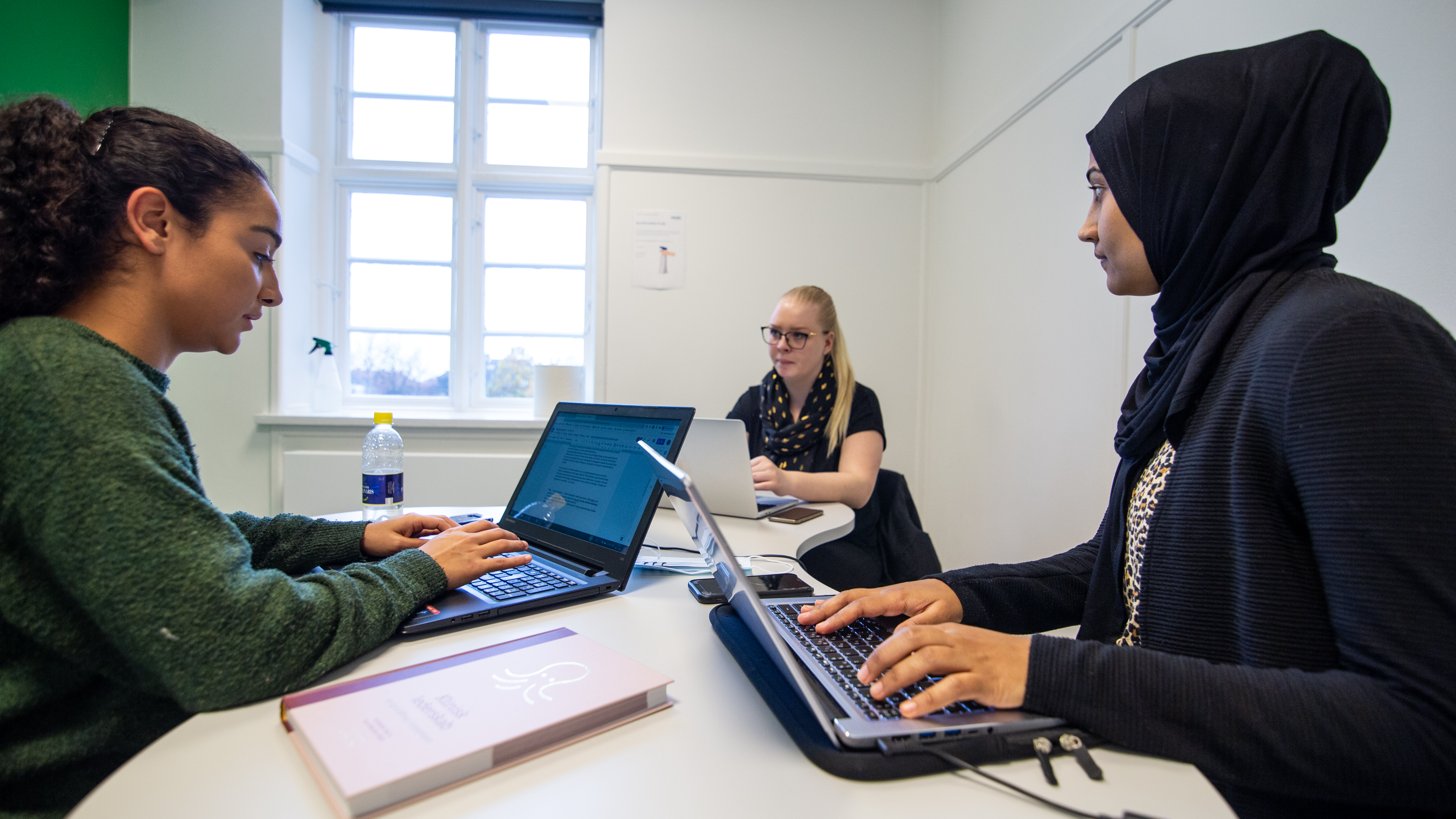
Photo: Students at Holbæk Uddannelses- og Studiecenter. Source: HUSC
Initiatives
One of HUSC’s primary objectives is to bridge the gap between different educational programmes within the campus. Collaborative events are organised to encourage interaction between cohorts and foster a sense of belonging beyond individual programmes. Examples include themed social events, such as carnival parties and bingo nights organised by different semester groups. The aim is to establish traditions to help create shared experiences while giving students ownership of the campus culture. However, top-down initiatives have proven difficult to implement. While some students participate in traditional social events, HUSC reports that it is difficult to implement initiatives successfully and fulfil students’ needs without consulting them first. To effectively reach and engage students, HUSC employs unconventional communication methods tailored to their preferences. While traditional channels like information screens are available, it was revealed that bathroom posters were the most important and effective tool for sharing information about social and student events.
Employing student environment facilitators
Facilitating direct interaction with students and honest feedback is challenging. Two staff members, serving as student environment facilitators, frequently meet students in casual settings, such as the campus lounge, to gather feedback and understand their needs. These conversations are supplemented by organised events, such as open lunch discussions, including free food for the students.
“Yes, it’s very hands-on. There hadn’t really been a dedicated café or common area before, so they used to meet in classrooms, which wasn’t very inspiring. Now, with the student lounge, we’ve seen new students getting involved and they often share suggestions. In the café area, there are signup sheets and rules on how they can use the space [...]"
(Interview 3)
Collaborations with local stakeholders
HUSC has established a range of structures to facilitate collaboration with a broad variety of local and regional actors, both public and private.
Programme-specific partnership networks
Each educational programme is supported by a stakeholder network relevant to its field, such as nursing. These networks primarily consist of local or regional stakeholders but also include representatives from the educational institutions and professional interest groups. They hold meetings a couple of times a year to discuss the content of programmes and developments on the labour market, share ideas and build collaborations.
Educational Advisory Board (Uddannelsesråd)
This is a municipality-organised network of advisors at the municipal level, including policymakers, local business actors and educational representatives from primary level through to higher education. Its role is to inform the municipality about current developments and local needs. For example, the idea to introduce a financial management programme emerged from discussions within this board.
Student Association “Godt Studieliv Holbæk” (NGO for students)
HUSC has supported the establishment of a student NGO called “Godt Studieliv Holbæk”, which focuses on creating a vibrant student life and events. The NGO is open to both current students and alumni from all educational programmes.
Career and Education Days (Karrieredage and Udddannelsesdage)
Together with partners such as Zealand Academy and Absalon University College, HUSC participates in educational events at local, regional and national levels. Typically, HUSC focuses on the local level. Its students are invited to participate in “Career and Education Days”, where they have the chance to network and learn about the local, regional and national labour markets.
Challenges and how HUSC has addressed them
Political support for innovation through “trial and error”
According to the management of HUSC, it functions as a “MVP” (Interview 1) (a concept that stems from LEAN and project management terminology and stands for “minimum viable product”). It serves as a functional prototype in Holbæk Municipality for testing and experimenting with new and hybrid forms of education and organisational models. HUSC explicitly aims to explore and implement hybrid approaches in the development of new educational programmes and delivery formats. The case study interviews revealed widespread recognition of HUSC as a model of “design thinking”, with the flexibility to adapt to future challenges and opportunities. The intention was not to create a perfect model from the beginning, but rather to test out solutions and “build the plane as we are flying it” through various tests and prototyping, such as of student recruitment strategies and educational formats (Interview 1).
Personal relations and networks
HUSC was initiated by and continues to rely heavily on strong personal and professional relations between actors and stakeholders in Holbæk and the region Zealand. The idea for HUSC began to take shape several years before its formal establishment, having originated in informal conversations among members of the local community. It seems that personal relations and individuals with a key knowledge of the local community were pivotal in HUSC’s success.
“Our role [as a local business network] is typically as a link between businesses and youth. For them [the municipality and the HUSC project], it seemed like a difficult task, but for me it was relatively easy. I know our companies and who would be interested in participating. So, I called a few of them and arranged an evening where they could meet the young people over pizza and soft drinks.”
(Interview 2)
Clarifying organisational roles
One of the key challenges for HUSC has been striking the right balance in its collaboration with educational institutions. In a smaller institution like HUSC, which is closely connected with many different stakeholders, the distribution of responsibilities and privileges can lead to conflicts due to the unclear structure – a structure which is usually being developed and changes rapidly in the initial years.
“It’s in our unique structure and interlinkedness that we find both the dirt and the gold.”
(Interview 1)
Targeting the “right” students and prioritising their needs
HUSC places a strong focus on recruiting local students, who might otherwise leave for nearby municipalities. It targets students from diverse backgrounds, which means that they have very different needs. Making student spaces available around the clock has been one of the key strategies that have paid off for HUSC.
"If they come to us with questions about housing, internships or other issues, we can guide them to the right resources. Sometimes it’s just about helping them navigate the building and pointing them in the right direction, especially when they’re new and unsure where to go."
(Interview 3)
Key learnings and way forward
Finding HUSC’s identity and role in the local community
“I’m not sure people know what HUSC does or who we are, but I’m pretty sure that they know that there is a nursing programme in Holbæk.”
(Interview 1)
One of the challenges for HUSC lies in its “messy identity and brand”. As a non-educational organisation providing education, it can be difficult to clearly position HUSC within the broader educational landscape. This has made it challenging to “put HUSC on the radar” (Interview 1). Local students and their networks are not always aware of the opportunities offered in the local area, a challenge which HUSC aims to counter in collaboration with other actors (public schools and educational providers).
Thinking innovatively within tight and shifting policy frameworks
While HUSC notes that the distinctive structure of the smaller campus and organisation has high innovative potential, it also encounters challenges due to rigid policy frameworks. Many higher education policies are designed with larger institutions and campuses in mind, resulting in a “one-size-fits-all” approach that often overlooks the specific needs and opportunities of smaller models/sites like HUSC. For example, during the Covid-19 pandemic, most educational institutions were forced to stop in-person lectures, but HUSC had a sufficiently small student body to continue on-site lectures safely. However, it was not allowed to, because it was subject to the same rules as larger universities.
"We sometimes need to remind others [stakeholders and collaborators] that we’re unique and have specific needs. That doesn’t always align with standard structures. But, in the end, we make things work to ensure we have the best environment for more people to pursue education.”
While HUSC has been providing higher education for just seven years, the policy framework and economic foundations for providing education have changed several times. This creates an unstable economic baseline, making future planning and innovation highly challenging.
HUSC additionaly reports difficulties in attracting teachers and staff. Being a small campus, vibrant research environments are difficult to sustain and the quality of teaching is difficult to uphold. Additionally, support services like a campus library and canteen are challenging to maintain, as the small scale makes it hard to achieve cost efficiency and benefit from discounts and economies of scale. Given the low number of students, student-driven events and engagement need ongoing support and help with outreach in order to become sustainable. HUSC aims to support the environment by clustering educational programmes across the institutions and using the campus for a wide range of student- and youth-related activities. However, this requires cross-institutional initiatives to achieve smooth and effective running.
Maintaining “sustainable” student numbers in the future
Despite its growth, HUSC faces the challenge of maintaining enrolment in programmes where demand fluctuates from year to year, such as nursing, finance and pedagogy.
While HUSC often experiences a surge in initial interest when a new programme is launched, the interest declines rapidly in subsequent years. One interviewee describes this as a kind of “reverse ketchup effect”, where programmes attract a wide and diverse pool of applicants in the first two years – often from various age groups, backgrounds and regions. However, this highly motivated student group is rapidly exhausted. This tendency creates uncertainty when predicting student numbers and can lead to overly optimistic projections for a programme and future demand.
While the programmes offered by HUSC are beneficial for the local community and labour market, HUSC is challenged to maintain them due to restrictions on maintaining programmes with low enrolment, as dictated by the economic frameworks governing educational provision. Thus, being a smaller institution with a limited enrolment base, HUSC is highly vulnerable to fluctuations in uptake and changing policy frameworks, which demand a continuous effort to innovate both the institution and its educational models.