Photo: Mariehamn. Source: The Government of Åland, n.d.
3.2 Åland University of Applied Sciences, Finland
The centre of education in Åland
Åland is a Swedish-speaking autonomous region of Finland, situated in the Baltic Sea between Finland and Sweden. As of 2024, the Åland islands have a population of 30,541, with 11,888 living in the capital, Mariehamn (Nordic Cooperation; Statistics Finland). Åland’s economy is fuelled by shipping and export businesses. The largest businesses are ferry companies, banks and manufacturing industries (such as high-tech plastics, carpentry, IT and fish processing). However, most businesses are small, with the service sector catering to incoming visitors (Ålands landskapsregering, n.d.). In addition, the agricultural sector is dispersed, with small farms providing local produce for Åland and elsewhere.
Högskolan på Åland, located in Mariehamn, traces its roots to a sea navigation training school established in 1854. The institution in its current form was founded in 2003 through the merger of Åland Vocational School and Åland University of Applied Sciences, bringing them together into a single organisation (Högskolan på Åland, n.d.-a). It has 60 employees and roughly 600 students, who can choose between nine educational programmes. Åland focuses UAS on providing degree-oriented education leading to a bachelor’s or master’s degree. In 2023, the first master’s programme opened for applications and in 2024, the first distance learning programme was introduced (Högskolan på Åland, n.d.-a).
A university close to home serving local students
Despite its Åland’s small population, Högskolan på Åland provides local students with the opportunity to study without having to relocate to mainland Finland or abroad (Interview 4). Ensuring access to higher education in Åland is seen as a crucial strategy for retaining young people, who can help to foster local development.
Nevertheless, demographic challenges and youth outmigration have made it increasingly important to attract students from mainland Finland and abroad. Högskolan på Åland attracts an older student body compared to other universities of applied sciences in Finland, with an average age of 30 years. This is partly because many students have prior work experience or education and are looking to change their career focus (Interview 3).
The university’s uniqueness and importance
Högskolan på Åland is organised differently from the other higher education institutions in Finland. The Self-Governing Act of Åland grants the islands the right to self-govern areas of social life, including education (Högskolan på Åland, n.d.-a). Since the institution is under the jurisdiction of the local government of Åland and is not governed by Finland’s national education system, it has the flexibility to tailor its educational programmes to local needs in collaboration with local industries (Interview 4). The institution’s funding is provided directly by the local government through a negotiated agreement, which determines the financial framework for the next four years (Interview 3).
Nevertheless, the structural relationship between Högskolan på Åland and the local government is set to change. Both parties agree on the need for the institution to leave local authority control and transition into an autonomous entity (Interview 3). This separation could potentially allow Högskolan på Åland greater flexibility and openness to innovative ideas (Interview 1).
Åland’s unique position is also reflected in the collective agreement for its teaching staff, which differs from the agreement in mainland Finland. There, the agreement offers higher salaries in less popular fields, typically those that are male-dominated, often leading to a gender imbalance. Åland's agreement ensures equal salaries across all study fields to avoid such disparities. However, it comes at a cost, making positions in less popular fields less attractive (Interview 3). This has made it harder to recruit staff for certain programmes at Högskolan på Åland. However, a new agreement from 2022 incorporates a comprehensive work schedule that allocates specific time for research and project implementation (Interview 4; Ålands landskapsregering, 2023). Although this change has allowed the institution to produce more relevant research, it also posed new challenges during adjustment to these changes.
Connections to the labour market
As the region’s only higher education institution, Högskolan på Åland plays a crucial role in ensuring Åland has a sufficient supply of educated professionals to contribute to local and regional development. Its key approach is to align its education and activities as closely as possible with the local community and business needs (Interview 4). Trends show that it is increasingly difficult to attract people from other regions, making it crucial to stay relevant to the local community and monitor changes on the labour market (Interview 3).
“We're the only higher education institution in Åland and you could say that it gives us a certain strength because we have a special purpose […] we have a big opportunity and a big responsibility. And that makes our position special.”
(Interview 3)
By engaging the business community, the university aims to adapt its programmes to the needs of the labour market on an ongoing basis (Interview 1). The University's Sector and Higher Education Council (Högskolans bransch- och fortbildningsråd) ensures programme relevance by involving business sector representatives for each field of study (Interview 1). Representatives meet several times per semester to discuss the needs of Åland's industries in relation to the institution’s programmes and provide feedback (Interview 3).
Most programmes at the institution require practical training, often through project-based courses that engage with the labour market. When companies approach Högskolan på Åland with specific tasks, students are assigned projects, typically lasting an entire semester. These practical courses sometimes lead to either employment or an internship, making it an effective strategy for introducing students to potential employers (Interview 2). Problem-based learning is also fostered through collaboration with local industries and EU-funded projects, such as Innovation Lab and Business Lab (Interview 4). These initiatives connect students, local businesses and the public sector while fostering innovation and business opportunities in Åland (Interview 3).
According to the student council representative, not all programmes have such strong ties with local industries. In fact, student retention after graduation poses a challenge due to limited career opportunities in Åland. While programmes such as hospitality management, nursing and IT host dedicated events to connect students with local companies and help students find relevant jobs after graduation, fields like engineering lack such events due to limited job opportunities on the island (Interview 2). Strong collaborations with healthcare organisations, especially within the nursing programme, also help students secure jobs (Interview 4).
Due to the limited number of local internship opportunities and high competition, many students opt to do their internships on mainland Finland or in Sweden. Businesses emphasise that there are more internship applications than available places for students (Interview 1).
While the institution offers upskilling courses, there is potential to promote them more proactively (Interview 1). Strengthening this initiative could provide Högskolan på Åland and local businesses with professionals who have broader and more specialised skillsets, without the need to take a full degree programme. This could enrich the local labour market and make the institution a more attractive place to study.
Högskolan på Åland remains dedicated to running programmes related to local industries and the economy, such as sea captain training for exports and hospitality management for tourism (Interview 3). Nevertheless, a declining interest in these programmes poses a challenge. Restoring the appeal of these fields is therefore a priority. If interest does not recover, these programmes may be discontinued in the future despite their continued relevance to local industries (Interview 4).
Strategies for student retention and attraction
Åland is facing outmigration among young people. To improve student retention and their integration into the local labour market, Högskolan på Åland prioritises predominantly campus-based education, deliberately limiting the development of fully digital courses to ensure students are well integrated into the local economy (Interview 3).
Although on-site studies remain a priority, two online programmes have been introduced to attract Swedish-speaking students from mainland Finland and Sweden (Interview 4). The distance programmes include three in-person meetings to facilitate networking between the students and local businesses, to connect the students with the local community and to enhance employment prospects (Interview 4).
The institution is also developing programmes involving flexible learning solutions, allowing students to attend campus two days a week and study independently the remainder of the time (Interview 3). This model provides greater flexibility and ensures students are connected to the community in Åland, while accommodating diverse learning and private needs. Such a solution is particularly beneficial for older students with varying family and work commitments.
“We’ve considered it [offering several distance programmes] but I think there's a fine line, since our presence in Åland has a particular purpose. So, providing only online programmes, without people having any connection to Åland [...] I don't think that's in Åland's general interest in the long term.”
(Interview 3)
As a further strategy to attract students, Högskolan på Åland launched a master’s programme in English, drawing a larger international cohort. To support this, businesses encourage studying in Åland by highlighting potential future employment opportunities in local companies within the region, despite competition for such positions remaining high (Interview 1).
Being small is a double-edged sword
The small size of both the local economy and the educational institution brings with it a mix of opportunities and challenges. Like many small educational institutions, the university faces difficulties in attracting and retaining students throughout their studies (Interview 4). For instance, a significant challenge lies in ensuring students complete their studies, as they oftentimes leave midway after finding employment (Interview 3). The small size also means that the selection of courses beyond the standard curriculum is limited, requiring students to enrol in online courses if they wish to pursue additional subjects. Moreover, Högskolan på Åland offers only limited student accommodation, with just one dedicated building (Interview 2). However, the availability of suitable housing has not been identified as a significant challenge so far.
Nevertheless, students tend to cite the small size of the university as a strength. It plays a positive role in attracting students. They value the close relations with their teachers and staff, as this contributes to a more flexible learning environment, which is not necessarily the case in larger institutions (Interview 4).
“It's a fairly small university […] If you have questions for the teachers, they know you on a first-name basis. You can just knock on their door and they’ll help you.”
(Interview 2)
The student council has a close relationship with the university’s management. Meetings are held once per semester to discuss relevant developments and students’ perspectives on how Högskolan på Åland should improve.
Rebuilding Åland’s maritime identity
Åland’s identity as a maritime hub, frequently attracting people to study and work in the maritime sector, seems to be waning. As one student explains, Åland’s niche and unique character is gradually fading, with its distinctive identity overshadowed by increasing diversity (Interview 2). A significant departure from Åland’s maritime tradition came when the local government, which had financed the training vessel MS Michael Sars, decided to cease funding and urged the institution to sell its ship due to high operating costs. Despite significant opposition in the local community, the intention remains to sell the ship in the future.
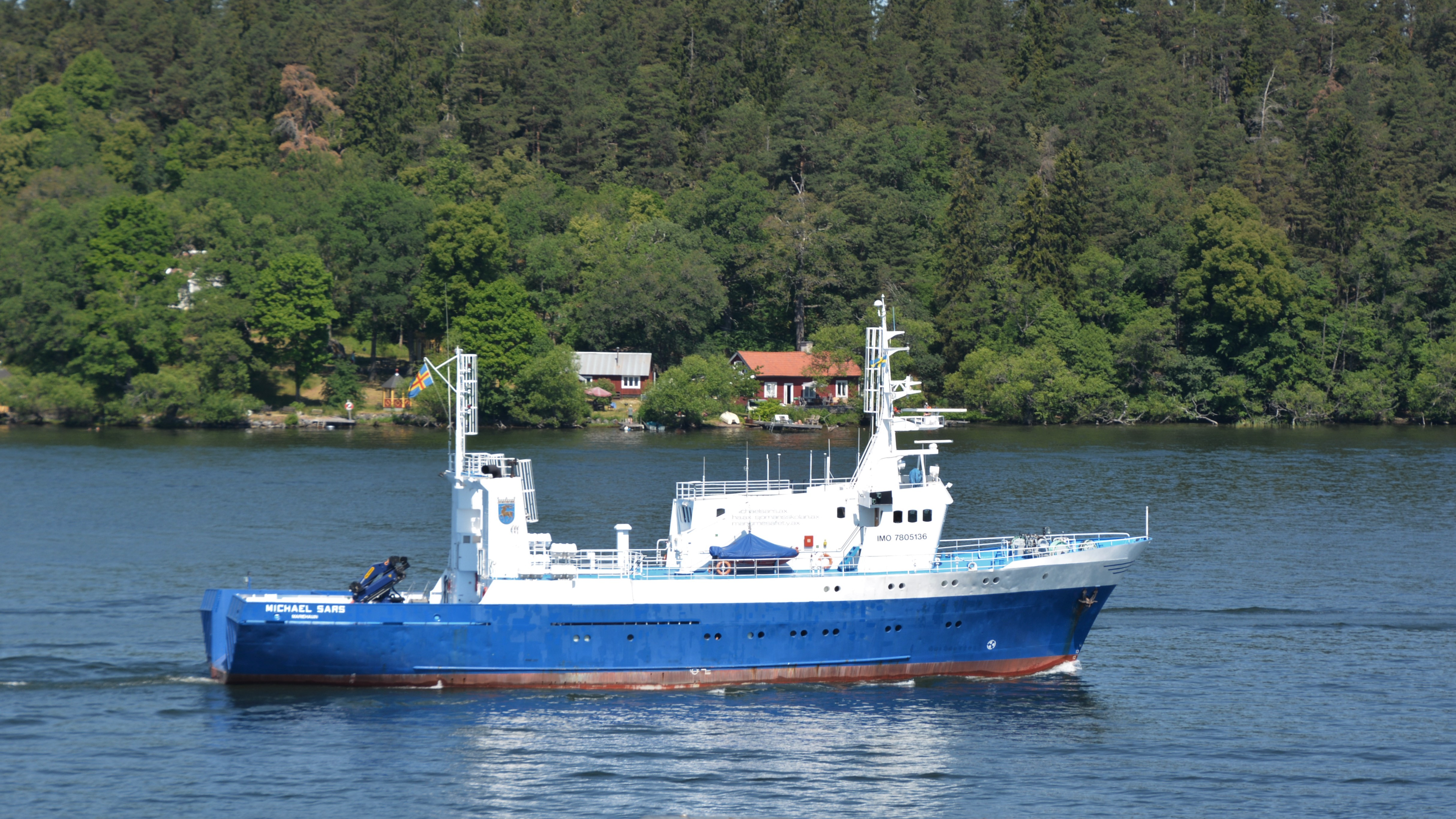
Photo: MS Michael Sars. Source: Bengt Oberger, Wikipedia, 2018.
“I mean, you can still study to become a sea captain. But you can also do that in Åbo [Turku], which is a bigger city. So, the thing is, why would you choose to go to a small place to study when you can go to a bigger city and study the same thing? […] The ship was the big thing [that set us apart].”
(Interview 2)
On the other hand, the islands still maintain a relatively strong maritime sector. While Åland has expanded to include a broader range of industries, it remains uncertain whether the future will see a renewed focus on strengthening the maritime sector (Interview 3).
Key learnings and way forward
Högskolan på Åland plays an important role in the labour market and Åland society in a broader sense. As the only higher education institution in the region, it serves as a stepping stone for local young people, offering education that is tailored to the needs of local businesses.
While traditionally focusing on maritime studies and rooted in the local community, the institution is now expanding its curriculum, introducing flexible study options to attract a broader range of students and addressing unique needs. The small scale of both the institution and the labour market presents unique opportunities and challenges. Close connections with teaching staff and local businesses offer advantages, but the limited size of the labour market restricts opportunities in some professions.
Maintaining a strong maritime focus while responding to industry demands likewise remains a challenge, especially given the declining interest in the maritime programme. Although Högskolan på Åland is already independent of the Finnish education model, it plans a further transition from being under local authority control to the status of an autonomous institution, which is expected to increase flexibility and spur innovation. Nevertheless, the results remain to be seen. Promoting more upskilling courses could be a strategic response to meet the evolving needs of the labour market better and address individual learners’ needs to improve their skillsets.
The institution is striving to be recognised as a provider of high-quality education to attract future students. In this effort, flexible and hybrid educational models, along with programmes taught in English, play a crucial role.