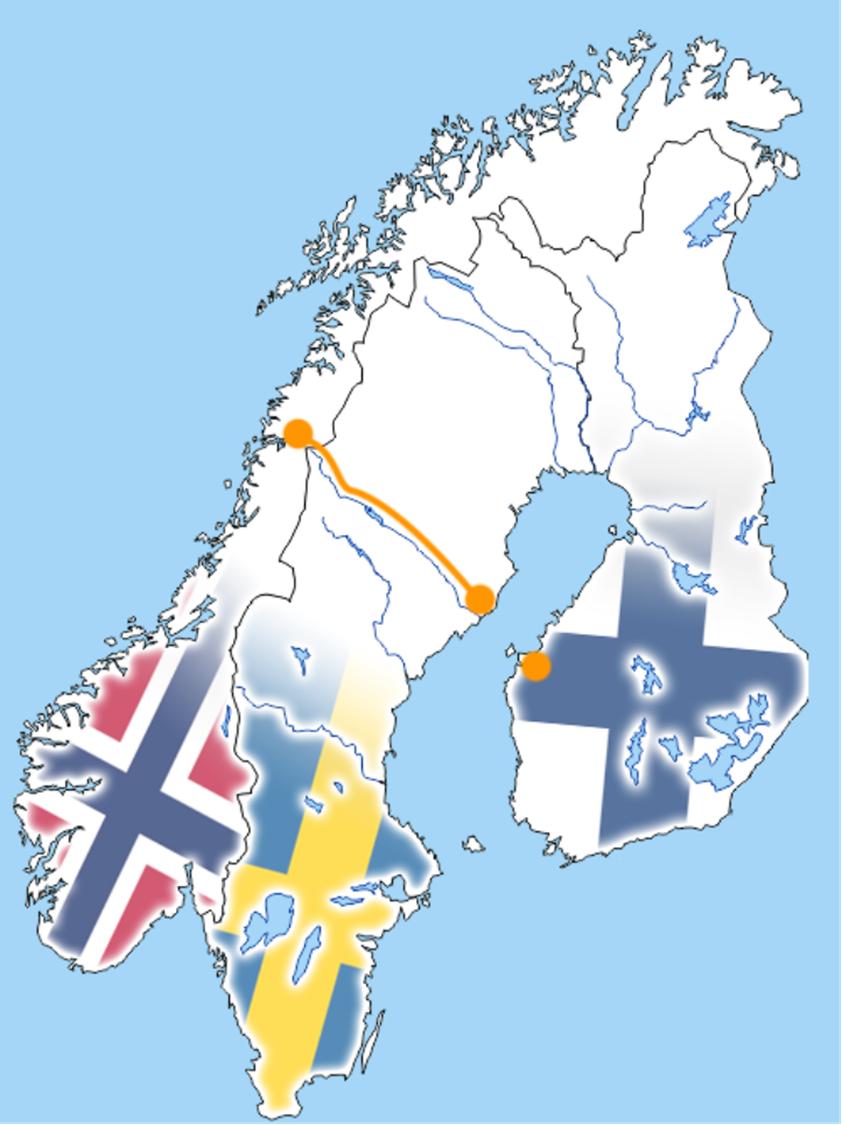
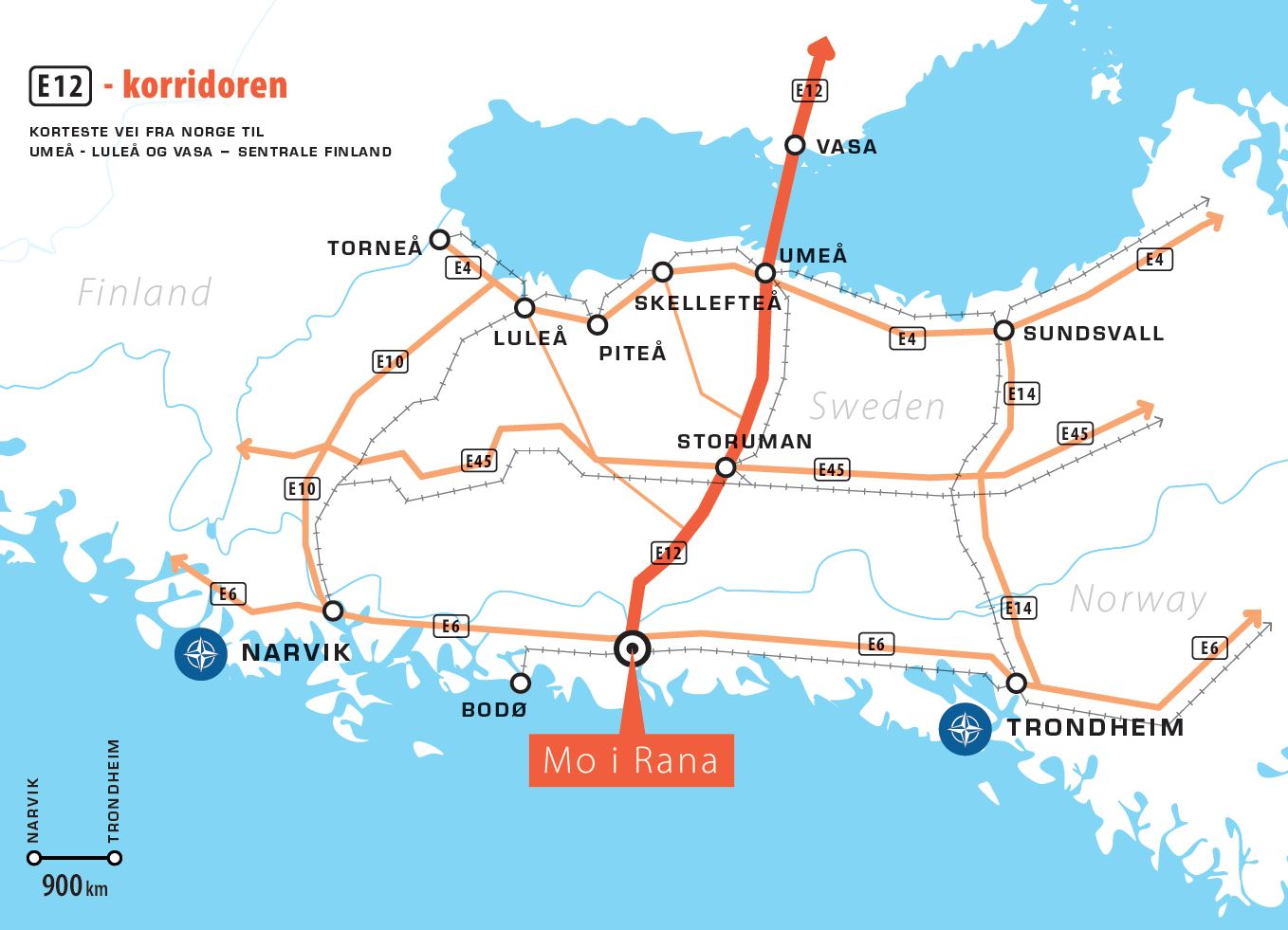
4. Capacity building in MidtSkandia – The E12 Corridor: From the Atlantic Ocean to the Baltic Sea
Recently, MidtSkandia border committee engaged Danish multinational engineering company Rambøll
Rambøll in this case was Norwegian. It is a Danish company but we had contact with the norwegian part of the company
At present, the region’s transport capacity is sufficient, with only minor improvements planned by 2030. Over the longer term, however, societal changes may require greater investment in, especially, sea and rail transport. The driving forces behind these anticipated social developments in Northern Norway and Northern Sweden can be summarised as follows:
Geopolitical conditions
- Increased Norway–Sweden cross-border defence activity
- Increased investments in critical infrastructure
Important societal goals
- Increased critical raw materials self-sufficiency in Europe
- Increased energy production from renewable resources
Climate change
- Increased population and business development
- New international transport corridors
While a scenario analysis of Northern Norway’s transport systems reveals various development opportunities between now and 2060, an increase in transport needs is widely recognised.
The feasibility study assesses current national plans and natural resources in the High North as they relate to economic development and transport in the E12 corridor. Although the Swedish Transport Administration has previously mapped possible measures to develop the area, the corridor’s railway line currently has a low market share and is among the country’s least developed.
The members of MidtSkandia are calling for significant improvements to the West Bothnia Line, as well as a westward expansion of the rail network once the North Bothnia Line has been completed. Norway, Sweden and Finland have agreed to establish a cross-border railway corridor for both civilian and military purposes, which includes the possibility of the Nordland Line in Norway undergoing further development.