18. How regions adopt a mission approach
Mission innovation
In recent years, mission-oriented innovation policy (MOIP) approaches have gained considerable policy and scholarly attention as a means of addressing ‘grand societal challenges’.
See, for example: Mazzucato, M., ‘Mission-oriented research & innovation in the European Union’, European Commission, 2018.
Policy shift?
Mission approaches are not new. In 1986, Ergas conceptualised them as ‘big science for big problems’, with the Apollo programme that led to the moon-landing an iconic example.
Ibid.
So, what’s new? Traditionally, innovation policy has mainly been concerned with economic growth, which is reflective of a narrower approach to missions.
Grillitsch, M. & Hansen, T., ‘Green industry development in different types of regions’, European Planning Studies 27/11 (2019): 2163–2183.
Ibid.
The project
The first phase of the Systems Perspective and Mission-oriented Policies project involved reviewing innovation policy traditions in Denmark, Finland and Sweden. In doing so, the aim was to identify how they have been shaped by mission and transformative approaches.
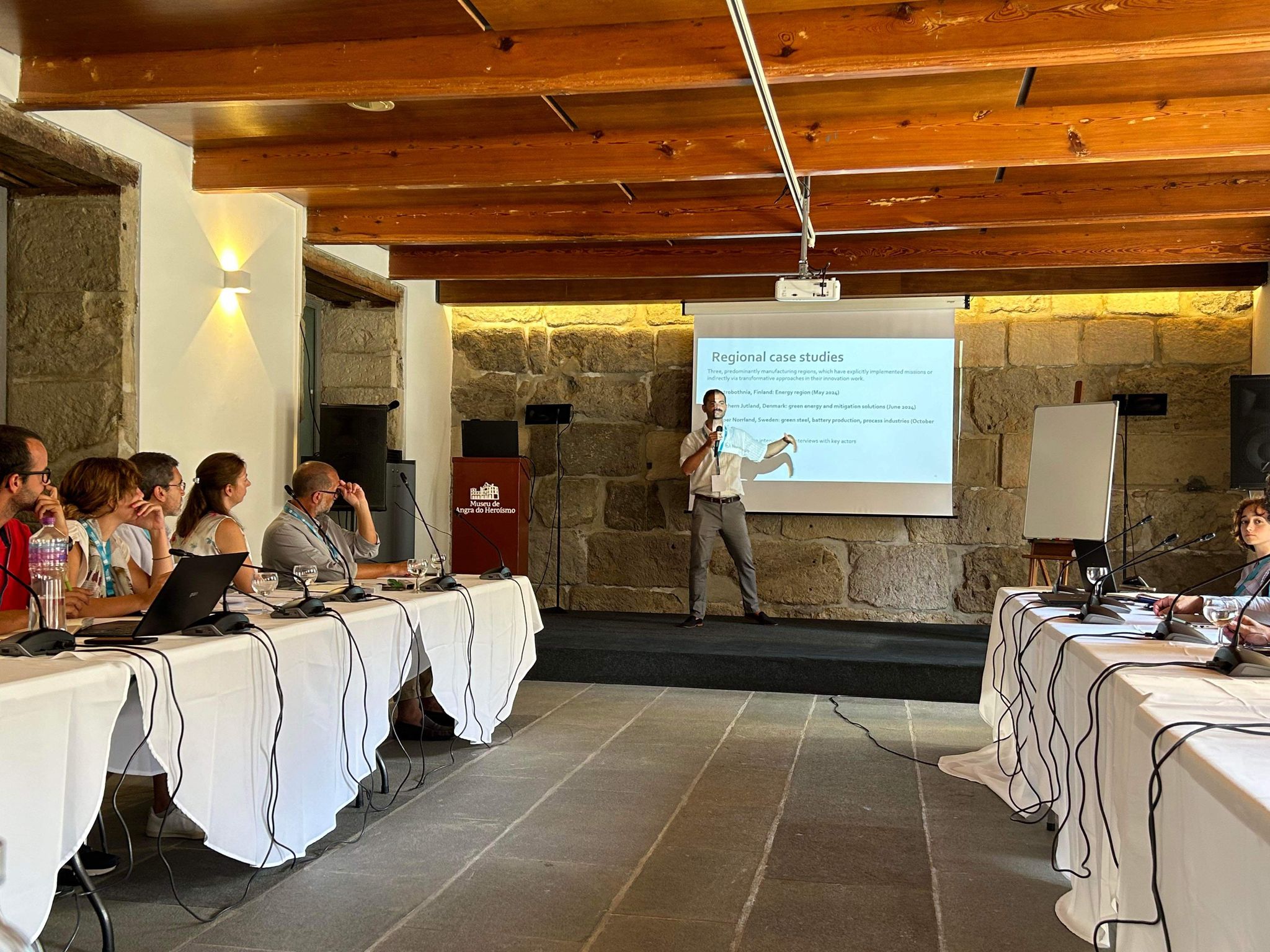
The second step turned to the potential implementation of MOIPs at a regional level, focusing on the cases of Northern Jutland (Denmark), Ostrobothnia (Finland) and Västerbotten (Sweden). The project culminated with a scientific article (forthcoming) and policy brief
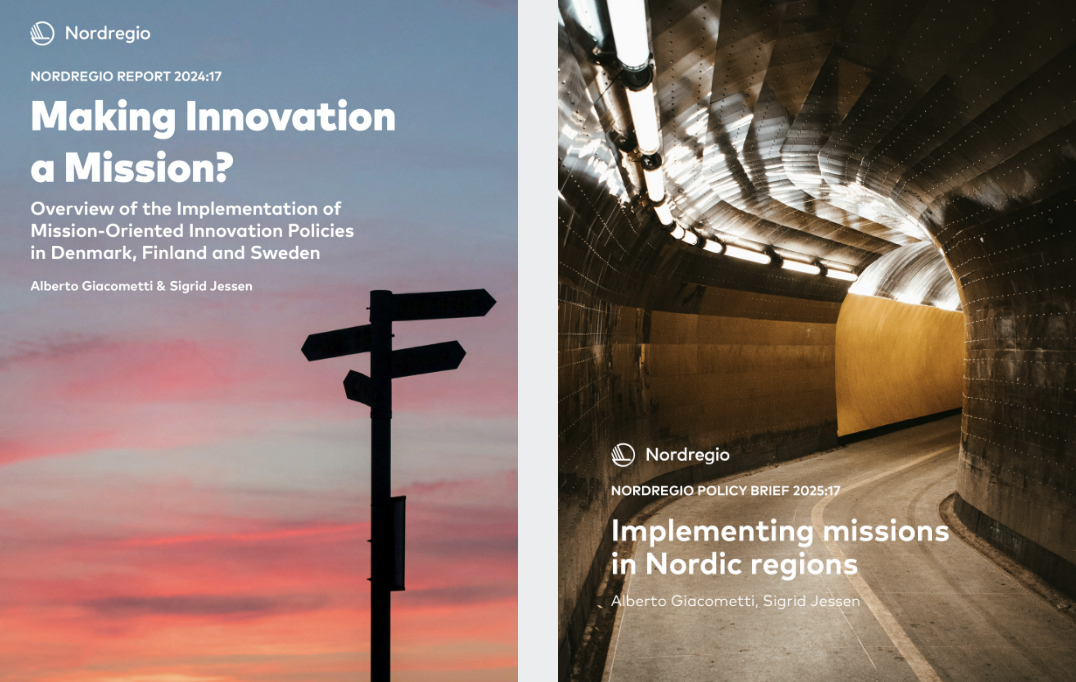
Giacometti, A. & Jessen, S., ‘Implementing Missions in Nordic Regions’, Nordregio Policy Brief 2025:17, 2025 AND Giacometti, A. & Jessen, S., ‘Making Innovation a Mission? Overview of the Implementation of Mission-Oriented Innovation Policies in Denmark, Finland and Sweden’, Nordregio Report 202
Method
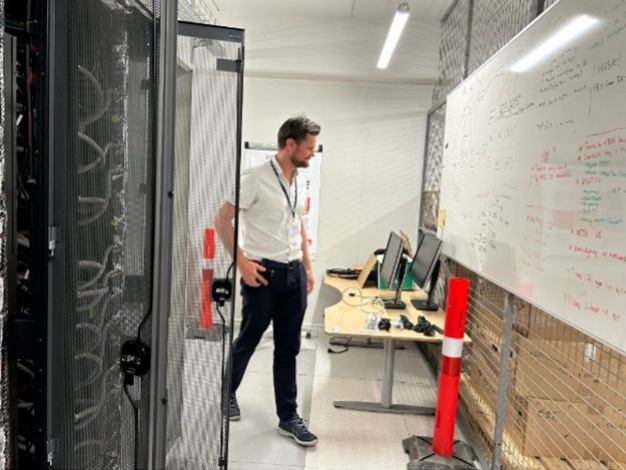
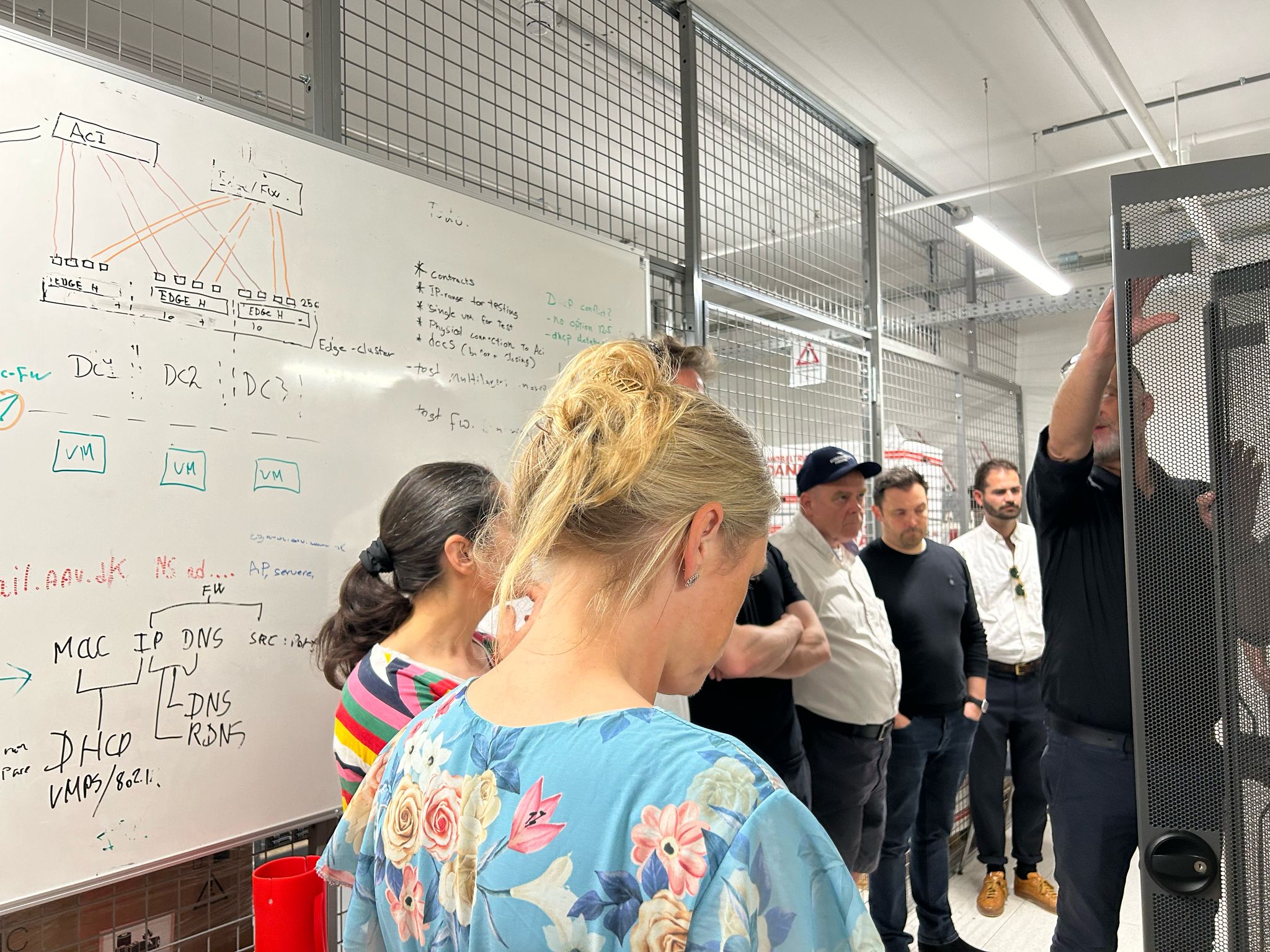
Given that current MOIPs are only in the early stages of development, and so subject to an array of interpretations, the project adopted an explorative dialogue approach with regional stakeholders. This ‘action research’ method was useful not only to the researchers, but regional stakeholders seeking possible avenues for a mission approach.
Throughout, researchers refrained from prescribing a policy development blueprint. Nor did they attribute values – whether positive or negative – to particular missions. Rather, their task was to assist stakeholders in exploring their own priorities, traditions and contexts. This proved useful when it came to understanding how context can expand or diminish the space for policy experimentation.
Key findings
While transformative policy approaches are common at the level of programmes and projects, it is much rarer to find them at the broader level of government-led missions. Denmark’s Innomissions, which encompasses mission-driven green partnerships, is the only case of the latter to be found in the three Nordic countries studied. It therefore remains to be seen whether MOIPs will become the norm. For the time being, most countries and sub-national authorities are restricting themselves to careful, experimental steps.
The diverse place-based contexts found across different regions offer a range of opportunities for MOIPs. To date, however, the tools and capabilities that authorities need to coordinate implementation of MOIPs remain largely understudied.
Making Innovation a Mission?
Overview of the Implementation of Mission-Oriented Innovation Policies in Denmark, Finland and Sweden
Nordregio Report 2024:17
Implementing Missions in Nordic Regions
Nordregio Policy Brief 2025:17