11. Ruralplan: Innovative planning in communities with population decline
Ruralplan was a research project carried out in 2024 by Inland Norway University of Applied Sciences in collaboration with Linköping University in Sweden and the Swiss Center for Mountain Regions. Funded through the European Territorial Observation Network (ESPON), the project focused on innovative planning in rural areas experiencing population decline and/or population composition challenges. In doing so, it examined a variety of methods and strategies designed to address the demographic changes faced by many rural communities.
The project’s ultimate goal was to develop long-term solutions conducive to a sustainable future for communities hampered by static population growth. The Innlandet–Dalarna Border Committee was involved in the methods development and model testing.
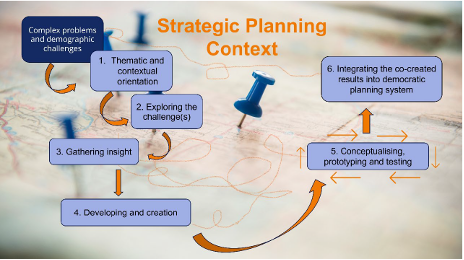
A key element of the project was the development and use of the RUPIL (Rural Planning and Innovation Lab) model, a methodology based on an established innovation process adapted to work in a community planning context.
For more about the RUPIL model and the project more generally, see: www.inn.no/forskning/forskningsprosjekter/ruralplan/.
As part of the Ruralplan project, the RUPIL model was tested in several pilot areas, including the municipality of Os in Norway, Malung-Sälen in Sweden and the Albula region in Switzerland. Based on results thus far, the process has proven effective in cultivating a deeper understanding of demographic challenges, as well as mobilising local resources in support of concrete strategies and solutions.
Photo: iStock
An example of how Ruralplan and the RUPIL model have contributed to municipal planning can be seen in Malung-Sälen, which faces demographic challenges related to an ageing population and labour shortages. Previously, the municipality had not directly addressed these challenges in its overall planning, as it had growth ambitions. Through using RUPIL, however, the municipality has come to a better understanding of how to manage the changes wrought by a declining working-age population and a growing proportion of older residents. In particular, the model has enabled dialogue around adapting the municipality’s elderly care and labour market strategies, and has facilitated concrete proposals on how to attract the skills needed for sustainable labour market.
The Ruralplan project has also yielded a toolbox designed to help municipal/regional planning authorities implement RUPIL’s methodological steps while simultaneously tailoring strategies to local priority areas. In addition, a policy brief produced by the project has been published by the EU, providing recommendations on how small municipalities across Europe can address demographic challenges. The brief summarises the project’s key lessons, setting out how the methods and processes used could be applied on a wider scale.
The project has shown how important it is to think long-term in planning, especially when dealing with demographic changes. While many planning strategies and policies focus on increasing the population and growing economically, Ruralplan strives to show that sustainable, viable communities can be nurtured even without population growth. Doing so, however, means thinking deeply about such factors as quality of life, the environment and social cohesion. Only then will it be possible to create a future in which people – including those in rural areas with declining populations – want to live and work.
It was good with the workshops, they offered opportunities to meet different types of actors that we do not meet on a daily basis, for new meetings and dialogues.
– Municipal leadership in Malung-Sälen, Sweden
Feedback shows that the test municipalities appreciated the work conducted using the RUPIL model. The Innlandet–Dalarna Border Committee is now working to ensure that more municipalities can work with the model, and is looking to disseminate experiences gathered through the project both nationally and more widely across the Nordic countries.
Feedback shows that the test municipalities appreciated the work conducted using the RUPIL model. The Innlandet–Dalarna Border Committee is now working to ensure that more municipalities can work with the model, and is looking to disseminate experiences gathered through the project both nationally and more widely across the Nordic countries.