3.5 Four main typologies of Nordic people
Finally, we may organise our data based on two major migration indicators along a matrix. These two indicators are based on the questions pertaining to whether people have left their place of origin (“leavers”) or not (“stayers”) and whether they have some plans to move in the future. Here below are the matrixes by country.
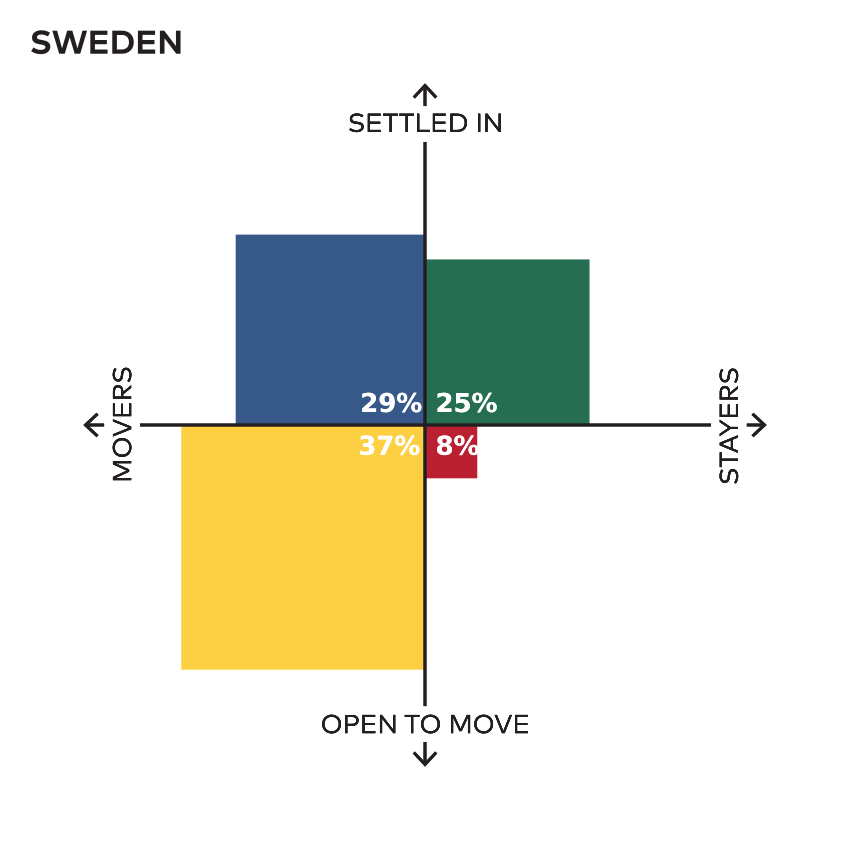
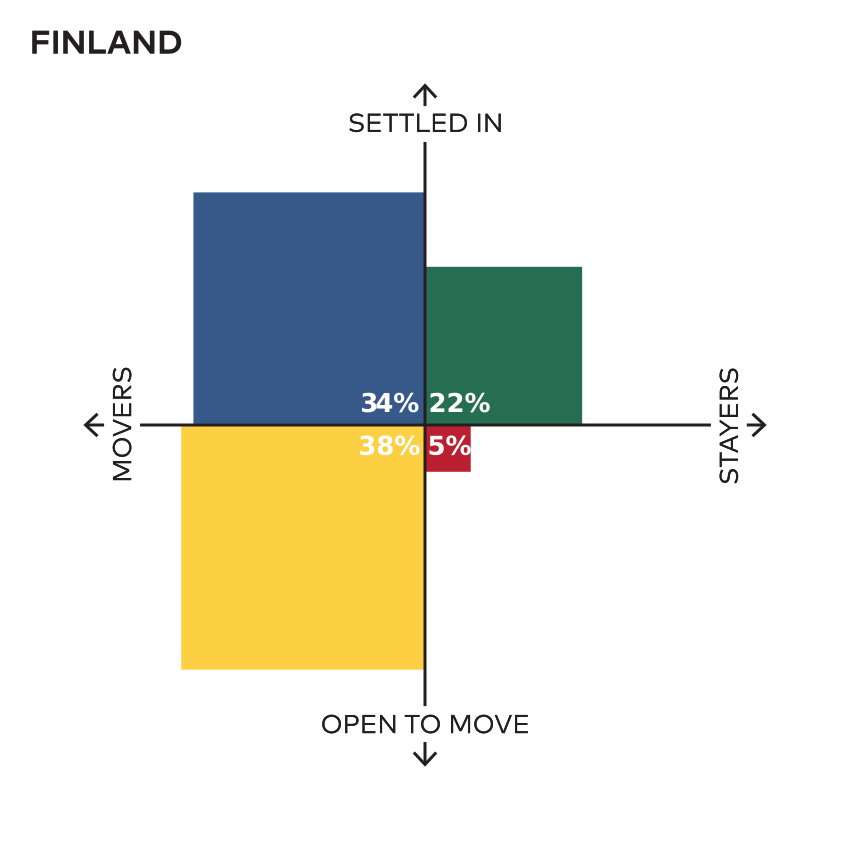
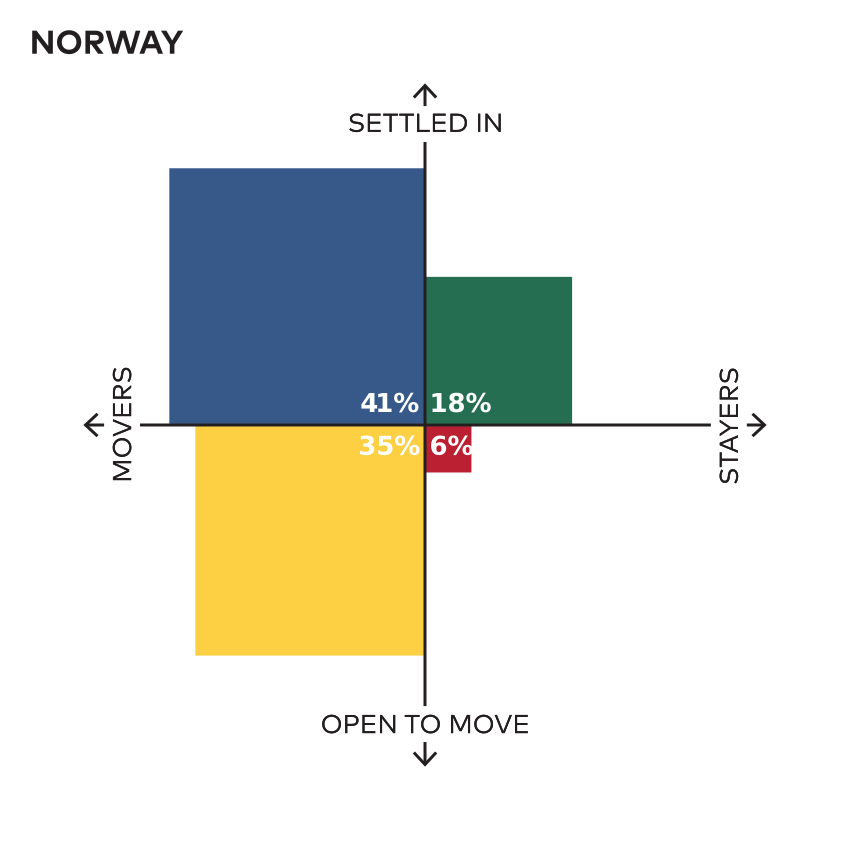
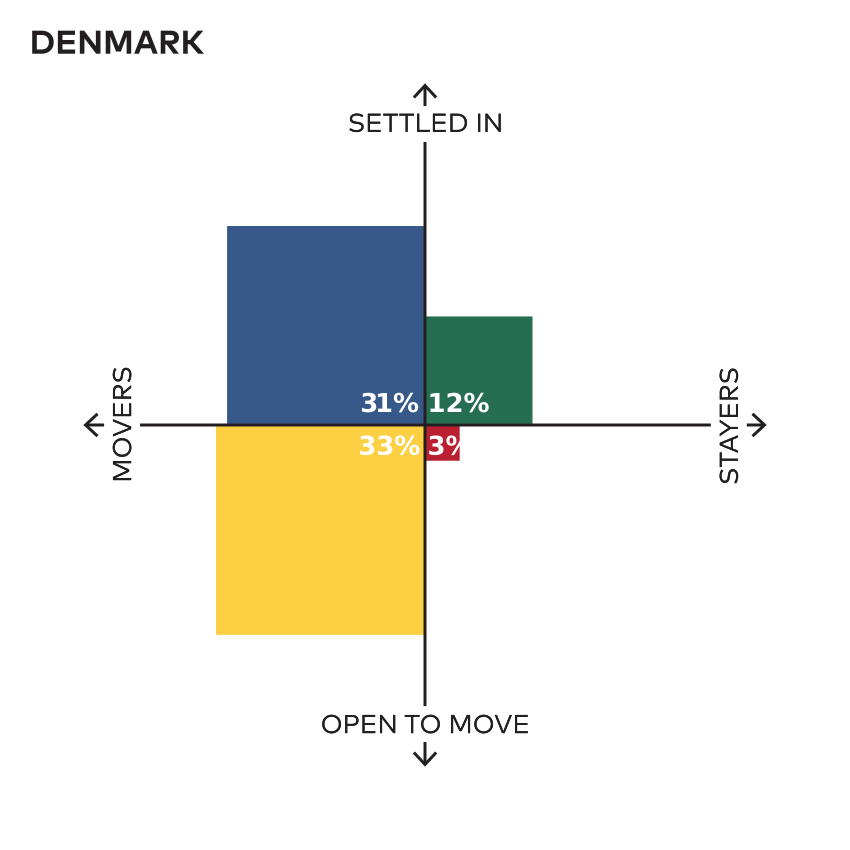
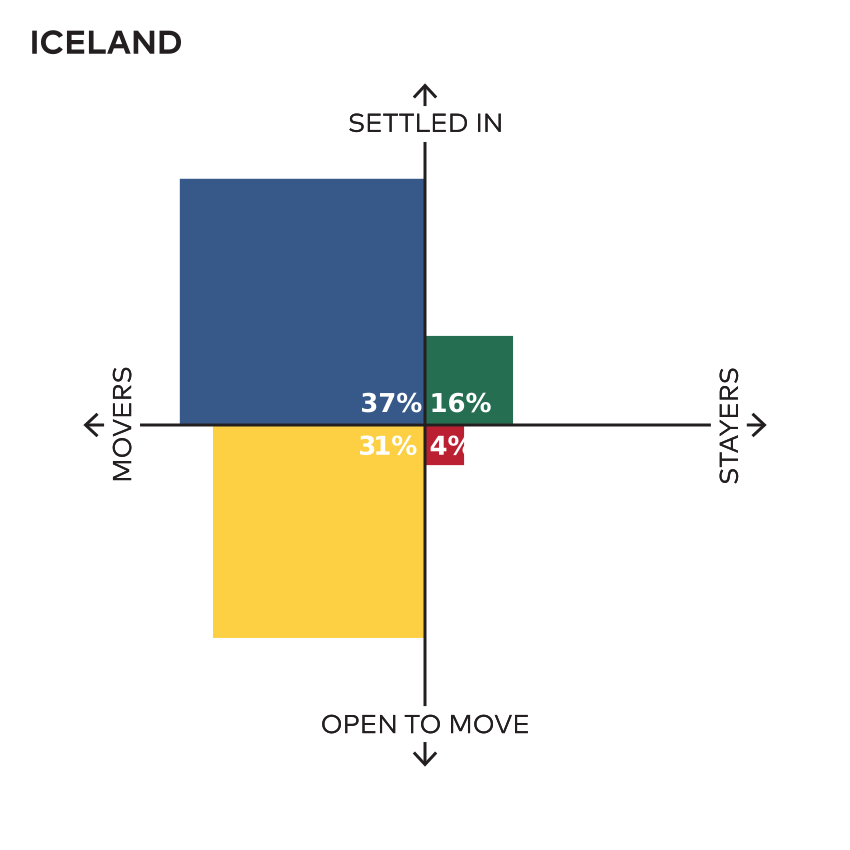
Graph 53. Matrix depicting people’s migration history and preferences in Sweden, Finland, Norway, Denmark, and Iceland.
These matrixes allow us to narrow down the complexities of migration patterns to the most core decisions, dividing them into four groups accordingly. They demonstrate that in the case of Finland, Sweden, and Denmark, people’s decisions to either remain in their place of origin or leave it characterises the mobility of their later life, as well: the leavers are more inclined to continue moving in the future while the stayers are inclined to remain settled in their place of origin. This development is most visible in Sweden. In the case of Iceland and Norway, people are more likely to feel settled in after leaving their place of origin. These numbers do not cover the people who have returned to their place of origin. As for the minority of stayers, a considerably smaller share of them is planning to move out in later life. This is especially true for Finland, Denmark, and Iceland, and to a lesser extent Sweden and Norway, where 33% of stayers remain open to move in the future.