Left: In Hyllie, Sweden, sensors manage energy, heating, waste, and water consumption
Right: A mobile tower with birds sitting on top of it
Right: A mobile tower with birds sitting on top of it
3. Background and terminology
In this chapter, we examine the terminologies that influence the public and scientific discourse on enhancing digital connectivity as it becomes embedded in numerous everyday practices in urban centres and rural areas of the Nordic-Baltic region. This definition mapping and associated discussions are grounded in a comprehensive narrative literature review aimed at identifying the specific characteristics that define and distinguish the various formats of “smart” societal structures – smart cities, smart villages, smart communities and smart territories. The chapter goes on to explore how these concepts have been employed in a Nordic-Baltic context before critically examining identified gaps and shortcomings, particularly in view of designing inclusive digital transformation practices. This mapping will establish the terminological and conceptual framework for further engagement with and exploration of smart entities in the Nordic-Baltic region within the context of the present research project.
3.1. Smart development strategies and concepts
The term “smart” has become a widely used label in planning and policy, signifying the integration of digital technologies and sustainable practices into development strategies for collaborative living environments. Concepts such as smart cities, smart villages, smart communities and smart territories aim to address societal challenges by leveraging technological innovations, such as 5G technologies, and fostering sustainable solutions. In a smart setting, these two elements often rely on each other, as technological progress is frequently used to promote, facilitate and implement sustainable practices. The employment of smart technologies has accelerated over the last decade, driven by increasingly widespread adoption of the fifth generation (5G) of wireless mobile communication (Gohar & Nencioni, 2021) and advancement of the Internet of Things (IoT).
The Internet of Things (IoT) refers to a network of devices and sensors which interact through the internet to share information and develop more efficient and intelligent services and Human-Computer interactions (Alahi et al., 2023).
The concept of the “smart city” that emerged in the 1990s initially focused on incorporating digital technologies into urban infrastructure to enhance efficiency and functionality. By the early 2000s, its scope had expanded to encompass sustainability, economic growth and improved quality of life. This evolution inspired related ideas, such as smart villages and smart communities, with these principles adapted to meet the needs of rural and diverse settings (Dameri & Cocchia, 2013). Recent approaches emphasise the holistic integration of technological, social, environmental and economic dimensions to build inclusive, resilient and sustainable communities capable of addressing complex challenges in both urban and rural environments.
Despite widespread use of the term “smart”, its definition remains fluid, varying across territorial contexts. This section introduces the four most commonly used concepts of “smart” development, focusing on how they are linked to 5G technologies and the overall rollout of faster digital connectivity in the Nordic and Baltic countries.
Smart cities
A smart city is an urban system that leverages digital technologies, data-driven solutions and efficient resource management to enhance services, improve quality of life and address urbanisation and sustainability challenges (Kitchin et al., 2019; Silva et al., 2018; Zhu et al., 2022). Unlike related concepts such as "digital cities", which primarily revolve around information and communication technologies (ICT), smart cities involve a more holistic approach, with policies and technologies integrated to foster sustainability, inclusivity and well-being (Dameri & Cocchia, 2013). This comprehensive approach takes social, economic and environmental dimensions into account to create connected and resilient communities.
Modern smart cities operate across multiple domains, including urban mobility, energy efficiency, infrastructure management, sustainability, citizen engagement, safety, economic development and resilience (Makkonen & Inkinen, 2024a; Silva et al., 2018). To assess these initiatives, Sharifi (2019) developed indicators across seven overarching themes: data, economy, people, governance, environment, living quality and mobility, each of which is associated with a set of indicators. This model is designed to provide a measurable framework for evaluation and comparison of the success of individual smart city initiatives (Sharifi, 2019). This approach is based on the original model of the “smart city wheel” as developed by Cohen (Cohen, 2012).
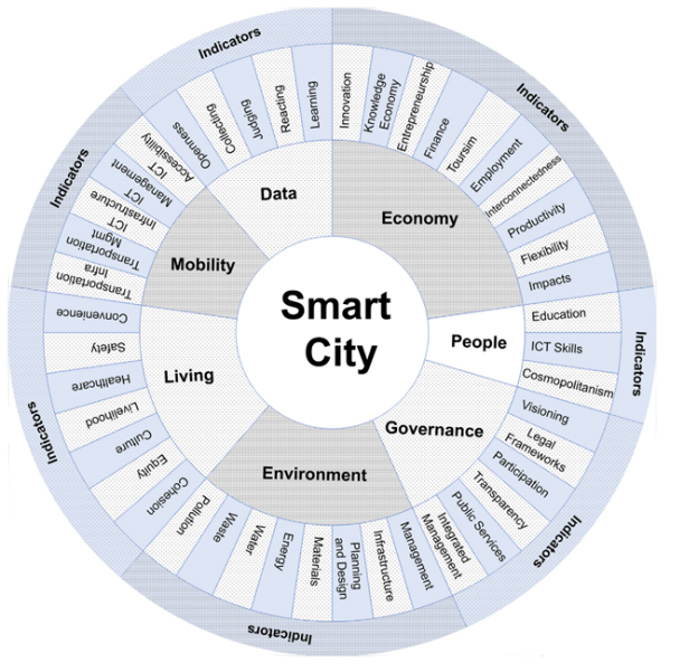
Figure 2: Smart City indicator themes developed by Sharifi (2019) based on the work of Cohen (2012).
The concept of the smart city gained momentum in the late 2000s with the rise of the Internet of Things (IoT), under which interconnected devices exchange data to enhance urban functions. In parallel, user platforms like Airbnb and Uber emerged during this period, aligning services with user needs through digital connectivity (Ramdani & Kawalek, 2024). The European Union further promoted the concept with its European Innovation Partnership for Smart Cities and Communities in 2011, which now forms part of the Smart Cities Marketplace (European Commission, 2025d). This initiative integrates communication technologies, energy management and transportation to tackle environmental, societal and health challenges in European cities (European Commission, 2016).
Globally, many cities now have dedicated administrative units for coordinating smart city projects, with public funding playing a central role in their implementation (Gerli et al., 2024). The Nordic Region is considered a leader in digitalisation, particularly in terms of 5G network development, access to public digital services and ICT skills (Nesse & Erdal, 2022). The growing availability of 5G can be considered a crucial factor in the development of smart city structures. Thanks to its low latency, 5G enables the collection of real-time data, which are essential for smart functionalities like traffic management. In 5G-enabled traffic systems, IoT sensors installed on traffic lights, streets and vehicles help analyse traffic patterns, prevent congestion and accidents and prioritise vehicles such as emergency vehicles, ensuring more efficient emergency responses (Liu et al., 2017).
While enabling these new kinds of communication networks, for example in vertical industries such as transportation, energy, healthcare, manufacturing and entertainment, most of the 5G projects in smart city contexts are still in their early stages (Gohar & Nencioni, 2021). Many challenges remain, including financial barriers, technical limitations and the acceptability of widespread 5G adoption (de Jesus & Melander, 2024).
The concept of smart cities, although recognised for leveraging technology to address urban challenges, has faced criticism for its vagueness and techno-centric foundation (Gerli et al., 2022; Makkonen & Inkinen, 2024b). Critics argue that smart cities often prioritise technological innovation and corporate interests over citizen welfare, neglecting democratic and social rights (Cardullo & Kitchin, 2019; Rosol & Blue, 2022).
Concerns have been also raised about technological determinism, where technology drives societal change, potentially leading to social fragmentation and weakening community bonds. Some argue that this shift from physical to digital interactions risks eroding the cultural and historical identities of cities (Makkonen & Inkinen, 2024b). Moreover, smart city technologies carry risks such as surveillance overreach, algorithmic bias and inequitable AI-driven decision-making processes (Samsurijan et al., 2022). These critiques highlight the importance of balancing innovation with inclusivity, governance and ethical considerations.
Smart villages
The concept of the smart village extends and adapts the principles of smart cities to rural areas, focusing on digital transformation and sustainable development to enhance quality of life. Smart villages aim to address common rural challenges, including limited access to services, economic opportunities and digital connectivity. By leveraging technology, such communities promote social inclusion, economic growth and environmental sustainability.
A key motivation for the development of smart villages is the disparity in data infrastructure between urban and rural areas. Rural communities often face significant connectivity gaps as well as challenges related to adoption and use of technology. Improving digital connectivity through broadband infrastructure and mobile cellular networks like 5G can enhance access to healthcare, education and public services, bridging the rural-urban divide (Salemink et al., 2017).
The European Commission adopted the EU Action for Smart Villages programme in 2017, aimed at supporting innovative solutions to enhance resilience and quality of life and foster dialogue among stakeholders in rural areas (European Commission, 2019; Ocsko, 2019). The resulting definition of a smart village defines it as a rural community that leverages local strengths and uses innovative solutions to enhance resilience and quality of life. The definition emphasises inclusivity, with participatory approaches used to improve economic, social and environmental conditions (Directorate-General for Agriculture and Rural Development et al., 2020). Digital technologies are not the primary focus under this approach. The EU emphasises the leveraging of local resources, innovation and community-led solutions alongside technology. Funding strategies often combine public and private resources and adapt national frameworks to suit local contexts (Ocsko, 2019).
The introduction of 5G offers a promising shift from the city-centric deployment observed in 3G and 4G to a more uniform, distributed approach. This is linked to the longer range of 5G cell towers, which can support a larger number of devices over a wider area. Furthermore, the low latency of 5G is crucial for many of the precision applications that are of particular interest to rural communities, such as remote healthcare solutions or digital systems for agricultural use (Cvar et al., 2020). For example, “Smart Agriculture” can improve efficiency and reduce environmental impacts through precision farming, smart irrigation and supply chain management. However, challenges such as connectivity issues, cost management and data security as well as potential misalignments between technology design and local needs must be addressed to ensure inclusivity and acceptance (Kumar et al., 2024).
Salemink et al. (2017) found that there are growing differences in data infrastructure quality between urban and rural areas. The deployment of technologies is generally lower in rural areas. Paired with lower average levels of education and skills, that has a negative impact on the adoption and use of technologies. The authors note that while rural communities are in greater need of improved digital connectivity due to their remoteness, they are the least connected and included (Salemink et al., 2017).
The employment of smart villages has the potential to empower rural communities through knowledge sharing, skills development and participatory decision-making, fostering resilience and self-reliance. However, further research is needed to inform policies tailored to less connected rural communities (Salemink et al., 2017) .
Smart communities
The concept of "smart communities" recognises that ICT technologies need to integrate social and economic aspects into digital development through the involvement of communities, both in urban and rural settings (Ma et al., 2024). Building on concepts such as “e-communities” and “digital communities”, which emerged in the 1980s (Malina et al., 1998), the “smart community” attempted to integrate information technology into social and economic governance (Zaidan et al., 2022).
The smart community reflects a community-centred philosophy, highlighting the critical need for social inclusion in decision-making processes to achieve social and environmental objectives in smart development, including aspects such as affordability, acceptability, privacy and coherence (Zaidan et al., 2022). Smart communities should also generate social innovation through inclusive governance and infrastructural and technological drivers, which can engage local actors to respond to challenges related to quality of life and inclusion (Zaidan et al., 2022).
While there are multiple definitions of smart communities, there is a common understanding of a smart community as a place where information technology, through innovation and interconnectivity, transforms living and working environments. It can also be seen as a framework which integrates society, government, businesses and individuals to improve societal systems through ICT technologies (Ma et al., 2024).
Recent research on smart communities often focuses on how to integrate smart technologies, such as 5G applications and IoT technologies, into community governance effectively. However, while much research focuses on constructions which facilitate smart communities, such as smart energy management, smart homes and smart transportation, there is lack of research on how various actors in a community interact within the technological sphere, including humanistic aspects of smart communities (Ma et al., 2024). Expanding fields of research include civic engagement, social innovation, smart economics and digital health (Ma et al., 2024).
Overall, the concept recognises that "smartness" is not confined to large cities but can be adapted and applied in various contexts, including smaller, localised areas. It emphasises collaborative, citizen-driven technological solutions. Accordingly, the concept of “smart communities” focuses more on the social governance structure underlying smart initiatives than on the geographical context in which the concept is applied.
Smart territories
“Smart territories” is a further term which can be found in the pertinent scientific literature. It refers to geographical areas that address public challenges through technology-driven solutions facilitated by cross-sector collaboration. This concept extends the model of the smart city to a wider geographical context and scale, encompassing interconnected urban, suburban and rural regions. It employs ICT tools to tackle challenges such as food security and waste management (Navío-Marco et al., 2020).
By integrating technology and governance, smart territories aim to enhance sustainability, connectivity and territorial management on a broader scale. A central aspect of this framework is the holistic approach to territorial management, which takes the unique objectives and conditions of each area into account and pushes for digital transformation that benefits both urban and rural communities equally (Navío-Marco et al., 2020).
The idea has gained traction within regional development strategies, with initiatives supported by organisations such as the EU and UN. These efforts often involve cross-border and interregional projects, thereby fostering collaboration and innovation across diverse geographical contexts (Navío-Marco et al., 2020).
Smart communities in the Nordic-Baltic region
The Nordic-Baltic region has emerged as a leader in research and development of smart solutions, driven by a commitment to sustainability, citizen engagement and technological innovation. There are multiple innovation beds for smart cities, villages and communities as well as initiatives focusing on knowledge sharing and enhanced technological accessibility.
The Nordic Smart City Network is an initiative aimed at fostering liveable and sustainable cities in the Nordic Region. It is a collaboration between five Nordic countries and provides insights from 20 Nordic cities, with emphasis on the need for collaboration, co-learning and the active role of citizens. One example of this approach is the Nordic Urban Living Labs project, which ran between 2018 and 2020, focusing on development of best practices and co-learning. The project emphasised sustainability through technical solutions, such as improved energy efficient buildings, waste management systems and green mobility. Countries like Finland and Denmark are leading the way in integrating digital platforms into public services, transportation and urban planning. The Baltic countries are also involved. For example, Estonia’s digital government serves as a model for smart communities and villages, particularly in creating e-governance frameworks (Nordic Smart City Network, n.d.).
Recently, smaller and more rural communities have gained more attention in the field of digitalisation. While the Nordic countries are considered one of the leading regions in smart urban planning, there are considerable discrepancies in the development of smart cities and communities, with both local conditions and country-level policies influencing smart city development. Examining Sweden, Norway, Denmark and Finland, Lindtvedt et al. (2021) found significant variations in smart city development in medium-sized municipalities. Here, organisational structures, clearly defined goals and strategies were found to foster more successful implementation of smart city projects (Lindtvedt et al., 2021).
Multiple projects in the EU apply the EU concept of Smart Villages, developed in the pilot project on Smart Eco-Social villages, to local contexts. For example, the Smart Rural 27 Geomapping Tool, presents smart rural communities in the EU, showcasing several examples in the Nordic and Baltic regions. The map highlights villages with “smart” village strategies and other smart projects or initiatives (Smartrural27, n.d.-a). Furthermore, the LEADER platform aims to bring stakeholders together to discuss the development of Smart Villages for the purpose of exchanging good practices (Smartrural27, n.d.-b).
3.2. Inclusive smart development
Since individuals have varying capacities and access to digital technologies, there is a risk that the benefits of smart development may be unevenly distributed within society. This concern underscores the need for smart initiatives to address disparities and ensure equitable access. While the importance of inclusivity applies equally to smart cities, villages, territories and communities, more research on the topic is needed.
Scholars are increasingly stressing the need to address the social dimensions of “smart” developments, highlighting issues like the digital divide and the importance of inclusive development strategies (Alizadeh & Sharifi, 2023b; Kitchin et al., 2019; Salemink et al., 2017; Toli & Murtagh, 2020). This criticism has led to the rise of a justice-oriented perspective, including “the right to the Smart City” (Cardullo & Kitchin, 2019; Kitchin et al., 2019).
For example, Makkonen and Inkinen (2024) highlight a significant gap in the literature regarding the impact of technology-driven urban development on people with disabilities. They call for more critical discussions and advocate for adapting and contextualising smart city initiatives to ensure more inclusive development of living conditions. The authors argue that without such considerations, smart city development threatens to exclude vulnerable populations and perpetuate inequalities.
The literature also stresses that simply offering digital services to everyone does not automatically create an inclusive smart city. True inclusivity requires addressing the preconditions and capacities necessary for individuals to engage with and benefit from smart solutions, ensuring that no group is left behind in the transition to digitalised, technology-driven environments (Makkonen & Inkinen, 2024a).
In rural contexts, inclusivity challenges arise regarding who can afford to implement digitalised technologies, such as precision farming tools and the potential loss of human control as automation and digitalisation increase (Rolandi et al., 2021). These issues highlight the need for inclusive strategies that enable equitable access to technology and ensure its benefits are widely shared.
3.3. Concluding remarks
The present work will mainly focus on rural contexts, bringing the concept of the “smart village” to the fore. However, as the concept might not always be employed to discuss a specific village and could also refer to a wider rural community, such as a municipality, the term “smart community” will be used in such cases. Due to the extensive body of literature on smart cities, this work will draw on some of the prominent conceptual frameworks and publications from that field and apply them to the specific context of Nordic and Baltic rural communities.