Left In Røros, Norway, there are guided tours and monitoring of visitor flows via an app
Right: In Lolland, Denmark, green energy are combined with smart grid technology
Right: In Lolland, Denmark, green energy are combined with smart grid technology
5. Policy review: Incentives for inclusive and responsible digital transformations
Emphasising the societal dimension of enhanced digital connectivity is essential when designing future socio-technical solutions that prioritise ethical considerations and align technological progress with societal needs. While building a robust, evidence-based information base is crucial for advancing the scholarly debate and policy development in the field, it is equally important to understand the factors currently driving – and regulating – socially sustainable, transparent and ethically sound technology design. Operating at the frontiers of human knowledge, often led by private companies, the challenges of monitoring, guiding and regulating the ever more complex emerging digital technologies have been a central concern for various groups including policy makers, researchers, civil rights activists over the past years (see e.g. Sharon & Gellert, 2024; Strauss et al., 2024).
In the Nordic-Baltic region, the Nordic-Baltic Cooperation Programme for Digitalisation 2025 to 2030 outlines the political goals of the Nordic Council of Ministers. These goals include subgoals such as “robust and secure digital services, safeguarding users’ privacy and ensuring that personal data are stored and processed in a secure and trustworthy way, giving everyone the ability to better control their own data” and “the goal to empower people to actively participate in a digital and democratic society and coming workforce transitions” (Nordic Council of Ministers, 2024). The policy document notes that “with a strong common set of values and highly educated, digitally skilled populations, the Nordic-Baltic region has the potential to lead by example in the use of technology” (ibid). This highlights the normative dimension – and ambitions – of technology development and the pivotal role of cross-border policies in serving as guiding beacons and watchdogs.
To understand what this looks like in practice, this chapter aims to provide an overview of the policies that, beyond the Nordic-Baltic Cooperation Programme, offer guidance to industry, research and policymakers on how the societal implications of technology development and implementation can be anticipated and better integrated into the digital transformation.
As most Nordic and Baltic countries are members of the European Union, this chapter will focus particularly on EU policies while also providing an overview of relevant Nordic and Baltic policies that currently form the regulatory framework for technology development. Five key EU policies and their transposition to the national level have been explored in more detail: (1) the Digital Services Act, (2) the Digital Markets Act, (3) the General Data Protection Regulation (GDPR), (4) the Artificial Intelligence Act (5) and the Web Accessibility Directive. This overview is followed by a review of Nordic and Baltic national policies relevant to this area.
The central question in this policy review is: to what extent does the current policy landscape encourage consideration of the societal impact of digitally enabled technologies? The methodology for this review is based on a narrative literature review approach as described by Baumeister and Leary (1997).
5.1. The origins of responsible innovation
Preliminary efforts to address the social, legal and ethical dimensions of emerging technologies and innovation focused primarily on the research sector and were made in the mid-1990s using the ELSA (ethical, legal, social aspects) approach of the 4th European Research Framework Programme (Ryan & Blok, 2023). The approach initially emerged in the life sciences and health-related research fields with the aim of ensuring that potential ethical and societal challenges arising from genome and related studies were addressed in an anticipatory manner by the scientific community (Zwart et al., 2014).
The main criticism of the ELSA initiative was its comparatively limited funding, leading some to view it as a smokescreen for the life sciences, serving more as a PR exercise than genuinely fostering critical engagement with the societal implications of research and development in that field (Forsberg, 2015). However, the concept evolved and reemerged under the name “Responsible Research and Innovation” (RRI), often interchangeably used with “Responsible Innovation” (RI), in 2010 as part of the European Commission’s research agenda, forming a cornerstone of the funding programme Horizon 2020 and later Horizon Europe (Ryan & Blok, 2023). Within Horizon 2020, the RRI framework focused on several dimensions: (1) public engagement, (2) gender equality, (3) science education, (4) open access, (5) ethics and (6) governance (European Commission. Directorate General for Research and Innovation., 2020). Expanding beyond the life sciences, RRI was to be employed particularly in the fields of engineering and the natural sciences more generally, aiming to strengthen researcher reflexivity while also bridging the gap between the “ivory tower” and the wider public through transparency and more direct citizen involvement (Zwart et al., 2014).
However, RRI did not fully replace the ELSA model. The continued use of both concepts beyond 2010 points towards the fine differences between them. Ryan and Blok (2023) found that one central distinction lies within the use and conceptualisation of “ethics”, describing the ethical approach within ELSA as building on a “position of moral intuitionism” stemming from “specific morally self-evident rights and wrongs in the world” and the critical application of this approach through a case-by-case basis (Ryan & Blok, 2023, p. 9). By contrast, RRI emphasises the use of “research ethics” and remains vague on other ethical questions. The authors of the 2023 paper hypothesise that this is linked to the stronger engagement of social scientists in the framing and application of RRI, who underscore the social construction of the concept (ibid). In this context, they further highlight that RRI gives greater emphasis to the term “responsibility”, shifting from the prohibitive character of ELSA ethics to a more constructive notion of designing progress responsibly for the common good (von Schomberg, 2013).
Looking beyond European funding schemes, associated discussions can be found on a “normative turn” within innovation research and technology development. Recent publications in innovation research, notably within the fields of economics and geography, have called on the research community to open up innovation research and associated discourses and policy initiatives to new, more normatively driven perspectives. This development can be traced back to what Uyarra et al. (2019) identified as the prior inability of innovation policy to consider and incorporate societal challenges, including poverty, climate change and regional economic restructuring (Uyarra et al., 2019). This argument is also reflected in the study by Castellaci (2023), who emphasised the need for a broadened research agenda when studying innovation in the context of economic outcomes and material prosperity, suggesting a shift away from prioritising efficiency over equity and material well-being over social justice (Castellacci, 2023). Building on the debate around the “normative turn” in innovation research, Binz and Castaldi (2024) suggest three pathways towards a more holistic and equitable approach. These pathways cover a broader conceptualisation of the innovation concept, a critical assessment of the institutional dynamics and a stronger focus on identifying and addressing spatial disparities in innovation and ensuring that these findings are fed into the relevant policy debates (Binz & Castaldi, 2024).
While the scholarly debate regarding the “normative turn” and the overlaps and complementary aspects of ELSA and RRI approaches persists, it continues to raise awareness within the research community of its social responsibilities and to foster a more interdisciplinary approach to technology development. Such multidisciplinarity is essential for comprehending the complexity of the societal implications that arise from disruptive innovation.
However, the debate originates and resonates primarily within scientific circles, with ELSA and RRI mainly applying to research practices within a European research context. Although these frameworks play a critical role in countering the prevalence of techno-centrism and determinism, it is worth noting that, rather than being developed as part of publicly funded research projects, many digital technologies originate from privately funded companies. These are generally not obliged to adhere to the same guidelines and regulations, nor are they necessarily attuned to the most recent scholarly debates on the topic. This is where national and international legal frameworks assume an increasingly important role. The following section will therefore explore four key European policies in this respect in more detail.
5.2. Overview of relevant EU policies
This section will focus on six initiatives and regulations that have been developed and implemented at the EU level in recent years: (1) the Web Accessibility Directive, (2) the General Data Protection Regulation (GDPR), (3) the Digital Markets Act, (4) the Digital Services Act, (5) the Artificial Intelligence Act and (6) the Gigabit Infrastructure Act (see Figure 6).
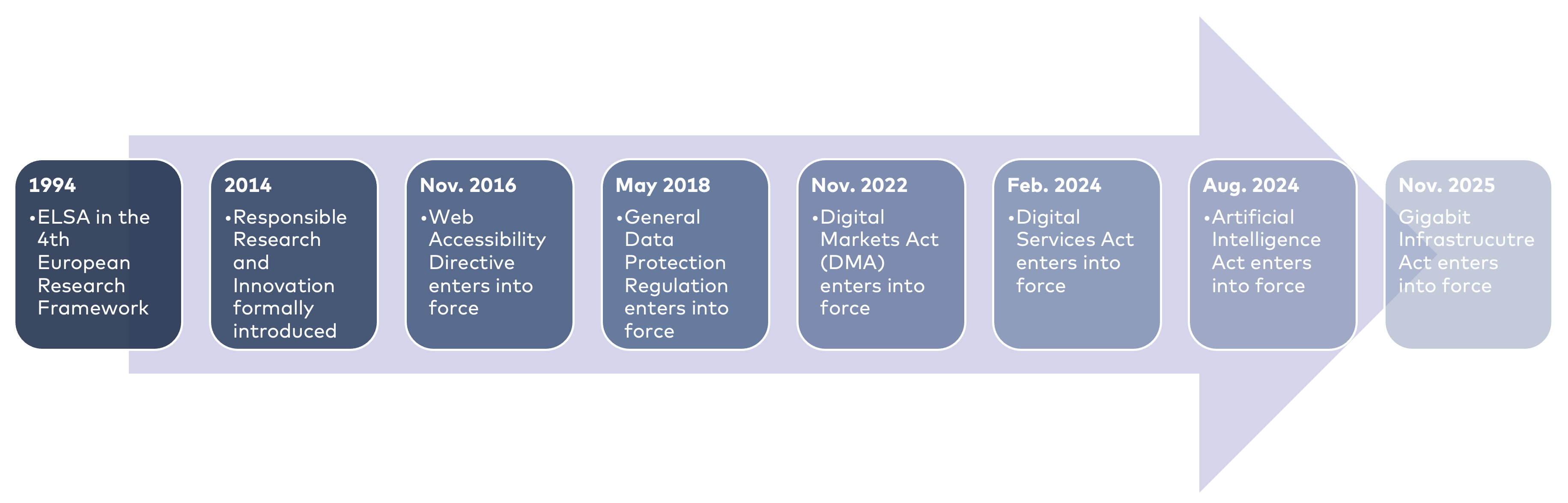
Figure 6: Timeline of the EU policies and initiatives outlined in this chapter.
The Web Accessibility Directive (WAD)
Public services and information that were previously available in physical versions are being digitalised to an ever greater extent and are increasingly only accessible online today. With approximately 100 million Europeans living with a disability, it is a key objective for the EU to ensure digital accessibility for all in its pursuit of becoming an inclusive Union (European Commission, 2025c). The WAD was adopted in 2016 and entered into full effect in June 2021. The WAD requires the websites and mobile apps of all public sector entities in the EU to be digitally accessible for all, regardless of their abilities. WAD defines three main requirements: i) an accessibility statement for all websites and mobile apps for the public sector, clarifying non-accessible content and relevant contact information. ii) the opportunity for users to provide feedback and indicate accessibility problems. iii) monitoring of accessibility of public sector websites and apps, with the monitoring results published every third year (ibid).
The term “accessible” is, in this context, relatively arbitrary. To ensure a shared understanding across the EU, a harmonised technical standard supports implementation of the WAD (European Commission, 2023). This standard is closely aligned with the Web Content Accessibility Guideline (WCAG) version 2.1 developed by the W3C (W3C, 2024). The WCAG version 2.1 provides guidelines for everything from perceivability (e.g., colourblind-friendly colour-schemes or text-to-audio options) and operationality (e.g., functionality is available from a keyboard) through to understandability (e.g., the language being used). As of today, all Member States have transposed the WAD into national law, with the deadline having been September 2018.
The General Data Protection Regulation (GDPR)
The GDPR is a strict set of data privacy and security laws introduced in 2016 by the European Commission. The GDPR entered into full effect two years later, in May 2018 (European Commission, n.d.b). While the GDPR is legally binding upon the EU Member States, it also impacts firms and organisations outside the EU that collect data on European individuals. The GDPR was prompted by the increased use of personal data in the digital economy, followed by increasing concerns over misuse, breaches and a lack of transparency in data processing. At the same time, there was a need for new harmonised data protection laws to replace the 1995 Data Protection Directive (European Data Protection Supervisor, 2018). The GDPR consists of seven data protection and accountability principles relating to i) lawfulness, fairness and transparency, ii) purpose limitation, iii) data minimisation, iv) storage limitation, v) accuracy, vi) integrity and confidentiality and vii) accountability (European Commission, n.d.a). The GDPR safeguards individuals’ rights over their personal data, including the right to erasure and the right to be informed (ibid). The GDPR was transposed into national laws of the Member States concurrently with the GDPR entering into full effect in May 2018.
The Digital Markets Act and the Digital Services Act
The Digital Markets Act (DMA) and the Digital Services Act (DSA) together form a legal package that aims to ensure fair and open digital markets in the EU (European Commission, 2025e). The DMA focuses on fostering market competition, while the DSA primarily addresses user protection and transparency (ibid).
The DMA, which was introduced in 2022, defines large digital platforms, such as Alphabet, Amazon, Apple, ByteDance, Meta and Microsoft, as “gatekeepers”. These gatekeepers are required to ensure fair market conditions by facilitating third party interoperability. Failure to comply may result in substantial fees for the gatekeepers (European Commission, 2022a).
The DSA entered into full effect in February 2024. It aims to ensure that online platforms are held accountable for preventing illegal content, disinformation and algorithmic transparency on their platforms. Responsibility for enforcing the DSA lies with the European Commission, alongside the national authorities, which oversee the compliance of national-specific platforms (European Commission, 2022b).
The Artificial Intelligence Act
The EU acknowledged that while AI systems could potentially help to solve various societal challenges, certain AI systems pose threats and vulnerabilities, which need to be mitigated (European Commission, 2025f). The AI Act is the first legal framework that addresses the risks of AI. It is intended to guarantee safety, fundamental rights and human-centric AI while also fostering the implementation, investment and innovation of AI in the EU (ibid).
The AI Act adopts a risk-based approach, defining four distinct levels of risk for AI systems: unacceptable risk, high risk, limited risk and minimal risk. AI systems that pose an unacceptable risk to people’s well-being are banned. High-risk AI systems are those that present serious risks to people's health, safety or fundamental rights. For high-risk AI systems to be placed on the market, they must adhere to strict requirements as specified by the AI Act. The AI Act also addresses transparency risks and states that AI-generated material should be clearly identifiable. No guidelines are provided in the AI Act for AI systems with minimal or no risk (European Commission, 2025f).
The implementation and oversight of the AI Act is the responsibility of the European AI Office and the Member States (European Commission, 2025f). The AI Act was introduced in August 2024 and will enter into full effect in August 2026 for all Member States.
There are, however, a few exceptions: prohibitions and AI literacy obligations entered into force from 2 February 2025; the governance rules and the obligations for general-purpose AI models become applicable on 2 August 2025; and the rules for high-risk AI systems – embedded into regulated products – have an extended transition period until 2 August 2027 (European Commission, 2025a).
The Gigabit Infrastructure Act
While not directly related to responsible innovation, the European Union’s Gigabit Infrastructure Act (GIA) is of central importance to this project. Having identified disparities in terms of affordable and reliable digital accessibility across the Union, the EU’s GIA was developed over the course of 2024 and entered into force in May 2024, becoming fully applicable in November 2025 in all Member States (European Commission, 2025b). The aim of the GIA is to enable faster, cheaper and simpler rollout of “very high-capacity networks” (VHCNs) such as gigabit networks and 5G, which are crucial for smart city development across the EU The GIA thus constitutes a fundamental element on the path towards achieving the EU’s 2030 Digital Decade goal, which aims to ensure cross-EU access to gigabit connectivity and fast mobile data (ibid).
Some of the key measures under the GIA encourage increased collaboration through the shared use of digital infrastructure and the co-deployment and coordination of civil works (ibid). These strategies are supplemented by a reduction in bureaucratic hurdles to streamline and facilitate network rollout. The GIA further includes the goal of equipping new buildings with “high-speed ready infrastructure” and incorporating sustainable practices throughout the rollout and implementation process by reusing existing infrastructures and prioritising the use of environmentally efficient technologies, including fibre and 5G (ibid).
5.3. National policies in the Nordic and Baltic countries
Responsible digitalisation
Beyond the presented EU regulations, the Nordic and Baltic countries have placed strong emphasis on responsible digitalisation. According to the reviewed digitalisation policies, responsible digitalisation focuses on ensuring that digital transformation benefits all members of society. The key themes across these policies include digital inclusion, cyber security and data protection, ethical use of technology and accessibility and usability.
The majority of the policies highlight the need for digital inclusion, ensuring that all citizens, regardless of their socio-economic status or geographical location, have access to digital tools and services (Government of Åland, 2023; Lithuanian Ministry of the Economy and Innovation, 2024; Naalakkersuisut, 2023). This includes efforts to bridge the digital divide and prevent digital exclusion (Ministry of Finance, Local Government Denmark, Danish Regions, 2022; Ministry of Local Government and Regional Development, 2023) and increase the overall level of digital skills and literacy (Danish Ministry of Digital Government and Gender Equality, 2023a; Government of Åland, 2017; Talgildu Føroyar, 2023).
One notable policy dedicated to digital inclusion is Denmark's “Principles for Digital Inclusion”. This policy outlines six key principles aimed at promoting inclusive digitalisation, ensuring that digital solutions are accessible and beneficial to all citizens. It is argued that these principles only add value when they are integrated into decisions, projects and interactions between citizens and public authorities (The Danish Agency for Digital Government, Local Government Denmark and Danish Regions, 2024).
Ensuring the safe and secure use of digital solutions is a common priority. Policies emphasise the importance of robust cyber security measures to protect personal and confidential data, prevent cyber-attacks and maintain trust in digital services (Icelandic Ministry of Higher Education, Science and Innovation, 2022; Ministry of Defence of the Republic of Latvia, 2023; Naalakkersuisut, 2023). The ethical and responsible use of digital technologies is another recurring theme. Policies stress the importance of transparency, accountability and inclusivity in digital transformation processes (Digital Iceland, 2021). This includes the responsible handling of public and personal information (Ministry of Finance, Local Government Denmark, Danish Regions, 2022; Talgildu Føroyar, 2023) and the ethical use of emerging technologies such as artificial intelligence (Danish Ministry of Digital Government and Gender Equality, 2023a).
Enhancing the accessibility and usability of digital services is also a key focus of the policies (Digital Iceland, 2020). Strategies aim to make digital services user-centric, ensuring that they are easy for all citizens to access and use, including those who are digitally challenged or vulnerable (Danish Ministry of Digital Government and Gender Equality, 2023b; Finnish Government, 2022; Government of Åland, 2024; Talgildu Føroyar, 2023).
Connectivity and 5G developments
The development of high-speed internet infrastructure and connectivity, including 5G networks, is a critical component of the digital policies in the Nordic and Baltic countries. Key points include expansion of broadband and 5G networks, infrastructure sharing and investment and challenges and opportunities of 5G and future technologies.
Various Nordic and Baltic policies emphasise the need for continuous improvement and expansion of broadband and 5G networks to ensure widespread and reliable connectivity (Estonian Ministry of Economic Affairs and Communications, 2021; Swedish Agency for Digital Government, 2023). This includes efforts to provide high-speed internet access to both densely populated urban areas and sparsely populated rural regions (Norwegian Ministry of Digitilisation and Public Governance, 2024).
However, the rollout of 5G technology presents both challenges and opportunities, which are also specified in the existing policy documents. Challenges include the need for substantial capital investments, legal constraints and ensuring security and resilience of the networks (Lithuanian Ministry of the Economy and Innovation, 2024; The Danish Government, 2021). For example, in Sweden, it is expected that expanding the 5G network to cover 99% of the Swedish population by 2025 is feasible by upgrading existing infrastructure. However, rural areas may not experience the highest 5G speeds due to reliance on low-frequency bands. New masts are needed in underserved areas, but economic incentives for operators are low due to underutilisation and limited revenue from existing masts in these regions (Swedish Agency for Digital Government, 2023; The Government of Sweden, 2023).
Opportunities for expanding 5G networks described by the countries’ policies include the potential for new business models and advancement of novel technologies (Latvian Ministry of Environmental Protection and Regional Development, 2021), enhanced emergency preparedness (Norwegian Ministry of Digitalisation and Public Governance, 2024), the development of smart cities (Swedish Agency for Digital Government, 2024) and autonomous transport systems (Lithuanian Ministry of the Economy and Innovation, 2021).
The importance of infrastructure sharing and significant investments in digital infrastructure is highlighted in several policies. This includes the deployment of 5G technology and the development of next-generation networks to support new services (Finnish Government, 2022). However, several policies emphasise that realising the potential of 5G and 6G requires a coherent approach to infrastructure investment that takes account of common standards and interoperability solutions (Danish Ministry of Finance, 2022). The fragmented nature of the EU market, comprising 27 national markets with different conditions and regulations, is identified as problematic in a statement on Europe's connectivity infrastructure needs (Swedish Agency for Digital Government, 2024).
Looking beyond 5G, some policies also mention preparations for the adoption of future technologies, such as 6G technology. This forward-looking approach aims to ensure that the region remains at the forefront of technological advancements and can leverage new opportunities as they arise (Lithuanian Ministry of the Economy and Innovation, 2024). For instance, Estonia’s “Digital Agenda 2030” underscores the importance of further deployment of 5G networks to ensure connectivity for all. The agenda also places emphasis on preparations for the adoption of 6G technology, highlighting the importance of constant technological advancements (Estonian Ministry of Economic Affairs and Communications, 2021). Similarly, Finland’s “Digital Compass” states that the country aims to achieve comprehensive 5G coverage by 2030 as well as to maintain its leadership in 6G research (Finnish Government, 2022).
In the Baltic countries, a collaborative 5G initiative called the "5G TEN-T Transport Corridor" is underway. This project, a partnership between Lithuania, Latvia and Estonia, aims to transform the Via Baltica highway into an international 5G transport corridor. The goal is to ensure seamless 5G coverage and high-quality connectivity to support the development of autonomous and smart transport systems along the route (Lithuanian Ministry of the Economy and Innovation, 2021).
In summary, the Nordic and Baltic digitalisation policies show a strong commitment to responsible digitalisation, with a particular focus on digital inclusion, cyber security, ethical use of technology and accessibility. The development of high-speed internet infrastructure, including 5G networks, is viewed as essential for supporting digital transformation, economic growth and innovation.
5.4. Concluding remarks on the policy review
Various efforts at the European and national levels aim to define principles that guide the increasing digitalisation of our everyday lives, ensuring the development and use of trustworthy and ethical technologies. While the presented EU regulations offer clear rules and guidelines on matters including the protection of personal data, market access and AI, Nordic and Baltic national policies describe broader policy visions. These visions relate to inclusive practices to be implemented in the specific cultural, linguistic and socio-technical contexts of the Nordic-Baltic region.
However, to ensure that the challenges and needs of underrepresented and digitally underserved communities, such as those in rural areas, are sufficiently taken into account and represented as these policies further evolve and new technologies emerge, it is important to continue to bring local perspectives and voices to the fore. Specific measures and economic incentives are needed to drive digital infrastructure development in remote and less densely populated areas and to foster the development of the relevant digital skills in those areas.