Photo: Karl Hornfeldt / Unsplash.com
PART I: Theoretical and conceptual overview
2. Theoretical overview
This theoretical overview explores the role of different agents in green innovation. It conceptualises the terms ‘systems’, ‘innovation’ and ‘green’ and reviews them in the context of the ‘green transition’. We begin by considering ‘systems’ through the lens of innovation and its different manifestations and then expand upon place-based innovation, tapping into the extensive contributions of economic geography literature in innovation studies, as well as innovation-based green transition of economic and social systems, as understood within transition literature. These different interpretations of innovation offer insight into how policies have been framed and changed over time. Interpretations have evolved from understanding innovation mainly as an economic driver, to acknowledging its systemic nature, to finally transcending purely economic aspirations and including social goals. We conclude with an overview of the current policy climate surrounding green transitions that emerges from the expected potential of innovation policy in addressing the complex societal and environmental challenges of today. This ambition for innovation policy has been translated into what is described as transformative innovation policies and missions-oriented innovation policies.
Innovation policy and economic development
At the end of the 20th century, Nelson and Winter (1977) conceptualised innovation policy as being forged on two premises: The first rests on the indisputable premise that “technological advance has been a powerful instrument of human progress”, and the second, more presumptuous premise, is that policy makers and key actors have sufficient knowledge to guide technology towards achieving “high priority objectives” in the future (Nelson & Winter, 1977, p. 38). However, then, as now, the situation is more complex. The same authors argue that “the key policy problem will be to augment or redesign institutions rather than to achieve particular resource allocation per se” (Nelson & Winter, 1977, p. 40). In 1977, Nelson and Winter recognise that innovation is not one single entity but can vary and is relatively complex within each economic sector. Innovation, Nelson and Winter write, is uncertain in an essential way and that the “explicit recognition of uncertainty is important in thinking about policy” (Nelson & Winter, 1977, p. 47). Furthermore, Schumpeter writes in 1942:
Every piece of business strategy acquires its true significance only against the background of that process and within the situation created by it. It must be seen in its role in the perennial gale of creative destruction; it cannot be understood irrespective of it or, in fact, on the hypothesis that there is a perennial lull.
(Schumpeter, 1942: 73)
The Austrian-German economist Joseph Schumpeter laid the foundation for modern theories of business and entrepreneurship in the early to mid-20th Century. His work can be divided into two distinct phases: Theory of Economic Development (1934) and his later work Capitalism, Socialism and Democracy (1942). The first theory is concerned with an increasingly ‘widening’ understanding of innovation and innovative activity, whereby entry into a new industry is characterised by relative (technological) ease. It also involved entrepreneurs challenging established businesses within the industry through their new ideas, processes, or products, which led to a process of constant disruption (Schumpeter 1934 in Malerba & Orsenigo, 1995). By 1942, Schumpeter had ‘deepened’ his theory of innovation (Malerba & Orsenigo, 1995), launching the term ‘creative destruction’, aided by capitalism, whereby:
the process of industrial mutation that incessantly revolutionizes the economic structure from within, incessantly destroying the old one, incessantly creating a new one. This process of Creative Destruction is the essential fact about capitalism. It is what capitalism consists in and what every capitalist concern has got to live in.
(Schumpeter, 1942 (2010), p. 73).
Based on empirical findings, Malerba & Orsenigo (1995) argue that there is support for this ‘deeper’ understanding of innovation set out by Schumpeter in 1942. This is especially evident when seen in light of innovation patterns in advanced economies in the 1990s, even though the nature of innovation activities varies across technologies and, therefore, the dominant technological regime. Moreover, stability emerges as a “feature of the patterns of innovative activity” as technological performance continues to be reliant on “a stable group of innovators”, generally in larger businesses. This, Malerba & Orsenigo (1995) write, has implications for theoretical analysis and policy writing, as it demands greater emphasis on the necessary analysis of innovation activities as they unfold in a dynamic context. Regarding policy, they contend that policymakers should primarily be concerned with creating conditions for the aforementioned ‘stable group of innovators’ – i.e., stability – as a crucial complement to policies concerning innovation in new but smaller businesses.
Innovation theory and the subsequent institutional policy development must, therefore, recognise the nature of innovation as evolutionary and against the structural backdrop within which it dwells, as well as ensuring significant room for organisational complexity, according to these authors (Nelson & Winter, 1977; Schumpeter, 1942 (2010)). For innovation, it is essential that the time, institutions and organisation for which (and within which) policy is developed are also considered necessary tenets of knowledge for creating appropriate innovation policy instruments. If capitalism and innovation as the force driving economic growth forward are inherently evolutionary, as first identified by Karl Marx, policy and institutions must follow: “capitalism, then, is by nature a form or method of economic change and not only never is but never can be stationary” (Schumpeter, 1942 (2010), p. 73). Moreover, capitalism is not merely conditioned within social and natural environments, but also comes from inventions, radical innovation, public sector innovation as well as innovation in goods and services (Schumpeter, 1942).
Innovation systems theory
Nelson and Rosenberg (1993, p. 4) define innovation as the new processes and product designs mastered and put into practice by businesses or that otherwise are commercialised. Cooke et al. (1997) critique this definition as too narrow, especially as it only considers productive companies and argue for a broader understanding of innovation. Innovation, they argue, implies a wider systemic concept, which comprises the ways in which actors, organisations and behaviour connect and the relationship between them. They maintain that “systemic innovation […] implies the loose coupling of subsystems” (Cooke, Gomez Uranga, & Extebarria, 1997), which essentially means that a system of innovation is a system that encapsulates a myriad of other smaller systems and does not exist on its own. Moreover, innovation systems are “open, dynamic, and social” (Carayannis, Samara, & Bakouros, 2015, p. 107) and should not be considered separate from the interaction occurring between people. In this way, the use of ‘systems’ should be taken as explaining interactivity between actors rather than solely as some form of linear knowledge transfer (Carayannis, Samara, & Bakouros, 2015; Lundvall, 1992 [2010]).
Innovation systems
The ‘innovation systems’ concept stems from the assumption that “innovations do not originate as isolated, discrete phenomena, but are generated by means of the interaction of a number of entities or actors/agents” (Saviotti, 1997, s. 180). In relation to emerging policies such as the European Union’s smart specialisation strategies, Asheim (2019) further notes that limiting the understanding of ‘entrepreneurial discovery’ as a public-private effort ignores “the systemic nature of innovation as interactive learning involving a number of stakeholders”. These actors and their interactions, Saviotti (1997: 180) writes, conserve certain features over time and, in many cases, behave as a whole. This applies to national, regional, sectoral, or technological innovation systems. Regardless of the level of aggregation, be it country, region, industrial sector, or technology, the key consideration under the systems approach “is that innovations are generated not only by individuals, organisations, and institutions but by their, often complex, patterns of interactions” (Saviotti, 1997, s. 180).
Asheim and Coenen (2006, p. 166) claim that a systems approach to innovation sheds light on the understanding that “innovations are carried out through a network of various actors underpinned by an institutional framework”. Saviotti (1997) critiques traditional growth theories for being largely a-institutional and emphasises that “institutional and organisational configurations are important determinants of economic development and growth” (Saviotti, 1997: 180). Therefore, Saviotti concludes that the “historical specificity and the institutional nature of national systems of innovation cannot be predicted or explained by traditional economic theories” (Saviotti 1997:180). As Nelson and Winter observe (1977), the role of normative institutions matters for innovation policy development and with regards to innovation systems, they are tightly interlinked through time, context and the agents that carry innovation systems forward.
Space and place in innovation theory
The role of space in innovation has been discussed in the literature for decades (Porter M. , 1998; Asheim & Coenen, 2005; Audrecht & Feldman, 1996; Freeman, 1995). With the increased pace of globalisation, however, the role of geography in innovation has been questioned. It is accepted that globalisation has played a significant role in levelling the global playing field (to a large extent) through free trade and better access to products, services and potential new partners (Friedman, 2005). Seen from a technological and sectoral/industrial systems lens, in the early 1990s, Carlsson and Stankiewicz (1991) wrote that innovation is essentially place-less. Friedman continued this argument and stated that globalisation meant the “end of geography as we know it”, ultimately leading to “the death of distance”. This conclusion has been heavily debated since (Rodríguez-Pose & Crescenzi, 2008).
In their paper On the nature, function and composition of technological systems, Carlsson & Stankiewicz (1991) write that a country’s development potential, as part of a wider technological system, is reflected by its economic growth – closely tying innovation theory to economic growth theories. Technological systems of innovation are defined as “a network of agents interacting in a specific economic/industrial area under a particular institutional infrastructure or set of infrastructures and involved in the generation, diffusion, and utilization of technology” (Carlsson & Stankiewicz, 1991, p. 111). These networks are defined by knowledge and competence rather than by goods and services and by technology and its techno-industrial area rather than by national borders. Technological systems bring with them institutional infrastructures, a regime/organisations that “support, stimulate and regulate the process of innovation and diffusion of technology” (1991, p. 109). By institutional structures, Carlsson & Stankiewicz mean “the normative structures which promote stable patterns of social interactions/transactions necessary for the performance of vital societal functions. Institutions reduce social uncertainty and prevent or mitigate conflicts between different value systems (…) Crucial for the survival and effectiveness of institutions is their legitimacy” (1991, p. 109). Although technological systems are conceptualised independently of geographical boundaries, they are nevertheless characterised in relation to economic systems, formal and informal institutions, networks and proximity that are, in turn, largely place-bound.
Technological systems of innovation are closely linked to sectoral systems of innovation. A sectoral system of innovation is also a network of agents, but agents operating within specific technological areas and in a specific institutional context (Carlsson & Stankiewicz, 1991). Breschi and Malerba (1997) write that in sectoral systems of innovation, clusters of companies and industries are involved in the generation and diffusion of technologies, and that the knowledge flows between these actors and learning from the new technologies employed are at play. Relationships between and across industries are important factors for the analysis of sectoral innovation systems (Carayannis, Samara, & Bakouros, 2015).
Boschma (2005) corroborates both Carlsson and Stankiewicz’, (1991) and Breschi and Malerba’s (1997) arguments to some extent when examining the role of cognitive proximity vis-à-vis geographical proximity. He argues that as tacit knowledge knows no distance, it may be transmitted by other means than geographical location (Boschma, 2005). In this approach, geographical proximity has a stronger, complementary role when it comes to strengthening and building institutional or social proximity. The assumption is that if there is cognitive proximity, i.e., shared ideas and understandings, geography plays a minor role (ibid). By ‘proximity’, Boschma refers to the ability to understand, adopt and adapt, to identify novelty, interpret and exploit new knowledge. Boschma’s five proximity dimensions are geographical, cognitive, organisational, social, and institutional proximity. Boschma argues that both too much and too little ‘proximity’ are harmful to learning and innovation and that effective interactive learning and innovations require an absorptive capacity in businesses and institutions demonstrating openness to new ideas (Boschma, 2005). These proximities are mutually reinforcing when it comes to ‘learning’ as part of economic development (Hansen, 2015).
Audrecht and Feldman (1996) maintain that location matters, especially when it comes to transmitting tacit knowledge versus transmitting information, which in turn may explain why some industries have clustered geographically. Rodríguez-Pose and Crescenzi (2008) further argue that although rapid technological development supports the idea of the death of distance, globalisation implies changes, opportunities and threats and “not all territories across the world have the same capacity and tools to make the world an even playing field” (Rodríguez-Pose and Crescenzi, 2008, p. 372). Moreover, it is primarily in metropolitan areas that these different proximities (social, institutional, cognitive, organisational and geographical) coalesce (Rodríguez-Pose and Crescenzi, 2008). In relation to globalisation, the death of distance and the capacity of a ‘flatter world’ only really work conceptually in a generalised macro-perspective and not in the more granulated details of regional and local development: “Paradoxically,” Porter writes “the enduring competitive advantages in a global economy lie increasingly in local things – knowledge, relationships, and motivation that distant rivals cannot match” (Porter M. , 1998). Moreover, the role of proximity in terms of mutual understanding and absorptive capacity among and between actors to find novel niches matters (Boschma, 2005). Geographical dimensions still play a key role in economic analysis as key social institutions develop within the national, regional, and local space (Freeman, 1995). However, as we have seen, the transmittance of ideas and technology is not dependent upon these defined boundaries. This is particularly interesting in terms of the turn towards global missions to solve so-called: ‘grand social challenges’. We will discuss this later in this report.
National innovation systems are a response to questions about the role of ‘home ground’ in relation to globalisation (Cooke, Gomez Uranga, & Extebarria, 1997). Freeman (1995) investigated this in relation to transnational and multinational companies. He writes that even if you cannot ignore the role of ‘global’ demands, there are still a vast number of products and services where local, regional and national institutions, climate and preferences play a key role. Moreover, these institutions, often considered a hampering factor in relation to innovation, are also the source of change. As Freeman points out, the role of the nation, or the state, to be more accurate, has been around for centuries (1995). Friedrich List (1854) commented on the industrial catch-up between Germany and the United Kingdom in the 19th century, showing that learning from others by adopting and adapting good practices, relying on reverse engineering and creating training and education systems to support change in many instances was supported by the German government – as the government was the only actor and still often is the only actor, that can afford to fund massive social changes. Considering the grand societal challenges global society is currently facing, the state may well still seem to play this role. Or as a minimum, the state continues to play a key role in the policy design premises on which grand societal challenges are meant to be addressed.
Another interesting question that arises is the role of the region. More specifically, “whether the organisation of innovation within nations [is] evolving in new ways” (Cooke, Gomez Uranga, & Extebarria, 1997) and the extent to which the national level is the appropriate lens through which to analyse innovation and the role of globalisation. However, it is equally interesting to investigate the role of the region in addressing grand social challenges, e.g., the green transition through innovation. According to Cooke et al. (1997), regional innovation systems (RIS) define the ways in which innovation subsystems are connected. This is particularly of note when studying innovation processes, as the complexity and non-linearity of such connections underpin national systems at a lower geographical level (Freeman, 1995; Cooke, Gomez Uranga, & Extebarria, 1997).
Considering the learning aspect, Asheim & Coenen (2005) conceptualised regional innovation systems as “regional clusters surrounded by supporting knowledge organisations through regional governance” (Asheim & Coenen, 2005, p. 11). They write that “in a globalising economy characterised by vertical disintegration and distributed knowledge bases, the important perspective ought to be the interdependences between regions and nations, where the deciding criteria must be the location of core activities (and not the whole value chain as such) and the relative importance of their connections to regional knowledge infrastructures” (Asheim & Coenen, 2005, p. 13).
Looking at the linkages between regional innovation systems and clusters, Asheim and Coenen (2005) view regions as sites for innovation and competitiveness in the globalising economy. They draw on the common rationale that territorial agglomeration provides the best context for an innovation-based globalising economy because of localised learning processes and ‘sticky’ knowledge grounded in social interaction (Asheim and Coenen 2005, p. 1174). At the same time, the authors acknowledge RIS to be embedded in national and global systems. In their words: “interacting knowledge generation and exploitation subsystems [are] linked to global, national, and other regional systems” (ibid. p. 1174).
In its focus on knowledge infrastructures and surrounding features this is linked to Cooke et al., (1997). For Cooke et al. (1997), “strengthening of regional level capacities” for promoting learning and innovation is crucial, as the key features of a regional innovation system revolve around financial capacity, productive culture (embeddedness) and institutionalised learning (access to knowledge), without which regional knowledge infrastructures cannot be supported. However, it must be differentiated and literature on regional innovation systems has built a significant empirical evidence-basis that challenges ‘one-size-fits-all’ models (Asheim & Coenen, 2005).
According to Grillitsch and Hansen (2019), the interlinkages between innovation and economic geography studies have contributed to an increased understanding of 1) the spatial embeddedness of innovation processes and 2) how innovation systems approaches can inform regional policy and assist industrial development. A basic assumption is that preconditions for innovation and new industrial developments vary in different regions. Based on this, Grillitsch and Hansen (2019) note that literature increasingly focuses on the potential for differentiated pathways of innovation in different types of regions.
Grillitsch and Hansen (2019) write that the regional innovation systems approach has added to the substantial empirical evidence of regional differences. This has evolved into a proposal of regional typologies, which distinguishes between peripheral regions, specialised regions and metropolitan regions, each of them with its “specific challenges and opportunities for regional development” (ibid). Regional typologies have been based on (1) actors and governance, (2) the strengths in radical versus incremental innovations and (3) RIS failures (ibid). The authors note that RIS failures have been the central argument for proposing new industrial path development (Grillitsch & Hansen, 2019).
The difference in innovation capacity between regional typologies lies mainly in the underlying preconditions and support systems for innovation and entrepreneurship (Grillitsch & Hansen, 2019). These are, for instance, the available knowledge generated by universities and research institutes and the possibility to apply or ‘exploit’ this in economic activity in industries and economic sectors. This often happens through intermediaries such as technological parks and incubators. Thus, apart from human capital and networks, other preconditions are necessary for turning knowledge into innovations applicable to markets or in practice more generally, such as knowledge intermediaries and entrepreneurial capital, which refer to both competence in business models and access to risk capital. Finally, the social and institutional contexts play a substantial role in shaping entrepreneurial activity (ibid.).
Metropolitan regions often host a number of universities and a range of education programmes and training opportunities. The scale and diversity of knowledge and entrepreneurship allow for the development of multiple related and unrelated industrial specialisations. Specialised regions, on the other hand, often experience some form of positive or negative ‘lock-in’, a self-reinforcing cycle stemming from their strong legacy and dependency on one or a few interrelated industrial activities, where support systems, knowledge and resources are concentrated in a few sectors (Grillitsch & Hansen, 2019). Nonetheless, this may strengthen their competitive advantage, although also weakening their position and ability to adapt when technologies or demand changes. Many peripheral regions have not reached a critical mass of high value creation and knowledge-intensive activities to be considered specialised in any one industry. In some cases, although support systems may be available, such as universities, these may not sufficiently trigger industrial development in the region. It may also be the case that innovative businesses are present in peripheral regions but rely on knowledge and networks from outside their regional location (ibid.).
In conclusion, we cannot easily differentiate between spatial sensitivity and spatial blindness; in many ways, innovation and innovation systems are too complex for compartmentalisation. A strict demarcation between the two would only shed light on certain aspects of the innovation system, depending on our analytical starting point (structure-agency).
Structure-Agency: institutions, the public sector and entrepreneurs in innovation policy and theory
The literature on innovation systems generally contributes to an understanding of how innovations occur through networks rather than individuals and highlights the relevance of institutional frameworks. In this way, place-based approaches accept the territorial unit rather than the sector as the “lens through which to observe the ways in which different sectors or even clusters interact with the regional governance and innovation support infrastructures as well as the national and global levels” (Cooke et al., 1997 p. 476). Examining clusters and sectors and their interaction in place-based (or place-less) settings thus illuminates the role of different agents. Sotarauta & Suvinen (2021) suggest that to study and understand the different types of agency, we inevitably need to learn how they interlink, what “roles they play in relation to each other” – even outside a geographically bound space, as sectors and clusters do not necessarily rely on the same preconditions for development.
Agents and structures
The underlying theoretical basis in social and political sciences is split between those who argue that structures drive change and those who argue that agency is the change maker. Söderholm (2020) emphasises that the focus should be on the role of national and local framework conditions (structure) and not merely on “individual heroes” (agency) (Söderholm, 2020, p. 9). Giddens’ structuration theory provides a more nuanced view by arguing that one cannot be understood without the other (Giddens, 1991). Understanding Giddens’ dualism of structures and agency, Jessop (2001) suggests that each should be bracketed to understand the emergence of structures and agency by analysing the position of structures and agents in relation to each other: by bracketing action in relation to structure and structure in relation to action. This would further point to the modalities of power. The dynamics between modalities of power are crucial for understanding how, e.g., policies (structures) and industries or businesses (agents) influence each other.
From the perspective of path development studies, Grillitsch and Sotarauta (2020) critique the “fundamental theoretical debate on structure and agency”, arguing that the “blind spot is the role of agency and its relation to structure”. They note that both the evolutionary tradition in economic geography and studies stemming from the institutional theory provide little insight into the micro-level processes at work in shaping new development paths (Grillitsch and Sotarauta 2020). Therefore, the authors point out a need to build an evidence base to shed light on “what actors do to create and exploit opportunities in given contexts, why they do so in some places and not in others, and why the effects of such efforts differ between apparently similar places”. To address this gap, Grillitsch and Sotarauta (2020) suggest a conceptual framework using a more holistic approach to the analysis of agency and new regional economic development paths. This framework explains interactions between a wider range of intentional and unintentional actions. They argue that there are three types of agency at play in regional path development (Grillitsch & Sotarauta 2020), as presented in Figure 1.
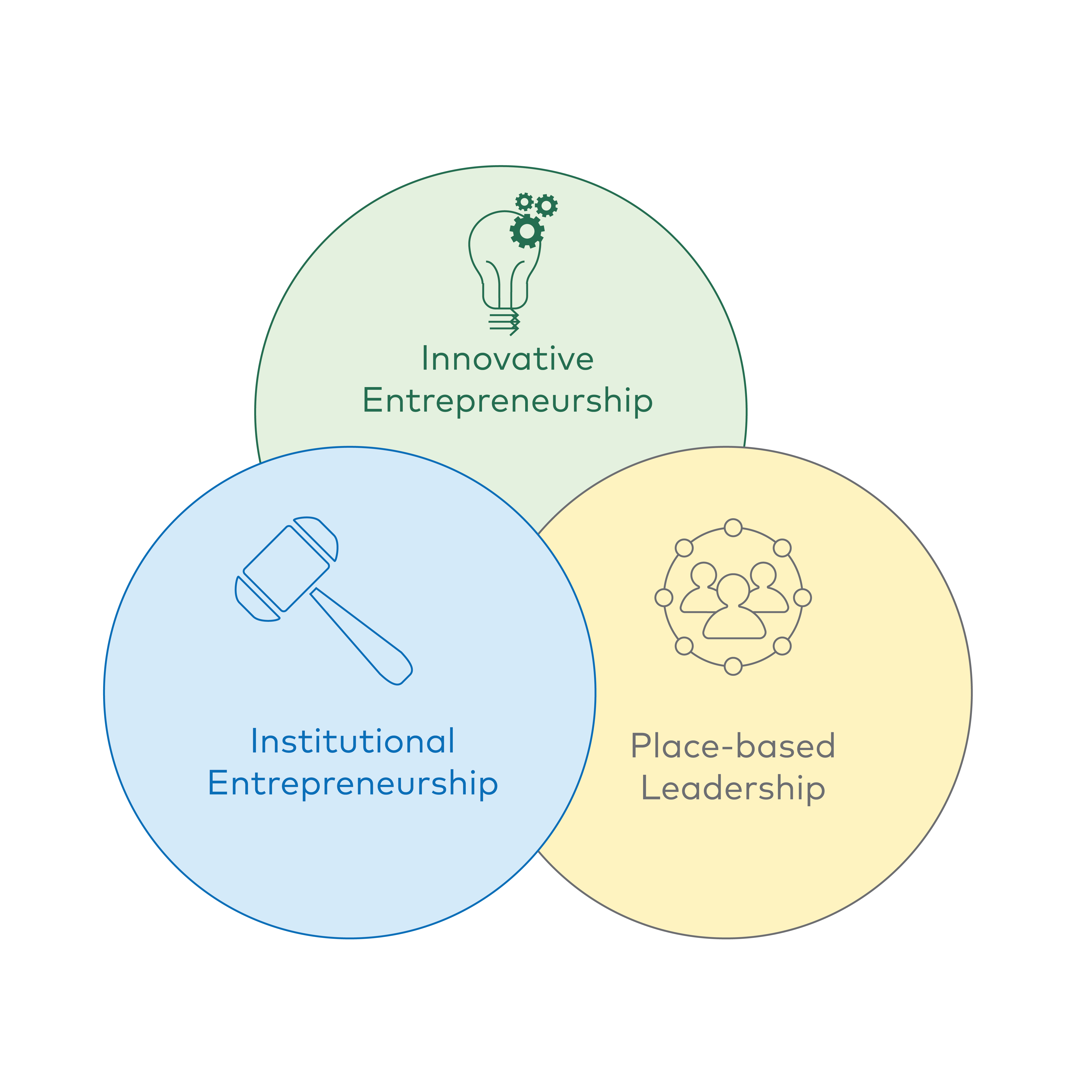
Figure 1: Trinity of change agency. Source: Adapted from Grillitsch, M. (2021). Re-design: Kotryna Juškaitė, Nordregio.
- Innovative entrepreneurship whereby entrepreneurship is a key instigator of change by triggering industrial and economic transformation.
- Institutional entrepreneurship demonstrating how new growth paths necessitate institutional change as they require opportunities and risk-taking institutional entrepreneurship. This is a second type of transformative agency.
- Place-based leadership is crucial for the organisation and pooling of competences to achieve individual objectives and broad-based (regional) goals. It stems from the border leadership literature but is conceived within the framework of city and regional development literature. New development paths are not constructed in a vacuum but is the outcome of multiple actors efforts. Place-based leadership, is therefore, important to coordinate efforts. (Grillitsch & Sotarauta 2020)
This ‘trinity of change agency’, as Grillitsch & Sotarauta (2020) argue, better explains how “the three types of agency – separately and in combination – contribute to the emergence of regional growth paths”. Therefore, the argument is not exclusively centred on whether structures influence agents or vice versa but also on how agents drive transformative change from multiple directions in a more or less chaotic process that leads to innovation or change within the entire ecosystem.
The entrepreneurial discovery process that leads to innovations occurs within a context, but context is not static; it changes, and with it, the opportunities for innovators. Those on the side of ‘structures’ in the structure-agency debate settle precisely on the role of context in determining the possibilities for innovations to occur. The question is, therefore, whether the context (as in systems) change is the cause or consequence of innovations. Grillitsch & Sotarauta (2020) suggests that the concept of opportunity space is beneficial for examining reflexive and embedded agency as it can be seen as a mediator between the aspects outlined in the trinity of change agency and structure. An opportunity is the time and set of circumstances that make something possible. Opportunity space is identified by agents’ deliberation of these possibilities in the future or for their future actions. In this sense, both actions and intentions reveal something about the apparent windows of opportunity. Agents reflect in a strategic way to decode the impact of their actions on the evolution of structures and vice versa: how structural changes also opens windows of opportunity for them ‘to exploit’ (Grillitsch & Sotarauta, 2020).
Furthermore, the concept of opportunity space extends previous ideas regarding the construction of regional advantage through an active policy approach, thereby establishing positive conditions for innovative entrepreneurship (Asheim et al., 2011; Tödtling et al., 2013). Opportunities are dynamic, evolving over time and show variations across different geographical areas. Moreover, the perception of opportunities and the ability to realise them vary not only across regions but also among individuals within them. According to Grillitsch and Sotarauta (2020), opportunity spaces manifest at three levels (see Figure 2):
- Time-specific opportunity space: determines what can be accomplished based on global knowledge resources, the institutions in place, market maturity and available technologies and resources at a specific point in time.
- Region-specific opportunity space: determines what can be achieved by considering the specific conditions in a particular area, e.g. in a region.
- Agent-specific opportunity space: denotes the opportunities, chances and abilities available or needed in individual agents to drive change based on their own experience, competences, networks, etc. (Grillitsch & Sotarauta 2020)
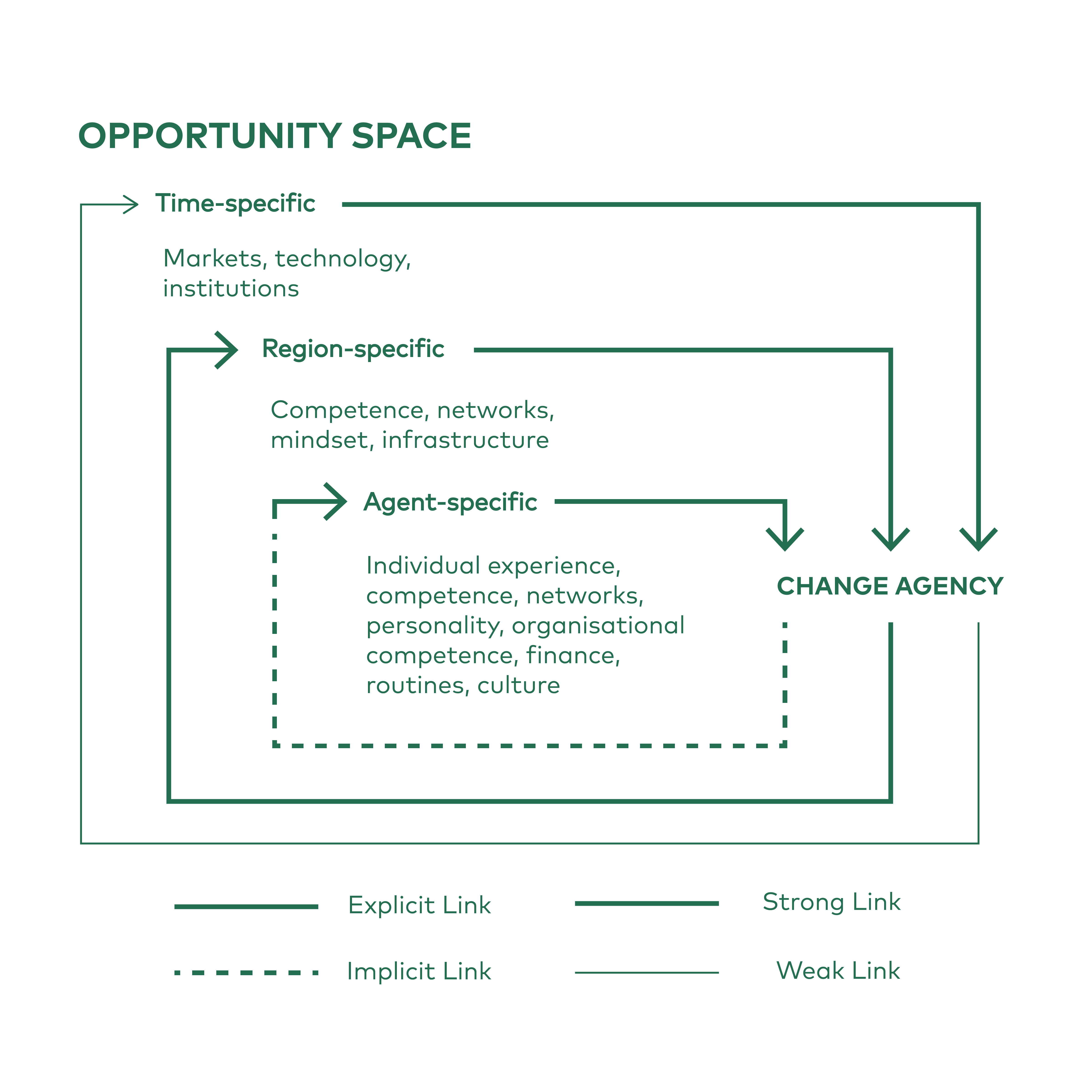
Figure 2: The various levels determining an ‘opportunity space’. Source: Adapted from Grillitsch, M. (2021). Re-design: Kotryna Juškaitė, Nordregio.
In terms of the structure-agency debate, this demonstrates how structures at various levels can move forward and how these structures influence each other while explaining how things do not remain the same but are constantly moving. It also clarifies the interdependencies between structure and agency: how changes in structures and specific combinations can enable agents to act.
Entrepreneurs and agency
Schumpeter’s theory of entrepreneurship laid the foundation for understanding creative labour and opportunity recognition. His thinking on innovation permutates his writings on entrepreneurship. In Schumpeter’s early work, entrepreneurs were the only relevant and true economic change agent; the ‘personification of innovation’ (Hagedoorn, 1996). Schumpeter’s early understanding of the entrepreneur as both an irrational and rational agent in search of new opportunities still stands up to reasonable scrutiny today. As Sotarauta and Suvinen (2021) write, “entrepreneurs have the will to realise something new to ‘map unknown terrain, to move where no-one dared venture before”. For Schumpeter, entrepreneurship is, in essence, creative labour (Hagedoorn, 1996).
In Schumpeter’s later writings, the entrepreneur as the sole change agent, the “heroic creative labour of a single individual” (Hagedoorn, 1996, p. 891), disappears. This may be connected to an altered notion of innovation as an increasingly automatised and routinised process due to the emergence of ‘trained specialists’ (ibid). In this depersonalisation process, entrepreneurial activities are increasingly attributed to businesses engaged in co-operative development, whether internally or with external partners. Innovation is seen as a solely endogenous factor in this process, whereas invention happens exogenously. The ability to commercialise inventions becomes the main output. Innovative entrepreneurs, whether understood as single individuals or as businesses, engage in the search for new economic opportunities even if these entail risks (Sotarauta and Suvinen, 2021), exploiting both existing and new possibilities. In this way, Hagedoorn (1996) notes that “entrepreneurship is not a magic phenomenon or a deus ex machina but primarily an endogenous factor that combines the application of innovative capabilities based on tacit knowledge [and] firm specific skills and organisational learning” (Hagedoorn, 1996, pp. 893). It is driven by “(…) competition, change, learning, climate, communications, processes, social interaction between individuals and other external factors” write Carayannis et al., (2015), pointing to Schumpeter’s later writings on entrepreneurship where skills are seen as an element in a larger, co-operative structure.
Entrepreneurship and innovation processes are inherently hard to define, being based on uncertainty and the ability to creatively exploit ideas. However, the pursuit of a distinctive theory of entrepreneurship continues. According to Phan (2004, p. 617), this ongoing search for a cohesive theory is in part due to the “phenomenological nature of extant work”, which in turn seems tied to our contemporary understanding of entrepreneurship as closely related to entrepreneur psychologies, network economics and innovation. These prevailing understandings of entrepreneurship are also often associated with context, whether organisational, sociological or as a typology of certain behavioural patterns (Phan, 2004).
Yet the definition of who and what an entrepreneur is depends very much on our language, interpretation of the world and the way we frame the concept of ‘entrepreneur’. Capturing who entrepreneurs are cannot be separated from the context in which they operate (Ramoglou, Gartner, & Tsang, 2020). Due to the many constantly changing contexts, it is clear that a theory of entrepreneurship must consider external factors, e.g., institutional structures and context, culture, the political economy, etc. (Carayannis et al., 2015). Moreover, seeking a specific entrepreneurial identity is entirely the wrong approach as it presupposes an individual trait, or even specific genetics in some cases and neglects that “entrepreneurs exercise a widely held human potential” (Ramoglou, Gartner, & Tsang, 2020, p. 4). As previously stated, entrepreneurship is creative labour.
Entrepreneurship is, according to Ramoglou et al., tied to human agency: humans do not simply respond spontaneously to external triggers but rather exercise their agency when responding to “entrepreneurial opportunities” (2020, p. 3). By refraining from conflating the factual (i.e. outcome) from a conceptual (i.e. language and semantic) understanding of entrepreneurs, it becomes clear that entrepreneurs are those who exercise their agency at the opportune moment. They do not necessarily harbour ‘deeply held secrets’ but are simply able to reframe old ideas in new ways within their given context: “worldviews are not rooted in genes, but in grammar”, according to Ramoglou et al. (2020, p. 4). Moreover, this may happen on a variety of levels, perhaps even leading to the need for an understanding of innovation and agency based on a multilevel analysis (Phan, 2004).
The understanding and conceptualisation of entrepreneurship in policy and practice impacts entrepreneurs’ ability to act. According to Sotarauta and Suvinen (2021), entrepreneurs require certain preconditions, such as capital, well-functioning capital markets, legal arrangements and skilled labour. This may demand a strategic approach to policy making beyond fixing ‘market failures’ and resource allocation: one that sets a course where co-creation and co-shaping of the economy occur in tandem with key market actors. This is an example of what Grillitsch and Sotarauta (2020) refer to as the second type of agency – institutional entrepreneurship – which entails moulding institutions to become risk-taking and opportunity-oriented entities with the intentional objective of influencing new industrial development or path creation.
But even here, the framing of opportunities also plays a central role and relates back to the importance of context: institutional infrastructures matter. Entrepreneurial discoveries and their enabling, depend on the ability of actors to work together on optimising both formal and informal institutions (Sotarauta & Suvinen, 2021). Seen in the light of the structure-agency debate, it is clear that change agents are necessary, both to enable and ensure change in a constantly and mutually reinforcing mechanism. It is systemic.
Institutions and the rules of the game
According to Rodriguez-Pose (2013), institutions “abandon the more rationalistic ‘game-theoretic’ approach of the new institutional economics and embrace a position in which institutions not only shape, but also are shaped by the environment” (2013, p. 1037). Although institutions share common features across territories, they are, to a significant extent, place-specific (ibid.). Institutions are commonly understood as “the rules of the game in a society; and more formally, as the humanly devised constraints that shape human interaction” (Rodríguez-Pose, 2013; North, 1990). In other words, the interplay between formal institutions (rules, laws and organisations) and informal institutions (norms, values, routines), as well as path dependencies, generate a distinct institutional environment in a particular territory (Gertler, 1997; Rodríguez-Pose, 2013). Path dependency and ‘lock in’ are often seen in relation to innovation capacities: here, historical institutionalism (i.e., sequences and time) dominates, as innovation is seen to be recreated in the same framework from whence it came (Wøien Meijer & Peters, 2021). History is full of examples of path dependencies, path disruptions and path creation (Lema, Nordensvärd, Urban, & Lüktenhorst, 2014).
Rodriguez-Pose (2013) adds that place-based institutional arrangements are often more successful at local and regional scale than national level, as the latter can ‘be too distant and detached’ to mobilise actors and organisations effectively. Development strategies and innovation policy need to be tailored to regions’ distinct contexts and institutional arrangements to ensure legitimacy.
Institutional legitimacy, however, depends on the ability of institutions to work as a ‘glue for collective action’ through their ability to ‘reduce uncertainty and transaction costs’ (Boschma, 2005, p. 68). This requires striking the balance of institutional proximity Bochma (2005) argues that “institutions are enabling or constraining mechanisms that affect the Having said this, it is not easy to describe how an level of knowledge transfer, interactive learning and effective institutional structure may overcome these (thus) innovation” (Boschma, 2005, p. 68). Too much proximity may cause inertia due to fewer new ideas and a lack of novelty, while insufficient proximity leads to the development of silos: lack of social cohesion and common values between actors and weak formal institutions. Cooke et al., (1997) adhere to the same principles: “innovation and learning are closely interlinked. There can be no change without previous learning (…)” (Cooke, Gomez Uranga, & Extebarria, 1997, p. 485). For Rodríguez-Pose and Crescenzi (2008): “Local innovative activities not only allow better local economic performance but also produce localised knowledge spillovers whose beneficial effects depend not only on proximity relationships but also on the presence of local institutions (or social filters) enabling their absorption and translation into further economic growth” (2008, p. 383).
In the context of change agency, Rodriguez-Pose (2013) argues that both “formal and informal institutions help territories to adjust and react to change, generating a degree of ‘adaptive efficiency’ that highlights the willingness and capacity of local actors to adopt new knowledge and to engage in innovative and creative activities” (2013, p. 1039). He adds that institutions are a key factor in determining the learning capacity of a region and, thereby, its ability to adapt to changes (Morgan, 1997 in Rodriguez-Pose, 2013). However, Rodriguez-Pose (2013) also notes contradictions and challenges in building institutional arrangements, as there is seemingly no clear agreement as to which informal or formal institutions are more relevant in driving economic development, nor no simple way to measure this. What is clear, however, is that mutual understanding is key to ensuring ‘adaptive efficiency’ and change. However, redesigning or augmenting institutions beyond resource allocation (Nelson & Winter, 1977) to ensure their ability to respond to the evolving nature of innovation (Carayannis, Samara, & Bakouros, 2015) remains a problem.
Institutional innovation in the public sector
Three main periods can be distinguished in the literature on the role of the public sector in innovation (Kattel, 2015, pp. 9-19). First is the Schumpeterian period, where “innovations and the public sector are related to a larger theory of how evolutionary change takes place in societies” (Kattel, 2015, pp. 9-19). Second is the organisational-theory period, where similarities between innovation occurring in the public sector and in private companies can be discerned (usually found in early organisational theory (Wilson, 1989; Kattel, 2015). Finally, the autochthonous-theory period concerning the trend to “disassociate public and private-sector innovations” (Kattel, 2015, pp. 9-19), returns to the origins.
However, the role of the public sector in innovation and by extension vis-á-vis markets, has been widely debated throughout recent history. In economic theory, the Austrian and Chicago schools of thought placed much emphasis on rational choice and the role of the consumer, embracing monetarism and rejecting Keynesianism, also in macroeconomics. However, when considering markets, capitalism, and competitiveness, it is difficult not to invoke the role of the state. Porter (1990) writes in his article The Competitive Advantage of Nations that “national prosperity is created, not inherited” and that in an increasingly globalised world, nations, or rather countries, have become more, not less, important (Porter M. E., 1990, p. 74). As the accumulation of knowledge continues to drive competitive advantage, it has become clear that the fundamental structures of a society and country, such as culture, values, institutional structure, history and economics, contribute to competitiveness (Porter M. E., The Competitive Advantage of Nations, 1990). Moreover, “the home nation takes on growing significance because it is the source of the skills and technology that underpin competitive advantage” (Porter, 1990, p. 79).
In more recent years, the state’s role in correcting market failures has re-emerged in the debate. There is a host of literature on market failures and the role of the state in correcting them to minimise the negative externalities of these failures. Considering the role of state interference in economics, the state is often viewed as offering false life support or as a source of “institutional drag”. However, Mariana Mazzucato (2020) argues that we cannot reduce the role of the state into a patchwork of bandages covering market failures. Rather, the state ensures that the institutional framework creates a favourable environment by reducing the risk of market failures, by taking the hits in a ‘risky bump landscape’ of innovation and economic growth.
In her book The Entrepreneurial State, Mazzucato attempts “to debunk this idea that the private sector has all this risk-taking embedded in it; there are many private companies that do not take risks and are perfectly happy with the status quo” (Mazzucato M. , 2013). She proposes the creation of entrepreneurial ecosystems, thus redefining the relationship between the public and private sectors. This requires public sector innovation, releasing bureaucratic culture from its inflexible organisational structures and their subsequent inertia. Civil servants should instead be trained to frame policy from a more strategic perspective rather than merely fixing ‘market failures’: setting a course for co-creating and co-shaping the economy together with market actors. This represents Grillitsch and Sotarauta’s (2020) approach, the second type of agency – institutional entrepreneurship – outlined earlier. Mazzucato (2020) raises the criticism that the bar for conceiving a risk-taking environment within bureaucratic structures is currently very low, perhaps due to a relatively risk-averse public sector. An emerging policy practice centred on pre-emptive considerations, where learning through mistakes is not encouraged, may be to blame. This is arguably impeding development. Mazzucato (2021) furthermore argues that the public sector must invest in its own capabilities and not succumb to so-called ‘brochurism’, in which the ‘sexiest brochure’ or PowerPoint presentation produced by for-profit consultancies take precedence and where facts and expert knowledge are easily relegated. This increased strategic or entrepreneurial institutional role is called for by Mazzucato (2013; 2021) and Grillitsch and Sotarauta (2020) to facilitate the establishment of institutions as a driving force for change through transformative and mission-oriented innovation policies. Seen from an entrepreneurial perspective, Sotarauta and Suvinen make it abundantly clear that “by definition, institutional entrepreneurs work to change the rules of the game” (Sotarauta & Suvinen 2021).
At sub-national levels, increased pressure falls upon regional actors and governance structures through Smart specialisation (S3) and other far-reaching policy goals, emphasising the importance of continuously developing institutions (Morgan, 2017). Investigating whether governance structures have changed since the introduction of S3 and how policies reflect the increased focus on green technologies is of interest. Exploring this informs us of existing policy feedback loops and institutional thickness, the role of partnerships and whether the regions involved are ‘learning’ and adapting to an evolving regional innovation system. Moreover, taking the region as a starting point reinforces the relevance of a spatial dimension in innovation policy.
Innovation policy and transitions in innovation systems
For decades, innovation policy served as a sub-category of economic policy, driving businesses and organisations to become more innovative (Freeman, 1995). However, in the current policy climate, innovation is moving beyond this somewhat one-dimensional conceptualisation. This is particularly evident in the development of the EU-wide concept of smart specialisation (see, e.g., Foray, 2014). Smart specialisation goes beyond the mere consideration of innovation in businesses and organisations and focuses on co-operation, leveraging competitive advantages within regions and an overall levelling of the innovative playing field in Europe. Innovation, Freeman explained in 1995, must be seen in relation to employment and economic growth, as it impacts both.
Smart specialisation (S3) is, in many ways, the European Union’s response to ‘new industrial innovation policies’ (Asheim B. , 2019; Radosevic, 2017). This ‘new industrial policy’ brings novel approaches to industrial innovation development, whereby ‘discovery processes’ for new specialisations seek economic diversification and path creation. Policy making is thus an endogenous process based on the acknowledgement that nobody possesses a full overview of the economy (Asheim, 2019). The new industrial policy, expressed through S3, aims to fulfil the EU’s 2020 objectives of a smart, inclusive and sustainable economy (Asheim, 2019) and receives European Regional Development Funds ex-ante.
Apart from economic development, however, the policy and academic debate has increasingly focused on the potential for innovation policy in solving societal challenges. According to Grillitsch et al. (2019), “the orientation towards grand societal challenges can be seen as a new wave or paradigm for innovation policy”. This will be addressed in more depth below.
Transition in innovation systems theory
Transitions help explain the complexity of systems innovations, encompassing not only the emergence of new technologies but the necessary changes in “markets, user practices, policy, and cultural discourses as well as governing institutions” (Coenen et al., 2012: 968). Innovations that require changes – or transformation - in the interlinked social and technical systems are referred to as ‘socio-technical transitions’.
Four different schools of thought have contributed to transition studies literature: strategic niche management (Kemp, Schot, & Hoogma, 1998); transition management (Rotmans, Kemp, & van Asselt, 2001; Loorbach, 2007), which can be seen as precursors to the multi-level perspective approach (Geels F. , 2002; Geels & Schot, 2007); technological innovation systems (Bergek, et al., 2008; Hekkert et al., 2007; Hekkert et al., 2020), with their sectoral/industrial approach (Breschi & Malerba, 1997; Carlsson & Stankiewicz, 1991) and finally, territorial variants (Asheim & Isaksen, 1997; Lundvall, 1992 [2010]). All these branches concur that change in complex sociotechnical systems is channelled through sociotechnical transitions (Cedergren et al., 2022)
Coenen et al. (2012, p. 968), stress that transition analyses are particularly useful in addressing the “structure-agency duality via evolutionary long-term trajectories of socio-technical change.” Literature on innovation systems in relation to sustainability transitions has generally centred around emerging new technologies, whereas literature on the multi-level perspective has, instead, “oriented toward reconstructing historical processes of sectoral change” (Coenen, Benneworth, & Truffer, 2012, p. 968)., Coenen et al. (2012) argue that both of these traditions have largely overlooked the geographical dimension and the socio-spatial dynamics in which transitions occur. However, the more recent shift towards the transformative capacity of innovation and innovation policy has established new bridges between innovation studies and economic geography (Grillitsch & Hansen, 2019).
Building from a multi-level perspective approach, Geels’ seminal paper published in 2002 introduces the idea that large-scale technological transformations result from an evolutionary and continuous process of technology substitution that occurs at different levels (Geels F. , 2002). This process results in the shift – or transition – “from one sociotechnical regime to another one” (Cedergren et al., 2022). The ‘green transition’, addressed later in this paper, is a prime example of a large-scale transformation, which requires not only technological innovations but an overhaul of both formal and informal institutions. Louiseau et al. (2015) at the European Environmental Research Partnership suggest that the green transition requires several aspects of transformation, including organisational support, market conditions, governance frameworks, technologies and political will. The latter is considered crucial: without it, addressing vast societal challenges proves difficult. However, the growing urgency to tackle these societal challenges, including environmental ones, has pushed policy makers towards incorporating transition thinking, or transformative policy, into innovation and industrial policies.
Transformative Innovation Policy
According to Grillitsch et al. (2019), “the orientation towards grand societal challenges can be seen as a new wave or paradigm for innovation policy”. Hekkert et al. (2020) stress that for decades, innovation policy was aimed primarily at repairing market failures, first by investing in R&D and later by addressing failures in national innovation systems and strengthening networks. A new wave of innovation policy – Transformative Innovation Policy (TIP) - explicitly centres on the “mobilisation of science, technology and innovation for meeting societal needs” (Grillitsch et al., 2019). Building on transition studies and socio-technical transitions theory, TIP provides directionality to innovation efforts. Also referred to as system innovation policy, this new approach implies system-wide transformation (ibid.).
TIP is rapidly emerging as a new innovation policy approach that drives for change, particularly in addressing major societal challenges (Grillitsch & Hansen, 2019) such as climate change, biodiversity loss, ageing population, poverty, hunger, etc. Transformative innovation policy essentially provides directionality and concentrates policy and financial efforts on innovations that offer solutions for social challenges. This represents a major shift, at least in discourse, from previous innovation policy generations, which focused primarily on economic growth (Hekkert et al., 2020). A substantial example is Horizon Europe, the EU research & innovation framework programme for 2021–2027, which has allocated EUR 95.5 billion towards five ‘missions’, including some of the most pressing contemporary societal challenges: adaptation to climate change, climate-neutral and smart cities, soil health and food systems, healthy oceans and waters and cancer (see Info Box 1).
Info Box 1: Horizon Europe: an interpretation of Mission Oriented Innovation Policy The Horizon Europe missions reveal one possible interpretation of the Mission-Oriented Innovation Policy (MOIP) approach by operationalising the principle of discovering willing problem-solvers instead of specific solutions. For example, within the mission of building climate-resilient regions, the emphasis is on inclusive governance via resource pooling and mobilising actors. This entails the co-design, co-production and co-assessment of policies, improving access to education and information, strengthening sustainable local economies and targeting funds. As a result, all European citizens, communities and regions should become better placed to tackle climate disruptions as the innovation pathways and local transformative solutions developed in target regions and cities spread and increase in scale (European Commission, 2020a). The Horizon Europe Missions target their resources on capacity-building and creating enabling conditions under which new experiments may take seed and grow. Instead of structuring policy based on a linear cause-effect solution, the MOIP framework defines criteria and characteristics for the end result (European Commission 2020a and 2020b, Mazzucato M., 2019). The proposed Missions involve specific targets, e.g. supporting 200 European communities and regions, scaling up 100 successful community innovations of climate resilience as “deep demonstrations”, and establishing 100 climate-neutral cities that will transform into innovation hubs. Despite these numbers, evaluating the success of these missions will leave plenty of interpretative room to manoeuvre due to the broad criteria and characteristics of the sought-after end results. Emphasis on strengthening networks and engaging a wider range of stakeholders, as well as targeting financing in a more coordinated manner, suggests that previous waves of innovation policy (focusing on R&D funding, repairing system failures and network building) remain active parts of new innovation policies. The Horizon missions thus entail not only developing new directions but also executing established approaches or instruments more effectively. However, the extent to which a change in directionality results in discovering innovative policy instruments has yet to be seen. So far, the Horizon Europe Missions have adopted a more incremental approach, rather than introducing ground-breaking measures. |
TIP has been closely connected to the movement towards exploring new economic pathways or industrial path creation, which reinstates geography’s relevance in innovation. Binz et al. (2016) and Steen and Hansen (2018, s. 191) define a new industrial development path as a “set of functionally related firms and supportive actors and institutions that are established and legitimised beyond emergence and are facing early stages of growth and developing new processes and products” (in Sotarauta & Suvinen 2021). Grillitsch and Asheim (2018) offer three alternative routes this might take: upgrading, diversification and the emergence of new regional industrial paths. All of these imply transformative processes but distinguish between incremental processes (upgrading), changing the fundamental structure of the local economy by establishing new industries (emergence) and ‘diversification’ representing a middle way or combination of the two.
In the context of a ‘Green Transition’, upgrading may imply a change in industrial paths through scaling “the hierarchy of global production networks by introducing green services and products” or by supporting “major changes in the existing industry due to the adoption of new green technologies and/or the introduction of new environmentally friendly business models (renewal)” (Sotarauta & Suvinen, 2021). As for diversification, it will require a move towards “new green industries by applying existing knowledge and competencies” (ibid.). Finally, emergence implies “the creation of new green industries which do not draw on the knowledge bases of existing regional industries.” (ibid.)
Societal challenges and mission-oriented-innovation policy (MOIP)
Directionality in innovation policy has ignited a heated debate in academia. The main division is between mission-oriented innovation policy (MOIP) and broad-based innovation policy (or Foundational Innovation Policy). Supporters of MOIP believe it is an effective approach to concentrating efforts and mobilising actors in to solving societal challenges, while advocates for broad-based innovation policy argue that narrowing the scope risks rejecting other possible alternatives or focusing on erroneous missions.
MOIP is a subtype of transformative innovation policy, as missions define the end goal of a transformative process. Mazzucato, a primary advocate of the mission approach, defines MOIP as:
“… systemic public policies that draw on frontier knowledge to attain specific goals or ‘big science deployed to meet big problems’. Missions provide a solution, an opportunity, and an approach to address the numerous challenges that people face in their daily lives”. (Mazzucato M. , 2018)
The OECD further describes them as:
“… a coordinated package of policy and regulatory measures tailored specifically to mobilise innovation in order to address well-defined objectives related to a social challenge, in a defined timeline” (OECD, 2020)
Mazzucato refers to the success of policy in generating the ICT revolution and the welfare state as examples where the efforts require bold ambitions (missions) and strategic thinking (ibid.). She claims that the internet, biotech, nanotech and green tech revolutions would not have happened if nation states had merely taken an observant or passive role (Mazzucato M. , 2021). Mazzucato believes that the green transition and addressing the Sustainable Development Goals (SDGs) also demands this type of approach: “it requires rethinking the tools for policymaking, whether we look at procurement policies, grants, loans, subsidies – these are all different types of levers governments have” (Mazzucato, Kattel, & Roll, 2020). However, she also believes that the way these tools are applied needs to be rethought “to foster transitions, be it the green transitions or other types of investments and activities that are required to solve the 17 SDGs” (ibid).
Mazzucato also raises concepts such as public value and purpose. “If an economy has a purpose, then it has a direction, so, how do we talk about directionality of the economy?” she asked in a lecture at the Creative Bureaucracy Festival (2020). Public purpose links to the role of targeted public missions. Public missions do not need to single out an individual sector or technology but rather can encourage and foster activity in all related industries or sectors that may require incentive support. In other words, a mission can be targeted. However, “solution-picking” policies are not required for bottom-up activity across organisations or to support sectors in their problem-solving activities in order to meet these public mission goals (Mazzucato, Kattel, & Roll, 2020). Although opponents of mission-oriented innovation policies claim that these limit alternatives, their aim is to support the emergence of diverse ideas and technologies.
Mazzucato (2021) explains that MOIP can be operationalised by identifying ‘the problem’ as the starting point and then supporting any sectoral or industrial innovations that work towards this predefined end. This would mean, for example, to “turn the SDGs, these 17 broad goals, into targeted missions, like getting 90% of the plastic out of the ocean or having 100 carbon neutral cities across Europe, or social ones, like fighting knife crime” (ibid.). Furthermore, policy instruments, such as industrial strategies, procurement, or loans and grants to stimulate bottom-up experimentation across businesses and organisations, are shaped to solve the (already) set problems. Mazzucato argues that this differs from common industrial policy strategies that often simply choose the top five industries to be funded, for example.
Green transition as a policy goal/mission-oriented concept
In the context of transition literature, a ‘green transition’ is merely another example of socio-technical transitions (Cedergren et al., 2022). As understood in MOIP and TIP, green transitions solve one or several ‘grand societal challenges’, such as climate change, biodiversity loss, eutrophication, etc. Beyond academic discourse, a green transition exists as a policy goal with varying interpretations. In general, it implies moving from a non-green (unsustainable) ‘present’ to a green (sustainable) ‘future’, which inevitably requires change in the social, economic and institutional systems.
At the core of green transition as a policy goal lies a “green economy”, which Jacobs (1991) conceptualises as “an economic context in which prosperity and social equality increase while pressures on the environment and ecological damage simultaneously decrease” (in Cedergren, et al., 2022). In relation to development or industrial policy, we can talk of green path development. UNEP (2011: 16) describes green path development as “industrial development around products, solutions, or technologies that ‘reduce carbon emissions and pollution, enhance energy, and resource efficiency, and prevent the loss of biodiversity and ecosystem services’” (in Sotarauta & Suvinen, 2021). The European Green Deal, which is the EU’s new ‘growth strategy’, is set to accelerate and trigger a green transition and transform “the Union into a modern, resource-efficient and competitive economy”, characterised by climate neutrality and reduced pollution, a competitive economy and green technology and sustainable industry and transport (European Commission, 2020)
Setting aside policy ambitions, the concept of ‘green’ is a highly dynamic one that may well change in just a few years (Tanner et al., 2019). Moreover, framing ‘green’ in terms of traditional exponential ‘growth’ leading to resource depletion and waste production while also linking it with human well-being and economic development is no longer sustainable (Altenburg & Rodrik, 2017). The concept of green transition is often linked with the concept of ‘green growth’, whereas innovation is understood in terms of economic development. Green growth is the capacity to create sustainable growth through innovation for new and improved services, processes, and goods, writes Annala & Teräs in 2017. Ambec (2017) furthermore states that when preconditions are fulfilled, green growth leads to economic competitiveness. These involve the ease of facilitating patent and technology transfers in industrial policy, high levels of technological absorption capacities in industries, and finally, flexibility in green innovation policy instruments, e.g., taxation policies (Ambec, 2017, p. 47). However, they are highly context-specific and dependent, contingent on the role of public policies and financial infrastructure and on the role played by ‘proximity’ in driving industrial green transitions (Altenburg & Pegels, 2012)
Conceptualising ‘green’ in the framework of the existing economic system can, therefore, quickly become limiting (Wøien Meijer & Peters, 2021). According to Altenburg and Rodrik (2017), radical new techno-institutional systems are necessary. The commitment to Agenda 2030 and the SDGs has transformative power, but conflict about goals may result in ‘halfway solutions’ if there is little or no guidance on balancing conflicting issues (e.g., housing vs. area protection). New policy foundations, such as the SDGs, may reform, in turn, both the formal and informal institutional structures if afforded the chance (Wøien Meijer & Peters, 2021).
Structuration theory establishes frameworks wherein agents and structures, under certain circumstances, have the potential to mutually influence each other, propelling society forward. As Asheim (2019) notes, new industrial innovation policies are generally built on the assumption that “no single agent has a total overview of the economy”. Therefore, to study innovation in green transitions, we need to examine change agency and identify where change is initiated, who and what triggers it and who or what leads the process of path creation.