Photo: Nazarin Babashova / Unsplash.com
PART II: Methodological Framework
In this section, we briefly describe our methodology and our approaches to the study of change agency in green innovation in the Nordic Region.
3. Conceptual framework
We use Coleman’s boat (Figure 3) to guide our interpretation of macro-micro-macro interlinkages – in other words, how structures (macro-level) influence agency (micro-level) in a mutually reinforcing way (Coleman, 1986; Giddens, 1991). This helps us ground our theory of change agency by understanding social change and change processes as dependent on changing institutions, values, visions, and attitudes. In relation to sustainable development, for example, macro may refer to the threats of climate change. This, in turn, conditions micro-level attitudes, leading to individual action, the development of the SDGs or other climate action, which in turn has an impact on economic pathways and the severity of the climate crisis.
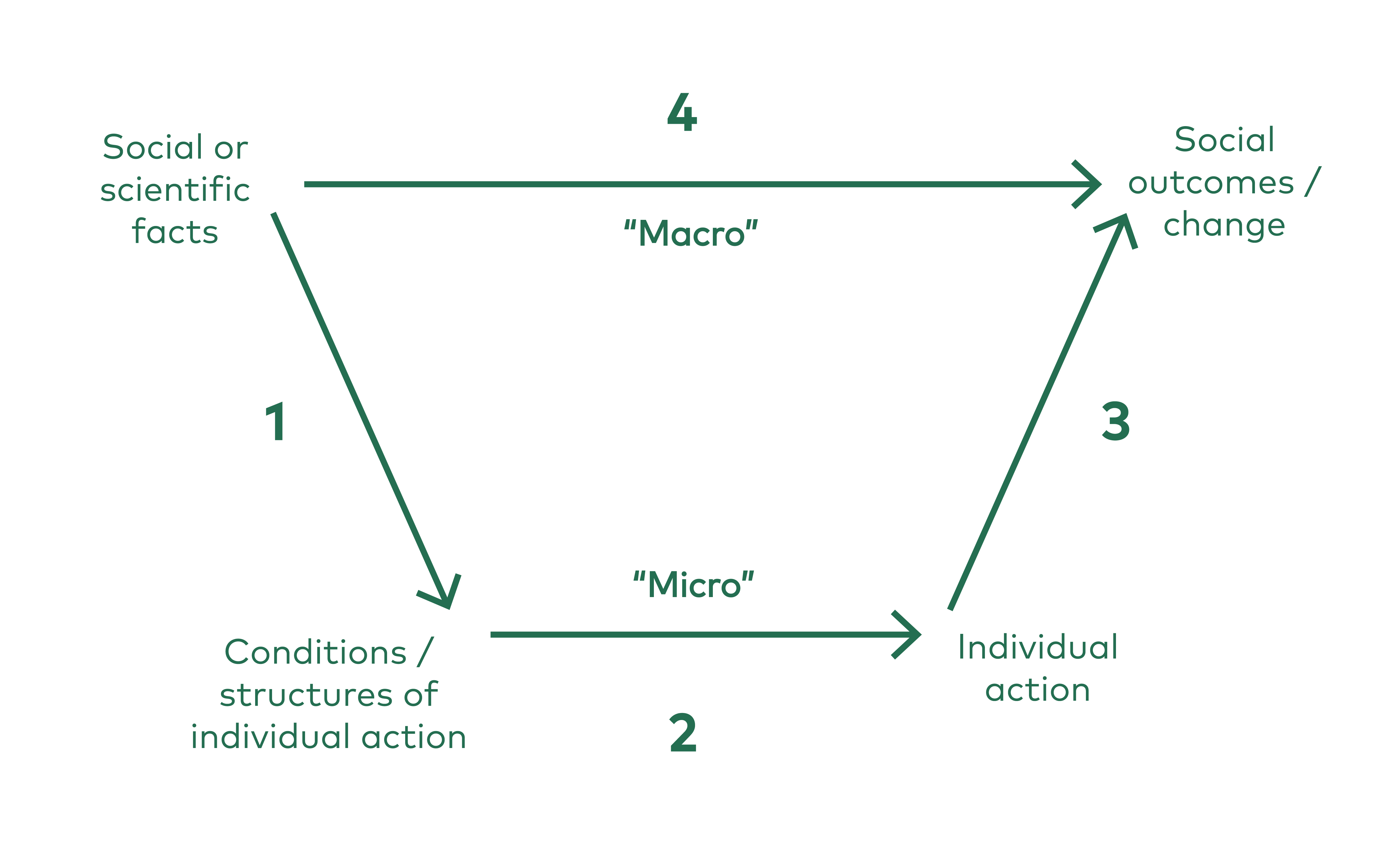
Figure 3. Coleman’s Boat, authors’ interpretation.
The boat explained: In relation to innovation within green transitions, individual actions link to system behaviour. This is partly because green transitions are catalysed by attitude and value changes that involve trust and/or social influence. Attitudes and values affect macro-level change, which in turn influences micro-level behaviours, change and eventually governance structures through institutional entrepreneurship. So, for example, influence type 1 (Figure 3) indicates social or scientific facts, such as e.g., climate change’s impact on society. Influence type 2 represents the impact on the conditions/structures of individual action. Influence type 3 shows the process of individual action impacting social outcomes (Coleman, 1986, p. 1331). Finally, we would like to add a double arrow as a fourth type of influence, showing how social outcomes may impact the development of social and scientific conditions and vice-versa on the macro scale, implying general shifts in attitudes – resulting in, e.g., establishing the newfound development of problem-solving mission-oriented policies to solve grand social challenges.
The limitation of the methodology based on Coleman’s Boat includes risks common to all qualitative methods, i.e., the lack of tangible, empirical results and the need to carefully review the credibility of results at every stage of analysis. While we acknowledge this limitation, we ground our conceptual framework on this model. Although the directionality and causality of influence tend not to be linear but complex, Coleman’s boat helps simplify and visualise how transformative action (individual level) and policies (structural level) influence and strengthen/weaken each other. This is observable in, for example, many contemporary social issues (e.g., the civil rights movement, women’s rights etc.). The interlinkages between agency and structures are charging transformations, while the institutionalisation of norms and values is driving green transitions and manifesting in individual action and policy change.
Having established how we conceptualise our ontological basis of social change in the relationship between structure-agency, we take a closer look at how this might work within the framework of innovation. Building on Grillitsch and Sotarauta’s theory of Trinity of Change Agency (2020), we see how, depending on the overall social conditions, variables and outcomes might change (Figure 4). Depending on the context and actors involved, the process, directionality of influence and outcomes of change agency vary. Moreover, this acknowledges the complex interlinkages between agency and structure in contributing to social change, or in this case, green transitions.
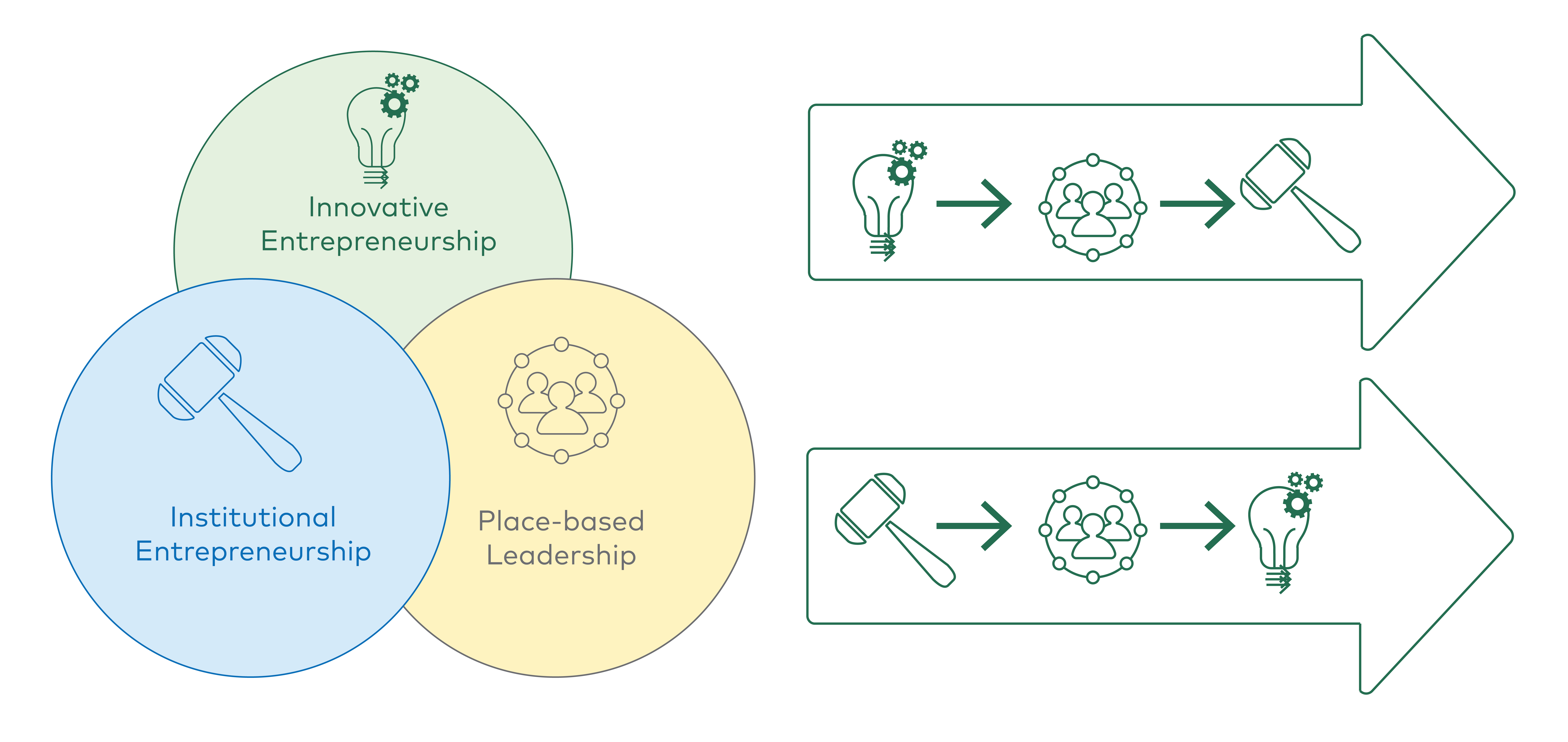
Figure 4: Trinity of Change and the role of agency in generating outcomes. Source: Adapted from Grillitsch, M. (2021). Re-design: Kotryna Juškaitė, Nordregio.
The ‘Trinity of Change Agency’ does not happen in a vacuum but is surrounded by various actors who may impact change. Grillitsch and Sotarauta (2020) suggest that these three forms of agency “[…] contribute in their own way to constructing and exploiting opportunity spaces, thereby continuously forming and shaping regional growth trajectories”. We also follow their assumption that despite similar preconditions regions do perform differently and that this may be rooted in the types of agency that exist and their ability to exploit opportunity spaces (Grillitsch & Sotarauta, 2020).
To complement the traditional view of actors in terms of formal role or organisation, we apply ‘the roles in change agency’ proposed by Sotarauta et al. (2020, p. 96), which involves both the formal and informal roles of actors in change processes and in driving innovation. These include support actors, vision brokers, critics and mentors, in addition to core place-leaders, institutional entrepreneurs and innovative entrepreneurs (Sotarauta et al., 2020, p. 96). In our empirical study, we will consider who these actors are in relation to the sectors chosen for our case studies.
The role | Characteristics of the role (within the game metaphor) |
Institutional entrepreneur | Initiates divergent institutional changes and actively participates in their implementation and is willing to take risk in doing so - works to change the rules of the game. |
Innovative entrepreneur | Actively seeks new economic opportunities and is willing to take financial and personal risk – exploits the existing, emerging and possible games and simultaneously changes them. |
Visionary | Breaks away from what already exists and has the imagination and the ability to see the big picture - imagines new games. |
Support actor | Encourages change by supporting the process by loosening up facilitation, coordination and/or providing change efforts with resources - does not play the game but helps the players and those who make/change the rules. |
Mentor | Typically, an actor who coaches and advises other actors and especially institutional entrepreneurs and leaders as well as entrepreneurs throughout the process but is not actively engaged in the change process - teaches others to play better or to change the rules more effectively. |
Critic | Plays the role of the devil's advocate by asking cunning questions that force the other actors to re-examine their assumptions and hold them against other criteria - does not work for the game or improve the ways it is played but indirectly helps the players to improve their game. |
Place leader | An actor having a position to assess a path development process from a more comprehensive angle than the other actors, and mobilise and pool resources, competencies and powers – makes it all possible, provides a generic direction for a game. |
Table 1: The roles in change agency. Source: Sotarauta et al., (2020, p. 96)
Methodological approach
Assuming a systemic nature of innovation in which no single agent has the monopoly of change, we find it relevant to use agency as a starting point to explore the concept of green innovation in the context of regional development. This allows us to gain further insights into the role and collaborative efforts employed by actors in enabling the green transition. Finally, this also sheds some light on the way in which the green transition may come to fruition through the complexity of actor-structure interactions.
The study included the following methodological approach:
- Theory and conceptual overview: desk study of innovation literature, concepts and policy evolution based on ongoing academic discourses.
- Methodological framework: based on the change agency approach.
- Empirical study: qualitative sector-based case studies based on 1) semi-structured interviews (selected following leads from the knowledge overview and by utilising the snowball method) and 2) knowledge overview combining a variety of sources (i.e., academic literature, policy documents and grey literature, e.g., reports, journalistic articles, websites, company reports, etc.). An overview and a conceptualisation of key terms at a case level were also conducted.
- Cross-case analysis in relation to the key theoretical.
The cases were selected based on the following criteria. Following our decision to focus on the concept of agency and the complexity of actor-structure interactions in green innovation, we decided to focus on sectors instead of specific regions. This has allowed us to capture a more complete picture of the multiple and changing roles of various actors during the process of systemic innovation, where a certain region or city, for example, may be proactively involved at a certain stage and less so at another. This approach also allows us to appreciate the relevance of place in technological, institutional, social and systems innovations.
We chose to focus on wood construction and the protein shift due to fast developments and innovation happening within these sectors, and their particular relevance in Nordic countries. We interviewed 14 people for Case study 1 and 8 people for Case study 2 between Autumn 2022 and Spring 2023 (for a detailed list see 8.4.). We also conducted fieldwork in Västerbotten region in Sweden, and Midtjylland region in Denmark in relation to the first and second case, respectively.
We recognise a number of limitations to our empirical study related to the limited number of interviews and the reliance on informants partial or subjective views in recollecting the historical sequence of events and identifying the relevant actors and factors in determining agency in the sectors development. This study, however, does not claim to seek an objective certainty of events but rather an understanding of aspects that carry the most weight to experts in the field. Furthermore, the case is limited by having only two cases, and therefore cannot claim to cover all possible manifestations of green innovation. For this, we need further research.