Photo: Ant Rozetsky / Unsplash.com
6. Discussion – Framing Digital Inclusion through Barriers and Measures
Since the pre-study, a substantial number of policies have been published across the Nordic/Baltic region. Table 15 depicts the identified and investigated strategies for the Nordic and Baltic countries. The strategies marked with * were also included in the pre-study. Table 16 compares how digital inclusion is framed by the various digitalisation policies in the region. It is important to note that Table 3 should not be seen as reflecting the overall digitalisation status. The colour scheme does not necessarily reflect how far ahead or behind the other countries the country in question is. The table highlights the varying political priorities the countries are adopting. Some countries are already performing well in terms of connectivity or eID roll-out and are, therefore, prioritising those aspects less in their political strategies. However, other countries may not be focusing on specific topics because, for differing reasons, they are yet to include them in their political strategies, rather than because they have already moved beyond such discussions. It is, therefore, important to see the table in relation to the country-specific descriptions of the digitalisation landscape and status quo in the various countries.
As evident from Figure 2, all of the countries have policies that either directly or indirectly discuss digital inclusion and develop strategies to address issues related to digital inclusion.
There are few countries that explicitly define digital inclusion. Norway, which follows the definition used by Midtgård et al. (2021), is an exception. However, while most of the countries have not developed definitions, the majority of the countries approach digital inclusion as an aspect of social inclusion. Åland, for instance, has developed no digitalisation strategies related to digital inclusion since the pre-study. However, digital inclusion is one of the initiatives included in its action plan on social accessibility for individuals with disabilities.
Most of the countries approach digital inclusion through either various societal target groups, with older adults (e.g. Denmark, Faroe Islands, Finland, Greenland, Norway, Lithuania and Åland) and individuals with disabilities (e.g. all countries either directly or indirectly) being most frequently mentioned. Other target groups are immigrants, young individuals and individuals outside the workforce. In general, the target groups addressed in the 11 Nordic/Baltic societies are largely the same, with differences tending to occur in the intersectionality of the groups, meaning that the groups identified nationally tend to differ at the sub-group level due to national and even regional-specific contexts. For example, immigrants are addressed differently in the various countries: Norway places emphasis on Ukrainian refugees in its Digital Throughout Life Action Plan (2023). The Faroe Islands, on the other hand, include individuals living abroad, both of Faroese nationality and Faroese citizens, e.g. sailors (interview with representative from Talgildu Føroyar in relation to this study, June 2023).
Several of the policies emphasise specific solutions for situations where specific groups are at risk of digital exclusion. That is among other things evident for Norway, which has developed a range of strategies targeting specific groups at different stages of their lives and in relation to specific situations, e.g. socio-economically disadvantaged children in schools, immigrants in the workforce and older adults after retirement. Latvia is one of the few countries not dealing with digital inclusion through barriers and specific target groups; instead it approaches the topic through the level of digital skills in Latvian society, aligned with the European framework for digital competencies, DigComp.
Regarding monitoring of digital inclusion, several indicators have been developed across the Nordic/Baltic region. While few of the policies explicitly discuss monitoring practices for indicators of digital inclusion (Iceland is an exception), several of the policies suggest new indicators to be tracked, such as Finland with its suggestion of 34 key variables (Finland’s Digital Compass, 2022). Other countries, such as Denmark, have launched analyses to monitor developments in how citizens interact with the digital sectors.
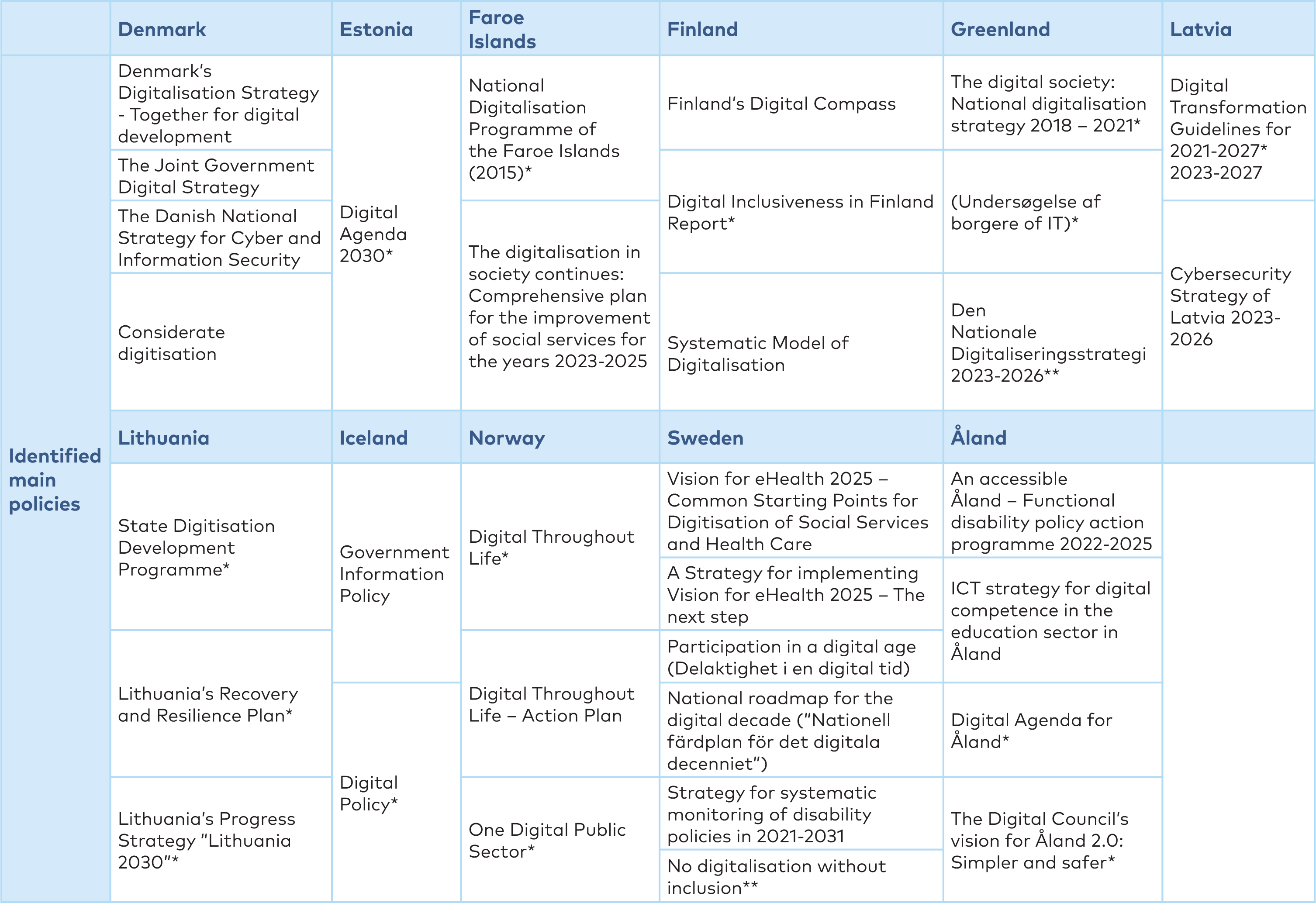
Table 15: Identified strategies across the Nordic and Baltic region.
Note 1: * = included prior to 2021 and included in Pre-study, Note 2:
** = As of writing, this text is still awaiting final political consultation
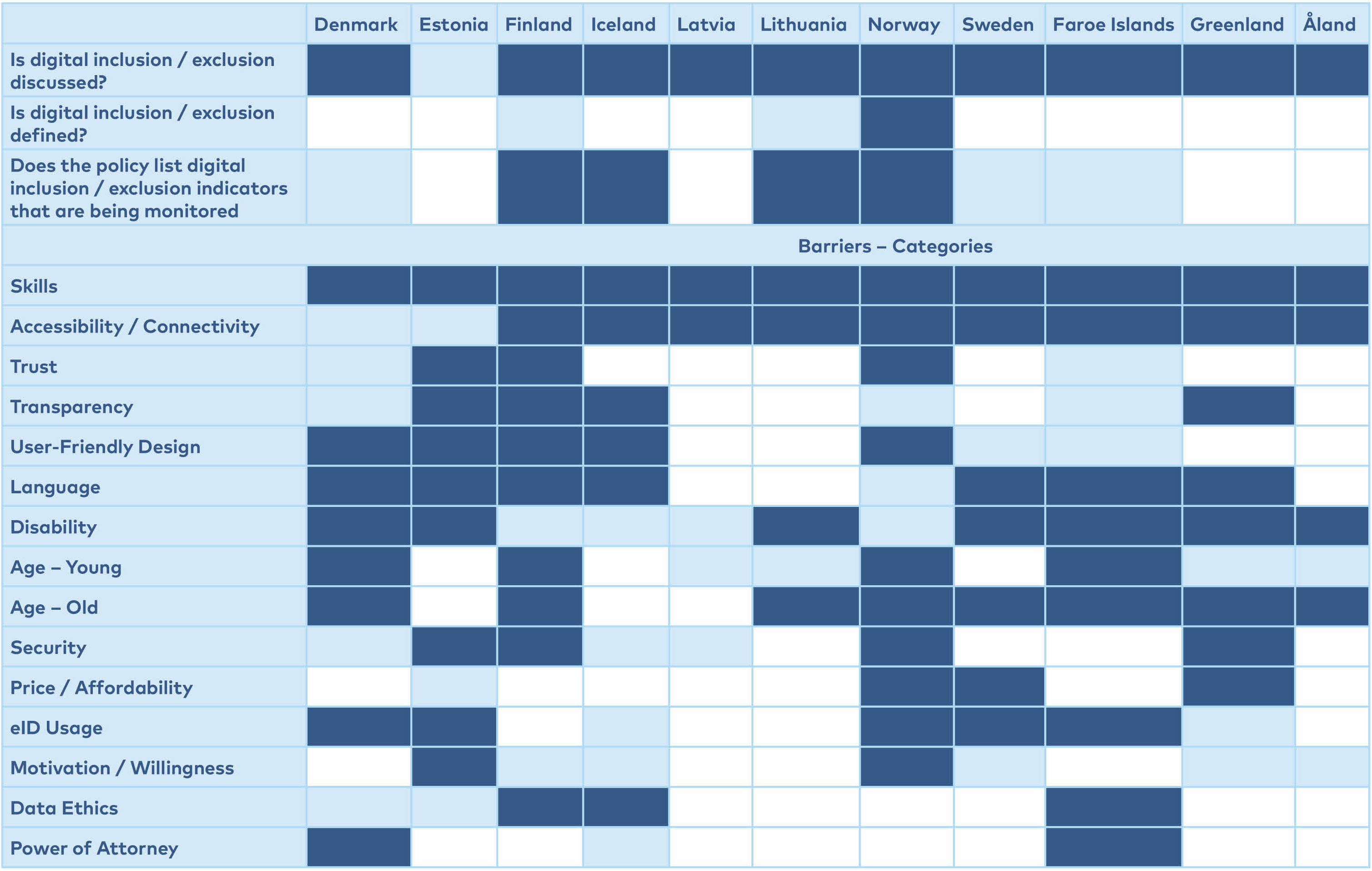
Table 16: Comparison of the definitions and focus of the digital inclusion strategies in the Nordic and Baltic region.
Note: A low engagement score (white) is given if the topic does not seem to be addressed by the respective policies. A medium score (light blue) is given if the policy touches upon the given topic but without establishing a clear link to issues of digital exclusion or elaborating on the topic in more detail. A high score (dark blue) is given if the policy clearly covers one of the identified topics.