Photo: Louise Ögland, Nordregio
Introduction and background
How do regions become green, innovative and resilient? And what can help them thrive and develop in this direction? This has been the focus of a group of Nordregio researchers and stakeholders representing national governments, regional authorities and cross-border organisations from the Nordic countries and NORA during the period 2021-2024 (Thematic group C for green, innovative and resilient regions). This report aims to share some of the main results and insights acquired.
The start of the work in 2021 was influenced by the pandemic which had started in 2020. Both in terms of topics raised as prioritised to further explore, for example the increasing practice of working remotely, and by meeting several times via Teams before finally meeting in person for the first time in Stockholm in the end of 2021.
As a first step a joint work programme for the period was developed which was based on the vision of the Nordic Council of Ministers and results from the proceeding period. The programme aimed at contributing to the five goals outlined for the Nordic Council of Ministers’ regional sector, with an emphasis on goal 6 on supporting competitiveness and goal 7 on labour markets and supporting the Nordic freedom of movement.
The group set out three objectives for the work:
- To produce new knowledge on green, innovative, and resilient regions in the Nordic context and contribute with Nordic added value.
- To be a hub for knowledge exchange on green, innovative, and resilient regions for Nordic senior level officials from the national level, regional level, and cross-border regions.
- To contribute to the Nordic vision of being the most sustainable and integrated region in the world through dissemination of research results and actively participating in policy discussions.
With the three objectives as guiding principles, the group decided to work with five themes in seven projects:
- A systems perspective on regional green innovation (GRINGO I and II)
- Competence mobility in the Nordic Region (cross-border and early career mobility)
- Remote work and multilocality
- Socially sustainable tourism
- Regional collaborative leadership
- A systems perspective on regional green innovation (GRINGO I and II)
- Competence mobility in the Nordic Region (cross-border and early career mobility)
- Remote work and multilocality
- Socially sustainable tourism
- Regional collaborative leadership
The results of the work includes not only reports, policy briefs, story maps, webinars and cross-sectoral collaboration with the thematic groups on urban areas (TGA) and rural areas (TGB), but also numerous presentations labelled as “Arena events” and “Roadshow events” throughout the period - with the aim of sharing knowledge, supporting the development of green, innovative and resilient regions and creating Nordic added value.
Through this Nordic collaboration, we have increased our knowledge of how regions and collaboration of actors at the regional territorial level can contribute to increase competitiveness and sustainability, as well as to making the Nordic Region the most integrated and sustainable in the world.- Petra Stenfors, national representative Finland
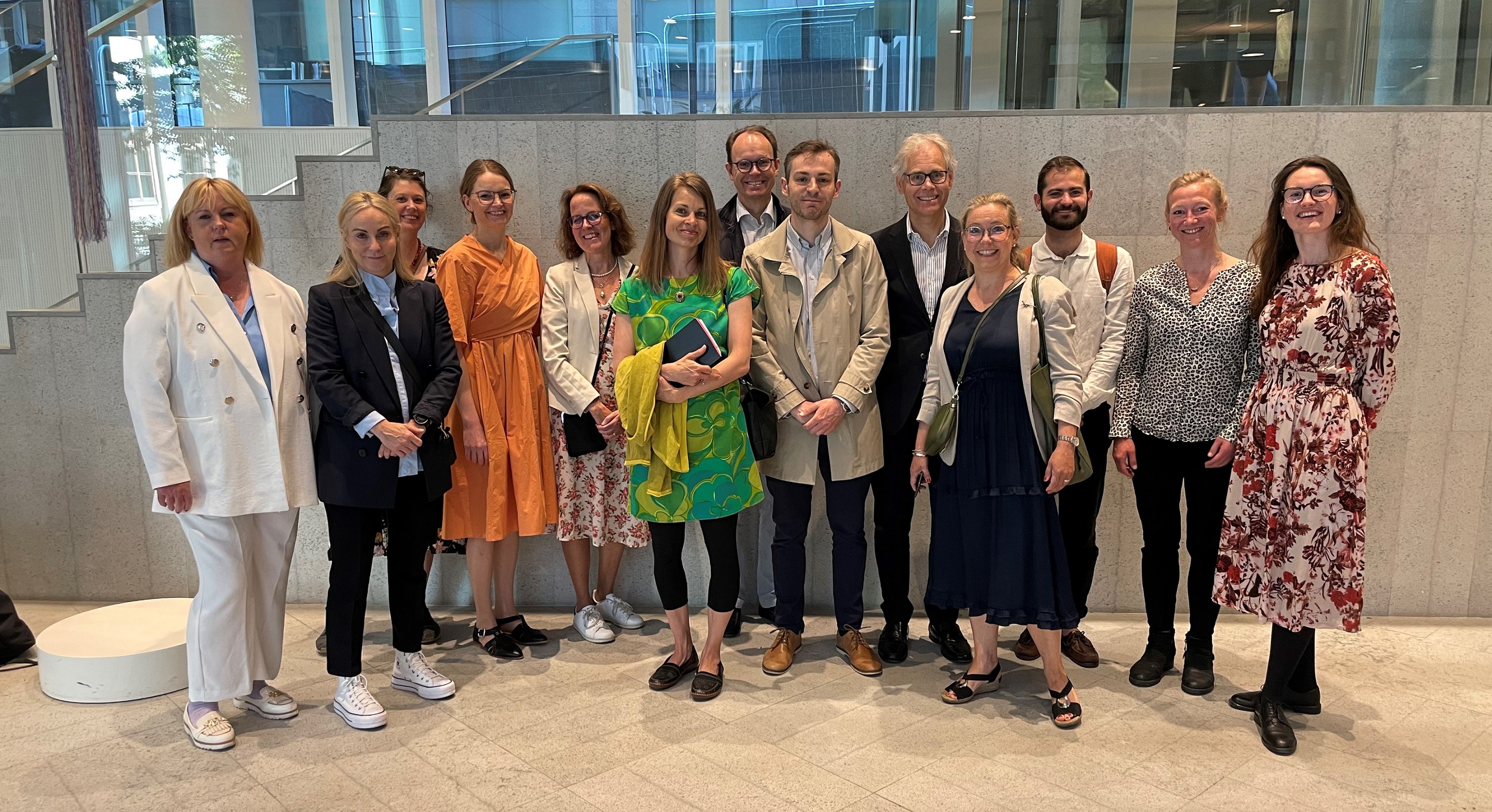
Photo: TGC meeting, 2022
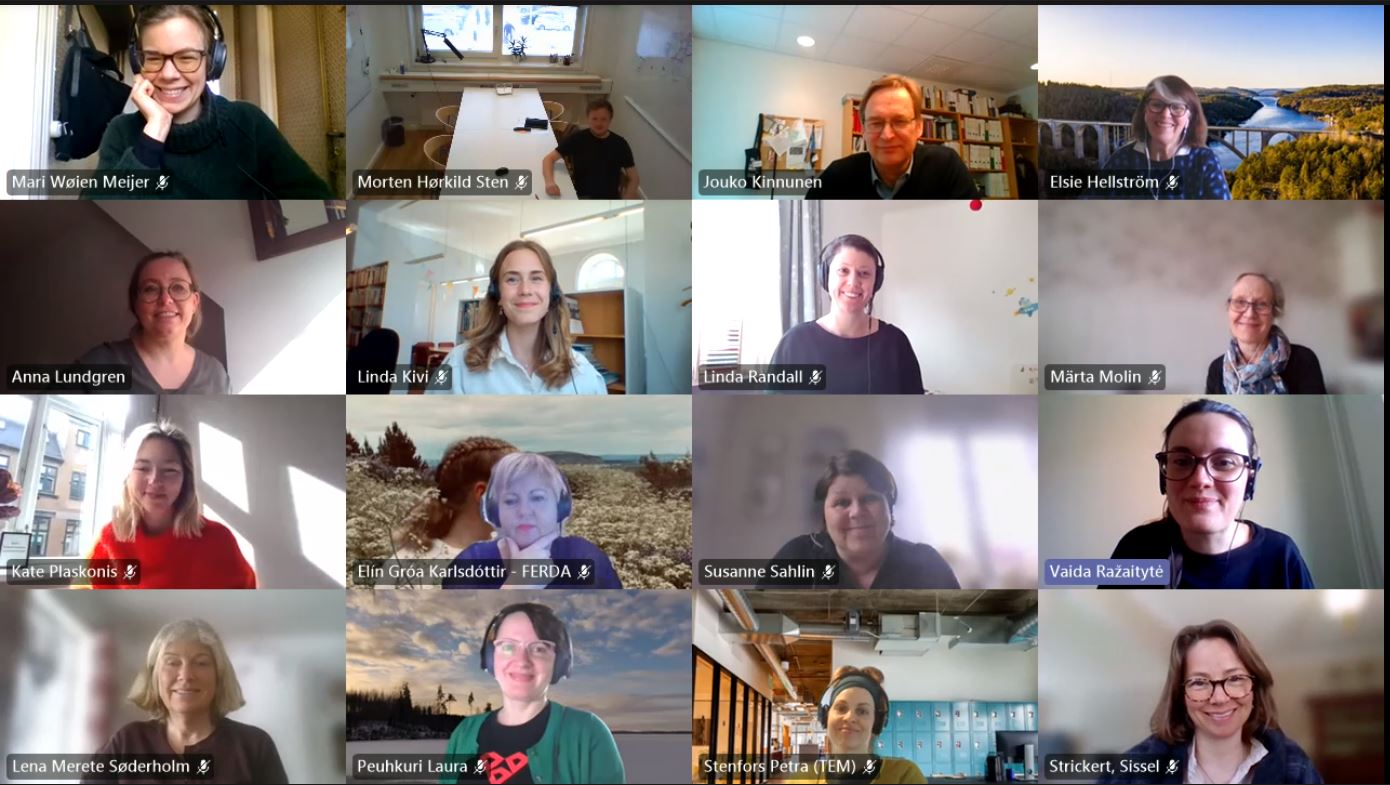
Photo: TGC meeting, 2021