ICELAND
Maintaining resilience during crisis in Grindavík
Images: Járngerður
Image: Járngerður
The Icelandic case looks at psychological resilience in times of crisis and crisis recovery, with a focus on the aftermath of the evacuation of Grindavík, Iceland, due to a series of volcanic activities. The case study covers developments from November 2023 to April 2026.
Background
Grindavík is situated on the Reykjanes peninsula in Southwest Iceland, approximately 25 km by road to Keflavík International Airport and 50 km by road to the capital city of Reykjavík. In the area near Grindavík is the Blue Lagoon, one of the most visited tourist destinations in Iceland, and the Svartsengi power station, providing the entire southern Reykjanes Peninsula with hot water. Furthermore, most of the inhabitants in the southern part of the peninsula receive drinking water from the water extraction area at Lágum. Until 10 November 2023, Grindavík was a flourishing municipality with 3,790 inhabitants, almost 1% of Iceland’s total population (Alþingi, 2024-b).
In December 2019, volcano-tectonic unrest began on the peninsula after centuries of dormant behaviour. Between 2021 and 2023, three volcanic eruptions consequently occurred in the Fagradalsfjall volcano system, in uninhabited areas of Reykjanes Peninsula. In October 2023, the Svartsengi system, which is located near Grindavík, began rapidly accumulating magma. On 10 November 2023, the magma intrusion started with extensive crustal movements and ground deformations in and around Grindavík, resulting in a declaration of emergency in Grindavík and a full evacuation and closure of the town. The residents of Grindavík had to leave their homes and belongings and find elsewhere to stay.
Grindavík is located just south of the Sundhnjúksgígar craters. In December 2023, the first eruption started from the Sundhnúksgígar craters, followed by a second one in January 2024. Two fissures opened in the eruption in January 2024—the larger one at Sundhnúkur, and a smaller one inside the lava protection walls that had been built north of Grindavík, less than 100 metres from the settlement. The lava flow from the fissure reached three houses in Grindavík, which were consumed in fire.
Critical infrastructure in the area was also at risk. The repeated eruptions caused major damage to hard infrastructure such as overhead transmission lines and underground cables (World Bank, 2026). In a volcanic eruption that began on 8 February 2024, lava flowed over the main pipeline transporting hot water from the power plant in Svartsengi to Reykjanesbær. As a result, the population in the southern peninsula had no access to heating or hot water for several days.
The development of these eruptions was such that they increased in size. Their initial magma discharge rate rose, and the total volume of lava simultaneously increased. The eruptions posed a greater threat early on due to faster lava flow and increased gas contamination (Alþingi, 2024-b). Between December 2023 and August 2025, the Sundhnúksgígar craters near Grindavík erupted nine times (Icelandic Meteorological Office, 2025).
Examples of response efforts taken thus far
Following the evacuation in November 2023, the National Commissioner of the Icelandic Police opened a service centre in Reykjavík, operated by the Department of Civil Protection and Emergency Management (Almannavarnir) to support the evacuated people from Grindavík. In collaboration with the Icelandic Red Cross and the Town Council of Grindavík, the service centre provided information, education, and advice of all kinds, and served as a place for social gatherings, while the Red Cross offered psychosocial support.
In May 2024, the Icelandic Parliament approved Act No. 40/2024 establishing the Special Executive Committee for Earthquakes in Grindavík (Alþingi, 2024-c). The bill was prepared in collaboration with the Town Council of Grindavík, which requested cooperation given the unusual circumstances. It was proposed that the Executive Committee operate temporarily and that the law be repealed at the next municipal elections in May 2026. Upon enactment of the bill, the Grindavík service centre ceased operations. The town council of Grindavík continued to manage the municipality and staff and maintain full financial management authority over projects not specifically entrusted to the Executive Committee (Innviðaráðuneytið, 2024).
According to the Ministry of Infrastructure (Innviðaráðuneytið, 2024), the main tasks of the committee were to:
- Operate a support team in the field of welfare and school services for the residents of Grindavík—including school and leisure activities, social services, child protection services, services for older people, disabled people, and other vulnerable groups—and to support in the field of housing and labour market issues.
- Supervise necessary repairs to social infrastructure and soil exploration as well as repairs to ensure the functionality and security of supply of critical infrastructure, etc.
- Supervise the protection of valuables and the implementation of access control in the town of Grindavík in cooperation with the police.
The need for a support team derived partly from discussions about how to ensure the wellbeing of children from Grindavík and their continued primary school attendance after the evacuation.
The people of Grindavík have suffered great emotional and financial damages. The objective of the Grindavík support team was to respond to the trauma and attempt to reduce the damage and suffering. They also sought to strengthen individuals and shelter them from further setbacks, resulting in more resilient individuals, in accordance with the disaster management cycle shown in Figure 5. The support team arranged access to basic services, which included assisting with enrolling children into preschools and primary schools, accessing medical centres and organising medical appointments, as well as facilitating financial aid, special housing aid, and psychological support with approved specialists. Creating psychological resilience was not an agenda of the Grindavík support team, rather their aim was to prevent further reduction of resilience.
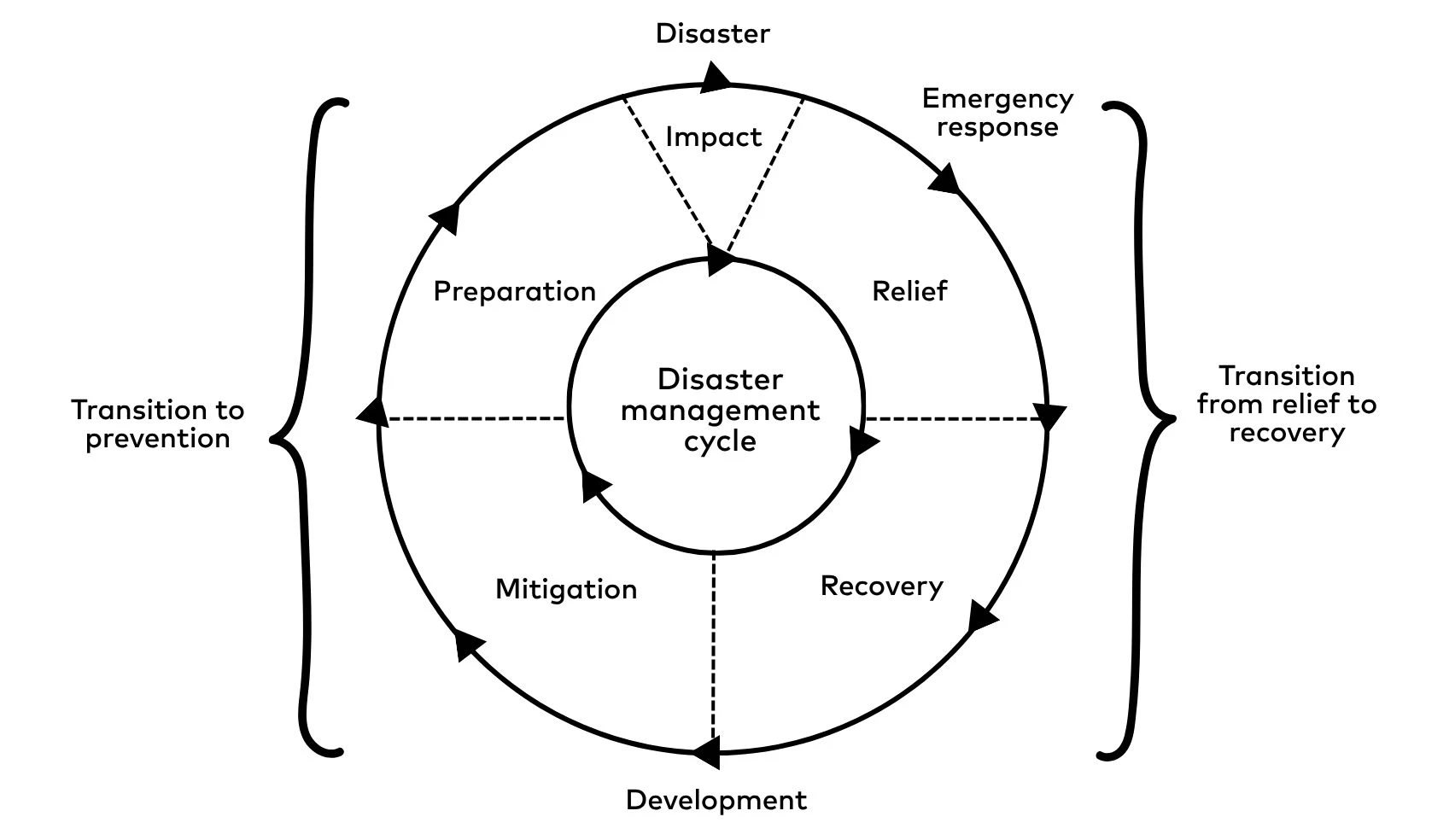
Figure 5. The disaster management cycle. (Source: Bealt & Mansouri, 2018)
According to the case study interviews, most of the evacuees
from Grindavík had never heard of the term resilience prior to the events in November 2023. Over two years after the events, they found the term overused, sometimes aggressive, and even harmful. They felt like they were constantly being described as resilient, yet they did not feel resilient and did not always wish to be resilient.
Throughout the remainder of the case, we use the term “evacuee” to refer to those individuals who were living in Grindavík up until the November 2023 events that required them to evacuate. Some of these individuals may be residents of other municipalities now while others may still be residents of Grindavík.
As the Finnish work on psychological resilience is the point of departure for this project, the Icelandic case study analyses the efforts in Grindavík using the Finnish government’s three dimensions of psychological resilience (see Figure 3 in the previous section of the report). The framework outlines how psychological resilience is created under normal conditions, and the conditions necessary to maintain and support resilience during crisis and recovery. Considering these dimensions, the situation in Grindavík sits somewhere between crisis and recovery. The evacuees can be divided into three groups: individuals already living again in Grindavík, individuals living elsewhere but waiting to move back to Grindavík, and individuals who have rehabilitated and do not plan to return to Grindavík in the coming years.
The group of people who have rehabilitated and do not plan to move back to Grindavík are recovering from the crisis of having lost their homes and their community. But the group of individuals and families who have temporarily resettled elsewhere yet hope to return to Grindavík remain in a state of uncertainty and crisis. As of April 2026, this group is waiting for permission to repurchase their home in Grindavík from the real estate company Þórkatla and for vital services, such as primary schools and daycare, to resume operations in Grindavík. For these individuals and families, the events of November 2023 (resulting in the evacuation) were only the first trauma of many. Uncertainty, particularly from the government’s decisions and indecisions related to the town’s future, is the main cause of current and continuing trauma.
According to the interviewees, housing and financial security is a particular concern for the psychological wellbeing and recovery of the evacuees. The Icelandic Parliament approved a series of Acts to assist the evacuees. These include an act on temporary support for employees in the private sector whose place of work was located in the town of Grindavík (Act No. 87/2023; Alþingi, 2023-a), an act on special housing support to those renting outside of Grindavík (Act No. 94/2023; Alþingi, 2023-b), and an act on purchasing private housing in Grindavík (Act No. 16/2024; Alþingi, 2024-d).
Following the enactment on purchasing private housing in Grindavík, the real estate company Þórkatla was formed to purchase the properties in Grindavík. Þórkatla was financed partly with loans taken over from commercial banks and partly with loan capital and equity contributions from the state. Þórkatla bought 959 of the roughly 1,200 properties in Grindavík (about 74% of the square metres of available housing). The purchase price of the properties amounted to nearly 73 billion ISK (approximately 509 million EUR; Grindavíkurnefnd, 2026). Þórkatla has offered former owners to make so-called friendship agreements, allowing limited use of the property in return for taking care of it. About half of those who have made a friendship agreement have also made a residence agreement with Þórkatla. Officially, the goal of Þórkatla is “to make it possible for residents to buy their properties back when it is clear that conditions have improved, so that a thriving community can take root in Grindavík again” (Þórkatla, n.d.). As of April 2026, it is unclear to the evacuees which measurements will be used to decide when conditions have improved so that the people of Grindavík can return to their homes. The interviewees noted that evacuees feel excluded and unheard in this process. Some of the evacuees already consider the conditions safe enough to move back and experience themselves stuck in the hands of invisible decision-makers for the foreseeable future.
The Council of Grindavík advertised the position of school principal in spring 2026 to prepare for the opening of the primary school and daycare in the autumn 2026. Around the same time, a report on the restoration of Grindavík explicitly recommended against restarting school activities in Grindavík until a risk assessment provided a reason to do so (Grindavíkurnefnd, 2026). This is an example of the conflict between the priorities of the local decision-makers, wishing to promote the return of public services and residents, and the central authorities, emphasising continued caution.
Success factors for maintaining resilience
The strength and cohesion of the community in Grindavík prior to the evacuation has been a cornerstone to the psychological resilience of the evacuees. After the evacuation, efforts were put into continuing social activities for the dispersed people of Grindavík. The effects of sporting events have been particularly pronounced, where the Grindavík teams play, and evacuees meet and bond over a common goal irrelevant to the evacuation. This has especially been the case with basketball, which has been a unifying force for the evacuees (Grindavíkurnefnd, 2026).
The continuation of social gatherings which existed prior to the evacuation has played a vital role in retaining community identity. These include gatherings organised through civil society associations such as the Grindavík Women’s Association, the Grindavík choir, the Grindavík Golf Club, the Senior Citizens’ Association, and the Grindavík Youth Association. The gatherings do not explicitly aim to build psychological resilience but play a significant role for evacuees to feel a sense of belonging and maintain social connectivity. As one of the interviewees phrased it: “It’s important to find someone who feels like you, too.” The priest from Grindavík also continues to serve the role of priest for the dispersed people of Grindavík, creating opportunities for the evacuees to find support among each other (Grindavíkurnefnd, 2026).
The evacuees have experienced serious losses, not only of their homes and belonging but also their normal routines and familiar surroundings. Usual coping methods, such as spending time in personal or meaningful places in Grindavík, were not an option. Therefore, peer support has become extremely important, as many residents feel most comfortable with others who share their experience. The report on the restoration of Grindavík from the Grindavík Committee recognises the positive effects of the strong cohesive community of Grindavík prior to the events on current psychological resilience of the evacuees (Grindavíkurnefnd, 2026).
Járngerður is a Grindavík citizens’ association formed after the evacuation and is a prime example of an association where psychological resilience is developed, as citizens self-organize and network to help each other, building trust and social capital as a byproduct. A major contribution of the Járngerður association has been the introduction of weekly informational meetings. These meetings include representatives from local businesses, the town council, the Grindavík Committee, the real estate company Þórkatla, the fire brigade, and other relevant groups. All meetings are recorded and made publicly available, which has helped to reduce uncertainty, increase transparency, and strengthen trust. This has been a great success for resilience of the community; people can depend on receiving updates and information, while also having a designated space and time to discuss issues related to Grindavík. The association has also arranged workshops, educational events, and open discussions. Furthermore, by organising themselves into an association, the evacuees have an official voice. Járngerður is a solidary front that comments on reports and decisions, is interviewed by the media, and has the capability to ensure that the perspectives of the evacuees are heard.
Contributing to the success and easing the transition on the evacuees are the neighbouring municipalities and communities which have welcomed and supported the people of Grindavík. However, there has been limited support and attention from the national government to these municipalities who have, on very short notice, responded to the needs of evacuees with their own public resources. About 70% of Grindavík evacuees currently live in the neighbouring municipalities and communities in Reykjanes. Furthermore, interviewees highlight that little attention has been given to the potential risks faced by these municipalities given the scope of the magma erosion under the peninsula.
Challenges in preserving and supporting resilience
More than two years after the evacuation, the people from Grindavík continued to experience trauma. Geological activity, repeated warnings from the authorities, and unpredictable policy decisions kept residents in a state of constant crisis. Families with children have been under particular pressure. A survey carried out by the Grindavík Executive Committee indicated that children from Grindavík experience lower life satisfaction, weaker connections to school, and more mental and physical ailments than their peers nationwide. It also indicated that over one-third of parents rate their children's mental health as worse after the evacuation (Grindavíkurnefnd & Maskína, 2026). Evacuees are entitled to psychological support for two years following a crisis event, but additional traumatic experiences have continued after the 10 November 2023 base date, making it difficult to claim a single day that applies for every family and situation. The evacuees describe a lack of understanding and empathy for the scope of the trauma and the ongoing decision-making which affects their lives.
Frustrations among evacuees often revolve around inconsistent communication and limited consultation from both the town council and national authorities. Interviewees from the citizens’ association expressed that important decisions (e.g., financial decisions) are made about them rather than with them. They also express a concern that the reconstruction process may not reflect the immediate needs of people who are currently displaced. Some policies appear to prioritise long-term plans rather than the urgent needs of families who are still living with uncertainty. Members of the Járngerður Association often feel they must defend their role and continually argue for the perspective of residents. Public opinion has created additional stress. Some people who are not from Grindavík misunderstand the situation or question the support offered to residents. Negative or dramatic news stories are often prioritised, while positive developments receive less attention.
The role of trust is specifically mentioned and recognised in the recent report on the restoration of Grindavík (Grindavíkurnefnd, 2026). A person’s sense of security is based on trust, such as trust in the authorities, risk assessments, or response systems. Several institutions and companies have financial interests related to the disaster, for example, risk assessment services and security operations. This sometimes encourages exaggerated descriptions of danger. Concerns were also raised about bureaucracy, social cliques, and occasional corruption, although some of these issues appear to be decreasing over time. There is a clear difference between the willingness to use public funding on the resilience and protection of hard infrastructure, such as fixing and constructing roads, filling cracks and constructing protection walls, and the willingness to financially support activities and organisations which facilitate psychological resilience and sustain the wellbeing of the people from Grindavík.
Future opportunities for resilience
Following the evacuation, cooperation between different actors—including ministries, public institutions, and voluntary organisations—was both essential and ensured by law. Responsibilities of different actors were made clear by enacting a special law on the Executive Committee. The temporary service centre and the more established support team helped to ensure that basic needs were met, including everyday structures like school attendance of children. However, according to the framework, cooperation between actors is as important during recovery as it is in crisis.
According to one interviewee, a holistic plan is needed for reconstruction and recovery at this scale, coordinated across ministries. Such a plan should be transparent and take recent experiences from Grindavík into account in order to better serve people experiencing post-traumatic stress and children with fear and to eliminate long-term effects of PTSD in both adults and children. Interviewees stress that this plan must include stronger national planning, earlier coordination across ministries, greater support for host municipalities, and ongoing psychological care. As shown in the disaster management cycle (Figure 5) and in the dimensions of resilience (Figure 3 in the previous section), resilience is not an individual trait but is rooted in social systems, access to services, and community cohesion built prior to crisis/disasters.
Access to information in a timely and organised manner is a key component to the wellbeing of people during acute crisis and recovery. The success of this for maintaining psychological resilience is illustrated through meetings organised by Járngerður, where trust among the community members is sustained through transparent communication. Fundamental to preserving psychological resilience among the affected individuals is to recognise them as actors in response and recovery plans, keeping them included and, when possible, offering them a seat at the decision-making table.