PART I.
Nordic security: Theory and policy
Images: Manuel Keller/Unsplash (left), Orkhan Sweden/Unsplash (right)
Image: Manuel Keller/Unsplash
Framing Nordic resilience
In this section, we describe the emergence of psychological resilience and discuss some of the complexities related to the application of psychological resilience within the countries of Denmark, Finland, Iceland, Norway, and Sweden (see Box 1 for a note on Greenland, the Faroe Islands, and Åland). Considering the academic discourse alongside our review of national security strategies and risk assessments, we learned that, despite some distinctions, a common resilience framework exists within the Nordic Region. Based on the policy and literature review, we provide a descriptive framework for Nordic resilience (Figure 1), emphasising where psychological resilience is situated within the larger security landscape and how it is operationalised—even within contexts that do not recognise its presence using the same vocabulary.
Within this framework, psychological resilience is, at once, part of a strategy for responding to the threats posed to society as well as a point of origin for developing the values which that society finds worthy of protection in the first place. While the figure acts as a simplification of Nordic resilience thinking, we use it here to understand how psychological resilience functions within the Nordic context and to make sense of the numerous related concepts within crisis preparedness and societal security.

Figure 1. A descriptive framework for Nordic resilience. (Source: Authors’ own illustration)
The framework takes certain values and vital functions of society as its starting point. These have been identified within national-level policy documents as worthy of protection/defence. However, these values and functions are under general and/or acute threat due to internal, external, and natural destabilising forces (e.g., disinformation, war, terrorism, environmental disasters, disruptions to supply, and health crises, as described in national risk assessments).
Various security strategies have been formulated—and re-formulated—to account for hybrid threats and the potential for polycrisis to emerge. While they have some unique elements (e.g., comprehensive security in the Finnish context compared to societal security in Norway), each of these strategies use all-of-society approaches in which the roles and responsibilities for maintaining the vital functions and values of society are protected by both designated security and non-security actors. These approaches also mean that security is ensured at a range of scales—from the national and regional levels down to local municipalities, neighbourhoods, households, and individuals themselves.
In general, resilience is conceptualised as one kind of societal measure—a security practice taken up among the nation and within local communities and individuals. Related measures like crisis management typically imply the role of specific authorities and agencies tasked with the responsibility of managing or collaborating in response to a particular crisis, while defence might refer to the actual armed defence in the case of a physical threat against people and national sovereignty. Civil preparedness refers to the prerequisite actions needed to ready an individual or society for crisis response and recovery.
While resilience is a societal measure that encompasses a much broader process of preparation, action, and recovery, psychological resilience is a form of security directly linked to total defence as well as the everyday threat environment in that it relies on multiple actors to collaborate, prepare, maintain, and reproduce the will to act during normal (or baseline) conditions so that such latent abilities and willingness can be operationalised when an acute threat strikes.
In the Nordic resilience framework posited here, psychological resilience is a concept for protecting and maintaining not only critical functions but also a specific set of values. While only the Finnish strategy uses the phrase of psychological resilience, similar features of it exist across the Nordic Region. Using the extended descriptions from the 2025 Finnish security strategy, the project defines the concept as follows:
Psychological resilience is citizens’ (individuals’ or communities’) self-initiated and self-organising adaptation to changing circumstances or crises through values-based activities.
Psychological resilience is closely connected to community or social resilience, referring to all forms where citizens self-organise and network to help each other, building trust and social capital as a byproduct. Civic activity takes place everywhere in various forms. For example, it can be supported by engaging in values-based activities such as cultural, religious, or sports activities, education, or through communication channels. With the emphasis on sites in which trust and values are developed, this definition completes the framework. Within the localised case studies (Part II of this report), we explore several of these areas in which psychological resilience is developed.
The remainder of this section of the report is organised according to the key elements of the Nordic resilience framework.
Box 1. Societal security in Greenland, Åland, and the Faroe Islands
Unlike the national security strategies established in the five Nordic countries, the autonomous territories of Greenland, Åland, and the Faroe Islands are uniquely positioned—both politically and geographically—which influences how they perceive and develop regional resilience.
While Greenland’s Ministry for Statehood and Foreign Affairs has published a foreign, security, and defence policy (2024), Åland is a neutralised territory whose defence responsibilities ultimately rest with Finland. In the Faroe Islands, the government adopted a resolution on national security policy in 2024, indicating an aim to “take responsibility for their own security and defence policy” and to “withstand complex threats” among other objectives (Ministry of Foreign Affairs, Industry, and Trade, 2024). Åland does not have a security strategy, but they emphasise aspects of civil preparedness within a government programme as a starting point for reviewing the government’s work, specifically in response to “the current security policy situation and NATO membership” (Ålands Landskapsregering, 2024).
While Greenland and the Faroe Islands have their own home rules as self-governing territories, when it comes to the most intensive crises of armed conflict, defence responsibilities lie with Denmark. The same is the case for Åland with respect to Finland. Furthermore, all three territories are part of NATO—Greenland and the Faroe Islands are ensured protection through Denmark’s membership, defined under the Washington Treaty from 1949, and with Finland’s accession to NATO in 2022, Åland is also included (whilst remaining itself a demilitarised territory). However, the Faroe Islands’ resolution acknowledges that, despite NATO protection, “international security, safety, and peace cannot be taken for granted,” which is one impetus for establishing a security policy (Ministry of Foreign Affairs, Industry, and Trade, 2024).
Greenland’s policy expresses developing a “more robust and resilient” society, especially in the wake of environmental threats (like landslides and tsunamis that impact physical and social infrastructure of local communities) as well as economic insecurities, cyber threats, and other geopolitical concerns due to the land’s strategic location and resources. Åland’s government programme also names climate change and global warming as key threats but further notes that Åland must be “ready to respond to diverse and challenging situations” including “wars and conflicts” (Ålands Landskapsregering, 2024). The Faroe Islands security policy names concerns of warfare and cyberattacks and stresses the need to ensure public safety, cyber security, supply chains, food security, public health, the environment, nature, and property and assets (Ministry of Foreign Affairs, Industry, and Trade, 2024).
Security-related documents from Greenland, the Faroe Islands, and Åland all emphasise the concern of being included in security measures without full representation in decision-making processes. For example, in response to conflict and destabilisation, Greenland’s security and defence policy highlights both its commitment to peace as well as its aim for parliament members to be included in the NATO Parliamentary Assembly. Their strategy includes the refrain, “nothing about us without us,” including in matters of defence, leading to the territory’s deliberations around military or civilian national service in Greenland as well as establishing their own “cyber security capabilities, … civil emergency response capabilities,” and other expertise for safeguarding critical infrastructure and strengthening societal security (Ministry for Statehood and Foreign Affairs, 2024, p. 45).
Societal security documents in all three territories mention increased responsibilities running parallel to Denmark or Finland to strengthen the sovereignty of their territory and to develop their own civil preparedness efforts. The aim of such work is to protect both shared security interests as well as the unique interests of their own regions. Thus Greenland, for example, expects to “develop an increasingly detailed security and defence policy” (Government of Greenland, 2024, p. 45), and Åland’s government is reviewing their preparedness work, and they will update their security policy handbook used by provincial authorities (Ålands Landskapsregering, 2024).
Vital functions and values worth protecting
According to a seminal work in the field of security studies, societal security is, at least in part, about enabling a society to “persist in its essential character” (Wæver et al., 1993). If this holds true, then vital functions and values may be understood as the building blocks of that character. At the same time, a system’s capacity to cope with disruption or adapt to changing circumstances are signs of resilience (Norström et al., 2025). Therefore, in the context of societal security, resilience may be understood as a system’s (e.g., community, region, nation) capacity to, in some instances, maintain vital functions which enable it to cope and adapt to disturbances or, in more intensive shocks, to maintain the essential values which can enable vital functions to re-emerge.
In the Nordic context, vital functions of society include services and activities ranging from economy, social services, and communication to physical infrastructure and access to material needs such as food and water. As exhibited in Table 1, each of the Nordic countries identifies vital functions in their security strategies. These are often described among the national governments as a society’s basic or essential needs and may include services and infrastructure provided through public or commercial means. Some of these functions correspond to the EU regulatory framework for critical infrastructure (EU, 2022), which names several sectors—such as transport, energy, food and water, and digital infrastructure—as the facilitators of critical entities.
Most of the five Nordic countries include things like energy, food, and water supplies, transportation, finance and economy services, health-related services and supplies, defence, and exercise of authority/leadership among their vital functions. Psychological resilience is uniquely named by the Finnish security strategy as a vital function. Other distinctive essentials include nature and the environment (identified by Norway) and education and research (noted in Denmark).
Country | Terminology for vital functions of society | Vital functions of society |
|---|---|---|
Denmark | Samfundsvigtige funktioner | “The activities, goods and services that form the basis for the general functioning of society.” (Styrelsen for Samfundssikkerhed, 2025-a) There are 15 areas where extreme pressure would have negative consequences on vital functions of society. These areas are energy; information and communication technology; transport; emergency response, police and civil protection; health; social affairs; drinking water and food; wastewater and waste management; finance and economy; education and research; meteorology; defence, intelligence and security services; foreign service; general exercise of authority; and cross-cutting crisis management. |
Finland | Yhteiskunnan elintärkeät toiminnot/ samhällets vitala funktioner | “Functions that are essential for a functioning society.” (Finnish Government, 2025, p. 13) In the Finnish context, these include functional capacity of the population and services; economy, infrastructure, and security of supply; leadership; international/EU activities; internal security; defence capabilities; and psychological resilience. |
Iceland | Ómissandi innviðir | “Systems, assets, facilities, equipment, networks, structures, or services that are necessary to ensure the basic needs of society and that society cannot be without for a day or less. Essential infrastructure can be owned or managed by public or private entities.” (Dómsmálaráðuneytið, 2025, p. 2) |
Norway | Kritiske samfunns-funksjoner | Critical societal functions “comprise functions that are defined as critical if society cannot do without them for seven days or less without jeopardising life, health or other basic needs.” (Norwegian Ministry of Justice and Public Security, 2024, p. 38) The Norwegian strategy names 14 critical functions: management and crisis management; defence; law and order; health and care services; rescue services; cyber security in the civilian sector; nature and the environment; security of supply; water and sewerage; financial services; power supply; electronic communication services; transport; and satellite-based services. |
Sweden | Samhällsviktig verksamhet | “Societally critical activities maintain functions that are essential for society’s basic needs, values, and security. This may include critical infrastructure for transport, communication, and energy, or the supply of goods and services such as medicines, food, and water that are fundamental to the functioning of society.” (Regeringskansliet, 2024, p. 27) “For some societally important activities, there are delivery or functional requirements, such as the Electricity Preparedness Act on preparedness measures in the electricity sector. For many, these requirements are lacking, which means that services are provided on a commercial basis.” (MSB, 2021, p. 34) |
Table 1. Vital functions of society, based on national security strategies
Within the all-of-society approaches to which the Nordic countries subscribe, all parts of society—armed forces as well as civilians—are expected to make a joint effort to prepare for and protect against crises. Such efforts thus hinge upon the existence of particular values which citizens find worth protecting. From a national perspective, these values are presumably shared among citizens and transcend niche social or political interests, while regional and local values may be unique to a specific context of, for example, a neighbourhood or local group. Nonetheless, such localised shared values may be more defined expressions of national values or may involve instances in which national values are practiced among individuals (e.g., democratic values, an expectation or pursuit of a certain quality of life, or a common interest or goal with one’s neighbours in a local sports club or religious association). These practices of social cohesion provide a “shared mentality of togetherness that is needed to face major societal disruptions—disruptions that are generally understood to originate outside the society” (Hyvönen & Juntunen, 2021, p. 170). When it comes to facilitating psychological resilience, community relationships based on shared values and social trust form the root of coping capacity, enabling vital services and activities to persist, adapt, or re-emerge in the wake of crises.
Table 2 summarises the societal values expressed in Nordic security strategies. Most of the strategies highlight the importance of protecting democracy and social trust, but economy is explicitly mentioned by three of the five countries as well (Denmark, Norway, and Sweden). Freedom, rule of law, life, and health are also mentioned in multiple strategies. How these values are articulated slightly differs. Neither Denmark nor Finland explicitly names these values as such—in Denmark, they are considered “parameters” measured in relation to possible threats, while in Finland, things like human rights, rule of law, and democracy are referred to as “principles” linked to the Constitution and which the strategy is meant to protect. The closest expression of values in the Swedish security strategy is its list of “national security interests” which are to be safeguarded and upheld (Samfundssikkerhed, 2025-a; Finnish Government, 2025; Regeringskansliet, 2024).
Values | Denmark | Finland | Iceland | Norway | Sweden |
|---|---|---|---|---|---|
Allied solidarity and unity in Europe | x | ||||
Competent authority | x | ||||
Democracy | x | x | x | x | |
Economy | x | x | x | ||
Environment | x | ||||
Equality/ Inclusion | x | ||||
Freedom | x | x | |||
Human rights | x | x | |||
Independence | x | x | |||
Individual capacities | x | ||||
Life | x | x | |||
Openness | x | ||||
Public health | x | x | |||
Property | x | ||||
Rule of law | x | x | x | ||
Safety/ security | x | x | |||
Social trust | x | x | x | x | |
Welfare | x |
Table 2. Values worth protecting, based on national security strategies
See Styrelsen for Samfundssikkerhed (2025-a), Finnish Government (2025), Alþingi (2024-a), Statsministerens kontor (2025), Regeringskansliet (2024)
Willingness to act
These values and vital functions are key elements of fostering a willingness to act in times of crisis, which has long been part of Finnish security politics. Valtonen and Branders (2021) suggest that Finnish history plays a key role in their overall national will to defend, particularly because of their ability to unite after the civil war and to respond to Soviet aggression. Finland stands out from its Nordic neighbours by having a more recent history in which their values and vital functions have been put at risk and their resilience thus tested. Interviews made by Raisio and colleagues found that Finnish people emphasised their “exceptionally high level of willingness to defend the country” as an important “underlying spirit” and “immense resource” for national security (Raisio et al., 2025, p. 490). However, similar willingness also exists in other Nordic countries. For example, the World Values Survey from 2022 revealed that 87.6% and 80.5% of Norwegian and Swedish respondents (respectively) indicated a willingness to defend their country against an armed attack—both higher percentages than Finland (74.8%). Denmark reported a similar response to Finland (74.6%), while only 53.7% of Icelanders indicated the same kind of willingness (53.7%; Wrange et al., 2024).
Referring to a 1953 government report about psychological defence
in Sweden, Örden (2025) writes that the “impulse [to defend the nation] is grounded in a sense that there is something ‘to defend’. A key precondition for such a will is that ‘the majority of the Swedish population has positive views of their own nation and societal order’ (SOU, 1953, 49)” (Örden, 2025, p. 9). Seventy years later, the idea persists in the Swedish Defence Commission’s report on the future direction of total defence:
Note the distinction between psychological defence referred to here, and psychological resilience. For more on this distinction, see “Resilience concepts in the Nordics” in this report.
The population’s sense of belonging to and its participation in society is of great importance for the will to defend the country and the will to participate and invest in total defence. … Ensuring and maintaining the population’s will to defend itself is at the core of the psychological defence. … If the population feels that fundamental values are being threatened, that their own contribution is of significance, and that there is a broader societal resilience to the effects of war, there are conditions for a strong will to defend the country. (Secretariat of the Defence Committee, 2023)
The Commission also refers to Ukraine’s resilience against Russia and their “central value of a nation’s citizens’ strong collective will to defend their country.” They link psychological defence to values of democratic society with freedom of opinion and free media (Secretariat of the Defence Committee, 2023). When it comes to psychological resilience, researchers Carlsson and Engström (2025) suggest that the cultural sector—including institutions like public libraries—can play a “significant factor in bolstering the willingness of the Swedish population to defend their country” (p. 2)—a point explored further in the Norwegian and Finnish case studies of this report as well.
Threats to society
According to national security strategies and risk assessments, the Nordic countries face a range of threats to their values and vital functions—from natural disasters to geopolitical concerns. Global supply chains and the interconnectivity of systems often mean that important functions of everyday life are vulnerable, as a threat to one part of the system threatens the whole. Nordic countries prioritise threats uniquely, in part due to geography, but also due to their distinct histories, economic structures, resource supplies, and political interests. While the countries consider the degree of certain threats differently (e.g., volcanic eruptions in Iceland compared to terrorism mentioned in Sweden and Norway; see Table 3), the Nordic Region has potential to collaborate in its security efforts as a “single strategic area” in the face of major geopolitical aggression (Nordforsk, 2025) and external forces which threaten to dismantle “Nordic values” and “Nordic democracy,” the latter emerging as both “identity marker” and “antidote against both ideological and geopolitical threats” (Græger, 2025; Kurunmäki & Strang, 2010/2016, p. 10). Furthermore, the Russian war on Ukraine has established a common threat among the Nordics (as well as the Baltics), marking a convergence of threat perceptions across the region (Wrange et al., 2024).
Table 3 shows both similarities and distinctions of the threat landscape across the Nordic countries (according to their most recent national risk assessments at time of research). All five countries highlight concerns of terrorism and extremism, and the majority also mention biological threats, social threats (including mass immigration), technological threats, and threats to supply systems. Finland, Norway, and Sweden all explicitly describe military threats and economic threats. Denmark, Iceland, and Sweden all mention concerns of natural disasters and climate change. Norway is the only country to identify threats to dignitaries as a particular concern.
Values | Denmark | Finland | Iceland | Norway | Sweden |
|---|---|---|---|---|---|
Military threats and/or pressure | x | x | x | ||
Hybrid threats from external state actors | x | x | x | x | |
Biological threats such as epidemics | x | x | x | x | |
Natural disasters and climate change | x | x | x | x | |
Internal security threats, such as terrorism, extremism, radicalisation, and sabotage | x | x | x | x | x |
Social threats such as mass influx of migration, violent riots, mis- and disinformation | x | x | x | x | |
Economic threats such as disruptions of the financial system, covert investments | x | x | x | ||
Technological threats such as accidents and failures after disruptions in IT systems as well as cyberattacks | x | x | x | x | |
Disruptions in supply chains and vital functions | x | x | x | x | |
Disruptions or major incidences related to transportation systems | x | x | |||
Threats to dignitaries | x |
Table 3. Threat landscape of the Nordic Region, according to national risk assessments
See Styrelsen for Samfundssikkerhed (2025-a), Sisäministeriön (2023), Ríkislögreglustjórinn almannavarnadeild (2011), Politiets Sikkerhetstjeneste (2025), MSB (2025).
In the academic literature around security planning and policy, several authors categorise current security threats as “wicked problems,” referring to the work of Rittel & Webber (1973; see also Selle & Wollebæk, 2015; Sandbakken & Karlsson, 2024; Hyvönen & Juntunen, 2021). This is because security threats are multiple, complex, and often unclear, making it difficult to respond with a single solution or fixed strategy.
While any crisis—defined as “inconceivable, unscheduled, and unexpected events” (Keinänen et al., 2025)—makes planning a challenge, globalisation and the interconnectedness of various systems and supply chains can also mean that a crisis can have more severe and overlapping ramifications, indicating an era of polycrisis. Furthermore, hybrid threats—which involve disinformation, manipulation, and “coordinated actions designed to create confusion and dilemmas across sectorial lines of responsibility”—undermine democracy and trust (Sandbakken & Karlsson, 2024, p. 165; Borch & Heier, 2024). In critical security studies, threats are not understood as merely problems or objects of study but as “products of social and political practices” (Aradau, 2014).
All-of-society approaches in response to a totalising security environment
While some threats remain acute, several authors note how, since the Cold War, defence and security strategies in the Nordic countries now emphasise “everyday threats” (Örden, 2025). Such potential pressures create an everyday security environment and contribute to the idea of a “grey zone” or “twilight zone” between war and peace (Larsson, 2024; Carlsson & Engström, 2025; Liebetrau, 2021; Hyvönen & Juntenen, 2021; Larsson, 2021; Berling & Petersen, 2021). These authors describe how the transition from tackling specific crisis moments to maintaining a general state of crisis preparedness challenges notions of exceptionalism and raises difficult questions around responsibility, governance, and strategic planning.
The literature highlights distinctions across the Nordic countries for when this blurring between war and peace emerged. In her genealogical review, Örden (2025) suggests that the “twilight zone” between war and peace was critically examined already in 1983, shaping Sweden’s concept of psychological defence (psykologiskt försvar) as a way to combat the “uncertainty, unpredictability, and perpetual change” of information influence (p. 11). While distinct from psychological resilience as defined in the Finnish context, psychological defence describes an “early resilience approach” established in the 1950s as an alternative to psychological warfare (Örden, 2025, p. 2). As it re-emerged in the 1980s, the concept focused on ensuring all of society was prepared to combat misinformation or communication that undermined the values of democracy.
Alongside the evolution of information influence as an everyday threat, the idea of psychological defence has matured as an everyday posture against that threat. In Sweden, the history of this can also be traced organisationally through the establishment of the Swedish Psychological Defence Board, which was phased out and folded into the work of the Swedish Civil Contingencies Agency (MSB) in 2008, and then re-established in the form of the Psychological Defence Agency (Myndigheten för psykologiskt försvär; MPF) in 2022 (MCF, 2025-a).
A similar study evaluating the security approach of Denmark since the 1980s suggests that it was not until the end of the Cold War that Danish Defence turned towards its managerial security practices as a response to the “increasingly volatile and unpredictable” security threats (Liebetrau, 2021, p. 109). In his research, Liebetrau highlights a 1997 report from the Danish Defence Commission as a turning point towards “indirect security” whereby “defence policy cannot … be predicted and planned [as easily as before]” (Liebetrau, 2021, pp. 114-115). The security environment was further complicated during the 2000s when conditions seemed favourable, yet at the same time unpredictable, leading to a “moment of simultaneous security and uncertainty” (Liebetrau, 2021, p. 115).
Just as the security environment becomes totalising (with less distinction between stability and uncertainty), so too is there a blurring of defence actors and responsibilities through all-of-society strategies. As a whole-of-society approach, total defence is utilised in some form by all the Nordic countries. This includes national sikkerhed in Denmark, comprehensive security or kokonaisturvallisuus in Finland, þjóðaröryggi in Iceland, totalforsvar and samfunnssikkerhet in Norway, and totalförsvar in Sweden. In principle, total defence acts as “a way to prepare and organise for potential threats and crisis that are essentially understood as transboundary in nature” (Berndtsson, 2024, p. 152). The approach combines civil and military efforts to secure a nation and its people against various stressors and includes a range of preparedness and protection efforts (MSB, 2021; Justis- og beredskapsdepartementet, 2025; Dómsmálaráðuneytið, 2021; Finnish Government, 2025).
Since the invasion of Ukraine by Russian forces in 2022, the Nordic countries have either revisited or developed anew their security strategies, considering their whole-of-society approaches and seeking to deepen relationships as a unified region (Wrange et al., 2024). Notably, Norway’s 2025 national security strategy is the first of its kind, developed due to “serious threats from Russia, a stronger, more assertive China … [weakened] international cooperation, and [strained] relations between the US and Europe” (Statsministerens kontor, 2025). The strategy states that the priorities for strengthening defence, increasing resilience, and strengthening economic security “require commitment from us all” through a “whole-of-society approach” (2025, p. 5). Additionally, MSB in Sweden has also been renamed as the Swedish Civil Defence and Resilience Agency (Myndigheten för civilt försvar, or MSB) to reflect the mission and responsibilities of the agency and of civil society amidst Sweden’s “most serious security situation since World War II” (MCF, 2025-b).
Preparedness as a security practice
Total defence is typically divided into the armed forces and civil defence, the latter emphasising how the civilian population can participate in security efforts through acts of preparedness, otherwise known as civil preparedness.
All of the Nordic countries discuss some form of preparedness within their security policies, with some using more specific terms related to the individual scale. In the context of today’s everyday security environments, preparedness efforts transcend the challenges of an isolated event and highlight the importance of being able, willing, and ready to respond to a range of threats to everyday life.
The Finnish Institute for International Affairs reports that civil preparedness is related to whole-of-society security approaches while crisis preparedness is related to disaster/emergency preparedness (Wigell et al., 2022). Both ideas are used or implied by different actors within the Nordic Region, often in overlapping ways.
Finland’s security strategy refers to preparedness (varatuminen/beredskap) as an “activity that reduces the likelihood of threats realising, promotes readiness to face threats, and creates the prerequisites for response” (Finnish Government, 2025, p. 13). However, they also use concepts like the “will to act,” noting that psychological resilience is “manifested in the will to take action to maintain the stability of society, the population’s living conditions, security, and ultimately, the state’s sovereignty” (Finnish Government, 2025, p. 22). Finnish policy discusses a will to defend as the “cornerstone of our defence capability” (Finnish Government, 2025, p. 22). While the will to defend relates more to armed defence rather than civil defence, it is also about “perceiving Finland and the Finnish way of life as worthy of defence,” and “maintaining the will to defend the country also creates a foundation for total defence and comprehensive security, while strengthening the resilience of our society” (Finnish Government, 2025, p. 65).
In Sweden, security policy uses the idea of civil preparedness (civil beredskap) to describe the work of maintaining “political decision-making and central leadership functions, essential societal functions, and civil support for military operations” (Regeringskansliet, 2024). MSB also defines civil preparedness as “crisis preparedness and civil defence,” noting that “it is often in everyday life that the ability to deal with the entire range of threats exists” (MSB, 2021, p. 34). In addition, Swedish policy refers to individual preparedness (enskildes beredskap), which includes both practical readiness at home and ensuring that individuals are mentally prepared (mentalt förberedda; MSB, 2021, p. 3). Similarly to Finland, these aspects of preparedness are described as an important cornerstone for society’s resilience (motståndskraft) and willingness to defend (försvarsvilja; MSB, 2021).
Denmark also uses the idea of preparedness (beredskab) as the capacity to “withstand complex problems and future crises” (Styrelsen for Samfundssikkerhed, 2025-a). Denmark’s policy discourse has less emphasis on individual preparedness compared to the Swedish context. However, in their national risk assessment, the Danish Emergency Management Agency (DEMA) reports the collaborative nature of robust national preparedness (robust national beredskab), which can be achieved through close cooperation between national authorities, regions, municipalities, the private sector, and civil organisations (Styrelsen for Samfundssikkerhed, 2025-a, p. 2). Outlined in light of Russian aggression towards Europe, Danish security policy describes such work as an effort to “increase our ability to think across the board so that we can deal effectively with the complex threat assessment that we face and make the Danish society more robust in the face of future challenges and crises” (Udenrigsministeriet, 2023).
In the Norwegian context, the policy discourse refers to total preparedness (totalberedskap) as the “ability to handle the full range of impacts that undesirable incidents can have for society” (Justis- og beredskapsdepartementet, 2025, p. 32). They also distinguish between several forms of preparedness, like self-preparedness (egenberedskap) and joint self-preparedness (felles egenberedskap) to highlight how individual efforts—such as preparing to manage for one week without electricity, sewage, internet, mobile networks, or payment solutions—contribute to the readiness of society as a whole. Norwegian security policy also refers to basic preparedness (grunnberedskap), which is, in part, similar to Finland’s basic resilience—about maintaining critical services and functions, especially at the local level (Justis- og beredskapsdepartementet, 2025, p. 32).
Iceland’s national security strategy refers to preparedness (viðbúnaður) in the context of promoting “the protection and uninterrupted functionality of critical infrastructure and the strengthening of society’s resilience against all types of threats” (Alþingi, 2024-a, p. 5). The strategy places an emphasis on “effective and coordinated” preparedness; however, unlike the other Nordic strategies, individual responsibilities are not discussed. A draft bill for a new comprehensive law on civil protection in Iceland was placed in Parliament in October 2025. One of the main objectives of the proposed law is to increase the importance of preventative measures to strengthen society’s ability to respond to crisis and to increase society’s resilience to trauma. It also clarifies the duties and responsibilities of the actors involved in civil protection, which are reserved among the state and the municipalities (Dómsmálaráðuneytið, 2025).
The everyday security environment, in which total defence is enacted, produces an alternative way of thinking—so-called “crisis-thinking” or “polycrisis-thinking” (McFarlane, 2026). Meanwhile, “resilience thinking” is another concept which underscores the “uncertain nature of the threat environment in an age of increasing complexity” (Hyvönen & Juntunen, 2021, p. 160). In other words, rather than (merely) improving the robustness of critical infrastructure, these ways of thinking are intended to prepare individuals, communities, regions, and nations for crises when—not if—they come, and reshape individuals’ everyday lifestyles into security practices.
New responsibilities for individuals and civil society
In recent years, the idea of preparedness has led to an emphasis on self-preparedness, meaning the individual bears greater responsibility to ensure his or her own safety. There are at least two sides to this reality. On the one hand, shifting more responsibility on individuals and local communities can empower them and make use of the existing linkages at the local level. And granting individuals agency, or the “capacity to make decisions and act on them” is a key element of resilience (Norström et al., 2025). Yet, what does this mean for those who, for various reasons, cannot ensure their own safety? As not everyone in society has equal capacity to prepare for or respond to crises, several voices in the academic discourse critique this growing form of so-called “responsibilisation” (Larsson, 2021). Such research questions how security efforts can be distributed in ways that unburden the state without demanding unfair expectations among citizens or excluding certain groups from national imaginaries (see, e.g., Liebetrau, 2021; Hyvönen & Juntunen, 2021; Larsson, 2021, Gross, 2023; Berling & Petersen, 2021; Awan et al., 2019).
The idea of sharing responsibility is present across the Nordic countries, both in policy and in the literature, but it remains uncertain how these responsibilities might be divided amongst actors who either already have a mandate to act in times of crisis or who take up new responsibilities in an ad hoc way. Furthermore, responsibility without agency or without capacity can lead to unfair expectations, confusion, and distrust among community and government actors.
Exploring the Swedish context, Larsson (2021) remarks: “The emerging security apparatus for managing peace/war preparedness is arguably more totalizing than previous forms of total defence insofar as the actions—and inactions—of individuals are now regarded as impacting individual, societal, and state security, even in the immediate absence of war and crises” (p. 308). While the totalisation of security may cause a “general ‘state of civil anxiety,’” it is not merely an anxiety for individual safety that emerges; rather, the “practice of resilience makes security politics a local and individualised matter” through which citizens are repositioned as a “‘voluntary’ frontline defence” (Berling & Petersen, 2021, p. 132; Awan et al., 2019). According to Larsson (2021), this produces a “resilient subject” who “accepts the living conditions of insecurity” (p. 307).
During the COVID-19 crisis, Gross (2023) made a critical reading of Norway’s political discourse, in which the government frequently evoked the idea of dugnad (voluntary collective efforts for the common good). Gross argues that, in doing so, politicians reinforced a normative collective Norwegian identity while simultaneously erasing those social and economic inequalities that otherwise prevented some individuals and population groups from participating in dugnad. This resulted in denigrating or removing such groups from the collective imagination of what makes a responsible Norwegian resident.
The concept of dugnad or dugnadsånd overlaps with the Finnish talkoot, and, to some extent, the Danish arbjedsflællesskab and/or samfundssind
, and the Swedish frivilliganda and even folkhemmet. These terms imply that one’s inclusion in society is profoundly intertwined with one’s activity as a socially responsible citizen.
If not expressed, taught, or developed with great nuance towards diversity, socioeconomic inequalities, and existing injustices, areas in which societal values are instilled may be at risk of becoming sites of exclusionary forms of nationalism.
See, e.g., Kratschmer (2023) and Wiking (2025) for more on these terms related to community-mindedness and how they have been utilised both politically and colloquially.
The term toloka in Ukrainian is much related to the same enactment of social activities building a material and immaterial network of support and reliability (see Dvulit & Slätmo, 2025).
The changing security environment not only influences the responsibility presumed by individuals but also that of public institutions and civic organisations. Reflecting on the situation in Ukraine, Raisio et al. (2025) note that spontaneous volunteering during crisis situations can emerge with great “flexibility, speed, and innovation”; however, the downsides include lack of clarity and misalignment with formal goals and efforts of the state of other preparedness organisations. Additionally, while civil society organisations may take up responsibilities informally during crises, their sustainability may be limited. Looking at the Finnish context, several researchers conclude that spontaneous volunteering may enhance community resilience but can also produce vulnerabilities, and more consideration is needed to integrate “informal civic action into formal preparedness structures” (Raisio et al., 2025).
Through interviews with key library actors and analyses of library sector materials in Sweden, Carlsson and Engström (2025) show how the library as a public institution plays a role in preparedness efforts. While the preparedness agency in Sweden notes that libraries play a role in civil defence by preserving cultural heritage, the researchers learned that some actors in the library sector believe the library can serve a greater role during crises by, for example, communicating/disseminating information, supporting digital inclusion, upholding and facilitating democracy through access to journalism, and providing physical and staffed citizen services (Carlsson & Engström, 2025). However, the research warns that “enrolling libraries in national security policy … and envisioning of new obligations in the crisis and war rhetoric tends to renegotiate the balance of responsibilities between the state, the individual, and civil society” and tensions “may present a challenge to libraries’ democratic mission” (Carlsson & Engström, 2025, p. 2). There are also some concerns regarding what mandate library actors have to assume such a role or if they require a mandate to do so. This report finds similar results from the Norwegian and Finnish case studies in Part II.
Resilience concepts in the Nordic Region
Within today’s security politics, resilience is presented as a strategy for navigating the contemporary threat landscape whereby crises may emerge, or indeed be embedded, in everyday life (Wigell et al., 2022; Larsson, 2024).
The Nordic countries use many resilience-related concepts in security discourse. For example, the Swedish government uses terms such as societal resilience (samhällets motståndskraft), civil society resilience (civila samhällets resilience, population resilience (befolkningens motståndskraft), and collective resilience (gemensamma motståndskraft) to describe different aspects of the nation’s strength to cooperate among societal actors, willingness to act and to trust one another, and ability to defend in pressure situations (Regeringskansliet, 2024). Though not yet part of the national security strategy, psychological resilience (psykologisk motståndskraft) has been referenced briefly by MSB in relation to the willingness to defend in response to crisis and war (MSB, 2021, p. 21).
Norwegian national security policy refers to civil resilience (sivil motsandskraft) as well as other specific forms of resilience related to the economy (økonomisk motstandskraft) and cyber security (digital mostandskraft /cyberberedskap; Justis- og beredskapsdepartementet, 2025). Iceland’s Government Policy on Civil Protection and Security Affairs mentions several forms of resilience (áfallaþol) including civil resilience (borgaralegt áfallaþol) and societal resilience (áfallaþol samfélaga), emphasising that resilience “must be considered in a comprehensive manner across all sectors in order to build resilience in each area, to prevent crises, and prepare responses when disasters strike, whether they are man-made threats or natural catastrophes” (Dómsmálaráðuneytið, 2021; Utanríkisráðuneytið, 2025). In addition to these specific forms of resilience, Iceland’s security policy also uses a general concept of resilience to describe the “ability of a system or society facing danger to avoid, reduce, or recover from shocks of any kind through preparedness, both through preventive measures and responses” (Dómsmálaráðuneytið, 2021). Furthermore, they discuss resilience in terms of the “resistance, toughness, [and] durability … and the capacity of a society to cope with, recover from, and overcome disasters” (Dómsmálaráðuneytið, 2021).
Denmark uses the concept of resilience (modstandsdygtighed) to describe the idea of “being able to act quickly and decisively together with the EU when crises strike” (Udenrigsministeriet, 2023). Their strategy highlights Denmark’s cooperation with the rest of Europe, while their risk assessment relates resilience to the nation’s ability to “resist physical and digital sabotage actions” (Styrelsen for Samfundssikkerhed, 2025-a).
In the Finnish context, the government distinguishes between basic resilience (perusresilienssi) and acute resilience (akuuttiresilienssi; see Figure 2; Mäenpää et al., 2025). Basic resilience is about participation and democracy, culture, and education. It describes the ability for renewal, which is cultivated in daily life and involves the capacity and willingness for individuals or communities to respond when the time comes. Acute resilience involves readiness for action at the moment of crisis.
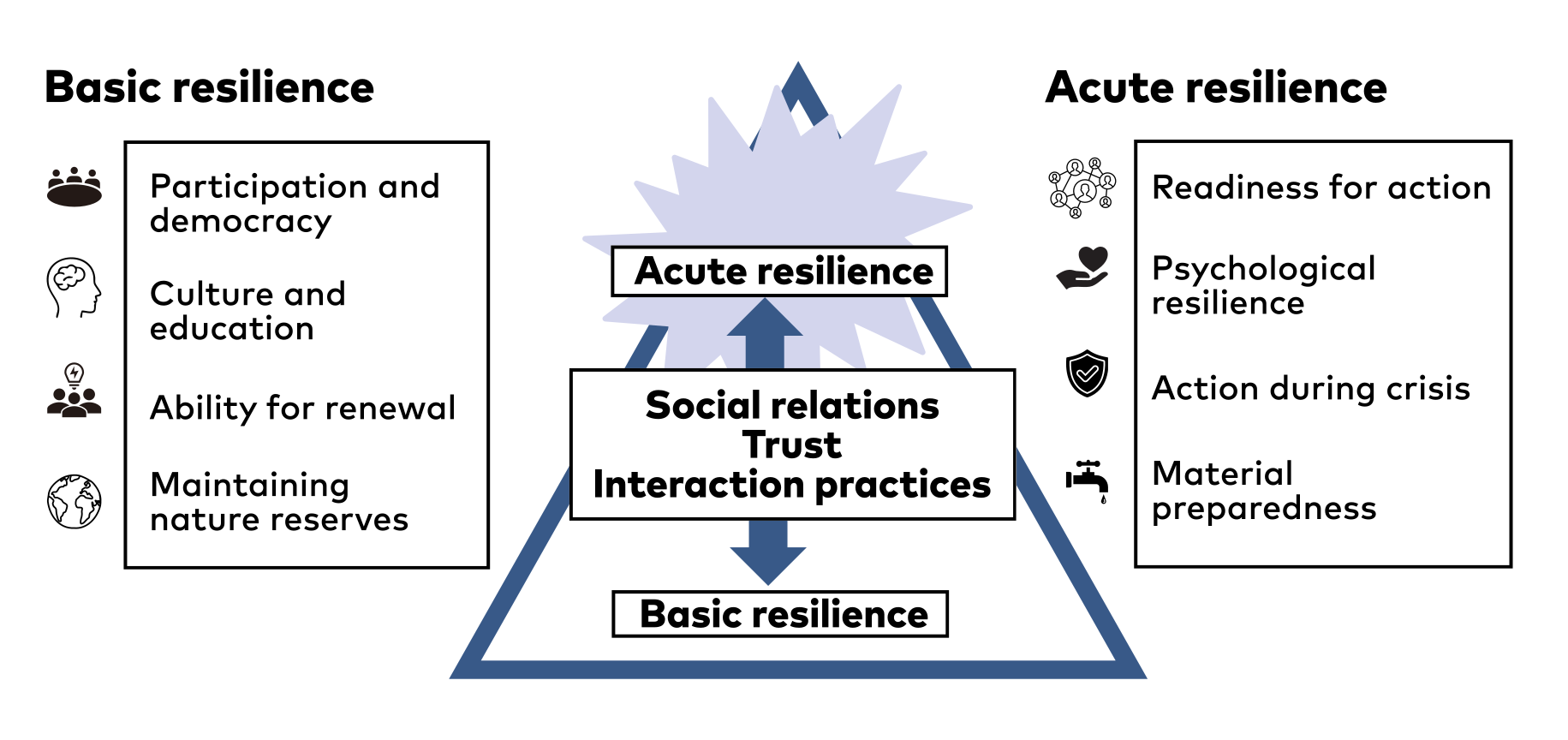
Figure 2. Basic versus acute resilience in the Finnish security context. (Source: Mäenpää et al., 2025)
Finland’s national security landscape involves a plethora of resilience concepts beyond basic and acute resilience. In a 2025 report from the Prime Minister’s Office, resilience (resilienssi or sietokyky) is defined as “the ability of a community or society to secure its existence and the things that are important to it when they are threatened by acute situations … or slow changes” (Mäenpää et al., 2025, p. 19). The report also provides a separate definition for community resilience (yhteisöllinen resilienssi or myös yhteisöresilienssi) as the “collective readiness and ability of residents and other local actors to face and adapt to sudden crisis situations and to sustainably recover from the situation to normal conditions” (p. 19). Both resilience and community resilience as described here highlight aspects of maintenance and protection of a status quo in the face of threats while also learning from a crisis and “bounc[ing] forward” (Mäenpää et al., 2025, p. 42).
The concept of resilience is not without critique. In addition to lacking a clear definition, it describes a “shift in security thinking from ‘grand design’ to ‘muddling through’: it is preparation without grand visions or promises” (Berling & Petersen, 2021, p. 132). The 2025 report from the Finnish government also mentions the critiques raised towards the political nature of resilience, as it can be used to “re-enact the system of power relations without the possibility of progress” (Mäenpää et al., 2025, p. 42; referring to MacKinnon & Derickson, 2012). These nuances are important to keep in mind as resilience, like many other well-intentioned concepts, can also be used to protect and defend dangerous ideologies and to resist progress or transformation.
Psychological resilience in Finland
Amidst these various terms, psychological resilience (henkinen kriisinkestävyys)
is one of the key expressions taken up in the Finland’s comprehensive strategy. The Finnish government referred to the idea of psychological resilience already in 2017 in a security strategy which linked the concept with citizens’ will to defend, as well as with maintaining the livelihood and security of the population in all situations (Security Committee, 2017, p. 22). Both the former and current strategies refer to different stages or dimensions of resilience involving various actors and operations of security. These dimensions—normal conditions, crisis, and recovery—are highlighted in their former security strategy document (Figure 3).
Also translated as mental resilience in English. The Finnish Government’s Swedish version of the strategy uses the phrase mental kristålighet as the translation for henkinen kriisinkestävyys.
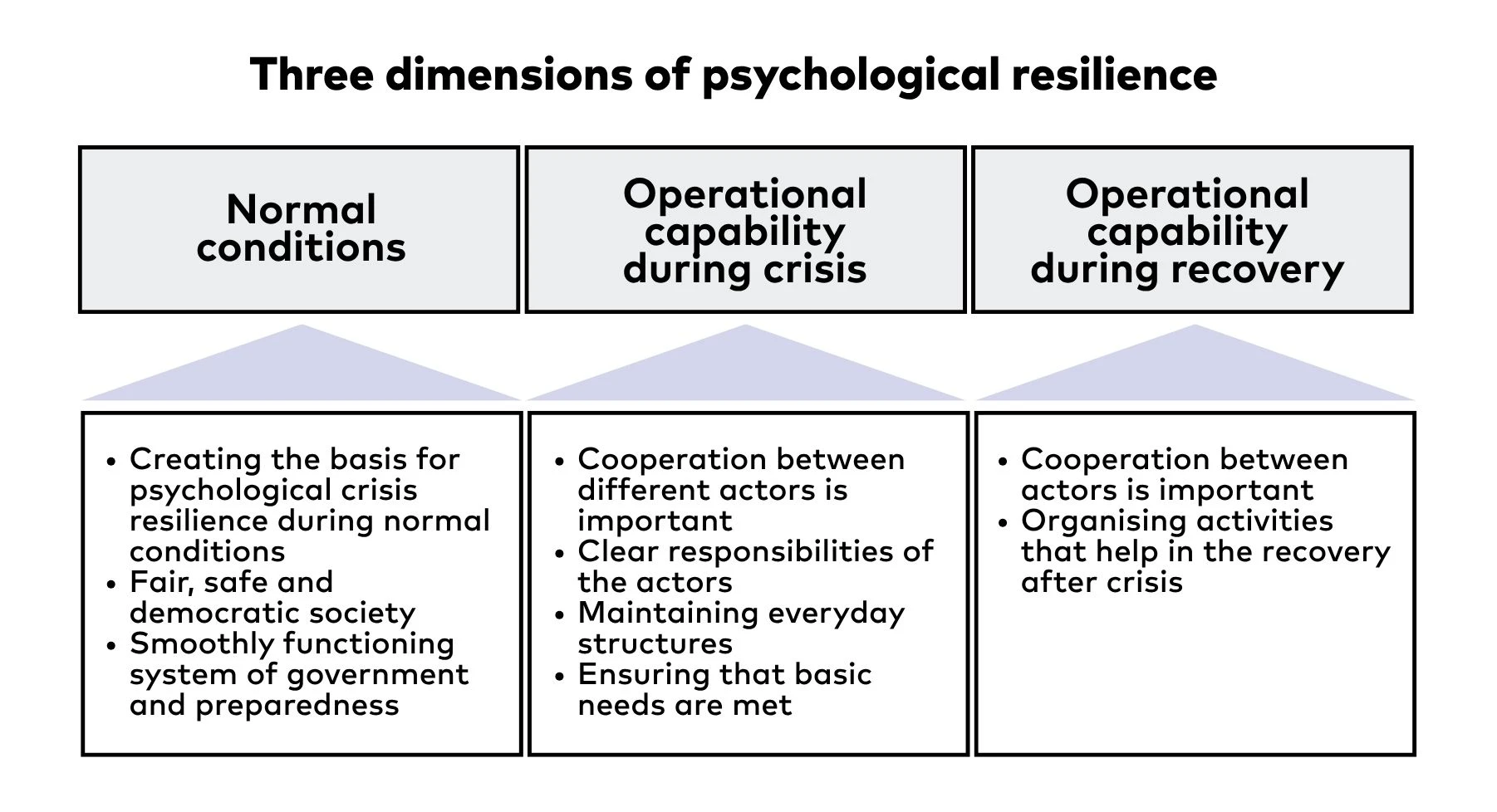
Figure 3. Dimensions for understanding the conditions for psychological resilience and cooperation efforts during crisis and recovery. (Source: Security Committee, 2017)
Within Finland’s current security strategy, the concept of psychological resilience is included as one of several vital functions of society. It is defined as “the ability of individuals, communities, and society to withstand the stress caused by crisis situations and to recover from their impacts” (Finnish Government, 2025, p. 22).
The foundation of psychological resilience is created in normal conditions, and it plays a key role in the maintenance of functional capacity during crisis. Good psychological resilience promotes recovery from crises. Psychological resilience is manifested in the will to take action to maintain the stability of society, the population’s living conditions, security, and ultimately, the state’s sovereignty. Building, strengthening, and maintaining psychological resilience is long-term work that takes place throughout society as a whole. (Finnish Government, 2025, pp. 22-23).
Psychological resilience is thus related to basic resilience and the latent abilities of individuals, communities, and society (see Hyvönen & Juntunen, 2021). But what are these latent abilities which are called upon in moments of acute crises? Based on the definition provided by the Finnish government, such latent abilities may be related to individuals’ trust—in each other, in authorities, and in society. They may also be related to community identity, shared societal values, and future hopes that motivate people to defend their way of life. These latent abilities may also be about specific skills or capacities—both hard and soft—that people apply during a threatening event or use to withstand sustained crises.
The security strategy identifies seven components of psychological resilience (Box 2). The components describe sites and activities where trust is built, identity is shaped, and skills are developed, as well as where the willingness and ability to act (respond and recover) during crisis is formed. At the same time, it is important to recognise that some relational elements of psychological resilience, such as trust and identity, are dynamic, ever-changing, and never achieved or arrived at in a complete or comprehensive way. Nor are such things shaped through singular, top-down policy; rather, resilience is built through “everyday practices and interaction between people and communities” (Luonila et al., 2023).
Box 2. Seven components of psychological resilience
- Maintaining cultural services and protecting cultural heritage
- Ensuring the basis for religious activities
- Ensuring the continuation of youth work and activities, as well as civic sporting activities
- Communications (to strengthen trust, inclusion, and faith in the future)
- Combatting social exclusion and inequality
- Promoting voluntary activities
- Recovery
Within this Recognising and supporting psychological resilience research project, we reinterpreted these components into seven areas in which psychological resilience is both developed and operationalised (Box 3). These can also be found within the Nordic resilience framework (Figure 1) and are revisited in Part II of this report. Our case studies explore three of the seven areas: cultural and heritage institutions (Finland and Norway), voluntary organisations (Denmark), and local community organisations (Iceland and Sweden).
Box 3. Seven areas where psychological resilience is developed and operationalised
- Cultural and heritage institutions (e.g., libraries, museums, arts, and cultural centres)
- Religious institutions and communities (e.g., churches, mosques, spiritual communities, ceremonial events)
- Youth activities
- Civic sporting activities
- Public broadcast services
- Voluntary organisations and activities (e.g., Red Cross, volunteer emergency services)
- Local community organisations (e.g., residential associations, neighbourhood organisations)
The Finnish security model is one that emphasises “multi-stakeholder preparedness” by which “informal civil society actors, ranging from individuals and families to local communities and online networks, are seen as having a meaningful role” in preparedness efforts (Raisio et al., 2025, p. 485). The comprehensive strategy purports that this model of preparedness is the foundation of Finnish resilience.
While none of the other national security strategies in the Nordics refer to psychological resilience directly, several components of the term are raised. For example, Sweden’s strategy describes the cross-sectoral work of national security, which involves faith communities and broader civil society (Regeringskansliet, 2024). Volunteer services among various civil society organisations are also mentioned. In a Norwegian brochure on preparedness, voluntary and faith communities are described as significant actors during emergencies, and housing associations are discussed with regards to their potential role in fostering joint-preparedness when it comes to stocking resources (DSB, 2024, p. 16). Similarly, material from Denmark also highlights the role of preparedness plans among neighbourhood groups and residential associations (Styrelsen for Samfundssikkerhed, 2025-b). Norway also mentions the significance of the cultural sector, but mainly as an area that should function normally in times of crisis and its capacity to help the public “preserve and maintain good mental health and morale” (Justis- og beredskapsdepartementet, 2025). Both the Swedish and Danish security publications also discuss the importance of public communication channels for enabling trust among society, ensuring stability, and combatting disinformation (MSB, 2021; Styrelsen for Samfundssikkerhed, 2025-a).
The spiritual roots of psychological resilience
The concept of psychological resilience evolved out of the 1960s notion of so-called “spiritual defence” (Hyvönen & Juntunen, 2021; Larsson & Rhinhard, 2021). Drawing from 1930s Swiss political-cultural movement of Geistige Landesverteidigung (spiritual national defence), Finnish security policy popularised the notion of spiritual defence during the Cold War as a way to “instill a new sense of ‘enlightened patriotism’” and solidify national, democratic values in the “everyday consciousness of the citizens’ life” (Hyvönen & Juntunen, 2021, p. 162). Indeed, even as the term is translated into the English as psychological or mental resilience, the Finnish security strategies from 2017 and 2025 use the term henkinen kriisinkestävyys, where henkinen can refer to both mental and spiritual ideas.
When, in the late 1950s, the National Association for Military Psychology appointed a new committee to consider the psychological aspect of defence, it was called the Committee for Spiritual National Defence (Henkisen maanpuolustuksen komitea) because “‘spiritual’ implicated a much broader ideological and societal agenda” (Hyvönen & Juntunen, 2021, p. 162):
The committee aimed to bring the wider societal fabric—key societal values, the sense of national unity and purpose as well as the ideological foundations of these values—under the comprehensive agenda of total defence planning and monitoring. From here on, the foundations of the willingness of the citizens to defend the democratic society and its core values was perceived as key ingredient of the Finnish national defence ethos. (Hyvönen & Juntunen, 2021, p. 162)
The spiritual aspect of psychological resilience is not unique to Finland. In Sweden, an idea of spiritual preparedness (andlig beredskap) has emerged in some media and research and among the Swedish Church, but not yet in policy (Svenska kyrkan, 2025). Though not discussed in the current Danish security strategy nor in the literature, recently published media articles remark upon Danish Prime Minister Mette Fredriksen’s call for spiritual rearmament/mobilisation (åndelig oprustning) among Danish society, which is connected to increased knowledge and authority of science while also maintaining one’s ability to discern between right and wrong (Bjerre, 2025).
The discussion emerged during a presentation given by the Prime Minister at Aalborg University on 3 April 2025. Since then, further media articles have taken up the topic to better understand the ideas of spiritual rearmament/mobilisation (see, e.g., Søderberg, 2026).
While the concept remains unclear, it is, according to the Prime Minister, about “something deep within ourselves,” our “democratic mindset,” “the ability to think critically,” and the values of the Enlightenment “where science triumphed over myths and God had to give way to democracy” (Bjerre, 2025, quoting Mette Fredriksen). According to another article interviewing democracy spokesperson Ida Auken, the concept “reflects military mobilisation, rearming people with spiritual and intellectual value” (Søderberg, 2026).
While often divorced from institutionalised religion, such ideas are not entirely disconnected from spiritual communities. For example, Swedish newspaper Svenska Dagbladet published an article in the wake of the Norwegian terrorist attack in Utøya back in 2011 which remarked upon the role of the church as a site for people to mourn over the tragedy in the neighbouring country and share in a collective grief that unified around one hopeful, common value: love—and a willingness to participate in love that has the power to withstand and overcome catastrophe (Lagercrantz, 2011).
The “spiritual” element of psychological resilience may persist today, but it is not outright described in the Finnish nor any other Nordic security strategy. Nevertheless, the idea returns us to the question of the shared values which underpin Nordic societies and motivate individuals to prepare for, respond to, and recover from crises. Such motivations are entangled with notions of national and Nordic identity, social cohesion, and a common moral ideology involving, most definitively, democracy and trust.
Nordic trust
The idea of trust has often been touted as a unique element of Nordic societies (Andreasson, 2017; Berling & Petersen, 2021; Selle & Wollebæk, 2015; Larsson & Rhinhard, 2021).
Data from the European Social Survey (2023) show that Finland, Norway, Iceland, and Sweden are among the top five countries which respond positively to the statement that most people can be trusted (European Social Survey, 2023-a). Furthermore, they make up the top four countries in Europe whose respondents agreed with the statement “most people try to be fair” (European Social Survey, 2023-b).
When it comes to the potential to develop a shared security culture, Wrange et al. (2024) argue that the Nordics share common threat perceptions, values, and other overlapping histories, geographies, and political cultures (Wrange et al., 2024). As mentioned, how trust is developed in these nations has a strong connection to psychological resilience.
For more statistics related to trust and security, see, e.g., Sweden’s Community Barometer (gemenskapsbaromtern) from Almén, D., & Trägårdh, L. (2025); ABDI (2024); European Parliament (2025).
Note that data from Denmark was absent from these two surveys.
The Nordic countries have a high degree of participation in voluntary organisations compared to other European countries (Selle & Wollebæk, 2015). Indeed, much social life often occurs within such organisations and associations in Nordic societies. According to the Civil Society Participation Index, which measures the “extent to which citizens are active in diverse organizations which choose and influence policymakers,” the Nordic countries are well above the European average (87-97% in the Nordic countries, compared to 77% in Europe; V-Dem, 2026). In a 2007 study, Wollebæk and Selle showed that people’s engagement in voluntary organisations affected levels of social trust, regardless of whether they were active or passive members. Even those who were not members maintained high levels of societal trust compared to active organisational members in other European countries due to their positive view on the effectiveness of voluntary organisations to influence society (Selle & Wollebæk, 2015). Considering the aftermath of the 2011 terrorist attack in Norway, the same authors evaluated community resilience and concluded that trust depends on the strength of organisational society (i.e., voluntary organisations that play an institutional role). “It is more important for the degree of trust that the individual belongs to a community with strong organisation than for the individual him/herself to be greatly involved in organisations” (Selle & Wollebæk, 2015, p. 280).
As described in the components of psychological resilience, other spheres also foster similar forms of trust and democratic values. In their 2023 study, Luonila and colleagues explore two Finnish neighbourhoods to discern how cultural participation can build community resilience. They evaluate culture as “grounded in the everyday lived experiences within communities,” and show the “potential of cultural participation as a fostering force” of cultural sustainability and resilience (p. 2). Furthermore, the researchers note that “culture exists as a central binding element that provides the values underlying … actions in communities” (Luonila et al., 2023, p. 3).
Trust is a key element of psychological resilience, and social infrastructure (Latham & Layton, 2022) and community-based activities are often where trust and other values are developed or reinforced. However, a high level of trust is not the sole indicator of whether a society is psychologically resilient. The concept also involves individuals’ willingness as well as capacity to act/defend in times of threat or crisis, their perceptions of societal values, and their perceptions of threat. It also requires that the social infrastructure through which values and trust are established are organised in meaningful ways so that action can be taken.