Occupations in health and social care in Åland are perceived to be difficult to recruit. In the municipalities there is also a demand for qualified teachers in childcare, student assistants and specialised teachers. (Photos: Helena Wahlman and Evelina Ytterbom / Imagebank.sweden.se)
9. ÅLAND
Åland’s labour market
Since the 1970s, the development of Åland’s labour market has been shaped by high population growth, primarily driven by immigration (Figure 9.1). The period has also been marked by the growth of a very large, expansive shipping sector that combines freight and cruise operations. This has opened up a wide range of workplaces attractive to both men and women (Table 9.1). Overall, while recent decades have seen significant immigration and emigration, Åland’s net immigration figures have been positive. Meanwhile, aside from exceptional situations when Sweden and Finland – Åland’s main markets – have been in recession at the same time, unemployment has generally been low (Figure 9.2). Åland’s labour market features high levels of participation among women, while the increase in immigration from European Union (EU) countries and elsewhere since 1995 means incomers today constitute a significant proportion of the workforce.
Linnéa Johansson
The Government of Åland
Tomas Lundberg
Åland Authority for Labour Market and Student Services (AMS)
The Government of Åland
Tomas Lundberg
Åland Authority for Labour Market and Student Services (AMS)
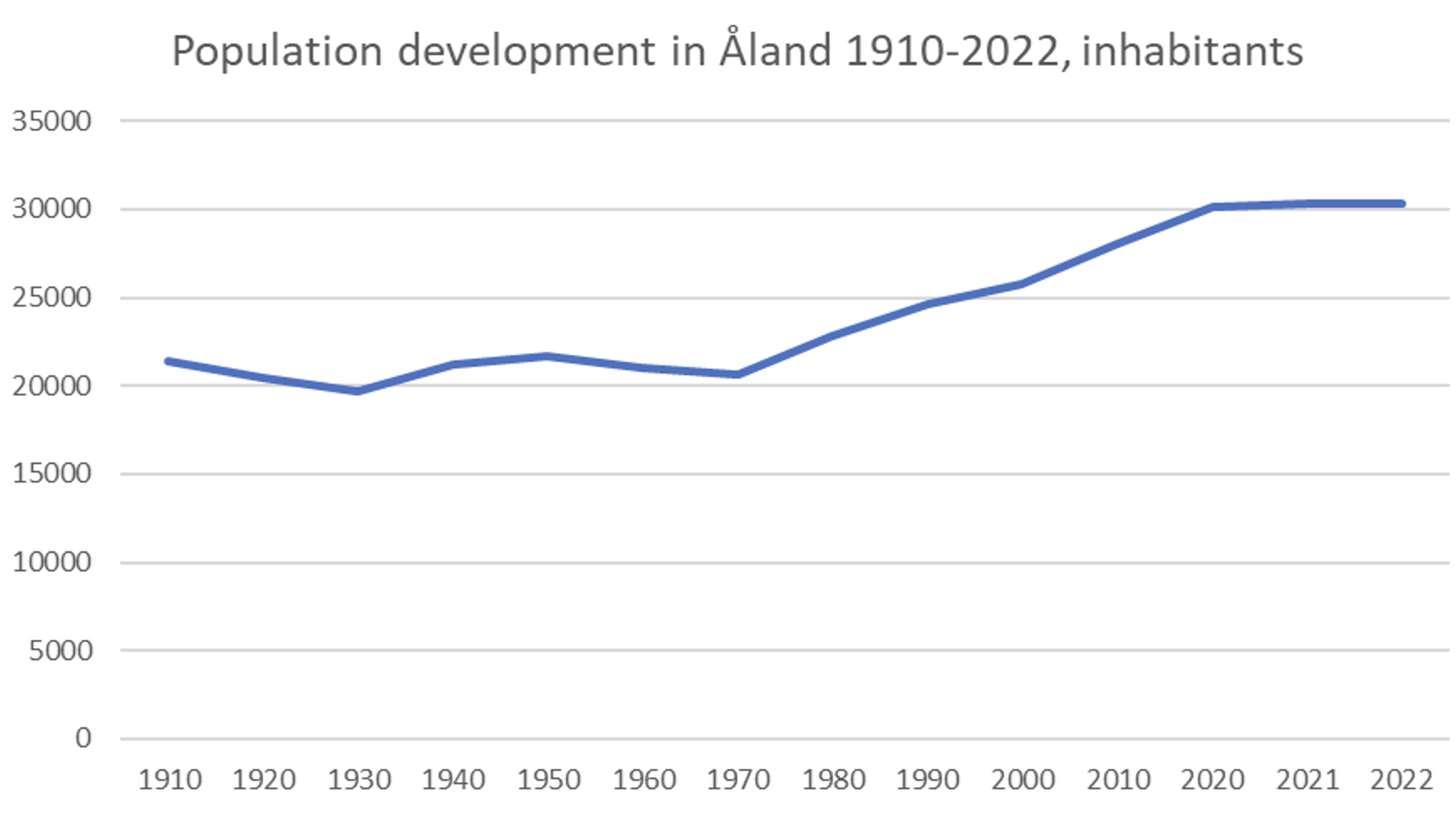
Figure 9.1. Population development in Åland, 1910–2022.
Source: Åland Statistics and Research (2023).
Source: Åland Statistics and Research (2023).
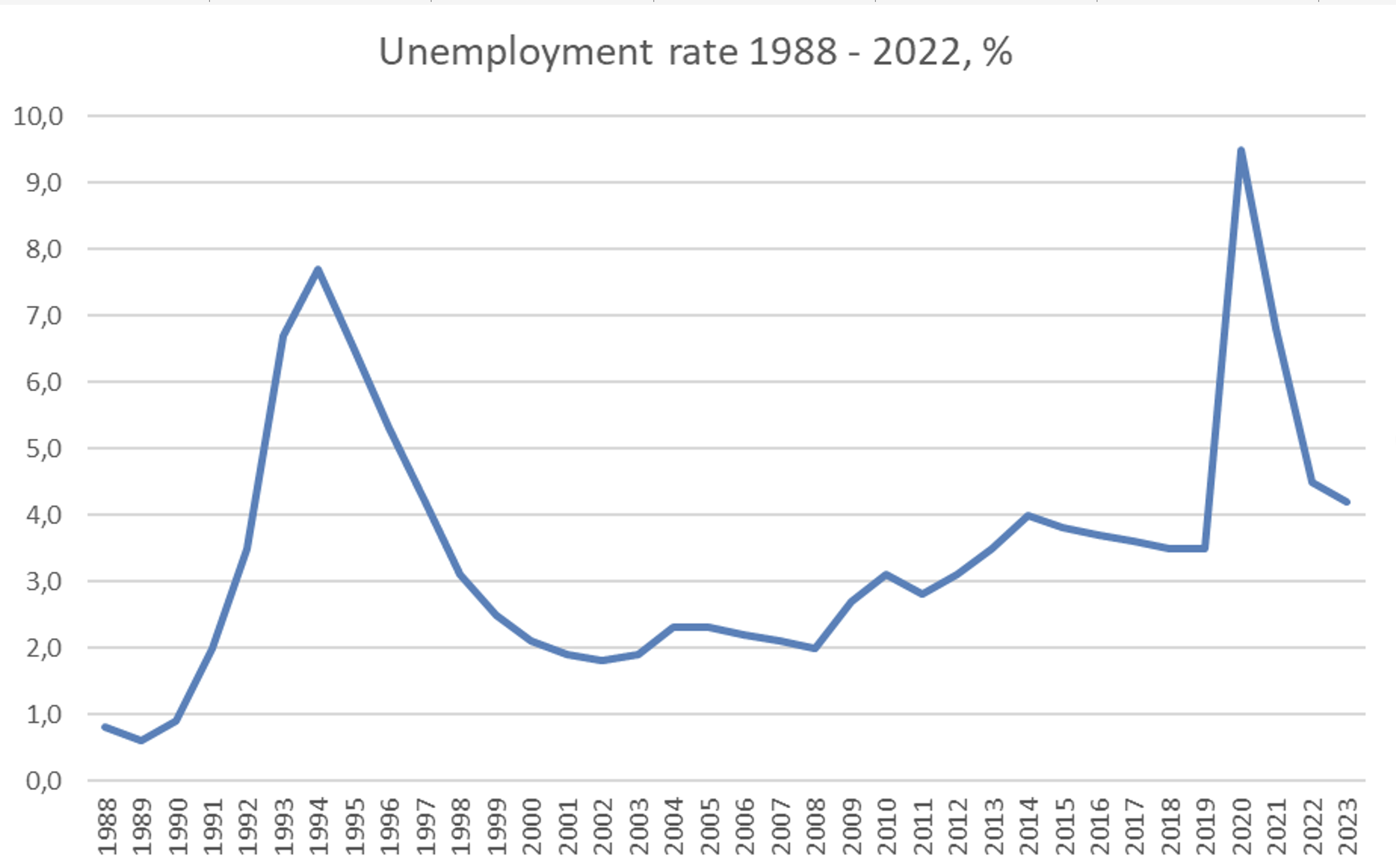
Figure 9.2. Unemployment rate, 1988–2022 (%).
Source: Åland Authority for Labour Market and Student Services (2023).
Source: Åland Authority for Labour Market and Student Services (2023).
Total % (no.) of inhabitants | Women (of total) | Men (of total) | |
Population | 100 (30,359) | 50.4 (15,295) | 49.6 (15,064) |
Labour force Employed Unemployed | 49.7 (15,087) - 95.7 (14,439) - 4.3 (648) | 49.9 (7,528) - 50,3 (7,265) - 40,6 (263) | 50.1 (7,559) - 49.7 (7,174) - 59.4 (385) |
Not in labour force 0–14 years Students Pensioners Others outside labour force | 50.3 (15,272) - 32.2 (4,921) - 10.6 (1,615) - 48.4 (7,395) - 8.8 (1,341) | 50.9 (7,767) - 49.6 (2,443) - 45.3 (731) - 52.3 (3,867) - 54.1 (726) | 49.1 (7,505) - 50.4 (2,478) - 54.7 (884) - 47.7 (3,528) - 45.9 (615) |
Table 9.1. Population in Åland by main activity as of 31 December 2022.
Source: Åland Statistics and Research (2023).
Trends and key sectors
Relative to its size, Åland’s economy encompasses a broad range of business life, with companies and employment present in almost every industry. Åland’s isolated location means the region also enjoys a wide range of public services. In this respect, Åland has bucked the trend towards privatising public services seen in neighbouring regions, which goes some way to explaining why public sector employment remains high (Figure 3). Since the 1990s, employment growth has mainly taken place in health care, social care and education.
For generations, Åland’s business life has been built around an extensive international shipping industry, coupled with directly- or indirectly-related service companies in logistics, trade, construction, financial transactions, business services, IT, the creative industries and manufacturing. Thus, despite being badly affected by the Covid-19 pandemic, the maritime sector remains Åland’s core competency, while traditional manufacturing industry is relatively small.
Even so, the competitive situation facing shipping has intensified over the past 20 years, leading to a fall in the proportion of Ålanders employed in the industry. More generally, since the turn of the millennium, there has been a shift away from employment in shipping, agriculture and manufacturing towards public services, finance and IT.
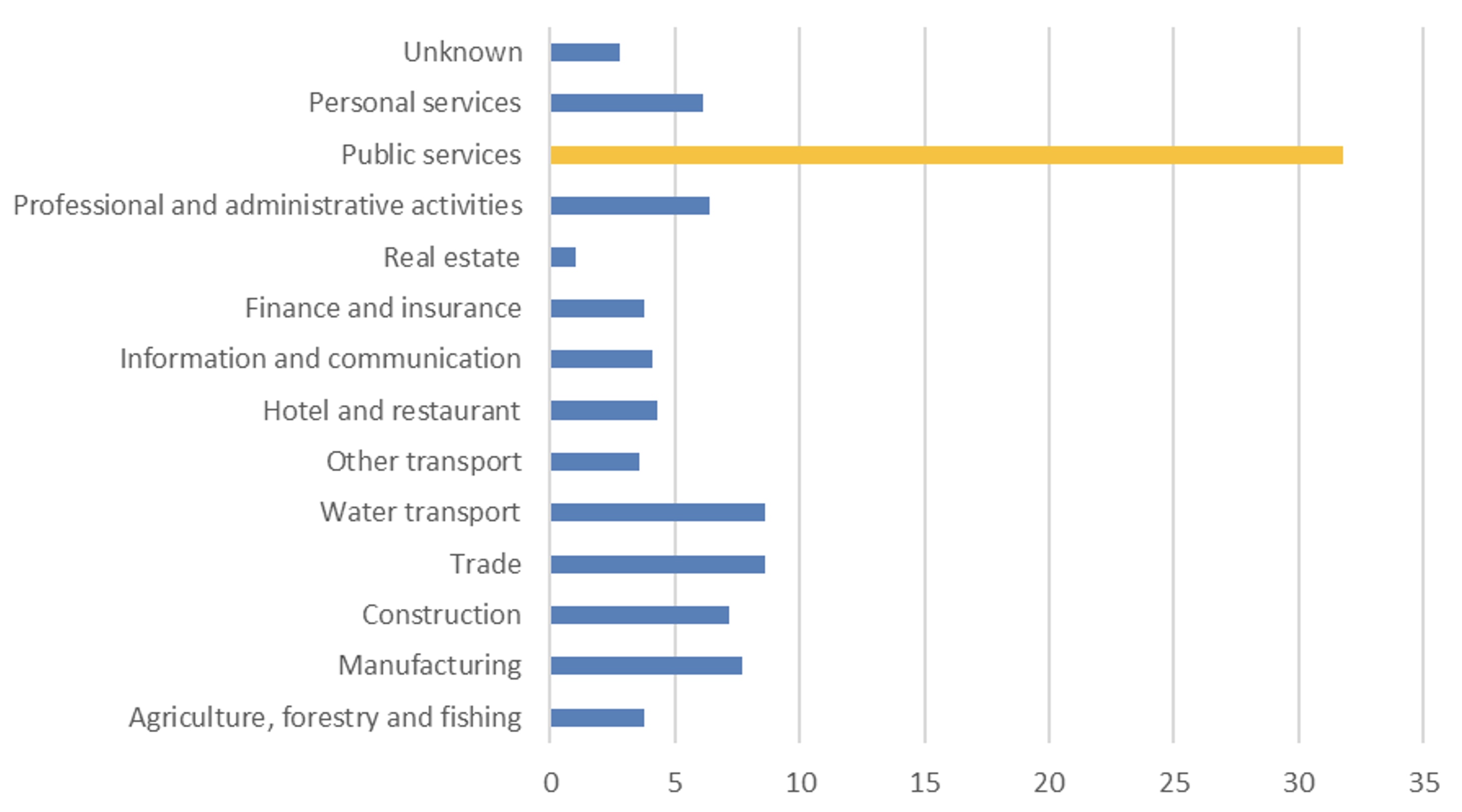
Figure 9.3. Workplaces by industry, 2021 (% of total).
Source: Åland Statistics and Research (2023).
Source: Åland Statistics and Research (2023).
Regional and rural variations of labour shortage
A labour market survey produced by Åland Statistics and Research (2023) reveals a wide range of occupations that companies and public sector organisations regard as challenging to recruit into. Despite this diversity, one common denominator is the need for specialists with relevant experience and higher education degrees.
In the public sector, there is particular demand for legal specialists, school-system teachers and other educational specialists, such as counsellors, with analysts/investigators, socio-technical engineers and business developers also mentioned as difficult to recruit into. Occupations in health and social care, especially community carers, are perceived as challenging to fill in both the public and private sectors. In addition, there is demand in Åland’s municipalities for qualified childcare staff, student assistants and specialised teachers.
In the private sector, the hard-to-recruit occupations highlighted in the survey are often sector-specific – that is, experts in a particular field. Occupations mentioned across several sectors include finance and IT specialists, and cleaners, while certain occupations within the electricity sector are also perceived to be difficult to recruit into (Åland Statistics and Research 2023).
Difficult-to-find occupational groups in the private sector
One of labour market survey’s questions is: ‘If your company is looking for a specific vocational specialisation, which one do you think will be most difficult to find in the coming year?’ (Åland Statistics and Research 2023). The answers to this question provide an indication of where labour supply gaps may be found, and more specifically which occupational groups may be subject to labour shortages going forward.
Here, it should be borne in mind that each survey respondent has a different starting point when it comes to answering the above question. Moreover, it is not possible to assess the degree of difficulty faced in each case – respondents only indicate which occupational group they think will be most difficult to recruit into. Nevertheless, in the 2023 survey, the following occupational groups and specialists are highlighted as difficult to recruit into:
- Primary industries: aquaculture professionals;
- Food industry: master distillers;
- Water and electricity: line-fitters and other electrical;
- Construction: plumbers and electrical and refrigeration technicians especially, as well as roofers and construction workers;
- Trade companies: sales and management personnel especially, as well as florists, drivers, mechanics, opticians, textile specialists and fish fillers;
- Shipping: cooks, engineers, ship electricians and generally experienced maritime personnel;
- Transport and communication: drivers;
- Hotel and restaurant industry: cooks especially, as well as waiters, cleaners and hotel receptionists;
- Finance and insurance: financial experts and senior specialists;
- IT sector: system and web developers, experienced programmers, IT technicians and network technicians;
- Personal services: IT specialists, carers and other health professionals; and
- Other: chemical engineering/process development specialists; project managers; engineers; forestry workers; workshop mechanics; accountants and financial advisors; authorised estate agents; mechanical/electrical engineers; cleaners; and lifeguards.
Difficult-to-find occupational groups in the public sector
The equivalent labour market survey question for the public sector is worded as follows: ‘If you plan to hire in the next 12-month period, which occupational specialisation do you think will be the most difficult to find?’ (Åland Statistics and Research 2023). Again, each respondent (representatives of a particular municipality, government authority, etc.) has a different starting point for answering the question, nor is it not possible to assess the degree of difficulty faced.
Having acknowledged this, difficult-to-fill public sector occupational groups highlighted in the 2023 survey include: specialists (especially legal specialists); analysts/investigators; socio-technical engineers; business developers; and transport procurement officers. In this context, many respondents point to the importance of a labour force with higher degrees.
Heads of office or department, network technicians, inspectors, heavy vehicles drivers and hygienists as also cited as hard-to-fill positions, with teachers and study counsellors in demand by schools. At the municipality level, childcare staff and kindergarten teachers are required, while nursing and other health and social care positions are expected to be among the most difficult to recruit into.
Other in-demand occupations include building inspectors, kitchen staff, specialised teachers and municipal technicians. Several primary schools envisage teaching assistants and special needs teachers will be the most difficult to recruit. In addition, specialised teacher and education manager positions pose problems.
Moreover, it is regarded as difficult to find staff with sufficient knowledge of both Swedish and Finnish.
Sectoral labour shortage variations
Table 9.2. Average number of vacancies filled in one month by appointment time (number of days) and profession (annual average).
Total | 0-3 | 4-7 | 8-14 | 15-21 | 22-28 | 29-42 | 43-60 | 61-90 | 91-180 | Over 180 | |
2021 | 237 | 8 | 9 | 32 | 95 | 32 | 34 | 16 | 7 | 3 | 1 |
2022 | 325 | 10 | 17 | 41 | 102 | 39 | 51 | 26 | 16 | 14 | 10 |
2023 | 298 | 5 | 10 | 32 | 107 | 39 | 41 | 33 | 12 | 13 | 7 |
By profession | |||||||||||
Managers | 10 | 0 | - | 1 | 4 | 3 | 1 | 0 | 0 | 0 | - |
Professionals | 57 | 1 | 4 | 5 | 29 | 10 | 7 | 2 | 0 | 0 | 0 |
Technicians and associate professionals | 44 | 1 | 0 | 4 | 19 | 6 | 5 | 3 | 1 | 4 | 1 |
Clerical support workers | 23 | 0 | 1 | 4 | 8 | 4 | 3 | 1 | 2 | 0 | 0 |
Service and sales workers | 126 | 2 | 2 | 13 | 39 | 10 | 18 | 23 | 9 | 7 | 7 |
Skilled agricultural, foestry and fishery workers | 4 | 0 | 1 | 0 | 0 | 0 | 2 | 0 | - | - | - |
Craft and related trades workers | 6 | 0 | 0 | 1 | 1 | 1 | 1 | 1 | - | 0 | 0 |
Plant and machine operators, and assemblers | 8 | 1 | 0 | 2 | 1 | 1 | 1 | 2 | - | - | 1 |
Elementary occuupations | 21 | 0 | 1 | 3 | 5 | 4 | 3 | 1 | 1 | 0 | 3 |
Unnown | 0 | - | - | - | - | - | - | - | - | - | - |
Source: Åland Statistics and Research (2023: 13).
Among other things, Table 2 shows that just over 11% of all vacancies in 2023 for professions categorised as ‘Technicians and associate professionals’, as well as just over 7% of vacancies for ‘Service and sales workers’, took three months or more to fill. This points to the existence of labour shortages in these occupations.
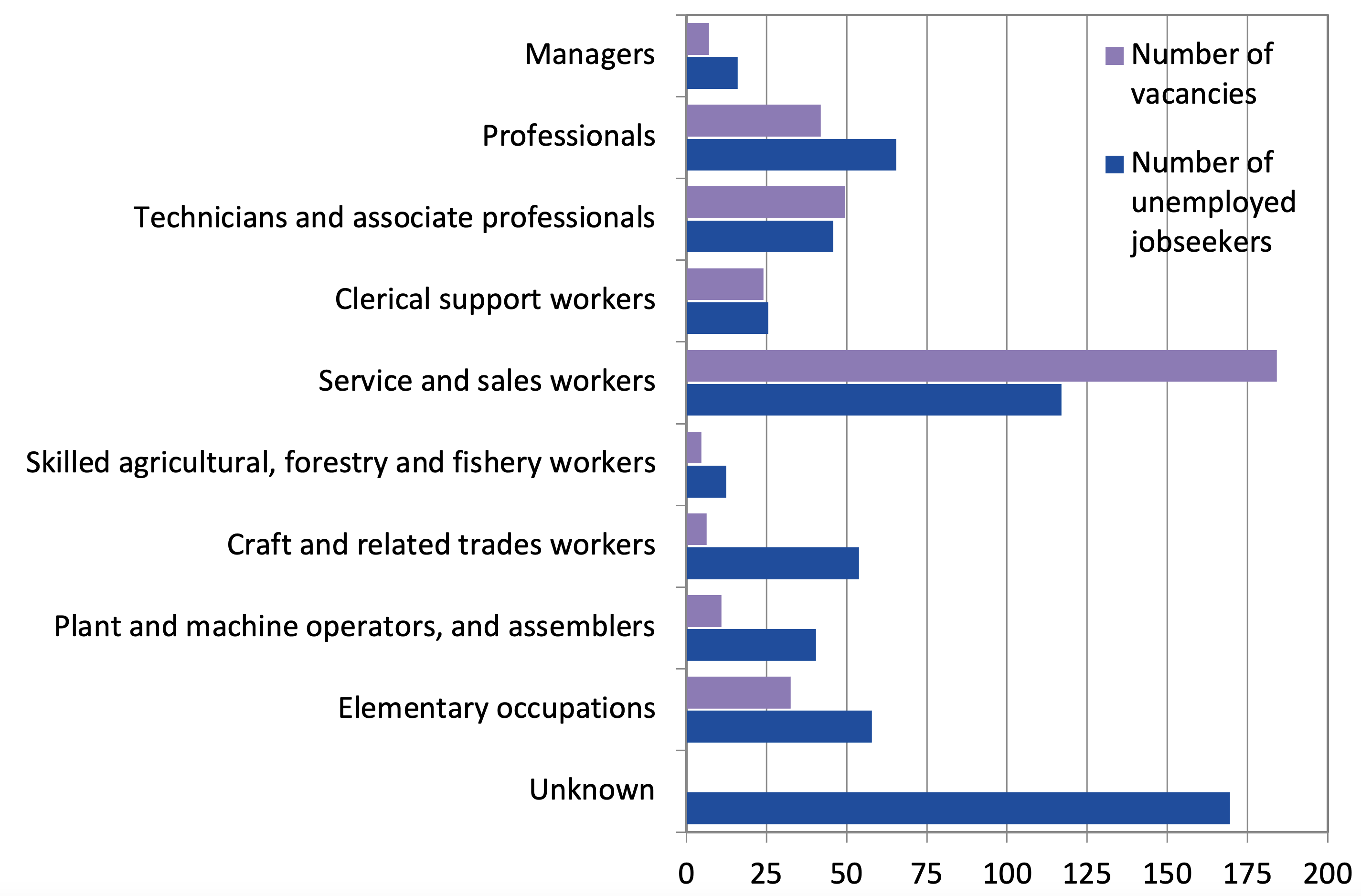
Figure 9.4. Average (monthly) number of unemployed jobseekers and vacancies by occupation, 2023.
Source: Åland Statistics and Research, Labour market (2023:13).
Source: Åland Statistics and Research, Labour market (2023:13).
As can be seen in Figure 9.4, the number of job vacancies in 2023 for ‘Technicians and associated professionals’ exceeded the number of people seeking employment in this area, although only to a relatively small degree. A much greater shortfall, however, affected ‘Service and sales workers’. For all other occupations, there were fewer vacancies than people seeking employment. Together, Table 2 and Figure 4 reveal that labour shortages exist in the service sector, as well as industries that require technicians and associate professionals.
2019 | 2020 | 2021 | 2022 | 2023 | Occupations | |
Restaurant and catering staff | 8 | 7 | 15 | 24 | 42 | chefs |
Construction workers (except electricians) | 4 | 5 | 6 | 4 | painters and other construction workers | |
Cleaners, maids and other cleaning workers | 14 | 9 | 21 | 17 | 36 | |
Catering staff | 4 | 4 | 11 | 11 | waiters and bartenders | |
Process operators, food industry | 3 | 3 | 12 | 12 | 5 | fish farming |
Assistants, horticulture | 24 | 18 | 28 | 10 | 7 | assistants, horticulture and horticultural workers |
Assistants, agriculture | 26 | 22 | 14 | 8 | 1 | |
Kitchen and restaurant assistants | 6 | 4 | 9 | 1 |
Table 9.3. Number of partial decisions for residential permits in Åland, per year, in sectors with the highest numbers of foreign workers (2019–2023).
Source: Data from the case management system for immigration matters (UMA), authors’ development.
Data from residential permits and occupations shows that in 2019 (the beginning of the five-year period tracked in Table 3) labour shortages were also present in ‘Horticulture’ and ‘Agriculture’. More recently (2023), the ‘Restaurant sector’ and ‘Cleaning’ have also faced labour shortages. Taken in combination with the data presented in Figure 4 and Table 2 above, Table 3 points to which sectors are experiencing labour shortages in Åland.
Strategies and solutions
‘One door in’ policy
The Government of Åland is currently – in conjunction with the business community, municipalities and local authorities – developing a migration, integration and skills supply strategy that aims to attract the necessary labour market skills through creating ‘one door in’ (Government of Åland 2023).
Addressing matching issues
Åland’s government is, via the Åland Authority for Labour Market and Student Services (AMS), restructuring and supporting the labour market in order to address matching problems. Towards this end, the Government of Åland has announced its intention to review the structures enabling adults, including those with a foreign background, to participate in education. The aim is to create an education system that meets everyone’s needs, with work-related vocational training a growing area of development.
Matching between jobseekers and vacancies in Åland remains a major challenge for labour market policy and AMS. Here, the starting point is that labour market services should primarily promote employment via the open labour market, or through skills enhancement that increases the possibility of an individual finding work. For many unemployed jobseekers, extensive, long-term efforts are required to ensure they are employable on the open labour market. This applies particularly to those without vocational training and more recent arrivals to Åland with poor Swedish language skills.
While full-time students are not entitled to unemployment benefits, as of 2016 AMS was granted the ability to provide unemployment benefits supporting a jobseeker’s voluntary studies in areas relevant to promoting vocational skills and strengthening their ability to secure a permanent job. Through this scheme, unemployed people have undergone training for occupations such as cooks, carers and accountants. Relatedly, educational testing offers the possibility of helping clarify an individual’s suitability for a particular sector.
Another relatively recent initiative – beginning in 2019 – is that any jobseeker aged 25 years or more can pursue studies aimed at enhancing their professional skills and, up to a maximum period of six months, still be entitled to unemployment benefits. In 2023, the range of studies that can be pursued while retaining unemployment benefits was broadened. It is hoped that these recent employment promotion measures, combined with planned employment promotion training, will lead to improved matching in 2024 and beyond.
Even so, AMS needs to maintain a clear focus on improving labour market matching, including following up and evaluating how its staff make use of different tools and methods. In this respect, the development of evidence-based methods, new data tools and IT skills requires prioritisation.
The new legislation on primary schools gives adults who do not have primary school certificates the right to a primary school education. Doing so would give many jobseekers the opportunity to move on to upper secondary studies given that Åland has now begun to provide a comprehensive school education system for adults.
Migration of demanded labour
For several decades now, the Government of Åland has actively pursued a policy of increasing immigration to the region in order to meet the region’s growing labour market demand. In pursuit of this aim, an initial target of increasing the region’s population to 30,000 inhabitants by 2010 was set. More recently, Åland’s development and sustainability agenda envisages 35,000 inhabitants by 2030.
The recruitment of skilled labour – particularly specialists in industries across various sectors – poses a particular problem. In response, AMS is devoting resources to recruitment efforts both within and outside Åland, including through activities under the ‘Åland Living’ framework and active participation in the European network for employment services and recruitment, EURES. Higher education internship activities also form a key part of the government’s strategy. More generally, AMS actively participates in the Government of Åland’s work to realise goal five of its strategic development and sustainability agenda: ‘Attractiveness for residents, visitors and businesses’.
Recruitment of foreign workers
One ‘public–private strategy’ for combatting labour shortages in Åland is to allow, and in some instances actively recruit, foreign workers. The Finnish Immigration Service may grant a residence permit to a foreign national if it deems there is a reasonable likelihood of the individual in question obtaining, within an appropriate timeframe, work in areas of labour market shortage.
Worker residence permit applications are centralised in five work permit units in Helsinki, Tampere, Oulu, Lappeenranta and Åland, which are authorised to issue partial decisions on such applications to the Finnish Immigration Service. Within Åland, AMS is responsible for companies seeking labour from outside the EU/EEA area, with the Aliens Act (FFS 301/2004) and the Finnish government’s national guidelines applicable in these cases.
When it comes to employment, AMS must investigate the possibilities of obtaining labour qualified for a particular job. Towards this end, an employer must report a vacancy to AMS and keep it announced ocally for at least two weeks. AMS is also responsible for assessing whether the employer has set realistic job specifications, as well as whether a potential employee possesses the training and licences required (e.g. a hygiene passport). In addition, AMS must ensure a foreign incomer’s subsistence is covered by income from gainful employment for the duration of their residence permit.
The Government of Åland issues can issue guidelines specifying which sectors face regional labour shortages, thereby allowing foreign workers to obtain residence permits for relevant positions. In such circumstances, the requirement for employers to notify AMS of the vacancy and advertise it for at least two weeks does not apply, making it easier for employers to source workers.
Internships, Competence Link and Work & Live on Åland
In the mid-1990s, in response to the realisation that many Ålanders studying outside the region were deciding to remain in their place of study once they had completed their courses, the predecessor to AMS launched the ‘Competence Link’ initiative. Through the initiative, individuals could remain in contact with the Åland labour market during their studies, thereby – it was hoped – enticing them back to the region once they were ready to seek a job.
As part of this, a scheme was introduced making it possible for Åland university students to gain paid summer internships at Åland workplaces. Later, in the early 2000s, it became apparent that a significant number of students who did not originate from Åland were also interested in exploring the region’s business environment and labour market. Thus, Competence Link was expanded, becoming the ‘Work & Live on Åland’ initiative.
Åland Living
In 2016, with Work & Live on Åland set to participate in the Emigration Expo in the Netherlands for the first time, the initiative underwent another transformation. Now called ‘Åland Living’, the initiative’s expanded, renamed website provided English language versions of its relevant information.
The previous website address of www.komhem.nu was changed to www.alandliving.ax.
From 2024 onwards, Åland Living is pivoting towards a new strategic orientation that involves strengthening Åland’s attractiveness, with the ultimate aim of maintaining a positive pattern of immigration and helping meet the population target set for 2030. Immigration guidance and information services form a central part of this strategy, including the targeting, via marketing materials, of particular interest groups linked to sectors categorised as suffering regional labour shortages.
Given the necessity of extending Åland Living’s reach beyond the region’s borders, the initiative is committed to pursuing strategic, ongoing communication work. At the same time, Åland Living is working – through extensive research work and data collection – to deepen understanding of the factors driving emigration from Åland.
In sum, Åland Living’s current mission is to:
- Help meet the needs of Åland’s labour market and business establishments (including through collaboration with business sector actors);
- Contribute to Åland’s total integration work (including through cooperation with actors working for integration);
- Play a role in Åland’s place-based development and onboarding work (including through collaboration with actors operating in these areas); and
- Work to increase Åland’s skills supply (including through cooperation and dialogue with the education system).
Concluding remarks
Although Åland is a relatively small society, it maintains a broad economic structure, the core competencies of which are to be found in maritime off- and on-shore activities. The region’s economic diversity is reflected by matching problems in a number of labour market sectors. In this respect, it is important to focus on continued promotion of Åland’s social and business environment, and so build on the steady population increases seen over the past 55 years.
At the same time, Åland’s reliance on immigration calls for further research into the factors driving migration into and out of the region. Finally, cooperation with large employers when it comes to branding and marketing, as well as the development of place attractiveness, must be placed high on the agenda going forwards.
References
Åland Authority for Labour Market and Student Services (2023).
Åland Statistics and Research (2023). ‘Labour Market Barometer 2023’. ÅSUB Rapport 2023:2. www.asub.ax/sv/utredning/arbetsmarknadsbarometern-2023.
Government of Åland (2023). ‘Political Programme 2023–2027’. www.regeringen.ax/sites/default/files/attachments/page/Regeringsprogram%202023.pdf