Shortage of labour poses obstacles to regional labour market growth and can contribute to unequal regional development within nations. (Photos: iStock and Freepik)
1. Introduction
Setting the scene
Labour shortages have emerged as a challenge across the Nordic region. In some areas, it has become difficult to attract the right competence – indeed, sourcing adequately skilled people to fill the available jobs has increasingly become a regional development issue. Shortage of labour poses obstacles to regional labour market growth and can contribute to unequal regional development within nations. Moreover, labour shortages in some areas of the welfare system – particularly healthcare, social care, childcare and schools – can place stress on services, be a security risk, provoke dissatisfaction, and limit the extent to which assistance is adapted to the needs of individuals.
While this study is based on the assumption that rural areas are particularly affected by labour shortages, substantial knowledge gaps exist as to the common challenges faced by the Nordic countries and territories, as well as which strategies and solutions have so far been deployed.
Elin Slätmo
Nordregio
Nordregio
Initiated at the behest of the thematic group for Green and Inclusive Rural Development,
The Nordic thematic group for Green and Inclusive Rural Development brings together national and regional development representatives/experts to share new knowledge and create added value through collaboration. The group provides input on developing and planning for green, inclusive rural areas across the Nordic region to policymakers/planners at the national, regional, local and cross-border levels. The group is part of the Nordic Co-operation Programme for Regional Development and Planning 2021–2024 and contributes to the Nordic Vision 2030 aim of making the region the most integrated and sustainable in the world. All activities and projects work towards achievement of the United Nations’ Agenda 2030 and its Sustainable Development Goals. See: https://nordregioprojects.org/rural/#.
Here, it is relevant to point out that the project utilises ‘regional’ and ‘rural’ as linguistically helpful concepts for explaining the reality surrounding us. Conceptual dichotomies such as urban and rural therefore represent categories imbued with human meaning, and as such ‘regional’, ‘urban’ and ‘rural’ areas cannot be said to exist in any predefined sense. Rather, such definitions vary according to what is being studied, and its context.
The everyday life of the Nordic region’s inhabitants and the geography of work is not, of course, neatly confined to either urban or rural areas. As such, it is fruitful to highlight a regional perspective that encompasses both urban and rural areas. Not only does a regional perspective hold the potential for exploring the urban–rural linkages formed by mobility flows of physical commuters and digital nomads, it provides an opportunity to investigate how the impacts of policy innovations differ in ‘rural’ and ‘urban’ contexts.
Against the above backdrop, the following report sets out to answer the following questions:
- What regional and rural labour shortage variations exist in the Nordic region?
- Which regions and sectors are especially challenged by (rural) labour shortages?
- What strategies and solutions to (rural) labour shortages exist in the Nordic region?
- How can the strategies used to address labour shortages be better targeted towards specifically rural problems?
The approach taken by the study combines statistical analysis of harmonised Nordic-level datasets with insights from seven Nordic countries/territories. The latter encompasses regional and sectoral labour market challenges, as well as the strategies being undertaken to address labour shortages. These national/territorial outlooks are provided by academic researchers in Denmark, Finland, Iceland, Norway and Sweden, and public officials in the case of Greenland and Åland.
In order to validate the study’s initial results, a workshop involving the report’s authors, together with members of the Nordic thematic group for Green and Inclusive Rural Development, was arranged for 30 May 2024. The online three-hour workshop incorporated both presentations and interactive discussions in break-out rooms, providing space for the 21 participants to obtain insights, highlight gaps and in collaboration create Nordic added value. Based on knowledge gained from previous studies, the online workshop and the various chapters submitted for this report, an analysis was conducted to identify Nordic-level commonalities, the ultimate purpose of which is to facilitate cross-Nordic learning and provide a ‘catalogue of strategies’ for meeting rural labour market challenges.
The remainder of this introductory chapter sets out the major trends driving structural rural labour shortages in the Nordic region, as well as the interregional differences in evidence. Following this, a statistical overview chapter highlights the importance of acknowledging the nuances underling regional and rural labour shortages. The next seven chapters then detail the (rural) labour markets of, respectively, Denmark, Finland, Greenland, Iceland, Norway, Sweden and Åland. Finally, the report’s concluding chapter provides cross-Nordic insights, a catalogue of strategies for combating rural labour shortages, and overarching conclusions.
Background: Three major trends driving rural labour shortages
The competence needed for a particular job or task can be gained via studies and/or experience. In this context, ‘labour shortages’ may refer both to a lack of labour (too few people within the relevant geographical area) or a lack of a certain type of labour (too few people with the required skills or competence). While there are a wide variety of reasons underlying the labour shortages faced in Nordic rural areas, three structural megatrends can be identified as having perhaps the greatest impact: 1) demography and decreasing rural populations; 2) the green transition; and 3) digitalisation.
Demography and decreasing rural populations
Not only have rural population numbers across the Nordic region been decreasing over time, an increasing proportion of the remaining rural population has reached or is approaching retirement age. Hörnström et al. (2015), in studying how national-level policies aim to address such demographic challenges in the Nordic countries, highlight that decreasing shares of working age population in many municipalities – due to ageing, as well as populations becoming increasingly concentrated in urban areas – is leading to higher dependency ratios (ratio of non-working population to working population), particularly in sparsely populated areas (see Berglund et al. 2019; Norlén & Randall 2020).
While this points to an overarching trend, it should be caveated by the fact that older adults constitute a diverse societal group, with many in the 65–80 age bracket contributing to the economy both in terms of being an affluent consumer group and performing a variety of (informal and volunteer) activities, responsibilities and tasks (Slätmo et al. 2022; Stjernberg et al. 2021).
Green transition
There is strong support for ensuring the green transition currently underway in the Nordic region is just (Lundgren et al. 2023; Salonen 2024). With this in mind, the transition’s impacts on the labour market and jobs are generally taken into consideration by the Nordic countries’ respective climate councils. Even so, future scenarios, new jobs and skills-needs concerning the green transition are difficult to estimate, as they are dependent on strategic political choices (Lundgren et al. 2023).
In order to understand how people are impacted by climate change and the green transition, a survey was conducted in 2022 involving more than 5,000 respondents from the Nordic countries and territories (Tapia et al. 2023). The survey’s results show, among other things, that 31% of the Nordic population think initiatives aimed at combating climate change will help create new jobs in their area.
The survey also indicates that residents of Iceland, Denmark and Sweden are especially likely to expect efforts to tackle climate change to bring economic benefits, while fewer such respondents worry about potential job losses. Conversely, residents of Finland and Norway are more likely to be concerned about the economic and labour risks of climate policies. In addition, men, people with lower educational attainment, those working in carbon-intensive industries, and residents of rural areas are less likely to expect economic benefits to arise from climate action, and more likely to be concerned about related job losses (Tapia et al. 2023).
Digitalisation
Digitalisation presents both opportunities and challenges for rural areas (Wendt-Lucas et al. 2024). If more activities, work tasks and services can be performed using digital tools and solutions, then this will likely increase the availability of services in rural areas across the Nordic region. In this regard, mitigating long distances via digital delivery offers a key opportunity for secure, safe service provision in sparsely populated areas (Slätmo et al. 2022).
Provided the necessary infrastructure is in place, digitalisation also enables increased remote working from rural locations (Bogason et al. 2024). Here, lack of digital services in some rural areas due to poor (or non-existent) broadband and/or cell-phone reception compared to urban areas has been termed a ‘digital divide’. Moreover, people who cannot access the internet risk exclusion if all societal services turn digital.
Finally, it should be highlighted that offices and service points have social value. It is therefore seen as important to maintain, alongside digital facilities, in-person services and physical meeting places (Slätmo et al. 2023).
The problem: Interregional differences in Nordic labour markets
Nordic labour markets display a number of variations, both between and within countries. Although not a core focus of the study, it is relevant to point out that in some urban and rural areas there are too few jobs due to shortages in the market, rather than there being a shortage of workers. As the results presented in the Finland, Denmark and Iceland chapters demonstrate, enhanced investments in rural entrepreneurship, as well as moving public sector jobs from capital regions to rural areas, can have a positive impact in combating this challenge.
Nevertheless, the report’s primary remit is to explore (rural) labour shortages in the Nordics, a problem characterised by: 1) a shortfall in the absolute number of potential workers; 2) a shortfall in the number of people with the relevant competence/skills to perform the jobs available; and 3) discrimination and predefined ideas on the part of employers regarding the skills and people they are seeking. This multi-pronged challenge is illustrated in Figure 1.1.
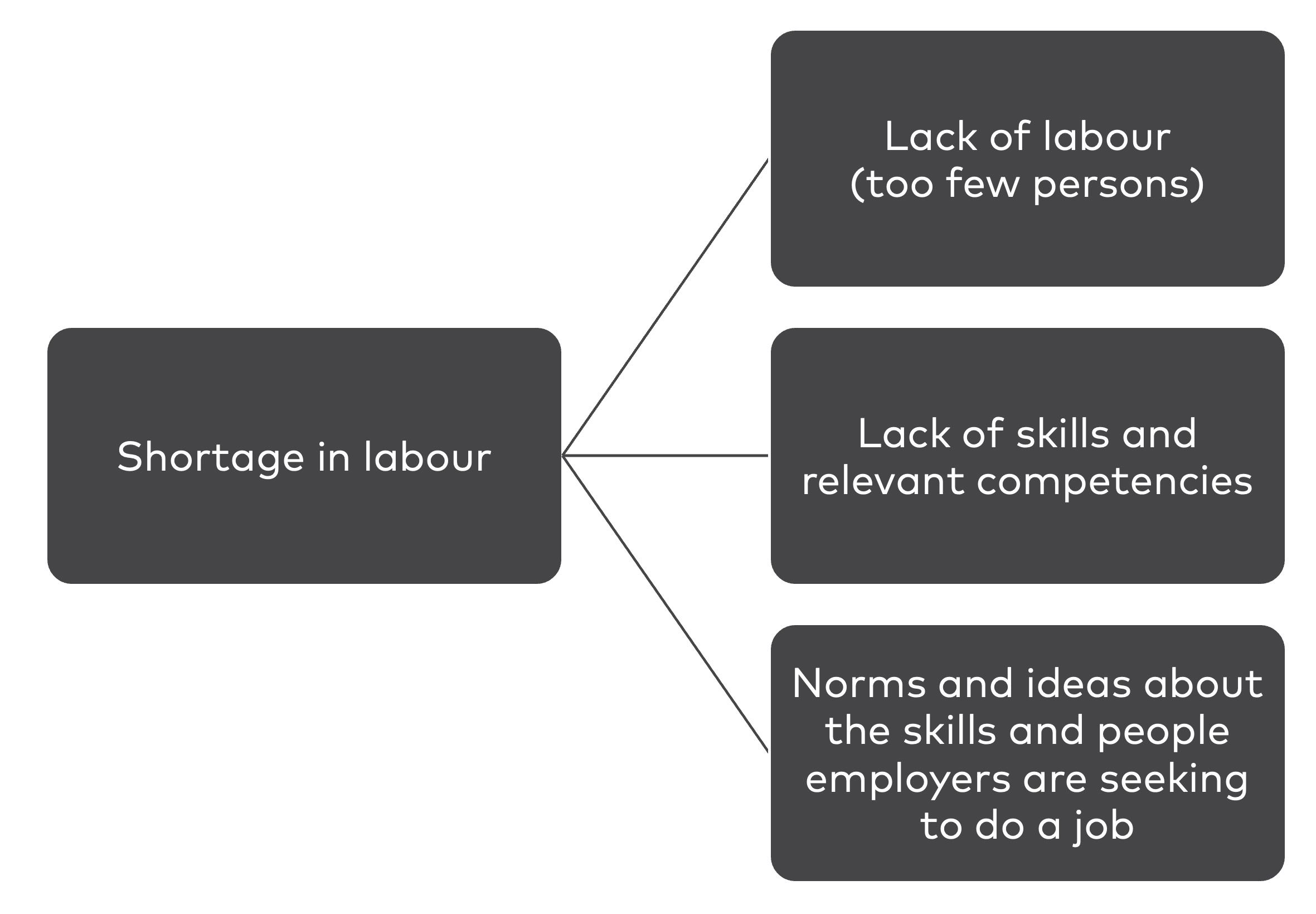
Figure 1.1. The problem of (rural) labour shortages in the Nordics
In a study of access to services in Nordic rural areas by Slätmo et al. (2023), labour shortages, especially in terms of attracting the right competencies, were identified as a core challenge.
The study was based on workshops, literature reviews, policy and statistical analyses, and 56 interviews in eight municipal case study areas. The case study areas – one in each Nordic country/autonomous territory – were as follows: Denmark, Lolland municipality; Finland, Kinnula municipality; Faroe Islands, Suðuroy region; Greenland, Avannaata municipality; Iceland, Múlaþing, municipality; Norway, Herøy municipality; Sweden, Vimmerby municipality; and Åland, Geta municipality (Slätmo et al. 2023).
These diverse results indicate that the sectors affected, along with the competence, education and types of skills required, vary widely between Nordic region’s rural areas. Thus, in order to learn more about these variations – as well as commonalities – the report now turns to a statistical overview of the Nordics.
References
Berglund, T., Dølvik, E. J., Rasmussen, S. & Røed Steen, J. (2019). ‘Changes in the Occupational Structure of Nordic Employment: Upgrading or Polarization?’. Nordic Future of Work Project 2017–2020: Working Paper 2. Fafo. www.fafo.no/images/pub/2019/Nfow-wp2.pdf.
Bogason, A., Brynteson, M. & Salonen, H. (2024). Remote Work in Rural Areas: Possibilities and Uncertainties. Nordregio report 2024:5. Stockholm: Nordregio. http://doi.org/10.6027/R2024:71403-2503.
Hörnström, L., Perjo, L., Johnsen, I. H. G. & Karlsdóttir, A. (2015). ‘Adapting to, or Mitigating Demographic Change? National Policies Addressing Demographic Challenges in the Nordic Countries’. Nordregio Working Paper 2015:1. https://norden.diva-portal.org/smash/get/diva2:871431/FULLTEXT01.pdf.
Lundgren, A., Guðmundsdóttir, H., Norlén, G. & Berlina, A. (2023). ‘Embracing the Just Green Transition on the Nordic Labour Market’. Report Number: R2023:111403-2503. Nordregio. http://doi.org/10.6027/R:2023:101403-2503.
Norlén, G. & Randall. L. (2020). ‘The Nordic labour market in 2040’. In: Grunfelder, J., Norlén, G., Randall, L. & Gassen, N. S. (eds), State of the Nordic Region 2020. Nord 2020:001. Copenhagen: Nordic Council of Ministers. https://doi.org/10.6027/NO2020-001.
Salonen, H. (2024). ‘Between Hand-outs and Stand-outs: Opportunities for Policy Support for Just Green Transitions’. Nordregio Policy Brief 2024:1. http://doi.org/10.6027/PB2024:1.2001-3876.
Slätmo, E., Bogason, Á., Cedergren, E., Huynh, D. & Salonen, H. (2023). Service Provision and Access to Services in Nordic Rural Areas. Nordregio Report 2023:2. Stockholm: Nordregio. http://doi.org/10.6027/R2023:2.1403-2503.
Slätmo, E., Bogason, Á., Vasilevskaya, A. & Salonen, H. (2022). Essential Rural Services in the Nordic Region: Challenges and Opportunities. Nordregio Report 2022:1. Stockholm: Nordregio. https://pub.nordregio.org/r-2022-1-essential-rural-services/#.
Stjernberg, M., Sigurjónsdóttir, H. R. & Wøien Meijer, M. (2021). Unlocking the Potential of Silver Economy in the Nordic Region. Nordregio Report 2021:7. Stockholm: Nordregio. http://doi.org/10.6027/R2021:7.1403-2503.
Tapia, C., Gassen, N. S. & Lundgren, A. (2023). In All Fairness: Perceptions of Climate Policies and the Green Transition in the Nordic Region. Nordregio Report: 2023:5. Stockholm: Nordregio. https://nordregio.org/publications/in-all-fairness-perceptions-of-climate-policies-and-the-green-transition-in-the-nordic-region/.
Wendt-Lucas, N., Jessen, S. and Brynteson, M. (2024). National Digital Inclusion Initiatives in the Nordic and Baltic Countries. Nordregio Report 2024:3 10.6027/R2024:31403-2503