Lack of labour in the care sector applies all over Finland. In sparsely populated rural areas a specific feature is the shortage of seasonal workers, e.g in wild berry-picking. (Photos: iStock and Maud Lervik / norden.org)
4. FINLAND
Introduction
This chapter explores labour shortage variations in Finnish rural areas, with special attention paid to the disparities between different types of rural area. Against this backdrop, the chapter analyses the solutions being pursued by national and regional authorities, as well as strategies adopted at a community and company level.
Finland’s national labour market
The single most important factor in Finland’s economy and national labour market is the country’s ageing population. While this represents an issue for the entire country, it is the rural population that is – proportionately speaking – the eldest (see Table 4.1).
Nevertheless, it is important to acknowledge just how extensive Finland’s countryside is, with different areas varying considerably in terms of climate, distances, population and economic structure. In particular, the contrast between those rural areas close to urban areas and other rural areas is in many respects bigger than the difference between urban and rural areas generally. With this in mind, this chapter follows the national regional typology (SYKE 2018; see Map 4.1), adopting a comparative approach to the three rural area categories: 1) sparsely populated rural areas; 2) core rural areas; and 3) rural areas close to urban areas.
Hilkka Vihinen
Natural Resources Institute Finland (Luke)
Natural Resources Institute Finland (Luke)
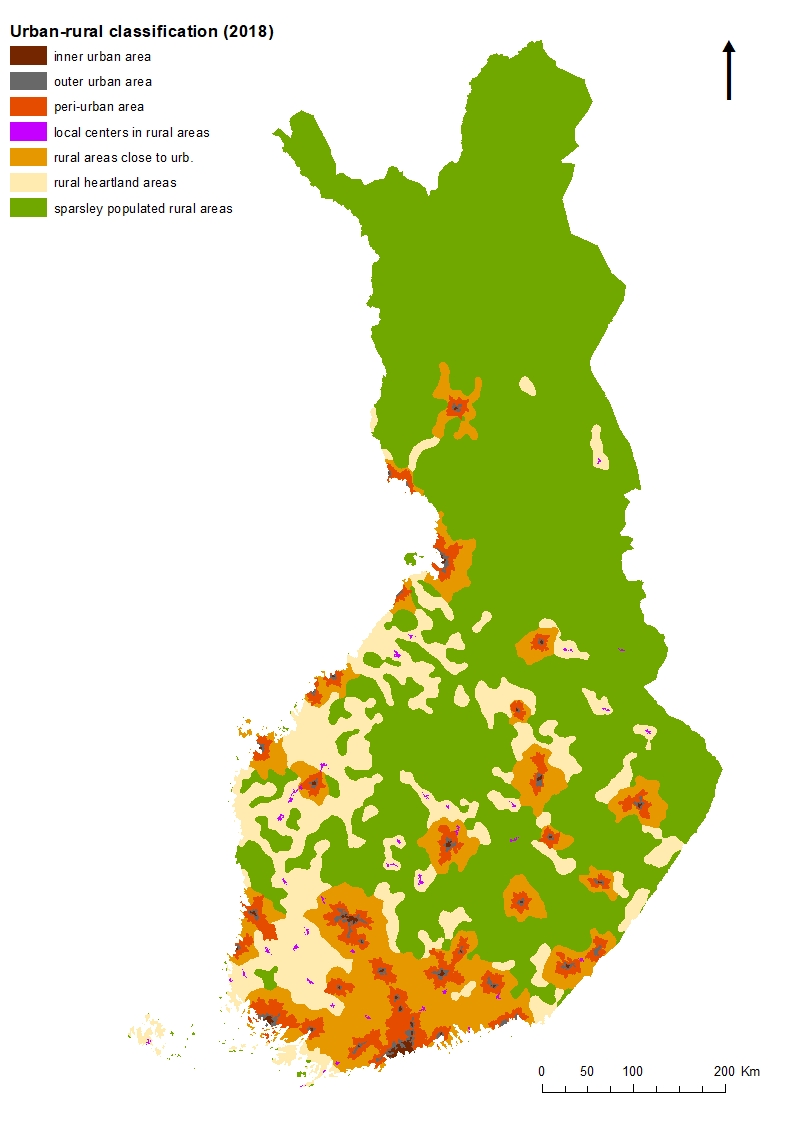
Map 4.1. Finnish urban–rural classification, 2018.
Source: SYKE (2018).
Source: SYKE (2018).
Labour shortages are not necessarily a sign of having too few or the wrong type of workers, nor of their inadequate quality or passivity. Rather, it may refer to a lack in (business) management and leadership.
According to the latest Labour Force Barometer (autumn 2023), most of Finland suffers from a labour market mismatch (Ministry of Economic Affairs and Employment 2023a, 2023b). The greatest shortage of labour is in the health and social services sector, where skilled workers are needed to provide care for older people in particular (Ministry of Economic Affairs and Employment 2023b). This shortage affects all types of areas, both urban and rural (Map 4.1).
According to the Barometer, demand for labour is decreasing due to the downward trend in the current economic cycle. Even so, almost half of workplaces (46%) seeking labour found it difficult to fill the vacancy. From a regional perspective, the situation in 2023 was most pronounced in Kainuu and Ostrobothnia. Kainuu is classified as a sparsely populated rural area, with the exception of its commercial centre, Kajaani. Ostrobothnia, meanwhile, consists mainly of rural heartland areas and sparsely populated rural areas, although with smaller urban centres (Ministry of Economic Affairs and Employment 2023a).
A closer examination of occupational levels reveals there is currently an acute shortage of nurses. In addition, there is a quantitative shortage of labour in early childhood education and care, sales tasks, protection and guarding work, and the software sector. There is also an oversupply of labour in many occupations, with the latest statistical data indicating this is the case for salespersons, builders, carpenters, freight handlers and lorry drivers (Ministry of Economic Affairs and Employment 2023a).
Finland’s unemployment rate (as of March 2024, for persons aged 15–74) is 8.1%, while its employment rate (persons aged 20–64) stands at 76.1% (OSF n.d.a). Here, it should be noted that the official statistics underestimate open vacancies, as private companies do not always seek labour openly or via public channels.
According to a recent Labour Market Roadmap project (Larja & Peltonen 2023), occupations facing a labour market mismatch – that is, where there is considerable demand for labour but unemployment remains high – include construction workers, application programmers, packers, chemical industry process operators, travel guides and greenhouse workers. The majority of such occupations are characterised by atypical employment relationships and low earning levels, rather than a traditional professional or regional mismatch (Larja & Peltonen 2023).
While lack of regional mobility is not generally a big problem in Finland, especially as the higher educated labour force is already very mobile (Alasalmi et al. 2020), increased mobility would be of help for certain occupations within the hospitality and manufacturing industry. A case in point is waiters, a profession that suffers from unemployment in urban areas, particularly the capital area, but for which there is a shortfall in supply across sparsely populated rural areas, especially Lapland. Similarly, the food industry faces a lack of process labour in in the core rural areas of South Ostrobothnia, in contrast to the surplus found in the sparsely rural areas of North Ostrobothnia (Larja & Peltonen 2023).
Looking at labour shortage profiles according to regional type, it can be seen that the entire country suffers from insufficient labour in the care sector. Turning to sparsely populated rural areas, a specific feature is the shortage of seasonal workers, both in the hospitality sector and especially in wild berry-picking. In core rural areas, which feature numerous small and medium-size (SMS) enterprises, there is a lack of both labour and successor enterprises in process and mechanical industry. In rural areas close to urban areas, there is a shortage of skilled labour in construction and industrial work. Finally, labour shortages in urban areas are worst in education and early childhood education, protection and guarding work, and the software sector (see Table 4.1).
History and trends
Finland’s industrialisation took place relatively late, from the 1960s onwards, with forest industry, wood processing and machine building forming the basis for metalworking and engineering. Due to the country’s northerly location, agriculture has never been a thriving business. Instead, it has been more typical – particularly in the case of farms in the north and east, where fields are small and scattered – to combine agriculture with other activities. In earlier times, this usually involved forest work; in more recent decades, machine contracting and paid employment.
Up until the recession that took hold in the early 1990s, Finland’s economic growth and welfare increases were rapid by international comparison. Prior to its collapse, the Soviet Union accounted for 15–20% of Finland’s exports, with Finland importing raw materials and exporting processed goods. The bilateral trade arrangements this rested on, however, were swept away along with the Soviet regime. At the same time, Finland faced a domestic financial sector crisis, price-competitiveness problems across its industries in general, and an economic downturn among Western economies.
Finland’s traditional rural businesses, agriculture and forestry have changed dramatically since the Second World War. Starting in the 1960s, forest work mechanised rapidly, while in agriculture similar developments progressed at a slower pace. As of 2020, the primary industries’ share of all jobs in Finland stood at 2.7% and the share of rural jobs at 10%, with the latter figure varying from 11.4% in sparsely populated rural areas to 5% in rural areas close to urban areas (Statistics Finland n.d.).
According to the Statistics Finland definition, ’primary production’ includes agriculture, forestry and fishing, but not mining.
Map 4.2 shows how the number and distribution of Finland’s farms has changed between 1995, when Finland became a member of the European Union (EU), and 2017. Most labour-intensive farms – those with livestock – are located either in the south-west (poultry and pig) or further north (dairy farms). The shift in the most labour-intensive production lines towards central and northern Finland is largely the result of the Act on Accession to the EU, which restricts payment of long-term national support to areas north of the 62th parallel.
The relevant details can be found in Article 142 of the 1994 ‘Act concerning the conditions of accession of the Kingdom of Norway, the Republic of Austria, the Republic of Finland and the Kingdom of Sweden and the adjustments to the Treaties on which the European Union is founded’, http://data.europa.eu/eli/treaty/acc_1994/sign.

Map 4.2. Farms in regional types of areas, 1995, 2003 and 2017.
Source: Vihinen et al. (2019: 65).
Source: Vihinen et al. (2019: 65).
Note: One dot = one active farm (= eligible for subsidies). K1 = inner urban area; K2 = outer urban area; K3 = peri-urban area; K4 = local centres in rural area; K5 = rural area close to urban area; K6 = rural heartland area; K7 = sparsely populated rural area.
The great recession of the 1990s initially led to severe, long-lasting unemployment, then later – towards the end of the century – the birth of the information and communications technology (ICT) sector and large-scale telecommunications. Following the 2008–2009 recession, the telecommunications sector lost its leading role in the economy. Instead, Finland has returned to exporting pulp industry products, with packing board replacing paper due to the worldwide expansion of online shopping. The technology industry, along with mechanical engineering, also remain strong elements of Finland’s export industry. Forestry and machine construction are both deeply rooted in the country’s rural areas, and so affect local labour markets. Although the headquarters of many metal and mechanical engineering companies are located in urban areas, they depend heavily on subcontracting, which takes place all over the countryside.
2. Regional and rural labour shortage variations
Rural labour force projections
As already mentioned, Finland’s rural population is ageing rapidly. Table 4.1 below shows that, according to population forecasts (OSF n.d.b), rural areas are expected to lose 100,000 working-age inhabitants by 2040. The trends driving this projection are a low birth-rate, with mortality exceeding births, and the concentration of foreign labour in urban areas, which are expected to gain 100,000 workers over the same period. The forecast also indicates that the larger shortage of female workers relative to male workers in rural areas will continue (OSF n.d.b).
Most important sectors by rural area type
While different types of rural areas have different economic structures, social and health care is the biggest employment sector across all regional types – including urban areas. As of 2020, the sector’s share of employment in sparsely populated rural was 18.2%, followed by primary production (agriculture, forestry and fisheries) (11.4%) and industry (10.8%). In heartland rural areas, the three biggest sectors were social and health care (19%), industry (18.9%) and primary production (9.9%). In rural areas close to urban areas, the biggest employment sector is again social and health care (19.4%), followed by industry (15.5%) and construction (10.9%) (Statistics Finland n.d.). Given the social and health care sector is dominated by female employees, any changes to the sector inevitably impacts women’s job opportunities in rural areas.
Social and health care’s share of employment has increased in all types of areas over the period 2007–2020 (Statistics Finland n.d.). In sparsely populated rural areas, the only other sector to increase its share of employment during this time was the mining industry (from 1% to 2.9%). In rural heartland areas, the hospitality sector’s share increased slightly (from 2.5% to 2.8%), while the construction industry grew in rural areas close to urban areas (from 9.8% to 10.9%) (Statistics Finland n.d.).
Entrepreneurs and the self-employed as part of the labour force
Proportionally speaking, Finland’s rural areas host more entrepreneurs, especially small-scale entrepreneurs as well as self-employed workers than its urban areas, where wage work is more common. In both sparsely populated and rural heartland areas, 15.4% of all those engaged in work in 2020 were entrepreneurs/self-employed. In rural areas close to urban areas, the percentage was 12.7%, while in urban areas it was just 8.6% (Table 4.1). As the numbers provided in Table 1 demonstrate, rural enterprises are primarily very small, with rural heartland areas standing out as having most businesses in absolute numbers.
In many cases, such businesses involve self-employed people taking care of various types of production (e.g. in agriculture or horticulture) or providing rural communities with necessary services (e.g. cleaning and maintenance workers, car mechanics, electricians, plumbers, machine contractors, hairdressers, physiotherapists). In addition, self-employment is also common in ‘new’ rural occupations, such as wilderness or hiking guides, dog trainers or wellness therapists. Self-employment is often the only option available for those interested in living in rural areas. Moreover, their work may only be possible with the aid of virtual connections and remote working.
Given the number of small enterprises in the countryside, labour shortages in rural areas not only affect the activities of public institutions and private companies, but have a direct impact on the number of such enterprises in an area (see Table 1). While the high number of small enterprises In rural heartland areas is partly explained by the amount of farms, only 35,730 of the total of 141,556 rural enterprises recorded in 2020 were classified as agricultural and horticultural enterprises (Statistics Finland n.d. ). In other words, only one in four rural enterprises can be classified as a farm. The ageing rural population also means labour shortages arise due to a shortage of successors willing or able to take the place of retirees. All of the above has implications when it comes to dealing with rural labour shortages.
Labour shortages due to retirement
When it comes to understanding whether future rural labour shortage in Finland will primarily be characterised by lack of personnel or lack of appropriate skills in the existing work force, it is important to examine the likelihood of rural labour retiring in different types of rural areas and sectors. According to employment statistics for 2022 (Vihinen et al. 2024), in sparsely populated rural areas almost a third (32.8%) of the total working population (both paid employment and self-employment) was 55–74 years old – thus likely to exit the world of work within ten years. The sectors with the largest shares of those in this age bracket were property business/maintenance (47.8%), public administration (39.3%), finance and insurance (37.4%), and primary production (36.8%). The share was high also in education, as well as in social and health care. People working in the mining sector had the smallest proportion of people likely to retire within the coming decade (Vihinen et al. 2024).
In rural heartland areas, 28% of the working population was 55–74 years old. As in the sparsely populated rural areas, those employed in property business/maintenance were the most likely to belong to this age bracket (42.4%), followed by public administration (36.1%) and primary production (33.7%). At the other end of the spectrum, the construction sector had the smallest share in rural heartlands (21.5%) (Vihinen et al. 2024).
The picture was somewhat more positive in rural areas close to urban areas, where, on average, a quarter (24.6%) of the employed population was 55–74 years old. Here, primary production had the highest proportion falling into this age range (35.2%), followed by property business/maintenance (34.8%). Conversely, the sector with the smallest proportion of 55–74 year olds was information and media (19.2%) (Vihinen et al. 2024).
It is noteworthy that the shortage of labour in rural areas is, in many cases, down to a lack of younger entrepreneurs stepping in to take over when their older counterparts retire. Firstly, many workers in rural areas work in small firms (see Table 4.1), meaning the retirement of a firm’s owner may lead to the job disappearing. Secondly, addressing labour shortages in rural areas requires finding suitable successors to fill the skills gap created when an entrepreneur or self-employed person leaves the local labour market. Doing so becomes difficult when there is a shortage of such individuals interested in or able to pursue self-employment. Here, it should be noted that being an entrepreneur or self-employed worker implies – in addition to the substance of the work – extra skills.
Seasonal workers as a specific labour shortage group in rural areas
Finland hosts an estimated 40,000 seasonal workers, half of whom work in the hospitality sector (especially in Lapland sports resorts), with the remainder working in agriculture or horticulture, or as wild berry-pickers (Yle 2022; Rannanpää et al. 2022). Regarding rural areas, an important intra-Nordic difference should be highlighted with regard to third-country migrant workers. In Finland, Ukraine provided the largest proportion of such workers – the majority of whom come to work in horticulture – in the years prior to Russia’s full-scale invasion in 2022 (Kuns et al. 2022). By contrast, studies indicate that EU labour migrants dominate in Norway and Denmark (Friberg & Erdland 2013; Friberg & Midtbøen 2018), and are also significant in Sweden.
In recent years, the Covid-19 pandemic and especially the war in Ukraine have complicated the availability of seasonal workers, to the extent that lack of workers threatens to significantly affect the supply of fruit and vegetables in Finland. By some estimates, a third of Finland’s seasonal rural worker roles are going unfulfilled (Yle 2022). Ukrainians in Finland who have fled their country and received temporary protection are allowed to work freely, and after 12 months can apply for a municipality of residence. The problem, however, is that most of these Ukrainians are women with (small) children, whereas male labour is needed to safeguard competitive production in agriculture and horticulture. As such, Finnish rural areas can no longer rely on the availability of Ukrainian labour (Viilo 2023).
Another sector facing severe labour shortages, particularly in sparsely populated rural areas, is the picking of wild berries and other natural products. Generally, this work is not carried out through conventional employment relations. Instead, most berry-pickers are foreign nationals who pick nature products by virtue of everyman’s right, facilitated by accommodation and food provided by industry operators. Recently, serious legal doubts have been raised regarding the sector’s functioning, with authorities expanding a human trafficking investigation to encompass berry companies. At the same time, high-ranking politicians and officials in Thailand have been subject to allegations of corruption linked to berry harvesting in Finland, while a Finnish senior ministerial advisor has been remanded in connection with the suspected use of foreigners in wild berry-picking (Yle News 2024a). In response, Finland’s Ministry for Foreign Affairs suspended berry-pickers’ visa applications in Thailand (Ministry for Foreign Affairs 2024).
Given that Thai pickers have typically accounted for 80–90% of commercially picked wild berries (Lapin Kansa 2024), this represents a major setback for the Finnish natural product sector, and appears a difficult issue to resolve in the short run. The most recent attempt to address the wild berry-picking labour issue has been the outlining of a ministerial committee on employment and entrepreneurship. This states that, from 2025 onwards, pickers should primarily have seasonal employment contracts, with berry-picking on a tourist visa no longer allowed. For 2024, wild berry firms are permitted to recruit foreign pickers if they enter Finland with employment-based residence permits, which is effectively the same procedure for workers harvesting farmed berries, such as strawberries. The main reason the use of berry-pickers has not previously been employment-based is because this allows the risk of poor harvest to be borne by the pickers rather than the berry companies (Yle News 2024b).
Table 4.1. Employment and entrepreneurship indicators according to national regional typology, different years.
Sparsely populated rural areas | Rural heartland areas | Rural areas close to urban areas | Urban areas | |
Working-age (25–64 years) population in 2040 (change from 2021, %) | 103,207 (-24.4%) | 253,733 (-19.2%) | 254,113 (-6.0%) | 2,190,822 (5.1%) |
Working-age (25–64 years) population according to gender in 2040 | 54,287 (men) 48,920 (women) | 133,379 (men) 120,354 (women) | 131,012 (men) 123,101 (women) | 1,125,541 (men) 1,065,281 (women) |
Most important sectors employing workers in 2020 (arrow shows direction of growth/shrinkage) | Social and health care (20.5%) ↑ Primary production (11.4%) ↓ Industry (10.8%)↓ | Social and health care (19%) ↑ Industry (18.9%) ↓ Primary production (9.9%)↓ | Social and health care (19.4%) ↑ Industry (15.5%) ↓ Construction (10.9%)↓ | Social and health care (17.9%) ↑ Trade (11.6%) ↓ Industry (11%)↓ |
Total share of employed over 55 years (including entrepreneurs) in 2022 (2007) | 32.8% (20.3%) | 28.0% (20.2%) | 24.6% (18.0%) | 20.4% (16.8%) |
Share of entrepreneurs among total employed in 2022 | 15.4% | 15.4% | 12.7% | 8.6% |
Number of (companies’) places of business in 2020 (national share) | 27,278 (6.8%) | 73,619 (18.4%) | 40,659 (10.2%) | 257,647 (64.5%) |
Share of places of business according to number of personnel and region type in 2020 | 0–4 persons: 90.6% 5–9 persons: 5.2% 10–19 persons: 2.7% 20–49 persons: 1.2% 50–249 persons: 0.3% 250+ persons: 0.01% | 0–4 persons: 90.3% 5–9 persons: 5.1% 10–19 persons: 2.7% 20–49 persons: 1.3% 50–249 persons: 0.5% 250+ persons: 0.03% | 0–4 persons: 89.7% 5–9 persons: 5.4% 10–19 persons: 3.0% 20–49 persons: 1.5% 50–249 persons: 0.4% 250+ persons: 0.04% | 0–4 persons: 83.7% 5–9 persons: 7.5%) 10–19 persons: 4.6% 20–49 persons: 2.8% 50–249 persons: 1.3% 250+ persons: 0.15% |
Commuting/remote work/seasonal work | More seasonal work municipalities than other regions. | Least number of commuting. Highest workplace self-sufficiency among rural areas. | Lowest workplace self-sufficiency. Highest number of remote work and commuting municipalities. | Highest workplace self-sufficiency. |
Labour shortage profile | Eldest workforce. Vulnerable to generation shifts (large share of small-scale entrepreneurs in workforce), especially in agriculture. Other shortage sectors: care, seasonal workers, wild berry-pickers. In Lapland, danger of losing skilled labour to Norway and Sweden. | Vulnerable to generation shifts (large share of small-scale entrepreneurs in workforce). High number of small enterprises. Lack of labour in social and health care, and process and mechanical industry. Open field vegetable production dependent on foreign labour. In Finland’s western regions, losing skilled, Swedish-speaking labour to neighbouring countries. | Lack of industrial workers, as well as skilled labour in construction. Labour shortages in urban areas affect the labour market in these areas. Smaller share or entrepreneurs among workforce. | Lack of labour in social and health care; education and early childhood education; protection and guarding work; and the software sector. |
Source: Vihinen et al. (2024).
Strategies and solutions
Rural labour shortages take many forms, with solutions requiring improved performance from all actors. Successful strategies in the past have often involved, among other things, regional and local tailoring, systematic networking, and cooperation across sectors. Against this backdrop, the sectors facing persistent labour shortages should revisit the terms of employment by addressing the following three dimensions: 1) the amount and quality of employees, which can be dealt with through foreign labour, vocational education or further training, and activating the unemployed; 2) the number of entrepreneurs and available successors; and 3) the quality of management and leadership.
Below, following a brief summary of Finland’s labour policy landscape, the main findings from recent studies and development projects in the country’s rural areas are summarised.
Regional implementation of national employment policies
Essentially, Finland’s labour policy is set at a national level, with the Ministry of Economic Affairs and Employment taking the lead and other ministries bearing special responsibilities. For example, the Ministry of Social Affairs and Health is assigned occupational safety and health,
For further information, see: https://stm.fi/en/occupational-safety-and-health.
For further information, see: https://okm.fi/en/vocational-education-and-training.
For further information on Finland’s CAP plan, see: https://maaseutu.fi/sv/eus-gemensamma-jordbrukspolitik/cap-plan/.
Within the national policy framework, regions have a degree of room for manoeuvre when choosing targets tailored to their circumstances. Although labour policy is centrally led, its implementation is currently undertaken by regional state authorities, namely the 15 ELY Centres (Centres for Economic Development, Transport and the Environment) and 15 TE Offices (Employment and Economic Development Offices), which offer employment services.
For further information on ELY Centres, see: www.ely-keskus.fi/ely-keskukset; for TE Offices, see: https://tem.fi/en/public-employment-and-business-services.
Starting from 1 January 2025, however, the system will shift towards greater local implementation, with 45 employment areas or municipalities given responsibility for organising employment services and economic development (Ministry of Economic Affairs and Employment 2024). This comes as part of a major readjustment in the division of labour between the state and municipalities. Finnish municipalities have, since 2023, been designated ‘vitality’ communities rather than ‘care’ communities, as was the case previously. In practical terms, social and health care has become the responsibility of specific regions, while municipalities now focus on promoting the local economy and taking care of primary education, culture and land use (Ministry of Social Affairs and Health n.d.).
What currently unites all of Finland’s regions is the need for skilled labour and significant green transition investments in, among other things, wind, solar and bioenergy solutions, as well the circular economy. The overriding message sent by the regions is that labour supply must be increased through the labour migration of skilled workers, and by improving areas of education relevant to the needs of enterprises located in the area in question (Pylkkänen 2023.)
Encouraging regional mobility
When it comes to labour mismatches, targeted communication about vacancies and mobility assistance could facilitate access to the workforce. Here, the main means of enhancing employment is the development of digital solutions and support for jobseekers and employers. International recruitment by public funds has also been proposed as a way of targeting occupations facing shortages where the potential for foreign labour appears greatest, such as ICT experts. Similarly, the number of foreign students undertaking courses relevant to these professions should be increased (Larja & Peltonen 2023).
Improving recruitment services
Various private recruitment channels (such as Töitä Suomesta/Work in the Countryside) have emerged alongside the regional TE Offices, leading to various forms of cooperation between the two.
For further information onTöitä Suomesta/Work in the Countryside, see: https://jobs.toitasuomesta.fi/en-GB.
Even so, employers are struggling to identify the most effective channels for finding workers. There are a multitude of recruitment services and it takes considerable skill and experience to know what to use when. While private services are considered more user-friendly than their public equivalents, they charge not-insignificant fees (Karikallio & Kiviholma 2019).
The quality of the workforce coming through public employment services is perceived to have declined. Moreover, many employers regard the public employment services as slow, or are unfamiliar with the recruitment services they provide. Given this, employer awareness of these services should be improved. There is also demand for a personalised service to complement e-services (Karikallio & Kiviholma 2019).
Making rural jobs more attractive through employers’ good practices
Employers must be proactive in finding and retaining a skilled workforce. Here, an important starting point is ensuring the basics are in place: the job should match what has been agreed, and the workplace should have clear ground rules, a good working atmosphere and a meaningful commitment to equal opportunities. Moreover, employers should make concerted efforts to improve their image and job adverts. In this respect, job presentation videos involving interviews with employees offer a good way of promoting awareness of both a particular workplace and the sector as a whole. In short, pride in one’s own industry should be visible at all times (Karikallio & Kiviholma 2019).
Improved salaries, contract types and working conditions in the main labour shortage sectors – such as social and health care, and maintenance and cleaning – are needed. There are many educated nurses, for example, who leave the sector due to unsatisfactory working conditions.
Educating potential employees and broadening the view of rural labour resources
Regional educational institutions and training options are central to workforce availability in Finland. Upon graduation, students often remain in the area where they studied. As such, closing down occupational education institutions in rural areas poses a structural problem when it comes to labour shortages. In 2022, there were only four vocational schools left across Finland’s entire sparsely populated rural area (Vipunen n.d.). Given that it is unlikely a significant number of new vocational institutes will be established in rural areas, investments in remote learning and learning hubs should be promoted.
Although recruitment training has shown signs of success, for example in the metal sector, the tool has been under-utilised thus far. Recruitment training is often incorporated into (vocational) studies, thereby introducing students to real-life work experiences and providing connections between potential employees and employers. Work experience schemes offering short placements with local employers can act as an incentive for unemployed people and students, helping integrate them into the labour market.
There appears to be a cohort of potential workers who – for various reasons – are uninterested in or cannot attend vocational schools. Here, apprenticeship training – in which an employer provides an employee with training over the course of a fixed-term contract – offers a potential solution. Under the Finnish system, an apprenticeship student works at least 25 hours a week. At least 80% of training takes place in the workplace, with the remaining 20% conducted in an education institution via online access and/or remote courses. Through the apprenticeship, the employee can complete second-degree vocational qualifications.
For further information, see: https://oppisopimus.fi/en/student/apprenticeship-training/.
More generally, pensioners and the partially employed in particular remain an under-utilised labour resource, including in rural areas.
Cooperation
One of the key potential solutions to rural labour shortages is increasing levels of cooperation between rural enterprises. This encompasses combining work to create longer periods of employment; recruiting foreign labour from abroad together; and/or engaging in rural development projects aimed at improving work conditions or the attractiveness of the area or sector in question (Karikallio & Kiviholma 2019). In terms of recruiting foreign labour directly to rural areas, there have been several encouraging examples of regional or local cross-sectoral cooperation involving close relations between local entrepreneurs and regional authorities (Vesala & Vihinen 2011).
Trade unions should also be involved in increasing cooperation, as well as municipalities and educational institutions. In rural areas, the labour market is thin, meaning regional labour mobility is important for balancing local labour markets. Such labour market disparities can be lessened by providing opportunities for teleworking or multi-site working. Overall, it is becoming increasingly easy to move from urban areas to rural enterprises (Vesala & Vihinen 2011).
Entrepreneurship/self-employment as an option
Increasing entrepreneurship/self-employment through better incentives is part of the solution to rural employment problems. It has become increasingly common, especially for temporary work, to utilise freelance services rather than hire a contract employee. In some cases, it is easier to offer remote or place-independent services as a self-employed person than to find a job in a rural area (Karikallio & Kiviholma 2019).
Activities aimed at matching potential successors with retiring entrepreneurs/self-employed workers is also an option for recruitment services in rural areas, where there is a shortage of successors.
Foreign workers
Foreign workers are of great importance in rural areas. A survey of Finnish rural employers (Karikallio & Kiviholma 2019) reveals that they find the work permit process, especially for workers coming from outside the EU, to be slow and inflexible. Greater efficiency and flexibility in this regard would therefore be desirable. In addition, more resources from employers and municipalities should be allocated to immigrant integration and language training. Even before starting work, foreign workers should be made familiar with the local living environment and work setting, as well as how best to interact with the authorities. Once in employment, foreign workers should be made to feel comfortable both at work and in their local community. It is also important that an employer makes efforts to maintain their good reputation, as foreign workers have a low threshold for changing jobs within the industry (Karikallio & Kiviholma 2019).
Närpes municipality is known nationally for its success in recruiting foreign labour, especially to work in glasshouses, and has long been regarded as Finland’s most successful rural area when it comes to tackling labour shortages. The strategy has been to embed newcomers in the labour market using longstanding, systematic activities aimed at encouraging – among other groups – family members of existing foreign workers, workers with a refugee background and those recruited directly from abroad. The roles played by both the municipality and employers has been crucial to making such integration a success (Raunio et al. 2023).
Provided they have the relevant professional skills, coupled with the motivation for regional mobility, seasonal foreign workers hold the potential to address various sectoral labour shortages throughout the year. Here, the question of regional attraction and retention, services and spouse employment is of particular importance. In Keski-Karjala sub-region, part of a sparsely populated rural area, local public and private sector actors have engaged in long-term cooperation, bringing together separate seasonal works in order to provide year-round employment. As a result, foreign workers have been enticed into settling down in the area, thus improving longer-term labour availability (Rannanpää et al. 2022: 85).
This demonstrates that even very sparsely populated rural areas can be made attractive living settings for foreign workers. Similarly, anyone whose work is location independent can if they wish transfer their activities to attractive rural surroundings. In many cases, however, this would require fully functioning, fast internet connections.
Improving the possibilities for multi-local working
A frequent problem in cases where a worker is potentially interested in taking up a job in a rural area is that there is no job available for his/her spouse. Here, the government resolution promoting multi-local work, studying and living (VM/2022/40) offers a means of addressing this obstacle, with the state sector committing itself to giving employees the freedom to choose where they work (taking into account the content and needs of the work in question).
For further information on government resolution VM/2022/40, see: https://valtioneuvosto.fi/paatokset/paatos?decisionId=0900908f8079e6cb.
Concluding remarks and outlook
Finland’s diverse rural areas face a range of labour shortage issues. As such, they require regionally tailored policy combinations, together with tools aimed at facilitating (small) entrepreneurship/self-employment. Employment itself is currently undergoing a process of transformation – going forward, we may see more atypical labour contracts, as well as greater numbers of self-employed people in rural areas.
Thanks to modern communication technology, more and more of our work is becoming location independent. Given this, investing in fast internet connections potentially offers one of the most effective labour policy options when it comes to rural areas. Access to vocational education is also a critical element in any functioning labour market, including in rural areas. Moreover, persistent labour shortages in a particular sector indicate a need to revisit the terms of employment (e.g. wages, working conditions), as well as the work management culture.
Finland’s ageing population is an issue for Finland’s labour market as a whole. Here, two main policy options present themselves: either adjust to the fact that certain geographical areas face shrinking populations, or try to attract foreign labour. The latter option poses challenges, as even if sufficient political will is mustered to proceed down this path, Finland is not a favoured destination for the international labour force.
Within the country, however, rural areas offer an attractive working environment for many. In addition, the core of Finland’s economy – the wood and metal industries – is firmly rooted in rural areas.
Finally, a researcher’s observation regarding rural labour shortage: gathering spatially based employment statistics would provide more accurate information on employment problems in different regions.
References
Alasalmi, J. et al. (2020). ‘Työn ja työvoiman alueellinen liikkuvuus ja monipaikkainen väestö’. Valtioneuvoston kanslia. https://julkaisut.valtioneuvosto.fi/handle/10024/162147.
Friberg, J. H. & Eldring, L. (2013). Labour Migrants from Central and Eastern Europe in the Nordic Countries: Patterns of Migration, Working Conditions and Recruitment Practices. Copenhagen: Temanord, Nordic Council of Ministers. www.oecd-ilibrary.org/content/publication/tn2013-570.
Friberg, J.H. & Midtbøen, A. H. (2018). ‘Ethnicity as skill: Immigrant employment hierarchies in Norwegian low-wage labour markets’. Journal of Ethnic and Migration Studies 44(9): 1463–1478. https://doi.org/10.1080/1369183X.2017.1388160.
Karikallio, H. & Kiviholma, S. (2019). ‘Työvoiman saatavuus vaivaa maaseutuakin – avuksi yhteistyö, koulutus ja maahanmuutto’. PTT Policy Brief 06/2019. www.ptt.fi/wp-content/uploads/media/julkaisut/tyovoimabrief4.pdf.
Kauppalehti. (2022). ‘Monella kasvua yli 40 %, liikevoitto jopa 86 % – Selvitimme 20 suurinta metsäteollisuuden yritystä, ja niillä menee nyt erittäin lujaa’. 14 October. www.kauppalehti.fi/uutiset/monella-kasvua-yli-40-liikevoitto-jopa-86-selvitimme-20-suurinta-metsateollisuuden-yritysta-ja-niilla-menee-nyt-erittain-lujaa/2f71c732-fb25-46fd-b288-8c3133fe8088.
Kuns, B. et al. (2023). ‘From panic to business as usual: What coronavirus has revealed about migrant labour, agri-food systems and industrial relations in the Nordic countries’. Sociologia Ruralis 63(4): 907–927. https://doi.org/10.1111/soru.12443.
Lapin Kansa (2024). ‘Marjayrityksillä ei varasuunnitelmia thaimaalaispoimijoiden korvaamiseksi – “Päätöksen ei olisi pitänyt olla yllätys kenellekään”, sanotaan ulkoministeriöstä’. 22 March. www.lapinkansa.fi/marjayrityksilla-ei-varasuunnitelmia-thaimaalaispo/6271025.
Larja, L. & Peltonen, J. (2023). Työvoiman saatavuus, työvoimapula ja kohtaanto-ongelmat vuonna 2022. TEM-analyyseja 113/2023. Ministry of Economic Affairs and Employment. https://julkaisut.valtioneuvosto.fi/handle/10024/164550.
Ministry for Foreign Affairs (2024). ‘Foreign Ministry suspends reception of berry pickers’ visa applications in Thailand’. Press release. 15 March. https://valtioneuvosto.fi/en/-/foreign-ministry-suspends-reception-of-berry-pickers-visa-applications-in-thailand.
Ministry of Economic Affairs and Employment of Finland (2023a). ‘Labour Force Barometer: Autumn 2023’. https://tyovoimabarometri.fi/.
Ministry of Economic Affairs and Employment of Finland (2023b). ‘Labour Force Barometer: Most of Finland suffers from labour market mismatch’. Press release. 29 November. https://tem.fi/en/-/labour-force-barometer-most-of-finland-suffers-from-labour-market-mismatch.
Ministry of Economic Affairs and Employment of Finland (2024). ‘TE services reform 2024: Finland to have 45 employment areas’. Press release. 22 February. https://tem.fi/en/-/te-services-reform-2024-finland-to-have-45-employment-areas.
Ministry of Social Affairs and Health (n.d.). ‘Wellbeing services counties will be responsible for organizing health, social and rescue services’. https://stm.fi/en/wellbeing-services-counties.
Official Statistics of Finland (OSF) (n.d.a). ‘Labour force survey’. Statistics Finland. https://stat.fi/en/statistics/tyti (accessed 21 May 2024).
OSF (n.d.b). ‘Population projection’. Statistics Finland. (accessed 16 May 2024).
Pylkkänen, E. (2023). ‘15 erilaista työllisyyspolitiikkaa yhdessä maassa’. Government of Finland. https://valtioneuvosto.fi/-//1410877/15-erilaista-tyollisyyspolitiikkaa-yhdessa-maassa.
Rannanpää, S. et al. (2022). Monipaikkaisuus – nykytila, tulevaisuus ja kestävyys. Helsinki: Prime Minister’s Office, Government of Finland. http://urn.fi/URN:ISBN:978-952-383-150-6.
Raunio, M., Mattila, M., Bäckman, L. & Kosová, M. (2023). Alueellinen resilienssi ja työperusteinen maahanmuutto. Kasvihuoneteollisuuden ulkomainen työvoima Närpiön seudulla. Helsinki: Ministry of Economic Affairs and Employment of Finland. https://urn.fi/URN:ISBN:978-952-327-609-3.
Statistics Finland (n.d.). ‘Rural Indicators’. Paid online database (accessed 30 April 2024 and 16 May 2024).
SYKE (2018). ‘Finnish urban–rural classification (2018)’. The updated version, from 2020, is found here: www.syke.fi/en-US/Current/Updated_urbanrural_classification_Finlan(57443).
Vesala, K. M. & Vihinen, H. (eds) (2011). Yritysten menestystarinat ja yrittäjyyden edistäminen. Tapaustutkimus yrittäjistä, kehittäjistä ja politiikkadiskursseista Suupohjan seutukunnassa. MTT Report 16. Jokioinnen: MTT. https://jukuri.luke.fi/handle/10024/438220.
Vihinen, H., Kallioniemi, M., Korhonen, K., Niskanen, L. & Voutilainen, O. (2024). Maaseudun toimialojen työvoiman saatavuus ja tulevaisuuden tarpeet vuoteen 2040. Helsinki: Luonnonvarakeskus. https://jukuri.luke.fi/handle/10024/555069.
Vihinen, H., Voutilainen, O. & Muilu, T. (eds) (2019). Manner-Suomen maaseudun kehittämisohjelmien aluetalous- ja työllisyysvaikutukset. Vaikuttavuusanalyysi kaudelta 2007-2013. Helsinki: Ministry of Agriculture and Forestry. http://urn.fi/URN:ISBN:978-952-366-005-2.
Viilo, T. (2023). ‘Ukrainalaisiin tukeutumisen aika on ohi’. Maaseudun Tulevaisuus. 10 February.
Vipunen. Education Statistics Finland (n.d.). ‘Vocational education and training’. https://vipunen.fi/en-gb/vocational-education-and-training.
Yle (2022). ‘Maaseudun töissä poljetaan usein ulkomaalaisten palkkaa ja työehtoja – työntekijät itse pyytävät toisinaan tehdä työtä vuorotta’. 21 July. https://yle.fi/a/3-12527292.
Yle News (2024a). ‘Berry-picking probes expand: Suspected human trafficking and corruption in Finland and Thailand’. 13 April. https://yle.fi/a/74-20083528.
Yle News (2024b). ‘Ministry: Wild berry pickers should mainly be seasonal employees by 2025’. 15 May. https://yle.fi/a/74-20088817.