2. Characteristics of the Nordic labour market and the Nordic model
The labour markets in the Nordic countries share several characteristics associated with the Nordic model, including common values such as equality, universal access to political and social rights and a high degree of inclusion. The Nordic states are welfare societies with high living standards and a large public sector, primarily funded through taxation.
A key feature of Nordic labour markets is high labour market participation, which is essential for sustaining and financing the Nordic welfare model. Historically, participation rates have risen, driven primarily by increased female workforce participation and, more recently, by a growing number of people over the age of 65 remaining in employment.
As illustrated in Figure 1, all Nordic countries have higher employment rates than the EU average. While employment levels fluctuate due to economic cycles, the gap between Nordic countries and the EU average remains relatively stable.
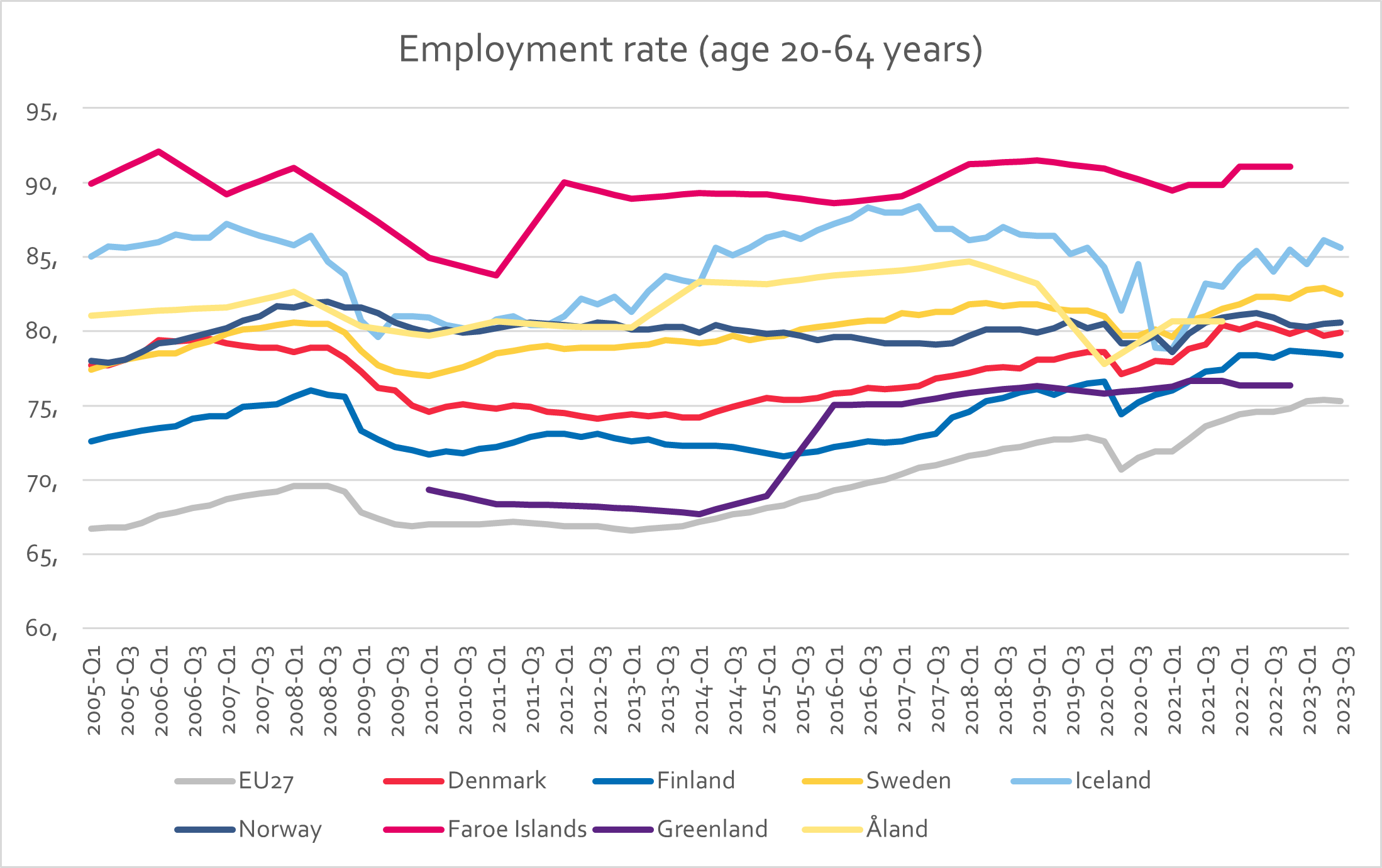
Figure 1. Employment rate (among the population aged 20-64 years). Data source: Eurostat and NSIs (Labour Force Survey, excluding GL and AX).
A strong gender balance in labour force participation is another key characteristic of the Nordic labour markets. However, gender segregation in the labour market remains a significant issue across the Nordic countries (OECD, 2018; Andréasson, Randall, & Norlén, 2020). For instance, only 17% of the workforce in Sweden, Finland and Norway is employed in occupations where the gender balance falls between 40% and 60% (Norlén, 2024).
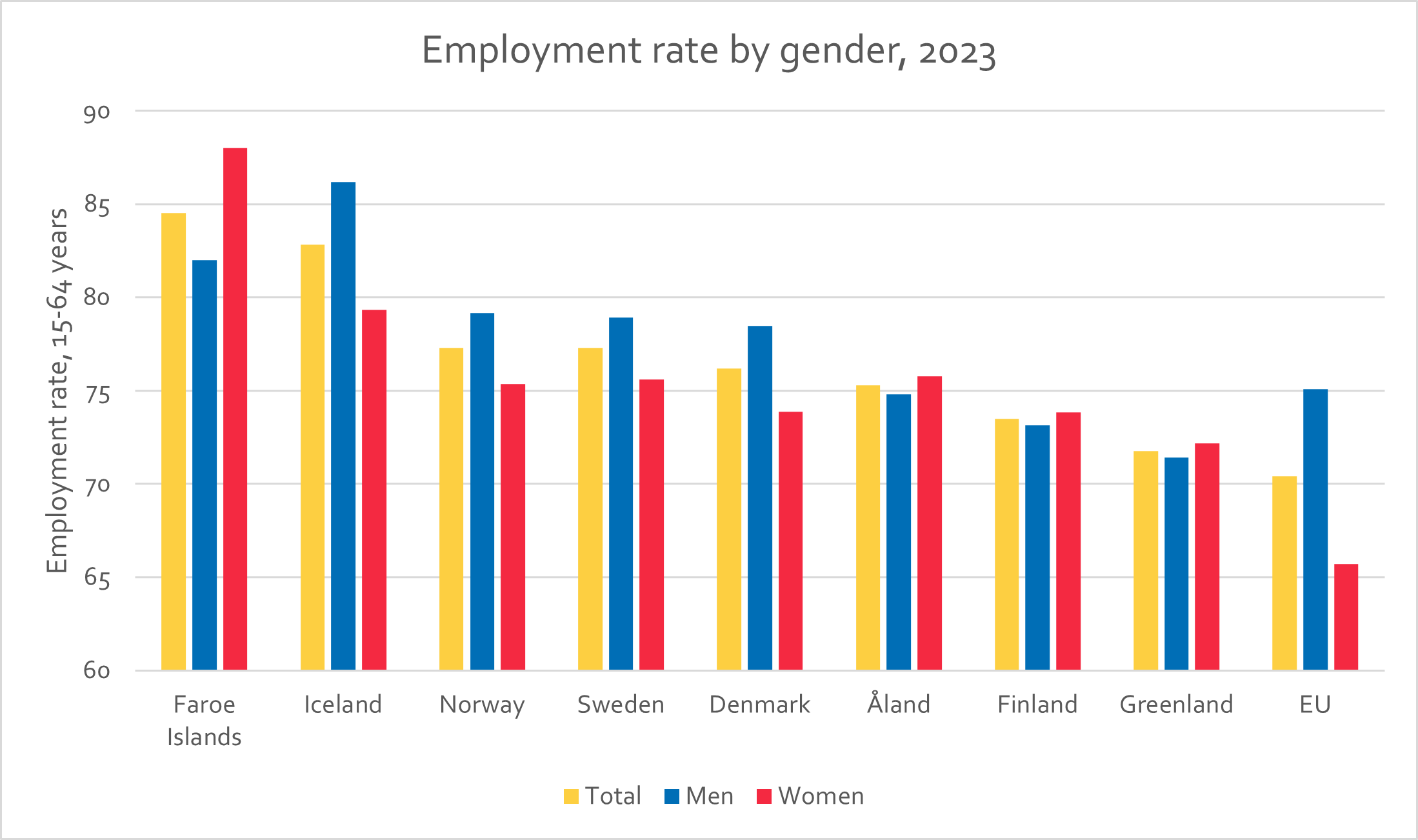
Figure 2. Employment rate by gender, 2023. Data source: Nordic Statistics; Åland: ÅSUB.
Despite a strong gender balance in the labour market, inequalities between genders and various societal groups persist in Nordic economies. One way to illustrate income disparities is through the Gini coefficient of disposable income, as shown in Map 2. The Gini index ranges from 0 to 1, where 0 represents complete equality and 1 signifies total inequality. The map highlights income inequality within municipalities, with urban municipalities generally exhibiting the highest levels of disparity.
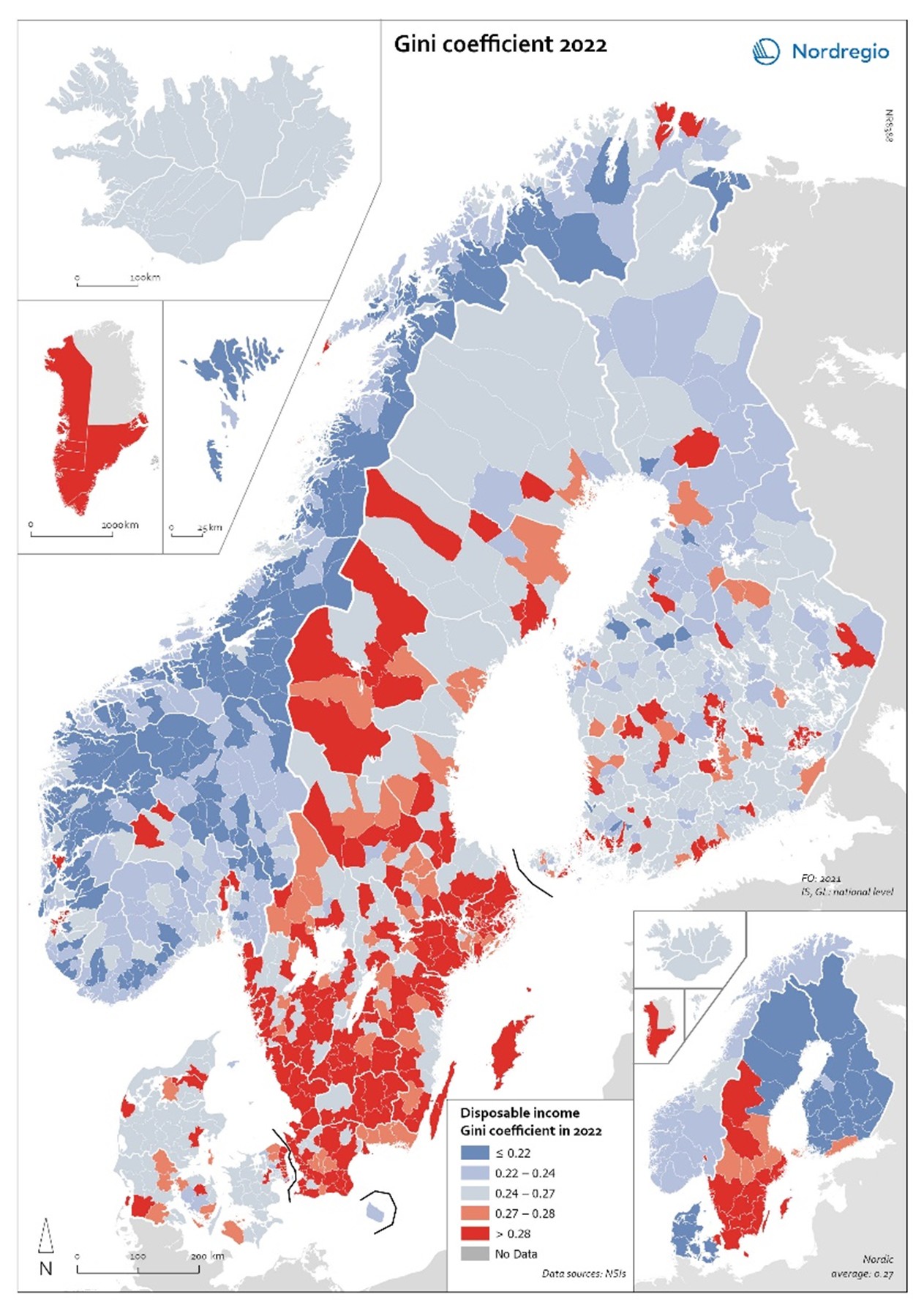
Map 2. Gini coefficient, 2022. Source: State of the Nordic Region 2024.
The Nordic labour market model encompasses macroeconomic policies aimed at achieving full employment, universal welfare systems that support re-skilling and up-skilling and a collective bargaining framework. This model has historically played a crucial role in managing structural changes and is expected to remain central to future labour market transitions (Alsos & Dølvik, 2021; Jesnes et al., 2020).
A defining feature of the Nordic model is the strong collaboration between social partners in the labour market. Trade union membership is notably high, with Nordic countries having the highest unionisation rates among OECD nations, although there is some variation between them.
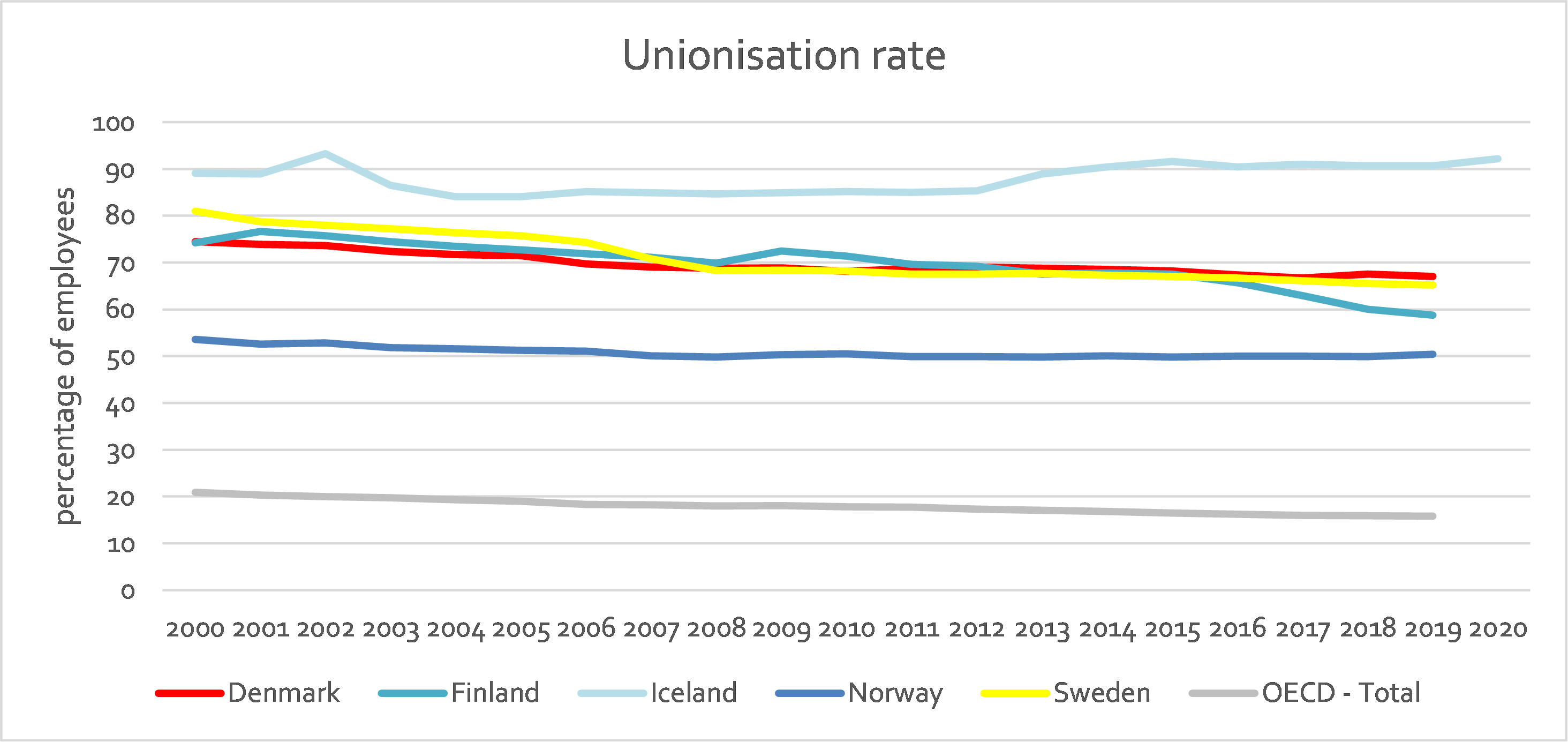
Figure 3. Unionsation rate. Data source: OECD.
As many as 80-90% of employees in the Nordic Region are covered by collective bargaining agreements (Logue, 2019). Despite high levels of unionisation and extensive coverage by such agreements, significant differences are observed within the region, particularly in the implementation of these agreements, the degree of trade union influence, dispute resolution mechanisms and the financing of unemployment insurance (Petersen, 2019; Høgedahl, Nergaard & Alsos, 2022).
Over time, the Nordic labour market model, characterised by tripartite agreements, has contributed to both stability and structural change within the labour market (Alsos & Dølvik, 2021; Rolandsson & Ilsøe, 2023), as well as to strong economic performance and high living standards (Høgedahl, Nergaard & Alsos, 2022).
From a European perspective, the Nordic approach – with collective agreements between employers' organisations and trade unions regulating wages and working conditions – differs from the legal framework-based model prevalent in continental Europe (Kristiansen, 2019).
However, EU membership and the implementation of European regulations, particularly in employment law, have increasingly influenced Nordic labour markets. This influence extends not only to EU Member States but also to Norway and Iceland, which, as part of the European Economic Area (EEA), are bound by EU legislation to the same extent as EU Member States (Kristiansen, 2019).
Social legislation covering unemployment insurance, industrial accident insurance, sickness benefits and pensions has gradually developed across the Nordic countries since the early 20th century. While these systems share many common features, they have also evolved independently in terms of institutional structures, support measures, labour market mechanisms and welfare sector financing, and at varying speeds (Petersen, 2019; Nordic Health and Welfare Statistics, n.d.). This development includes policies related to the green transition in the labour market (Lundgren et al., 2023).
In terms of unemployment support, residents of Nordic countries benefit from a comprehensive system of financial assistance and employment services aimed at facilitating re-entry into the labour market. Although social expenditures have risen over the past 50 years (Petersen, 2019), the proportion of GDP allocated to social spending varies significantly across the Nordic Region. As illustrated in Figure 4, Finland has the highest social protection expenditure as a share of GDP, while Iceland has the lowest.
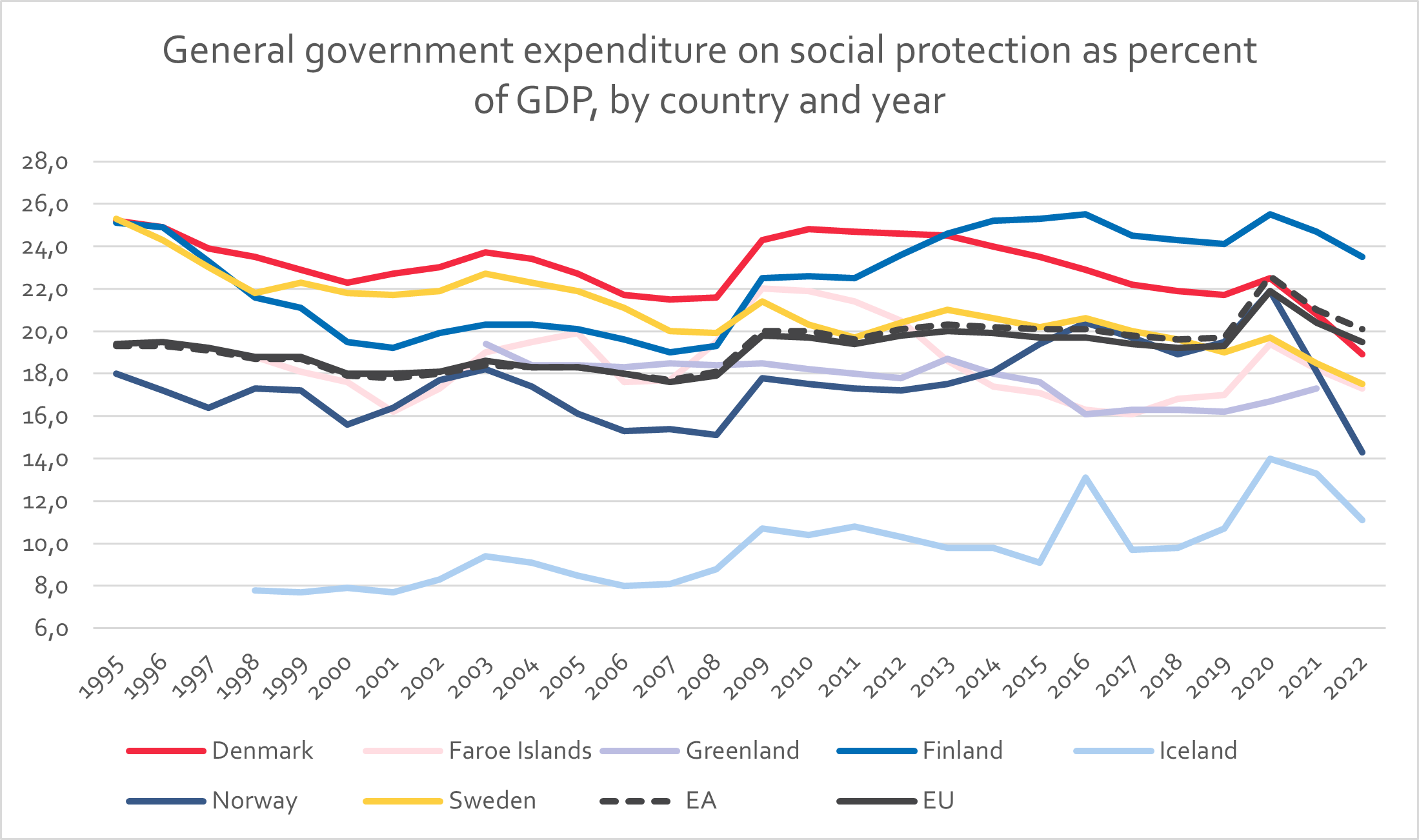
Figure 4. General government expenditure on social protection as a percentage of GDP. Source: Nordic Statistics 2024; Lundgren et al. 2024.