5. Megatrends and their impact on labour market participation in the Nordic Region
Within the SUNREM project, four key megatrends have been identified that, according to the literature, have a particularly strong influence on the labour market: demographic change, technological change, globalisation and climate change/the green transition. This chapter explores the impact of these megatrends on the labour market in the Nordic Region, supported by spatial statistical data.
Megatrend 1: Demography and the labour market
The Nordic Region is facing the challenge of an ageing population, leading to a rising share of older people, which is expected to have significant implications for the Nordic labour market. As the population is ageing, the number of people of working age is decreasing in many local labour markets. Map 9 shows the projected change in the working-age population (here defined as those aged 20-64 years) between 2023 and 2040. The areas in red are expected to see a decrease in the working-age population, while the areas in blue are expected to see an increase. The map is based on projections made by the national statistical offices (Maersk & Norlén, 2024).
A declining working-age population is a common trend across much of the Western world. While the EU average working-age population is projected to decrease by 6.5% between 2023 and 2040, the Nordic Region as a whole is expected to experience a slight increase of 1.9%. As the map illustrates, however, there are significant differences both between countries and within them. Iceland is projected to see the largest increase in its working-age population (28%), followed by Sweden (5.8%), Åland (3.9%) and Norway (0.6%). Conversely, a decline is anticipated in Finland (-0.5%), the Faroe Islands (-2.6%), Denmark (-3.2%) and Greenland (-11.4%). Additionally, there are marked regional variations within countries, with urban areas generally expected to grow, while most rural areas are projected to experience a decrease. (Maersk & Norlén, 2024).
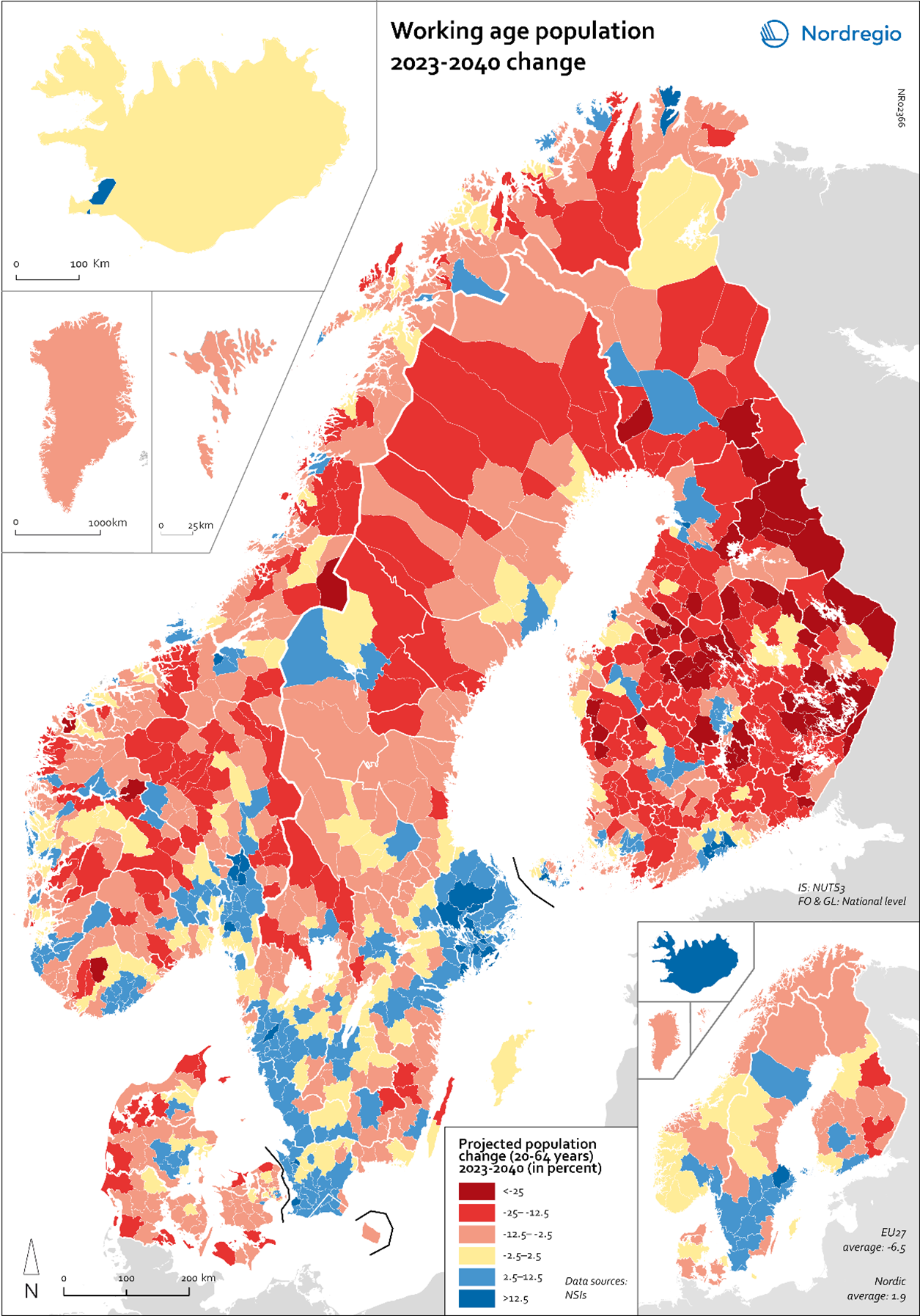
Map 9. Projected change in the working-age population (aged 20-64 years), 2023-2040.
Overall, the trend of population growth in urban areas and decline in rural areas is expected to persist. Across the Nordic Region, rural municipalities are projected to experience a 5.8% decline in population, while urban municipalities are expected to grow by 7.3% and intermediate municipalities are anticipated to maintain a stable labour supply (Maersk & Norlén, 2024). While the working-age population in remote areas is anticipated to decline by an average of 7.2% by 2040, several case study regions are projected to experience growth.
Notably, both Icelandic case study areas, as well as Gotland and Åland, are expected to see an increase in their working-age populations. Although earlier projections by Statistics Sweden indicated a decrease in Skellefteå’s working-age population, these forecasts were the subject of debate and have recently been revised, with an increase now projected.
Norð-urþing* | Dalvík-urbyggð* | Stord | Hamm-erfest | Skellefteå | Gotland | Åland | |
Projected population change 2023-2040 | 1.4% | 1.4% | -4.4% | -7.4% | -4.0% | 1.3% | 3.9% |
National average | 28.0% | 0.6% | 5.8% | -0.5% | |||
Average for remote labour markets (excl. Denmark) | -7.2% | ||||||
Nordic average | 1.9% | ||||||
Table 6. Population growth projections.
*Note: Data for Iceland are collected at the NUTS3 level; the value provided refers to IS002 Landsbyggð (rest of the country). It should be noted that population projections for small regions and municipalities may be unreliable..
Another approach to examining the effects of a changing labour market considers labour supply replacement (Map 10), represented here as the ratio of individuals aged 20-29 entering the labour market to those aged 55-64 who are approaching retirement. The map highlights significant regional and municipal variations, with pink areas indicating a lower number of younger people entering the labour market relative than those nearing retirement.
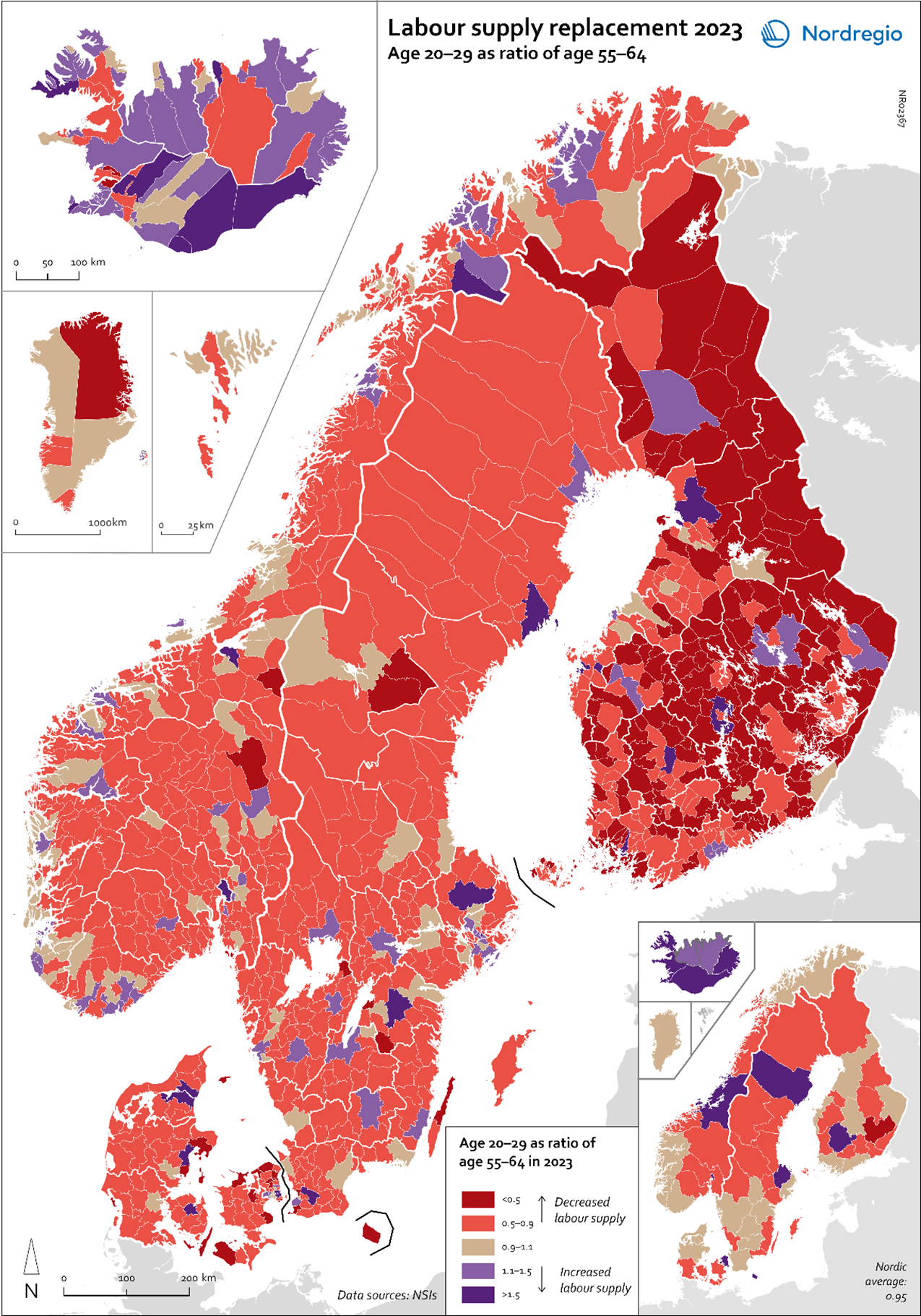
Map 10. Labour supply replacement, ratio of individuals aged 20-29 to those aged 55-64, 2023.
A ratio of 1 indicates an equal number of people in the younger and older age groups, whereas a ratio below 1 means that there are fewer people in the younger age group than in the older age group and a ratio above 1 indicates that there are more people in the younger age group. With the exception of Norðurþing and Hammerfest, all of the case study areas have a ratio under 1, meaning fewer people entering the labour market than exiting it. The lowest numbers are observed in Åland and Gotland, which will therefore need to rely on migration to sustain a stable labour force.
Norð-urþing | Dalvík-urbyggð | Stord | Hamm-erfest | Skellefteå | Gotland | Åland | |
Labour supply replacement | 1.11 | 0.98 | 0.98 | 1.13 | 0.87 | 0.76 | 0.63 |
National average | 1.28 | 0.95 | 0.93 | 0.94 | |||
Average for remote labour markets (excl. Denmark) | 0.77 | ||||||
Nordic average | 0.95 | ||||||
Table 7. Ratio of individuals aged 20-20 to those aged 55-64. Data source: NSIs.
The megatrend of demographic change manifests very differently across urban and rural regions. While urban areas are projected to grow, most rural and remote areas are projected to have a decreasing working-age population. This means that measures need to be taken to ensure a sustainable workforce, such as attracting new residents to these areas.
One contributing factor to this trend is the limited availability of educational opportunities in remote labour markets. Research indicates that a significant number of young individuals who relocate to urban centres for education tend to remain there after graduation, leading to a “brain drain” from rural communities. This pattern exacerbates the challenges faced by rural areas in maintaining a robust working-age demographic. (Slätmo et al., 2024).
Additionally, rural and remote regions have a higher proportion of older residents. While an ageing population is not inherently problematic, it does lead to increased demand for healthcare and social care services over time. Consequently, there is a growing need for workers in these sectors to support the ageing rural population. (Norlén et al., 2024).
Megatrend 2: Technological change and the labour market
Technological advancements have historically played a significant role in driving structural changes in the labour market and are expected to continue shaping the Nordic labour markets in the future. The current wave of technological transformation, which is largely driven by automation and artificial intelligence (AI), has a broader impact than previous industrial revolutions, extending beyond the industrial sector (Frey & Osborne, 2017).
Map 11 applies Frey and Osborne’s (2017) methodology to assess the proportion of jobs at risk of automation or AI. The methodology calculates the potential of work tasks within specific professions to classify if jobs are at high, medium or low risk of automation. Using this method, over 400 occupational categories were evaluated to determine whether the tasks associated with each role could be automated. According to this approach, around one-third of jobs in the Nordic Region were classified as being at “high risk” of automation in the coming decades. As the map shows, this trend is unevenly distributed, with rural areas generally facing a higher proportion of at-risk jobs. (Norlén & Randall, 2020).
However, while certain jobs may, in theory, be automated, this does not necessarily mean that they will be replaced in the immediate future. Employment structures will continue to evolve as individuals retire and job roles may adapt as tasks within specific occupations change. Additionally, technological advancements may also create new employment opportunities. Automation and AI can also be tools for keeping production or services in a location where labour is scarce. (Frey & Osborne, 2017; Norlén & Randall, 2020).
A high share of jobs at risk of automation might also indicate the presence of numerous industries. The share of jobs at “high risk” of automation is higher than the national average in all case study areas except in Stord. However, only Åland shows a share higher than the average for remote labour markets.
Norð-urþing | Dalvík-urbyggð | Stord | Hamm-erfest | Skellefteå | Gotland | Åland | |
Share of jobs at “high risk” of automation | No data | No data | 26.03% | 31.09% | 31.5% | 32.5% | 36.3% |
National average | 32.0% | 29.9% | 30.9% | 31.9% | |||
Average for remote labour markets (excl. Denmark) | 33.3% | ||||||
Nordic average | 32.1% | ||||||
Table 8. Share of jobs at high risk of automation, 2020.
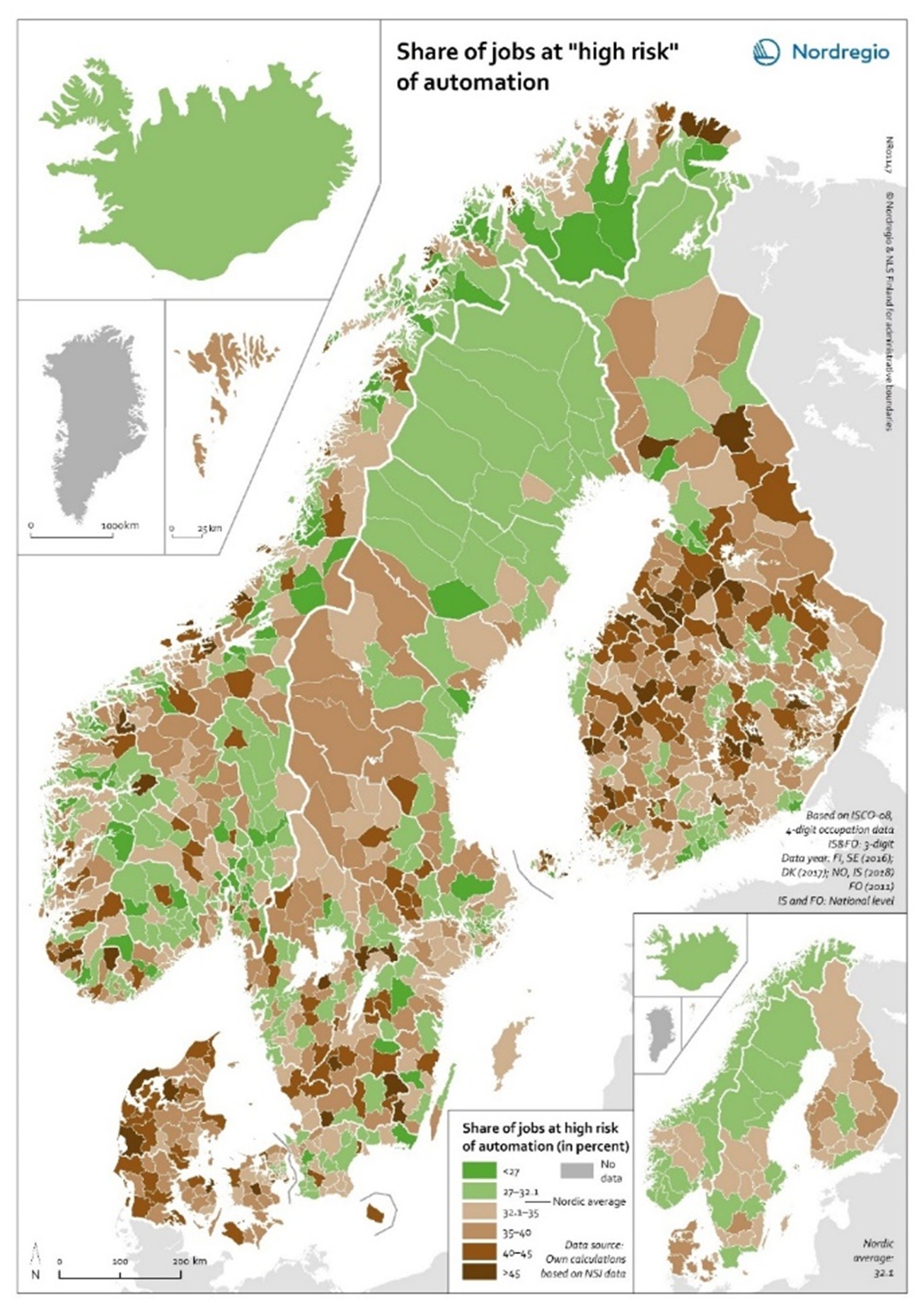
Map 11. Share of jobs at high risk of automation, 2020. Calculations by Nordregio based on Frey and Osborne (2013) and NSI data.
Note: the brown shades indicate areas with a higher share of jobs at high risk of automation.
Although AI and automation are expected to impact a wide range of occupations, including middle-class "white-collar" jobs, demand for individuals with higher education continues to grow (Norlén & Randall, 2020). Projections by the European Centre for the Development of Vocational Training (CEDEFOP) indicate that workforce educational levels are set to rise across all Nordic countries by 2035 (Figure 5).
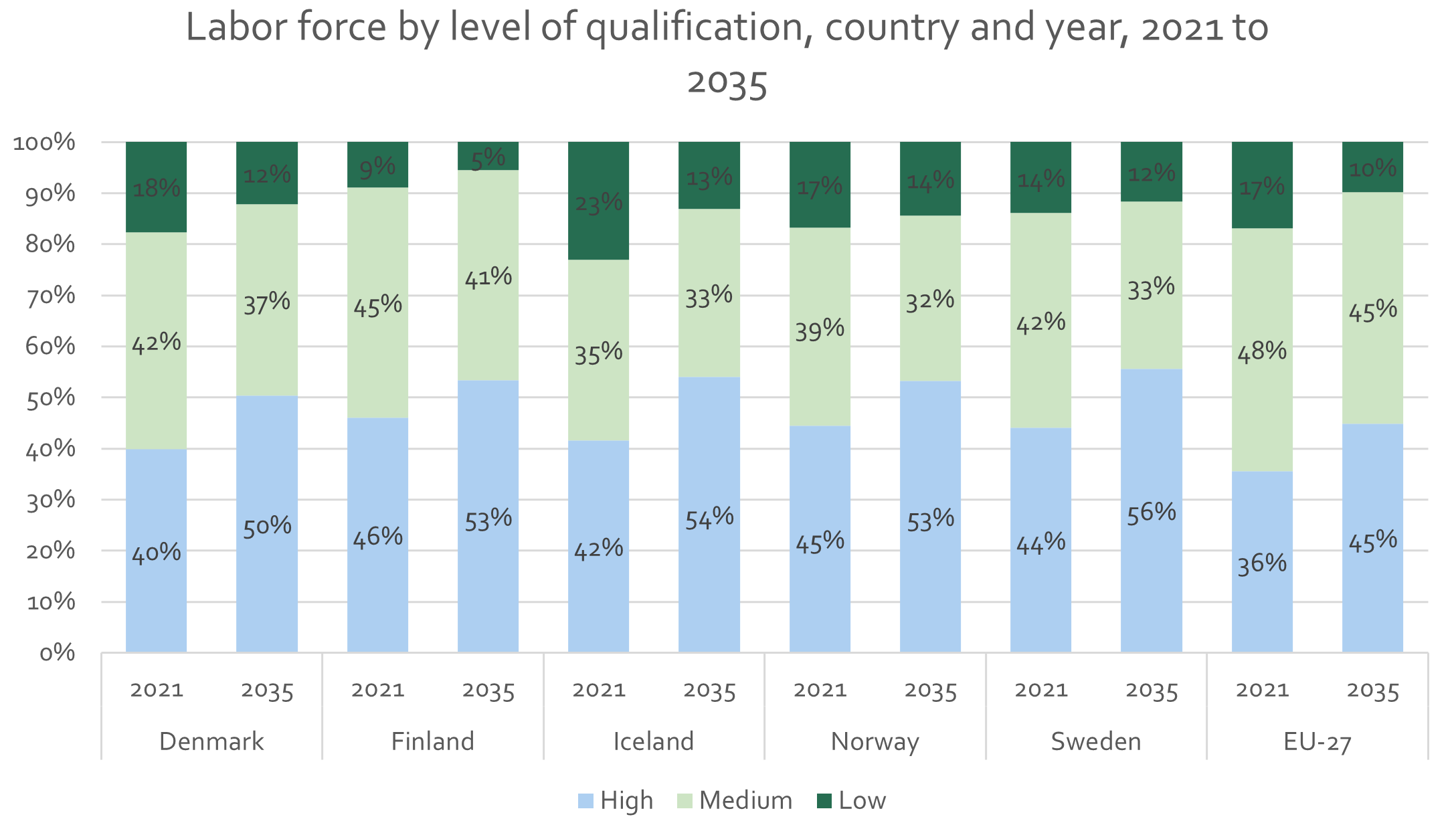
Figure 6. Labour force by level of qualification, country and year, 2021 to 2035. Based on CEDEFOP data. Source: Lundgren et al. 2024.
A well-educated workforce is a significant asset to a local labour market. However, educational attainment levels are generally lower in rural and remote areas than in urban centres. Map 12 illustrates that, on average, over 45.8% of the Nordic population holds a higher education qualification, exceeding the EU27 average of 34.3%. It also highlights that urban and university regions tend to have higher levels of education compared to rural areas. (Maersk & Norlén, 2024).
Table 9 illustrates the percentages of the population with tertiary educational attainment across the case study areas. In all cases, these regions exhibit a lower proportion of individuals with tertiary qualifications than the respective national average. This disparity is largely attributable to the concentration of higher education institutions in major urban centres, which naturally raises educational attainment levels in those locations. Nonetheless, certain case study areas, namely Stord, Hammerfest, Skellefteå and Gotland, demonstrate a higher share of tertiary-educated individuals than the average for remote regions. This suggests the presence of employment opportunities requiring advanced qualifications, which may contribute to retaining or attracting a more educated workforce in these areas.
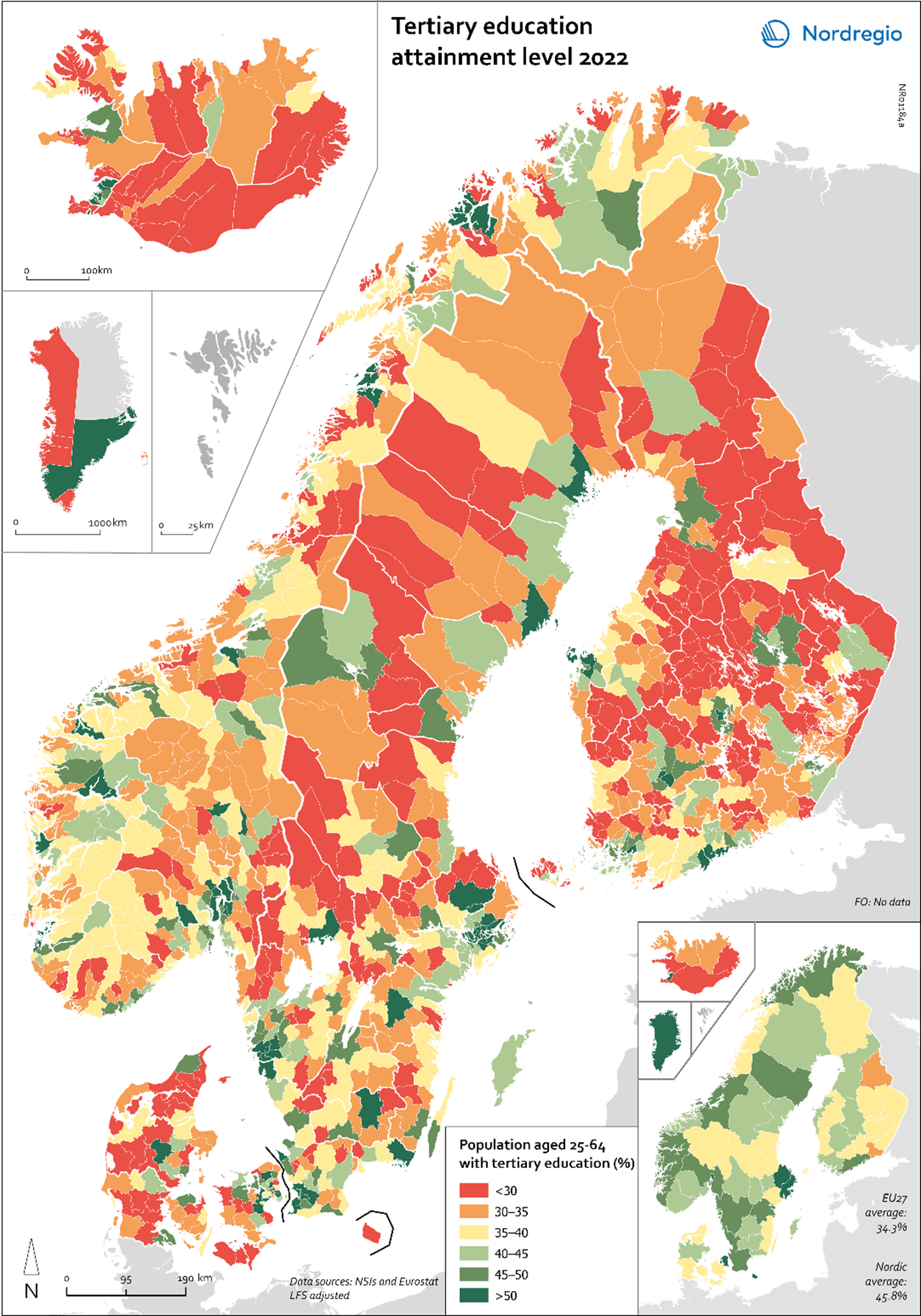
Map 12. Percentages of the population with tertiary educational attainment, 2022.
Norð-urþing | Dalvík-urbyggð | Stord | Hamm-erfest | Skellefteå | Gotland | Åland | |
Percentage of population with tertiary educational attainment (2022) | 32.7% | 25.1% | 43.2% | 42.4% | 48.3% | 40.8% | 33.5% |
National average | 42.9% | 47.8% | 48.6% | 42.7% | |||
Average for remote labour markets (excl. Denmark) | 36.6% | ||||||
Nordic average | 45.8% | ||||||
Table 9. Percentages of the population with tertiary educational attainment in the case study areas in 2022.
Note: Åland’s educational statistics have some limitations, since it is common to study in Sweden, but the official statistics do not necessarily capture studies abroad. The data are based on the day population and do not include those individuals who work in these areas but live elsewhere.
The ongoing wave of automation, artificial intelligence (AI) and digitalisation is fundamentally reshaping the nature of work, presenting both significant opportunities and notable challenges. Jobs in rural and remote areas are slightly more susceptible to automation than jobs in urban areas since there is a higher share of industries there. While this may present a challenge, it could also be viewed as an opportunity to maintain production with fewer workers.
Digitalisation also represents an opportunity for remote areas, as the possibility of remote work may make it possible to recruit workers with specialised skills that it would otherwise be difficult to attract. This requires strong digital infrastructure and digital skills, which may pose a challenge to older workers. The availability of a well-educated workforce is important for labour markets to adapt to new demands.
Megatrend 3: Globalisation and the labour market
In international comparison, the Nordic Region demonstrates a strong economic performance, with all Nordic countries exceeding the EU average in terms of GDP per capita (Norlén et al., 2024). Economic growth in the Nordic Region has remained stable over time, particularly following the 2008-2009 financial crisis. From an economic perspective, the Nordic countries also experienced a relatively swift recovery after the Covid-19 pandemic. (Norlén et al., 2022).
The Nordic economies are highly export-driven, with exports accounting for more than 50% of GDP – with this figure reaching as high as 70% in Denmark. Among key trading partners, the Nordic countries and Germany consistently rank among the most significant (SCB, 2025).
One way to illustrate the globalisation of the economy is through the inflow of foreign direct investment (FDI). Figure 6 presents the accumulated value of foreign direct investments made by foreign countries into the Nordic countries, expressed as a percentage of GDP, by country and over time. While Sweden has the highest accumulated value of inward foreign investments, the table also reflects shifts associated with major changes in the global economy, such as the financial crisis.
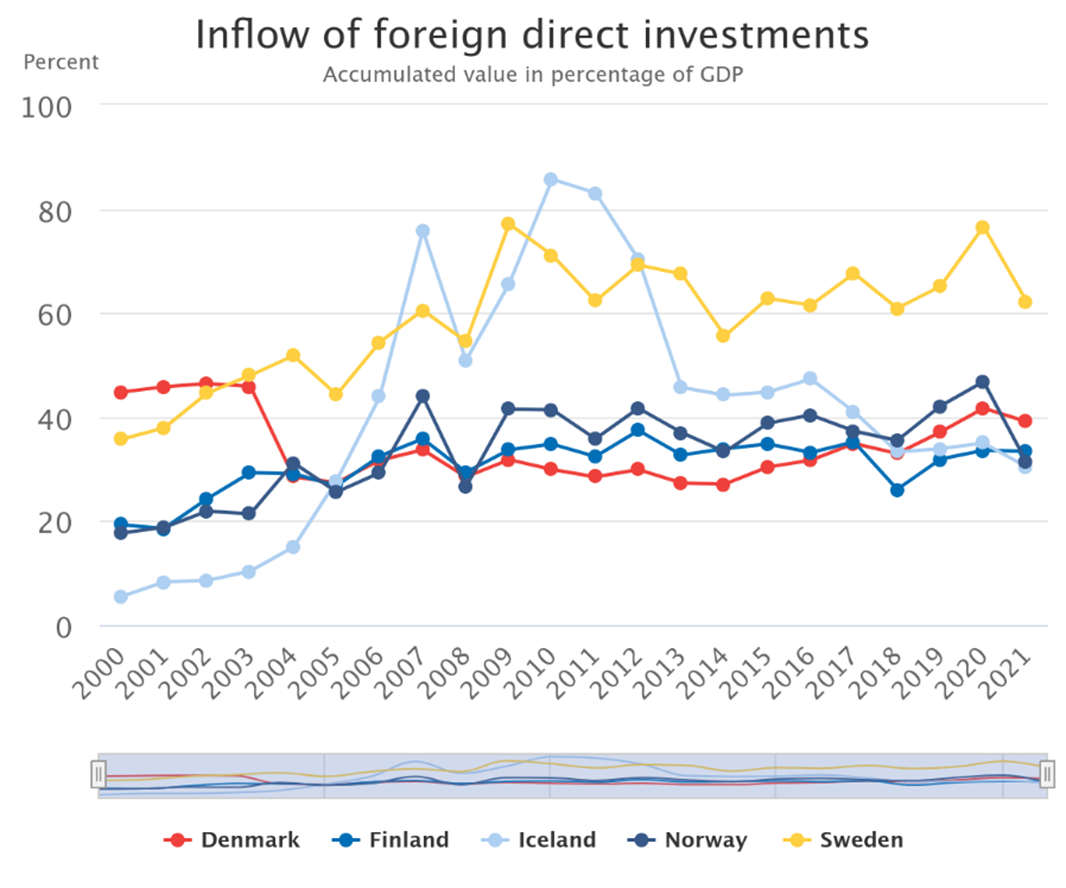
Figure 7. Inflow of foreign direct investments as a percentage of GDP. Source: Nordic statistics database, FODI01.
Another way to examine the relationship between globalisation and the labour market is through migration. Since 1990, net migration has risen across the Nordic countries, with Sweden recording the highest figures, while Norway and Finland have shown upward trends in recent years.
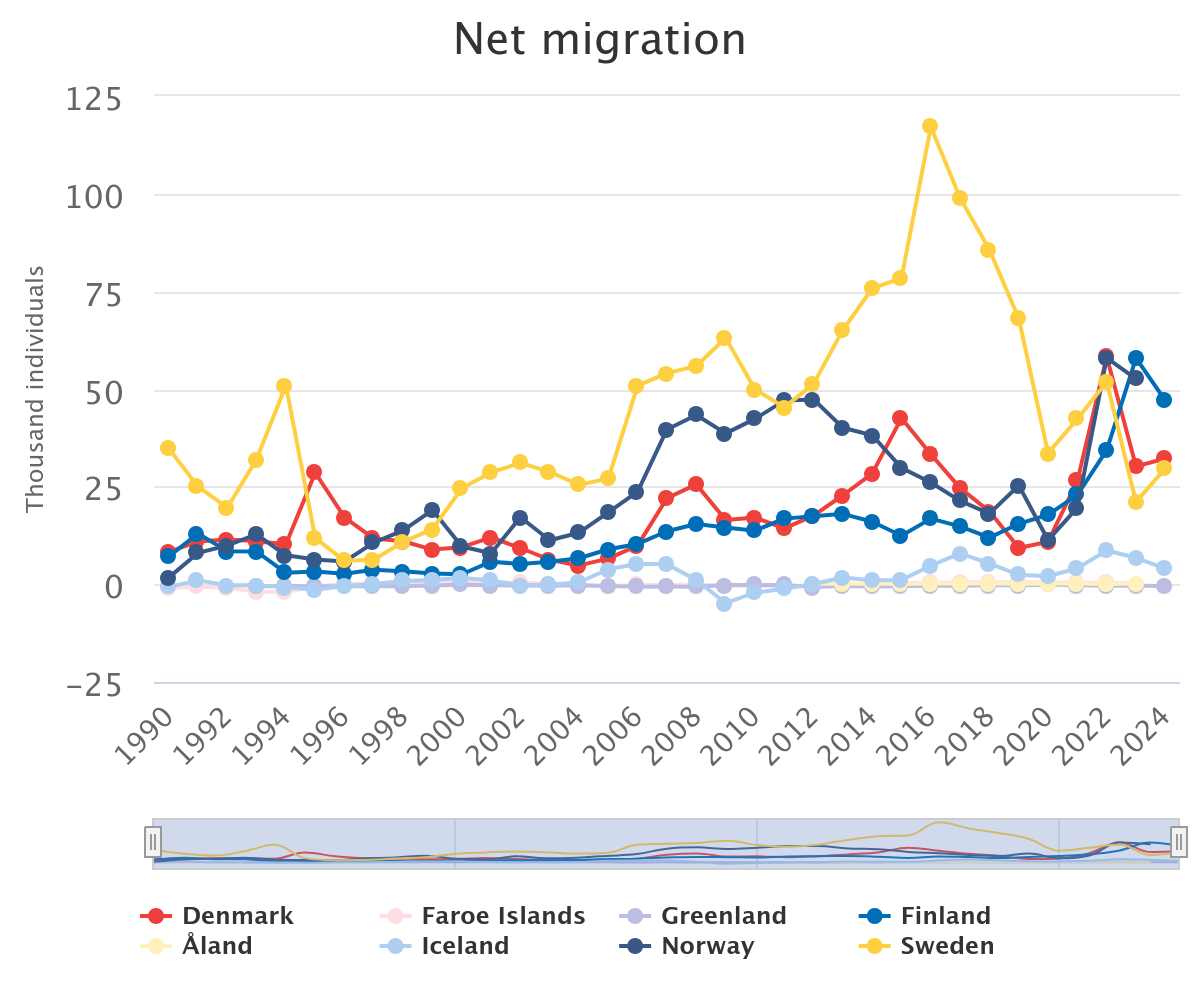
Figure 8. Net migration per thousand individuals. Source: Nordic statistics database, MIGR03.
However, there are also pronounced differences between the Nordic countries, regions and municipalities, with some areas attracting more migration than others. Map 13 shows the foreign-born population as a share of the total population. While cities and some border regions tend to have higher shares of foreign-born residents, rural areas typically have lower shares. For some remote labour markets, the influx of people from abroad is an important strategy to address labour shortages.
Norð-urþing | Dalvík-urbyggð | Stord | Hamm-erfest | Skellefteå | Gotland | Åland | |
Foreign-born share of the population (2022) | 20.2% | 15.1% | 11.9% | 17% | 10.4% | 8.2% | 14.8% |
National average | 15.1% | 11.3% | 12.7% | 2.4% | |||
Nordic average | 11.9% | ||||||
Table 10. Shares of foreign-born residents in the case study areas.
However, it is not only the share of the foreign-born population that differs across the Nordic countries and regions, but also the composition of the foreign-born population, which is shown in Map 14.
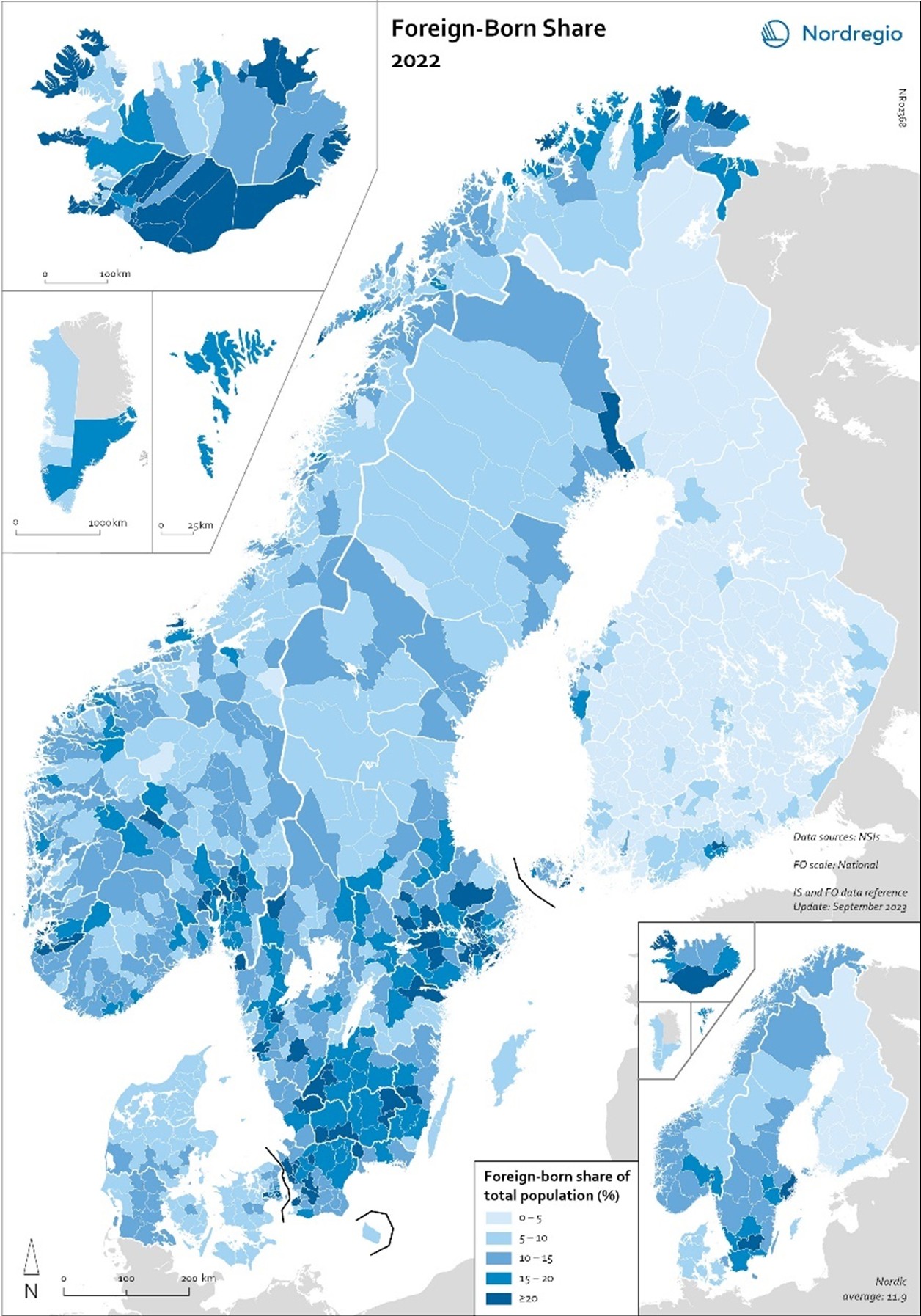
Map 13. Shares of foreign-born residents, 2022. Source: State of the Nordic Region 2024.
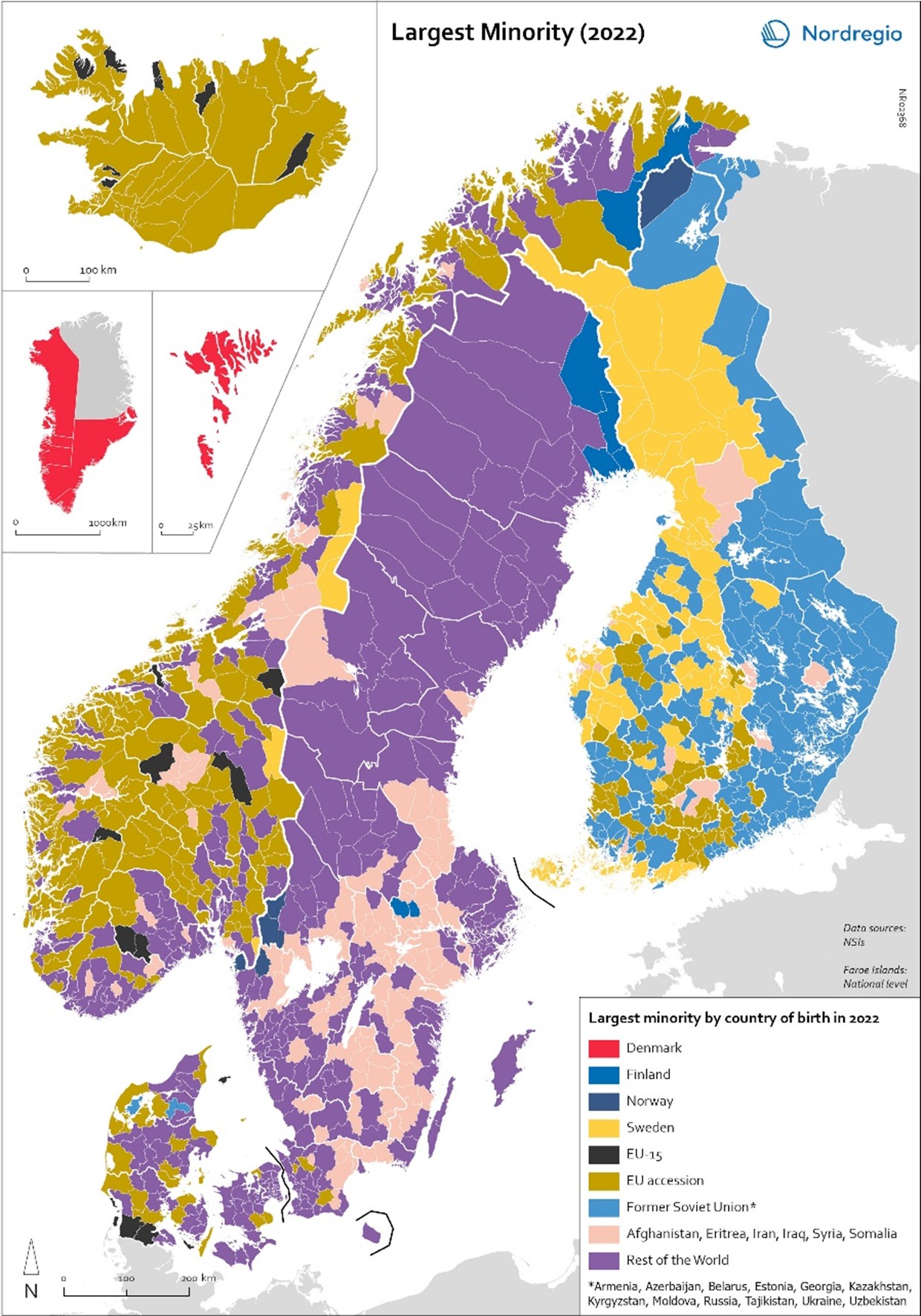
Map 14. Largest foreign-born minority, 2022. Source: State of the Nordic Region 2024.
Globalisation has fostered an increasingly interconnected world, characterised by the high mobility of people, goods and capital. The Nordic countries, with their robust economies and competitive industries, have actively engaged in this global landscape, attracting substantial foreign direct investment and maintaining strong export-driven markets. However, recent global events – such as the COVID-19 pandemic, the war in Ukraine and rising protectionist sentiments – have introduced uncertainties, prompting a renewed focus on re-industrialisation and national security within the region.
Migration remains an important aspect of globalisation. The Nordic countries have experienced significant demographic shifts, with foreign-born individuals constituting a growing share of the population. While urban areas typically attract a higher proportion of immigrants, remote regions, especially those with substantial industrial activities, also rely on foreign labour to address workforce shortages. Integrating these populations into local labour markets is essential for sustaining economic vitality and addressing demographic challenges across the Nordic Region.
Megatrend 4: Climate change/ the green transition and the labour market
Both climate change and the green transition – driven by efforts to reduce CO2 emissions – have significant implications for the labour market. While climate change and the green transition affects all sectors of the economy, certain industries and job roles are more likely to experience substantial change than others. However, estimates of the impact of climate change and the green transition on the labour market are difficult to make.
Maps 15 and 16 highlight areas with a high proportion of polluting or green jobs, based on a method developed by Vona (2018) and applied by organisations such as the OECD (2023)
For more information on the methodology and results underlying the green and polluting job maps, see Norlén & Berbert (2024): https://pub.nordregio.org/r-2024-13-state-of-the-nordic-region-2024/chapter-6-green-transition-of-the-labour-market.html
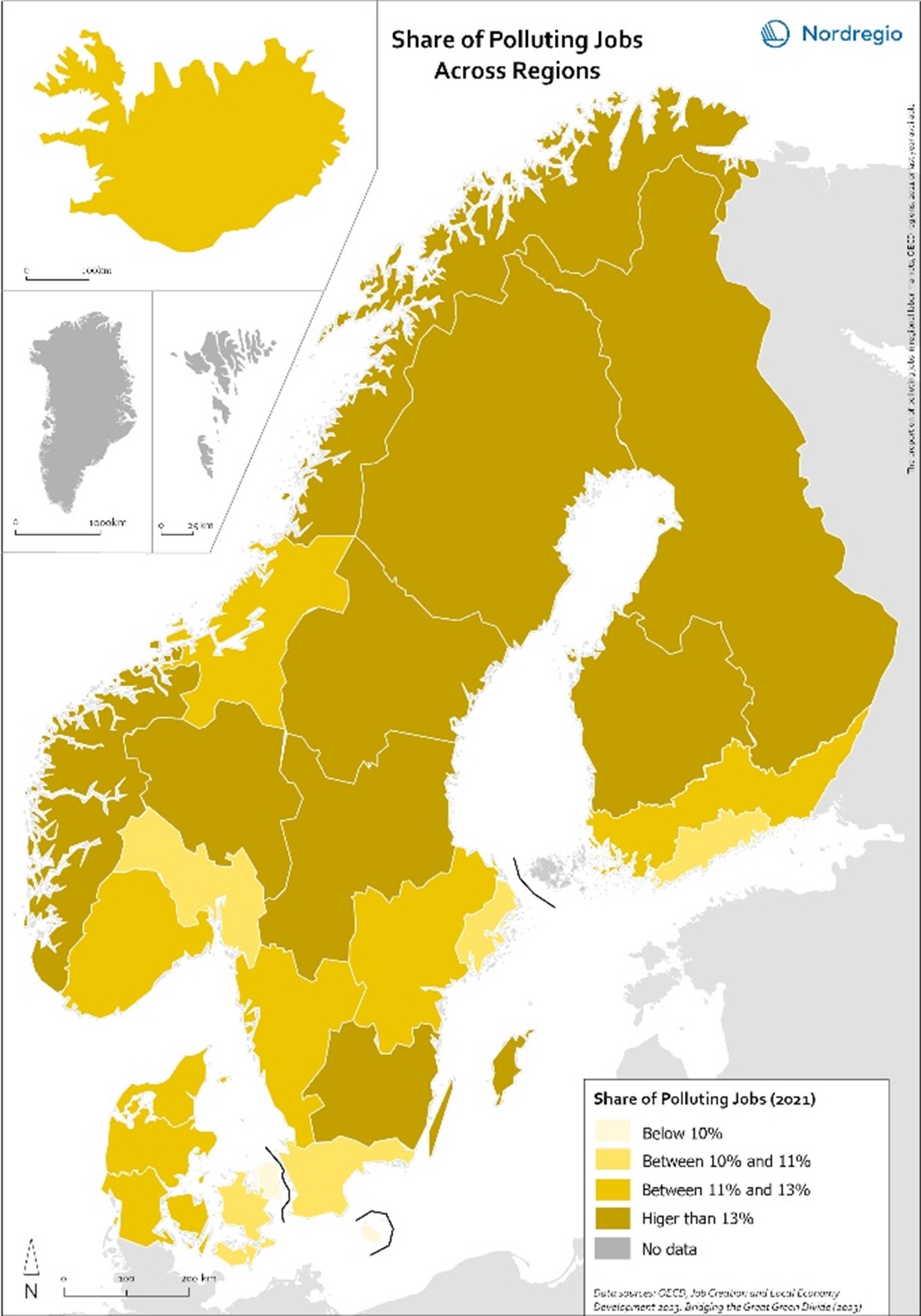
Map 15. Share of polluting jobs, 2021.
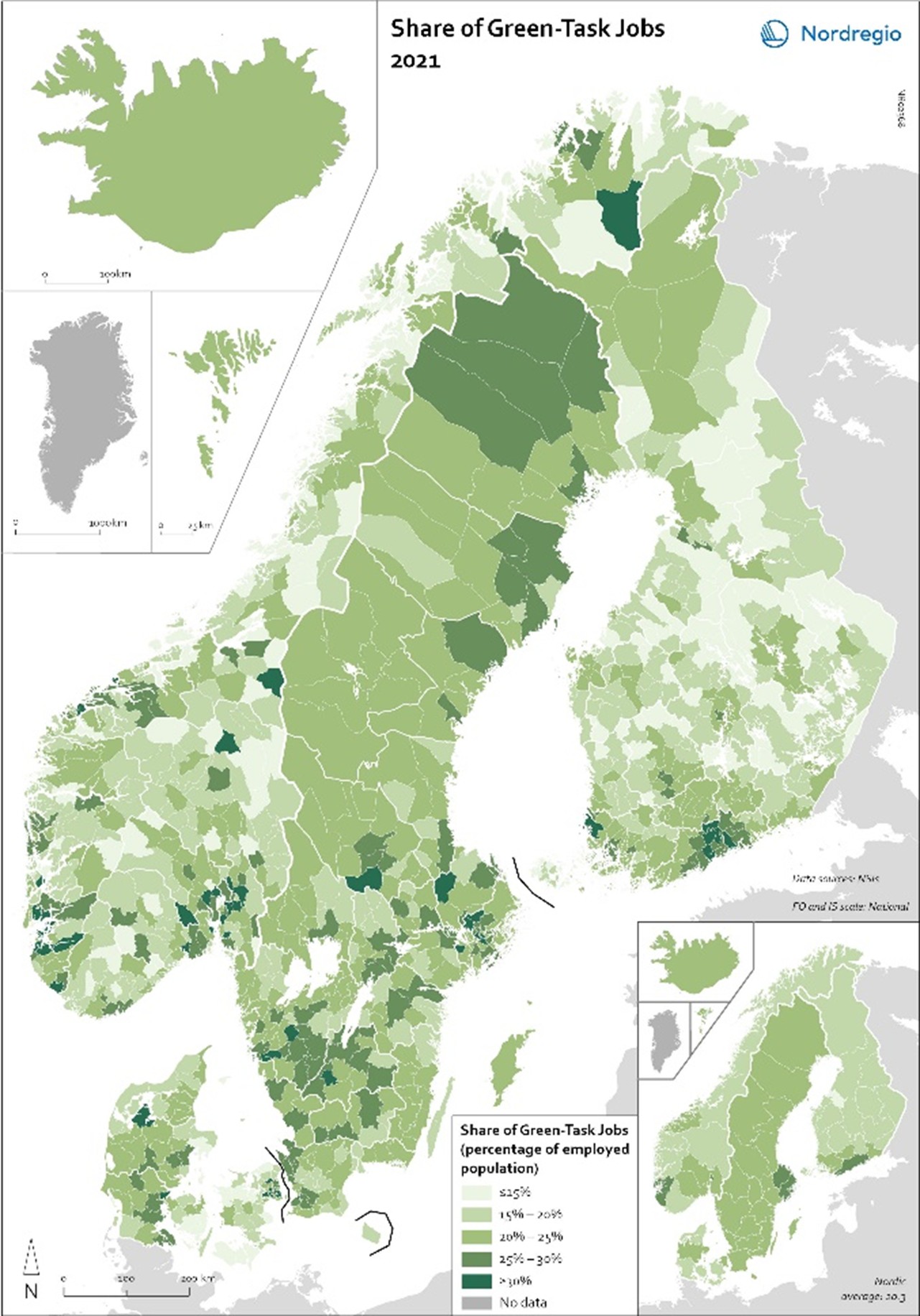
Map 16. Share of green-task jobs, 2021.
The maps of polluting and green jobs show that while all case study areas are located in areas with a high share of polluting jobs, the shares of green-task jobs are, in general, also at a medium level or above in the case study areas.
Norð-urþing | Dalvík-urbyggð | Stord | Hamm-erfest | Skellefteå | Gotland | Åland | |
Share of green task jobs (2021) | n/a | n/a | 32.3% | 26.3% | 25.9% | 22.2% | 17.0% |
National average | 23% | 26.3% | 26.6% | 23.6% | |||
Average for remote labour markets (excl. Denmark) | 20.5% | ||||||
Nordic average | 25.2% | ||||||
Table 11. Green-task jobs.
Direct effects of climate change and indirect effects through the green transition will shape the labour market in the future. While many green-task jobs are located in urban areas, a significant number of investments are being made in more remote areas. These investments can create “demand shocks”, posing challenges in sourcing the right skills and workforce. Many of these investments are in areas with access to fossil-free electricity, as in the case in several of the case studies.