Appendix 2. Labour market statistics
The Labour Force Survey (LFS) is the official source for labour market statistics and the only source that provides comparable data across countries. The data are derived from a standardised survey conducted uniformly across all EU countries, as well as in several non-EU countries, including Norway, Iceland and the Faroe Islands.
The LFS categorises the working-age population (defined as those aged 15–74) into three groups: employed, unemployed and outside the labour force.
Employed: A person who performed work – for at least one hour – during the reference week or who was temporarily absent from a job they hold.
Unemployed: A person who was not employed during the reference week but is currently available for work within two weeks and is actively seeking work (within four weeks of the reference week) or has a job that will start in more than three months from the reference week.
Outside the labour force (formerly known as economically inactive): A person who is neither employed nor unemployed according to the definitions above.
Workforce: Employed plus unemployed.
Indicators for measuring labour market performance
Employment rate: The proportion of people in employment within a certain age group, expressed as a percentage of that population.
Unemployment rate: Unemployed individuals as a share of the workforce (i.e. employed plus unemployed).
In this section, we have chosen to focus on the employment rate rather than the unemployment rate. While the unemployment rate is a good short-term indicator of the economy, focusing on those who are immediately available for work, it overlooks the segment of the population that is neither in employment nor seeking a job.
The employment rate is not the only indicator of a functioning labour market. It should be noted that while a high employment rate is considered positive at both the individual and societal level, full employment can also mean that it is difficult for companies to find workers with the right skills, which can slow growth. It can also mean that very few people are pursuing higher education, which could pose long-term challenges related to the skills needed on the future labour market. It should also be noted that many labour markets consist of more than one municipality, with a local labour market defined as the geographical area where labour supply and demand meet. Eurostat (2023, 2024a, 2024b)
Source: Norlén, 2024.
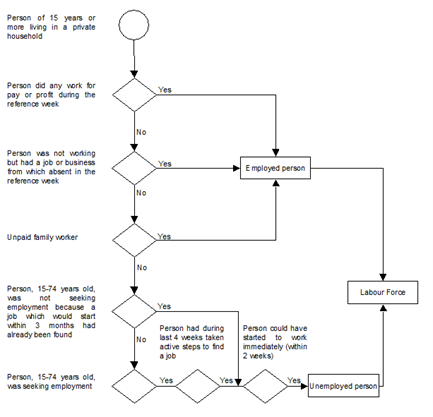
Figure X. Labour force participation according to the Labour Force Survey definition. (https://www.ecb.europa.eu/pub/pdf/other/mb201306_focus07.en.pdf)