10. NORWAY
Case: Trondheim
Background information
Trondheim, situated within Trondheim municipality in Norway's Trøndelag county, is the largest urban hub in the area and the third-largest city in Norway. As of 2024, it has a population of 196,948 people, while the entire municipality has a population of 214,565 residents (Statisics Norway, 2024). It spans an area of 59.25 km2 (341,11 km2 for the whole municipality). In the last 20 years, the population has grown by approximately 40%, with a steady increase of 2,000-3,000 people per year. Trondheim is also the main municipality in the metropolitan area, Trondheim Regionen, which encompasses nine municipalities and had a population of some 316,888 habitants as of 2023 (Statistics Norway, 2023b).
Trondheim is widely recognised as the technological capital of Norway. Indeed, technology and innovation are a cornerstone of its economy, with a robust presence in information technology, telecommunications and electronics. The Norwegian University of Science and Technology (NTNU) plays a significant role as one of the country’s leading research centres in the fields of engineering, physics and natural sciences. Trondheim is also home to the headquarters of the Foundation for Scientific and Industrial Research (SINTEF), which is the largest independent research organisation in Scandinavia. Furthermore, as a coastal city, Trondheim has a strong maritime industry, offering services ranging from cargo handling to shipbuilding (UEP NTNU, 2018). Healthcare is another dominant sector in Trondheim’s economy, with the regional hospital providing significant employment opportunities. Tourism also plays a vital role; the city attracts visitors with its medieval architecture, cultural heritage and outdoor attractions. Additionally, Trondheim participates in Norway's renewable energy initiatives, conducting research and development in renewable technologies, which, as it will be discussed, are a fundamental part of Trondheim’s strategy to achieve climate neutrality.
Strategic level: municipal goals and policies
Trondheim has a strong political vision with respect to climate neutrality. As stated in the last comprehensive municipal plan, “The main goal for Trondheim to take responsibility for a greener and more circular society is about creating a climate-neutral city, without nature or health-damaging pollution” (Trondheim Municipality, 2022a, p. 25). Trondheim was selected as one of the 112 EU’s climate-neutral and smart cities by 2030 (Cities Mission) in April 2022 and will therefore act as an experimentation and innovation hub for other European cities striving to achieve climate neutrality by 2030. In connection with this, the Municipal Energy and Climate Plan with the vision 2017-2030 (Trondheim Municipality, 2017) has been revised and a new plan, presenting the overarching aims and targets for climate action, was proposed and presented to the city council in March 2024 (Trondheim Municipality, 2024). The new plan has two overarching goals:
- Direct greenhouse gas emissions shall be cut by at least 80% by 2030, compared to 2009 and
- The city will be emission-free by 2050
The plan is based on nine priority areas: nature and land use, energy efficiency, mobility and transport, buildings and construction, consumption and waste, carbon sequestration
Carbon sequestration is the process of capturing and storing atmospheric carbon dioxide.
Another important aspect of Trondheim’s approach to climate neutrality is its involvement in various networks, which primarily facilitate the exchange of information and allow Trondheim to draw inspiration from other Norwegian and international cities. First, as mentioned above, Trondheim is part of the EU City Mission Network, through the project +CityxChange, which explores possibilities to integrate smart positive energy solutions. Trondheim is also part of the Big City Network (Storbynettverket), which involves eight municipalities in Norway. In addition, the top administrative management in the same municipalities engages in an administrative metropolitan network for knowledge exchange and to bring issues to the attention of other layers of government (Interviewee 22, 2024). It should also be noted that Trondheim hosts important knowledge institutions, namely the aforementioned NTNU and SINTEF, which represent a sound basis for research, development and innovation on climate matters.
The aforementioned goal of reducing direct emissions by 80% by 2030 was established politically in the previous climate plan (Trondheim Municipality, 2017). However, the new plan outlines four key objectives, namely for Trondheim to become a climate-neutral, energy-smart, circular and climate-resilient city (Interviewee 22, 2024). These goals are also informed by the experiences shared by other cities on climate practices and strategies (Interviewee 22, 2024) and, obviously, the monitoring of emissions in various sectors, which also form the basis for Trondheim’s climate budget.
The climate budget is a management tool for following up on Trondheim's targets for emission reductions and other energy and climate targets. The climate budget is a separate chapter in Trondheim municipality's annual action and financial plan and includes an emissions framework for greenhouse gas emissions in Trondheim in the coming four-year period.
The total GHG emissions in Trondheim amounted to 485,000 tonnes in 2022, which is a reduction of approximately 20% from 2009. The GHG emissions in EU Member States were reduced by 32.5% in 2022 from 1990, while Norway only achieved 4.6%.
The emissions account shows emissions of the three greenhouse gases CO₂, methane (CH₄) and nitrous oxide (N₂O) distributed across nine sectors in Norwegian municipalities and counties. https://www.miljodirektoratet.no/tjenester/klimagassutslipp-kommuner/?area=170§or=-2
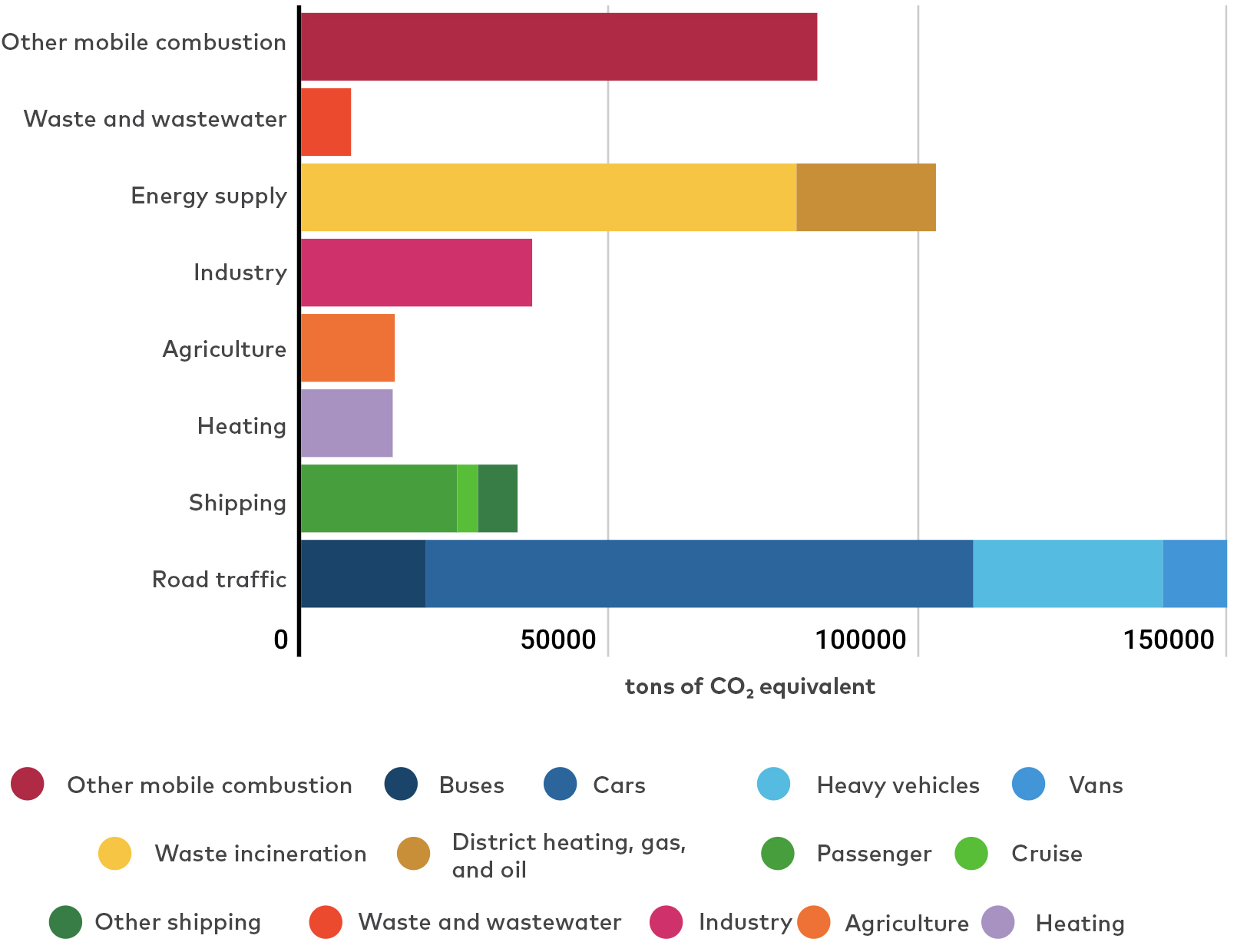
- Road traffic accounts for about one-third of greenhouse gas emissions in Trondheim.
- Energy supply is linked to district heating production and accounts for about a quarter of the total greenhouse gas emissions in Trondheim. Most of these emissions come from incineration of waste.
- Other mobile combustion accounts for one-fifth of the emissions in Trondheim. This includes all non-road machinery that runs on tax-free diesel, such as construction machinery and tractors.
Source: Norwegian Environment Agency
The main source for emission figures used in Trondheim's climate budget is the Environmental Directorate's publication titled "Emissions of greenhouse gases in municipalities and counties" (The Norwegian Environment Agency, 2023). These figures cover the period from 2009 (as the baseline) and include greenhouse gas emissions of carbon dioxide (CO₂), methane (CH₄) and nitrous oxide (N₂O). Emission figures for each greenhouse gas are converted to a common unit, namely carbon dioxide equivalents (CO₂-eq). The entire time series is updated annually with a two-year time lag (Trondheim Municipality, 2021a). It should also be noted that all the figures on emissions for all the 356 Norwegian municipalities come from the Norwegian Environmental Agency (national level), with municipalities required to submit own reporting to the city council, the national government and the CDP – Carbon Disclosure Project. Trondheim was one of 119 cities in the world to be placed on the CDP's A-list for 2023. That recognises its systematic climate leadership, which fosters emission reduction and climate adaptation, making both the city and nature more resilient to climate change.
The emission ceiling is the core of the climate budget. The emission framework sets limits for the development of greenhouse gas emissions in Trondheim in the future, describing three scenarios (see Figure 12):
- Baseline scenario: the baseline scenario is a scenario for what will happen in the future if more measures are not implemented (business as usual).
- Path of action: the action path shows how various measures (e.g. emission-free construction sites, fossil-free public transport etc.) will contribute to reducing greenhouse gas emissions during the economic plan period of 2021-2021.
- Goal path: the target path is a scenario based on the city council's targets for emission reductions in 2023 and 2030.
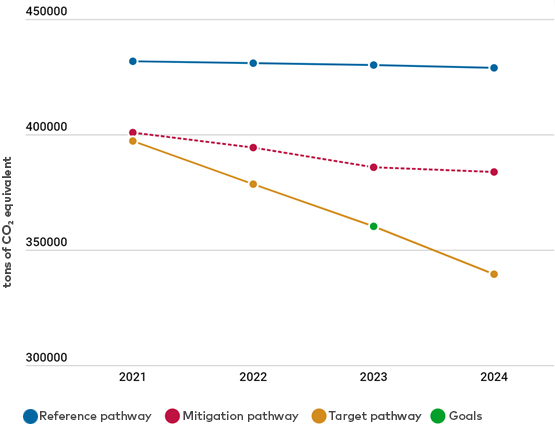
As can be observed in Figure 12, there is a gap between the action and the target path, meaning that the planned actions have been estimated to lower emissions by 25% from 2009 instead of 30%, as stated in the city council goal. Updated figures are needed to show what the actual gap and the projections towards 2030 look like.
Despite making large strides forward, several challenges lie ahead. Transport and road traffic are significant contributors to emissions, while construction activities, especially those utilising combustion engines, also contribute substantially (Interviewee 22, 2024). Even stationary machinery involved in construction projects adds to this emission category. Waste management presents another significant challenge, with waste-to-energy incineration facilities being a notable source of pollution. Efforts are underway to tackle emissions from these sources through carbon capture and storage (CCS) initiatives, with a specific emphasis on reducing pollution from waste incineration. These challenges become even more complex when considering indirect emissions and the broader carbon footprint, highlighting the crucial need to address issues related to circular economy governance (Interviewee 22, 2024).
Land use sector
The goal of achieving an 80% reduction in GHG emissions by 2030 also applies to land use and the other spatial planning sectors examined in this project. The municipality of Trondheim has implemented densification as a tool for making the city more attractive since the mid-1990s. The need for densification is even greater that Trondheim is expected to have around 55,000 more inhabitants in 2050, requiring approximately 29,000 new housing units
Housing stock in Trondheim consists of approximately 23% detached houses, 30% residential buildings of under three stories (terraced houses and four-person dwellings) and 41% block buildings of three stories or more. Student housing, housing and service centres and other types of housing associations are included in the last seven percent (Trondheim Municipality, 2019).
Three main types of densification are implemented in Trondheim: villa garden densification in single-family home areas, reshaping and reuse of areas such as ports and industrial areas and new construction within the construction zone (Trondheim Municipality, 2019). Brownfields and transport hubs are priority areas for development, with a polycentric spatial approach followed (Figure 13): for instance, densification is implemented in the city centre and in other local centres, with the aim of developing the 15-minute city (Interviewee 23, 2024).
Figure 13 below shows where housing was developed in the period 2010-2017. A total of 12,120 homes were built during this period, with about 50% of them built along public transport routes, in local centres and city centre areas as defined in the municipal plan (Trondheim Municipality, 2022a). The remaining 50% were built outside those areas. This shows that although housing construction has contributed to densification, around half of the housing has been developed outside the designated priority areas. In the last ten years, new homes in Trondheim have been distributed throughout nearly the entire city. While transport hubs and brownfields are designated as priority areas (Interviewee 23, 2024), only around one-third of housing has been developed in areas where it is easy to live without a car in everyday life. Greenfield development still occurs, and Trondheim has a history of urban sprawl, resulting in far lower overall population density than in cities such as Oslo or Copenhagen (Trondheim Municipality, 2019). Only a small part of Trondheim (mainly in the centre) is utilised, which has more than 100% usable area (BRA) or more than 10 dwellings per hectare.
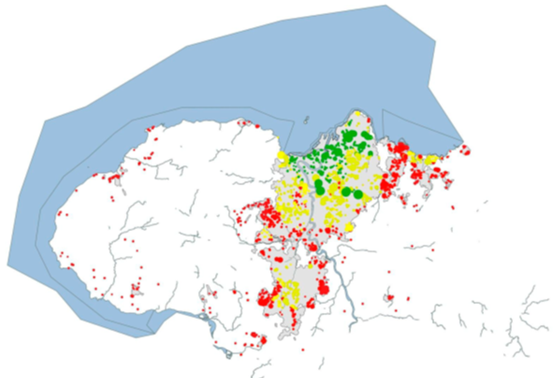
Homes marked green are homes where it is easiest to choose environmentally friendly transport solutions, while it is more challenging for people living in the homes marked red to opt for environmentally friendly transport solutions.
Source: Trondheim Municipality, 2019, p. 24
Regarding vertical development of the city, regulations are quite strict in the city centre, with existing building heights representing the upper limit. Regulations are more liberal for development outside the city centre but specific limits are set for high rises. This is particularly important in Norway, where reduced daylight for a significant portion of the year necessitates careful consideration of building heights and their impact on light penetration. In general, the aim is to promote a traditional urban form with about six to seven stories per building (Interviewee 23, 2024). Regarding other urban functions such as industrial and commercial areas, which occupy large amounts of land, the ambition is to foster better dialogue with the business community and present a plan for densification and improved utilisation of existing commercial space (Region of Trondheim, 2018). However, a systematic approach seems to be lacking.
Buildings and construction sector
In addition to the overarching goal of achieving an 80% reduction in emissions by 2030, the buildings sector has a crucial objective: achieving 100% emission-free buildings for municipally owned and developed structures (Interviewee 24, 2024). By 2025, all municipal building and construction projects must comply with emission-free standards. Emission-free considerations must be integrated early in the planning phase, encompassing infrastructure requirements like power access, charging options and emission-free solutions for construction machinery, building dryers and heating (Trondheim Municipality, 2023b).
Direct greenhouse gas emissions related to buildings and construction result primarily from the combustion of fuel in construction machinery and vehicles used for transporting masses, materials and staff. Emissions at the construction site account for approximately 14% of Trondheim's direct emissions. In addition, the construction industry has a significant carbon footprint due to energy use, land use changes and production and transport of building materials from value chains outside Trondheim. To cut these emissions, the environmental strategy on buildings and construction (Trondheim Municipality, 2023b) defines the following goals for municipal construction activities:
- Demolition projects must also take emission-free practices into account. Starting in 2025, all internal municipal projects must comply with emission-free construction standards. Until then, efforts should prioritise partially emission-free construction, with a strong push towards maximising the proportion of emission-free practices.
- Transport within the scope of construction projects has a significant climate impact, prompting Trondheim municipality to leverage its procurement power to encourage suppliers to adopt climate-friendly practices. By 2025, all purchases of goods and services involving vehicles weighing under 7.5 tonnes and accommodating up to eight people must use zero-emission or biogas vehicles.
- Energy efficiency is also crucial, with the municipality aiming to reduce specific energy consumption in its buildings annually by at least 1% through various means such as energy monitoring, demand management and the adoption of new technologies. Focus areas include solar cells, ground heating, heat pumps and energy exchange between buildings to minimise energy use and peaks.
- Material use plays a pivotal role in the climate footprint of projects, highlighting the need for environmentally friendly, low-emission and renewable materials. Environmental declarations on key materials and plans for material reuse must be integral to all projects, with durability and maintenance serving as vital strategies for emission reduction.
- Trondheim municipality shall prioritise value-preserving maintenance, favour rehabilitation over demolition and ensure flexibility in project design to accommodate changing needs. Opportunities for reuse of materials, equipment and fixtures must be explored and the related climate benefits documented, with overall progress plans reflecting the implications of reuse.
- Finally, the environmental efforts must comply with the Norwegian Standard ISO 14001 on environmental management. For larger new buildings and complete rehabilitation projects, BREEAM-NOR must be used as the environmental classification tool, with a minimum target of “Very Good”. Certification must be assessed on a project-by-project basis (Trondheim Municipality, 2023b).
Specific requirements and energy efficiency standards for new buildings are mainly regulated at the national level through building codes (TEK 17), which define the minimum characteristics a building must possess in order to be legally constructed in Norway. TEK17 was revised in 2022, and from 1 July 2022, it became mandatory to prepare greenhouse gas accounts for apartment buildings and commercial buildings.
For specific requirements concerning energy efficiency, see: https://www.dibk.no/regelverk/byggteknisk-forskrift-tek17/14/14-2
Specific requirements for energy efficiency standards apply to retrofitting of existing building stock. Norway's energy efficiency efforts are overseen by the national agency Enova SF, owned by the Ministry of Climate and Environment. Subsidies are provided for various initiatives, including installation of hydronic heating and local electricity production. The primary focus is on comprehensive building energy upgrades, with reimbursement of up to 25% of costs, capped at NOK 100,000–150,000. The goal is to drive market change towards more sustainable solutions, reducing dependence on subsidies over time. Although a loan scheme is offered through the Norwegian Housing Bank (“Husbanken”), only a small number of households have utilised it annually, indicating potential issues. Additionally, a free advisory service called "Enova answers" assists households with energy retrofitting and subsidy inquiries. Norway's energy retrofit rate has stagnated at around 3.4% annually, despite some households driving up this figure (Egner et al., 2021).
The Brattørkaia Powerhouse aims to achieve three primary objectives: maximise clean energy production, minimise energy consumption and create a pleasant space for occupants and the community.
The building's energy production capabilities stem from the integration of 3,000 square metres of photovoltaic panels into both its façade and pentagonal roof, yielding up to 500,000 kWh of renewable energy annually. It functions as a miniature power plant in the heart of the city, with an energy storage system enabling it to retain energy during the long winter months when daylight hours are limited. Technologies used in the powerhouse include a well-insulated building envelope, airflow management systems to reduce heating needs, heat recovery ventilation and greywater recycling. Additionally, seawater is utilised for heating and cooling purposes, while high-efficiency appliances minimise energy consumption. The Brattørkaia Powerhouse, whose construction commenced in 2018 and was completed two years later, is one of the most efficient and iconic green buildings globally.
Transport and mobility sector
Transport is the primary contributor to greenhouse gas emissions in Trondheim, although remarkable progress has been made, with a 30% reduction since 2009. The Norwegian Environment Agency is the main body responsible for calculations and monitoring with regard to emissions from other sectors, including transport-related emissions. Under the monitoring system, emissions are measured in CO₂ equivalents, which means that the emissions for each gas are weighted according to its global warming potential (GWP).
Despite the progress that has been made, focusing on transport is crucial to achieve the ambitious target of an 80% reduction in overall emissions.
To attain this vision, several key strategies must be prioritised (Trondheim Municipality, 2024):
- Reducing private car traffic: encouraging alternatives to private car use, such as public transport, cycling and walking, is pivotal to curbing emissions.
- Transitioning to fossil-fuel-free or emission-free transport: rapidly phasing out fossil fuel-powered vehicles in favour of electric, hydrogen or other zero-emission alternatives is imperative.
- Optimising land use: instead of further expansion of transport infrastructure, streets or lanes should be reallocated to accommodate pedestrians, cyclists and efficient public transport systems.
Despite these efforts, a specific challenge remains: achieving a 20% reduction in car traffic by 2030. Progress in this regard has been less than optimal, highlighting the need for intensified strategies and community engagement to reach this crucial milestone.
The Norwegian National Transport Plan (Norwegian Ministry of Transport, 2021) defines the goal of achieving zero growth in passenger car traffic in the major urban areas. Achievement of a zero-growth target alone does not suffice to mitigate emissions; a simultaneous shift towards emission-free solutions is needed. While emission-free technologies can help reduce emissions even in the face of traffic growth, the associated costs and demand for resources render this approach unsustainable. Conversely, prioritising traffic reduction, which is a crucial aim in Trondheim (Trondheim Municipality, 2024), yields numerous societal benefits:
- Accelerated energy and climate transition: with fewer emission-free vehicles required, the transition occurs more rapidly and cost-effectively.
- Reduced infrastructure demand: in a compact city with stagnant private car traffic, the need for road construction and other infrastructure diminishes. This not only lowers the carbon footprint but also preserves natural and agricultural areas, safeguarding vital assets like carbon sinks and flood protection.
- Enhanced accessibility and inclusiveness: prioritisation of public transport users and pedestrians fosters a more accessible and inclusive urban environment for all. Additionally, shorter traffic jams, cleaner air and improved traffic safety contribute to a healthier and more liveable city.
After years of car-centric urban development, the focus is now shifting towards creating a city that caters to the needs of both its inhabitants and the environment, with the aim of a harmonious coexistence between people and nature.
In addition to the climate plan, where mobility and transport are identified as one of the key sectors for achieving local climate goals, Trondheim also has a mobility strategy, which explore goals for the transport sectors and tools used at the local level to reduce emissions (Trondheim Municipality, 2022b).
The strategy is divided into six topics, which must be considered holistically, as achievement of mobility goals relies on a combination of actions to improve pedestrian, cycling and public transport infrastructure, limit traffic in residential and city centre areas, enhance the attractiveness of streets and reduce reliance on private vehicles. The actions outlined in the strategy are measures the municipality can implement under its own authority and through collaboration with other stakeholders. However, some actions depend on coordination with other authorities, such as county or state governments, particularly concerning roads, public transport and mobility-related regulations. All the topics are, in different ways, relevant to achieving the climate goals. The focus on pedestrian priority and on cycling infrastructure, for example, aims to shorten walking distances between key destinations and improve pedestrian and cycling infrastructure, thus disincentivising the use of private cars. Efforts to promote efficient public transport include increasing public transport use in growth areas, raising awareness through campaigns and ensuring the accessibility and safety of bus stops and interchanges.
Traffic calming in neighbourhoods involves concentrating car traffic on fewer roads, protecting residential and city centre areas from excessive traffic and improving road safety while reducing noise and air pollution. Active Parking Policies are employed to reduce car commuting and ownership, ensure adequate parking availability and prioritise shared parking solutions. Lastly, the focus on creating attractive and accessible city centres aims to facilitate efficient and environmentally friendly mobility for goods and services and enhance street design to reflect local identity and incorporate green infrastructure. Together, these topics and measures form the backbone of Trondheim's mobility strategy, which sets out to foster a sustainable, accessible and vibrant urban environment.
The main tool used to fund these initiatives is Miljøpakken (Text box 1), also known as the Trondheim Package, which is a comprehensive urban transport package aimed at improving public transport, reducing traffic congestion and promoting environmentally friendly modes of transport in the city (Interviewee 25, 2024). The package includes measures such as expanding and enhancing public transport services, implementing toll rings or congestion charges to reduce traffic congestion, investing in infrastructure for pedestrians and cyclists ad promoting electric vehicles and initiatives to reduce emissions and improve air quality. Funding for Miljøpakken comes from various sources, including the state, the county, the municipality and road tolls.
For an overview of the tolls, see: https://miljopakken.no/bomsystemet
Overall, despite the challenges, there is optimism regarding the transition from fossil fuel-driven to emission-free vehicles among private car owners. This shift presents a significant opportunity to reduce emissions within the transport sector. Furthermore, the commitment of major companies to achieving their climate goals offers an opportunity for collaboration and support, especially in the heavy-duty vehicle sector. Public awareness campaigns and incentives, such as grants for electric bikes, provide opportunities to motivate behavioural change and promote the use of public transport. The principle of "polluter pays" offers an additional opportunity to incentivise sustainable practices within the transport sector. However, there is a need for more targeted tools to ensure equity and accessibility when implementing sustainability trade-offs.
Since 2008, the Miljøpakken initiative has overseen the construction of nearly 40 kilometres of dedicated cycling lanes and close to 10 kilometres of combined walking and cycling paths. While several sections boast commendable infrastructure, gaps remain and certain connections pose safety concerns for cyclists. Trondheim's ambitious goal is to establish a continuous cycling network spanning 180 kilometres. Currently, approximately 80% of Trondheim residents have access to bicycles, with electric bicycles comprising 15% of the total. An increasing number of individuals are opting for electric cargo bikes to facilitate their daily routines. However, the relatively steep price of these bikes is as a financial barrier for many prospective users.
Case: Kristiansand
Background information
Kristiansand, located in the county of Agder in southern Norway, is the largest urban area in Kristiansand Municipality. It ranks as the fifth-largest city in Norway, with a population of 66,576 residents as of 2023 (Statistics Norway, 2023b), while the entire municipality has a total population of 115,569 residents (Statistics Norway, 2023a). Since 2000, the city’s population has increased by approximately 8.7%. As part of a municipal reform, Kristiansand merged with the nearby municipalities of Søgne and Songdalen on 1 January 2020.
Geographically, Kristiansand features a mix of rugged coastlines, sandy beaches and forests and its coastline is dotted with an archipelago of islands. Economically, Kristiansand is quite diverse, with several key sectors driving its prosperity. The maritime and shipping industry is a cornerstone of the local economy. The city’s port is among the busiest in Norway, handling a substantial amount of cargo and passenger traffic. This robust maritime activity is complemented by a significant shipbuilding industry and various logistics services. Tourism is another vital part of Kristiansand's economy.
In recent years, Kristiansand has also become a hub for technology and innovation. The city hosts a growing number of IT and electronics companies, supported by strong emphasis on research and development. The University of Agder plays a crucial role in this sector, fostering a vibrant academic community and driving technological advancements. The oil and gas industry also has a significant presence in Kristiansand, with companies providing essential equipment and services for offshore operations in the North Sea.
Strategic level: municipal goals and policies
In January 2023, Kristiansand’s city council approved an ambitious new climate plan, setting forward-thinking climate goals for the city (Kristiansand Municipality, 2023a). This comprehensive climate and environmental strategy outlines how Kristiansand will transform into a socially equitable, low-emission society. A key aspect of this transition is the shift from a linear economy to a circular economy, with the focus on reducing the total climate footprint by addressing both direct and indirect emissions. To achieve these goals, the climate plan takes into consideration innovative solutions, co-creation and collaboration among the municipality, public actors, the university and research communities, businesses, voluntary organisations and citizens (Kristiansand Municipality, 2023b).
The climate plan, which is mainly the responsibility of the municipal climate and environmental department (Interviewee 26, 2024), emphasises seven key areas: 1) Land use and natural diversity; 2) Food and agriculture; 3) Green mobility and logistics; 4) Sustainable site and property development; 5) Consumption and waste; 6) Green transformation in the business world; 7) Climate management.
While the new climate plan does not define the specific aim of achieving climate neutrality (Interviewee 26, 2024), the municipality of Kristiansand sets the following ambitious climate goals:
- Become a socially fair, low-emission society with an 80% reduction in direct greenhouse gas emissions by 2030 compared to 2015. As in the case of Trondheim, this goal is more ambitious than the one set nationally, which corresponds to a reduction in emissions of at least 55% by 2030.
- Encourage the municipality and its citizens to achieve more with fewer resources.
- Protect and preserve nature.
As detailed in the community section of the municipal plan "Stronger Together – Kristiansand Towards 2030”, the goal is for Kristiansand to be a socially just, low-emission society with significantly reduced greenhouse gas emissions (Kristiansand Municipality, 2020). Furthermore, Kristiansand municipality is committed to ensuring a sustainable climate transition based on the principles of focusing on the total climate footprint and transitioning to a circular economy. The "Kortreist kvalitet" (short-distance quality) report provides concrete recommendations for reducing greenhouse gas emissions and facilitating the transition to a low-emission society for the 12 Norwegian municipalities that participate in the Kortreist Kvalitet network (KS et al., 2020).The report identifies three levels of measures:
- Efficiency: This involves actions that reduce emissions by improving existing technology within current structures and systems. An example is transitioning cars to run on electricity or renewable diesel.
- Concept Development: This involves moderate system changes by developing new ways of performing activities or solving tasks, for instance, replacing private car use with bicycles or e-bikes.
- Transformation: This includes major system changes that prevent emissions by reducing the need for energy and resource consumption, requiring more planning and collaboration. This level envisions a low-emission society with less demand for transport due to communities being planned with shorter distances between homes and workplaces.
Furthermore, the Kortreist Kvalitet network aims to be a platform for knowledge sharing among the participating municipalities and regions. That includes innovation projects in fields such as climate management, citizen participation, biogas, sustainable food production, climate communication, green mobility, co-creation and climate budgets (KS et al., 2020).
Climate goals
As already explored in the case of Trondheim, emissions in Kristiansand are monitored by the Norwegian Environment Agency (Miljødirektorat). As reported in the climate plan (Kristiansand Municipality, 2023b), the greenhouse gas emissions measured in Kristiansand comprise:
- Direct greenhouse gas emissions, which physically arise within Kristiansand municipality's borders.
- Indirect emissions, which arise outside Kristiansand's borders, but which are caused by the municipality's inhabitants and business life. These are approximately four to six times higher than the direct emissions.
In 2022, total greenhouse gas emissions in Kristiansand amounted to 422,159.6 tonnes of CO₂ equivalent (Kristiansand Municipality, 2023b).
Figure 14 presents direct emissions in Kristiansand for various sectors. As can be seen, road traffic is the largest source. Additionally, emissions are particularly high from the following sectors: industry, energy supply and combustion from diesel engines, motor vehicles and shipping, especially due to frequent calls for the ferries between Kristiansand and Hirtshals.
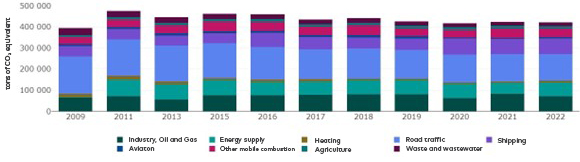
Source: Miljødirektoratet
The Centre for Climate Research (CICERO) and the Norwegian Transport Economics Institute (TØI) have developed a calculation model and a set of projections for greenhouse gas emissions in Kristiansand municipality through 2030 (Korsbakken et al., 2021). These projections include a reference path and estimates of the impact of various emission reduction measures. They illustrate potential developments in greenhouse gas emissions in Kristiansand under different scenarios and outline the efforts needed to achieve the municipality's goal of an 80% reduction in emissions from 2015 to 2030.
The reference path estimates how emissions may evolve without new measures or policies beyond those already adopted. This baseline is used to gauge the impact of additional measures. The emission reduction measures are categorised into four distinct packages, each with a thematic focus and increasing levels of effect and ambition:
- Electrification: This package includes measures for the electrification of road transport. While the total reduction is modest and corresponds to 5,000 tonnes of CO₂ equivalents by 2030, the measures are straightforward to implement and send a strong signal of commitment. Key components include electrifying the bus fleet and taxi fleet and replacing all municipal light vehicles with zero-emission vehicles (Korsbakken et al., 2021).
- Climate Plan for 2021-2030: This package includes relevant measures from the government's Climate Plan for 2021-2030 (The Ministry of Finance, 2019) that impact emissions in Kristiansand. The package encompasses a variety of measures across a range of sectors, aiming for a total reduction of 35,000 tonnes of CO₂ equivalents by 2030. The most significant measure is the requirement for biofuel use.
- Climate Cure 2030: This package includes selected national measures from the Norwegian Environment Agency's report "Climate Cure 2030" (or equivalent local measures) that were not included in the Climate Plan but may still be relevant for Kristiansand (Norwegian Environment Agency, 2020). The measures cover various sectors including transport, land use and industry.
- Radical Measures: This package includes more transformative measures, such as mandates for zero-emission solutions.
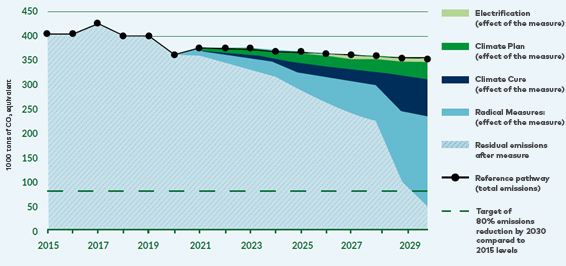
Source: Jan Ivar Korsbakken et al., 2021
As highlighted in the report, to achieve the 80% emission reduction target, it is critical that all these measures are implemented without exception. There is very limited scope to omit any measures, except possibly the zero-emission zone for cars, buses and vans (25,000 tonnes) due to significant reductions already achieved in these areas. However, if any measures from the previous packages fall short or if overall progress deviates from the reference path, implementing a zero-emission zone for all vehicle types will become necessary to stay on track.
In addition to the general climate plan, Kristiansand adopted a climate action plan in June 2030, which identifies concrete measures to help reduce both direct and indirect emissions (Kristiansand Municipality, 2023a). In the next sections, some of the main climate measures for the various spatial planning sectors will be explored.
Land use sector
The main document outlining the land use strategy for Kristiansand is the municipal master plan (Kristiansand Municipality, 2020). The new legally binding section of the municipal masterplan was approved by the municipal council in February 2024. The approach to reducing climate emissions related to land use in Kristiansand recognises the close interlink between land use and transport (Interviewee 27, 2024).
The target goal for the land use sector stated in the municipal masterplan is the same as the general climate goal for the city: an 80% reduction in emissions by 2030. The masterplan provides overarching guidelines for the municipality's physical development from a long-term perspective and identifies several key strategies to support achievement of the climate goals.
Demand for transport is to be reduced by coordinating housing, land use and transport planning, emphasising walking, cycling and public transport. The plan highlights the importance of prioritising the development of local centres with good accessibility between housing, services and meeting places to reduce greenhouse gas emissions and create a more inclusive and age-friendly society. Furthermore, attention is paid to the location of workplaces to help reduce the need for transport (Kristiansand Municipality, 2020).
Housing is mainly planned in and near development centres and in areas with frequent bus services, according to densification principles (Kristiansand Municipality, 2020). Centres are categorised into three levels based on visitation frequency and the area they serve. Although densification is indicated as the main land use strategy, Kristiansand has followed a relatively sprawling development pattern (Interviewee 27, 2024). The proportion of detached houses in Kristiansand is high. Single-family housing makes up around 70% of housing in the municipality (Kristiansand Municipality, 2022b). In recent years, efforts have been made to concentrate development in “local centres” to develop the 10-minute city concept and to create a society that is not only more environmentally friendly but also more socially inclusive (Interviewee 27, 2024). Key challenges arise here in relation to rural areas, where scattered development takes place. Here too the land use strategy is to develop housing in rural areas in connection to local centres where facilities and services are located (Kristiansand Municipality, 2022a).
The reallocation of agricultural land is to be prevented and a long-term boundary for development is to be established with the aim of preserving recreational and agricultural interests and preventing urban sprawl. As noted in the municipal strategy for blue and green infrastructure, safeguarding agricultural land and natural areas with water and sea contributes to health-promoting urban development, preserves biodiversity and limits the negative consequences of climate change (Kristiansand Municipality, 2022a). The municipal strategy for blue and green infrastructure further includes many climate adaptation measures that concern protection of biodiversity, protection of buildings from flooding and reuse instead of demolition of heritage buildings (Kristiansand Municipality, 2022a).
Buildings and construction sector
The municipal goal of achieving an 80% reduction in emissions by 2030 compared to the 2015 levels also applies to the buildings and construction sector in Kristiansand. In October 2021, the city council approved a thematic plan on reducing emissions in the buildings and construction sector. The plan defines overall goals, strategies and measures for the municipality's construction activities (Kristiansand Municipality, 2021). It should be noted that the strategy refers to municipal buildings and thus mainly to functions other than housing (which in Norway is mainly handled by private developers). For requirements regarding private buildings, the same aspects as described for Trondheim should be considered.
Kristiansand Municipality has established comprehensive climate and environmental goals for its buildings sector, focusing on optimising procurement, reducing greenhouse gas emissions and implementing sustainable building practices. Several key objectives have been defined. The municipality is actively working to strengthen its climate competence in the buildings sector, aiming to achieve sustainable and environmentally responsible development (Kristiansand Municipality, 2021). One of the primary strategies to achieve this is optimising procurement processes to enhance the sustainability of municipal buildings. By prioritising materials and construction methods that minimise environmental impact, the municipality is seeking to promote more sustainable practices. This includes fostering stronger dialogue between the municipality and construction players and ensuring that environmental and climate considerations account for at least 30% of the award criteria in procurement decisions (Interviewee 28, 2024).
An important focus is on optimising space use by observing densification principles. This involves combining building functions to reduce the overall square footage required, which in turn lowers the GHG emissions associated with both construction and operation. Additionally, all municipal construction projects now require implementation of an environmental follow-up plan (MOP). This plan outlines current environmental requirements, sets clear ambitions for sustainability and ensures systematic follow-up throughout the project’s life cycle (Kristiansand Municipality, 2021). Optimising material use is another key priority. To minimise greenhouse gas emissions, the municipality assesses the combined environmental effect of materials rather than focusing solely on individual components. Environmental Product Declarations (EPDs) or equivalent labels are now required for at least the 15 main materials in a building. Moreover, the municipality is committed to minimising GHG emissions from buildings by implementing life cycle-based greenhouse gas budgets and accounts for all construction projects over 400 square metres or with an investment framework exceeding NOK 10 million. Greenhouse gas calculations are to be conducted according to the NS 3720 standard (Kristiansand Municipality, 2021).
The municipality has also set the ambitious goal of emission-free construction sites by 2025. Pilot projects are already underway to test zero-emission construction methods, with the target of increasing the percentage of such sites across all projects. In the meantime, sustainable biodiesel will be used until the electrification of construction machinery becomes more widespread (Kristiansand Municipality, 2021). Alongside these efforts, the municipality is committed to reducing waste on construction sites, with recent projects setting a waste generation target of no more than 25 kg per square metre and the goal of recycling over 90% of construction waste (Interviewee 28, 2024).
Energy efficiency is another crucial focus area. The municipality is investing in measures to reduce energy consumption in existing buildings and requires that all new buildings be designed according to passive house standards (NS 3700 for residential buildings and NS 3701 for commercial buildings). For major renovation projects, passive house standards will also be prioritised. Where feasible, all new buildings are required to achieve energy class A. Finally, to support a circular economy, the municipality aims to evaluate existing buildings for potential reuse before planning new construction. Additionally, there is a strong emphasis on reusing materials in new projects. Climate adaptation is also integral to construction activities, with a focus on protecting biodiversity and ensuring that buildings are resilient to climate change impacts such as heavy rainfall, stormwater and flooding.
Transport and mobility sector
The overarching goals for the municipality of Kristiansand in the transport and mobility sector are aligned with national objectives aimed at sustainable urban transport, as outlined in the municipal climate plan (Kristiansand Municipality, 2023b). These goals are rooted in the Norwegian transport system, which prioritises reduction of private car traffic growth in major urban areas through the "Zero Growth Goal" established in the National Transport Plan of 2012. A national financing scheme supports these objectives, allowing municipalities to enter into agreements with the Ministry of Transport to receive funding. Kristiansand has successfully secured incentive agreements with the Ministry of Transport since 2009 (Interviewee 29, 2024). This funding has led to substantial improvements in the public transport system and a notable increase in passenger numbers.
Additionally, a road toll system implemented since 2009, with revised pricing in 2013 to discourage peak-hour traffic, contributed to achieving zero growth in private car traffic from 2012 until around 2019. However, a shift occurred in 2019 when traffic growth resumed, interrupted briefly by the COVID-19 pandemic in early 2020. Despite an initial drop in traffic, levels rebounded quickly in the latter half of 2020 and continued to rise in 2021 and 2022 (Interviewee 29, 2024). Notably, 2022 saw a 2.2% increase in traffic compared to the previous year. This situation presents a paradox, as private car traffic and public transport passenger numbers are growing concurrently despite modest population growth. This unexpected trend poses a challenge to maintaining the zero-growth goal and highlights the need for further analysis and strategic adjustments.
As addressed in the climate plan (Kristiansand Municipality, 2023b) transport in Kristiansand aims to be predominantly emission-free by 2030. The municipality sets several goals in this respect:
- Actively promoting walking, cycling and public transport as the primary choices.
- Facilitating shared mobility solutions to reduce the need for private vehicles.
- Municipal purchases of vehicles and machinery that are emission-free or use sustainable renewable fuels.
To achieve these goals, several actions are listed in the climate Action Plan (Kristiansand Municipality, 2023a). The municipality aims to promote compact urban development by enhancing public transport, pedestrian pathways and cycling infrastructure. Information campaigns will play a key role in encouraging more residents to walk or cycle, while parking policies will be designed to limit car use. Kristiansand is also focused on expanding shared mobility options, such as car-sharing, bike-sharing and e-scooter programmes, which will be integrated seamlessly with public transport. Secure bike storage will be provided at key transport hubs to facilitate this shift. The municipality is committed to transitioning its own vehicle fleet to emission-free or sustainable alternatives and ensuring that construction sites are equipped with emission-free solutions. Additionally, emission-free waste collection vehicles will be encouraged and new public transport agreements will prioritise a high percentage of emission-free vehicles, including taxis, which will be required to meet these standards as part of municipal contracts. To support this transition, the municipality will assess and provide adequate charging infrastructure for taxis as well as for private and commercial vehicles. Kristiansand will also explore the introduction of zero-emission or low-emission zones and conduct feasibility studies for goods delivery distribution points in the city centre. Efforts to shift freight transport from road to rail and sea are planned, with phased requirements for zero-emission vehicles in procurement processes. In order to reduce the overall need for transport, the municipality will encourage the use of innovative and local solutions. This includes replacing physical meetings and gatherings with digital platforms where possible and prioritising locally produced products and services. These combined efforts aim to reduce emissions and foster more sustainable mobility (Kristiansand Municipality, 2023a).
Achieving the climate goals in the transport sector presents several challenges. A primary issue is the continuous growth in private vehicle traffic. Additionally, the way land is used and developed significantly impacts transport patterns. Spatial development dictates the locations of homes, workplaces and recreational areas, influencing how and where people travel. Coordinating land use with transport development is a significant challenge that must be addressed (Interviewee 29, 2024).
Challenges and opportunities: a multilevel governance perspective
In general, Norwegian municipalities enjoy broad autonomy in spatial planning. Under the legal framework of the Planning and Building Act, municipalities are authorised to specify which land use plans are to be developed and updated. Municipal masterplans, which govern local spatial planning, fall under their responsibility. Nevertheless, aligning land use approaches with climate neutrality goals is not an easy task and several challenges may arise.
In the transport and mobility sector, the national-level agenda is defined by the National Transport Plan, which outlines priorities for projects and funding allocation. This plan guides decisions on which initiatives receive financial support from the state, such as railway construction or road improvements. While the National Transport Plan does not directly impose enforceable regulations, it establishes climate goals that influence transport priorities. These goals include targets for reducing emissions from various vehicle types, thereby aligning decision-making with broader national objectives (Interviewee 25, 2024, p. 25). At the local level, laws and regulations are pivotal in shaping transport policies. Local governments enact rules related to emissions, traffic management, land use and infrastructure development, often reflecting national goals but tailored to local needs. Funding mechanisms, such as grants and subsidies from the national government, significantly impact local transport projects (Interviewee 25, 2024). Local governments must adhere to criteria outlined in the national plan to secure financial support, emphasising the connection between national policies and local actions.
With respect to the buildings sector, the main responsibility rests at the national level, with the regulatory framework established by the Planning and Building Act and the technical regulations (TEK). At the local level, municipalities have to comply with national-level requirements.
Policy capacity: vertical and horizontal governance tensions
Land use sector
Vertical governance tensions
In Norway, densification is the dominant strategy in land use discourse, with compact urban development being strongly pursued both at the national and at the local level. However, in both Trondheim and Kristiansand challenges persist in implementing a compact city approach, with sprawl continuing to shape development patterns in both cases.
In Trondheim, regulatory autonomy issues have arisen. Here, brownfields are priority areas for implementing densification interventions, as they are usually located in already built-up areas. Many of these brownfield areas were once used for waste disposal before newer methods like incineration became widespread. Now they are located in river valleys near the city centre but have become problematic due to the release of harmful gases and contaminants from the buried waste. This poses serious health risks, a concern that the national government takes seriously. Despite local leaders and politicians wishing to repurpose these areas for housing, the health hazards of building on former waste disposal sites are hard to ignore. Navigation of governance structures adds to the challenge. Even when there is universal agreement on goals, such as densifying already built-up areas, local authorities can find themselves restricted by national rules, limiting their ability to address local needs effectively (Interviewee 23, 2024).
In Kristiansand, challenges related to densification arise in selecting areas for development. A recent evaluation by the municipality identified areas to be potentially excluded from designation as development zones in the municipal plan. Some of these areas were deemed unsuitable due to their remote locations or steep terrain, which would increase transport demand and contribute to environmental encroachment. Their exclusion aligned with national land use objectives to reduce transport demand and preserve natural environments. However, political shifts led to fewer areas being removed than initially recommended. As a result, many areas continue to be designated as potential development zones, serving as a buffer for future expansion despite earlier proposals for their removal. This process highlights the tension between administrative planning recommendations and political decision-making at the local level (Interviewee 27, 2024). While national goals provide a general framework, their implementation requires local adaptation, introducing complexities. Local politicians may interpret national objectives in different ways, creating inconsistencies in planning decisions (Interviewee 27, 2024). In Kristiansand, the challenge is not a lack of local autonomy but rather conflicting interpretations of national-level recommendations (Interviewee 27, 2024). The municipality plays a crucial role in implementing these goals, yet many of these discussions might be more effectively addressed at the regional or national level.
Horizontal governance tensions
Densification around transport hubs is a key strategy for reducing emissions by decreasing car dependency and improving access to public transport. However, in Trondheim, this approach is sometimes hindered by conflicts between municipal departments. For example, the Environmental Department’s concerns over noise pollution often clash with the goal of increasing density near transit corridors. This tension highlights a common challenge in urban densification efforts. Similarly, competing priorities among departments advocating for seemingly beneficial initiatives can create obstacles. The Transport Department prioritises high-quality bicycle lanes to promote cycling, while urban planners focus on pedestrian-friendly nodes in local centres. Aligning these objectives is not always straightforward, as preferences for infrastructure – such as roundabouts, cycle paths and green spaces – often diverge. Nevertheless, negotiating these conflicts is a considered a routine aspect of project development and consensus is typically reached (Interviewee 23, 2024).
Furthermore, densification also faces resistance due to concerns over green space loss, architectural identity and neighbourhood character. Transforming urban areas is inherently complex, involving property disputes, competing interests, high land values and significant financial investments for both public and private stakeholders (Trondheim Municipality, 2019). Lastly, increased land pressure in the city centre threatens valuable assets such as parks and cultural landmarks. Cultural attitudes and political pressures further complicate the process, as there is often an expectation to approve new developments despite preservation concerns.
In addressing local land use strategies, Kristiansand faces some significant challenges, particularly in integrating sustainability goals. The municipal plan emphasises the three dimensions of sustainability – environmental, economic and social – and recognises the complex interplay among these aspects and the UN Sustainable Development Goals. However, translating this vision into practical, day-to-day actions is a complicated task (Interviewee 27, 2024). One of the primary challenges is that of effectively measuring the social impact of local climate strategies. While environmental and economic impacts are more straightforward to quantify, social impacts, which often involve softer qualities of life, are more difficult to evaluate. Although there are local indicators for quality of life, assessing and improving these aspects remains challenging. Nevertheless, the municipality is working on projects where social impacts are the main theme, learning how to assess social qualities for neighbourhoods, such as in area-based development.
Another challenge in Kristiansand’s urban development is the tension between previous trends of urban sprawl and the current goal of densifying city centres. Densification aims to provide better access to essential services and activities within walkable distances, enhancing overall quality of life. However, ensuring that densified areas remain accessible and inclusive for all residents – especially for vulnerable groups – poses a significant challenge (Interviewee 27, 2024). Moreover, densification carries the risk of rising housing costs, potentially reducing affordability. While Kristiansand has been proactive in addressing this concern, often outperforming larger cities like Oslo in providing affordable housing (Interviewee 27, 2024), maintaining this balance will be crucial. Moving forward, Kristiansand must navigate the complexities of densification and inclusivity to ensure that urban development supports all residents fairly while upholding its sustainability commitments.
Buildings and construction sector
Vertical governance tensions
In Trondheim, a critical challenge arises in relation to emission-free construction sites. A key factor in this transition is the availability of electric construction machinery, such as engraving machines and loaders. However, the high costs of these machines place the financial burden on construction companies, which are often reluctant to invest without sufficient demand or financial support. At the same time, municipalities cannot legally require them to do so. This regulatory barrier is rooted in national legislation, specifically the Planning and Building Act (PBL). Authorities are exploring legal options to assess whether the law could be challenged, potentially granting municipalities greater authority to impose stricter environmental requirements on private developers. While the Planning and Building Act serves as a crucial governance tool for municipalities to reduce greenhouse gas emissions, Trondheim can only mandate emission-free practices on municipally developed sites, while privately led developments remain outside its control.
Like in Trondheim, in Kristiansand, the municipality’s climate ambitions have generally exceeded national targets (Interviewee 28, 2024). The municipality has set the goal of an 80% reduction in emissions by 2030, surpassing the national target of 50-55%. While this reflects the municipality's strong commitment to sustainability, it has also sparked local debates about the potential need for recalibration to align more closely with national objectives. As the political landscape evolves, there may be a shift towards harmonisation to ensure that targets remain both ambitious and achievable (Interviewee 28, 2024). Although Kristiansand has maintained higher environmental standards, there is growing recognition that recalibrating its targets might be necessary to facilitate effective implementation and compliance.
Since January 2024, the Norwegian national government has introduced a new rule stating that climate and environmental considerations are to given a weighting of at least 30% in public procurement. This strict regulation can be difficult to navigate at the local level. Identifying the most impactful and cost-effective environmental measures is often challenging, leading to potential inefficiencies and higher costs. In Kristiansand, this issue ties in with the need for enhanced competence within the organisation as well as better support networks to provide guidance in climate actions (Interviewee 28, 2024).
Horizontal governance tensions
In Trondheim, communication practices among the various municipal departments are generally satisfactory. However, challenges may arise from the inherent diversity in operations and the unique demands they entail. Each unit functions as a system with inputs, outputs and a set budget. Some units collaborate with the private sector on projects where considerations such as climate impact may not always receive sufficient attention due to the lengthy and costly nature of the process. This can lead to misaligned expectations among units. For example, infrastructure projects like water and sewage operate differently from building projects, requiring particular types of machinery. Buildings may need tower cranes, while infrastructure projects require excavation equipment or electrical trucks. Achieving a 100% emission reduction in construction activities is challenging due to these differences. As a result, establishing a universal method for measuring emissions across all projects is complex. Despite these inevitable discrepancies, efforts are ongoing to foster dialogue and find solutions to bridge the gaps between units and their respective expectations (Interviewee 24, .
In Trondheim, electrification of the construction and infrastructure sectors presents both challenges and opportunities. While it will undoubtedly increase the demand for energy and power, it also creates opportunities for transitioning to more localised energy production. Regulatory support for initiatives, such as energy sharing between neighbouring buildings and properties, can be pivotal in meeting demands sustainably. Trondheim municipality is poised to lead by example through its own projects, encouraging contractors to use emission-free and climate-friendly technology.
Additionally, initiatives like the Positive CityxChange project provide valuable opportunities to test innovative solutions, such as energy sharing, which can ultimately drive comprehensive regulatory changes. Furthermore, regulatory revisions are essential to promote reuse and circular solutions within the construction and infrastructure industry. By fostering a circular and emission-free future, Trondheim can not only mitigate its environmental impact but also stimulate the growth of a sustainable economy.
Transport and mobility sector
Vertical governance tensions
In Kristiansand, financial constraints are one of the primary challenges, as without the national funding packages, it would be a significant challenge to meet the transport objectives (Interviewee 29, 2024). This is particularly true for the public transport service, which is severely underfunded. The complexity of county financing aside, the current funding system for public transport is not designed to drive substantial improvements. It merely maintains the status quo from the previous year, making it impossible to enhance service levels or efficiency significantly within the existing financial framework. For instance, doubling the frequency of bus lines would be unfeasible under normal funding conditions (Interviewee 29, 2024). Therefore, these national funding packages are crucial for Kristiansand as well as for other major urban areas in Norway. However, there is a notable disconnect between national goals and the associated funding. This is particularly evident in infrastructure development for biking. While it is possible for municipalities to prioritise such projects within their budgets, progress would be markedly slower without additional funding. Consequently, both toll road packages and the "byvekst-avtale" (growth agreements) are essential for enabling meaningful advancements (Interviewee 29, 2024)
The municipality of Trondheim lacks the authority to establish zero-emission zones
Geographically defined area on a public road which is exposed to local air pollution from cars and where the municipality has received consent to introduce a fee for driving. i.e. a zone where there are high fees for entering with a fossil fuel-driven vehicle
Horizontal governance tensions
In Kristiansand, regarding horizontal governance at the municipal level, interactions among various departments, including those not directly involved in transport, can sometimes lead to discussions over priorities and specific projects. For instance, collaboration with the engineering department helps determine the planning and implementation of bicycle routes. Similarly, coordination with the Parks and Green Areas Department influences decisions regarding street design, outdoor amenities like bicycle parking and the creation of paths for walking through green spaces (Interviewee 29, 2024). Moreover, engagement with building and planning authorities ensures that new developments integrate effectively with existing bike infrastructure and public transport routes, with the aim of optimising the local transport network over the long term (Interviewee 29, 2024). Additionally, interactions extend to other departments, where considerations like school consolidation by education authorities – intended to save costs but potentially impacting pupil commuting distances – highlight interconnected challenges. Similar dynamics are observed in relation to kindergartens and other public services, emphasising the complexity and interdependence of municipal governance efforts.
In Trondheim, challenges mainly arise due to the size of the municipality, making it difficult to navigate and find the appropriate contacts within different departments. Despite a shared willingness to cooperate, the sheer number of staff can hinder seamless collaboration. Although efforts are made to break down silos and foster integration, busy schedules and competing priorities sometimes prevail (Interviewee 25, 2024). Typically, departments work independently but come together for specific tasks or projects, demonstrating a tendency towards collaboration for smaller or larger endeavours. However, the ideal of seamless cooperation is not always achieved due to practical constraints.
Institutional capacity: knowledge, relational resources and mobilisation capacity
Knowledge Capacity
Both Trondheim and Kristiansand have well-established knowledge bases across the land use, buildings and transport sectors. Nevertheless, challenges remain in ensuring consistent expertise, integrating climate considerations into decision-making and keeping pace with evolving technical requirements.
Kristiansand benefits from a large and professional municipal staff, allowing for internal discussions and knowledge sharing on climate and environmental planning. However, knowledge is not always effectively disseminated across departments, creating gaps in implementation, particularly in operational units such as roads and parks, where daily tasks can overshadow innovation efforts (Interviewee 27, 2024). Therefore, improving internal collaboration and spreading existing knowledge more effectively is crucial. Keeping knowledge up to date by attending conferences, courses and webinars and learning from successful projects in other municipalities or regions is an ongoing effort (Interviewee 27, 2024).
In Trondheim, there is strong technical competence across various municipal sectors, but governance complexities arise from management of political interests and competing agendas (Interviewee 23, 2024). One key area for improvement is enhancing the ability to interpret and analyse greenhouse gas emission data, particularly in land use planning, where measuring climate impact is becoming increasingly necessary. In the buildings sector, Trondheim has developed specialised expertise in sustainability and circularity, particularly in the reuse of materials such as furniture, timber and bricks (Interviewee 24, n.d.). However, ensuring that all employees have sufficient environmental expertise is an ongoing effort, requiring structured internal knowledge development and capacity-building programmes (Trondheim Municipality, 2023b).
In Kristiansand, climate knowledge in the buildings sector varies significantly across the organisation, creating obstacles to the consistent implementation of sustainability measures (Interviewee 28, 2024). Furthermore, the pressure to produce results under resource constraints limits the municipality’s ability to dedicate time and staff to in-depth climate analysis (Interviewee 28, 2024).
Similarly, while the transport sector in both municipalities is supported by competent municipal staff, there is a reliance on consultants and research collaborations to fill expertise gaps (Interviewee 25, 2024; Interviewee 29, 2024). Trondheim, in particular, prioritises continuous learning and improvement, integrating external knowledge into municipal decision-making through research partnerships (Interviewee 25, 2024).
Relational Resources
Both municipalities actively participate in national and international networks to share best practices and enhance institutional knowledge. These networks serve as crucial platforms for exchanging experiences, developing strategies and keeping abreast of emerging climate solutions.
In land use planning, Kristiansand and Trondheim engage in intermunicipal networks focused on greenhouse gas emissions and urban planning, collaborating with cities such as Oslo and Bergen (Interviewee 23, 2024). Trondheim has also prioritised participation in the Storby Network, a leadership-focused platform for discussing climate strategies across major Norwegian cities. These collaborations allow municipalities to learn from national and international experiences, including case studies from cities such as Stavanger and even from Greenland (Interviewee 23, 2024).
The buildings sector in Trondheim is strengthened by participation in FutureBuilt, an initiative originally established in Oslo that now includes cities like Stavanger and Bergen. This membership enables Trondheim to contribute to and benefit from innovative sustainability projects, particularly in low-carbon construction and circular material use (Trondheim Municipality, 2023b). Kristiansand, while not as heavily involved in such programmes, maintains regional collaborations and works towards integrating climate considerations into municipal building policies.
In the transport sector, Kristiansand has established regional connections with road authorities at both the municipal and national levels. For biking initiatives, it participates in a county-wide network, leveraging its role as the largest city in the region to promote cycling infrastructure improvements (Interviewee 29, 2024). Trondheim, in turn, benefits from engagement with EU initiatives such as the EU City Mission, ensuring access to international expertise and financial resources (Interviewee 25, 2024). The municipality also has an EU advisor, who tracks opportunities for participation in European projects, bolstering its ability to engage when necessary (Interviewee 25, 2024).
While these networks provide valuable opportunities for collaboration, both municipalities face challenges in resource allocation and participation capacity. Engaging in multiple networks requires staff time and financial support; municipalities must strategically decide which platforms offer the most practical benefits for local climate action.
Mobilisation Capacity
Kristiansand and Trondheim have well-established governance structures for climate planning, but the effectiveness of implementation varies due to internal coordination issues, political considerations and capacity constraints.
In Kristiansand, despite having a large municipal workforce, climate integration remains uneven across departments. Certain units, such as land use planning, are well-equipped to incorporate sustainability principles, while others, like roads and parks, struggle to prioritise climate initiatives within their daily operations (Interviewee 27, 2024). Internal collaboration mechanisms are necessary to ensure climate knowledge is integrated across all municipal activities.
Trondheim has taken steps to mainstream environmental expertise across departments, assigning climate and environmental advisors to oversee both existing and new construction projects (Interviewee 24, n.d.). However, ensuring that these advisors can effectively influence municipal decisions and enforce sustainability standards remains a challenge. The municipality has recognised the need for increased cross-sectoral collaboration and better-defined responsibilities to translate expertise into action (Trondheim Municipality, 2023b).
Political considerations play a significant role in shaping municipal climate policies. In Kristiansand, political decision-making is sometimes misaligned with expert recommendations, particularly in the transport sector, where understanding the interdependencies between land use, mobility and emission reductions is crucial (Interviewee 29, 2024). Trondheim faces similar governance challenges, with competing political priorities potentially slowing down the adoption of ambitious climate measures (Interviewee 23, 2024).
Both municipalities also face challenges related to staff capacity. In Kristiansand, the need to deliver rapid results strains staff resources, making it difficult to prioritise long-term sustainability initiatives (Interviewee 28, 2024). Trondheim, despite its strong knowledge base, relies on consulting firms for market investigations and complex environmental analyses, underscoring the need for further development of internal expertise (Trondheim Municipality, 2023b).
Despite these challenges, both municipalities have opportunities to strengthen their governance and mobilisation capacity. Trondheim’s participation in FutureBuilt positions it as a leader in innovative sustainable building, while Kristiansand’s role in regional cycling and road infrastructure networks allows it to influence mobility planning beyond municipal borders. Additionally, both municipalities benefit from national and EU-funded initiatives, which can provide financial and technical support for progress on local climate goals.
Key reflections and learnings from Norway
Kristiansand and Trondheim both face significant challenges in their pursuit of climate neutrality through spatial planning, though their experiences differ due to local governance structures, geographical contexts and institutional capacities. Both cities strive for compact urban development as a key policy goal, yet they encounter obstacles in realising this ideal. In Trondheim, regulatory issues complicate local efforts, limiting local decision-making autonomy. However, the city’s strong technical expertise and established participation in collaborative networks, such as FutureBuilt and the Storby Network, enhance its ability to navigate governance constraints and integrate sustainability into urban planning. By contrast, Kristiansand faces issues related to the suitability of development areas, with some proposed sites deemed unsuitable due to geography, leading to political conflicts over land use. Despite this, Kristiansand benefits from a large and professional municipal staff, which supports ongoing learning and adaptation, particularly in projects focused on assessing social impacts in urban development.
In the transport sector, both cities face hurdles. Trondheim is seeking to establish zero-emission zones but lacks the necessary legal authority, while Kristiansand's public transport development is hindered by financial constraints and inadequate funding. Despite these challenges, both cities have demonstrated success in securing external financial support and utilising mechanisms such as growth agreements and toll road packages to drive mobility improvements. Additionally, Kristiansand’s active role in regional transport planning strengthens cross-sectoral collaboration, ensuring that sustainable mobility remains a key priority despite funding limitations.
Horizontal governance tensions also arise in both cities as various municipal departments work to align their priorities with climate goals. Trondheim experiences conflicts between environmental and transport interests, while Kristiansand faces challenges in integrating transport planning with urban design.
Institutional capacity is another factor that shapes each city’s approach. Trondheim benefits from a strong expertise base, engaging in collaborative networks to share best practices. Furthermore, Trondheim’s leadership in sustainable construction is evident in its commitment to emission-free municipal projects. Kristiansand, while possessing significant knowledge, struggles with inconsistent expertise across departments, affecting the implementation of climate initiatives. Overall, both Kristiansand and Trondheim are committed to climate neutrality. Despite being embedded in the same vertical governance framework, their paths reflect distinct local conditions that shape different levels of policy and institutional capacity. In the following boxes, we provide an overview of the key challenges faced by the Norwegian cities in achieving climate neutrality, as well as reflecting on the implications and possible ways to address them.