7. Denmark
Case: Aarhus
Background information
Aarhus, the second largest city in Denmark, is located on the eastern coast of the Jutland peninsula. As of 2024, the municipality of Aarhus has a population of 367,663, with 295,688 people living in the city. The population has been growing steadily, with an increase of over 5,000 people in 2023. Over the past ten years (2013-2023), the population grew by around 48,000 people. According to population projections, Aarhus will have a population of almost 400,000 residents by 2033 (Aarhus Municipality, 2024a).
As of 2023, the largest employment sector in the municipality is public administration, education and health. This is followed by trade and transport and business services. Aarhus also has the highest number of industrial jobs in Denmark, within key industries such as machinery (27%), food and drink (26.7%) and the furniture industry (12.5%) (Aarhus Municipality, 2024b). These figures highlight Aarhus’s diverse economy, with particular strengths in public services and industry.
Strategic level: municipal goals and policies
Aarhus is considered to be among the most climate-ambitious municipalities in Denmark, driven by a city council that is striving to position Aarhus as a municipality with progressive and aspiring climate goals (Interviewee 5, 2024). The goal of achieving climate neutrality by 2030 was set in 2008, defined as a 70% reduction in emissions compared to 1990 levels (Aarhus Municipality, 2020). Additionally, the municipality aims to become fully emission-free in 2050.
To meet those objectives, a climate strategy was developed in 2020, outlining general principles for reducing emissions. To complement the strategy, a climate action plan setting out detailed efforts was developed for 2021-2024. A new action plan is currently underway, which is expected to reaffirm the emission goals (Interviewee 5, 2024). Furthermore, the climate action plan is supported by a catalogue of measures for six focus areas where emissions should be reduced: (1) energy, (2) transport and mobility, (3) buildings and construction, (4) industry and agriculture, (5) Aarhus transforms and (6) the municipality as a climate-friendly workplace/organisation (Aarhus Municipality, 2020). These six areas are guided by a number of principles, including:
- Focusing on direct emissions (Scopes 1 and 2) but also taking responsibility for collective emissions (Scope 3).
- Not relying on compensation schemes.
- Thinking about the green transition holistically and seeking opportunities and positive outcomes for the urban community.
- Supporting the development of carbon capture, utilisation and future carbon storage.
- Leveraging partnerships to tackle the current issues.
Data from 2022 show that the transport sector (729,000 tonnes) and energy sector (698,000 tonnes CO₂) are the largest emitters. To reduce emissions from energy use, the goal is to transition to renewable energy in all sectors (including transport and buildings) (Aarhus Municipality, 2021c). In the buildings sector, the primary goals are for the city to grow without an increase in energy consumption and to achieve a 70% reduction in greenhouse gas emissions from materials and activities associated with construction. The focus area on transport and mobility is aimed at minimising demand for transport in general while also creating the opportunity for combining different transport solutions. Aarhus expects to reduce carbon emissions by 282,500 tonnes in 2024 with significantly higher figures by 2030 if carbon capture technologies are successful (Aarhus Municipality, 2021c). Nevertheless, the upcoming climate action plan indicates that the municipality will fall short of reaching its neutrality goal in 2030 by 846,000 tonnes of CO₂ in 2030. Overall emissions are lower than in 2009,
2009 was when relevant data first became available.
The municipality measures emissions in Scopes 1, 2 and 3 (see Box 1 for definitions) resulting from its own operations as well as the overall emissions in the geographical area of the municipality. The data are collected annually and classified according to different sectors. An assessment is being conducted to evaluate the effects of Scope 1 and Scope 2 emissions. This assessment is cross-referenced with national initiatives, with municipal goals subsequently being updated to reflect both local emission levels and national policies. The target figures for 2030 take national decisions and initiatives into account as well as current emissions and local efforts. Consequently, the policy for Scope 1 and Scope 2 will become frozen policy
“Frozen policy” describes a scenario in which no new policies are introduced (Danish Energy Agency, 2023).
As an integral part of working with the EU Mission for 100 Climate-neutral & Smart Cities, the Climate City Contract (CCC) action plan and the previous years’ municipal climate actions, Aarhus is paying increasing attention to co-benefits of the transition (Interviewee 5, 2024). As the measures required for CO₂ reductions become more difficult and more comprehensive, it is increasingly important to focus on the co-benefits that the green transition brings and thus formulate a value-based vision beyond CO₂ reductions. The green transition of Aarhus should not only contribute to achieving the national and international CO₂ goals but also create value for its citizens, businesses and communities.
Financing Aarhus’s climate initiatives has historically relied on mechanisms such as climate funds and climate pools, which provided funding for various programmes. These mechanisms have had mixed success, as not all funded programmes have effectively reduced the city’s carbon footprint. While most funding opportunities stem from municipal climate funds, external sources like Realdania have also played a role. For instance, Realdania supported a project that transformed the city’s inner harbour from an industrial area into an urban space, incorporating climate protection measures for the city (Realdania, 2017). As the municipality develops new climate plans, it is currently exploring how future financing structures and systems should be designed (Interviewee 5, 2024).
The climate secretariat – a technical and environmental department of the municipality (Interviewee 5, 2024) – is in charge of overseeing and coordinating the climate initiatives. Nevertheless, as most initiatives span multiple sectors, nearly all municipal departments are involved in implementing the plans in some capacity. This involvement also extends to municipally owned businesses, such as Kredsløb, an energy company that provides electricity to Aarhus.
An interviewee from the municipality acknowledges that, in retrospect, the goals in the current climate plan might not have been the most appropriate ones to set (Interviewee 8, 2024). While the goals might have seemed correct five years ago, time has shown that different issues need to be addressed, which will be outlined in the upcoming climate plan. On the other hand, the municipality has learned from this experience and has dedicated significant time to setting more concrete and well-thought-out aims in the upcoming climate plan.
The greatest governance challenges to achieving climate neutrality lie in areas where the municipality lacks a mandate. This is especially the case for private industries and agriculture, where the jurisdiction of the municipality ends abruptly (Interviewee 5, 2024). Strengthened regulations may be needed to enforce climate actions across all municipal departments (Interviewee 5, 2024). Another significant barrier is the individual decision-making of citizens when it comes to choosing modes of transport. While the municipality can create a green mobility plan and make green transport methods more accessible, there is no guarantee that residents will change their preferences and habits. Ultimately, the municipality is dependent on the actions of citizens and stakeholders to reach its goals.
Land use sector
To support the city’s climate goals, Aarhus has set a vision of becoming a 15-minute city. By densifying the city into clusters around existing urban areas and traffic hubs and ensuring easy access to necessary amenities, the city aims to facilitate sustainable lifestyles. Densification will primarily occur along key corridors, following the main streets that run in and out of the city (Aarhus Municipality, 2021a). To promote the 15-minute principle, new projects will focus on local needs (Aarhus Municipality, 2023a). To this end, the municipality is using core data to assess the coverage of essential services such as shops, day care centres and medical centres and how residents can access them (Interviewee 6, 2024).
In the municipal plan, cohesive green spaces and nature are considered part of the solution to climate-related issues. Hence, the municipality is focusing on developing a network of blue and green areas, while newly established development areas will prioritise projects that create synergies between climate adaptation, nature and recreation (see Figure 1) (Aarhus Municipality, 2021a). The plan emphasises that new developments and the blue-green network around the municipality should support one another in creating a healthy living environment where local amenities and natural areas are readily accessible. The municipality acknowledges that it will be more difficult to implement the strategy of combining green areas with already developed city environments. Therefore, the municipality is striving to find solutions that combine the existing landscape of the city with new green areas. Moreover, the municipality is also working on conservation and nature-related strategies, such as where to place surplus soil and where to begin afforestation in relation to groundwater areas (Interviewee 6, 2024).
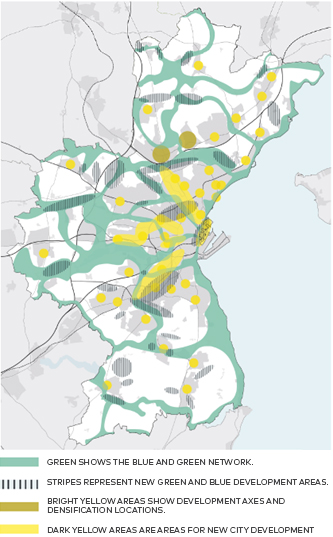
Currently, the municipality is preparing a new municipal plan, which is set to take effect in 2025. The upcoming plan builds on the preceding strategy plan from 2024. A key focus of the strategy is to protect natural areas by targeting already urbanised areas for future development. This includes prioritising existing city growth zones, repurposing brownfields for development and retrofitting old buildings (Aarhus Municipality, 2023a). However, repurposing of existing buildings is, however, seldom practiced with new construction being the more common approach (Interviewee 8, 2024). Repurposing requires political approval and many older buildings fail to meet current safety or emission standards. There is also a bias against reusing buildings due to their perceived low quality or unattractive locations. As a result, the municipality has not developed a strong practice of repurposing, creating tension between plans to reduce construction and the current trend of building new structures. However, the upcoming municipal plan could shift this approach.
To estimate the climate impact of land use, the municipality is currently developing a CO₂ assessment tool. The tool will be used whenever a local plan for a specific area is being developed. As the tool is not fully developed, the current challenge is to decide on the evaluation framework, as the reliability of the tool depends heavily on the method for evaluating the CO₂ impact (Interviewee 6, 2024).
Lastly, the green energy transition requires space, which is rather limited within and around Aarhus. It is therefore necessary to plan for multifunctional land use, such as combining afforestation with the installation of wind turbines (Interviewee 5, 2024). However, current legislation limits multifunctional land use. Such limitations might be lifted in upcoming years, as there is increased political focus on ensuring the right political leeway for the municipalities' green transition, including opportunities associated with multifunctional land use (Interviewee 5, 2024). The “Green Tripartite” (consisting of the Government, Agriculture and Food, the Food Federation NNF, Danish Metal, Danish Industry and the National Association of Municipalities) is working to reach an agreement on principles for recommendations and solutions on how to create areas in the future where agriculture, nature, renewable energy and recreational areas can coexist. For Aarhus, with its blend of urban, peri-urban and rural areas, a legislative change promoting multifunctional land could unlock new opportunities, such as potential renewable energy facilities, biogenic parks and increased afforestation.
Buildings and construction sector
In 2022, 74% of municipal buildings in Aarhus belonged to a low energy class (D, E, F and G). In comparison, the national average in the same year for municipal buildings with a low energy class was 64% (Pedersen, 2022). The municipality is aware of the situation and is actively working to improve the energy efficiency of all municipal buildings. An analysis by the municipality shows that if the municipality is to comply with the Paris Agreement, the energy performance of all buildings needs to be higher than the minimum requirements under current regulations. Therefore, the municipality is also encouraging developers to meet a “voluntary sustainability class” (Interviewee 6, 2024).
To monitor the emissions and energy efficiency of municipal buildings, Aarhus uses life cycle assessment (LCA). LCA is used for every new municipal building to compare expected and actual CO₂ emissions (Interviewee 8, 2024). Moreover, the municipality has development projects focused on LCA in other domains, including material recycling and transitioning machinery from fossil fuels to electric power (Interviewee 9, 2024)
The main goal for new buildings is for them to be constructed according to low-emission classes (Interviewee 8, 2024). All new municipal buildings should meet the criteria of the voluntary emissions class. In other words, the municipality is more ambitious than current national requirements in making new buildings more climate-friendly (Interviewee 6, 2024). However, existing buildings do not undergo such an extensive evaluation process. Instead, the municipality has an energy management initiative, which monitors and evaluates when a building needs renovation (Interviewee 8, 2024).
Outside the public sector, the municipality has limited influence over the decisions of private building contractors and owners. While building codes set specific requirements, these are regarded by several interviewees as rather weak and lacking ambition (Interviewee 8, 2024). The two municipality departments responsible for municipal buildings and private builders work closely together, since the municipality has observed that leading by example and taking on some risks and challenges by implementing new approaches within its own buildings encourages the private sector to follow suit (Interviewee 8, 2024).
The municipality has its own pool of funds, allocated for purposes including innovation and building in a climate-efficient way (Interviewee 8, 2024). At the outset of a new project, the municipality can allocate additional funds to a specific type of material to increase climate efficiency. The funds can also be used to cover the costs of LCA, since the municipality requires a more nuanced and in-depth evaluation than the average LCA, incorporating data and analysis related to environmental aspects. The municipality has supported projects involving the circular economy and has launched initiatives to promote the construction of high-rise buildings using wood and recycled materials (Interviewee 9, 2024). By doing so, the municipality can support pilot initiatives that may inspire future projects.
Transport and mobility sector
Aarhus municipality witnessed a 6% rise in car traffic between 2012 and 2022. This increase is, however, significantly lower than on the national level, which was around 11%. Bicycle traffic in Aarhus has increased by 12% during the last decade, while on the national level the increase was only 1% (Aarhus Municipality, n.d.-b). As of 2017, the municipality had 675 km of bicycle lanes (Aarhus Municipality, 2020). Between 2020 and 2022, the most popular mode of transport in the inner city was walking, accounting for 37% (29% in the whole municipality), followed by cars at 29% (47% in the municipality) and bicycles at 20% (14% in the municipality). Lastly, tram and buses account for 11% of all transport options (6% in the municipality) (Aarhus Municipality, 2022).
The municipality has set the goal of 60% of all transport choices in the wider municipality by 2030 being either by bicycle, collective transport or on foot (Aarhus Municipality, 2024d). According to Danish statistics, less than 60% of families own a car in Aarhus municipality as of 2023 (below the national average), while less than 15% own several cars (Danmark’s Statistics, 2023). In 2021, Aarhus municipality emitted a total of 1,267,457 tonnes of CO₂, while in 2022 the transport sector, as the largest contributor, accounted for 729,000 tonnes of CO₂4 (Aarhus Municipality, 2024e). Municipal vehicles emitted 1,819 tonnes of CO₂ in 2021 out of the total 39,495 tonnes of CO₂ emissions produced by the entire municipal organisation (Aarhus Municipality, 2024a).
The general goal for the municipality’s transport sector is the same as for the rest of the municipality, namely, to achieve carbon neutrality by 2030. Nevertheless, that does not necessarily entail elimination of all fossil-driven vehicles in Aarhus. This is due to the development of carbon capture and storage, an initiative that Aarhus’ heat and power plant is actively pursuing (Interviewee 7, 2024). In simple terms, the system would capture CO₂ in and around the area of Aarhus and store it in designated facilities.
Aarhus does not yet have a green mobility plan, but the transport and mobility department is currently working to have such a plan ready by the end of 2024. The plan is expected to include specific projects and actions for green mobility (Interviewee 7, 2024). Nevertheless, as mentioned, transport and mobility issues are addressed in the climate action plan. Mobility-related measures include reducing the general need for transport (Aarhus Municipality, 2021c). That goes hand in hand with Aarhus’ vision of becoming a 15-minute city with all necessary facilities reachable within walking distance. Transport habits also need to change, meaning reliance on transport methods that require high energy or CO₂ consumption must be reduced. Modes of transport such as light rail, cycling and carpooling need to become the natural choice for daily commutes. However, solely changing transport methods is not enough, as residents will still use cars (Aarhus Municipality, 2021c). Therefore, new technologies need to be introduced more broadly in the transport sector. From electric cars to hybrid planes and other forms of sustainable energy sources, innovations need to be developed to tackle the climate crisis effectively.
Finally, the climate action plan underlines the importance of necessary infrastructure as well as incentives to make the transport sector more climate-friendly (Aarhus Municipality, 2021c). These will be expanded on in the upcoming green mobility plan, which will specify the relevant instruments and procedures in more detail. The latest mobility plan for Aarhus was released in 2018 and addresses the main issues regarding mobility in the city (Aarhus Municipality, 2018).
Aarhus municipality has commissioned a survey, asking people which methods of transport they primarily use and in which situations. Those data are used to build an understanding of local transport habits in the municipality in order to identify the necessary measures (Interviewee 7, 2024). Public transport data are gathered by monitoring ticket purchases made through when the Danish national electronic ticket system Rejsekort.
To support mobility planning the municipality has developed a guiding document which divides Aarhus into five area types, from most urbanised to most rural. The area types are used as a reference point to understand social aspects such as residential distribution and area size and transport habits and preferences. The upcoming green mobility plan will include specific goals and procedures for distinct areas, while still ensuring the overall development of mobility in Aarhus. In addition the municipality has developed a “mobility toolbox” (see Text box 1)
The municipality also offers incentives to support more sustainable options. For instance, electric vehicles can park in public parking spaces for free for four hours and three hours at the charging ports (Interviewee 7, 2024). In addition, heavy vehicles that do not comply with the Euro 5 emission standard have to pay a fee to enter the city centre. This fee is managed by Sund og Belt, the same company that administers fees for crossing the Great Belt and Öresund (Interviewee 7, 2024). Recently the municipality has also raised the prices for residents wishing to park their cars by their building from 500 DKK per year to 2,500 DKK for the first car and 3750 DKK for the second car. There are already indicators of success, as fewer parking permits have been issued (Interviewee 7, 2024).
The municipality has developed a “mobility toolbox” which provides insights, inspiration and knowledge (Aarhus Municipality, 2023b). The toolbox itself is divided into five distinct domains, namely: (1) road and bicycle lane network, (2) public transport, (3) close proximity to necessary facilities, (4) local meeting centres and (5) parking and shared mobility (Aarhus Municipality, 2023b). Each domain is assigned a corresponding checklist, with relevant plans and strategies. The next part of the toolbox assigns the relevant domains to each of the five geographical areas of Aarhus municipality together with some real-life examples. An example from the toolbox is provided in the table below.
|
|
|
|
Case: Vejle
Background information
Vejle is a harbour city located in the southeast of the Jutland peninsula in Denmark. It is the largest city in Vejle municipality, which includes smaller towns such as Jelling, Give, Børkop and Egtved.
For practicality, references to Vejle will pertain to the city of Vejle and not the municipality, unless stated otherwise.
The average income of residents in Vejle municipality is higher than the national average. This is due to a strong labour force, low unemployment and a highly educated population (with 83% having a vocational degree or higher). The number of workplaces in the municipality is also increasing, setting high ambitions for the area’s future development (Vejle Municipality, 2023c). As of 2023, the largest employment sectors are in private trade and services, followed by the public sector and the industrial sector (Vejle Municipality, 2023d). The agricultural sector has experienced the largest decline in workplaces between 2019 and 2022 (more than 2%). On the other hand, the construction sector saw the largest growth in workplaces in the same period (above 3%) (Vejle Municipality, 2022b).
Strategic level: municipal goals and policies
Vejle municipality devotes considerable attention to climate-related issues across several plans including its municipal plan, climate plan and specific plans for mobility and transport as well as buildings. The municipality’s climate plan was developed in 2020 and established the framework for the municipality’s actions from 2020 to 2050 (Vejle Municipality, 2020b). The plan currently incorporates several focus areas, ranging from energy, green transport and education to waste management, climate-friendly agriculture and other sectors. The plan is scheduled for review in 2025 to refine the approach, such as by adding consumption as a focus area.
The overall goal of the climate plan is to achieve a 70% decrease in CO₂ emissions by 2030 and to reach climate neutrality by 2050. The municipality estimates that it has already achieved 47% of the total required reduction in GHG emissions (Vejle Municipality, 2023f). To reach the objective, the goal has been divided into three main areas, each with their own targets, accompanied by actions to support CO₂ reduction. In the energy sector, 65% of electricity should be supplied by renewable sources by 2030 and 100% by 2050. In the agriculture sector, greenhouse gas emissions should be reduced by 20% by 2030 and 80% by 2050.
It is noted that this is uncertain and the reduction potential is not included in the calculations.
The municipality chose to concentrate on long-term solutions, with partnerships and local workplaces being crucial for accomplishing the goals. With that in mind, the integration of climate plans should benefit as many people as possible while prevention and adaptation go hand in hand (Vejle Municipality, 2020b). The climate plan aims to mobilise residents to participate actively in the green transition. Since Vejle is growing rapidly, the municipality is striving for clever and sustainable growth. The municipality supports the engagement of local communities and businesses in climate actions by allowing them to apply for funding. One option is the Citizens’ Green Transition Fund (Borgernes grønne omstillingspulje), which supports activities and projects aimed at helping Vejle achieve a 70% reduction in its CO₂ emissions by 2030, while backing key focus areas of the municipality’s climate plan. The fund is active until the end of 2024 and supports areas such as energy, green mobility, climate-friendly farming and education.
The municipality’s climate plan is not the only policy governing climate in Vejle municipality, as both the mobility and the building plans each have additional documents focusing on the impacts on climate, as will be discussed in the relevant chapters below. Since the climate plan incorporates several focus areas, the climate secretariat of the municipality worked together with relevant departments (e.g. education) to incorporate ideas from experts working in various fields (Interviewee 2, 2024). As a result, different municipal departments have developed their own specialised climate action plans. This approach gives agency to each department to develop and carry out their own plans. In short, the municipality’s climate plan serves as a guideline that each department uses to tailor its own plan.
In the initial stage of developing the municipality’s climate goals, a consultancy company was hired to develop a budget and identify where the municipality’s emissions originated from (Interviewee 1, 2023). Both the agriculture and energy sectors were identified as major sources. There is also a national energy and CO₂ calculation mechanism for municipalities in Denmark, which provides annual updates to the municipalities about the sources of their emissions. The goals are adjusted and set on the basis of the results. Furthermore, the municipality tracks its own data from the Danish national statistics database and publishes information on its website about the number of electric cars or gas heaters in houses (Vejle Municipality, 2023f).
The municipality is currently seeking to devise principles to calculate trade-offs, for example to compare building single-family houses with apartment buildings (Interviewee 1, 2023). This will be elaborated on further in the chapter on buildings and construction below. Furthermore, it should be noted that the current climate plan gives minimal attention to the buildings sector, aside from the inclusion of energy impacts (Interviewee 3, 2024). Assessment of building materials, transport of those materials and the construction phase itself, together with other indirect consequences, will be incorporated into the next climate plan in the near future as the municipality develops its knowledge on this topic. There is strong political will overall to accomplish the established goals. While the process relies on learning-by-doing, the municipality is increasingly gaining expertise and adopting new strategies to combat climate change and achieve climate neutrality.
Land use sector
The municipal masterplan states that Vejle and the other cities in the Triangle Region (Trekantsområdet) should develop according to densification principles (Vejle Municipality, 2021). Furthermore, synergies between densification, mix of urban functions, traffic hubs and urban spaces should be created when developing the city (Vejle Municipality, 2021). Concentration of retail services in the city centre is designed to make the most efficient use of the current infrastructure and the public transport capabilities, leading to less emissions. Moreover, a dense city core will promote a sense of vitality in the city (Interviewee 2, 2024).
Regarding urban growth, the city is densifying by building vertically, albeit only to a limited extent, in accordance with its internal architecture policies, which underscore the importance of preserving the green skyline in Vejle. Given that the city is situated in a valley, the goal is for people to feel surrounded by nature, with trees visible above the buildings (Interviewee 2, 2024). Nevertheless, since the city is growing rapidly with more inhabitants moving into Vejle, the city is inclined to expand horizontally to a certain extent as well. This creates a dichotomy between Vejle’s desire to densify the city and its wish to preserve the green landscape, which should remain visible from the city. The Vision for Vejle Municipality establishes a framework that prioritises nature in the city's expansion (Interviewee 2, 2024; Vejle Municipality, 2023e). In practical terms, that means that the initial focus when determining a new area for city development is on assessing the locations of green and blue spaces. The locations of new buildings are planned only once biodiversity has been considered. The newly drafted Blue Green Strategy (Blågrøn strategi) shows in detail where green and blue areas need to be preserved and which areas are unsuitable for building, reinforcing the priority given to preserving the natural surroundings (Vejle Municipality, 2023a). The Biodiversity Plan (Biodiversitetsplan) released earlier takes a more technical approach to preserving natural areas, not only in Vejle city but throughout the municipality (Vejle Municipality, 2020a).
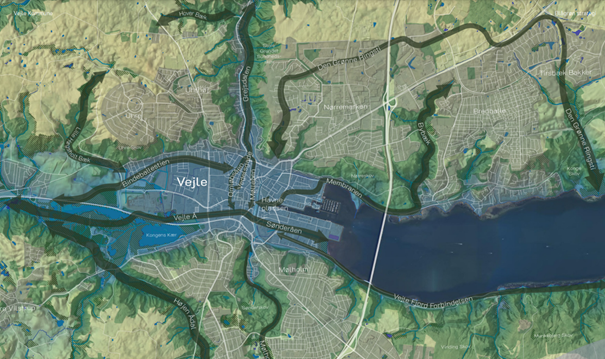
Important blue-green streams are marked with arrows
Source: Vejle Municipality, 2023a
Additional strategies to preserve green areas include afforestation outside of Vejle city. As there are both afforestation companies and businesses seeking to invest in afforestation to improve their climate indicators, the municipality is working to coordinate these efforts and identify additional synergies (Interviewee 2, 2024). The goal is not to only to plant forests, but to do so in a way that benefits the natural environment while also creating recreational zones.
To evaluate the consequences of land use the municipality employs a Climate Barometer and Analysis of Climate Impacts (klimaregnskab) developed by Climate Alliance (Klimaalliancen) (Interviewee 2, 2024). This makes it is easy for municipalities to benchmark and compare with one another, since the method of evaluation is the same.
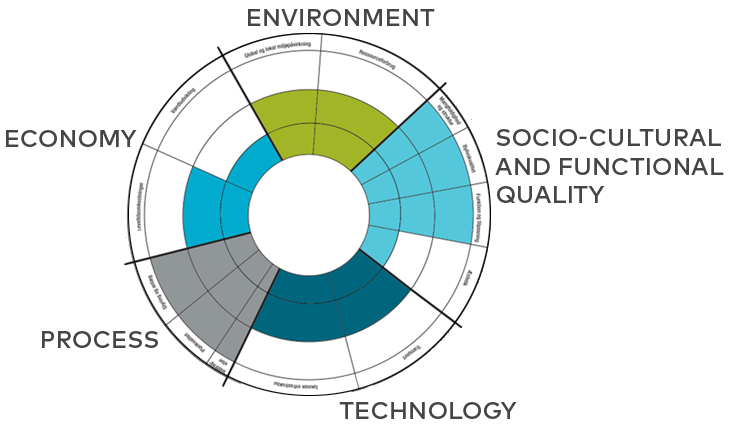
In cooperation with the other municipalities in the Triangle Region, Vejle has developed a sustainability tool (also referred to as Hjul or Wheel) which is used to evaluate a range of parameters when creating local plans (Interviewee 1, 2023). The sustainability tool evaluates proposed local plans across five different topics: environment (global and local environmental impact, resource use), economy (lifetime costs, value development), sociocultural and functional quality (versatility and structure, quality of city life, function and fit, aesthetics), technology (transport, technological infrastructure) and process (engagement, plan quality, management and facilities) (Vejle Municipality, n.d.). Each topic is assessed on a scale from one to three, with one indicating compliance with climate-related legislation, two signifying that work is underway on sustainable initiatives and three denoting exemplary performance. The assessment is illustrated in the circle shown below. The aim of this tool is not to calculate a qualitative sustainability score or accumulate as many points as possible, but rather to show how sustainability is considered in different projects. By illustrating trade-offs between the various parameters, the tool enables dialogue and communication (Vejle Municipality, n.d.).
Buildings and construction sector
The specific goals for the buildings sector in Vejle are based on national guidelines, which in turn follow EU directives (Interviewee 3, 2024). Additionally, the municipality has established its own set of principles as outlined in the Strategy for Sustainable Building (Vejle Municipality, 2022a). These are (1) minimising new construction by reducing the overall square meters, (2) taking care of existing buildings to extend their service life and (3) prioritising renovation and transformation over new construction and (4) ensuring that any new construction is carried out sustainably (Vejle Municipality, 2022a). The aim of the strategy is to foster a new mindset geared towards avoiding new construction and to steer the direction of the public buildings sector.
To achieve these goals, a system for estimating emissions needs to be established. Estimation of CO₂ emissions, especially for urban development, is difficult due to the number of factors that need to be taken into consideration (Interviewee 3, 2024). Those include not only the buildings themselves but also elements such as road infrastructure, energy supply and land use. Currently, the municipality is exploring tools to calculate the CO₂ emissions from buildings, which would demonstrate the relative trade-offs in terms of environmental impact e.g. the impact of a specific material versus an alternative. This tool could provide decision-makers with options that predict the environmental consequences of constructing different types of buildings.
Currently, Vejle municipality is monitoring actual emissions from public buildings by measuring electricity, heating and gas consumption, which is then converted into CO₂ emissions (Interviewee 3, 2024). Buildings are checked every three years, ensuring regular updates about the condition of the buildings, costs of renovation, possible investment-related challenges, any backlogs etc. It was underlined that the key issue is the existing building stock (Interviewee 3, 2024). Those buildings that were constructed before 2010, when regulations were not as strict, require most attention and financing. Vejle municipality is therefore working on drawing politicians’ attention to the lack of financing for renovation of older buildings.
The national regulations for energy efficiency in new buildings are becoming increasingly stringent, with major updates set to come into force in 2025 (Interviewee 3, 2024). For carbon emissions the threshold requirement is a maximum 12 kilograms of CO₂ per square metre per year, which is expected to be lowered to 7-9 kilograms of CO₂ per square metre per year (Interviewee 3, 2024). Adjustments will be needed in the construction industry to meet this goal, as compliance with the strict regulations may be challenging (Interviewee 3, 2024). Nevertheless, the primary challenge in Vejle lies not in the regulations for new construction, but achieving the targets for retrofitting of old buildings (Interviewee 3, 2024).
Regarding existing building stock, at the national level, evaluation of the energy class of buildings is required before retrofitting. This process is currently underway in Vejle. The results will show where retrofitting is cost-effective in terms of repayment of loans taken out to finance the retrofitting. If the loan repayment period exceeds ten years, it becomes challenging to secure loan financing for the retrofitting that is viable and makes financial sense for the municipality (Interviewee 3, 2024). Moreover, there are no longer incentives for these initiatives. In previous years municipalities could sell CO₂ savings to utility companies to support retrofitting projects (Interviewee 3, 2024). This system was discontinued after utility companies met their green transition requirements.
Previously, municipalities could sell reductions in CO₂ emissions – achieved through upgrades like LED lighting – to utility companies, which used them to finance sustainability efforts.
Transport and mobility sector
Vejle is paying significant attention to the topic of mobility and transport in the city. The city has developed a mobility plan for the years 2018-2030. In 2023, the Green Vision Annex to the Mobility Plan was also approved, which sets out concrete principles for climate neutrality and mobility (Vejle Municipality, 2023b).
For short trips of under 5 kilometres, which offer the most potential for cycling and walking, in 2016, half of trips were made using a car (compared to 33% on foot and 14% cycling) (Vejle Municipality, 2018). To put this in perspective, one-third of all households in Vejle city do not own a car and are dependent on other forms of transport, while one in four households has two or more cars (Vejle Municipality, 2018). Nevertheless, as of 2021, the growth in electric vehicles has outpaced the growth of other types of car, which has decreased since 2022 (Vejle Municipality, 2023f). Given the evident level of car mobility in the city, the municipality also offers around 1,000 paid parking spaces as of 2018, with varying rates depending on the time of the day and the location of the parking space, in order to help regulate the flow of traffic (Vejle Municipality, 2018). Finally, according to the Analysis of Climate Impacts of Vejle Municipality, the transport sector accounted for 28% of greenhouse gas emissions in Vejle municipality in 2018, with that figure expected to decrease by 2030 (Vejle Municipality, 2020b). Transport sector emissions in Vejle municipality (including international flights) amounted to 274,000 tonnes in 2022 (Vejle Municipality, 2023f).
Vejle Municipality’s climate plan outlines several goals and plans for mobility. First and foremost, the climate plan states that in 2030 at least 30% of all cars should run on electricity (currently 7% of all cars in Vejle are electric (Vejle Municipality, 2023f). The next tender for city buses will also require those vehicles to be electric (Vejle Municipality, 2020b). The municipality is striving to decouple population growth from an increase in fossil-fuelled transport by ensuring that 25% of all journeys of 5 km or shorter are made by cycling or walking. To this end, the goal is to align the ticket prices for public transport with the cost of using a car. The Green Vision Annex to the Mobility Plan furthers these goals and highlights five focus areas in relation to climate neutrality, including CO₂ reduction, improved health of residents and ensuring future accessibility (Vejle Municipality, 2023b). The five focus areas addressed are as follows:
- Making Vejle city centre more peaceful by dedicating it primarily to use by pedestrians and cyclists, while those who live in the city centre should be able to park their cars in multi-storey parking houses instead of the street to free up space. Additionally, traffic passing through the city should not be directed through the city centre. That is to be achieved through newly established “traffic islands” dividing Vejle city centre into four different “islands”. While cyclists and public transport will be able to pass through the islands, cars will have to drive around the islands. To get from one island to another, cars will have to drive out of the city centre and back in again (Vejle Municipality, 2023b);
- Ensuring a well-built network of main bicycle routes and super bicycle routes. These routes should not end in Vejle city itself but instead connect to other towns in the municipality. Furthermore, Vejle municipality is cooperating with other municipalities in the Triangle Region to establish cycling routes to other cities (Vejle Municipality, 2023b).
- Ensuring effective and flexible public transport. This includes both buses and car-sharing services, supported by 50 dedicated parking spaces in Vejle and other towns in the municipality. Moreover, the municipality has established 25 hubs throughout the municipality for switching between different modes of public transport. Finally, a selection of shared bicycles is available in Vejle city (Vejle Municipality, 2023b).
- Teaching children to cycle and get around the city from the age that they start kindergarten. This not only encourages children to travel to school sustainably but also promotes their health and independence. The goal is to have most pupils cycling to school by 2030 (Vejle Municipality, 2023b).
- Focusing on green mobility in local planning, construction and maintenance of the municipality. Within this focus area, the municipality is striving for people to think about green solutions like mixed-use facilities and expansion of the city near transport corridors (Vejle Municipality, 2023b).
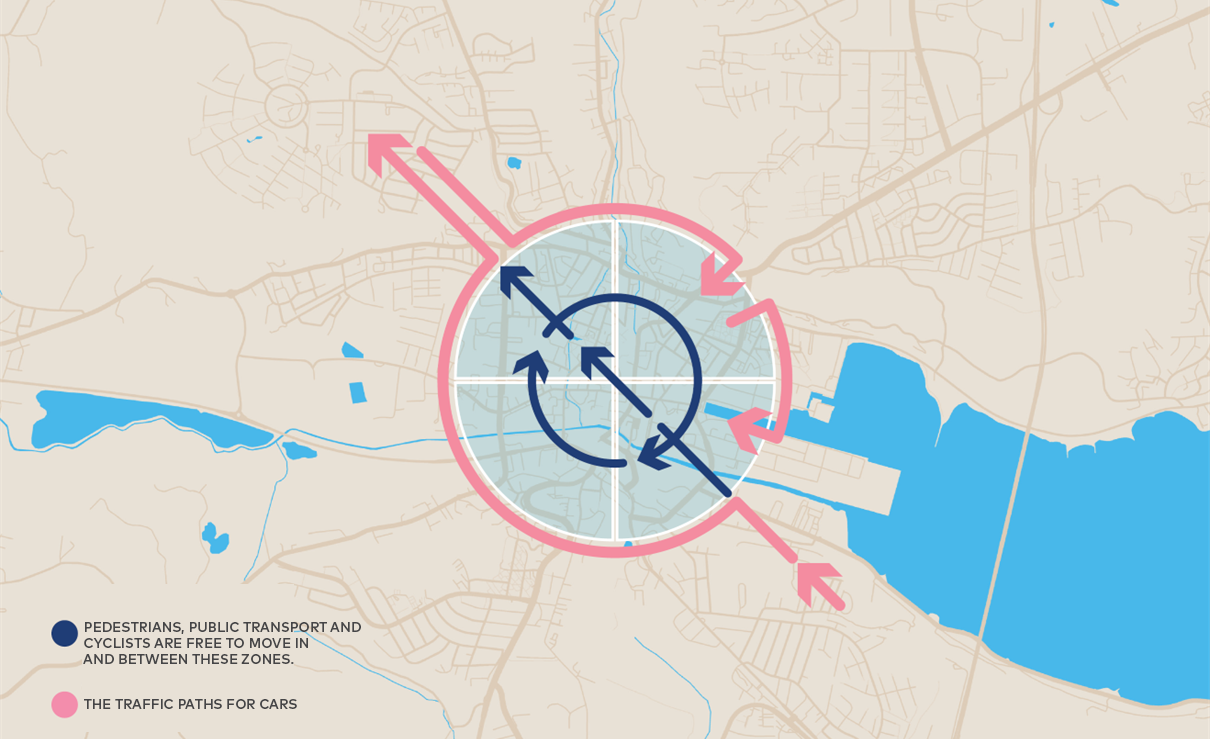
The blue sectors show the four traffic islands in the city centre. Pedestrians, public transport and cyclists are free to move in and between these zones. The pink arrows show the traffic paths for cars (Vejle Municipality, 2023b)
Besides the above-mentioned tools, the municipality published tenders for companies to build electric car charging stations mainly around the city centre in municipal parking spaces, such as multi-storey parking houses (Interviewee 4, 2024). That resulted in three different companies building around 200 charging stations around the municipality. When determining the locations of these stations, priority was given to areas near apartments and cultural buildings such as museums. Finally, the municipality is keeping track of mobility data from Danish Statistics and compiles a monitoring tool, which is publicly available on its website (Vejle Municipality, 2023f). This tool is used to keep track of the municipality’s climate goals, including data about the number of electric cars, private cars, transport habits in the municipality, public transport and other parameters.
In Vejle, each municipal department has a climate action plan, including a climate action plan for youth and children focusing on education. The scope for increasing climate literacy is broad, including the topic of transport and mobility. By organising “Green Teams”, with participants from each public school, children and young people gain the opportunity to develop suggestions for politicians. Through this programme, the children also become aware of how decisions impact the environment, helping to contribute to the municipality’s goals (Interviewee 4, 2024).
Challenges and opportunities: a multilevel governance perspective
Spatial planning in Denmark is based on a multilevel governance system that integrates land use, transport and buildings sectors to ensure sustainable development. The framework is guided by the Danish Planning Act, which outlines the roles and responsibilities of national, regional and municipal authorities. National authorities are responsible for policy formation, coordination with ministries to align domestic plans with international sustainability targets and deployment of financial instruments to support major infrastructure and environmental initiatives.
The regional level, represented by Denmark’s five administrative regions, acts primarily as a coordinating body, bridging national policies and municipal planning. Regions are responsible for large-scale infrastructure projects, particularly in transport, ensuring connectivity across municipal boundaries. While they do not have independent legislative power, they facilitate intermunicipal cooperation on issues such as environmental protection and economic development. They play a pivotal role in aligning local projects with national objectives while ensuring efficient resource allocation and strategic planning.
At the municipal level, local governments hold significant authority in spatial planning, as they prepare local plans and zoning regulations. Municipalities are tasked with developing comprehensive land use plans, enforcing zoning regulations, managing building permits and ensuring that construction practices adhere to established safety and environmental standards.
Policy capacity: vertical and horizontal governance tensions
Land use
Vertical governance
As mentioned above, Danish municipalities have significant autonomy in land use planning. Nevertheless, vertical regulatory tensions persist. In Aarhus, early-stage planning requirements are viewed as rigid, forcing municipalities to make detailed decisions – such as on architectural designs and building materials – far in advance (Interviewee 9, 2024). These early plans often become outdated before development begins, undermining environmental performance and architectural quality. This issue is more pronounced in Aarhus than in Vejle, with an Aarhus representative suggesting that increased flexibility in regulating architectural principles during the building application process could help address this challenge (Interviewee 9, 2024).
Horizontal governance
Tensions in horizontal governance are also evident, often due to the many departments and policymakers involved in planning. In Vejle, it was noted that while the involvement of several departments supports a broad-based approach, the distinct specialisations of respective departments can cause friction. Moreover, competition for limited financial resources can lead to conflicts between departments seeking to secure funding for their own activities, sometimes at the expense of collaborative solutions (Interviewee 2, 2024). Nevertheless, there are significant synergies at the horizontal organisational level in Vejle, particularly within the city council. One prominent example is the planning of flood protection for the city. While a conventional concrete wall could resolve the flooding issue, the city council is seeking to ensure that the project delivers benefits to taxpayers throughout the municipality, including those living outside the city (Interviewee 2, 2024). Accordingly, the municipality has explored alternatives that enhance marine and land biodiversity, while also including cycling paths and recreational zones. Such alternative solutions would not have been possible without broad political commitment.
In Aarhus, horizontal tensions may arise from its distinct governance structure. It is the only municipality in Denmark governed by a magistrate system. Comprising six magisterial departments, the municipality is led by the mayor and five chairpersons. The chairpersons oversee their respective departments and can present political matters directly to the city council, allowing issues to bypass committee discussions. As a result, the matters that reach the city council can easily be influenced by the political viewpoint of a single chairperson (Interviewee 6, 2024). Nevertheless, the organisational structure of the municipality is considered conducive to goal-oriented work, fostering cohesion between climate objectives and practical measures (Interviewee 6, 2024).
In both municipalities, competition for attracting residents leads to sustainability trade-offs, especially as goals for densification and housing preferences can be at odds. Aarhus, for instance, limits the size of single-family houses to reduce emissions to some degree but further reduction could be achieved if these restrictions were tightened. However, political concerns over Aarhus's attractiveness and the risk of discouraging new residents make this unlikely (Interviewee 5, 2024). Similarly, Vejle faces a dilemma between meeting rising demand for housing and pursuing climate neutrality. To raise the municipality’s tax revenue, local politicians strive to attract residents, even if urban expansion conflicts with climate goals. To compensate for the expansion, the municipality is seeking to achieve sustainable solutions without restricting the size of households and plots (Interviewee 2, 2024).
Buildings and construction sector
Vertical governance
In the buildings sector, misalignment between national requirements and municipal capabilities is evident, though experienced differently from case to case. In Aarhus, certain national regulations are perceived as outdated. For instance, the application of overly cautious principles in structural calculations leads to excessive use of materials, contradicting sustainable building practices. Moreover, the lack of specific legislative guidelines for climate-smart construction limits understanding of the costs associated with sustainable building methods (Interviewee 8, 2024). Financing of new materials comes with uncertain operational reliability, making long-term expenses difficult to estimate. Without national laws mandating climate-neutral construction, allocation of additional funds as financial buffers is limited.
Another issue raised in Aarhus is that new developments comfortably meet existing sustainability requirements, leaving little incentive to push for further progress (Interviewee 8, 2024). While the municipality could impose stricter standards locally, political concern about deterring contractors – particularly given the more lenient standards in neighbouring municipalities – hinders such action. Currently, constructing new buildings in Aarhus is more expensive and complex than elsewhere, lending credence to fears of reduced investment. In Vejle, the national requirements for sustainable construction are, by contrast, considered to be too stringent and challenging to meet. In particular, a strict national construction cap complicates retrofitting and new construction despite the needs of a growing population. Greater flexibility in this cap could allow Vejle to provide public buildings more efficiently while accelerating efforts to reduce emissions (Interviewee 3, 2024). To bridge these gaps, revision of current legislation and a unified national approach could foster sustainable building practices across Denmark, ensuring a level playing field for contractors. Establishing a permanent forum for dialogue between municipalities and policymakers could also mitigate vertical governance tensions and enhance climate strategies (Interviewee 9, 2024).
Lastly, it should be noted that the national requirements in Denmark are influenced by EU legislation, adding an additional layer to the vertical governance structure. Indeed, Danish municipalities are anticipating upcoming EU-driven regulations aimed at enhancing energy efficiency in existing buildings and reducing CO₂ emissions in new constructions (Interviewee 3, 2024).
Horizontal governance
Horizontal governance in the buildings sector often reveals tensions linked to cross-departmental coordination. For instance, in Vejle, ownership and management responsibilities are divided, with departments like the Children and Youth Department overseeing institutions such as schools, while a separate building department manages logistical aspects, including energy efficiency. This fragmented approach can lead to conflicts due to differing priorities and budgetary constraints (Interviewee 3, 2024). To address this challenge, the building department in Vejle is working on presenting detailed data on energy, heating and other consumption metrics for each institution. The aim is to influence the decisions and behaviours of leaders across different departments by fostering a shared understanding of energy management (Interviewee 3, 2024). The data-driven approach could also encourage institutions to foster behavioural changes among users, such as teaching children simple energy-saving habits like closing windows when leaving a room. Over time, this approach could help align priorities across sectors while promoting both efficiency and sustainability (Interviewee 3, 2024). In Aarhus, horizontal governance tensions arise when competing sustainability priorities conflict. For instance, the city’s 15-minute urban accessibility goal – a commitment to ensuring all residents can reach essential services within 15 minutes – conflicts with the city’s climate strategy of limiting new construction activity, revealing a fundamental tension between long-term objectives. These contradictory objectives reflect the difficulty of harmonising urban development and environmental sustainability goals.
Transport sector
Vertical governance
Governance of the transport sector in both cities is heavily shaped by political decisions on both the national and local levels. Measures such as increasing parking rates or closing streets to cars, although aligned with climate goals, frequently generate resistance among residents. These societal attitudes, often amplified through public discourse, exert pressure on both national and local politicians, who are wary of losing political support (Interviewee 4, 2024; Interviewee 7, 2024).
One of the key challenges is the growing number of cars on the roads. Increasing fees and taxes on private cars and roads could address many of the challenges faced by the mobility sector in tackling climate issues (Interviewee 7, 2024). Such measures could generate funds for sustainable infrastructure investments – such as renovating the railway system – and simultaneously reduce the number of cars on the roads. Moreover, increased personal car taxes could alleviate municipal budget pressures by reducing the need for costly interventions, including road closures, redesigns and reductions in parking spaces (Interviewee 4, 2024; Interviewee 7, 2024).
A proposed national law will allow larger municipalities, including Aarhus, to establish zero-emission zones in city centres. These zones aim to restrict fossil-fuel-powered vehicles in designated areas, reserving access for electric cars or banning cars altogether. However, effectiveness of the law may be limited by several exemptions; for instance, residents living within restricted zones will still be allowed to use fossil fuel-driven vehicles. Additionally, this regulatory tool will only apply to larger municipalities, leaving smaller cities like Vejle without access to similar mechanisms.
Horizontal governance
At the local level, governance within the transport sector in both cities are heavily influenced by political decisions. While meetings between municipal representatives, city councils, residents and trade stakeholders in Aarhus are intended to foster dialogue and balance competing interests, these processes are often time-consuming and slowed by political debates over budget allocations (Interviewee 7, 2024). Moreover, measures such as increasing parking rates or closing streets to cars, although aligned with climate goals, frequently generate resistance among residents. These societal attitudes, often amplified through public discourse, exert pressure on local politicians, who are wary of losing political support (Interviewee 4, 2024; Interviewee 7, 2024). This highlights the importance of engaging the broader public to align societal values with long-term sustainability goals.
Institutional capacity: knowledge and relational resources and mobilisation capacity
Knowledge capacity
While both case study cities demonstrate strong knowledge capacities, some knowledge gaps exist, leading to the need for external consultants. Aarhus, as Denmark second largest city, benefits from a substantial talent pool and diverse expertise across its municipal departments. However, the need for continuous learning is evident, especially in the buildings sector due to the rapidly evolving nature of sustainable construction materials and methods (Interviewee 8, 2024). To this end, the municipality has established a dedicated team to update its expertise, including a three-year post-doctoral position focused on reducing CO₂ in the urban environment (Interviewee 9, 2024).
Vejle's buildings sector department is also well-staffed with professionals knowledgeable in energy efficiency, construction standards and climate mitigation strategies (Interviewee 3, 2024). However, specific knowledge gaps in quantitative climate impact assessments remain, with room for improvement in technical climate modelling and scenario analysis in land use planning (Interviewee 2, 2024).
Relational resources
Both Aarhus and Vejle actively engage in international, national and regional partnerships that facilitate the exchange of best practices and foster policy innovation. Despite strong engagement in networks, interviewees note gaps in formalised knowledge-sharing platforms. For instance, in the buildings sector, informal exchanges take place but often do not result in actionable decisions or in-depth knowledge exchange (Interviewee 8, 2024). More structured mechanisms for collaboration could help facilitate deep, technical collaboration between municipalities in sustainable construction practices (Interviewee 8, 2024).
Furthermore, it was observed that ensuring alignment across municipal departments poses a challenge. For example, in Aarhus, conflicts arise between departments that prioritise revenue generation through land sales and those focused on sustainability-oriented densification (Interviewee 7, 2024). These tensions highlight the importance of relational resources, not only between cities but also within municipal administrations.
Mobilisation capacity
Beyond knowledge and collaboration, mobilisation capacity determines how effectively municipalities can translate strategies into action. Aarhus and Vejle have implemented various initiatives to align internal structures and resources with climate goals. Vejle integrates sustainability into multiple departments, linking mobility policies with public health and education initiatives (Interviewee 4, 2024). Aarhus centralised its municipal property management in 2024 to improve coordination on climate initiatives, aiming for greater efficiency and coherence in sustainability efforts (Interviewee 8, 2024).
However, achieving alignment across all municipal departments remains a challenge, as conflicts arise between revenue-generating objectives (such as land sales for single-family homes) and environmental priorities (Interviewee 7, 2024). In the transport sector, Aarhus and Vejle face challenges in shifting mobility habits towards greener alternatives. While infrastructure investments, such as expanding cycling lanes, are underway, behavioural change remains difficult as long as car use remains convenient and cost-effective (Interviewee 4, 2024; Interviewee 7, 2024).
Financial constraints also limit mobilisation efforts. In Vejle, efforts to retrofit older buildings with energy-efficient solutions are hindered by funding shortages (Interviewee 3, 2024). Similarly, Aarhus contends with the uncertainty of climate impact assessments for new construction projects, since initial projections may not align with final outcomes due to evolving sustainability methodologies (Interviewee 8, 2024). Overcoming such barriers requires continuous learning and adaptive policy frameworks.
Key reflections and learnings from Denmark
The findings from Aarhus and Vejle reveal dynamic interplay between governance levels, each presenting both opportunities and constraints. Vertical governance tensions primarily arise from misalignment between municipal goals and national regulations, which can limit local sustainability efforts. In the land use and buildings sector, rigid early-stage planning requirements hinder adaptive decision-making, which can lead to outdated or suboptimal developments. Stringent national construction caps can also limit flexibility in retrofitting of older buildings, despite the urgent need for energy-efficient upgrades. Furthermore, a lack of legal mandates for climate-smart construction complicates efforts to finance and implement sustainable building strategies, underscoring the need for clearer national guidelines and a more coordinated regulatory approach. Despite these challenges, Danish municipalities benefit from a strong tradition of municipal autonomy, allowing them to implement ambitious local policies that often exceed national climate targets. Both Aarhus and Vejle have shown innovation in integrating sustainability into urban planning, with Aarhus developing dedicated municipal teams for advancing climate-friendly construction and Vejle implementing energy efficiency measures in public buildings.
In the transport sector, a fundamental tension persists regarding the division of responsibility between local and national governments for achieving climate neutrality. While city councils are politically obligated to pursue climate goals, it remains unclear which level of governance should lead the charge. This uncertainty creates delays in implementing essential measures, as local politicians weigh the trade-offs between environmental benefits and potential voter dissatisfaction. Political resistance to measures like higher parking fees or car use restrictions underscores the difficulty of balancing policy ambitions with societal preferences and public acceptance. Although local governments hold many of the tools necessary to achieve sustainable mobility, the lack of decisive support and political leadership at the national level limits their ability to act effectively. However, with the upcoming introduction of national zero-emission zone legislation, cities like Aarhus have an opportunity to lead the way in transforming urban mobility. This represents an important step towards a more systematic national approach to transport decarbonisation, aligning local initiatives with overarching climate goals.
In addition to vertical governance challenges, horizontal governance tensions arise from competing interests and gaps in coordination between municipal departments. In both cities, competition for residents and tax revenue shapes policy decision-making, highlighting the trade-offs between economic growth and climate neutrality. In terms of land use, Aarhus aims to limit single-family housing to reduce emissions, while also moderating strict regulations to avoid deterring potential residents. Similarly, Vejle is expanding to attract new taxpayers, despite the fact that urban expansion conflicts with climate neutrality goals. These trade-offs underscore the political realities of urban sustainability, where economic viability and environmental objectives must be carefully negotiated. Nevertheless, both municipalities have demonstrated a capacity for cross-departmental cooperation in areas where sustainability priorities align with other urban objectives. Vejle’s flood protection project exemplifies this, as the municipality has successfully integrated climate adaptation with biodiversity enhancement, recreational space and cycling infrastructure, showing that political commitment and broad-based collaboration can lead to multi-benefit solutions.
Lastly, institutional capacity gaps exist. In general, both cities benefit from internal knowledge capacity as well as participation in networks such as Concito, DK2020 and international collaborations to strengthen their knowledge base and governance strategies. Aarhus, as Denmark’s second-largest city, has a significant advantage in terms of expertise, with specialised municipal teams and a dedicated research position focused on climate mitigation in urban planning. Vejle’s approach to using data-driven tools for energy management in public buildings also highlights an emerging strength in leveraging digital solutions to support sustainability efforts. However, formalised knowledge-sharing platforms have demonstrated gaps, suggesting that increased cooperation between municipalities and formalised frameworks could strengthen knowledge development and mobilisation capacity.
In the following boxes, we provide an overview of the key challenges Danish cities face in achieving climate neutrality, along with their broader implications and potential solutions.