Reykjavík Photo: Unsplash.com
9. Iceland
Case: Reykjavík
Background
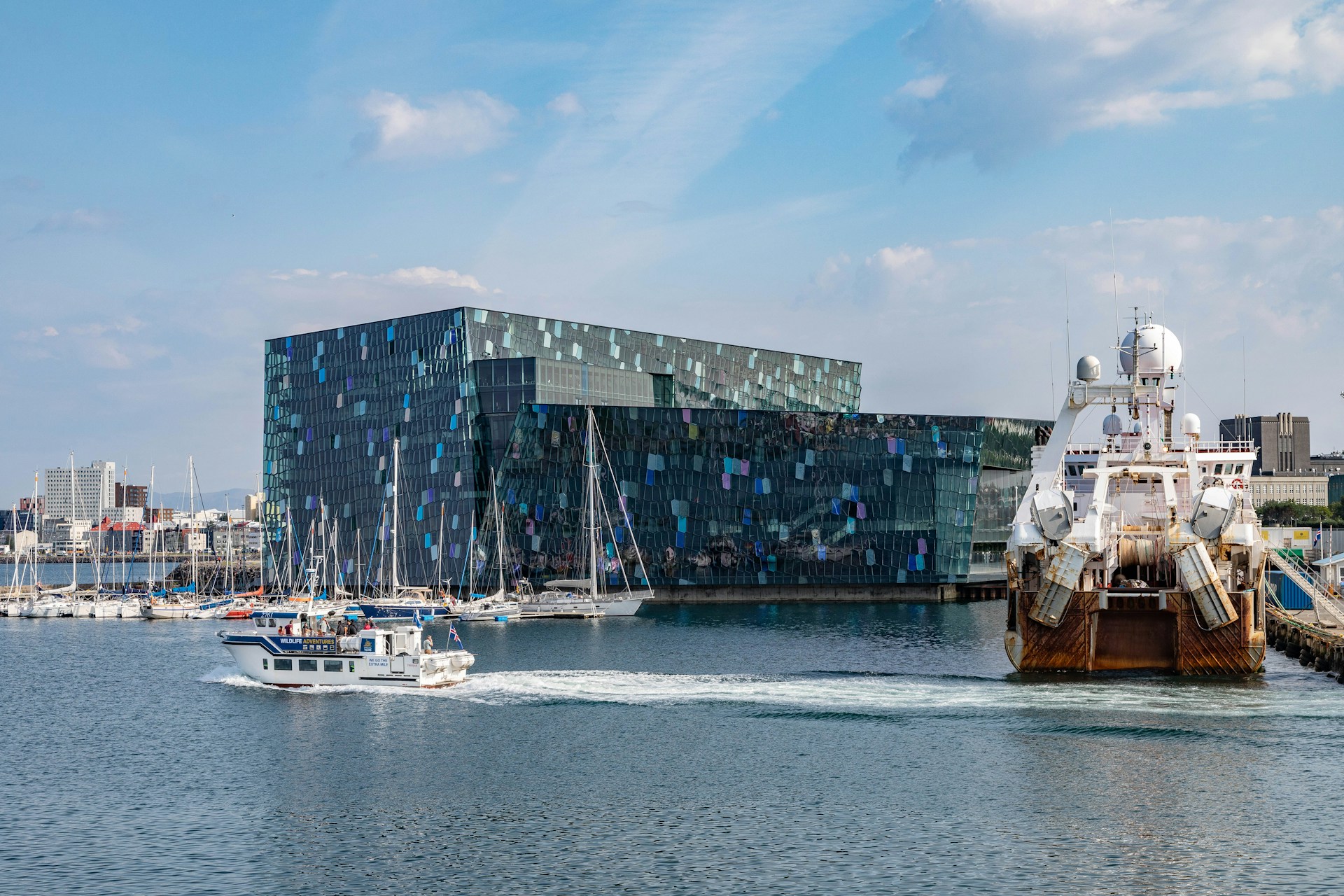
Reykjavík, located within the Capital Region of Iceland, is the country’s largest city and capital. It is located in southwestern Iceland. As of 2024, the population is estimated at just below 140,000, while the entire municipality spans an area of 273 km². Reykjavík is also the largest municipality in the Greater Reykjavík Area, which includes six municipalities and has a population of around 243,000 inhabitants as of 2024 (Hagstofa Íslands, n.d.).
Reykjavík is globally recognised for its commitment to innovation and technology. The city is home to the University of Iceland and Reykjavík University, both of which include research centres in various fields and sciences. The city also hosts several research units, centres, labs and institutes, which contribute to its vibrant technological ecosystem (Reykjavík, 2022). As a coastal city, Reykjavík has a significant maritime industry. The city’s port, Reykjavík Harbour, is Iceland’s principal seaport, providing comprehensive maritime support and hosting tourism on a large scale(Faxaflóahafnir, 2024). Public services such as education and healthcare are another dominant sector of Reykjavík’s economy. Tourism also plays a vital role in the city’s economy; Reykjavík attracts visitors from all over the world and hosts more than 2 million international visitors annually (Hagstofa Íslands, 2024).
Lastly, Reykjavík is at the forefront of renewable energy initiatives. The city is powered largely by green energy from hydro and geothermal sources (Reykjavík Energy, 2024). Reykjavík officials are taking unprecedented steps towards reducing the carbon output of city vehicles and are aiming for 100% of vehicles to be powered by energies free of greenhouse gas emissions by 2025 (Reykjavík, 2021). The city’s transition from fossil fuels to renewables serves as an inspiration to other countries seeking to increase their share of renewable energy (Eggertsson, n.d.).
Strategic level: municipal goals and policies
Reykjavík has made a robust commitment to climate neutrality, as detailed in its Climate Action Plan for 2021–2025, which sets the goal of becoming carbon neutral by 2040 (City of Reykjavík, 2021). The city has been selected for a European collaboration on carbon-neutral and smart cities until 2030, positioning itself as an innovation hub for other European cities pursuing similar objectives (European Commission, 2022).
The city’s climate policy was first introduced in 2009 and has been revised several times, evolving into the current Climate Action Plan, which sets greenhouse gas reduction targets through 2030. The city supports a carbon-neutral future through extensive green investments and careful assessment of each action’s carbon dioxide equivalent impact, cost and implementation timeline (City of Reykjavík, 2019). Recent systematic efforts have emphasised environmental improvements and green investments, which are projected to account for approximately 24% of total investments over the next five years (City of Reykjavík, 2019). Green investments cover improvements in open spaces, maintenance of footpaths, upgrades to bus priority routes, replacement of garbage containers and more (Reykjavík, 2022).
A comprehensive approach to environmental responsibility is embedded in the city’s Environmental and Resource Policy, which aligns climate action with urban development, transport and nature preservation (City of Reykjavík, 2015). Biodiversity is recognised as a key factor in climate adaptation, with initiatives such as tree planting and wetland restoration featuring in the City of Reykjavík Policy on Biodiversity. Other sectoral plans, such as the Reykjavík Housing Plan, a waste management policy and the Green City Plan, further reinforce the city's commitment to carbon neutrality (City of Reykjavík, 2014, 2019, 2022a). The Green Deal serves as Reykjavík’s overarching strategy, linking key environmental, economic and social policies under a unified vision for 2030 (City of Reykjavík, 2022c). With an emphasis on the environment, the economy and society, the Green Plan defines fifteen key priorities that act as a common guiding framework across the city.
The current Climate Action Plan builds upon the previous plan, which concluded in 2020, and is aligned with the Paris Agreement’s framework of revising climate actions every five years while measuring progress biennially. The plan integrates goals from earlier policies, including the Reykjavík Municipal Plan 2010-2030, the Environmental and Resource Policy and the Action Programme for Waste Management. Development of the Climate Action Plan also involved significant public and stakeholder engagement. A steering group comprising elected officials, municipal staff and external experts oversaw the process, with more than 200 public proposals submitted online and consultations held with NGOs and businesses. The draft plan was reviewed by the City Committee on Environment and Health and the city council before being finalised (City of Reykjavík, 2021). The plan sets out fifteen key climate actions, eleven of which are primary and four supporting, each with specific carbon reduction targets. These initiatives focus on transforming Reykjavík’s districts into pedestrian-friendly areas where essential services, green spaces and outdoor activities are accessible within a 15-minute walk or bike ride. Sustainable transport is central to this vision, with 80% of new housing development planned near the city’s Bus Rapid Transit system, Borgarlína. An expanded cycling network will support Reykjavík’s ambition to become a world-class cycling city, while improved public transport and compact urban planning will reduce car dependency.
Further measures include the implementation of citywide charging infrastructure for electric vehicles, the reduction of landfill waste through an enhanced recycling and recirculation plan and the promotion of greener construction practices. Reykjavík is also working with Carbfix and OR to develop solutions for CO₂ sequestration and is expanding climate forests in collaboration with the Reykjavík Forestry Society (Reykjavík, 2021; Reykjavík Energy, 2024). Supporting actions include eliminating fossil fuel use in municipal operations by 2025, with no new fossil fuel-powered vehicles or equipment having been procured since 2021. The city is also adapting to climate change through innovative water management solutions, improved flood control measures and the development of coastal recreational areas. In partnership with Festa, a centre for corporate social responsibility, Reykjavík is encouraging sustainable business practices across all sectors of the economy (Reykjavík, 2021).
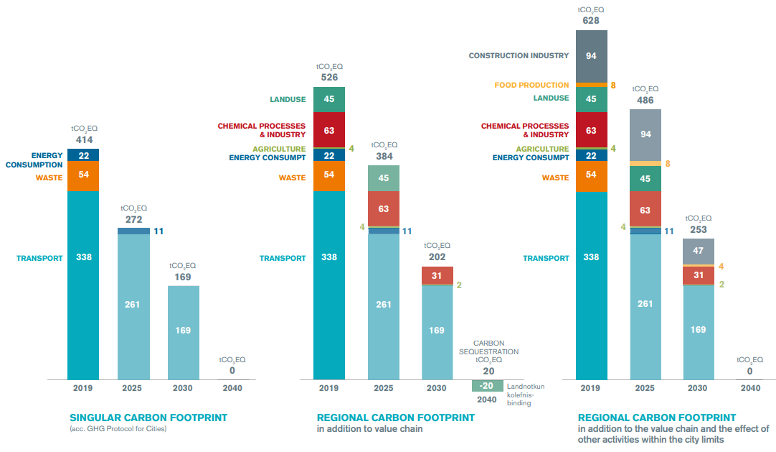
Greenhouse gas emissions are assessed using the Global Protocol for Community-Scale Greenhouse Gas Emission Inventories (GPC), ensuring consistency with international climate accounting standards. Reykjavík reports emissions at two levels: community-scale emissions, which encompass all emissions generated by residents, businesses, transport and land use, and municipal operations emissions, which include the city’s fleet, public buildings and waste. Examination of the factors that the city of Reykjavík can influence shows that emissions from transport continue to account for the largest share of community-scale emissions. A simple carbon footprint analysis reveals that transport accounts for 82% of all emissions (EFLA, 2022). However, when additional factors are incorporated into a regional carbon footprint, including the value chain, the proportion of emissions attributed to transport decreases to 64%. When further effects are considered, such as the impact of other activities within city limits, transport’s share of total emissions falls to 54%. This highlights the complexity and multifaceted nature of carbon emissions within a city context (Interviewee 18, 2024).
To project future developments, it is essential to assess the current situation and consider plans for future outcomes. The general zoning plan anticipates a 50% reduction in private car trips by 2030. This scenario projects a 5% annual reduction in transport emissions until 2025, with emissions halving by 2030 compared to 2019 levels. The goal is for all cars to be greenhouse gas (GHG) emission-free by 2040, resulting in zero emissions from transport by that year. Concurrently, the public Reykjavík Energy Company is aiming for carbon neutrality by 2030. This will significantly reduce GHG emissions from energy, with forecasts indicating a drop to zero emissions by 2030 (Reykjavík, 2021). In the waste sector, once the Sorpa Waste Management biogas and composting plant is operational, the landfill disposal of organic and combustible waste is expected to cease. The target is to reduce landfill emissions to near zero by 2025. Emissions from agriculture, construction and other sectors are projected to be halved by 2030, with the ambition for those sectors to achieve carbon neutrality by 2040 (Reykjavík, 2021).
While environmental responsibility is a cross-cutting issue spanning multiple departments, the Department of Environment and Planning is primarily responsible for climate actions, urban planning and environmental quality (City of Reykjavík, 2024c). The Department of Environment and Planning is also responsible for coordinating with the Global Covenant of Mayors, ensuring climate accounting is submitted according to this international treaty. The Finance Office handles the annual emission assessments from the city’s operations. Supervision and follow-up of the new action plan will be managed by a political steering group, with particular attention to implementing a gender-based budget for Reykjavík. Other divisions also contribute, with the Finance and Risk Management Division overseeing green procurement and climate accounting, the Human Resources Division promoting workplace sustainability and the Service and Innovation Division advancing climate-focused projects (City of Reykjavík, 2024b). Looking ahead to 2040, achieving carbon neutrality will require nearly complete emission reductions across all sectors, including fossil fuel use, waste creation and energy consumption (Interviewee 18, 2024).
Land use sector
Over the past few decades, Iceland’s Capital Region has experienced significant growth in both land use and population. From the mid-1980s to 2012, the urban area expanded by 132%, while the population increased by 52%. This led to a 35% decrease in population density and an 86% increase in private car ownership (Borgarlína, 2022b, 2022a), which is indicative of urban sprawl and increased car dependency.
With continued population growth expected, authorities aim to reverse the trend by promoting sustainable urban development, increasing densification and enhancing public transport use (Interviewee 19, 2024). The transformation of transport, through the establishment of an efficient public transport network, aligns with international climate obligations and the Icelandic government’s overall policy. By reducing private car use and, consequently, carbon emissions from land transport, the initiative contributes to meeting national and international obligations, encouraging the state to finance this large-scale transport transformation project that is now underway in the city of Reykjavík and the whole Capital Region (Lidmo et al., 2024).
This initiative, regarded as a necessary step to curb further urban sprawl, aligns with a comprehensive urban development perspective reflected in national policy as well as the policies of the City of Reykjavík and the collective regional plan of the municipalities in the Capital Region (Reykjavík, 2022; Skipulagsstofnun, 2016, 2020; SSH, 2015). The collective regional plan has proven successful in preserving, protecting and developing green urban areas (Lidmo, J., Bogason, Á., & Turunen, E., 2020). However, to achieve the vision of more sustainable urban development, a transformation of the municipalities in the Capital Region and its suburbs, along with new modes of transport, is deemed necessary (SSH, 2015). Therefore, densification and better availability of public transport are seen as key factors for Reykjavík and its surrounding areas in reducing emissions.
Policy approaches and instruments related to land use for minimising carbon emissions are outlined in several sectoral plans. However, the City of Reykjavík’s municipal master plan is the main policy document, with emphasis on densification, green infrastructure, public transport-oriented development and smart growth. Reykjavík prioritises limiting its past massive geographical expansion through the key strategies of densification and mixed land use. Densification aims to optimise land use within existing urban areas, reducing the need for expansion into undeveloped lands. Mixed land use integrates residential, commercial and recreational spaces, promoting vibrant, walkable neighbourhoods (Reykjavík, 2022).
Another approach to future and ongoing development is the concept of a 15-minute city. This approach ensures that essential services and amenities are accessible within a 15-minute walk or bike ride from residents’ homes and that there is also access to public transport in the proximity. This reduces reliance on cars, lowers emissions and enhances the quality of life. Reykjavík’s policy also prioritises development of brownfield sites over greenfield sites. Brownfield development involves repurposing previously used land, helping to preserve green spaces and reduces urban sprawl. This approach aligns with sustainable development goals by minimising environmental impact and promoting efficient land use (City of Reykjavík, 2022; City of Reykjavík, 2022b).
Ártúnshöfði and Elliðaárvogur represent Reykjavík’s largest development area. Located in a former industrial area, their development is aimed to support the city’s climate goals and promote sustainable urban development. The new district will include up to 8,000 housing units for approximately 20,000 residents. The development emphasises environmental sustainability, with a strong focus on green spaces and environmentally friendly construction practices. The area is designed to integrate high-quality public transport, including the proposed Borgarlína system, which will run through the centre of the district, enhancing connectivity and reducing reliance on cars.
The district’s development aligns with Reykjavík’s Green Plan, a comprehensive strategy for green investment, construction and job creation. The goal is for the district to undergo an environmental certification process, with the aim of it becoming the first district in Reykjavík to receive special environmental certification according to international standards.Emphasis is placed on walking, cycling and electric scooters to promote a pedestrian-friendly environment with minimal carbon emissions from transport.
Buildings and construction sector
The 2023 Reykjavík Housing Agreement marks a significant milestone in addressing the city's housing challenges. This comprehensive agreement aims to boost housing supply, with ambitious targets of constructing an average of 1,600 units annually until 2033. Notably, it prioritises affordability and social responsibility, dedicating 35% of new construction to affordable, sustainable and socially inclusive housing. That translates to approximately 5,600 such units over the decade. The agreement represents a transformative shift in Reykjavík's housing approach, with the aim of providing equitable access to adequate and comfortable housing for the city’s residents while ensuring environmental and social sustainability (City of Reykjavík, 2024a).
Sustainable construction practices and proximity to eco-friendly transport infrastructure are considered crucial in pursuit of the initiative for socially responsible housing. The location of these developments is therefore expected to prioritise walkable access to services, recreational spaces and employment opportunities. Additionally, the design and construction of new neighbourhoods must prioritise public health, environmental concerns and minimisation of household transport costs and carbon emissions (Interviewee 20, 2024).
The municipal master plan and Reykjavík’s Green Plan also emphasise integrated housing and sustainable transport infrastructure plans (City of Reykjavík, 2022; City of Reykjavík, 2022c, 2024a). Evaluation of construction needs should consider climate change and the carbon footprint, with prioritisation of residential developments near public transport, walking and cycling routes (Interviewee 21, 2024). The City of Reykjavík has therefore emphasised sustainable construction practices like BREAAM certification, minimisation of carbon footprints and optimisation of energy efficiency. Projects like Green Housing of the Future and C40 Reinventing Cities exemplify this commitment. Through such projects the city collaborates with designers, contractors, housing companies, investors and other stakeholders in the construction sector to reduce greenhouse gas emissions and environmental pollution (City of Reykjavík, 2024c). Furthermore, the city has made several pieces of land available for development, envisioned as green catalysts within the construction industry's value chain, thereby promoting the sector's environmental sustainability. The goal is to minimise negative environmental impacts by considering factors like building materials, emissions during construction, energy consumption, building flexibility and lifespan (Interviewee 20, 2024; City of Reykjavík, 2024a).
The Icelandic Housing Authority (HMS) has recently approved the implementation of mandatory Life Cycle Assessments (LCAs) and carbon footprint calculations for all building projects. Effective from 1 September 2025, applicants seeking building permits will be required to submit LCA results at both the design stage and upon project completion before the final inspection can occur (EFLA, 2024). LCAs provide an assessment of a building's environmental footprint, taking into account factors like energy consumption, water use, waste generation and greenhouse gas emissions. Similarly, carbon footprint calculations specifically focus on quantifying the total carbon emissions associated with the building's construction and operation (interviews, (EFLA, 2024). By making these assessments mandatory, Iceland – and by extension Reykjavík – aims to promote a more sustainable and environmentally conscious approach to the construction industry. The requirement to submit LCA and carbon footprint data will also provide valuable insights for design optimisation and material selection, ultimately contributing to a reduction in the environmental impact of buildings (Interviewee 20, 2024).
The City of Reykjavík is taking a proactive approach to building a greener future, assuming a leading role in the collaborative project "Building a Greener Future", alongside key stakeholders in the construction industry. This project brings together the city of Reykjavík, Græn byggð (Green Construction), the Federation of Icelandic Industries, the Association of Local Authorities in Iceland, the Icelandic Road Administration, the Ministry of Infrastructure, the Environment Agency of Iceland and the Housing Financing Fund.
Through this joint initiative, the city is working closely with various industry players to develop and implement a roadmap for environmentally responsible construction practices towards 2030.The collaborating parties are actively exploring ways to minimise the lifetime carbon footprint of buildings, focusing on reducing emissions associated with construction sites, materials, energy consumption, infrastructure sharing and other relevant factors.
Within the scope of the Green Housing of the Future project (Grænt húsnæði framtíðarinnar), the city of Reykjavík offered a plot for development and the team from Iða Real Estate Development presented the winning concept. This team aims to revolutionise the construction sector by reusing existing materials and resources that have already emitted carbon, while exploring additional design and construction strategies to significantly reduce future carbon emissions. Their goal is to achieve a 50-60% reduction in carbon footprint compared to a reference building (666 kg CO₂/m2).
Alongside the building design, the team plans to conduct a life cycle analysis to guide material selection. Furthermore, it is striving for a 40% reduction in energy consumption over the building's lifetime compared to traditional designs. Through this approach, the project stands as a pioneering example of circular economy principles in action, showcasing innovative solutions for sustainable construction and setting a new standard for environmentally responsible housing development.
Transport and mobility sector
The current Climate Account reveals that transport is the primary source of emissions in Reykjavík. However, the Icelandic government's climate action plan envisions a ban on new petrol and diesel car registrations by 2030, with the potential for this transition to occur even sooner in Reykjavík, which boasts well-developed electric vehicle infrastructure. Additionally, the implementation of Borgarlína, a new Bus Rapid Transit system, is expected to further drive the shift towards sustainable public transport, utilising renewable energy sources as outlined in the government's climate action plan and adopted by City of Reykjavík in its policies and plans (EFLA, 2022).
Reykjavík has previously taken steps to decrease car dependency in the city and aims to take further steps. Discussions on congestion taxes on cars in the central area have taken place and changes in laws, along with an agreement between the state and the municipalities in the Capital Region, make it possible to charge for the use of certain transport infrastructure.
The agreement between the state and the municipalities in the Capital Region encompasses various development projects aimed at fostering a more sustainable transport system across the entire metropolitan area. The objectives of this agreement are fourfold: (i) enhancing transport efficiency and diversifying travel modes, (ii) achieving a carbon-neutral society, (iii) improving road safety and (iv) promoting state and municipal collaboration for sustainable urban development. The most significant component of this agreement is Borgarlína, a Bus Rapid Transit (BRT) system in the Reykjavík area. Additionally, the agreement includes other infrastructure projects, such as the expansion of bicycle paths (Reykjavík, 2021; Stjórnarráð Íslands, 2019).
Reykjavík is typically considered a city with an exceedingly high level of car dependency. The city spans considerable geographical distances in relation to the number of inhabitants and the climate also makes reliance on cars for transport almost a necessity (Interviewee 21, 2024). Accordingly, Reykjavík’s primary focus in its efforts to reduce emissions has been on the transport sector. This is mainly being implemented through introduction of the new Bus Rapid Transit system as well as continuous work to develop and maintain bicycle lanes, including during winter, making cycling a viable option as a year-round mode of transport (Interviewee 19, 2024; City of Reykjavík, 2019).
The Biking Plan in Reykjavík is integral to the city’s broader vision for transport, urban development and enhanced quality of life. According to surveys, 27% of residents prefer biking as their means of commuting to work, with approximately 10% doing so consistently. The policy aims to establish the necessary infrastructure to enable those 27% to commute by bicycle (City of Reykjavík, 2022b).
Reykjavík’s emission reduction will largely depend on mitigating emissions from road transport by decreasing the number of kilometres driven and emissions per kilometre. The city aims to reduce the share of car trips to 58% by 2030, down from 73% in 2017. However, due to expected population growth, the actual number of car trips will likely remain the same, necessitating a reduction in emissions per kilometre driven. The adoption of eco-friendly vehicles has been rapid, with about 19% of new cars registered in 2020 being electric or plug-in hybrid. However, 48% of cars imported in 2020 still run on diesel or petrol. To significantly reduce traffic emissions, the number of eco-friendly vehicles must increase and the number of fossil fuel-powered vehicles must decrease rapidly.
Challenges and opportunities: a multilevel governance perspective
Spatial planning in Iceland is regulated through a hierarchical governance structure involving national, regional and local authorities. The Planning Act (Skipulagslög, No. 123/2010) provides the legal framework for land use, building regulations and transport infrastructure development. Iceland’s governance structure is highly decentralised, with municipalities playing a key role in local planning and implementation. However, national authorities provide oversight, funding and strategic direction.
Land use planning in Iceland is governed by the Ministry for the Environment, Energy and Climate, which oversees national spatial planning policies and ensures compliance with environmental regulations. The National Planning Agency (Skipulagsstofnun) is responsible for reviewing and approving planning documents and conducting Strategic Environmental Assessments (SEA). At the regional level, regional planning committees coordinate land use across multiple municipalities. However, local municipalities play the key role, as they are responsible for municipal plans, zoning regulations and building permits.
The Ministry of Infrastructure oversees building regulations and enforces safety, energy efficiency and sustainability standards. The National Building Authority (Mannvirkjastofnun) ensures compliance with building regulations and supervises major construction projects. At the regional level, direct involvement is limited, but some regional development agencies perform advisory roles. Municipalities are the primary regulatory bodies for issuing building permits, supervising construction projects and enforcing zoning laws.
The Ministry of Infrastructure oversees national road networks, airports, harbours and public transport policy. The Icelandic Road and Coastal Administration (Vegagerðin) is responsible for maintaining national roads and ferry services. At the regional level, transport planning is coordinated through regional development plans. Municipalities manage local road networks, parking policies and public transport services in urban areas.
Policy capacity: vertical and horizontal governance tensions
Land use sector
Vertical governance
In the land use sector, Icelandic municipalities generally enjoy considerable autonomy to create and update municipal master plans that guide local spatial planning. Nonetheless, they must adhere to national guidelines, such as those outlined in the National Planning Policy (Skipulagsstofnun, 2016, 2020). That sometimes results in regulatory tensions and sustainability trade-offs.
In Reykjavík, vertical governance tensions arise in cases where state-owned land falls within municipal boundaries, such as the domestic airport, which remains under national jurisdiction despite being located in the municipality (Interviewee 29, 2024). Such cases require coordination between municipal and national authorities, sometimes leading to conflicting interests regarding land use priorities. Additionally, while municipal master plans provide long-term direction, they must be approved by the National Planning Agency to ensure that local initiatives align with national objectives (Lidmo et al., 2020). Despite these hierarchical constraints, Reykjavík retains considerable policymaking flexibility in areas not subject to national oversight, such as urban densification strategies and climate-oriented spatial planning.
Horizontal governance
The horizontal governance structure for land use in Reykjavík is characterised by cross-sectoral collaboration, involving departments responsible for transport, housing, environment and public health. While this integrated approach enhances comprehensive urban development, coordination of efforts across multiple municipal departments and agencies remains complex.
As the largest municipality in the Capital Region, Reykjavík must also coordinate land use planning and infrastructure projects with neighbouring municipalities through the regional plan, overseen by the Association of Municipalities in the Capital Region (SSH, 2015; Skipulagsstofnun, 2020). This can prove challenging since it involves coordinating planning efforts across administrative boundaries while addressing the specific needs and priorities of each individual municipality. One challenge lies in ensuring compatibility between neighbouring land uses and the creation of cohesive and functional spaces across borders. Coordination of multiple stakeholders and sectors can be challenging, requiring robust governance frameworks and clear communication channels (Interviewee 29, 2024). Public engagement presents an additional challenge. Low public participation in planning discussions often limits citizen input, while in cases with high public engagement, discussions can become polarised, particularly on controversial land use decisions (Interviewee 29, 2024).
Despite these challenges, horizontal governance structures offer significant opportunities for intermunicipal cooperation. The regional plan, data-sharing initiatives and formal agreements strengthen cross-municipal coordination, promoting balanced and sustainable development. By harnessing these opportunities, municipalities in the Greater Reykjavík area have been able to address complex challenges, improve service delivery and join forces in the effort to create more cohesive, vibrant and sustainable communities. Within the municipality, collaboration between departments fosters better understanding of complex issues, leading to informed decisions and streamlined service delivery. Furthermore, it sparks innovation and agile responses to community needs (Interviewee 29, 2024).
Buildings and construction sector
Vertical governance
The governance of building regulations and housing policy in Iceland involves both national and municipal authorities as well as private sector actors. The national government establishes building standards, covering environmental performance, energy efficiency and sustainability requirements. Municipalities are responsible for zoning, permits and implementation, requiring cooperation across different public authorities, including planning agencies, environmental regulators and transport bodies (Lidmo et al., 2020). Public-private partnerships (PPPs) are also increasingly used for financing and developing infrastructure projects, but naturally they must adhere to the same set of guidelines, laws and regulations.
Recent regulatory changes reflect a growing emphasis on sustainability. The Icelandic Housing Authority (HMS) has approved the mandatory implementation of Life Cycle Assessments (LCAs) and carbon footprint calculations for all building projects. From September 2025, building permit applicants must submit LCA data at both the design stage and upon project completion (EFLA, 2024). By making these assessments mandatory, Iceland aims to promote a more sustainable and environmentally conscious approach to the construction industry. The requirement to submit LCA and carbon footprint data will also provide valuable insights for design optimisation and selection of materials, ultimately contributing to a reduction in the environmental impact of buildings (Interviewee 32, 2024). While this policy shift strengthens Reykjavík’s progress on its sustainability goals, ensuring regulatory compliance while maintaining housing affordability is a key challenge moving forward.
Horizontal governance
Horizontal governance tensions arise from the complexity of meeting housing standards and environmental obligations while remaining financially competitive. Challenges include infrastructure constraints, transport congestion and meeting both housing demand and environmental targets. Balancing economic development, environmental sustainability and affordability requires cross-sectoral coordination, particularly as the city seeks to reduce urban sprawl while ensuring sufficient housing supply (Interviewee 32, 2024). In response, Reykjavík has adopted Smart Growth principles, promoting mixed-use development and transit-oriented housing strategies to minimise sprawl and reduce reliance on private vehicles. Public-private partnerships (PPPs) offer additional opportunities for innovative and affordable housing solutions (Interviewee 29, 2024). Although initial efforts to integrate housing, transport and environmental planning faced difficulties, ongoing coordination has led to more cohesive planning approaches, which are key to ensuring sustainable development (Interviewee 29, 2024).
Transport and mobility sector
Vertical governance
Governance of the transport sector in Reykjavík is shaped by multilevel coordination between municipal, national and state-owned agencies. While Icelandic municipalities have autonomy over local transport planning, large-scale infrastructure projects, such as the Borgarlína Bus Rapid Transit system, require substantial state funding and regulatory approval. This financial dependence on the national government can create delays and governance tensions, particularly when municipal and state priorities do not fully align (Interviewee 29, 2024; Interviewee 31, 2024).
A key aspect of Reykjavík’s transport governance is the division of responsibilities between municipal and national authorities. In the Capital Region, some roads within the city come under state ownership and are maintained by the Transport Authority, while others are managed at the municipal level. Continuous intergovernmental coordination is therefore required to ensure a cohesive and efficient transport network. Additionally, multiple state institutions and municipal departments are involved in transport planning across the Greater Reykjavík area, further adding to the complexity of governance (Lidmo et al., 2024).
Despite the challenges, Reykjavík has been successful in structuring multilevel governance frameworks to manage transport transformation in the Capital Region. Formal agreements between the national government and municipalities in the Capital Region have facilitated resource sharing and policy alignment, making it possible to pursue large-scale projects aimed at sustainable mobility and reduction of carbon emissions (Interviewee 29, 2024; Interviewee 31, 2024). While financial reliance on the state can be a constraint, the agreement between the state and municipalities in the Capital Region highlights the potential for collaborative funding and resource allocation, presenting opportunities for securing long-term investment in sustainable transport infrastructure.
Horizontal Governance Tensions
The development of an integrated and sustainable transport system in Reykjavík requires coordination not only between the various levels of government but also across municipal departments and neighbouring municipalities. However, achieving policy alignment and resource sharing across these different entities can be challenging, sometimes resulting in fragmented efforts and inefficiencies. Internally, ensuring that different departments work towards shared sustainability goals can prove challenging, particularly when projects require cross-sectoral resource allocation.
As Reykjavík forms part of a larger metropolitan region, transport planning must also account for commuting patterns, regional infrastructure needs and intermunicipal connectivity. The Association of Municipalities in the Capital Region plays a key role in coordinating these efforts, yet differences in municipal priorities, financial capacities and land use strategies can stall progress.
Institutional capacity: Knowledge, relational resources and mobilisation capacity
Knowledge Capacity
Reykjavík has a solid foundation of technical expertise and data-driven decision-making, particularly in emissions monitoring and climate accountability. As a member of the Global Covenant of Mayors for Climate and Energy and its predecessors since 2012, the city regularly publishes its Climate Account, which assesses carbon emissions across various sectors. Using the City Inventory Reporting and Information System (CIRIS) and in alignment with the Global Protocol for Community-Scale Greenhouse Gas Emission Inventories (GPC), Reykjavík ensures transparent and standardised emission reporting (EFLA, 2022). This knowledge infrastructure enhances the city’s ability to monitor and refine its climate strategies.
In the land use sector, Reykjavík collaborates with the Association of Municipalities in the Capital Region to share data and best practices for urban planning. This coordination enables a regional approach to sustainable development, although differences in municipal capacities and priorities present challenges in harmonising efforts. Likewise, in the buildings and construction sector, Reykjavík benefits from specialised knowledge through initiatives such as the Green Housing of the Future project, which integrates research on sustainable construction materials and energy efficiency strategies. However, ensuring that all stakeholders – from municipal departments to private developers – remain aligned and committed to sustainable construction principles remains a challenge.
Reykjavík’s transport sector also benefits from extensive local expertise. The city actively engages with municipal departments, state agencies and private stakeholders to design sustainable mobility solutions. Nevertheless, the implementation of these policies often requires ongoing adjustments due to evolving transport demands and regulatory constraints.
Relational Resources
Reykjavík actively engages in international, regional and national networks to enhance its relational resources. As a participant in the EU Smart City network, the city explores smart energy solutions for integration into urban development (European Commission, 2022). Reykjavík is also part of a Nordic capital cities network, which facilitates knowledge exchange and collective efforts on climate-related initiatives, including a joint declaration on climate change ahead of COP21 (Nordic Capitals, n.d.). These networks strengthen Reykjavík’s ability to draw inspiration from global best practices while contributing to common sustainability goals.
At the regional level, cooperation among municipalities in the Capital Region is critical for coordinated land use planning and infrastructure development. However, managing these relationships can be complex due to differing local policies and financial constraints. In the buildings sector, Reykjavík collaborates with private developers and national agencies to promote sustainable construction. However, maintaining long-term commitment by all stakeholders remains a challenge. Similarly, in the transport sector, the city works closely with national transport agencies and international networks to enhance mobility solutions. However, ensuring alignment between state-level policies and local priorities requires continued negotiation and adaptation.
Mobilisation Capacity
Reykjavík’s ability to translate knowledge and partnerships into action demonstrates its mobilisation capacity. As a participant in the Carbon Disclosure Project (CDP), the city publicly shares data on carbon consumption, fostering accountability and encouraging community engagement in climate initiatives (CDP, 2023). This transparency helps mobilise both public and private sector efforts towards emission reductions.
In the land use sector, municipal policies must align with national climate obligations, requiring careful coordination to balance local autonomy with broader environmental commitments. While this alignment strengthens Reykjavík’s contribution to national sustainability targets, it also adds complexity in navigating regulatory frameworks and policy adjustments.
In the buildings and construction sector, the city promotes sustainable practices through initiatives like the Green Housing of the Future project with the aim of reducing environmental impacts. Driving industry-wide change in construction methods, however, remains an ongoing effort requiring both regulatory support and market incentives.
Reykjavík’s transport sector highlights the importance of mobilisation at multiple levels. The city engages residents through public consultations and stakeholder collaborations to promote green mobility solutions. However, achieving significant shifts in transport habits, such as reducing car dependency, requires sustained political commitment, infrastructure investments and initiatives to drive behavioural change.
Key reflections and learnings from Iceland
Reykjavík’s efforts towards climate neutrality demonstrate both ambitious policy goals and strong institutional capacity, yet they also highlight the challenges of translating sustainability commitments into action. The city has developed comprehensive policies across the sectors of land use, buildings and transport, backed by international partnerships, regional collaboration and local expertise. While the city has made significant progress in aligning local strategies with national and international sustainability goals, governance tensions, resource constraints and coordination challenges persist.
Vertical governance tensions arise where national regulations limit local decision-making. This is particularly evident in land use, with state-owned land within city boundaries – such as Reykjavík’s domestic airport – requiring coordination between municipal and national authorities. Similarly, in the buildings sector, the national government defines construction regulations and environmental standards, which municipalities must adhere to. The recent mandate for Life Cycle Assessments (LCAs) in building projects, while advancing sustainability goals, poses technical and financial challenges for developers, requiring new knowledge and compliance mechanisms.
In transport governance, Reykjavík depends on state funding for large-scale infrastructure projects, including the Borgarlína Bus Rapid Transit system. While multilevel governance structures have facilitated intergovernmental cooperation, financial dependence on the national government can delay implementation and limit municipal flexibility in transport planning. Nonetheless, the agreement between the state and municipalities in the Capital Region has proven instrumental in securing long-term investment in sustainable mobility solutions.
Horizontal governance tensions present another layer of complexity, particularly when it comes to coordinating infrastructure projects across the Greater Reykjavík area. As the largest municipality in the Capital Region, Reykjavík must align policies with neighbouring municipalities, ensuring that urban development, land use and transport plans are cohesive and complementary. While formal agreements and the regional plan help structure intermunicipal cooperation, differences in local priorities, financial capacities and planning frameworks can create obstacles to efficient regional development.
Reykjavík benefits from strong institutional capacity. The city’s participation in local and international networks has reinforced technical expertise, data transparency and policy innovation. Systematic use of the Climate Account enables Reykjavík to track progress towards carbon neutrality with a high degree of accountability. However, translating this knowledge into effective local action remains an ongoing challenge, particularly in sectors like transport, where shifting away from car dependency requires significant infrastructure investments and behavioural change. In the following boxes we outline key challenges in Reykjavík and propose actions to be taken