8. Finland
Case: Tampere
Background information
Located in southern Finland, Tampere is the third-largest city in the country and serves as the economic and cultural hub of the Pirkanmaa region. Extending from the city, the Tampere City Region is the second largest metropolitan area in Finland, encompassing seven surrounding municipalities (Kangasala, Lempäälä, Nokia, Orivesi, Pirkkala, Ruovesi and Ylöjärvi). While the city of Tampere covers around 690 square kilometres, the metropolitan area spans 4,977 square kilometres, composed of urban and rural landscapes.
As of 2023, Tampere has a population of around 255,000 people, with the metropolitan area housing a further 160,000 residents (City of Tampere, n.d.). Driven by its economy, high quality of life and educational institutions, the region has seen steady population growth since the early 2000s. Population growth is projected to continue, with the population of the city of Tampere expected to surpass 300,000 residents by 2040, while the metropolitan region will approach a quarter of a million residents.
Demographically, Tampere is a youthful city with a significant proportion of its population under the age of 35, reflecting its status as a major educational hub. The city is home to several higher education institutions, including Tampere University and Tampere University of Applied Sciences. Economically, Tampere has transitioned from its historical industrial roots to a modern economy focused on technology, research and services. The city is home to numerous high-tech companies, particularly in the fields of information technology, health technology and mechanical engineering. Notable global companies, such as Nokia, have established a strong presence in Tampere, contributing to its reputation as a centre of innovation and entrepreneurship.
In addition to its technological prowess, Tampere has a strong cultural sector, hosting numerous theatres, museums and festivals. To add to its reputation as a centre of innovation, education and culture, Tampere has embraced climate leadership as a part of its city brand and is taking great strides towards reaching its goal of climate neutrality by 2030.
Strategic level: municipal goals and policies
The city of Tampere is among the most climate-ambitious cities in Finland and is aiming to achieve carbon neutrality by 2030. Greenhous gas emissions began to decrease in 2010 and the city has since become a frontrunner in climate change mitigation, both nationally and internationally. In 2019, Tampere became the first city in Finland to publish a climate budget. The city is also a frontrunner in the Tampere City Region, where the eight municipalities cooperate to make the region carbon-neutral by 2030 (Tampere City Region, 2019).While the collaboration is organised through HINKU, it is the city council of Tampere that oversees the strategic work. The regional strategy involves a burden-sharing agreement under which each municipality implements emission reduction measures according to its operational capabilities. Tampere carries a considerable share and is committed to covering 57% of the 80% reduction goal. There is also close cooperation with the Centre for Economic Development, Transport and the Environment (ELY), which leads the local Climate Forum, a common network for sharing information about funding opportunities, research innovations and data on local development scenarios for emissions and carbon sequestration.
In the international context, Tampere has joined several transnational networks, declarations and commitments to curb greenhouse gas emissions and reduce energy consumption.1 Notably, the city signed the Covenant of Mayors agreement in 2009 and the renewed Global Covenant of Mayors for Climate and Energy in 2017. Another significant commitment was made in 2022, when Tampere was selected to participate in the EU Mission for 100 Climate-Neutral and Smart Cities by 2030 – also known as the Cities Mission, which is coordinated by the EU Net Zero Cities platform. In 2024, along with four cities in Finland, Tampere was granted the official Mission Label for its efforts. The Mission Label is a testament to the resoluteness of achieving carbon neutrality. It provides international recognition and support to help secure EU, national and private funding for achieving the goal of carbon neutrality (Interviewee 10, 2024).
To reach the target of climate neutrality by 2030, Tampere plans to cut emissions by 80%, compared to 1990, the baseline year defined in the Covenant of Mayors agreement. The remaining 20% is to be achieved through offset methods or carbon sinks such as forests and green infrastructure (City of Tampere, 2022a). Specific plans for offsets are to be developed after 2025, once the effectiveness of ongoing measures has been evaluated and possible offsetting schemes have been further assessed. Climate policies are prepared, coordinated and monitored by the Climate and Environmental Policy Unit of the city and are approved by the city council. This enables policy flexibility, with adaptation of strategies and budgets to political priorities. One of Tampere’s strengths is that climate leadership has been a shared vision across political parties, enabling collaboration and long-term commitments (Interviewee 10, 2024). Indeed, decision-makers in Tampere view climate mitigation and adaptation as essential both for improving citizens’ quality of life and for promoting the city. Accordingly, measures for carbon reduction and environmental sustainability are communicated across the public communication channels and incorporated into the city’s broader marketing strategies.
The steps towards achieving climate neutrality have been outlined over the years in various strategic and planning documents. In 2018, the city council approved the overarching environmental policies in the Sustainable Tampere 2030 Guidelines, which set the goal of carbon neutrality by 2030. The current City Strategy 2030 of the governing city council also emphasises carbon neutrality, which is listed as one of four priorities (Tampere City Council, 2023).
Implementation of the strategy is further guided by the Carbon Neutral Tampere 2030 Roadmap, which consolidates all the city’s climate efforts and the investments needed to carry them out (City of Tampere, 2022a).
Published for the first time in 2020, the roadmap is updated biennially. In the current version a total of 305 measures are presented under six topics: urban planning, mobility, construction, energy, consumption and urban nature. The measures in the roadmap are based on participation and suggestions from all units and subsidiaries of the city, under the coordination of the Climate and Environmental Policy Unit. The measures do not adhere to the administrative structure of the city and instead respond to different phenomena across units. This bottom-up approach has proven beneficial in defining actionable steps and fostering commitment within the respective units (Interviewee 10, 2024). For each update of the roadmap, the Climate and Environmental Policy Unit organises workshops and meetings to discuss how the roadmap and its implementation can be strengthened. Progress along the roadmap is monitored by 28 indicators, which are categorised into tactical and strategic indicators. To ensure transparency, the progress along the roadmap and overall emissions are made available to the public through an online service called the Tampere Climate Watch.
- 16 tactical indicators: these describe phenomena that the city strives to increase or decrease through various measures. An example is "the share of new residential buildings in energy class A".
- 12 strategic indicators: these describe the overall greenhouse gas emissions, providing information about the effectiveness of the measures. An example is "emissions from building heating".
The measures in the roadmap are also supported by Tampere’s climate budget, which integrates reduction targets into the financial planning of the city. The budget establishes an annual emissions cap, which guides the allocation of funds through to 2030. The budget monitors overall progress on emission reduction targets, as well as enabling rough estimates of the cost-effectiveness of various measures. Emissions are calculated using the “CO₂ report” method (CO₂-raportti), a commonly used method among municipalities in Finland, which follows the reporting standards set by the EU. The calculations cover global warming emissions (carbon dioxide, methane, nitrous oxide) generated within the geographical area of Tampere, aggregated to carbon dioxide equivalents (CO₂-eq). Annual reviews of the climate budget are conducted as part of the city’s financial statements, allowing for adjustments to ensure that emission goals are met and funds are used effectively.
Calculations from 2022 estimate that Tampere has reduced total emissions by 35%, compared to the 1990 baseline (City of Tampere, 2022a). Per capita emissions have been reduced by 50% even as the population has grown from 173,000 to 250,000 (45% population increase) over this timespan. According to the latest update of the roadmap, the city will achieve a 77.5% reduction, leaving a small but significant gap to the 80% goal. The greatest challenges to closing the emission gap on time lie within the transport and waste management sector, where reductions are behind schedule. To reach its goals, the city has recognised that more systemic work is needed across sectors. Moreover, engaging residents and private entities will be imperative. In the following sections of the case study, the plans and strategies for reducing emissions in the land use, buildings and transport sector in Tampere will be explored.
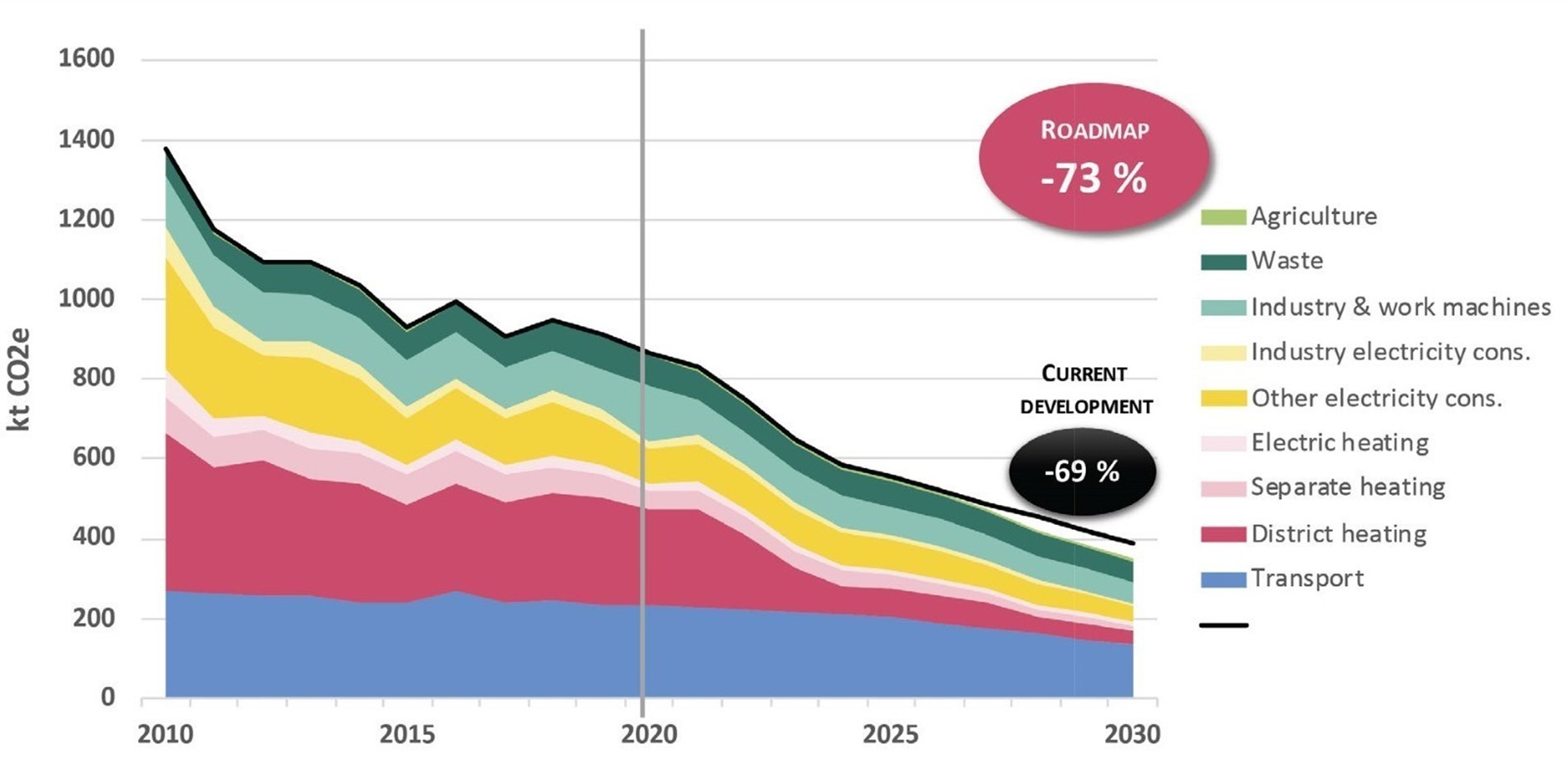
The figure shows Tampere’s actual climate emissions from 2010-2020, a projection based on current development and a projection based on the measures in the roadmap. The current development projection includes key climate measures that are set to be implemented shortly. The Roadmap trajectory shows the estimated reductions that can be achieved through implementation of the measures in the roadmap.
Land use
The spatial typology of Tampere is distinctly divided into an urban area in the south, the Inner City (Kantakaupunki) and Northern Tampere (Pohjois-Tampere), a rural area in the north. While the Inner City has grown and been built up significantly over the last decades, Northern Tampere is characterised by large forest areas (83%), fields (15%) and rural settlements (2%). While Northern Tampere makes up 75% of the total area of the city, it only houses about 2% of its population. With around 4,500 residents, the population density of Northern Tampere is around 11 residents per square kilometre, compared to approximately 1,860 residents per square kilometre in the Inner City area (City of Tampere, 2021a).
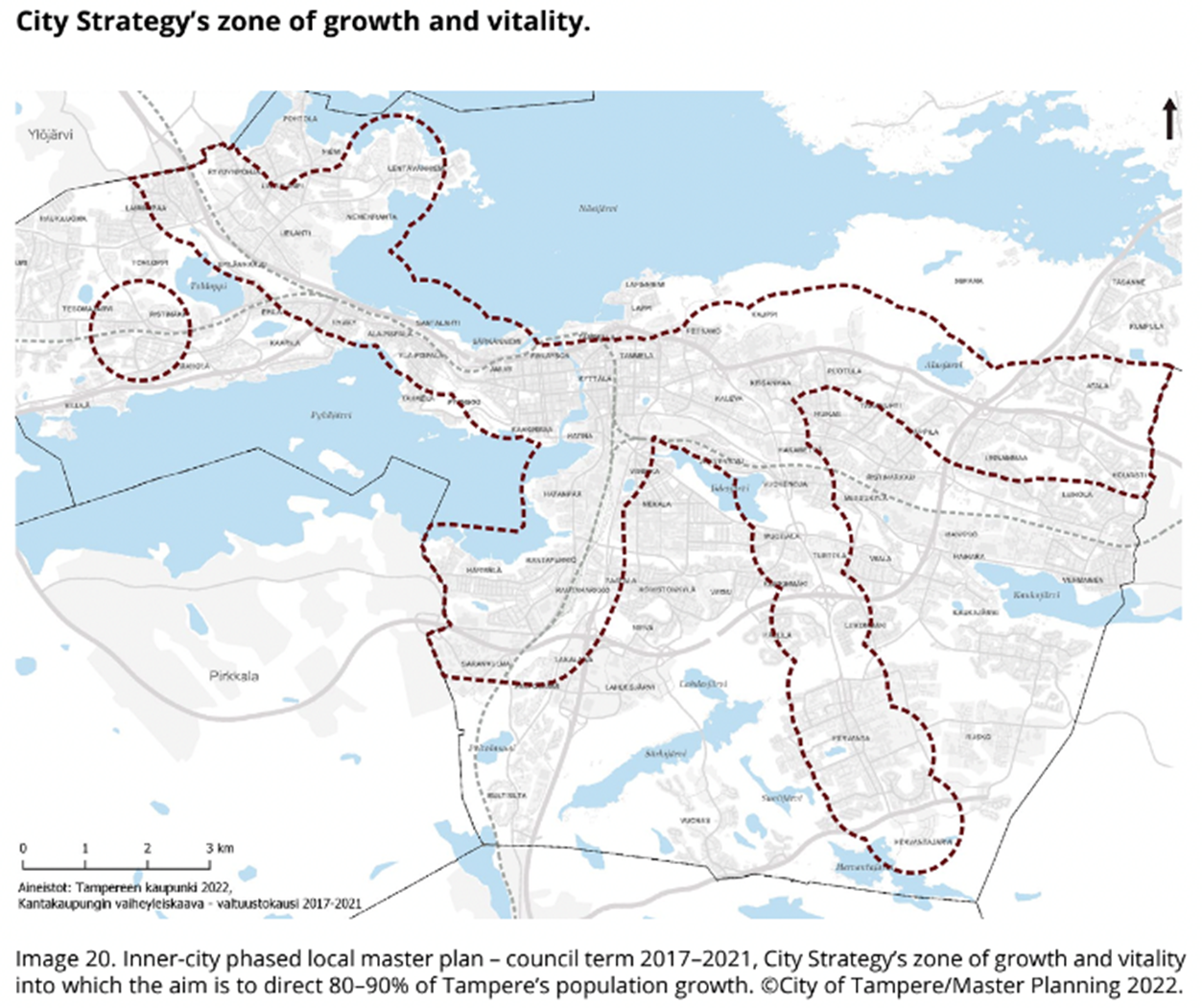
Tampere is experiencing an annual growth rate of approximately 3,000 residents (City of Tampere, 2022b). To meet the needs of a growing population while meeting climate goals, the main approach to land use is to promote high-density, mixed-use urban functions in central hubs and along existing and planned transport corridors. To address the differences in the spatial typologies outlined above, the city employs two Local Master Plans. Both plans define strategies for sustainable development, but the Inner City Master Plan is most relevant for urban development and climate concerns as the majority of the future construction is planned in this area. Looking ahead to 2040, the zoning focus of the Inner City Master Plan involves densifying areas through infills in the city centre and along the existing tramway lines, as well as developing new areas in connection to future public transport corridors and hubs (City of Tampere, 2024). Together these areas form the city’s zone for vitality and growth, which is intended to accommodate 80-90% of the future population growth (see Figure 8). To this end, the plan outlines goals for building density in central areas (see Table 6).
|
|
With public ownership of approximately 70% of land in the urban area, the city of Tampere is well-positioned to reach its objectives. Achieving mixed-use functions and densification is most straightforward in publicly owned or led developments, but the city also leverages its position as a major landowner to influence the private sector (Interviewee 11, 2024). For instance, the city has piloted design competitions and models for plot allocations that include climate-related criteria. Zoning requirements are also used to achieve sustainability goals, such as requiring the use of wood materials in certain areas. It is also worth noting that zoning regulations typically favour construction in locations that do not require extensive underground solutions or high-emission methods, making them both environmentally and economically sound.
While densification in urbanised areas and brown fields is the guiding principle, some developments are located in greenfield areas to meet the minimum target of housing production, which is set at 2,388 new units per year (City of Tampere, 2022b). For instance, the development of new districts in Alajärvi and Hiedanranta requires significant land as they are designed to accommodate 9,000 and 20,000 residents respectively. In addition to its size, the Hiedanranta development is a standout project as it is planned to be a positive energy district (see Text box 7 below).
Hiedanranta District Development
The Hiedanranta district in Tampere is a flagship project aimed at creating a positive energy district that produces more energy than it consumes. The district will integrate innovative and sustainable practices to ensure energy efficiency and environmental sustainability, aiming to attract residents and businesses committed to environmental stewardship. Hiedanranta plans to utilise renewable energy sources extensively, including solar and geothermal energy. Solar panels will be installed throughout the district and geothermal heat pumps will provide heating. Buildings in the district will be constructed or renovated to meet high energy efficiency standards, surpassing typical construction norms. Additionally, Hiedanranta will adopt circular economy practices, focusing on recycling, waste reduction and sustainable water management.
Buildings and construction
Emissions in the buildings sector are primarily due to heating systems of buildings, emissions from the production of construction materials and the combustion of fuel in construction machinery. To address these factors, the city of Tampere has set several objectives for its own building portfolio and construction plans, along with measures aimed at influencing the private sector. For city-owned properties, the focus is on increasing energy efficiency, phasing out oil heating in buildings by 2025 and significantly expanding solar energy capacity. In 2020, the city introduced life cycle carbon footprint assessments for both new construction and major renovations. Significant progress has since been made and all public buildings are now constructed to meet the A energy efficiency class. Energy efficiency has also been improved in the private sector through incentives and regulations. For instance, when the city leases public land for new developments, apartment buildings are required to meet the A energy efficiency standard, surpassing the minimum legal requirements (Interviewee 12, 2024). Moreover, the city offers free guidance on sustainable building practices, incentivising private actors to consider the long-term benefits of energy-efficient construction.
With great improvements in energy efficiency, the focus has shifted towards sustainable materials and construction-related emissions. The city uses wood in new constructions where it is economically viable, typically in smaller buildings, schools and kindergartens. The objective is to progressively increase the amount of wood used in apartment buildings by 2030. To encourage the private sector to adopt similar practices, the city provides various incentives. For instance, in vertical building expansions, discounts on land use fees are offered if wood or other low-carbon construction methods are used. This supports the goals for the buildings sector while also aligning with the densification objectives discussed in the previous chapter.
To reduce emissions from the construction phase, the city plans to replace work machines with low-emission vehicles, improve soil management and increase material recycling. While the city cannot impose requirements beyond national legislation on private property, by implementing the measures mentioned above and leading by example, the city encourages private actors to contribute to the city's sustainability goals.
|
|
Transport and mobility
The transport sector accounts for roughly 30% of emissions in Tampere. These emissions primarily come from road traffic, including freight transport, buses and passenger cars. Reducing reliance on passenger cars, which account for the largest share of emissions, is a significant challenge, with approximately 50% of residents’ journeys made by car. Transport emissions have not been reduced at a sufficient pace to reach emission goals and, with a growing population and commuter share, transport remains one of the greatest hurdles to reaching climate neutrality by 2030 (Interviewee 13, 2024). To address this challenge, the city aims to increase the use of sustainable transport modes by investing heavily in public transport, modifying urban infrastructure and promoting new and innovative mobility services. A dense, mixed-use urban structure, ensured through planning, further enhances accessibility and supports the development of sustainable mobility options.
Based on the EU's sustainable urban mobility concept, Tampere developed a Sustainable Urban Mobility Programme (SUMP) (City of Tampere, 2021b), which won the SUMP Award the following year. The goal of SUMP is to integrate the principles of sustainable urban mobility more firmly into mobility planning and decision-making. The plan also introduces key quantitative goals, such as increasing the share of sustainable transport modes to 69% by 2030. That includes raising the share of public transport to 21%, of walking to 33% and of cycling to 15%. For the remaining road traffic, the city plans to encourage the shift towards low-emission vehicles by expanding the network of electric charging stations and promoting low-emission zones. Within the city organisation, all vehicles are to operate on electricity or low-emission fuel by 2030, with the same goal for public transport.
|
| |
Achieving emission reductions in the mobility sector relies heavily on changing residents' daily habits and preferences in favour of sustainable mobility. As fiscal incentives to reduce private car use (such as toll fees) lack political support, the city focuses on making other mobility options more attractive, efficient and accessible. By creating cycling lanes and improving bicycle parking, the city aims to make cycling the fastest mode of transport for journeys under 3 kilometres. Pedestrian-friendly developments in city centres will further promote walking.
The new tramway system, which began operating in 2021, is the most significant project for developing the public transport system. The city plans to extend both the tramway and local train services by adding new stops and integrating train and bus ticketing systems. To encourage behavioural change, the city has also created a scheme where tickets to major events in the city centre cover public transport fares, promoting car-free travel (Interviewee 13, 2024). Additionally, car-sharing programmes, electric scooters and autonomous transport options are being developed to reduce the need for private car ownership and use. Furthermore, Tampere is exploring smart transport solutions like Mobility as a Service (MaaS) to integrate various transport modes into a seamless system, providing residents with flexible travel options.
Tampere Tramway is the city's largest public transport project and a cornerstone for promoting sustainable urban growth. It offers direct emissions benefits due to its lower energy consumption and indirect emission reductions by enabling a denser urban structure and improving public transport services. The tramway supports job concentration and creates prime locations for city-centre-oriented activities in districts including Hervanta, Turtola, Kaleva and Lielahti. By 2040, approximately 50% of urban jobs will be located within the tramway zone. Each tram can accommodate the equivalent of three busloads of passengers and operates on dedicated tracks, ensuring reliability unaffected by road congestion. The project also enhances bus service reliability on feeder lines and reduces bus traffic in the city centre, freeing up space for walking, cycling and leisure.
Case: Oulu
Background information
Situated on the northwestern coast of Finland in the Northern Ostrobothnia region, Oulu is the fifth largest city in Finland. The city has roughly 215,000 inhabitants, while the Oulu region has a total population of 262,736 inhabitants. The total area of the municipality is 3,818 km², of which 2,972 km² is land area. The size of the municipality, with vast rural areas, is the result of the merger in 2013 of the adjacent municipalities of Haukipudas, Kiiminki, Oulunsalo and Yli-Ii with the city of Oulu. The overall residential density is 72 inhabitants per km², with the city centre being the most densely populated area, having 1,015 residents per km² (Statistics Finland, 2023).
Demographically, Oulu has a young population; nearly 25% of its residents are under 15 years old and the median age in the city is 36. As the northernmost metropolitan region, Oulu is the economic and cultural centre of Northern Finland. The leading economic sectors are the technology and IT industries, with the city being particularly renowned for its strong expertise in wireless technologies and software development, making it one of Europe's leading ICT hubs. Health and wellness technology is also a significant sector, with innovative startups and established companies developing new solutions. Traditional industries, such as metal and forestry, continue to play an important role in the region's economy. The city's university and polytechnic university college support local innovation and contribute to a highly educated workforce.
Strategic level: municipal goals and policies
While Oulu is not among the frontrunner cities in Finland in climate action, its commitment has grown considerably over the last decade. The city joined the Covenant of Mayors in 2011 and pledged a 20% per capita reduction in greenhouse gas emissions by 2020. This goal was reached in 2013 and the city followed up with the CoM agreement for Climate and Energy in 2016, pledging to reduce greenhouse gas emissions by at least 40% compared to 1990 levels by 2030. The agreement includes a Sustainable Energy and Climate Action Plan (SECAP), which defines measures related to building energy efficiency, transport and waste management (City of Oulu, 2018).
In the national context, Oulu has been a long-time participant in voluntary energy efficiency agreements. Significant progress has been made in city-owned properties and operations through energy audits, energy-efficient street lighting and energy guidance for construction in the private sector. The current municipal energy efficiency agreement runs from 2017 to 2025, aiming to improve energy efficiency by 10.5% from 2014 levels by the end of 2025. Building on previous measures, the current agreement includes initiatives for energy efficiency in service buildings managed by the city, municipal transport and machinery as well as water and waste management. It also includes initiatives to increase the use of renewable energy, develop a cohesive urban structure and changes in operational models.
Oulu also participates in several networks, including the national C6 city network, which consists of the six largest cities in Finland (Helsinki, Espoo, Vantaa, Tampere, Turku and Oulu). Cooperating on several urban topics, these cities discuss climate measures, work to find common solutions, share best practices and support sustainable development by influencing national policies. For Oulu, the network acts as an important platform for learning and collaborating with some of the leading climate cities in Finland, including Turku, Tampere and Helsinki, which have greater resources dedicated to climate neutrality (Interviewee 14, 2024).
It should be noted that the other cities in the network are situated in Southern Finland, where distances between urban centres are shorter and population growth is higher. In comparison, the pressure to build urban infrastructure at a high pace is slightly lower and the city does not have the same critical mass to support the development of extensive public transport networks. Accordingly, some of the climate mitigation solutions that may be effective in Southern Finland are not always transferable to Oulu. That requires Oulu to tailor strategies to its unique geographical and demographic challenges, focusing on solutions that align with its specific context and needs.
In early 2022, the city council of Oulu set the goal of achieving carbon neutrality by 2035 in its City Strategy, bringing forward the previous target year from 2040 (City of Oulu, 2022a). Carbon neutrality is defined as a reduction in emissions of at least 80% from 1990 levels (the baseline year in the CoM agreement), with the remaining 20% to be offset or compensated for. Implementation of the climate objectives in the city strategy is further elaborated on in the Environmental Programme (Ympäristöohjelma) (City of Oulu, 2022b). The programme combines small-scale initiatives with cumulative impacts, alongside larger-scale guidelines for urban development. The main principle for the latter is to increase density and functional mix around urban centres and to steer future developments around public transport corridors and hubs.
Another key document is the Climate Roadmap, a long-term plan that outlines goals for 2026, 2030 and 2035 (City of Oulu, 2023). Building on the Sustainable Energy and Climate Action Plan (SECAP) from 2018, the roadmap focuses on the sectors of energy, transport and mobility; construction and service facilities; waste management and circular economy; and education, public services and culture. These sectors were chosen as the key areas for climate action as they are the areas that are directly within the city’s operational influence.
Like many other cities in Finland, Oulu calculates its total greenhouse gas emissions using the CO₂-report method, which aligns with the EU standard for calculating emission inventories.1 The sectors included in the calculations are consumer electricity consumption, electric heating, geothermal heating, district heating, separate heating, road traffic, ports, railways, agriculture and waste management. Additionally, emissions from industry, machinery and industrial electricity consumption are assessed.
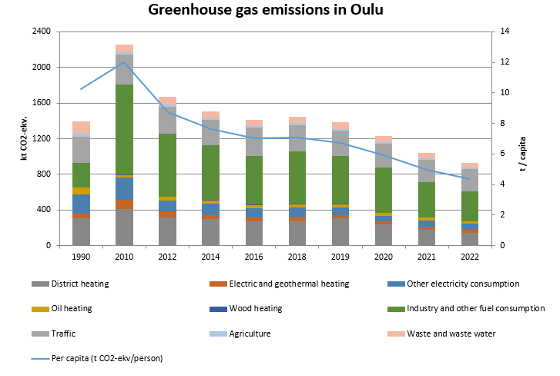
In 2022, total emissions, including the industrial share, were 928 kt CO₂-eq or about 4.4 tonnes per capita (Sitowise, 2023). That equals a decrease in emissions of about one-third or approximately 57% per capita compared to 1990 levels (see Figure 1). In 2022, the largest share of consumer emissions came from transport (43%) and district heating consumption (26%). Notably, emissions from district heating production had dropped to less than half of the 1990 level by 2022, whereas transport emissions per capita had only decreased by about one-fifth, making transport the slowest sector to transform in terms of consumer emissions.
Looking to the future, estimates suggest that total emissions in 2035 will be 430 kt CO₂-eq or about 69% lower than 1990 levels, falling short of the 80% reduction target. Given the short timeline, several barriers lie ahead. In particular, political priorities at both local and state levels have made the implementation of certain climate objectives challenging. The emphasis on local economic growth may conflict with long-term climate goals, while the austerity policies of the current government (Orpo’s Cabinet, 2023-present) have created uncertainties about public funding and budget constraints, further complicating municipal strategies (Interviewee 14, 2024). The impact of political priorities is particularly evident in the land use and transport sectors, as the political majority at both local and national levels considers the development of road networks for motorised vehicles essential for economic growth, exacerbating the challenge of reducing emissions in the transport sector (Interviewee 17, 2024). These tensions highlight the need for integrated policies and strategies to achieve meaningful progress. In the following sections the strategies, challenges and opportunities to reduce carbon emissions within the land use, transport and buildings sectors in Oulu will be further explored.
Source: Sitowise
Land use
In 2013, the city of Oulu merged with four surrounding municipalities (Haukipudas, Kiiminki, Oulunsalo and Yli-Ii), expanding the administrative boundaries city to its current form. Aside from the central city area and smaller local centres, the region is predominantly rural, characterised by detached housing and vast forest areas.
Following the municipal merger, a Local Master Plan was developed with the aim of promoting sustainable and energy-efficient urban development across the entire municipal area (City of Oulu, 2016). The master plan does not specify quantitative climate targets, but provides strategic direction for land use planning, with qualitative goals for future development such as limiting urban sprawl, promoting functional diversity, increasing land use efficiency through densification and developing a more networked urban structure. The plan also addresses sustainable mobility, with the goal of creating favourable conditions for the development of public transport in the future.
A notable element of the master plan is that it operates at two scales with respective timelines – 2030 and 2050 – to address both short-term and long-term urban planning needs. The 2030 plan covers the urban inner-city area, specifying land allocations for housing, employment, primary uses and supporting functions. By contrast, the 2050 plan provides a broader strategic vision for the entire municipal area, outlining long-term development areas based on population forecasts.
The “development zones”, which guide land use, are another key element of the master plan. These zones are designated for both urban and rural areas, with specific development objectives tailored to each area. Accordingly, the zones vary in land use efficiency, functional diversity, urban appearance and environmental quality. With the aim of establishing a framework for sustainable growth, zones are categorised by development objectives, enabling more specific regulations to be detailed in lower-level plans. This approach means that the plan remains flexible, allowing for adaptability to local conditions and future changes.
Since the city owns few plots in the inner city, developing a functional mix in the city centre largely relies on private landowners, complicating comprehensive planning (Interviewee 15, 2024). Residential projects often yield higher returns, prompting private developers to prioritise housing in new construction. To address this challenge, the city uses economic incentives that encourage infill development, including discounts on land use fees, planning fees and agreement compensations. For instance, property owners are eligible to receive financial benefits for infill projects, enabling them to renovate buildings or add amenities like lifts. However, such incentives have their limitations, as target groups, such as housing cooperatives, are often reluctant to take on the long-term financial commitments and the risk of uncertain returns on investment from such projects. As a result, widespread use of these incentives remains challenging without additional support measures.
In contrast to the low land ownership in urban areas, the city of Oulu possesses vast forest areas – approximately 19,500 hectares – making it the largest owner of municipal forests in Finland. Recognised for their potential to act as carbon sinks, these forests are a key asset in offsetting emissions. However, the forest industry also plays a crucial role in the municipal economy, contributing significantly to employment and local revenue. As such, the city’s approach to forest management is a frequent topic of discussion among policymakers and stakeholders (Interviewee 15, 2024). While climate change mitigation is a central theme in these discussions, the current principle for sustainable forest use is to maintain multiple functions. This means that carbon sequestration needs to be balanced with other uses such as timber production, biodiversity and water conservation and recreation (City of Oulu, 2024).
Buildings and construction
The goals for achieving carbon neutrality in the construction sector include several key measures, which are outlined in the recent Environmental Programme (City of Oulu, 2022b), the Roadmap for Circular Economy (City of Oulu, 2021a) and the Climate Roadmap (City of Oulu, 2023). The latter operates with two timelines, with goals for 2026 and 2035. By 2026, certain steps are mandated, while additional measures are to be implemented more gradually. In the buildings sector, the primary goal for 2026 is to ensure energy efficiency in all public buildings. The first step is to incorporate carbon footprint calculations into all major municipal building projects. Additionally, efforts will be made to renovate, improve and maintain existing buildings to extend their lifespan. Between 2026 and 2035, the public sector aims to further develop low-carbon practices in construction, enhance the recycling and reuse of materials and increase the use of wood in municipal projects.
In recent years, the energy consumption of Oulu's municipal properties has been significantly reduced, particularly through adjustments in ventilation and lighting, resulting in lower consumption than in other major Finnish cities. As part of the Environmental Programme, the city monitors the energy efficiency and theoretical energy consumption of new buildings, calculating how much more efficient they are than the regulations require. A good example is Sivakka Oy, the city’s rental housing company, which manages over 8,300 rental apartments. Sivakka's buildings are top-tier in energy efficiency, with electricity and heat increasingly produced from emission-free energy sources. New buildings always have an energy class of A+ and are equipped with solar panels, district heating and geothermal heat. In line with the Climate Roadmap, Sivakka’s next mandate is to reduce emissions from construction and materials. In addition to the progress in the public sector, Oulu is nationally recognised for its work in guiding private and commercial builders in energy efficiency (Interviewee 16, 2024). This guidance is being extended to renovations.
Transport and mobility
Among the greatest challenges to achieving climate neutrality in Oulu is reducing the significant emissions from the transport sector. While reductions have been achieved across several sectors, emissions from road traffic have remained consistently high over the last decade and are estimated to account for 34% of residents' carbon footprint. However, the emphasis on sustainable transport has become increasingly explicit in steering documents such as the City Strategy (2023), the Local Master Plan (2016) and the Regional Transport Plan. In 2021, the city also drew up a Sustainable Urban Mobility Plan (SUMP) based on the EU-SUMP concept. In this plan, a quantitative goal to steer concrete measures is clearly defined: at least 50% of all journeys should be made by walking, cycling and public transport by 2030 (City of Oulu, 2021b). The plan identifies decision-making, the city centre’s traffic system and public transport as the pivotal areas for promoting sustainable mobility. To this end, five subgoals have been defined:
- Decision-making will support the long-term development of sustainable transport.
- The city centre will be a vibrant meeting place with 20% more people spending 20% more time there.
- Local environments will be pleasant and safe, with walking making up at least 23% of the modal share.
- Public transport will be a convenient choice, with a modal share of at least 7%.
- Cycling will be a smooth and attractive option all year round, with a modal share of at least 20%.
The high reliance on cars in Oulu is closely linked to the challenges in the land use sector, such as the sprawling urban structure and the lack of political commitment to ensuring higher density. Without consensus on restricting passenger cars, developing comprehensive public transport coverage is currently unattainable (Interviewee 17, 2024).
So far, the most successful aspect of sustainable transport planning in Oulu is the extensive cycling infrastructure. The city boasts a total of 900 km of bike lanes, including 14 km of high-quality cycling corridors known as Baana. Despite the long winter season, the average distance travelled by cycling in Oulu is more than twice the national average, reflecting the city’s commitment to promoting cycling as a viable mode of transport. The Baana corridors provide direct and convenient routes that connect key residential areas with major destinations such as the city centre, schools, workplaces and recreational areas. The city is continually expanding the Baana network to cover more areas, improve connections and integrate new technologies for better traffic management and safety. The goal is to extend the network to 98 km by 2030 through upgrading existing cycling infrastructure to Baana standards and expanding it into new areas (City of Oulu, 2019). The plan also includes adding more covered bike parking facilities, increasing signage and wayfinding tools and further integrating cycling paths with public transport networks to support a seamless travel experience. These efforts aim to make cycling not only a practical choice for daily commutes but also an integral part of Oulu's overall transport system.
While a shift to lower-emission vehicles could accelerate emission reduction, in the adoption of electric vehicles (EVs) Oulu lags behind the more densely populated southern regions of Finland. Currently, there are no specific incentives for electric vehicles in Oulu and public charging infrastructure is limited to larger parking facilities and private properties. However, efforts are underway to develop a comprehensive plan for public charging points, which might include incentives such as reduced parking fees at charging stations. Nevertheless, significant change in renewing the car stock will rely on national policies and incentives provided by the government.
To promote cycling and improve the quality of cycling routes, several high-quality cycling corridors called Baanas are planned to be implemented. A typical Baana project involves widening the cycling path and separating pedestrian and cycling lanes. The implementation of upcoming Baana projects is scheduled to last until 2030.
One of the key factors contributing to the success of Oulu's cycling infrastructure is its exceptional maintenance of cycling lanes, especially during winter. The city employs a rigorous snow ploughing regimen, ensuring lanes are cleared promptly and frequently. This maintenance is so thorough that bike lanes may be ploughed multiple times a night during heavy snowfall, keeping them safe and usable all year round.
Challenges and opportunities: a multilevel governance perspective
Spatial planning in Finland operates according to a hierarchical system involving national, regional and local authorities. In land use planning, regulatory instruments are tied to a hierarchical three-tiered zoning plan system: the regional plan, the local master plan and local detailed zoning plans. The regional and local master plans are guided by national land use objectives, which are drawn up at the beginning of each government term. However, these do not have regulatory power over lower-level plans and, in general, Finnish municipalities are considered to have significant autonomy in spatial planning.
In the buildings and construction sector, the Ministry of the Environment establishes national building codes, energy efficiency standards and environmental impact regulations to promote sustainable construction. At the regional level, ELY Centres (Centres for Economic Development, Transport and the Environment) monitor compliance in terms of environmental impacts and heritage protection. At the local level, municipalities serve as the primary authorities for issuing building permits and supervising construction projects.
Policy capacity: vertical and horizontal governance tensions
Land use sector
Vertical governance tensions
In Finland, urban densification has been the guiding principle for planning on both the local and national level for over two decades. Since 2000, national guidelines have prioritised the consolidation of urban form, a focus that has been reinforced in recent years due to climate change mitigation aims. Central to the Finnish notion of “consolidation” is the development of urban areas within existing infrastructure. However, policy implementation has been weak, as urban sprawl continues across all major urban regions, including Tampere and Oulu (Ministry of the Environment, 2021)
To achieve climate neutrality in cities, coherent land use planning on the city-regional level is recognised as crucial, as settlement and commuting patterns drive emissions both within and outside city limits. While there is no dedicated authority operating at this level in Finland, there are a number of policy tools for coordination, with the most significant being the Land Use, Housing and Transport agreements (MAL agreements). These agreements are made between the state and municipalities in all the largest metropolitan regions in Finland. MAL agreements are contractual arrangements under which the state agrees to partially fund major infrastructure projects and municipalities agree to create city-regional planning frameworks and align their strategies for land use. The agreements are concluded for 12 years, but implementation plans and funding are renegotiated every four years – at the start of each government's term; that can make the implementation of some projects unpredictable. It should also be noted that these agreements do not hold statutory power over local zoning plans, meaning that there is no guarantee that local decision-makers will consistently adhere to the objectives set forth in the MAL agreements.
Horizontal governance tensions
In both Tampere and Oulu, the systematic adherence to master plans and other overarching strategies is a challenge. One weakness is the nature of planning decisions, with plans being approved on a case-by-case basis. More effective governance control could be achieved through stricter regulations but a prevailing anti-regulation stance at the national and local level makes this an unlikely solution. Indeed, in both municipalities, cooperation with the private sector is viewed as a more efficient solution than imposing stringent rules (Interviewee 12, 2024; Interviewee 15, 2024) . Moreover, the current government (Orpo’s Cabinet) has – as part of its austerity policies – retracted the legal requirement for municipalities to develop local climate strategies, which was introduced by the preceding government (Marin's Cabinet, 2019-2023). While this regulatory reversal has not led Oulu and Tampere to abandon their climate strategies, the frequent changes in regulations demonstrate the uncertainties and shifting priorities surrounding climate policies.
In Tampere, the densification and functional mix of the inner city have been advanced by the extensive land ownership of the municipality. Identifying optimal solutions is, however, complicated as different trade-offs must be weighed up. For instance, the ambitious goals for housing production necessitate the use of undeveloped land and green fields, as densification of urbanised areas is a slow process compared to the construction of new areas supplying the city with thousands of housing units (Interviewee 11, 2024). This, in fact, goes against densification principles of saving natural land.
Another challenge in horizontal governance is the growing conflict between various efforts to promote sustainable development. For instance, the rise in environmental regulations and detailed ecological surveys affects where housing can be developed, which can complicate plans for larger cohesive urban structures and densification goals. In Oulu, preservation of natural areas and habitats is clearly rising on the political agenda, sometimes at the expense of densification efforts (Interviewee 15, 2024). This is partly due to how impacts are assessed and communicated. While the consequences of land use on biodiversity and nature can be relatively predictable and immediate, climate impacts are compounded over longer periods of time, making each planning decision seem less consequential for policymakers.
In Oulu, the dispersed urban fabric presents inherent challenges, as increasing densification and energy efficiency in a large, sparsely populated municipality with long distances to the city centre requires systematic implementation and coordination. However, such systematic implementation has been strained by political priorities that contradict climate goals. A particular challenge is the political support for developing detached housing, which is considered essential for the city's vitality and attractiveness (Interviewee 15, 2024). This preference leads to urban expansion and inefficiencies in public transport coverage, as many households rely on multiple cars. That leads, in turn, to increased demand for parking spaces and road infrastructure – responsibilities that fall to the planning unit. Consequently, planning resources are often diverted towards addressing parking and road capacity concerns, detracting attention from long-term sustainability goals (Interviewee 15, 2024).
Buildings and construction sector.
Vertical governance tensions
Although Finnish municipalities have a high degree of autonomy in planning and have various tools at their disposal for incentivising sustainable construction, the existing legal framework limits the most ambitious efforts as municipalities cannot demand that private developers surpass the requirements of the law with respect to environmental targets.
The Land Use and Building Act (132/1999), which regulates the buildings sector in Finland, is being revised at the time of writing and is set to come into effect in 2025. The outcome of the revision is highly anticipated as it will introduce new rules related to carbon emissions, including procedural and technical requirements. Among municipal representatives there are concerns that the law may weaken climate efforts, as recent amendments have weakened some requirements and some of the stricter provisions are set to be postponed until 2026. Municipal representatives in both Tampere and Oulu considered it likely that the government will eliminate some of the stricter requirements to reduce construction costs (Interviewee 12, 2024; Interviewee 16, 2024).
This issue is highly relevant, as not all private developers would oppose stricter regulations. In fact, a recent study in Tampere found that private developers in the region would welcome stricter climate regulations if these were mandated by the city (Interviewee 12, 2024). As the private market does not encourage developers to make these changes voluntarily, the greatest step towards sustainable practices remains dependent on regulatory tools. It should also be noted that while the City of Tampere has high land ownership – enabling the city to realise many of its ambitions – the low municipal land ownership in Oulu makes progress even more reliant on private developers. Compared to other metropolitan areas in Finland, Oulu also faces lower building pressure, meaning the relatively low competition on Oulu’s private market leaves even fewer economic incentives to adopt sustainable practices (Interviewee 15, 2024).
Horizontal governance tensions
In terms of horizontal governance, representatives from both cities considered cross-departmental cooperation within their municipalities to be well-developed (Interviewee 12, 2024; Interviewee 16, 2024). Nevertheless, some conflicting interests arise due to the differing tasks and responsibilities of various units. Similarly to among representatives from the land use sector, such tensions were perceived not as conflicts but as an integral part of the working process (Interviewee 11, 2024; Interviewee 15, 2024).
A challenge related to conflicting interests is the difficulty in comparing different solutions with one another. For instance, in Tampere, the use of life cycle assessments (LCAs) may make the carbon reduction efforts of the public building unit appear ineffective (Interviewee 12, 2024). This is because LCAs assume a 50-year lifespan for buildings counting forwards, disregarding the actual longevity of older buildings, which may exceed 200 years. As a result, renovation efforts seem more carbon-intensive and expensive than the construction and maintenance of new buildings. Since a significant portion (roughly 70%) of the public construction budget is allocated to renovating older buildings – many of which are over a hundred years old and protected by heritage regulations – the building unit’s emission reduction efforts have been called into question. This example illustrates how standardised assessment methods can misrepresent the environmental impact of renovation versus new construction, potentially undervaluing the long-term sustainability benefits of preserving older buildings.
Moreover, architectural requirements for public buildings add complexity. The challenge often lies in the high construction costs associated with using the most sustainable materials, limiting municipalities’ ability to implement environmentally friendly solutions. While sustainable materials could reduce the carbon footprint of public buildings, their expense often exceeds public budget constraints.
Transport and mobility sector
Vertical governance
To support Finland's national goal of achieving carbon neutrality by 2035, a national 12-year traffic plan was drawn up in 2021. The plan outlines the largest infrastructure projects for the next 12 years and includes a yearly investment plan to support these initiatives. However, the actual budgets and implementation are subject to change, based on the political priorities of each government in office. The current government (Orpo’s Cabinet, 2023-present) has signalled a shift in focus towards improving road infrastructure to strengthen national security and economic growth.
Ministry of Transport and Communications, (23.05.2024), Press release: https://valtioneuvosto.fi/en/-/1410829/minister-ranne-government-transport-projects-strengthen-finland-s-security-and-growth-
At the same time, national subsidies for sustainable transport modes, such as walking, cycling and public transport, have been cut, impacting the ability of both cities to fully implement plans on sustainable mobility. As a result, municipalities are tasked with finding innovative ways to continue supporting sustainable transport initiatives despite reduced funding.
Horizontal governance
At the horizontal governance level, the main challenge in transport planning lies in balancing multiple objectives and finding common ground between different stakeholders' interests. While the city of Tampere has made considerable strides in developing sustainable transport services, decisions such as rejecting congestion charges or tolls highlight the political influences shaping Tampere's transport policies. While such measures could be part of the strategic toolkit, they currently lack political support both locally and nationally (Interviewee 13, 2024).
In Oulu, the dichotomy between promoting sustainable mobility and accommodating car use also causes tensions. Current strategic plans do not restrict car use or parking, reflecting the prevailing political stance that favours expansion of car capacity. This creates a challenging environment for advancing initiatives like walking, cycling and public transport, especially given Oulu’s extensive rural areas, where private car use is already predominant. While there is political consensus around the overall vision and general strategies for increasing sustainable mobility at the local and regional level, actual solutions remain elusive. For instance, a comprehensive plan to reduce road traffic in favour of improving walking and cycling infrastructure in the city centre was recently prepared by the transport planning unit, but was dismissed by the city council as the political majority opposes any limitations on passenger cars (Interviewee 17, 2024).
Moreover, the objectives for “efficient public transport” in Oulu remain vague as there is no political consensus on what public transport solution should be developed. Different options such as light rail and bus rapid transit systems have been discussed but are still awaiting a decision. In this context, the mandate for transport planning in Oulu is to facilitate the development of all mobility modes, ultimately reducing the potential capacity for public transport, walking and cycling. Lastly, efforts to expand air traffic and commercial flights to the city highlight tensions between achieving emissions goals and political decisions to enhance the vitality and appeal of Oulu.
Institutional capacity: knowledge, relational resources and mobilisation capacity.
Knowledge capacity
Tampere and Oulu demonstrate strong knowledge capacity in urban sustainability and climate action, but their approaches reflect their distinct regional contexts. Tampere, as a rapidly growing city, has developed a structured and data-driven approach to emissions monitoring. It was the first Finnish city to introduce a climate budget, integrating emission reduction into financial planning (City of Tampere, 2023). This approach allows for continuous monitoring, providing real-time emission tracking and progress indicators (City of Tampere, 2022). Moreover, Tampere has strengthened its in-house expertise in climate planning, hiring specialists in sustainable construction, energy efficiency and emissions assessment (Interviewee 10, 2024).
Oulu, as a smaller municipality, relies more on outsourced expertise for emissions assessments while gradually developing internal knowledge. While Oulu has well-developed internal competencies, limited political support for stricter regulations has led to fragmented efforts in climate adaptation, especially in land use and transport (Interviewee 17, 2024). However, Oulu has deep expertise in energy efficiency, enabling it to lead initiatives in energy-efficient construction and renewable heating solutions.
Relational Resources
Both cities are engaged in national and international climate networks, enabling them to share best practices and align with broader sustainability objectives. Tampere is a frontrunner city in Finland’s HINKU network, collaborating with other municipalities to achieve carbon neutrality by 2030 (Tampere City Region, 2019). It has also received an EU Mission Label as part of the Net Zero Cities programme, providing access to international funding and research initiatives (Interviewee 10, 2024). Additionally, Tampere participates in the Green Building Council Finland, influencing national sustainability standards (Interviewee 11, 2024).
Both cities are members of the C6 city network, which brings together Finland’s six largest cities (Helsinki, Espoo, Vantaa, Tampere, Turku and Oulu) to collaborate, share best practices, coordinate climate measures and influence national policies. However, the network’s role differs between the cities. For Tampere, the network has strengthened the collaboration between Helsinki and Tampere, helping to leverage Tampere’s influence on national policies. While Oulu also benefits from the knowledge exchange, its geographical and economic context sets different pre-conditions. Unlike the other C6 cities, which are all located in southern and central Finland, the dispersed urban structures and lower population density in Northern Finland makes solutions less transferrable to Oulu (Interviewee 14, 2024). For instance, major state-funded public transport projects are more likely to be realised in the south as distances between urban areas are much shorter and the critical mass larger, highlighting the need for climate strategies and policy frameworks that account for different regional pre-conditions.
Public-private collaboration is another critical relational resource. In the construction sector, both cities prioritise cooperation when engaging the private sector in sustainability efforts (Interviewee 15, 2024; Interviewee 12, 2024). Tampere, for instance, hosts regular meetings with major contractors to encourage low-carbon construction, while Oulu integrates private sector engagement through Business Oulu, facilitating investment in sustainable development. By fostering these relationships, both cities position the private sector as an active partner in climate action, rather than a passive recipient of regulations.
Mobilisation Capacity
Mobilisation capacity – the ability to translate plans into action – varies between Tampere and Oulu. In Tampere, there is strong political consensus on climate action, with carbon neutrality embedded in city strategy and financial planning (City of Tampere, 2023). Its Carbon Neutral Tampere 2030 Roadmap integrates emission reduction across departments, ensuring cross-sectoral implementation (City of Tampere, 2022). Moreover, public ownership of 70% of urban land enables Tampere to influence sustainable urban development directly (Interviewee 11, 2024). This has allowed for innovative zoning policies, such as requiring wood construction in specific areas and offering incentives for energy-efficient buildings. However, implementation challenges remain in the transport sector, where car dependency and budget constraints limit a rapid transition to sustainable mobility (Interviewee 11, 2024).
Oulu faces greater challenges in mobilising its climate plans. While the city has ambitious climate targets, political opposition to regulating car use and controlling urban sprawl has slowed progress (Interviewee 17, 2024). Oulu has successfully implemented energy efficiency measures in municipal buildings and housing, but land use planning remains a challenge, as low-density development continues to spread into rural areas (City of Oulu, 2016). Furthermore, the city's transport planning lacks a clear political mandate, delaying decisions on public transport expansion (Interviewee 17, 2024). Despite these obstacles, Oulu has successfully expanded its cycling infrastructure and now boasts the highest per capita cycling rates in Finland, supported by bike lanes that are maintained in winter (City of Oulu, 2019).
Key reflections and learnings from Finland
The cases of Tampere and Oulu highlight the diverse approaches Finnish cities take to sustainability and climate action, shaped by differences in political alignment, economic structure and regional context. While both cities demonstrate strong institutional capacity in various sectors, they also face challenges in governance coordination, policy implementation and behavioural shifts.
While national and local strategies highlight compact urban forms, inconsistent adherence to densification principles and trade-offs between sustainability goals and development priorities pose challenges in creating cohesive, low-carbon urban environments. Past urban planning decisions also shape sustainability efforts, particularly in Oulu, where a historically dispersed urban structure – reinforced by policies favouring detached housing and road expansion – poses challenges to densification and sustainability goals.
Further, the building and transport sectors illustrate tensions in regulatory autonomy and sustainability. In the buildings sector, national regulations slow the adoption of sustainable practices, as they limit the extent to which stricter local standards can be enforced. While the collaboration with private actors and economic incentives provide opportunities, significant advancements remain contingent on stronger regulatory frameworks and consistent policy support from the national level.
This is also evident in the transport sector, where state funding constraints and weak political support for car-restrictive measures (e.g. toll roads) at both national and local levels undermine efforts to expand sustainable alternatives. Meanwhile, intermunicipal coordination remains a challenge, as different municipalities and departments prioritise competing transport investments, slowing the integration of regional mobility strategies. As transport remains one of the most challenging sectors to decarbonise, both strong political commitment and shifts in societal preferences are imperative.
While both cities are committed to carbon neutrality, the ability to translate plans into action varies. Tampere’s political cohesion and history of climate leadership have enabled strong interdepartmental coordination, ensuring that ambitious sustainability goals translate into concrete actions across municipal sectors. While Oulu is setting increasingly high climate ambitions, it is experiencing fragmented political will and inconsistencies between goals and actions. Nevertheless, Oulu’s cycling infrastructure and energy-efficient housing initiatives demonstrate that even without full political alignment, significant progress is possible.
In summary, the experiences of Oulu and Tampere demonstrate that achieving climate neutrality will demand robust political will, solutions for adaptation to legacy systems and a commitment to fostering cultural and behavioural change. In the boxes below, some of the key challenges in Finland, their implications and possible actions are summarised.