Denmark. Copenhagen – Bornholm
Copenhagen – Bornholm | |
Distance between the airports | 141 km |
Travel time by electric airplane Table 1: Aircraft model employed for this study. | approx. 22 min |
Table 2: Distance and travel time between the airports.
The Danish case study on the impacts of electric aviation is unique in comparison to the other Nordic regions because of the location concerned. Denmark has a significantly smaller geographical area than the other Nordic countries and is therefore significantly more urbanised and more densely populated. In order to satisfy the methodological requirement of this study for an urban-rural connection, a route over water was considered most suitable, leading to selection of the connection between Copenhagen and the island of Bornholm.
That route connects two distinct areas of Denmark with airports situated 141 km apart from each other: the densely populated Danish capital Copenhagen and the island of Bornholm, which is considered a rural area in the proximity of Copenhagen (Nordregio, 2022). According to preliminary calculations, the flight would take approximately 22 minutes by electric airplane. The existing flight route between those two destinations is operated by the Danish airline DAT three to eight times per day, depending on the day of the week and the season of the year (Bornholms Lufthavn, 2023). While there are no bridges or tunnels connecting the island to mainland Sweden or Denmark, there are regular “Bornholmslinjen” ferries that connect Bornholm to Ystad in Sweden, Køge in Denmark and Sassnitz in Germany (Tomiola, 2023). Passengers travelling between Bornholm and Copenhagen by ferry usually use the route between Bornholm and Ystad and then take the bus or travel by car to Copenhagen. Bornholm is rapidly transitioning to a green island, with high support for sustainable means of transport (Municipality of Bornholm, 2018). Given those factors, the flight route between the island of Bornholm and Copenhagen lends itself to being studied.
In short, while there are existing connections on the route between Bornholm and Copenhagen, the case study will provide a unique perspective of the possible impacts that electric aviation might have, should it be implemented on this route.
As this case study will primarily investigate the impact of electric aviation on regional development on the island of Bornholm, most of the following text focuses on the Danish Island of Bornholm rather than the capital city of Copenhagen. However, transport and other administrative links between the two locations will be taken into consideration.
Regional context
Geography and demography
Bornholm is a Danish island located in the Baltic Sea, to the east of the Danish mainland. With an area of 588 km², Bornholm is Denmark’s fifth largest island. The island lies about 180km east of Copenhagen by sea and 37 km from the Swedish mainland (Melskens, 2017).
As at January 2022, Bornholm had 39,552 inhabitants. Since 1990, the population has decreased by 13.5% percent from about 45,800. However, the regional authority, the Municipality of Bornholm, expects the island’s population to grow again slightly over the coming ten years and estimates a total population of 40,470 in 2033 (Municipality of Bornholm, 2022). The previous reduction in population has been linked to causes including young people leaving the island in pursuit of careers elsewhere, reflecting demographic changes that have also been observed in other rural parts of the Nordic region (Bogason, 2020). About two-thirds of the local population today live in towns while the remaining inhabitants live in rural areas. Bornholm’s largest town is Rønne, located on the island’s west coast; other towns are Hasle, Sandvig, Allinge, Gudhjem, Svaneke and Nexø.
The average age of the island’s population is 48 years. That is more than ten years above the average age in Copenhagen (Admin Stat Danimarca, 2023). The largest age groups on the island are the group aged between 56 and 64 (17%) and the group aged between 66 and 74 (16%) (Admin Stat Danimarca, 2023). As at March 2023, Bornholm had an unemployment rate of 3.0%, compared to 3.5% in Copenhagen (Statistics Denmark, 2023). However, the overall income level in Bornholm is about 20% lower than the national average (Statistics Denmark, 2022). Housing is less expensive on the island than elsewhere in Denmark due to lower demand (Bogason, 2020).
Regional economy
Historically, the main income-generating activities in Bornholm have been fishing, agriculture and the machinery industry. Many of Bornholm’s farmers engaged in pig or dairy farming in the past. However, in line with the island’s “Bright Green Island” policy, which will be outlined in the next section, the agricultural sector has been shifting its focus towards organic, small-scale farming over the past years (Bogason, 2020). The manufacturing of craft products also has a long-standing tradition on the island, especially in the fields of glass blowing and ceramics, while other materials such as wood and textiles also play a role in the artisanal production of local artefacts (Royal Danish Academy, 2017). Bornholm has also attracted many Danish and international artists over the past decades and has become known for its local art museum (Tomiola, 2020).
Sustainable tourism has been identified as an important future source of income for the local population (Broegaard, 2022; Destination Bornholm ApS, 2023; Szromek, 2019). Various sustainable concepts have been evolving over the past years in the gastronomy sector and the tourism sector as a whole on the island (ibid). Furthermore, Bornholm’s “Energy Island” project is set to generate new sources of income, including new job opportunities for the local population, such as in the field of sustainable offshore engineering (Energy Island Bornholm, 2023). The project is expected not only to turn the island into a hub for green energy generation, but also for research and further development in that field (Baltic Energy Island, 2023). The establishment of such new green jobs can help to attract more people to the island, strengthen the local employment sector and economy and potentially improve the island’s old-age dependency ratio.
Regional policies and initiatives relevant to electric aviation
Over the past years, Bornholm has strengthened its regional and international reputation as a sustainable community and tourist destination, with ambitious goals on carbon neutrality and the introduction of sustainable solutions across all sectors. Bornholm’s ambitious strategy is called “Bright Green Island” and has gained recognition, with the island being awarded the European Union’s “RESponsible Island Prize” in 2020, for example. The prize recognises Bornholm’s cross-sectoral approach to sustainability and local renewable energy production systems (European Commission, 2020).
The “Bright Green Island” strategy was developed under the leadership of the local municipal council and launched in 2018 (Nordregio, 2019). The vision describes eight overarching goals which are intended to support the island’s transition towards a carbon-neutral society (Municipality of Bornholm, 2018). Those goals include achieving carbon-neutral energy production in 2025, being fossil-free by 2040 and recycling or reusing all waste by 2032 (ibid). On the path to meeting its objectives, the island of Bornholm today bases all of the island’s district heating and electricity production on renewable energy sources, using wind, solar, biogas, wood chips and wheat straw. Local energy production covers 60% of local consumption (Destination Bornholm ApS, 2022). With its aim of phasing out all fossil fuels by 2040, the island will have to transition towards the electrification of its transport sector in the coming years. Presently, the Danish airline DAT compensates its emissions through the planting of trees (Destination Bornholm ApS, 2023).
In line with its sustainability goals, Bornholm is currently in the process of becoming the world’s first “energy island”. That process is described in more detail under the section “Energy infrastructure” and comprises Bornholm’s future role as an energy hub for energy produced in offshore wind parks in the Baltic Sea.
Transport infrastructure
The airport in Rønne is Bornholm’s only airport. Routes served to and from Rønne Airport include Copenhagen, Aalborg, Billund and Sonderbørg, all of which are in Denmark. Apart from those regular flights, the airport is also open to general aviation from all of Europe (see Figure 2). Figure 1 shows the total number of passengers arriving at and departing from the airport, with an average of 6,760 passengers arriving per month on the island in 2022.
Figure 1: Number of passengers arriving at and departing from Bornholm Airport in 2022 and 2023
Source: Trafikstyrelsen, 2023
Source: Trafikstyrelsen, 2023
As mentioned above, the island can also be reached by sea. The ferry company “Bornholmslinjen” connects the island with Ystad in Sweden, Køge in Denmark and Sassnitz in Germany (Tomiola, 2023). Moreover, Christiansø, which lies 10 km northeast of Bornholm, is connected by a ferry service that runs between Gudhjem and the island of Christiansø (ibid). The connection between Ystad and Rønne is the most frequently used route with about five ferry departures per harbour per day, while there are only one to two departures from Køge and Sassnitz (Bornholmslinjen, 2023). In April 2023, a new vessel called “Express 5” began serving the route between Ystad and Rønne. The world’s largest fast ferry can carry up to 1,600 passengers, as well as 450 cars (Herin, 2023). The ferry’s four 16-cylinder engines are of the dual-fuel type, which means that both the engines and the vessel are capable of using alternative fuels (Bornholmslinjen, 2023). Sustainability was hence considered in the design and development of the ferry. However, it cannot be seen as a low-emission or zero-emission transport solution. There are no bridges or tunnels connecting the island with the mainland. On the island itself, a good network of streets connects the various towns and villages, ports and the airport.
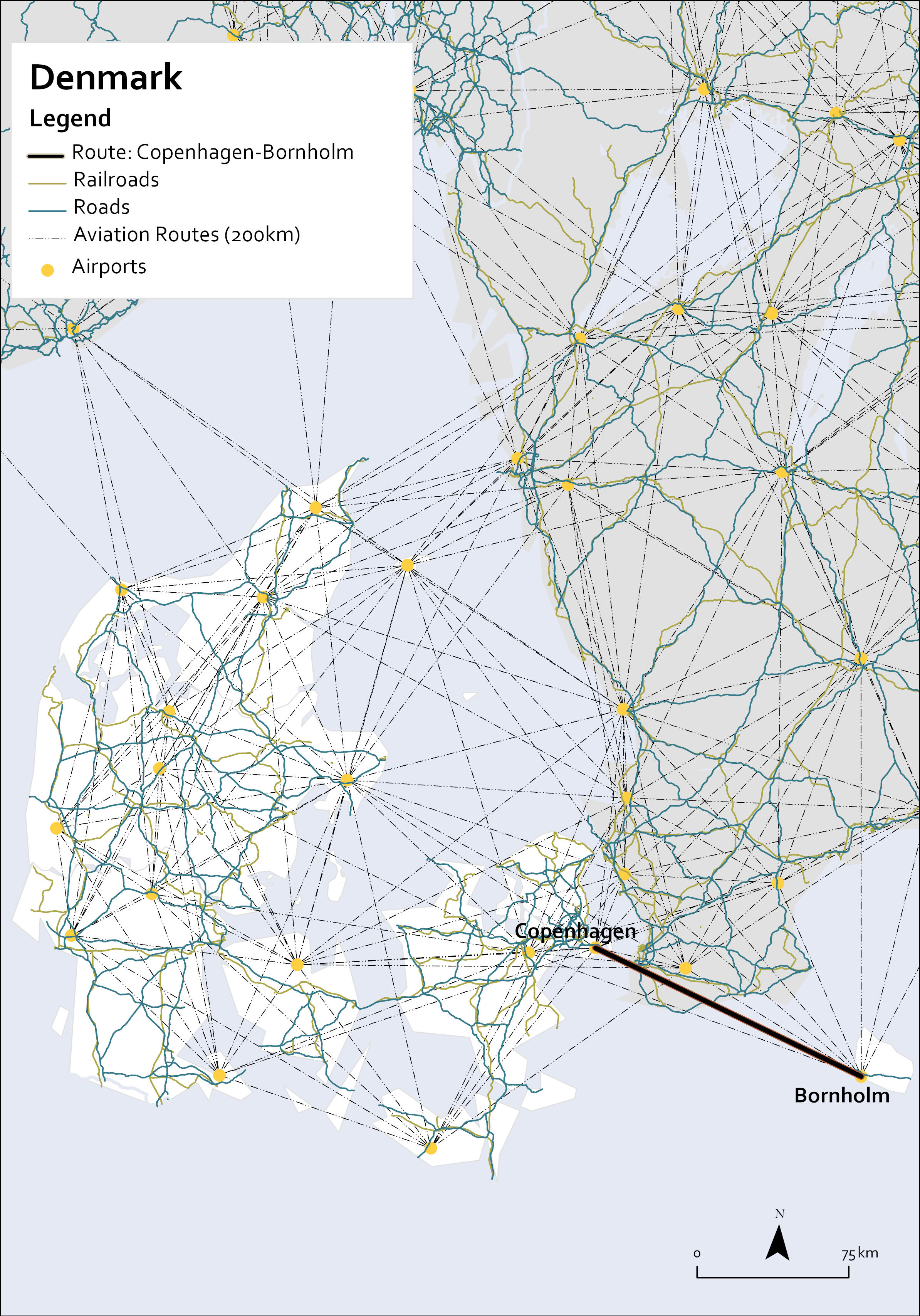
Figure 2: Danish route and regional transport infrastructure
Source: Nordregio
Source: Nordregio
Accessibility of care facilities, education, work and other public services
There is one hospital on Bornholm, situated in Rønne. Bornholm is considered one of five health clusters in the Capital Region of Copenhagen. As at 2022, the hospital had about 600 employees (Bornholms Hospital, 2022, 2023b). The hospital offers services including a maternity ward, an anaesthesiology department, a surgery department, an oncology section and a mental health unit (Bornholms Hospital, 2023a). If there is a lack of specialists or a patient cannot be treated at the local hospital for other reasons, patients are usually transferred to a specialist at a hospital in Copenhagen due to Bornholms Hospital’s administrative link to the Capital Region of Copenhagen. That requires a referral from a local doctor. The municipality pays for the patient’s transport if they are travelling to/from the nearest specialist, i.e. in Copenhagen, and have not opted to continue their treatment in one of the other Danish hospitals outside the Capital Region (Municipality of Bornholm, 2023b). Furthermore, travel expenses are only covered if the patient takes the cheapest travel option, namely the bus from Rønne to Copenhagen via the ferry to Ystad in Sweden, which takes over three hours. The municipality only covers the costs of other means of transport, i.e. flights, if the health condition of the patient does not allow for travel by bus (and ferry) (ibid).
Besides the hospital, in 2018, there were about twelve medical surgeries across the island as well as eleven dental practices (Tomiola, 2018). Access to healthcare facilities on the island is therefore relatively good. However, hospitals in Copenhagen offer a wider range of specialist care, so patient trips between Bornholm and the Danish capital are a regular occurrence. In 2021, there were about 40,000 single trips between Bornholm and Copenhagen, “often for just a brief medical consultation or check-up” (VOPD Project Consortium, 2021).
There are several educational facilities on the island of Bornholm. For children under the age of six, Bornholm offers 17 daycare facilities. Furthermore, the island is home to six primary schools, two special-needs schools and one lower secondary school (Municipality of Bornholm, 2023a). In addition, there are seven private schools and one upper secondary school (Business Centre Bornholm, 2023). There are also several institutions offering vocational and academic qualifications. For instance, the Copenhagen Business Academy, University College Copenhagen and Bornholm’s Health and Nursing School offer study programmes ranging from pedagogy and nursing through to finance (Bornholms Sundheds- og Sygeplejeskole, 2023; Copenhagen Business Academy, 2023; University College Copenhagen, 2023). The local municipality has worked in recent years on establishing more upper secondary educational programmes to retain young people and also attract young people to the island (Bogason, 2020).
Energy infrastructure
Bornholm’s “Energy Island” project was adopted by the Danish Parliament in early 2020 and is currently set not only to boost the sustainable energy supply of the island itself, but also of some of the Baltic Sea’s littoral states, including Denmark and Germany. It will further serve as a role model for other energy islands around the world (Energy Island Bornholm, 2023). Several windfarms south of Bornholm are planned to be put into operation by 2030, generating 2-3 GW of green energy (Energy Island Bornholm, 2023), which will then be delivered to a high-voltage station on Bornholm. The energy will be distributed on from there to Germany and Denmark. In spring 2023, the Danish and German transmission system operators (TSOs) concerned launched a market study for procurement of the necessary cable systems (Memija, 2023). Besides the TSOs, the Municipality of Bornholm plays an important role in the process, ensuring that the developments take place in consultation with the local population, as well as that the best interests of Bornholm’s inhabitants and local businesses are considered and jobs are created (Energy Island Bornholm, 2023). The project will further enable Bornholm to become a “green refuelling station” for ships and there are plans for the establishment of a “National Centre for Green Energy” on the island (Destination Bornholm ApS, 2022).
Ten-Year Scenario for Electric Aviation
The focus group discussion was conducted online via Teams in October 2023 and took around two hours. The scenario below has been developed based on the discussion with four respondents (one from Bornholm and three from elsewhere in Denmark). The recruitment process was less dynamic than expected due to the passiveness and lack of response from contacted suitable participants located in Bornholm. While it was intended for the highest number of participants to be from Bornholm, only one was available to take part in the study.
The participants included a management-level representative from Bornholm’s official travel guide “Destination Bornholm”, a researcher from DTU (Technical University of Denmark), a chief consultant from “Trafikstyrelsen” (Danish Civil Aviation and Railway Authority) and a business developer from “Erhvervshus Hovedstaden” (Business House Capital) who is also involved in “Blå Bornholm” (Blue Bornholm), an association that is working on improving the environmental condition of the Baltic Sea.
Key driving forces:
Political factors
The focus group named the “Bright Green Island” vision as a pivotal force that is set to shape the trajectory of electric aviation over the next decade. Since the vision is one of several levers that have encouraged Bornholm to become greener and more sustainable, the group was convinced that local support for the vision could generate positive incentives to implement electric aviation, thereby improving Bornholm’s transport connections. The group emphasised that such innovative goals signal political support for green solutions. While acknowledging the potential influence of that vision, participants underscored the need to pay attention to other equally significant factors. A closer examination of the vision revealed a commitment to fossil-free transport, which was deemed an even more significant driving force than the “Bright Green Island” vision.
Political will and commitment, along with the aspiration to transition to fossil-free transport, are considered likely to act as a driving force. However, it was stressed that electric aviation is not the only means by which emissions could be reduced. The participants referred to alternative fuels, such as Sustainable Aviation Fuel (SAF) or hydrogen, as being potentially more cost-effective and feasible options in the Danish context. Despite highlighting the diverse means by which sustainable aviation can be achieved, the group recognised strong political intent to implement eco-friendly flights and highlighted specific goals such as all domestic flights being green by 2030. Notably, there is already agreement on an electric aviation route between Læsø and Roskilde that is expected to be operational by 2028.
The scope of Bornholm's ambition extends beyond aviation, as articulated in the “Bright Green Island” vision. The goal is for all public transport to be sustainable and for electric cars and ride sharing solutions to be incentivised. However, the focus group identified ferries as a significant contender in that context. When discussing public transport in general, the participants expressed the view that it is ferry transport that largely needs to be improved, since it is the main source of pollution. It has been argued that the actual emissions per transported passenger are much higher by ferry than by conventional airplane. In addition, more people use the ferry than travel by airplane on this route. It was also thought that electric airplanes, unlike ferries, would not be able to carry heavy cargo. Such factors might deter decision-makers from supporting electrification of airplanes. It also explains why the focus group was hesitant to be fully positive with respect to the outlook for electric aviation.
The focus group remained cautious about exclusive support for electric aviation due to doubts about political backing. As mentioned, sustainable aviation can also be achieved using other fuel types – a point that was stressed several times during the discussion. The group backed up that argument by highlighting the challenge for decision-makers in supporting one company over another, solely based on the fuel type they utilize. This poses an issue as currently there is only one airline operating between the cities in question.
Economic factors
The imperative to attract a skilled workforce is as a key catalyst, given the current flow of people commuting between the regions for work-related reasons. Nevertheless, for electric aviation to have a significant impact, the flight schedules need to be drawn up very carefully to accommodate working hours. On the other hand, the focus group participants pointed out that Bornholm does not currently offer significant employment potential and electric aviation is not anticipated to generate a substantial increase in job prospects.
Linked to that, the drive to attract a younger demographic is a significant factor, as some groups of young people are more environmentally-aware and choose only sustainable travel options. Nevertheless, the ferry might still be more attractive to young people given that it is a cheaper option. Price is a crucial factor for young people, who are budget-conscious and typically place less importance on a shorter travel time. The group also stressed that electric aviation may not be a sufficient draw for young people, since the salaries and the housing market in Bornholm are currently unattractive. Other things being equal, other sustainable options would also be attractive to young people.
The focus group thought that the growing sustainable tourism sector is likely to continue expanding in Bornholm. As the island positions itself as a hub for sustainable tourism, efficient means of transporting visitors become crucial. Since electric aviation could facilitate that need, the growing popularity of sustainable tourism was identified as an important driver. For some participants, the prospect of trying out a new technology, such as an electric airplane, was deemed to be attractive in itself. The connection could be used by people visiting their summer house or wishing to explore the island. On the other hand, ferry services remain attractive to tourists desiring more flexibility, including the option to bring their own vehicles.
Social factors
Accessibility of healthcare was considered an important driving factor for the implementation of electric aviation, as the healthcare facilities on Bornholm are limited in comparison to Copenhagen. Currently around 20% of trips between Copenhagen and Bornholm are health-related according to one participant. When discussing conventional airplanes in particular, the group noted that there tend to be some five to six people onboard who are bound for Copenhagen due to an appointment at the hospital. If electric aviation could offer more competitive prices than the ferries, improved healthcare accessibility could be a noteworthy driver, since the state pays for the cheapest means of travel from Bornholm to Copenhagen when needed for an appointment at the hospital. In an emergency situation, the healthcare provider would have the patient transported by helicopter or airplane. The focus group reasoned that if the electric airplanes were small enough (like a helicopter), they could land directly at the hospital. In addition to better healthcare coverage, outmigration might also fall owing to the snowball effect.
Accessibility of education was not seen as a major driver, since educational possibilities are limited in Bornholm, meaning that any efforts to attract students to the island would not bear fruit. Conversely, the focus group considered it unlikely that students would fly often to Copenhagen to attend courses given that the ticket prices are expected to be too high for students. Students tend to prefer to live in a college environment and are therefore more likely to move from Bornholm to Copenhagen to study and live. Given that there are already connections between Bornholm and Copenhagen, electric aviation would not offer enhanced access to education.
Technological factors
As was noted during the discussions, the evolving green energy hub is an important driving force given that the prerequisite for electric aviation is for the airplanes to be charged using green, renewable electricity. The green energy hub could facilitate that, providing that the necessary infrastructure is in place. The group was convinced that the energy produced on the island would be more than enough to charge the airplanes and provide enough electricity for further export. Another compelling factor to consider with respect to advancement of the green energy hub in Bornholm is the potential synergy with the emerging field of electric aviation, further enhancing the overall impact of sustainable development.
More flexibility in aviation was identified as an additional driving force. Since the electric airplanes are expected to be smaller than conventional airplanes, there could be more possibilities to land at airports of a different size. One participant cited the example of the waterplane, which operates between Aarhus and Copenhagen. If that plane were to run on electric fuel, not only would it be able to land on water or at small airports, but it could also minimise travel times, since the airport in Aarhus is situated fairly far outside the city. The already planned electric route for 2028 between Roskilde and Læsø that was mentioned above shows that Bornholm and Copenhagen are far from being the only possible routes that electric airplanes could operate on.
Environmental factors
Protection of local flora and fauna was considered a double-edged driving force since the impact of that factor is not clear-cut with regard to electric aviation. The lack of CO2 emissions and expected lower noise pollution during operation of the electric airplanes would clearly benefit the natural environment. However, the group questioned to what extent development of the battery might pollute the natural environment. While estimates were unknown during the focus group discussion, the participants were not optimistic in that regard. Another issue raised was the question of battery disposal after use. Due to such uncertainties, the participants questioned whether SAF would leave a smaller footprint then the electric alternative.
Legal factors
There was consensus in the focus group that the relevant rules and regulations for electric aviation will be in place in due time. However, safety and reliability take priority, so even though electric aircrafts are mostly in the test phase at the time of writing, the participants did not expect that to contribute as a negative driver. Trust in electric aircraft is difficult to predict. Nevertheless, failed tests can have ambiguous consequences for the development and perception of such types of new technologies.
Concluding reflections
When considering the possible electric route between Bornholm and Copenhagen, the focus group remained sceptical about the discussed drivers and applicability. One of the major doubts voiced throughout the discussion concerned the price of tickets for flights served by electric airplane. Since the route is currently served not only by conventional airplanes, but also by ferries, which are significantly cheaper, the focus group was uncertain as to whether the electric airplanes would be used extensively and whether there would therefore be sufficient incentives to commit to development of the routes. In connection to the previous point, the group was also doubtful about whether the airplanes would necessarily be electric. It was underlined that there are other types of fuels that would likewise be sustainable or easier to implement, so evaluating political commitment was equally difficult.
On the other hand, there was full agreement concerning the necessity and possibility of finding a sustainable flight solution. Bornholm, which is moving rapidly towards a sustainable future thanks to local support and tangible steps – such as development of the green energy island – is undoubtedly in need of a sustainable approach. However, whether that will involve electric aircraft or other options remains to be seen. Implementation of electric aviation along that route could make the island an even more attractive tourist destination. Furthermore, it has the potential to improve healthcare access for local residents. Overall, the focus group suggested the need for further evaluation and for more details to be addressed prior to implementation of such a route.