Sweden. Skellefteå – Oulu
Skellefteå – Oulu | |
Distance between the airports | 215 km |
Travel time by electric airplane | approx. 43 min |
Table 4: Distance and travel time between the airports.
The northern regions of Sweden and Finland are currently undergoing a significant transformation, marked by substantial investments in green industries. Those regions, known for their vast territories, sparse populations, substantial industrial projects and workforce shortages, are experiencing a surge in activity. This presents both opportunities and challenges. Consequently, there is increased need for improved accessibility for companies, workers and residents, as well as well-established transport infrastructure to address that growing demand (Lapland Chamber of Commerce, 2023). Previous research has highlighted the increased need for and interest in electric aviation routes between the northern parts of Sweden and Finland. There are already cross-border collaborations, but as demand is expected to increase, more routes and transport options are needed. Electric aviation has been highlighted as a suitable transport mode for increasing access between the regions (Lundberg, 2022).
This case study explores a cross-border route between the northern parts of Sweden and Finland, namely the Skellefteå-Oulu route. That route would have a travel time of approximately 43 minutes by electric aircraft. In Sweden, several initiatives have been launched focusing on electric aviation (Ydersbond et al., 2020) and in Skellefteå work on testing and implementing electric aviation is already underway (Löfving et al., 2023). The case study will primarily focus on Sweden and the impact of electric aviation on regional development in Skellefteå, but Oulu will also be explored. Transport, infrastructure, administrative links and policies between the two locations will be taken into consideration and addressed when studying the route. Skellefteå and Oulu are separated by the Gulf of Bothnia. That gulf itself serves as a natural boundary between the two countries, with Sweden to the west and Finland to the east. There is no direct air travel route between Skellefteå and Oulu at the time of writing and there are few links connecting Skellefteå to the bordering side of Finland. Yet there is a desire to connect those two locations and increase cross-border connections for the purpose of regional development (Ericson, 2019), making it interesting to study such an electric aviation route more closely.
Regional context
Geography and demography
Skellefteå is a city and municipality in Västerbotten County, located on the east coast in northern Sweden. With a total area of around 9,944 km², Skellefteå municipality is the eighth largest municipality in Sweden in terms of area (SCB, 2023c). Between 1995 and 2015, the population trend was negative but then reversed and the population has been increasing in the 2020s. As at the end of 2022, Skellefteå had a population of 74,402 people (SCB, 2023a). Currently, a large green industrial transition is underway in parts of northern Sweden, with Skellefteå playing an important part in that. There is a need for the municipality to grow, especially in terms of new workers for the relevant industries (Skellefteå, 2022b; Skellefteå Works, n.d.). In Skellefteå, 81.5 percent of people live in urban areas and 18.5 percent of people live outside urban areas. Furthermore, 83.8 percent of people aged 20-64 are in employment, which exceeds the national average of 79.6 percent (SCB, 2023b). The unemployment rate in Skellefteå was 4.5 percent in 2022, which is among the lowest rates in Sweden and lower than the national average of 7.2 percent (Öhlund, 2022). Among the counties, the shortage of relevant skills is most pronounced in Västerbotten. As Västerbotten is also the county with the lowest level of unemployment, it is emphasising the need for inward migration to alleviate the shortage in the county (Arbetsförmedlingen, 2023).
Oulu is a town and municipality in the Northern Ostrobothnia region and is considered to be the centre of northern Finland. Oulu has total area of 3,880 km², with a population of about 212,000 people in the city of Oulu in 2023, making it the fifth most populous city in the country. Oulu is unilingually Finnish and is located beside the Gulf of Bothnia, approximately 600 kilometres north of the capital Helsinki (Info Finland, 2023b). Oulu has a balanced gender distribution and a fairly young population with the largest age group being that of 20-29-year-olds (about 35,000 people). Oulu has a labour force of 102,841 people, with an unemployment rate of 11.8% (Business Oulu, 2022).
Regional economy
Skellefteå is an industrial municipality, whose major industries are mining, wood, metals and minerals, battery production and green energy production. In 2017, it was announced that the company Northvolt had chosen Skellefteå as the location for its planned battery factory. Northvolt is estimated to need a workforce of some 2,500-3,000 people. The expansion means that more people will be needed in the public and service sectors as well – including education and healthcare – and the development will give a boost to shops, restaurants, hotels, transport companies, construction work etc. That requires increased commuting from the local area and migration both nationally and internationally (Skellefteå, 2021). Skellefteå's economy is based on a large private sector and industry accounts for a large share of the labour market in Skellefteå (Skellefteå, 2019, 2022c).
Oulu is known as a city of technology and a major hub in the field of high technology, specifically in IT and wellness technology and for telecommunications companies. Oulu is the leader in the IT/business sector in Finland and a frontrunner in the new technology and innovation sectors. Oulu is also making strides in the field of renewable energy and is involved in research and development related to sustainable energy sources, including wind energy and bioenergy. Oulu is also home to traditional industries, such as steel, paper and wood refining (Business Oulu, 2022; Oulu, n.d.).
Transport infrastructure
With a port, airport and bus stations, there are several transport options in Skellefteå. However, Skellefteå is the largest city in Sweden without passenger rail services. There is no direct train to Skellefteå. Passengers taking the train must currently change to a bus in a neighbouring municipality. However, there is a project focused on expanding the railway network in northern Sweden. The North Bothnia Line (Norrbotniabanan), a new railway between Umeå and Luleå (running through Skellefteå), will connect the cities along the coast of northern Sweden, enabling faster, safer and more environmentally-friendly travel and transport. Work on the North Bothnia Line is ongoing but is delayed, with the last segment of the route expected to be completed by 2030 (Trafikverket, 2022).
The Skellefteå region is in a phase of expansion, involving numerous investment projects and a strong need for good connections, including an expansion in both domestic and international air traffic (Skellefteå, n.d.). Skellefteå Airport is Västerbotten's second largest airport and is strategically located between Luleå and Umeå. The airport is owned by Skellefteå municipality and has about 300,000 passengers per year (Skellefteå Airport, n.d.). Skellefteå's location between Luleå and Umeå (i.e. between two of Norrland’s largest cities) both helps and hinders the airport. The passenger base for flights to destinations that can be flown to from both Luleå and Umeå – in particular Stockholm – is shrinking. That is because the airports in Umeå and Luleå often offer a better flight schedule with more airlines and thus more flights. However, with competitive prices and better timetables, Skellefteå Airport can capture a much larger passenger market that extends geographically from Luleå to Umeå (Ericson, 2018).
Routes served to and from Skellefteå Airport include both international and national ones. There is a wish to improve connections to Finland and especially to the area on the other side of the Baltic Sea from Skellefteå. See Figure 4 for an overview of the transport infrastructure in the selected Swedish and Finnish regions. In 2018, the business community in Skellefteå was already working to try to establish both a passenger and freight route to Finland. The plans were not carried out at the time, but an air traffic route from Skellefteå to Finland is part of the vision for Skellefteå’s business community (Ericson, 2019). Northvolt’s battery production in Skellefteå, for example, will create the need for both Finnish supply of materials and workforce in the near future (Lundberg, 2022). The FAIR programme investigated current air traffic patterns and connections in the northern parts of Sweden, Finland and Norway (Smedberg et al., 2022). Currently, the most common travel mode between the two destinations is by car, with an approximate road distance of 382 km, taking just under 4.5 hours (Rome2Rio, n.d.).
Oulu serves as a regional transport hub with several means of transport. The railway station is one of the busiest in Finland with railway connections to destinations throughout Finland. Several regional and long-distance buses operate and all main roads/highways meet in Oulu (Info Finland, 2023b). Oulu Airport is an international airport and the second busiest airport in Finland. In 2022, around 630,000 passengers passed through the airport (Degerman, 2023a). The airport is especially important for businesses purposes, as Oulu serves as a city of technology and university city (Finavia, 2023). There is a great demand for accessibility for companies, employees and residents and a functioning electric flight network can help meet some of that demand. Investments in cross-border flight routes could promote the movement of people and investments between the two regions (Lapland Chamber of Commerce, 2023).
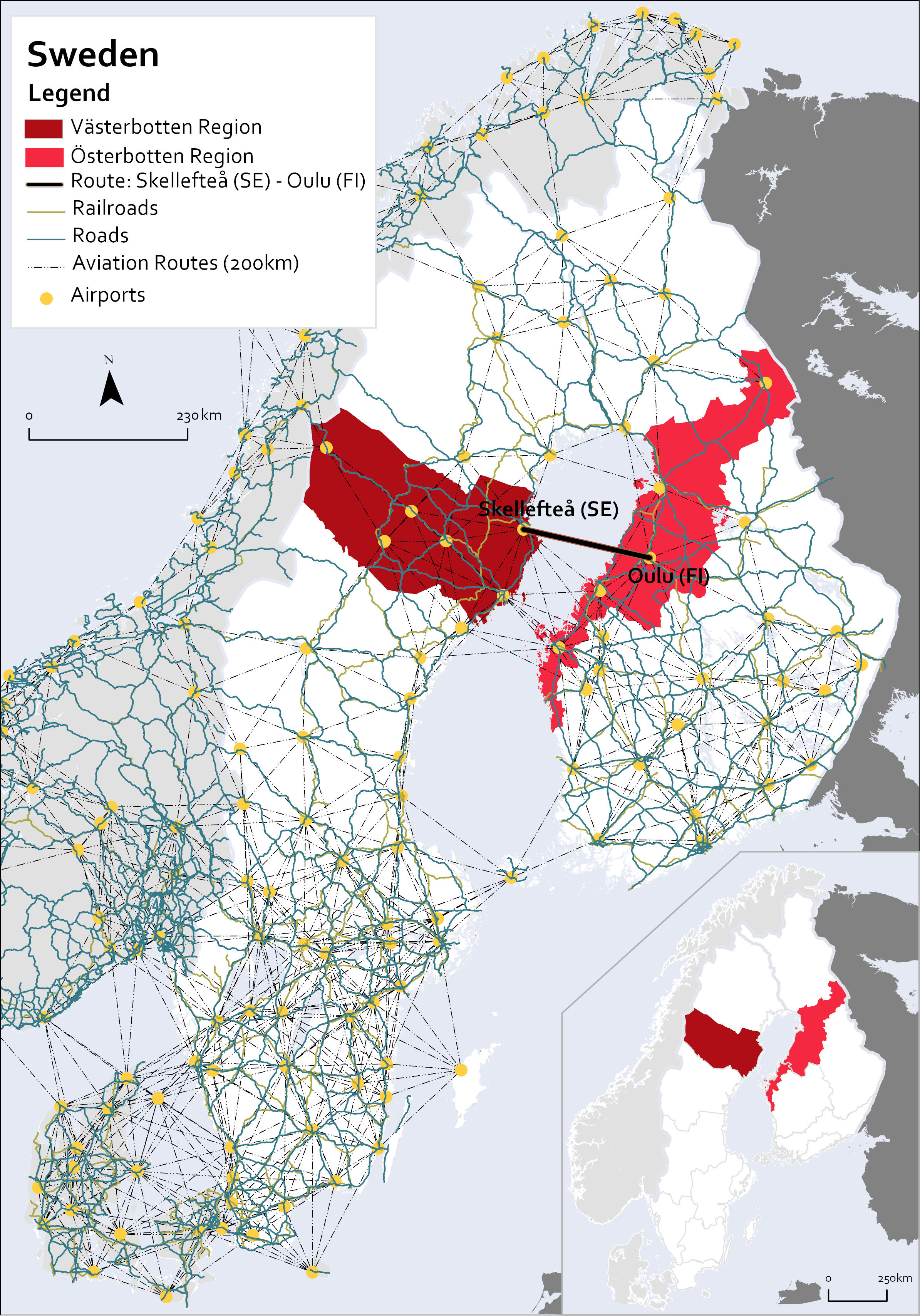
Figure 4: Swedish route and regional transport infrastructure
Source: Nordregio
Source: Nordregio
Accessibility of care facilities, education, work and other public services
Skellefteå faces challenges related to accessibility of public services, an issue that is expected to become more pressing as the population grows. Skellefteå is a vast municipality with major infrastructure needs. The low population density makes access to public services difficult for some of the population living outside central hubs (Skellefteå, 2022a). With more people, the need for health, social and elderly care will also increase (Skellefteå, 2022c). There is one hospital in Skellefteå, “Skellefteå Lasarett”, which is one of Västerbotten county's three emergency hospitals (Region Västerbotten, 2022). The level of education in Skellefteå is low compared to the rest of Sweden. Skellefteå is not home to a university, but Campus Skellefteå offers educational resources from Luleå University of Technology and Umeå University (Skellefteå, 2023).
Oulu offers a diverse range of education, from early basic education to university level. The higher education sector is strong given the presence of the University of Oulu and the Oulu University of Applied Sciences. (Oulu, n.d.). Oulu belongs to the health and welfare region of North Ostrobothnia (Pohde) and offers basic and high-tech healthcare opportunities. There are health centres throughout Oulu and Oulu University hospital is an innovative hospital focused on research and development (Info Finland, 2023a).
Regional policies and initiatives relevant to electric aviation
Over the past years, Skellefteå has drawn up new regional policies and strategies and launched initiatives aimed at making the municipality grow. Those strategies also cover sustainable transport, noting that Skellefteå will be a proactive hub for sustainable air traffic, an innovative leader in sustainable air traffic and a test bed for the aviation of the future (Skellefteå, 2022a). Skellefteå, together with Skellefteå Airport, has several ongoing initiatives for sustainable aircraft. One development is establishment of the “Green Flight Academy” at Skellefteå Airport, which began operating in 2022. It is a flight school initiative that will develop a climate-smart educational platform, with a large part of the training using electric aircraft charged with green electricity (Ericson, 2021a).
An initiative was launched in 2020 to make Skellefteå Airport capable of accommodating electric airplanes. Skellefteå Airport and Skellefteå Kraft (the local energy company) are responsible for the initiative, which is aimed at Skellefteå becoming a test bed for electric aviation and taking the first steps towards commercial electric aviation. That includes test activities such as take-off, landing and charging in a realistic context (Ericson, 2020, 2021b). In 2020, an investment was made to enable the charging of electric airplanes at Skellefteå Airport and in 2021 the charging structure was in place. The charging station enables 1 MW of available power for electric aviation, which is enough to fast-charge several small electric airplanes simultaneously. Part of the development of the charging structure stems from the ELIS (Elektrifierad Luftfart i Skellefteå) development scheme, which aims to accelerate the commercialisation of electric aviation. ELIS is a collaboration between Skellefteå Airport, Skellefteå Kraft, Northvolt, Skellefteå Science City and EIT InnoEnergy. Skellefteå was seen as an optimal site for the initiative, as the region has a) an airport with available space b) Skellefteå Kraft, which is engaged in research into and production of renewable electricity, development and production of renewable electricity c) Northvolt with access to battery development and solutions for energy storage and d) climate-smart flight training through the Green Flight Academy (Skellefteå Airport, 2021).
One key theme in Northern Ostrobothnia’s climate roadmap 2021-2030 “Towards a carbon neutral Northern Ostrobothnia” is low-emission transport. Strategies to strengthen the shift to low-emission means of transport and renewable fuels are underway (Pohjois-Pohjanmaa, 2021). Oulu Airport forms part of the Finavia airport network. Finavia has several policies and initiatives for sustainable air traffic, with the overall aim being for all of Finavia’s carbon-neutral airports to reach net zero emissions in 2025. Finavia is a member of the Network for Electric Aviation (NEA) in the Nordic region and is involved in funding of the first electric aircraft in Finland (Finavia, 2022). Furthermore, the University of Oulu is also involved in research on innovation in aviation and electric and hydrogen-powered aircraft. The initiative called ALBATROS is an EU-funded research project by Horizon Europe that aims to develop a dependable model to assess and mitigate potential hazards to aviation. One section of the research focuses on the risks related to electric and hybrid-powered aviation, studying side effects on safety and survivability, as well as new airport energy systems (University of Oulu, 2023).
Energy infrastructure
In northern Sweden, the electric grid is extensive, with a high stability and consumption coverage rate and high power adequacy (Nordic Energy Research, 2023). Skellefteå Kraft is one Sweden’s five largest electricity producers, producing wind and hydro power, heat and bioenergy. Its operations span large-scale power generation, electricity networks, charging infrastructure, district heating, broadband and solar energy. Recently, the Blaiken wind farm was inaugurated, whose 99 wind turbines will make it one of the largest wind farms in Europe. The goal is for its own energy production to be 100% sustainable and there is also interest in energy storage and investments in charging infrastructure (Skellefteå Kraft, n.d.). Skellefteå Airport is located close to one of the transmission projects under “Fossilfritt övre Norrland” (FÖN), an investment programme implemented by Svenska Kraftnät. The FÖN project works to develop power grids to electrify industries in northern Sweden. With proximity to one of the transmission projects, it extends the 400 kV transmission grid (Nordic Energy Research, 2023; Svenska Kraftnät, 2022).
In general, Finland has a strong main electric grid. Northern Ostrobothnia is a region of renewable and low-emission energy and is engaged in the development of new energy sources (Nordic Energy Research, 2023). In fact, Northern Ostrobothnia is Finland’s leading wind power producer, producing approximately 40% of the country’s total wind power (Pohjois-Pohjanmaa, 2021). Oulu has surplus power production and a high share of wind power production due to the establishment of several wind parks. Wind farms throughout Oulu harness wind power for electricity generation. Solar energy adoption has also been increasing in Oulu but is not seen as important due to the rather low share of sunlight in given periods (Fingrid, 2022). The University of Oulu also focuses on research and innovation in the field of renewable energy technologies and solutions (University of Oulu, n.d.).
Ten-year scenario for electric aviation
The focus group
The focus group discussion was conducted online in September 2023 via Teams. The session lasted approximately 90 minutes and six participants attended. The focus group was mainly composed of regional experts from Skellefteå, representing both the perspectives of the local electric aviation projects and of local business and social development. Skellefteå has several initiatives focusing on electric aviation, so those experts provided knowledge of driving forces and barriers to future implementation. The stakeholders in the field of municipal development provided input on the potential impacts and effects electric aviation could have. Input from the perspective of Oulu was provided by this project’s Finnish focus group.
Key driving forces for implementing electric aviation on the Skellefteå-Oulu route
Political and environmental factors
Political factors and environmental factors were often discussed together and were viewed as interlinking factors due to EU, national and regional climate goals of lowering emissions. Environmental reasons and the lowering of emissions were highlighted as the starting point for electric aviation being attractive and needed in the first place. In other words, climate goals – which are also political – are perceived as a vital driver for electric aviation. Both Skellefteå and Oulu have good access to green electricity in their respective regions, which is also an important environmental factor. It was noted that it is important to take into account the fact that there is no existing route between Skellefteå and Oulu when evaluating environmental aspects. The electric aviation route would establish a new, low-emission transport mode rather than replacing a higher-emission one.
The group agreed that political commitment is a key aspect with regard to future implementation of electric aviation. The view taken was that market forces alone are not sufficient, meaning that strong incentives are needed. There is currently strong political support in Skellefteå for electric aviation and the group expected that commitment to remain robust. However, the high political ambition at the municipality level may not accord with the political ambition at the national level. It was noted that strong political ambition at the national level is important to create strong incentives for future implementation. It was considered important to note that this is one of several transport modes and other transport modes also need attention and development efforts.
There is political and commercial will to connect Skellefteå with northern Finland, but it was mentioned that cities other than Oulu could be more suitable. The connection to Finland was deemed important, but not to Oulu specifically, and the group reflected that it could be more useful to establish electric aviation routes to connect with smaller regions/destinations within Sweden instead.
The Swedish-Finnish cross-border route scenario brought with it some concerns, as different political factors are in place in the two countries, which could complicate the implementation of electric aviation. The political situation, driving forces, will and ambitions may differ between Skellefteå and Oulu and during a ten-year time frame the two countries may choose to approach electric aviation differently.
Economic factors
Under economic factors, the focus group’s discussions centred on economic incentives, demand for labour and skills, business opportunities and reputation. Just as with political commitment, economic incentives were deemed to be highly relevant to the future implementation of electric aviation. Economic incentives from the government were seen as important to incentivise implementation, as the market will be uncertain during the initial years. Electric aviation will need large initial investments and it unsure when there will be a return on investment, with the possibility of economic losses in the initial phase.
Skellefteå needs to attract both skilled and unskilled workers for industrial investments and the related societal developments. The group noted that the relevance of this factor to electric aviation is fairly low. It was not seen as a key driving force for electric aviation as it was thought that electric aviation would be implemented regardless. Having a new transport route, with regular flights and reasonable prices, is an attractive factor for workers, who might be able to commute more readily and frequently. Yet some challenges were mentioned concerning the route. One concerned the language barrier, with Skellefteå being unilingually Swedish and Oulu being unilingually Finnish. In Skellefteå, it is beneficial to speak Swedish for numerous jobs in the public sector, such as in healthcare, care for the elderly and kindergartens. Oulu is unilingually Finnish speaking, meaning that it would be difficult to “solve” the issue of labour shortages by using Finnish labour in workplaces where Swedish is the working language rather than English and vice-versa. The group was of the view that an electric aviation transport route within northern Sweden would probably have a larger effect on the labour demand issue.
The group perceived more opportunities in the case of labour supply to industries where English may be the working language. Oulu is a university city with several businesses in the tech, energy and battery sectors, with a high-skilled labour force that could be attractive to the industries in Skellefteå. From the perspective of Oulu, the Finnish focus group noted that while a connection between Oulu-Skellefteå could naturally pose a potential threat to the Oulu region due to high-skilled workers leaving for Skellefteå, it was still smarter to think about development and cooperation in a wider context and more beneficial to focus on how a wider region may benefit than on individual cities. The group also noted that it is unlikely that the first aircraft will carry cargo as well, meaning that cargo will still need to be carried by land.
Furthermore, the group expressed the view that electric aviation could open up new business connections by enabling face-to-face meetings, with the potential to link to businesses in Oulu. However, that was not identified as a driving force for the future implementation of electric aviation, but rather as a positive outcome of it. Cooperation is facilitated by more efficient means of transport. Regional businesses and green industry projects could benefit from an electric aviation route as it would enable meetings between clients and other potential stakeholders, such as industry experts or researchers. The smaller size of the aircraft would be sufficient for that purpose. However, whether there are enough passenger demand to support the route was a concern raised by the focus group. From Oulu’s perspective (contributed by the Finnish focus group), it was noted that the Finnish market for air taxis is small and it is uncertain whether there would be enough regular passengers between Oulu and Skellefteå. Hence, the route should be researched and marketed carefully.
Social factors
Social factors included the social acceptance of electric aviation, and the role electric aviation could play in accessibility of services, as well as geographical distances and alternative transport modes. In a scenario where electric aviation is a common transport mode, social acceptance and trust are key. Social acceptance was seen as a factor that will not affect the future implementation of electric aviation, but rather as a factor affecting the future utilisation of it. Passengers need to trust the solution and electric aircraft need to be seen as a travel mode that is “safe enough”. If most of the population are sceptical, who will fly? Electric aviation needs a period for it to become established, i.e. to be promoted and for trust to be built in it as a safe alternative. It was mentioned that Skellefteå is already working on that issue and has strategies in place to promote and advertise electric aviation and to inform the public about its use and safety. Furthermore, it was noted that most people already understand the benefits of electric aviation, but changing habits and establishing trust takes time, which is why Skellefteå is already making efforts geared towards the future commercialisation of electric aircraft.
In addition, it was noted that the population of Skellefteå and northern Sweden in general are to a large extent used to relying on cars and the “freedom” of transport associated with driving, which could also affect the utilisation of electric aviation. There is a habit of taking the car; the choice between flying and driving depends on the reason for the trip and whether the traveller needs a car at the destination they are traveling to. If electric aviation provides for reduced travel times, cheaper tickets, a good flight schedule with frequent and attractive flights and an easy boarding process (seamless and fast check-in, security screening etc.), then flying could be an attractive choice for the population in the future.
From Oulu’s perspective, it was noted that the Oulu-Skellefteå route had largely not been discussed, as the two places were generally perceived as being too far apart. However, electric aviation could change that perception and perhaps open up new connections. Utilising electric aviation for routes across water, such as the Gulf of Bothnia, is currently seen as the most sensible use for it. However, train connections are viewed as more important in several transport plans in the area. In general, Oulu viewed the whole Swedish coast as having considerable potential for new routes and Skellefteå as being an interesting possibility, but perceived Luleå as a more logical point of contact as it is a more active transport node with more routes onto other destinations from there.
Regarding the accessibility of services, the group deemed that this factor was not likely to be a driving force for electric aviation. Furthermore, discussions centred on the point that the cross-border route would not be likely to provide benefits in this regard, since patients needing access to medical care would tend to be flown to a hospital within the country rather than to another country.
Technological and legal factors
Under technological factors, the group noted that Skellefteå strives to be and has already begun working on becoming a test bed for electric aviation. That was not seen as a driving force per se, but the infrastructure, technology and initiatives already in place serve as enabling factors for the future implementation of electric aviation.
Technological factors were described as seldom being driving forces but it was noted that they may be vital prolonging forces. Regarding electric aircraft, the focus is on developing and continuing to improve the battery technology. While it is improving, energy density remains a limiting factor for electric aircraft. Furthermore, the right kind of infrastructure at airports is needed. The necessary infrastructure for electric aviation is already present or under construction in Skellefteå. The airport infrastructure, namely the runway and the charging grid, has been updated. Skellefteå is in a phase in which action and practical testing are more necessary and valuable than further research. It is not sufficient for one airport to have all the technological factors in place, i.e. the charging grid, infrastructure, runway, routines etc.; the issue is that the destination airport also needs to have adequate technological factors and infrastructure in place. That is true whether the route is cross-border or domestic, but different countries may have different regulations and ambitions regarding electric aviation. It is therefore not possible to expand faster than the infrastructure available to support electric aircraft. There are still some technical issues to be resolved and tested, such as finding a solution to how to remove ice on the aircraft wings during flights – a problem that has been solved for fossil-fuel aircraft – and more knowledge of the impact of ice and snow on electric aircraft is needed.
It was mentioned that Skellefteå, with its geographical location, harsh winters, considerable snow and low temperatures, is a good location for a test bed for electric aviation. Electric aircraft may be more vulnerable to certain weather conditions, such as extreme cold, which may affect battery performance. Testing electric aircraft under perfect weather and climate conditions can only provide limited input into electric aviation operations. Instead, testing electric aircraft under the “worst” conditions can provide much more input for future work on developing electric aircraft. A cold climate has an impact on batteries, so the cold weather in the Nordic region makes it an optimal place to pioneer electric aviation technology. Developing and testing electric aircraft there and ensuring that the technology works in those weather conditions will make it easier to export it elsewhere.
Under technological factors, legal aspects also arose during the discussion. Legislation, regulations and certification processes for new technologies were not discussed as a driving force per se but as having the potential to be both enabling and prolonging factors. For electric aircraft to operate commercially, they must be deemed highly safe and the institutions/authorities in charge need to be able to guarantee that. Certification may thus be strict, as certifying electric aircraft for commercial use on international routes requires comprehensive testing and validation to ensure safety and reliability. Air safety regulations, legislation and certification processes are decided at a high level (EU or national government) rather than by the local level on its own. Accordingly, these are key factors that will affect the future implementation of electric aviation. During the ten-year scenario, there will be a need for authorisations and legislative factors that promote electric aviation, rather than prevent it, while all safety regulations are upheld and guaranteed.
Concluding reflections
There is strong support for electric aviation in Skellefteå and several projects have been launched with the aim of establishing Skellefteå as a testbed for the future implementation and utilisation of electric aviation. Yet for electric aviation to become reality and used commercially within the next ten years, several enabling factors need to be enhanced and other inhibiting factors need to be addressed. During work on the case study, several key elements to consider in a ten-year scenario implementation arose. Electric aviation can be considered a positive opportunity that can be used to increase accessibility, both for people and businesses, and that can offer an environmentally-friendly and efficient mode of travel that overcomes mountains and seas. However, it is important to understand that political commitment and issues of regulations and financing are important preconditions for early implementation that need to be considered closely.
A route over water, connecting the northern parts of Sweden and Finland, was viewed as attractive in the future. The question of the most beneficial cross-border route needs to be researched closely and the market needs to be studied. However, cross-border routes in the initial phase of electric aviation present certain specific challenges due to the evolving nature of electric aircraft technology and the complex regulatory and logistical issues associated with international air travel. Electric aircraft require airports that have been upgraded, with infrastructure suitable to the new type of aircraft. Establishing a reliable and standardised charging infrastructure network for electric aircraft at airports on both sides of the border is vital. However, there are no guarantees that the two countries will choose to approach electric aviation in the same way or in the same time frame and the level of ambition may vary.
Creation of an electric aviation network hub in northern Sweden was seen as beneficial to regional development. In the initial phase, electric aviation is suitable for shorter flights and the aircraft have a limited amount of passenger seats. Establishing a route connecting airports in northern Sweden within the range limitations can connect smaller/rural settlements with the larger cities in the north. Implementation of electric aviation could have positive impacts especially on cooperation and accessibility within the region of northern Sweden. All airports still need to have the necessary infrastructural upgrades, but the point was raised that it might be easier to streamline such work in the context of a domestic route, rather than a cross-border one.