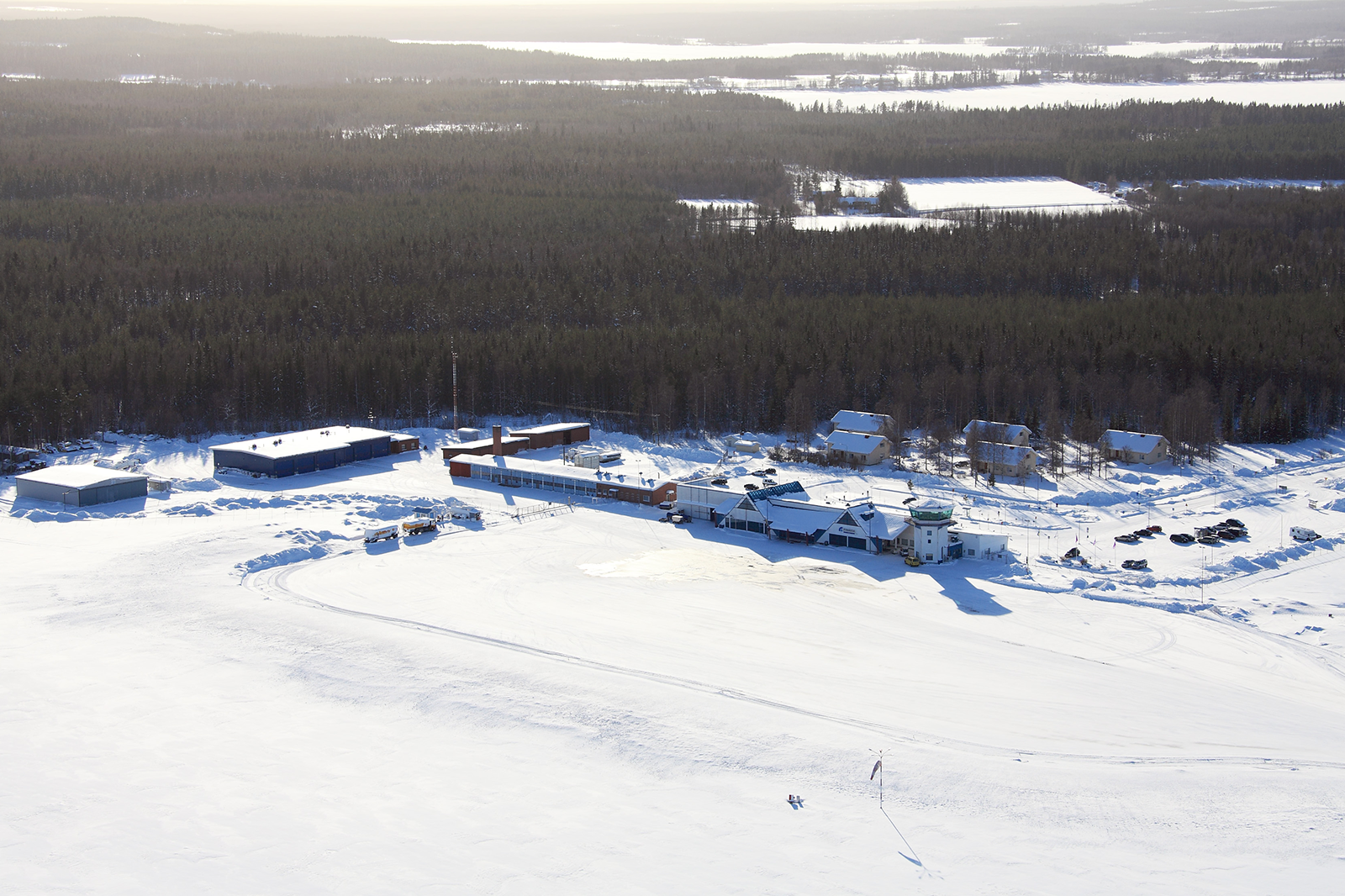
Aerial photo of Kajaani Airport i Finland.
Photo: Finavia
Photo: Finavia
5. Nordic Learnings for Electric Aviation and Concluding Remarks
The move towards electric aviation marks a significant shift in the trajectory of air travel, promising a more environmentally-friendly way to fly. In the Nordic region – which is known for its commitment to protecting the environment and embracing new technologies – challenges and open questions, as well as multiple ways of overcoming the challenges in question, have to be considered for the future implementation of electric aviation.
Key challenges and open questions for the implementation of electric aviation
Need for continuous technological advancement. This is perhaps the most tangible of the emerging barriers. Challenges like defrosting electric aircraft and maintaining a constant weight throughout flights remain unresolved.
Establishment of new regional connections. As efforts are made to address the technological challenges hindering electric aviation, it is crucial to consider various modes of transport when establishing new connections between regions. That is particularly relevant to cargo transport, where factors like weight and size may continue to favour lorries or ferries over air transport.
Airport infrastructure upgrades. As the Nordic countries head towards the transition to electric aviation, upgrading airport infrastructure is identified as a common imperative. Despite varying developmental phases, the Swedish region explored in the report seems to be leading the way, highlighting the need for improvements at airports, including facilities and services that cater to the specific needs of electric airplanes.
Strength of regulations and social trust. Anticipated scepticism during the initial phase of introduction of the new technology calls for a solid foundation of regulations and public confidence for seamless operations. The social acceptance of electric airplanes is found to be a critical factor influencing their popularity. Stakeholders must grapple with questions of trust among commuters, addressing these concerns as prerequisites for the successful integration of electric airplanes into the Nordic region's transport system.
Incentives and affordability. Other unanswered questions and challenges that require attention include the pivotal issue of incentives. That is driven by decision-makers' commitment to electric aviation and influenced by migration trends, market dynamics and geographical boundaries. Moreover, the practical matter of ticket prices raises questions about affordability and accessibility for different demographics, further underscoring the need for careful consideration. As showcased by the Danish route Copenhagen-Bornholm, existing transport solutions, even if more polluting, might still appear more viable, as considerably cheaper.
Looking ahead
The analysis developed in this report has shown that for electric aviation to overcome the above-mentioned barriers and be at the forefront of the Nordic transport landscape, a multifaceted approach is essential, requiring strong support from both local and national governing bodies.
Key regulatory frameworks centred around taxation and incentives play a pivotal role, shaping the trajectory of the future electric aviation industry. In this situation, where it appears crucial to identify strong actors to take a clear initiative on the issue, pioneering regions as well as the national states or private actors could make a difference. Regions, being familiar with their own characteristics and specific needs, are well-advised to adopt a proactive stance towards this emerging development. It is in their best interest to advocate for routes that are most compatible with the requirements and opportunities presented by this new mode of transport. In this respect, the case study routes chosen for this report seem to support the findings from the Accessibility study for electric aviation (Lundberg, 2022). Indeed, the routes crossing geographical obstacles and bodies of water appear to be the most competitive during the very early stages of introduction of electric aviation. They would provide the type of a novel benefit – especially related to increased geographical accessibility, emission reduction and time saving – that could justify the heavy initial investments.
Moreover, exploring alternative sustainable fuels, such as hydrogen or sustainable aviation fuel (SAF), adds another layer to the discussion. Those options indeed present potential advantages in terms of sustainability, cost-effectiveness and ease of implementation compared to fully electric solutions.
The Nordic countries exhibit varying attitudes towards the future of electric aviation. While Norway and Iceland embrace electric aircraft optimistically, Sweden is moderately positive and Denmark and Finland are taking a cautious stance. Despite those differences, electric aviation was found to be a significant opportunity to forge new synergies for regional cooperation, fostering sustainability in the field of travel and potentially elevating regional collaboration and cohesion.