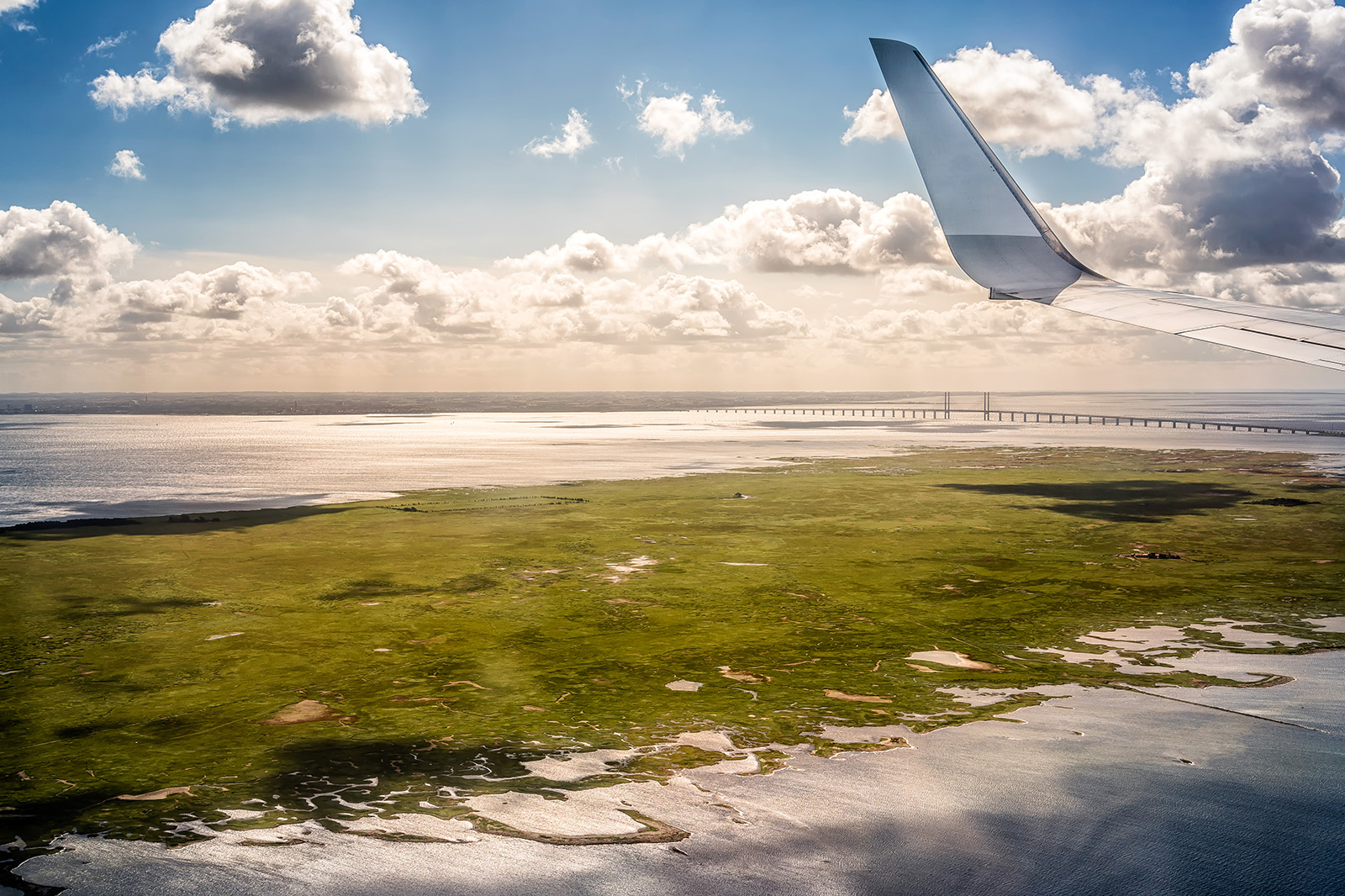
Wing of an airplane flying above Oresund Bridge between Denmark and Sweden
Photo: iStock
Photo: iStock
Summary
Electric aviation has gained momentum in the Nordic region since the first certification of an electric aircraft in the European Union in 2020. Given its unique geographical features and strong commitment to climate-neutral transport, the Nordic region represents an ideal testing ground for electric aviation. In five to ten years from now, electric aviation has the potential to become reality, so it is crucial to explore which factors may affect its implementation and how regional development may be impacted.
Against this background, the objective of the “Electric Aviation and the Effects on the Nordic Region” project is to present a ten-year future scenario for electric aviation in the Nordic region. To that end, the project explores future scenarios for five selected Nordic routes and identifies the key driving forces behind that transformative shift, while exploring both the positive and negative impacts that electric aviation may bring about. The future scenarios were developed through focus group discussions conducted with key stakeholders from each of the five Nordic countries.
The main findings of the study show that electric aviation is generally perceived positively in the various Nordic countries with some relevant contextual differences.
- In Denmark, electric aviation, among other sustainable alternatives, is primarily viewed as a pathway to achieving ambitious national climate targets.
- Finland emphasises the potential of electric aviation for connecting remote regions, as well as stimulating regional development in areas that have fallen behind.
- Iceland sees electric aviation as a potential avenue for cheaper travel options compared to conventional flights, as well as improved ability to access services from remote locations.
- The greatest potential in Norway lies in reducing emissions and improving accessibility by overcoming geographical barriers.
- Sweden, in particular Skellefteå, shows a strong commitment to electric aviation, presenting significant opportunities for linking remote northern areas.
Even though the general attitude towards electric aviation seems to be positive, scepticism emerged, especially in the Danish and Finnish case. In all the cases, the social acceptance of the new technology, the unanswered questions about the future ticket price as well as the uncertainty around who will be the investors to kick-off the new technology emerged as primary reasons for scepticism.
Furthermore, the future scenarios suggest that a high level of support from local and national governing bodies is required in order to make electric aviation a viable air transport mode in the Nordic region. Factors such as incentives, taxation policies, technological advancements, regulatory frameworks and social trust were identified as pivotal elements in this transformation.
While the possible impacts of electric aviation are manifold, the most prominent are:
- enhancing the green Nordic image
- increasing the political commitment to financial regulations and incentives
- new opportunities for tourism, business and flight routes
- increased access to public services and
- reduction in emissions in the operational phase.
The dominant driving forces for such implementation include:
- strong political will and commitment
- the goal of achieving fossil-free transport and
- variations in demographics and workforce skills in different areas of the Nordic region.
Those insights are intended not only to inform decision-makers, but also to provide nuanced observations from each Nordic country and explore future pathways towards a sustainable and more integrated Nordic region in line with the vision of the Nordic Council of Ministers 2030 (Nordic Council of Ministers, 2023).
Sammanfattning
Elflyg har tagit fart i Norden sedan den första certifieringen av ett elflygplan i Europeiska unionen 2020. Med sina unika geografiska egenskaper och sitt starka engagemang för klimatneutrala transporter utgör Norden ett idealiskt testområde för elflyg. Om fem till tio år har elflyg potential att bli verklighet, så det är avgörande att undersöka vilka faktorer som kan påverka dess genomförande samt hur regional utveckling kan påverkas.
Mot denna bakgrund är målet med projektet " Electric Aviation and the Effects on the Nordic Region" att presentera ett tioårigt framtidsscenario för elektriskt flyg i Norden. För detta ändamål utforskar projektet framtidsscenarier för fem utvalda nordiska rutter och identifierar de viktigaste drivkrafterna bakom denna transformativa förändring, samt de positiva och negativa effekterna som elflyg kan medföra. Framtidsscenarierna utvecklades genom fokusgruppsdiskussioner med centrala intressenter från samtliga fem nordiska länder.
De viktigaste resultaten i studien visar att elflyg generellt uppfattas positivt i de nordiska länderna, med vissa relevanta kontextuella skillnader.
- I Danmark ses elflyg, bland andra hållbara alternativ, främst som en väg för att uppnå ambitiösa nationella klimatmål.
- Finland betonar elflygets potential att förbinda avlägsna regioner och stimulera regional utveckling i områden som har hamnat på efterkälken.
- Island ser elflyg som en potentiell väg till billigare resealternativ jämfört med konventionella flyg, samt förbättrade möjligheter att få tillgång till tjänster från avlägsna platser.
- Den största potentialen i Norge ligger i att minska utsläppen och förbättra tillgängligheten genom att övervinna geografiska hinder.
- Sverige, i synnerhet Skellefteå, visar ett starkt engagemang för elflyg, vilket ger betydande möjligheter att knyta samman avlägsna nordliga områden.
Trots att den allmänna inställningen till elflyg verkar vara positiv framkom skepsis, särskilt i de danska och finska studierna. I samtliga studier framstod den sociala acceptansen för den nya tekniken, de obesvarade frågorna om det framtida biljettpriset samt osäkerhet kring vilka investerare som kommer att driva den teknologiska utvecklingen som de främsta anledningarna till skepsis.
Dessutom tyder framtidsscenarierna på att det krävs en hög nivå av stöd från lokala och nationella styrande organ för att göra elflyg till ett livskraftigt lufttransportsätt i Norden. Faktorer som incitament, skattepolitik, tekniska framsteg, regelverk och socialt förtroende identifierades som avgörandei denna omvandling.
De möjliga effekterna av elflyg är många, men de mest framträdande är:
- förstärka bilden av det gröna Norden
- öka det politiska engagemanget för finansiella regler och incitament
- nya möjligheter för turism, affärsverksamhet och flygrutter
- ökad tillgång till offentliga tjänster och
- minskade utsläpp under driftsfasen.
De dominerande drivkrafterna för ett sådant genomförande är bland annat:
- stark politisk vilja och engagemang
- målet att uppnå fossilfria transporter och
- variationer i demografi och arbetskraftens kompetens i olika delar av Norden.
Dessa insikter är inte bara avsedda att informera beslutsfattare, utan också att ge nyanserade observationer från varje nordiskt land och utforska framtida vägar mot en hållbar och mer integrerad nordisk region i linje med Nordiska ministerrådets vision för 2030 (Nordiska ministerrådet, 2023).